
Table of Contents Show
Who will be remembered as the reigning diva of this generation? Recent years might prop up Sabrina Carpenter or Chappell Roan. Perhaps the 2000s and 2010s are more indicative of Beyoncé, Lady Gaga, or Britney Spears. Maybe longevity should be more coveted, and it’s really Mariah Carey, Madonna, or Tina Turner who takes the cake.

Had the same question been posed in the midcentury, one might have thought immediately of a Hollywood or Broadway actress such as Marilyn Monroe or Barbra Streisand. But one can go back even further, in the 19th century, the answer might have been Caterina Gabrielli, Maria Malibran, or Jenny Lind1, all big names in opera, where the term was first used as we use it colloquially today. Regardless, hundreds of talented women fit the bill.
Yet vocal talent is hardly the end-all, be-all of what makes a diva. Indeed, the term is far more acquainted with a personality type associated with successful female celebrities on account of misogyny. Projecting the diva archetype onto a woman allows the audience to simultaneously enjoy her art while also diminishing it. The artist’s creation becomes meretricious, and their success is unfounded.2
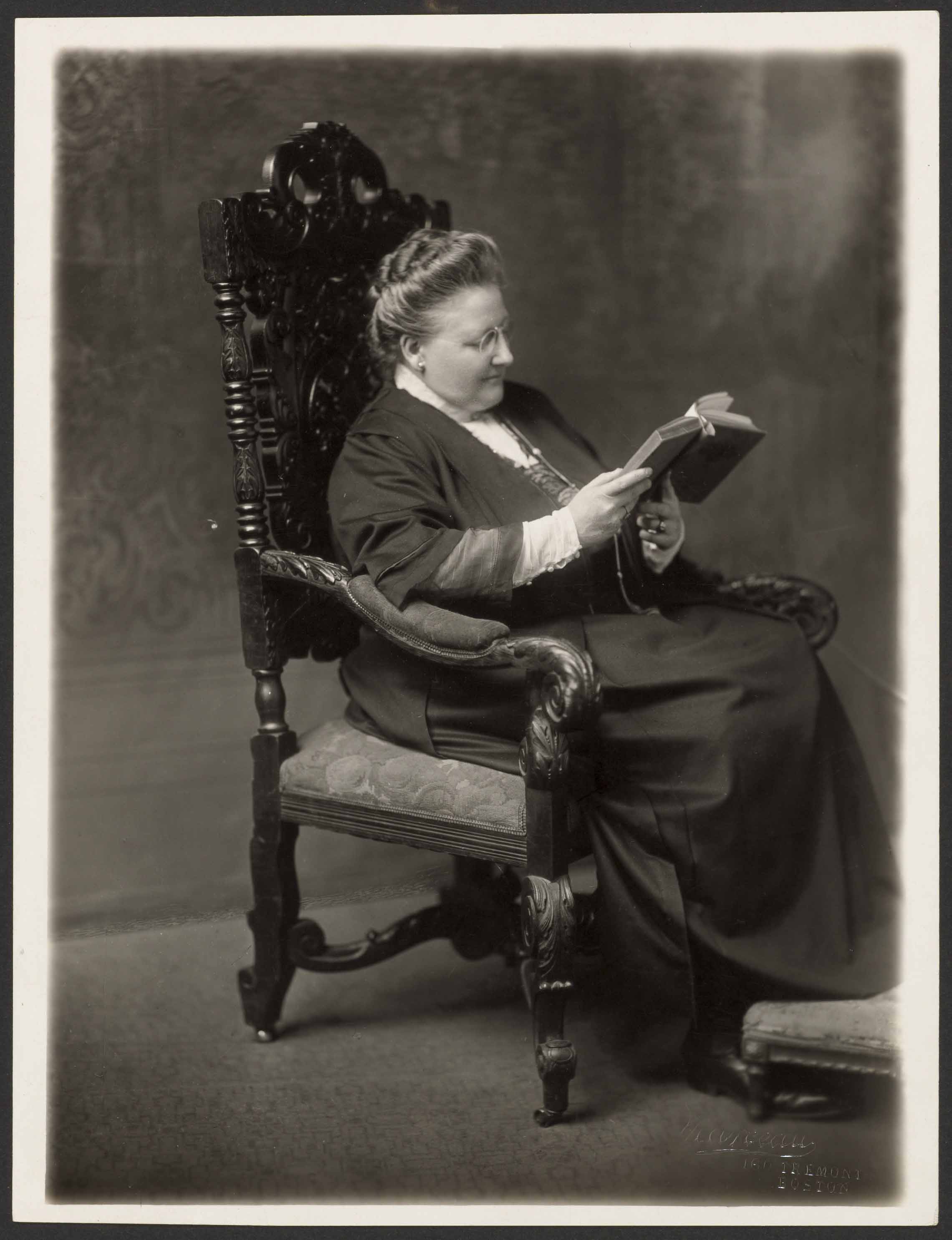

Long described as the arc of the female celebrity from fame to disdain, the diva archetype encapsulates a relentless confidence in and enjoyment of the self. This is a role that American poet Amy Lowell embraced to establish her place on the literary scene of the early 20th century. But while Lowell deliberately positioned herself as a literary diva, she simultaneously undermined its shallow connotations with intimate, profound, and powerful verse through poetry.
In glancing at a few corners of Lowell’s work, we can see how her strong authorial voice — augmented by her performance as a diva — pierces through history to engage contemporary readers in discussions of love, loneliness, and ego. Perhaps through diva-dom, we can all use art not as a shield from modern problems but a sword against them.
Diva Is The Female Version Of A…What, Exactly?
In essence, author Melissa Bradshaw writes, “Diva connotes egotism, arrogance, and tempestuousness.”3 Wayne Koestenbaum, author of The Queen’s Throat: Opera, Homosexuality, and the Mystery of Desire, describes the underlying fear behind the misogyny that fuels diva branding; a diva is, after all, a woman. Such a woman, though, poses a tangible, sordid threat.
He writes:
“The diva is demonized: she is associated with difference itself, with a satanic separation from the whole, the clean, the contained, and the attractive. Mythically, she is perverse, monstrous, abnormal, and ugly…they have been considered deviant figures capable of ruining an empire with a roulade or a retort.”4
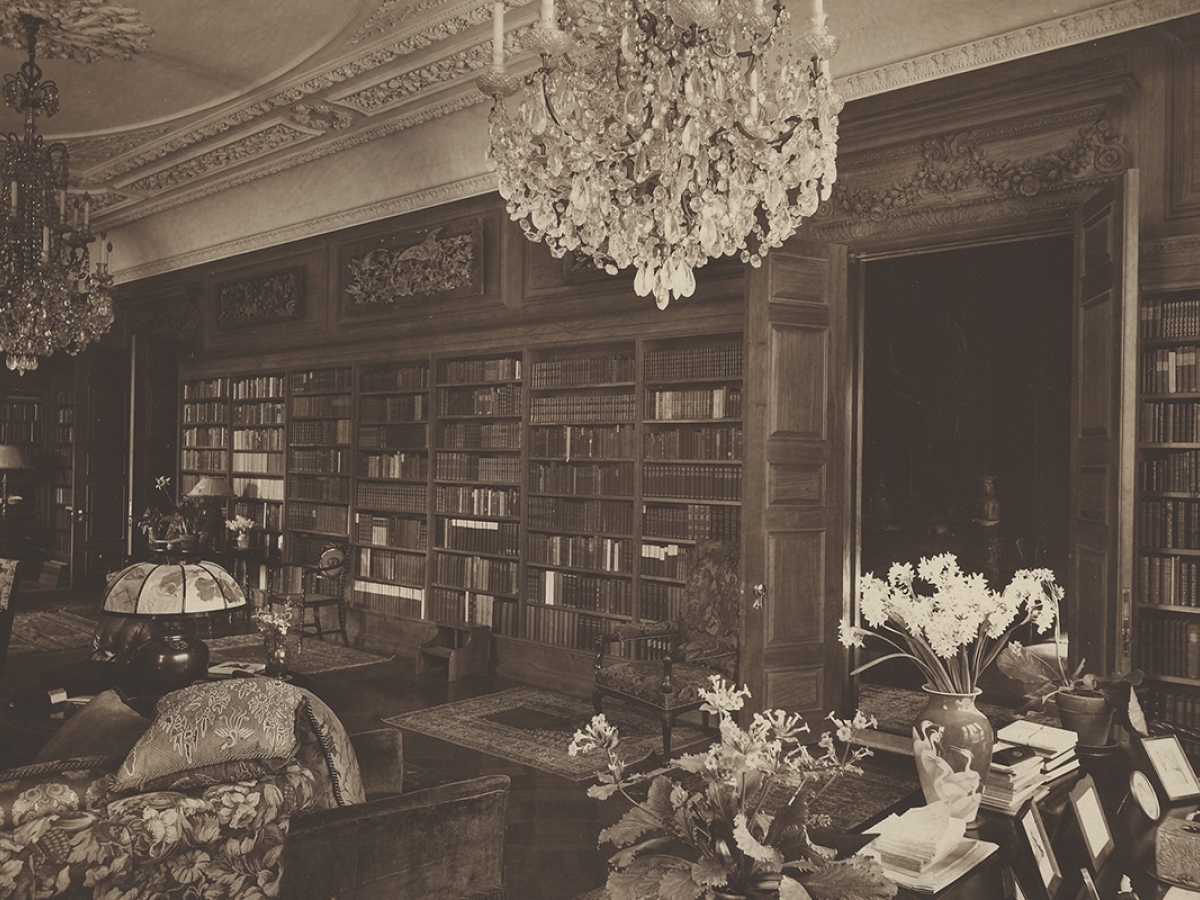
Enter Amy Lowell, born in Massachusetts in 1874 to the distinguished Lowell family, established in the country for over 200 years.5 Amy grew up privileged and sheltered. The family held influence in New England and is largely emblematic of the stereotype of the wealthy, uptight, pretentious Northerner.
By her death in 1925, Amy Lowell was a renowned poet and is remembered in scholarship as bringing the modern poetry movement, specifically Imagism, to Americans. As a published poet herself, Lowell also funded and edited poetry anthologies, wrote and published literary criticism, and upheld herself as a relentless life-long student of literature, history, and the arts. Throughout her life, Lowell used her status and privilege to champion up-and-coming poets, largely directing the evolution of American poetry.6
All Press Is Good Press For A Diva
Alongside her contributions to the literary scene in her legacy, however, is a formidable self-celebritization. Confident, driven, and frank, Lowell was intentional in cultivating her “unabashedly public persona.”7 Somewhat umbrageous and unable to hold her tongue, Lowell quickly garnered a reputation not just among poets but among the American public as well.

One such example of Lowell’s sensitive temperament is in her public feud with South Carolinians at large. Her poem “Magnolia Gardens” (1922), published in Poetry magazine, describes a Charleston garden unfavorably, claiming specifically to be “nauseous to the sight” of the magenta color of the flowers. Angry letters from Southern readers followed. David Beardsley writes for Harvard Magazine that Lowell, ever petty and self-assured, “found another poem describing the flowers as magenta, convinced its author to submit it to Poetry with a letter defending ‘Magnolia Gardens,’ and persuaded the magazine’s amused and incredulous editor to print the other poet’s work.”8
It is no surprise, then, that Lowell had a reputation beyond the poetry community. In her book Amy Lowell, Diva Poet (2011), author Melissa Bradshaw writes that Lowell made this reputation for herself, describing the poet as “intimidating…sophisticated, powerful, confident, and charismatic,” becoming one of the first (among few) literary divas.
Reputation (Amy’s Version)
There is another piece to Amy Lowell, however, that should not be ignored when examining her positioning as a diva. Though well-known in her time, her legacy in American poetry has collected dust. Today, she is most known for her sapphic love poems. While she would not have labeled herself as a lesbian (no one did at this point), Lowell did nothing to hide. Her success in male-dominated fields as a plus-sized, gay woman, then, reveals another side to the story of Amy Lowell as literary diva.

Bradshaw, citing Wayne Koestenbaum, describes the diva persona as a defense mechanism within the queer community. In a world that sniffs out queerness like a rot and destroys it, the larger-than-life, overly-confident diva persona becomes a mode of not only survival but steadfast resistance that is rooted in identity, the very thing which bigotry seeks to eradicate.
Further, Bradshaw writes that this strategy “tries to preempt the punishments that come to powerful women.” Rather than being shallow and vain, the diva is profoundly self-aware.9 Diva, then, becomes not something one is but rather something one does. It is an action, an act — a performance.
And it is a performance of which Lowell was a master because while stories of her public disputes and grandiosities are amusing, her poetry tells a very different story, a story from the book of Koestenbaum’s diva.
Love In The Queer Poetic Imagination
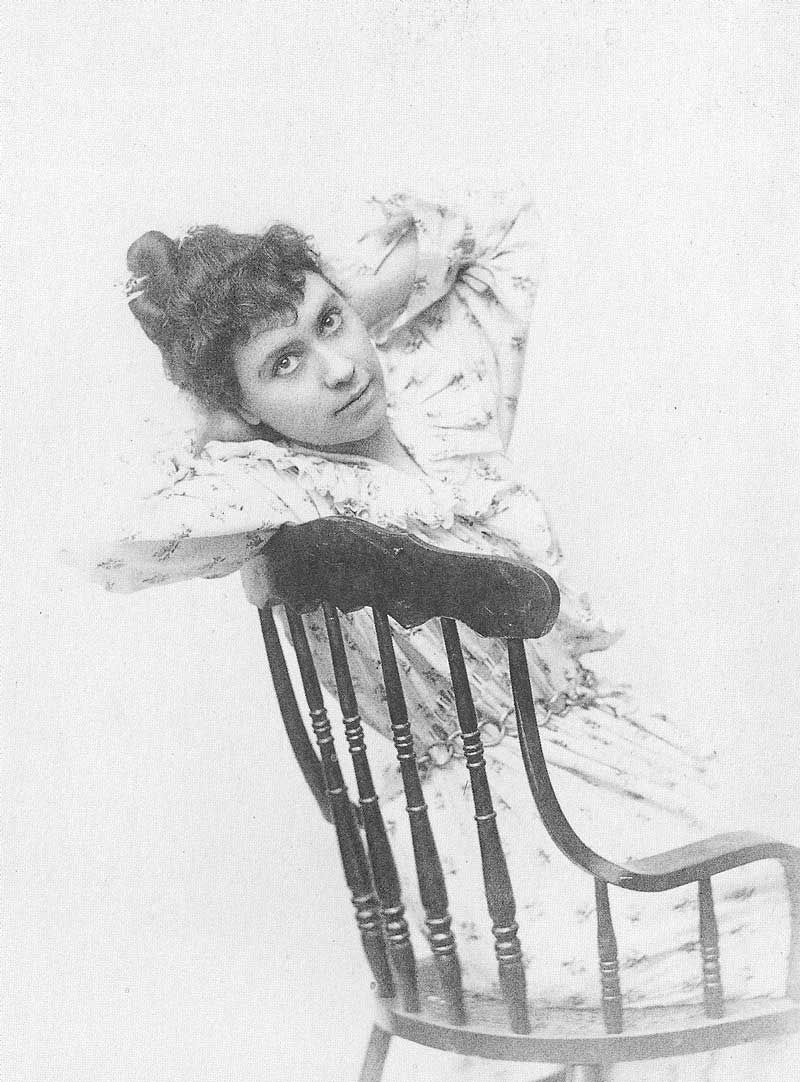
Amy Lowell did not necessarily write frequently about loving women; she did, however, write extensively about loving Ada Dwyer Russell, her lover from 1912 until Lowell died in 1925. Often likened to Gertrude Stein and Alice B. Toklas, Russell served not only as Lowell’s inspiration but also balm to her sometimes abrasive sensitivity to criticism.10
Russell’s role as muse, though, is most evident in Lowell’s love poetry — the context in which her work is most often taught today. Further, it establishes an authorial voice distinctly at odds with the confident, nearly smug stereotype of the traditional diva.
Delicate Diction In “A Lady” (1914)
In her 1914 poem titled “A Lady,” Lowell makes deliberate word choices and uses specific similes and metaphors to evoke domesticity, artistry, and femininity while establishing a delicate, soft tone to depict a tender, humble admirer. Words like beautiful, faded, perfume, vague, suffusing, delight, and gazing all carry pointed meanings and characterize the speaker as observant, careful, and sincere.
Figurative language operates similarly and emphasizes the lady’s elegance and ethereal nature. For example, the poem opens with:
“You are beautiful and faded, / Like an old opera tune / Played upon a harpsichord; / Or like the sun-flooded silks / Of an eighteenth century boudoir.”
Not only does this language carry specific connotations of its own, but the very act of using metaphors and similes suggests an inadequacy on the part of the speaker.
The speaker doesn’t have the words esteemed enough for the lady, and so only art (such as the opera tune on a harpsichord) and nature (“the fallen roses of outlived minutes”) can express her loveliness. This delicacy and awe portray a speaker removed from any notion of diva-ness.
The flowing, wistful comparisons are somewhat juxtaposed with the final metaphor, describing the speaker, which is given its own stanza (separate from the loveliness of the listener). Lowell writes,
“My vigor is a new-minted penny, / Which I cast at your feet. / Gather it up from the dust, / That its sparkle may amuse you.”
In minimizing her own offering to a penny, the speaker diminishes herself and puts the listener — the lady — on a pedestal. Bordering on self-deprecation, the coin metaphor is further developed as the speaker’s sheepish offering.
Far from being embarrassed by the prospect of loving a woman, the speaker is embarrassed to offer her meager adoration to such a creature. Finally, rather than beg for reciprocity, the speaker can only hope that the notion of her longing is enough for a flicker of amusement for the lady.
Palpable Passion In “Venus Transiens” (1915)
Lowell’s 1915 poem “Venus Transiens” depicts a similarly awed and humble speaker, though this time with more fervent passion:
Tell me,
Was Venus more beautiful
Than you are,
When she topped
The crinkled waves,
Drifting shoreward
On her plaited shell?
Was Botticelli's vision
Fairer than mine;
And were the painted rosebuds
He tossed his lady
Of better worth
Than the words I blow about you
To cover your too great loveliness
As with a gauze
Of misted silver?

For me,
you stand poised
In the blue and buoyant air,
Cinctured by bright winds,
Treading the sunlight.
And the waves which precede you
Ripple and stir
The sands at my feet.
Here, Lowell evokes a near-Shakespearean tone, reminiscent of “Sonnet 18: Shall compare thee to a summer’s day?” Alluding to Botticelli’s “The Birth of Venus,” the speaker seems unsatisfied with what they can produce for their lover, concluding the poem with a quiet admission of their own vision.
The first stanza is long, inquiring, and larger in scope. Comprised of two long-winded questions, the speaker seems almost desperate for answers in the first stanza.

But the abrupt and isolated “For me” quickly quiets the tone and depicts a simple scene. As the listener treads sunlight, positioned above the water’s surface, the speaker notes the waves that:
“Ripple and stir / The sands at my feet.”
As if overwhelmed by the prospect of describing such beauty, the speaker’s energy recedes—one could almost picture the speaker looking down at their feet, sheepishly, similar to the speaker of “A Lady.”
Delicate Figurative Language / The Humble Speaker
These two poems highlight two important features of Lowell’s love poetry. The word choice and use of figurative language — while pointed, distinct, and evocative — are deliberate. This is reflective of the Imagist movement in which precision in language is, according to Lowell, essential. The excess and extravagance of the diva, then, is nowhere to be found. While the ideas and depictions within the words may be grand, their execution is not.
Secondly and more importantly, Lowell portrays a speaker who is humble and self-critical, ashamed not to be so in love but rather unsure of their own worthiness. Amy Lowell’s public and private personas, while seemingly opposites, are not unrelated. Her public flamboyance is what allowed for timidity and softness on the page. In other words, only because Lowell was so self-assured in the poetry scene at large was she able to write and publish intimately, without censorship or anxiety. The diva Amy Lowell protected the poet.
Lonely Heart, Lonelier Mind — Emotional Depth & Intellectual Isolation
While the Lowell family fortune certainly provided a sheltered upbringing and comfortable lifestyle for Amy, that should not be ignored or discounted, there were some challenges to such a social position. Most notably, the traditional family did not believe in women’s education. Beyond childhood tutoring, Lowell took it upon herself to be learned.11
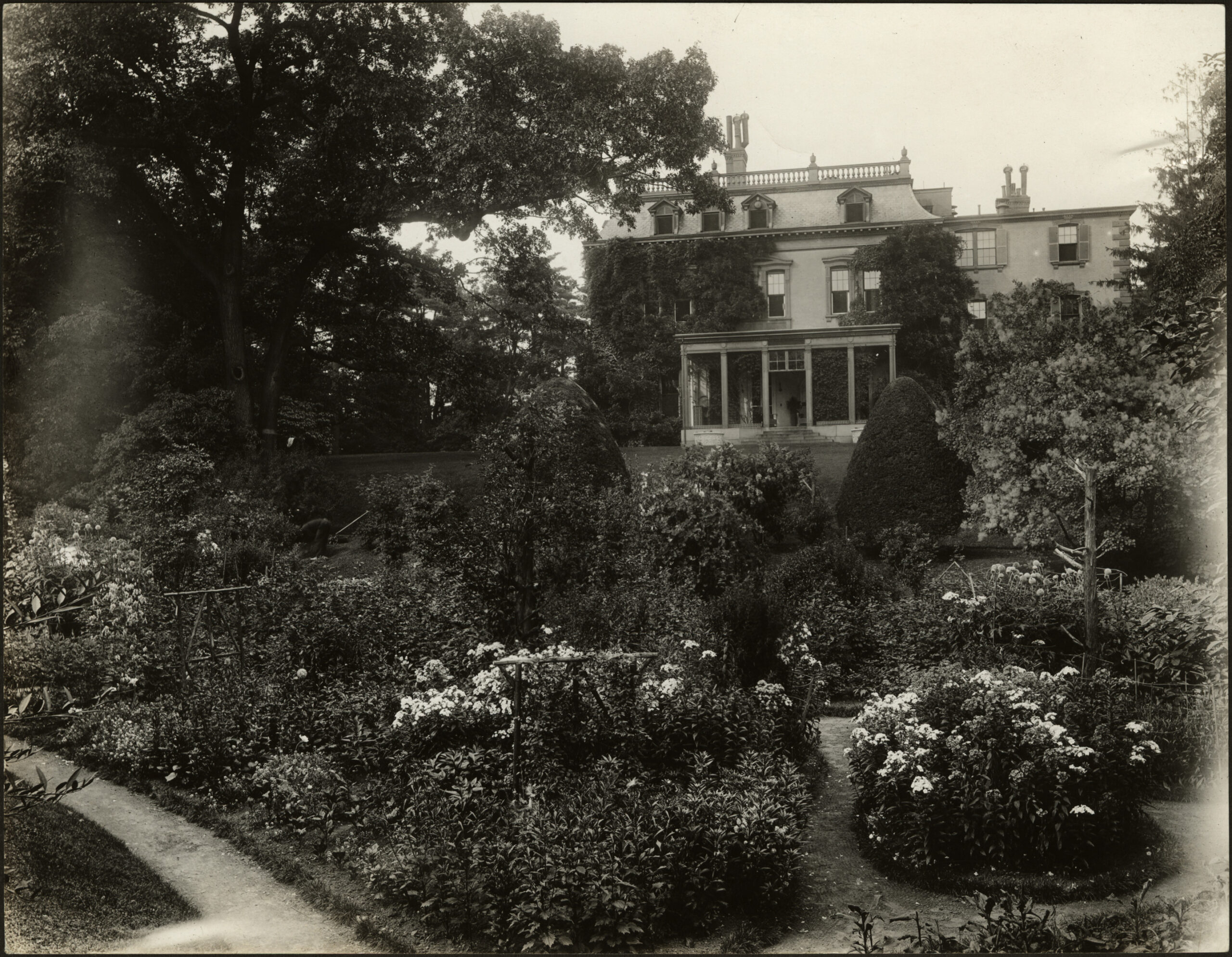
Initially drawn to the performing arts, Lowell was rejected from theatre because of her being overweight and pivoted to poetry, training deeply over the course of years:
“Lowell pursued the craft with dedication, patience, and close study, virtues facilitated by her wealth: she spent a decade honing her skills in private and studying nineteenth-century masters like Keats, Shelley, and Tennyson.”12
“Truth Teller” — Plagued By Societies’ Inadequacies
Though far from being a hermit, Lowell was secluded in her work, and her appearance made her into something of a social outcast. The emotional experience of her ensuing loneliness, however, was more evidenced by a sense of intellectual isolation. This is most explicitly represented in her 1917 poem titled “Disillusion,” in which she begins with a scholar, “Weary of erecting the fragile towers of words,” and ends with the scholar committing suicide.
Another poem from the same collection, “Paper Fishes,” expresses a similar disappointment in the mental capacities and spiritual shortcomings of humankind. Adopting a solemn tone, she writes:
The paper carp,
At the end of its long bamboo pole,
Takes the wind into its mouth
And emits it at its tail.
So is man,
Forever swallowing the wind.
“The Painter on Silk” (1915) reflects a similar disconnect with society, though it attests to Lowell’s capacity for optimism. In it, Lowell depicts a gentle artist, content to paint roses while the world around him descends into war. Even as he lay dying, and “…the conquerors / Entered the city,” the artist thought only of his roses and their color. There is a sober melange of melancholy and, arguably, hope.
Lowell’s poetic musings were not confined to large-scale societal commentary, though. “A Blockhead” (1913) presents a speaker somewhat exhausted by life, uninspired in the midst of depression and regret. Lowell writes,
“Before me lies a mass of shapeless days, / Unseparated atoms, and I must / Sort them apart and live them…” Drawing further on feelings of isolation, the speaker likens themself to a monk, “...so I thrust / Each tasteless particle aside, and just / Begin again the task which never stays.”

These poems are not explicitly linked by either form or theme, but they illustrate the complexity and depth of Amy Lowell. Simultaneously hopeful and jagged, bored and inspired, Lowell may have been many things, but she was neither simple nor straightforward.
“To allow absolute freedom in the choice of subject” is one of Lowell’s tenets of Imagist writing, and she practiced what she preached.13 Lowell dealt with deep themes and complicated topics surrounding the human experience, and the diva she was made out to be cannot adequately capture these multitudes.
Much like the earnestness in her love poems, however, this depth is made possible and all the more engaging by Lowell’s performance as a diva.
“Divine Diva” — Finding Holiness In Humanity
The word “diva” comes from the Italian word for goddess, which in turn comes from the Latin word for goddess.14 While initially given to Italian opera singers who garnered a fanbase who saw their idols as godlike, the term has colloquially evolved to include figures who supposedly act as though they believe themselves to be gods.
Wayne Koestenbaum argues that this attitude is a method of “retaliatory self-invention” against fixed social identities and classes. He writes, “…gay culture has perfected the art of mimicking a diva — of pretending, inside, to be divine—to help the stigmatized self imagine it is received, believed, and adored.”15
“It Takes One To Know One” — Amy Lowell’s Critics & Contemporaries
Today, Lowell is remembered for championing the Imagist movement. Her contemporaries, however, would have used a different word. At one point, her literary mentor and supporter, Ezra Pound, would go on to become one of Lowell’s harshest critics before abandoning Imagism altogether.
Referring to the movement as “Amygism,” Pound claimed Imagism had become “overly sentimental” and that Lowell had “hijacked” it.16 American poet Witter Bynner went so far as to refer to her as a “Hippopoetess.”17

While helping her to establish herself as an authority in poetry in life, Lowell’s reputation as a diva hindered her posthumous recognition. Bradshaw describes the first full-length biography of Lowell after her passing by Clement Wood:
“He premises his study on his belief that Lowell’s shame at being fat and supposedly unattractive to men made her a sadistic butch lesbian.”
She continues on with Gregory Horace’s 1958 biography of Lowell, writing that he “works to undermine her critical legacy by trivializing her career as the overreaching of an otherwise unexceptional society woman.”18

It is clear, then, why Lowell would assume the diva performance in public in order to protect her peace and integrity in private. Where some readers saw a god in a poet, others saw a poet who perceived God in herself.
“Beauty Or Beast” — Self-Aggrandizement / The Lack Thereof In “Bath” (1916)
While most of Lowell’s diva-ish behavior occurred in the public sphere as opposed to within her verse, her poem titled “Bath” (1916) is an example of suggestions of this self-divinity in Lowell’s work. The poem ends and begins with the smell of “tulips and narcissus in the air,” as if the speaker is cognizant of their own vanity, even as they describe the beauty of the day beyond themself.
The imagery is potent, sumptuous, and nearly whimsical, appealing to every sense. As the speaker does nothing more but bask in the delight of a bath, they note the influence they have over the water and sunlight: “…a stir of my finger sets them whirring, reeling. I move a foot and the planes of light in the water jar.”
One can almost imagine the speaker as a deity, reveling in the glory of a paradise and their own power. This power, however, is framed as significant not for the sense of control it affords the speaker but rather the beauty and tranquility it produces. The speaker appears to have a diva complex of their own. However, it is tender and intimate, reminiscent of the self-protection that Koestenbaum attributes to the gay community.
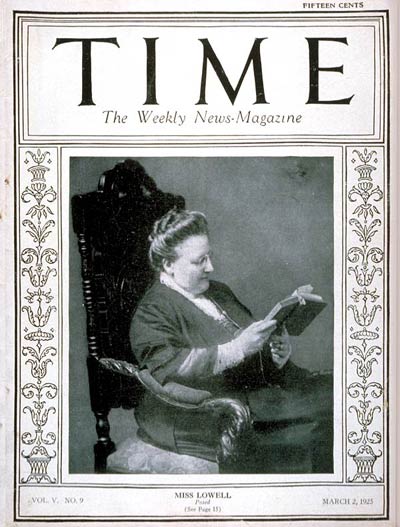
Despite this supposedly self-centered piece, “Bath” may also suggest something larger, even in such a quiet moment. As mentioned, the imagery is vivid and thorough, leaving readers with a vision of the speaker embedded within the beauty (“I lie back and laugh, and let the green-white water, the sun-flawed beryl water, flow over me.”).
The poem does not come across as individualistic as one might expect, but instead cohesive with the external scene. There is a perfect unity between the speaker’s surroundings and their internal peace.
Garden Of Eden Versus The Garden Of Amy Lowell — “Proportion” (1913-1919)
Another poem, “Proportion,” exhibits a second instance of the divinity in the self that “Bath” expresses. Lowell writes:
In the sky there is a moon and stars,
And in my garden there are yellow moths
Fluttering about a white azalea bush.
Notably shorter than Lowell’s other work, it is missing the recognizable self-aggrandizing opulence one might expect of a typical diva. Instead, the speaker compares their garden to the night sky. In juxtaposing the two, the speaker simultaneously likens themself to a god-like figure while also minimizing themself. And even while the speaker’s garden is attributed the grandiosity and beauty of the night sky, it is the yellow moths and white azalea bush that are celebrated.
“Diva” — A Common Language, A Human Language
There is a humble understanding. It is cathartic and true to see divinity in oneself, but it is far more rewarding to view this divinity in its full context — a context that is spread across humanity and nature.

Amy Lowell does perceive a divinity in herself. More accurately, Amy Lowell perceives a divinity in the self. Most true of all, though, is that Amy Lowell perceives a divinity in all selves, in all beings. Perhaps if we read between the lines of other notable divas, they are saying the same thing.
We Should All Be Divas
The question of whether Amy Lowell was a diva is a moot point. Did she act as a diva? Unequivocally, and it seems that’s the point — to become unerasable in a world which seemingly hunts for stray pencil marks to blot out.
Lowell acted as a diva to protect her place in the modern poetry movement as a queer and unconventional woman of the upper class. The magnolia feud, then, may be more telling of other aspects of Lowell than would appear on first glance. David Beardsley writes,
“Lowell’s response may be artistically justified. Precise word choice was a requirement of Imagism, so the magenta dispute touched a poetic nerve. But in the broader context of her career and personality, the dispute is telling…If Lowell had chosen her battles more carefully, the literary vanguard might not have abandoned her so quickly. Then again, she might also never have been as influential.”19
Further, Lowell shows how the diva drive can be channeled through art, and the result shows why this drive should be channeled through art. Bradshaw writes:
“In her haughtiness and seeming imperviousness to criticism — such a contrast to the awed, tender voice of her love poems — Lowell offers an example of what it looks like to meet opposition with bravado and confidence with imperiousness without letting the vitriol of those battles pollute her art. To describe Lowell as a literary diva is to account for her commitment to her art…”20
“Given One More Gram”
In her performance of diva-ness, Amy Lowell expanded the bounds of the role. While traditionally viewed as self-absorbed, Lowell illustrates how it can be extrapolated to mean seeing the goodness and depth in all individuals, beginning with the self.
In his obituary tribute to Amy, Heywood Broun wrote, “She was upon the surface of things a Lowell, a New Englander and a spinster. But inside everything was molten like the core of the earth…Given one more gram of emotion, Amy Lowell would have burst into flame and been consumed to cinders.”21
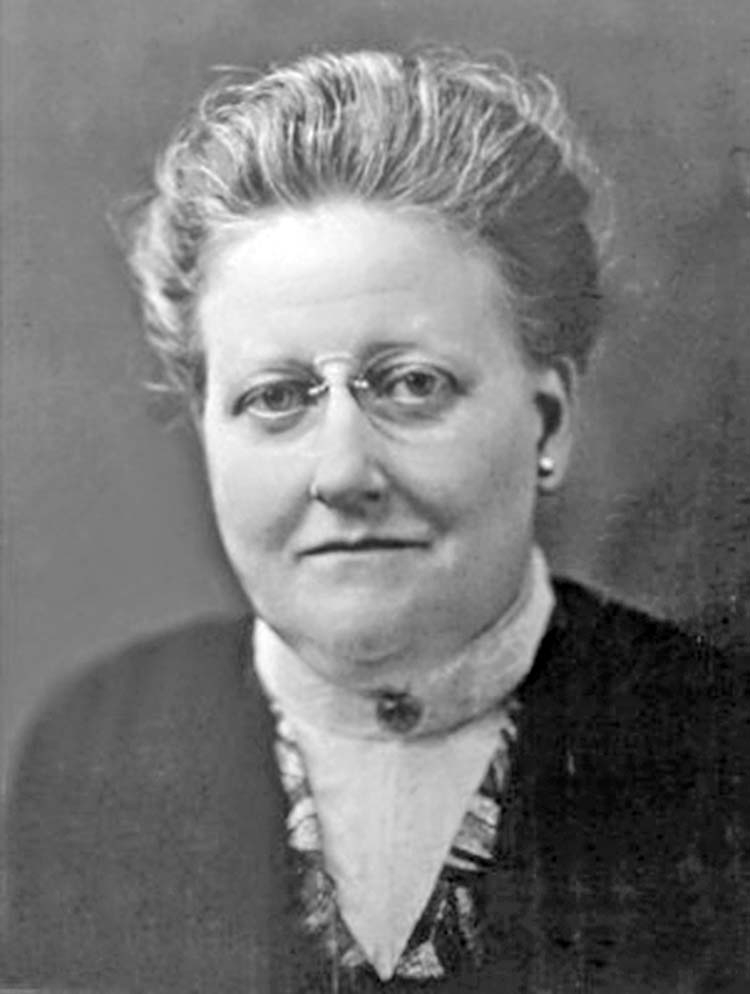
Perhaps to act a diva is to be a diva, and there is no circumventing the stereotypical arrogance or entitlement. Regardless, in deconstructing the role as Lowell did in life, we can better appreciate her — and other divas, past and present — in death. Perhaps there is something to be learned and gained in stepping into the role of diva, even if just to put words to the page.
Footnotes
- “Divas!” First Coast Opera, 13 March 2023. ↩︎
- Bradshaw, Melissa. Amy Lowell, Diva Poet. Ashgate, 2011. ↩︎
- Bradshaw, Melissa. Amy Lowell, Diva Poet. Ashgate, 2011. ↩︎
- Koestenbaum, Wayne. The Queen’s Throat: Opera, Homosexuality, and the Mystery of Desire. Poseidon Press, 1993. ↩︎
- Bradshaw, Melissa. Amy Lowell, Diva Poet. Ashgate, 2011. ↩︎
- “Amy Lowell.” Poetry Foundation. ↩︎
- “Amy Lowell.” Poetry Foundation. ↩︎
- Beardsley, David. “Amy Lowell: Brief Life of an Imagist Poet: 1874-1925.” Harvard Magazine. ↩︎
- Bradshaw, Melissa. Amy Lowell, Diva Poet. Ashgate, 2011. ↩︎
- Faderman, Lillian. “‘Which, Being Interpreted, Is as May Be, or Otherwise’: Ada Dwyer Russell in Amy Lowell’s Life and Work.” Amy Lowell, American Modern, edited by Adrienne Munich and Melissa Bradshaw, Rutgers University Press, 2004, pp. 59-76. ↩︎
- Bradshaw, Melissa. Amy Lowell, Diva Poet. Ashgate, 2011. ↩︎
- Beardsley, David. “Amy Lowell: Brief Life of an Imagist Poet: 1874-1925.” Harvard Magazine. ↩︎
- “Amy Lowell.” Poetry Foundation. ↩︎
- Harper, Douglas. “Etymology of diva.” Online Etymology Dictionary. ↩︎
- Koestenbaum, Wayne. The Queen’s Throat: Opera, Homosexuality, and the Mystery of Desire. Poseidon Press, 1993. ↩︎
- Bradshaw, Melissa. Amy Lowell, Diva Poet. Ashgate, 2011. ↩︎
- Bellot, Gabrielle. “Lady of the Moon.” Poetry Foundation, 03 June 2019. ↩︎
- Bradshaw, Melissa. Amy Lowell, Diva Poet. Ashgate, 2011. ↩︎
- Beardsley, David. “Amy Lowell: Brief Life of an Imagist Poet: 1874-1925.” Harvard Magazine. ↩︎
- Bradshaw, Melissa. Amy Lowell, Diva Poet. Ashgate, 2011. ↩︎
- Agarwal, Suman. Sylvia Plath. Northern Book Centre, 2003. ↩︎