

Table of Contents Show
Who — at least which woman — wouldn’t pay a king’s ransom to look as stunning as Margot Robbie or live in the real-life version of Barbie Land from the nearly $1.5 billion movie Barbie she starred in?1

Of course, the Barbie (2023) universe is fictional. Still, the idea of being effortlessly beautiful forever in a pastel-colored utopia is irresistible — almost as enchanting as the magical Harry Potter world. Moreover, Ryan Gosling’s Ken and his never-ending love for Barbie might be every woman’s over-the-top dream boyfriend.

Speaking of Ken, portrayed by Ryan Gosling, he was one of the few central male characters in the spectacular, yet unapologetically girly, pink, and fluffy world of Barbie. Still, the film’s limited male presence doesn’t make it a “women-only” social satire or black comedy.
In fact, Barbie turned out to be a hit with both genders — not just women. According to Box Office Pro, about 65% of the film’s theatrical audience were women, while 35% were men.2 And in a Resume Builder survey, 50% of male respondents said they loved the movie, and another 43% said they liked it.3
Therefore, it raises the question: Is the sharp satirical critique of physical appearance and lookism a female-exclusive societal issue? In other words, what if a sequel or spinoff of Barbie was released with the film titled Ken instead of Barbie Part Two, essentially a male version of the original movie?

Would numerous men also pay a king’s ransom to live in a utopian “Ken Land,” where they could stay forever young and effortlessly handsome? In this version, Ryan Gosling as the original Ken, or other actors widely regarded as attractive, such as Robert Pattison, Leonardo DiCaprio, or Ian Somerhalder, could portray Ken living in “Ken Land,” an elegant, bluish-colored, instead of pink, spectacle where most of the characters are tall, handsome, and non-aging men.
Then, would such a film also become a massive global hit? Would men across continents connect with the film as strongly and emotionally as women around the world did with the original Barbie, only this time with the genders reversed? Would numerous men pay a king’s ransom to live in a utopian “Ken Land,” where they could stay forever young and effortlessly handsome?

Well, no one truly knows the answer, since no such film has been made yet, but one can imagine the general picture. A “Ken”-centric version of Barbie would likely reveal that men, too, are trapped by modern standards of perfection, showing that lookism is not a gendered issue but a universal one.
The issue of unrealistic beauty ideals is no longer just a concern for women today; it is increasingly affecting men as well, although, to be frank, it has never been properly dealt with.
Lookism Across Time — A Shifting Standard
Lookism is not a modern invention — it has simply evolved alongside culture, media, and technology. By tracing how beauty standards operated in the past versus how they function today, we can see how male bodies moved from relative invisibility to relentless scrutiny.
Lookism In The Past
Conversations about body image and beauty standards have focused almost entirely on women for a long time in history, while those on men were largely ignored. After all, the term “the less fair sex” referred to men, suggesting that physical beauty was something more expected of women.

Da Vinci, Leonardo. “Mona Lisa.” 1503–1506. Louvre Museum, Paris.
For instance, the physical appearance of a male protagonist is often unspecified in both older and more modern literature; moreover, their physical descriptions rarely directly indicate handsomeness, even in cases where physical hideousness is not explicitly stated.
In contrast, female protagonists are almost always described in terms of beauty, often with details like doe eyes that “drown,” a heart-shaped face, cupid’s bow lips, or a tall, lithe figure reminiscent of a ballerina from the moment they enter the storyline.
Lookism In The Present
If literature was the pre-modern stage, influencers and celebrities fostered by various social media platforms and entertainment industries are those on the modern stage, perpetuating the classic image of physical beauty today.
Not just Hollywood but various giant entertainment industries around the world have done a brilliant job in setting today’s unrealistically attractive physical appearance standards. Actors with god-like body shapes and frames achieved theirs through nearly life-threatening routines that consisted of excessive dieting and punishing workouts, all in an effort to be shown as flawless on screen.


Some of the golden examples are hyper-muscular physiques of Marvel superheroes, Zac Efron’s shredded, ultra-low body fat physique, the highlight of his “beach body” perfection in Gordon’s 2017 Baywatch, Jacob Elordi’s all-athletic frame in Euphoria (2019-), Saltburn (2023), and male K-pop stars’ slim, toned bodies and flawless skin that has brought a pan-Asian standard that has become desirable, not only to Asian Gen Z men, but to those all across the world.
Yes, excessively exercising and restrictively dieting may be occupationally necessary for actors; however, they can be challenging and unnecessary for average individuals to carry out while juggling school, work, or family responsibilities. Yet, the male upper bodies shown on cinematic screens have become the benchmark for masculine attractiveness, creating an illusion that such extremes are both normal and attainable.

Many men have confessed to experiencing muscle dysmorphia, or “bigorexia,” becoming obsessed with building muscle even when they are already fit enough. In line with this, a 2025 study in Canada and the United States found that nearly 3% of boys and men were likely affected by muscle dysmorphia.4
And influencers, it seems, are no less harmful than the shining bodies of Hollywood actors. Similar trends can be observed in numerous masculine body-image posts circulating across Instagram, TikTok, and YouTube. Users often record and upload “What I eat in a day” videos documenting their daily meals and supplement intake, or side-by-side transformation clips showing their physical progress over weeks or months.5

Many of these clips are featured on the TikTok community known as “GymTok,” which has surpassed 165 billion views, and whose content under “#fitinspiration” reached over 1.8 billion global views in 2024.6 Likewise, a 2024 survey by the UK’s Mental Health Foundation revealed that 48% of men aged 18–34 said social media made them feel dissatisfied with their bodies.7
Thus, naturally, as digital metrics such as likes, views, and follower counts rise, their negative offline consequences appear to grow in tandem — sometimes even outpacing the numbers themselves. A 2023 King’s College London report found that around one in five young men edited their photos before posting to appear more muscular or lean.8

Meanwhile, a 2023 North American fitness survey found that over half of men who regularly went to the gym were exercising at least five days a week, and 1 in 3 of them reported following a strict calorie-restricted diet inspired by fitness influencers.9
These instances not only normalize a specific male body ideal by prescribing what the “average” attractive masculine physique should look like, but also promote the notion of a “correct” diet and health routine.
Yet, in reality, each body has its own unique biological factors and lifestyle ones that conform to those elements, such as one’s individual metabolism, hormones, and the amount of time he can realistically spend at the gym.
Steroids & The Fatal Cost Of Appearance
Perhaps things turn for the worse when men’s desire for masculine attractiveness results in something that not only risks one’s health but also crosses legal boundaries-very tragic that countless men are sacrificing their health, money, longevity, legal consciousness, and perhaps even their lives for an image that was never real to begin with.

Steroids are doubly dangerous for those pursuing the so-called “golden” muscular male body, as they hover at the boundaries between looks, health, and harm. Exercising and muscle building are technically essential to achieving the ideal masculine physique, and steroids do technically enhance athletic performance by strengthening and quickening muscle growth.
Yet, the fatal point lies precisely there because excessive exercise alone can strain the body. When combined with steroids, the health risks multiply, pushing the body far beyond its natural limits. Ironically, steroids are medications that even celebrities, influencers, and professional bodybuilders — whose careers depend on physical perfection — remain cautious about using regularly due to their health risks, though there are many fatal cases among them as well, no fewer than those of ordinary men.


For instance, Rich Piana, an American bodybuilder and fitness influencer known for his massive physique and numerous social media followers, admitted to using steroids and growth hormones for decades. When he died at 46, his autopsy revealed that his heart and liver were reportedly twice their normal size.10
Similarly, Aziz “Zyzz” Shavershian, a very well-known Australian fitness influencer for his “aesthetic” transformation, died of a heart attack at just 22, and forensic pathologists concluded the hypothesis that his regular steroid overdoses may have been the main element that worsened his heart defect.11
Likewise, Dallas McCarver, a 26-year-old professional bodybuilder, died of steroid-related severe cardiac enlargement and organ damage at the peak of his career.12

A 2024 Frontiers in Sports and Active Living analysis found that 6.4% of males who regularly go to gyms had used anabolic steroids.13 Similarly, a 2021 study from the Netherlands revealed that 9% of young male gym users had used steroids at least once, with social media exposure correlating positively with their usage of the drug at such an early age.14 Likewise, approximately 4% of American high school seniors admitted to abusing steroids.15
It is unimaginable how many fatal steroid cases involving ordinary men never come to light. Unlike celebrities, influencers, or professional athletes whose deaths or confessions make headlines, the stories of non-public figures often go untold, mostly reduced to nothing more than mere numerical figures in medical reports or public health surveys.
Mental Health & Male Insecurities
The negative impacts of appearance pressures on men are no less severe than those experienced by women, even if they may be less frequently acknowledged. Psychologically, many men experience stress, low self-esteem, anxiety, and depression when they feel like they fall out of the frame of traditional masculine beauty.
For instance, a British survey of 2,000 men found that almost half of the participants said their body image issues had negatively impacted their mental health.16 Similarly, another British survey found that 28% of men reported feeling anxious and 25% reported feeling depressed because of concerns about their body image.17
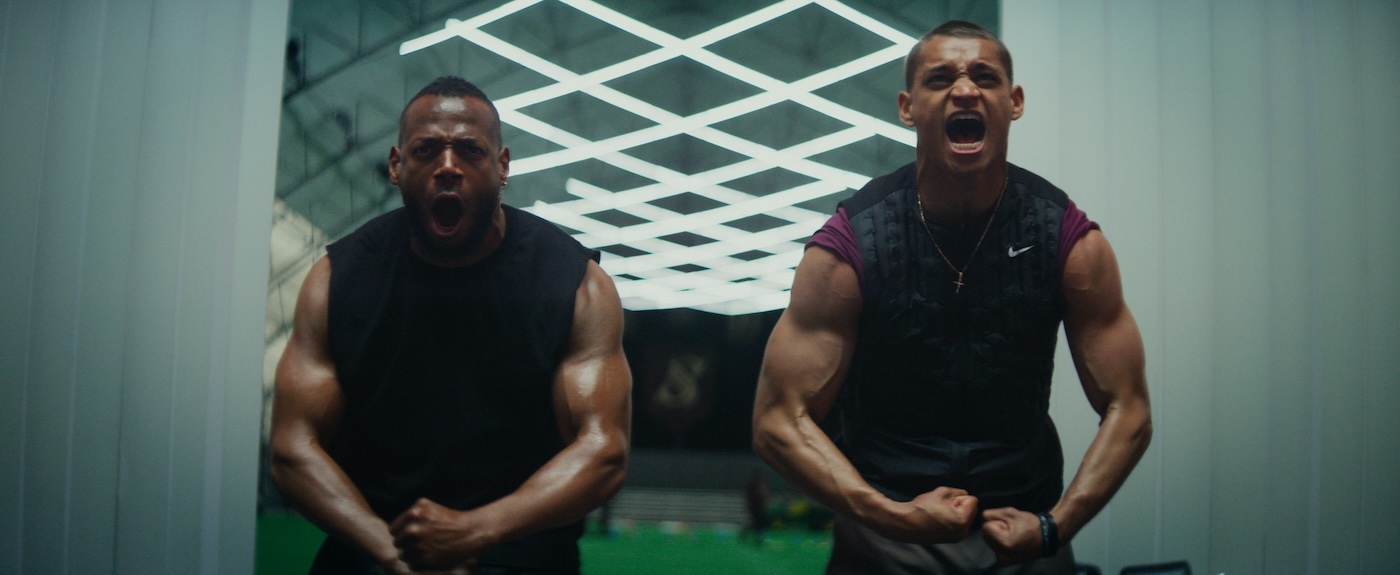
More tragically, some men despair over traits that cannot be enhanced, not even through surgical methods, such as height, which is static once human growth is complete.
A survey of sexual minority men in Australia and New Zealand reported that shorter men showed significantly greater height dissatisfaction and quality-of-life impairments, with about 11% of participants reporting experiences of heightism.18 Indeed, tallness has always been preferred over shortness, probably throughout all of human history.
From this, another issue could arise: some men may develop misogynistic attitudes when they see women, perhaps going after males who are more physically attractive than themselves. Therefore, they may conclude, whether with objective fairness or not, that women’s preferences for “superior attractiveness” are the primary, driving factor in romantic partner selection, which can bring resentment and hostility toward the female gender in general.
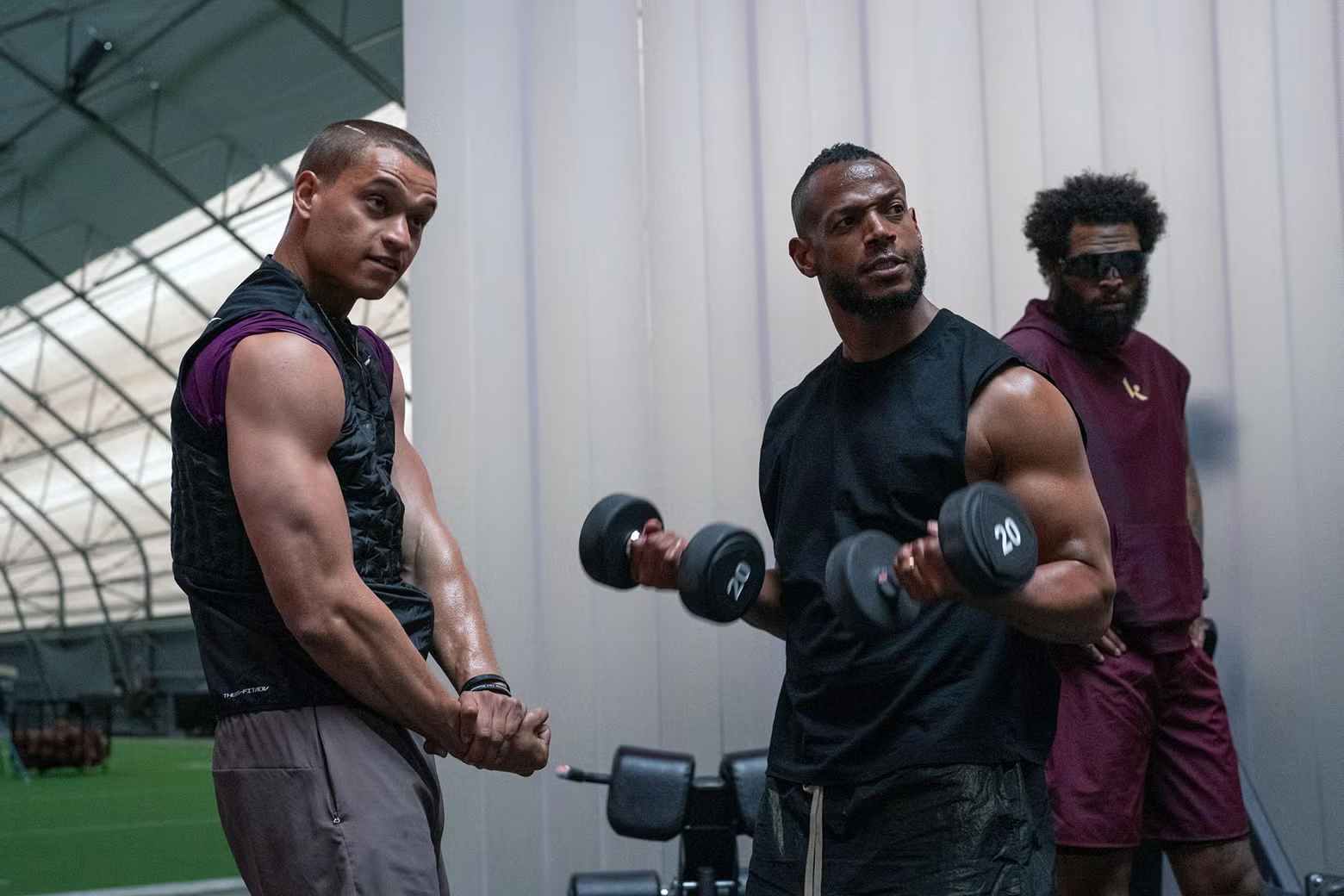
A 2024 UK study of 473 single men showed that those who viewed themselves as either exceptionally attractive or exceptionally unattractive were significantly more likely to hold hostile attitudes toward women, suggesting that men who see themselves as either extremely attractive or not attractive at all often deal with similar issues, just in opposite ways.19
Both groups may feel either insecure or overly confident, which can lead to frustration or resentment toward women. In short, it can be perceived as social media and beauty culture distorting self-image in ways that spill over into how people of opposite genders relate to each other.20
Cosmetic Pressures
Additionally, cosmetic procedures such as plastic surgery are becoming increasingly more common among men. Although women still outnumber men when it comes to plastic surgeries, the number of men undergoing jawline contouring, hair transplants, or skin treatments has steadily increased over the years.

The American Academy of Facial Plastic and Reconstructive Surgery (AAFPRS) 2024 survey revealed that 92% of facial plastic surgeons treated male patients, particularly for eyelid surgery, nose reshaping, and facelifts.21 Likewise, a 2024 study of 241 men in German-speaking Europe showed that approximately 20% had undergone cosmetic procedures, including wrinkle treatments, eyelid corrections, or hair transplants.22 At this point, men are also vulnerable to potential plastic surgery addiction issues.

Furthermore, many men now regularly engage in elaborate beauty routines, from frequent dermatologist visits for luxurious skincare to hair treatments and constantly trying new grooming products. According to Euromonitor’s Men’s Advanced Skin Care in the US 2024 report, approximately 20% of American men reported that skincare was one of their top priorities.23 Similarly, Cosmetics Design reported a 68% increase in facial skincare use among American men between 2022 and 2024.24
Additionally, the number of gender-neutral beauty products has been steadily increasing. A 2024 McKinsey survey found that almost 40% of Gen Z consumers prefer gender-neutral beauty products, which is about 10% more than older generations, proving that skincare and beauty routines, which were once widely perceived as primarily women’s practices, are no longer woman-exclusive.25
Why Men’s Struggles Are Overlooked
One of the most important — and most tragic — facts is that it is tough for men to deal with body image pressures and muscularity insecurities when they are often left unspoken or undiscussed. These outdated gender expectations descend from long-standing cultural gender norms.
Historically, culture has primarily associated beauty and self-image with femininity and strength, stoicism, and emotional restraint with masculinity. As a result, society expects women to care about how they look, to talk about it openly, and even tolerates dissatisfaction and anger over the disadvantages associated with physical appearance issues.

On the other hand, men are expected to appear confident, composed, and unaffected by their appearance in general. Therefore, they risk being criticized as unmanly and insecure when they openly express their concerns about their body dissatisfaction. Ironically, even though the world and its culture have tremendously changed from those black-and-white times, this very idea remains unchanged: gendered expectations and emotional reactions to physical appearance have remained static.

As a result, numerous men have wrestled with these issues in private shadows, their frustration building up as they angrily acknowledge that while their insecurities are no less real, they are rarely given the same cultural attention or empathy as women’s, creating a double burden locked by double standards for the male sex.
If Ken Had His Own Gloria Monologue
Ken does not join Barbie when she makes the ultimate decision to leave Barbie Land at the end of the movie. Yet, what if he had made the same decision shortly, even if that meant not reuniting with Barbie herself?

What if he had also realized that a significant life comes from imperfection, emotion, and choice, and decided to move to the real world to live as a real man, just like Barbie had, only with the genders switched? Then, would he have been able to convince countless non-perfect-looking, non-plastic men with self-image issues that it is just human nature to feel insecure, lost, or imperfect, as it is to be confident and assertive?
Or to imagine a different scene of Barbie: Near the end of the film, Barbie breaks down in front of Gloria and cries, “I’m not the stereotypical Barbie pretty!” And the response of that breakdown becomes the emotional trigger for Gloria’s now-iconic monologue, which is the most quoted and thrillingly central message of the entire film: “It is literally impossible to be a woman. You are so beautiful and so smart, and it kills me that you don’t think you’re good enough…”

But what if Ken had been present in that very scene? What if he responded with something just as honest?: “Well… you’re not alone, Barbie. It’s literally impossible to be a man, too. People tell me I’m handsome and smart, and yet I never feel handsome or smart enough. I’m not a Hollywood star –” (which would be ironic, because Ryan Gosling actually is one) “–I haven’t starred in every cologne commercial on Earth–” (also ironic, given Gosling’s real-life luxury brand endorsements)“–and in case you haven’t noticed, I’m barely six feet tall.” (again ironic, since Gosling is around six feet) “I don’t have an Ivy League degree either.” (True for this one, Gosling never attended college.) “And you know what? At least you get to cry about it out loud. I’m just supposed to swallow it all inside and pretend none of it bothers me.”
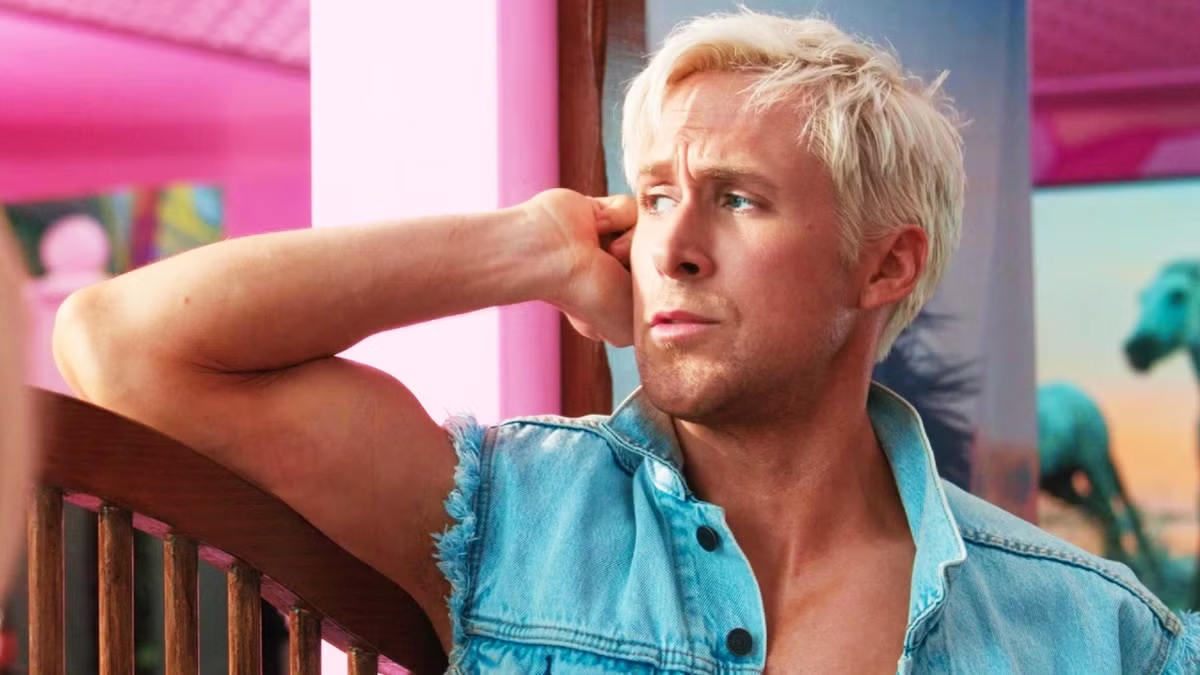
Would the narrator have cut in again with a meta-commentary like the one she used during the “Margot Robbie is the wrong person to cast if you want to make this point” line? With something like: “Note to the filmmakers: Ryan Gosling is also the wrong person to cast if you want to make this point.” Probably. But that’s the irony — and the tragedy.
After Barbie (2023) — The Mirror Turns To Men
In the end, unrealistic beauty ideals are not only a female problem but a universal one, and men’s concerns weigh no less than women’s.
Sadly, what makes their societal burden perhaps even heavier than women’s is society’s lack of open conversation and recognition regarding men’s body image pressures that come from unrealistic male appearance standards, not to mention the mental health challenges, leaving many men to deal with these insecurities in isolation rather than seeking help.

Therefore, moving forward, society and, of course, the diverse communities residing within must broaden body image topics beyond gender boundaries by acknowledging that chasing impossible physical perfection harms all members of both sexes: both males and females.
Footnotes
- Box Office Mojo. “Barbie (2023).” Accessed October 30, 2025. ↩︎
- PBS NewsHour. “‘Barbie,’ ‘Oppenheimer’ Make Box Office History on Highly Anticipated Opening Weekend.” July 23, 2023. ↩︎
- ResumeBuilder.com. “63% of Men Say ‘Barbie’ Movie Made Them More Aware of Patriarchy in the Workplace.” August 8, 2023. ↩︎
- Kyle T. Ganson, “Prevalence and Correlates of Muscle Dysmorphia in a Sample of Boys and Men in Canada and the United States,” BMC Public Health (2025). ↩︎
- “‘What I Eat in a Day’ Videos Have Amassed Over 4 Billion Views on TikTok.” Corq Studio, 2023. ↩︎
- Rachel E. Cohen et al., “TikTok’s #Fitspo: A Content Analysis of Fitspiration Videos and Their Impact on Body Image,” Body Image (2024). ↩︎
- Mental Health Foundation. “Millions of Men in the U.K. Affected by Body Image Issues – Mental Health Foundation Survey.” News release, London, November 2019. Accessed November 1, 2025. ↩︎
- King’s College London. “One in Five Young Men Edit Their Photos on Social Media to Look More Muscular, King’s Study Reveals.” News release, London, May 2023. Accessed November 1, 2025. ↩︎
- Zsila, Ágnes, et al. “The Impact of Fitness Influencers on the Level of Physical Activity Performed by Instagram Users in the United States: An Analytical Cross-Sectional Study.” Frontiers in Psychology 14 (2023): 1204964. ↩︎
- “Bodybuilder Rich Piana Autopsy Rules Cause of Death as ‘Unknown’,” Men’s Health, November 8 2017, accessed November 2 2025. ↩︎
- “Heart condition ‘behind bodybuilder’s death’,” 9News, August 11 2011, accessed November 2 2025. ↩︎
- “Dallas McCarver Autopsy Report,” Office of the District Medical Examiner, Palm Beach County, Florida, Case No. 17-1423 (Aug. 23 2017), accessed November 2 2025, DocumentCloud. ↩︎
- Azevedo, R. A., et al., “Abusive use of anabolic androgenic steroids, male sexual dysfunction and psychiatric disorders: A narrative review,” Frontiers in Toxicology 12 (2024): article 1379272. Note: the review cites the global lifetime prevalence estimate of 6.4% among physically active males (“the global prevalence of AAS use is 6.4% among physically active males”). ↩︎
- Hilkens, L., M. Cruyff, L. Woertman, J. Benjamins, and C. Evers, “Social Media, Body Image and Resistance Training: Creating the Perfect ‘Me’ with Dietary Supplements, Anabolic Steroids and SARM’s,” Sports Medicine – Open 7 (2021): 81. ↩︎
- U.S. Department of Justice, “Anabolic Steroids Abuse: Four Percent of High School Seniors in the United States Abused Steroids at Least Once in Their Lifetime,” NDIC Publication (2006) (citing data). ↩︎
- Newport Institute, “Male Body Image Issues: Stats, Causes, and Solutions,” 2023. ↩︎
- Mental Health Foundation, Body Image: How We Think and Feel About Our Bodies, 2019. ↩︎
- Mark J. Priebe, Duane P. McDonagh, and Scott Griffiths, “Height Dissatisfaction and Its Correlates in a Community Sample of Sexual Minority Men,” Body Image 49 (2024): 73–82. ↩︎
- Jiewen Zhang et al., “Predicting hostility towards women: incel‐related factors in a general sample of men,” Scandinavian Journal of Psychology (2024/25). ↩︎
- John G. Fawcett et al., “Attractiveness Extremes and Hostility Toward Women: Self-Perceptions and Gender Attitudes Among Single Men,” Psychology of Men & Masculinities (2024), reported in PsyPost, October 2024. ↩︎
- American Academy of Facial Plastic and Reconstructive Surgery (AAFPRS), 2024 Annual Survey Results, February 2025. ↩︎
- Franziska Bittner et al., “A Cross-Sectional Study on Cosmetic Surgery in Men from German-Speaking Countries,” Archives of Plastic Surgery 51, no. 6 (2024): 609–616. ↩︎
- Euromonitor International, Men’s Advanced Skin Care in the US 2024, August 2024. ↩︎
- Amanda Lim, “68% Increase in Male Skin Care Usage: What’s Driving the Surge?” Cosmetics Design USA, September 4, 2024. ↩︎
- McKinsey & Company, The State of Fashion: Beauty 2024, April 2024. ↩︎