
Table of Contents Show
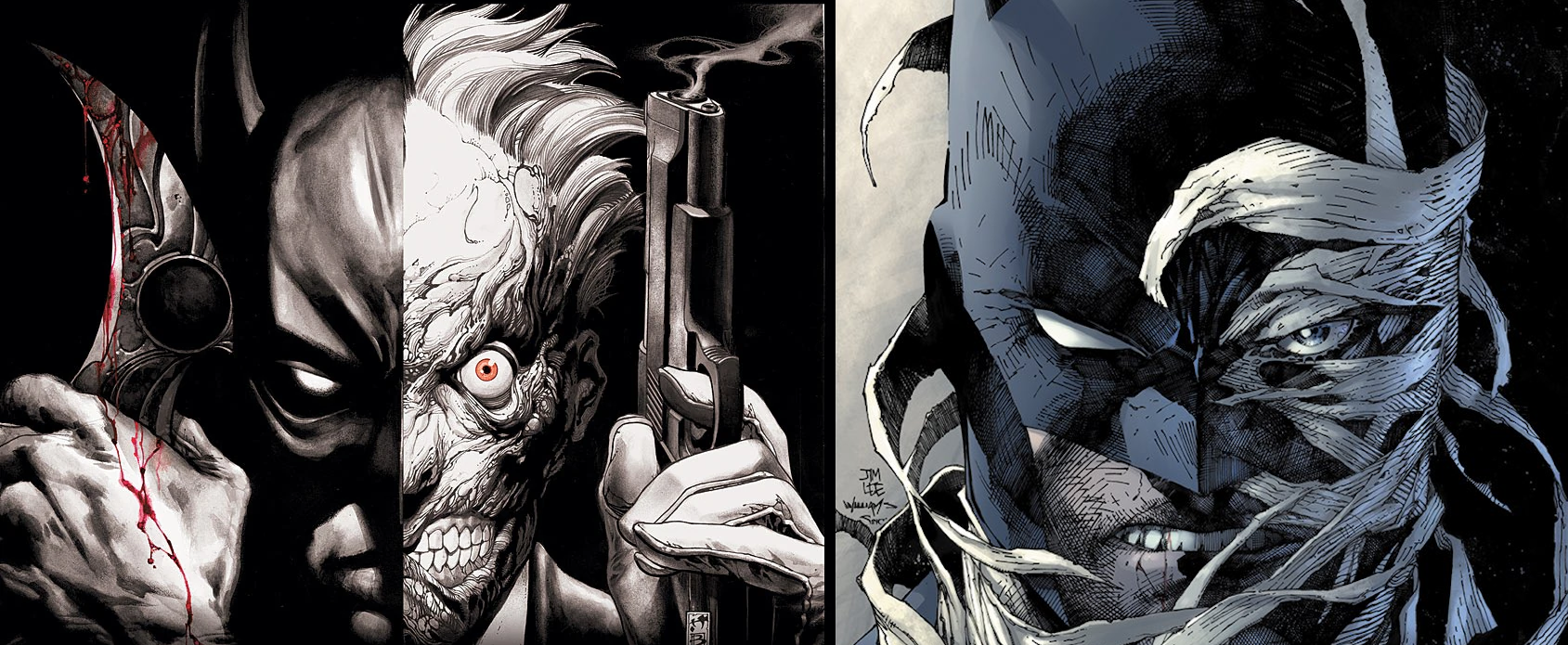
From Two-Face to Hush, several members of Batman’s Rogues Gallery can trace their origins to The Dark Knight’s past. Most notably, Batman’s alliance with District Attorney Harvey Dent — and Dent’s subsequent transformation into Two-Face — has become a core moment for stories of Batman’s early years, serving as one of the hero’s first major failures.
With the recent casting of MCU alum Sebastian Stan1 as the character in the highly anticipated sequel to Matt Reeves’ The Batman (2022), fans have speculated how this story might unfold in Reeves’ version of Gotham.

The nature of Batman’s relationship with Harvey Dent has evolved across adaptations, Batman: The Animated Series (1992-1994) famously portraying Dent as a close friend to Bruce Wayne rather than Batman. In recent years, video games like Batman: Arkham Shadow (2024) and the Absolute Batman comic series (2024-) by Scott Snyder have gone a step further, framing Dent as a childhood friend.
Modern adaptations have continued this trend, increasingly recasting Batman’s foes as childhood companions of Bruce Wayne. These adaptational changes create a more complex dynamic between Batman and his enemies, personifying Gotham’s corruption while examining the consequences of Batman’s war on crime.
The Dark Knight’s First Failure
Harvey Dent made his first comic appearance in Detective Comics #662 as District Attorney Harvey ‘Apollo’ Kent. Aside from a slight name variation, much of his modern origin starts here. The issue begins with the prosecution of mobster “Boss” Moroni (later Maroni). From the outset, Batman and Dent are portrayed as allies, with Dent calling Batman as his first witness in the trial. What happens next is quick but iconic: Moroni throws acid at Dent, scarring the DA on one side of his face.

With his face split down the middle, Dent grows obsessed with duality, developing the belief that life is governed by chance. And so Two-Face is born. From the beginning, we see Batman’s hope that his friend can return to a normal life. Ending on a cliffhanger, the conclusion of Detective Comics #66 sees Batman offer Two-Face the chance of a lighter sentence.
The story of Two-Face would continue into Detective Comics #68 and Detective Comics #80, forming a trilogy that seemingly culminates in the redemption of Harvey Dent, with his face restored through plastic surgery.

Of course, Dent would return to crime as Two-Face on and off, his appearances post-Detective Comics #80 largely sporadic. It would not be until the late 1980s that Two-Face was revisited, with stories like “Eye of the Beholder” in Batman Annual #14 further fleshing out Dent’s backstory.
Dent would notably play a prominent role in Batman: The Long Halloween3 (1996-1997) by Jeph Loeb and Tim Sale. Just as in his first appearance, Dent is portrayed as a DA who falls from grace. But where the Golden Age was quick to show his shift to villainy, Loeb’s story takes its time building Dent’s character arc. The story depicts Dent forming a pact with Batman and Jim Gordon.
Obsessed with bringing down the empire of Carmine “The Roman” Falcone, and with the added pressure of a killer known as Holiday, Dent’s faith in the law weakens. He becomes a willing participant in Batman’s vigilante activities, creating a relationship distinct from Batman’s more traditional, by-the-book partnership with Gordon.
In many ways, The Long Halloween acts as a modern retelling of Two-Face’s origin, building to the same turning point: Harvey Dent in the courtroom, staring down Sal Maroni; the mobster unleashing a bottle of acid in his face.

What has changed is the weight of the moment. It does more than retell the same story; the scene cements Dent as one of Batman’s greatest tragedies. All throughout The Long Halloween, we’re presented with the idea that Gotham is changing. The old-school mobsters are gone, replaced by a new breed of criminal. Dent is caught in the middle of this shift, and as a result, becomes both a victim and product of Gotham’s transformation.
Two-Face personifies the effects of the city’s corruption, showing that in Batman’s crusade, friends are easily lost.
Bruce And Harvey — Friendship As Tragedy
Two-Face’s first adaptation in Batman: The Animated Series (1992-1994) marks the beginning of a new trend, with Harvey Dent acting as a friend to Bruce Wayne rather than Batman.
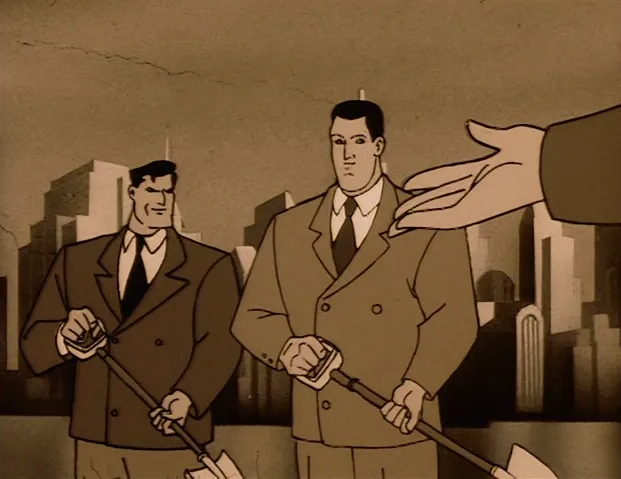
Dent makes his first appearance in the episode “Pretty Poison” , falling prey to Poison Ivy in a story that establishes Bruce and Harvey as best friends. Dent’s transformation into Two-Face takes place several episodes later, in the two-part episode “Two-Face.” Drawing from his comic origin, “Two-Face Part 1” sees Dent on a quest to bring down a different mobster, this time Rupert Thorne, who winds up responsible for Harvey’s disfiguring.

Following this, Two-Face becomes a reccurring villain on the show, serving as one of the most tragic characters within Batman: The Animated Series, and a constant source of guilt for The Dark Knight. While Batman always tries to reach his former friend, it is notably Bruce who remains by his side, Two-Face at one point reflecting on this:
“Good old Bruce. He’s never given up on me. Always been my best friend.”4
This choice serves to further humanize The Dark Knight. If Batman has someone he cares about as Bruce, the audience gains an understanding of his internal conflict; externalized by the existence of Two-Face.
Other adaptations of Harvey Dent follow in the footsteps of Batman: The Animated Series. The video game Batman: The Telltale Series (2016) sees Bruce Wayne as a friend to Harvey Dent amidst the latter’s mayoral campaign.
In Christopher Nolan’s The Dark Knight (2008), while depicting more of a rivalry between Harvey and Bruce Wayne, Bruce still bears the guilt for Harvey’s scarring at the hands of The Joker. What these adaptations share in common is their emphasis on Dent’s downfall; Batman always failing to save him.

Some stories take that dynamic a step beyond, tracing Bruce’s relationship with Harvey Dent back to his childhood, such as in All-Star Batman (2016-2017) by Scott Snyder, where Batman recounts first meeting Harvey at a home for disturbed youth5.

The novel Batman: Nightwalker (2018) by Marie Lu, and its subsequent graphic novel adaptation, feature Dent as someone who has grown up alongside Bruce, as does Batman: Earth One by Geoff Johns. In Batman: Arkham Shadow (2024), the latest game in the Batman: Arkham franchise, Bruce meets Harvey following the murder of his parents6, forming a bond more brotherly than past adaptations.
Most recently, Dent is just one of many childhood friends to Bruce Wayne in the Absolute Batman (2024-) series, also by Scott Snyder. A dramatic reinvention of the Batman mythos, all of Bruce’s childhood companions are names familiar to fans: Selina Kyle, Oswald Cobblepot, Edward Nygma, and Waylon Jones.7
The Enemies We Made Along The Way
Indeed, Two-Face isn’t the only of Batman’s villains to be a former friend. Dr. Thomas Elliot is introduced in Batman #609 as another childhood friend of Bruce Wayne’s. Later revealed to be the enigmatic Hush of the Hush storyline, subsequent issues paint Elliot as a dark mirror of Bruce Wayne.

Born to a wealthy family, Elliot attempted to murder his parents in a car crash, succeeding only in killing his father as Thomas Wayne saved his mother’s life. The event sparked in Elliot a hatred for Bruce Wayne, and years later, he takes his revenge, orchestrating a plot involving many of Batman’s most infamous villains.
Like Dent, Elliot’s connections to Batman’s past give layers to the Dark Knight. Where Two-Face emphasizes Batman and Bruce’s duality, Hush shows a Bruce Wayne corrupted by his wealth. Their once friendly bond establishes an instant connection, making Batman’s fights with Hush all the more more complex. He is Bruce’s twisted other half.
“What is a friend? A single soul dwelling in two bodies.”8
Pre-dating the character of Hush, the backstory of Roman Sionis, aka Black Mask, carries similar shades. The son of rich socialites, Roman Sionis in secret hated the Waynes, only cozying up to Bruce due to social pressure from his parents. Likewise, Oswald Cobblepot is another character to grow up in that wealthy circle.

His resentment of Bruce Wayne is similarly born from past events; the Cobblepots feud with the Waynes, stretching back to the early days of Gotham. What this shows is that life in Gotham comes with demands. Just like Batman, these villains have been molded by their upbringing. The difference lies in the end product of that upbringing.
When The Dark Knight faces characters like Hush, Penguin or Black Mask, their existence as reminders of his past is crucial. It shows that Batman too was born in Gotham; that he lived in a world demanding self-sacrifice, and yet never lost himself.
Adaptational Villainy
The need for Batman’s foes to come from his past has carried into his adaptations, extending beyond just Harvey Dent. The animated series The Batman (2004-2006) gives us Ethan Bennett, a close friend of Bruce Wayne’s created for the show. Filling a role similar to Dent’s, Bennett begins as an officer in the GPCD before suffering an incident that transforms him into the villain Clayface.
The Fox series Gotham (2014-2019), set in a Gotham years before Batman’s arrival, spends significant time on young Bruce Wayne’s journey into heroism. Despite this, we see only one true companion for him — Harvey Dent being an adult in the series, and Thomas Elliot making minimal appearances — that being Selina Kyle. A young street thief, Kyle’s relationship with Bruce evolves as the series goes on, blossoming into an uneasy romance.

In Batman: The Telltale Series, it’s Oswald Cobblepot who is the childhood friend of Bruce Wayne, having grown up wealthy before the loss of his fortune. What remains is his grudge against the Waynes, and as The Penguin, he seeks revenge for sins committed by Thomas Wayne.
Even The Joker has jumped on the bandwagon; from his start as ally John Doe in the Telltale Universe, to Jeremiah Valeska in Gotham and classmate Jack Napier in Gotham High (2020) by Melissa de la Cruz, Batman’s adaptations are constantly finding new, unexpected ways for the past to haunt him.
The Ghosts Of Gotham Past — Why Do We Enjoy ‘Friends To Enemies?’
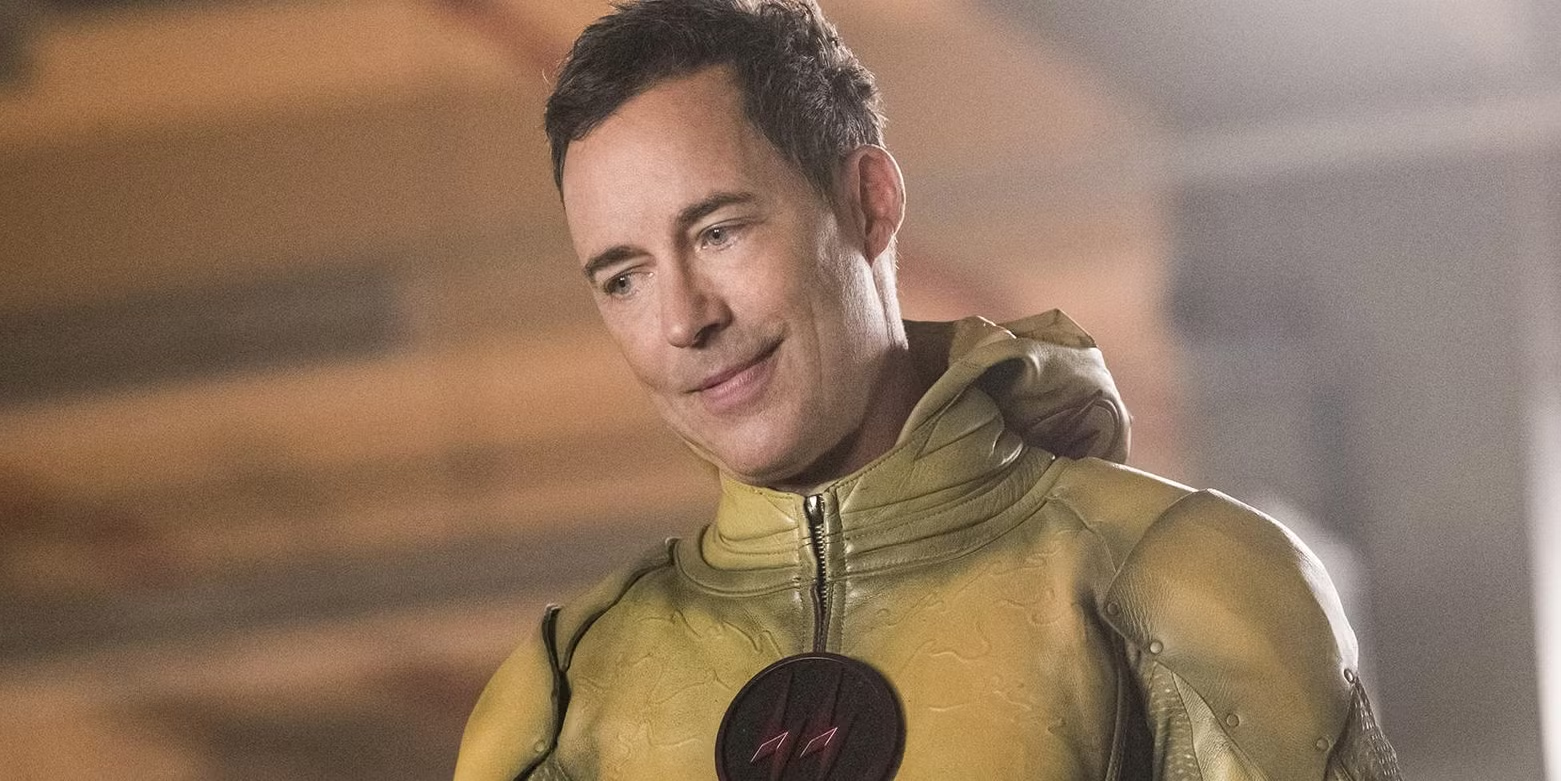
Villains stemming from a hero’s childhood is nothing new. Just consider Peter Parker and Harry Osborn, or Clark Kent and Lex Luthor. Even in an adaptation like The Flash (2014-2023), The Reverse Flash first assumes the role of friend to Barry Allen. Maybe because it’s easy to create tension this way.
The past comes with baggage. In a world where comic books have become akin to soap operas, supervillains personify that like no other. With this notion of friends-to-enemies, audiences carry an expectation of a narrative arc. As in, How do we go from point A to point B? How does Harvey Dent become Two-Face?
The audience is invested because we witness these arcs play out; understand the significance of a friend lost to evil by first understanding their role in the hero’s life. For Batman, a character born from past trauma; to have him literally fight enemies from the past carries immediate thematic weight. Gotham has taken, and will continue to take. It’s why Batman is necessary.
What Does This Say For The Batman Part II?
How Harvey Dent might fit into the world of Matt Reeves’ The Batman remains a matter of speculation. If Reeves continues to draw inspiration from stories like The Long Halloween9, the chance of another alliance between Dent and The Dark Knight are high, but the question lies in his potential relationship to Bruce. The Bruce Wayne we meet in The Batman (2022) is a complete recluse, but who’s to say there wasn’t a Harvey Dent or a Thomas Elliot in his past?
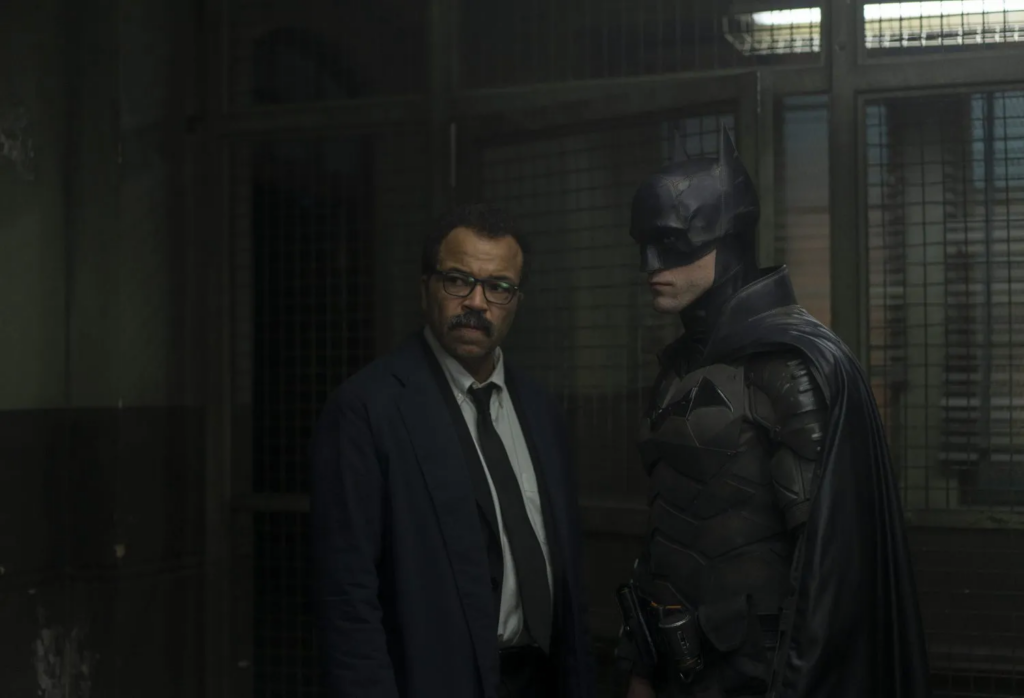
Considering Batman’s embracing of hope at the end of the film, the shift could also signal an openness to new allies, especially if Bruce Wayne’s social isolation has damaged his relationships. With Matt Reeves’ continued focus on the sins of Gotham’s past, and taking into account this growing trend, whatever villain Batman faces in The Batman Part II may very well come from a place deeply personal to The Dark Knight.
Footnotes
- The Hollywood Reporter, 2026.
↩︎ - Finger, Bill and Kane, Bob. “Detective Comics #66,” “The Crimes of Two-Face.” DC Comics. 20 Jun 1942. ↩︎
- Loeb, Jeph and Sale, Tim. Batman: The Long Halloween, DC Comics. ↩︎
- Batman: The Animated Series. Season 2, Episode 14. “Second Chance.” 1994. Warner Bros Animation. ↩︎
- Reaves, Dashiel. “Batman’s Identity Was Just Exposed to the ONE Person Who Can Crush Him.” Screenrant.com, 3 Feb 2023 ↩︎
- Cooper, Dalton. “Batman: Arkham Shadow Confirms Surprising Detail about Two-Face’s Origin.” Game Rant. October 26, 2024.
↩︎ - Adams, Tim. 2024. “Absolute Batman Drastically Changes the Hero’s Relationship to His Villains.” ComicBook.com. October 10, 2024.
↩︎ - Loeb, Jeph And Lee, Jim. “Batman #618,” “Hush Part Eleven: The Game.” DC Comics, 27 Aug. 2003. ↩︎
- “Building Batman’s Crime Saga: Matt Reeves on ‘the Penguin,’ Scrapped Spinoffs, and What’s Next.” EW.com. 2024.
↩︎