

Table of Contents Show
With isolation and seclusion becoming increasingly more prevalent in today’s world, many seek to find comfort in media and television. One such show of comfort is BoJack Horseman (2014-2020)1, an adult animated tragicomedy telling the story of BoJack, an anthropomorphic horse, after he starred in a 90s television show.
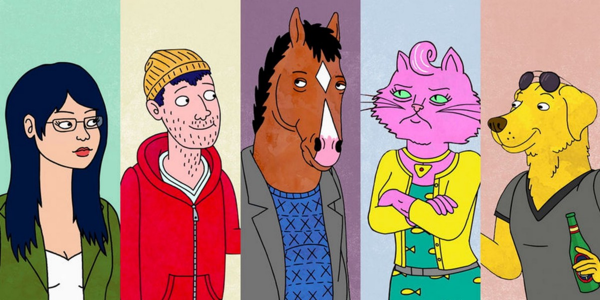
Many have found relatability in the dark scenes and characters of the show, while others have found despair, which brings forth the question: Does BoJack Horseman better serve as a source of hope or despair for the audience?
Humor, Darkness, + Emotional Whiplash In BoJack Horseman (2014-2020)
There are many shows that attempt to tackle dark topics in artful ways. 13 Reasons Why (2017-2020) tells the story of a girl explaining the reasons why she is committing suicide. Some of the graphic scenes and discussion of these topics were very disturbing to viewers.
Though unintentional, there was a higher increase in suicide rates the month following the release of the show.2 This statistic raises questions about whether these dark topics do more harm than good, even when they are presented with good intentions.

Despite BoJack Horseman’s choice to include dark topics like child abuse, sexual assault, and suicide, it depicts these themes with a less graphic and less realistic angle than 13 Reasons Why. As BoJack Horseman is a cartoon tragicomedy, dark topics can be dulled down either with its animation style or humor.
Episodes are typically split into two separate plots, one with the main drama and concern of the episode, and the other with humor and gags to lighten the heaviness of the main plot.
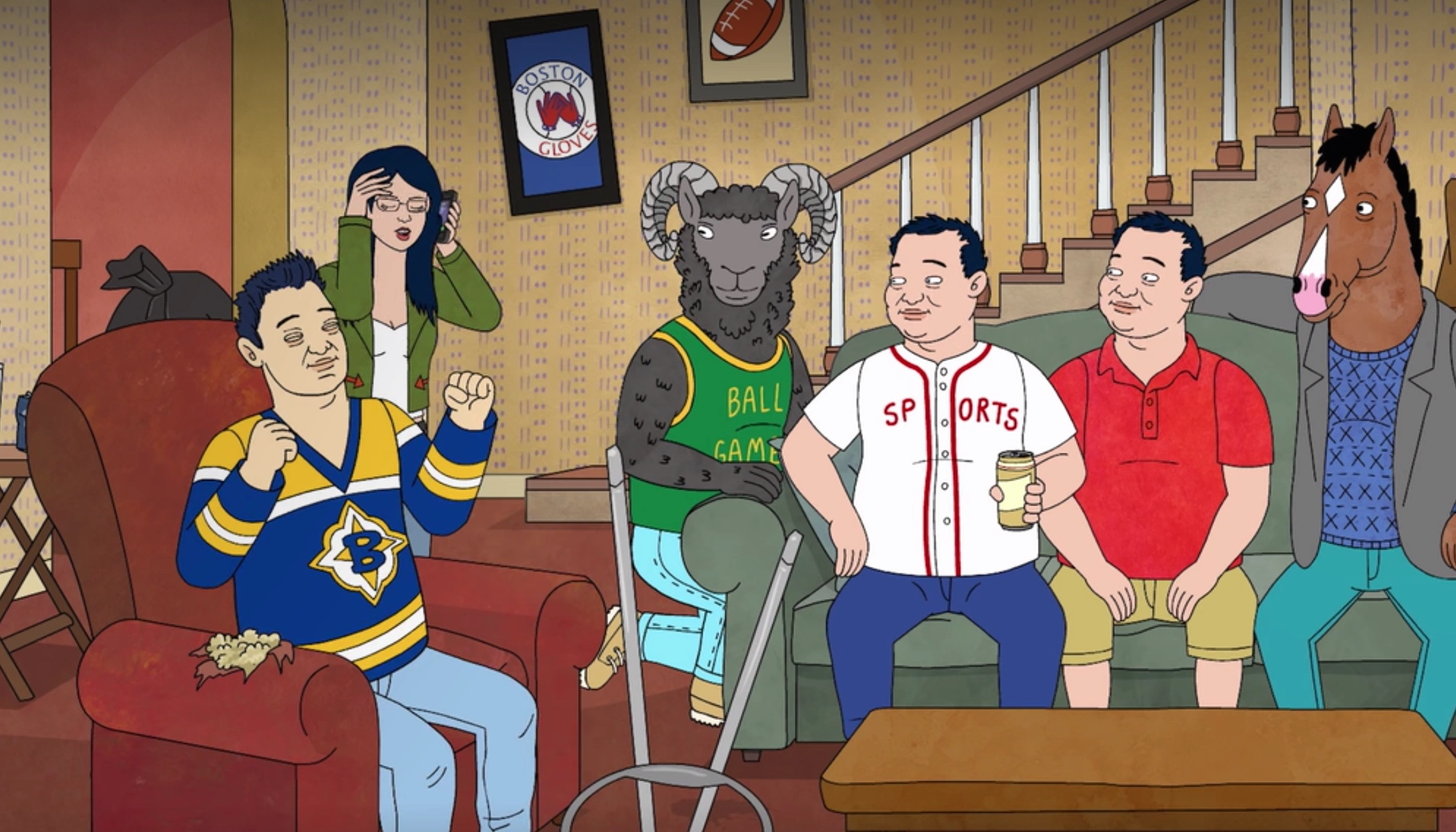
For example, in “Live Fast, Diane Nguyen,” Bojack follows Diane, the ghostwriter for his book, as she visits her family after their father’s death. To break up the sad moments between her and her unsupportive family members, the episode alternates between her story and Todd‘s, BoJack’s freeloading roommate.
Todd, in BoJack’s absence, creates mischief by charging tourists tickets to BoJack’s house by claiming it is David Boreanaz’s. This ridiculous venture helps alleviate the heaviness of the overall episode and provides audiences with relief, keeping them engaged.
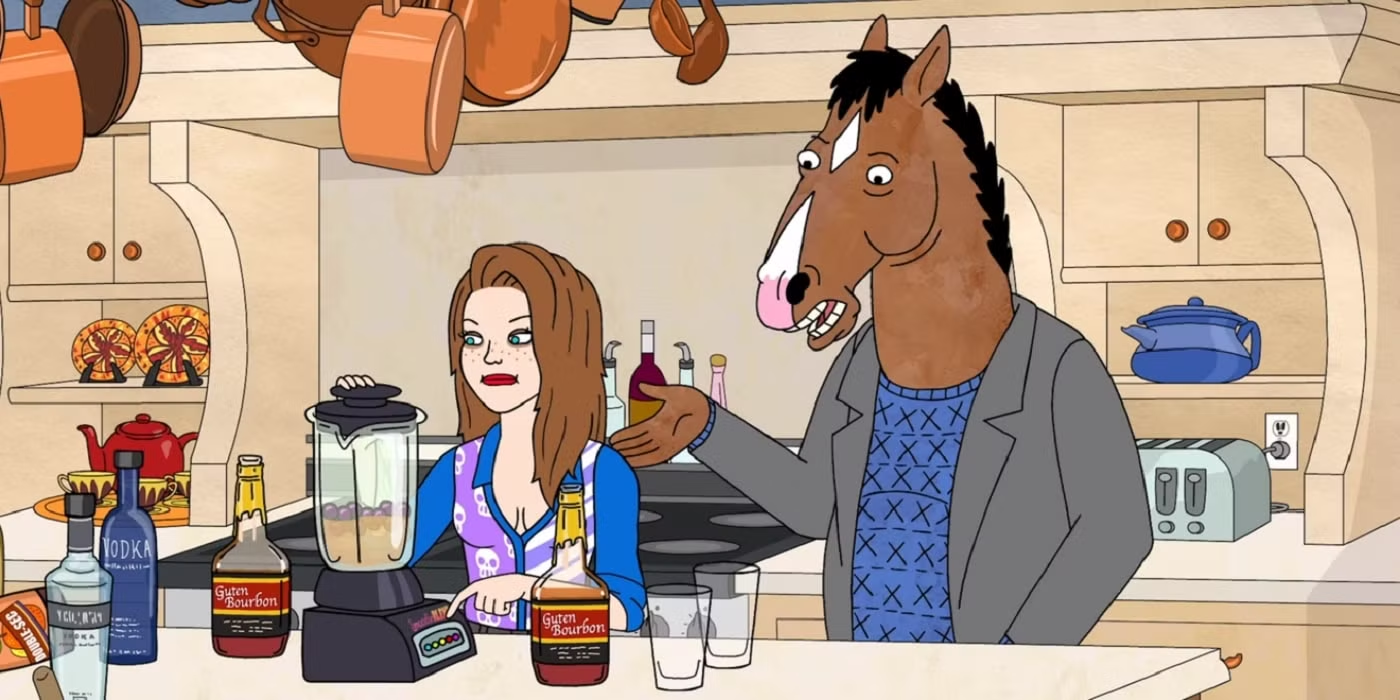
With the comedy in mind, another factor is the overall tone of these dark moments. Character reactions influence how the audience should react. Moments that should be dark, like a character’s childhood abuse, are lightened by the character’s avoidance or brief joke on the issue.
In part, it can keep these instances in the audience’s mind for character understanding while still following the provided storyline for the episode. Even with the comedy and tonal differences in mind, the lightness of certain moments makes the darker ones intentionally stronger.
The Duality Of Ambition
A complex array of characters in BoJack Horseman allows for deeper conversations on different themes. One of the most notable topics that brings hope and despair is the depiction of ambition. Princess Carolyn is BoJack’s agent and is seen as the epitome of ambition in the unforgiving Hollywood landscape.
She’s an adjective workaholic and often makes extreme sacrifices to find work for her clients. Her strong ambitions often get in the way of maintaining a peaceful personal life, and her personal desires are often ignored for the sake of others.
All she wants is to be recognized and seen for who she is, which is difficult to achieve when she is always managing the lives of others.
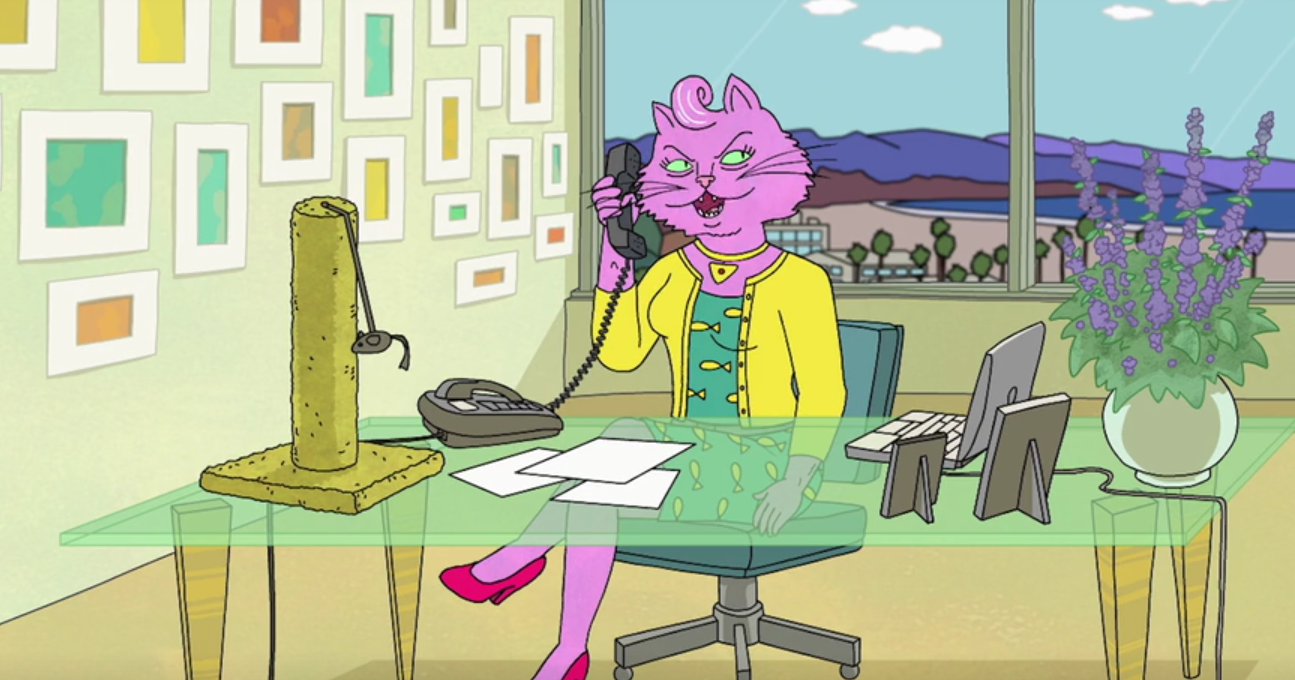
Because Princess Carolyn is often undervalued in the workplace, her efforts make a notable impact on audiences. For some, her story creates despair with the belief that no matter how hard they try, they will never be recognized, as Princess Carolyn is never praised for her efforts.
For others, her story provides hope and proof that their hard work is seen through her character’s existence and endurance against the forces that attempt to hinder her. Audiences feel seen through her character and renew their endurance to keep working.
“When i feel overwhelmed i immediately think of Princess Caroline[…]. I think of how powerful and strong she is. I mean she has lots of personal problems, but still manages everyone and everything perfectly. She is such a caring and strong character. Helps me feel better when am busy af.”3
In contrast, Todd’s lack of ambition creates mixed feelings for audiences. Todd has no desire for ambition, and he follows a childlike ‘go-with-the-flow’ mentality that often leads to an interesting side-hustle or entertaining side plot, such as an unfinished ‘Halloween in January’ store that leads to several celebrity injuries.
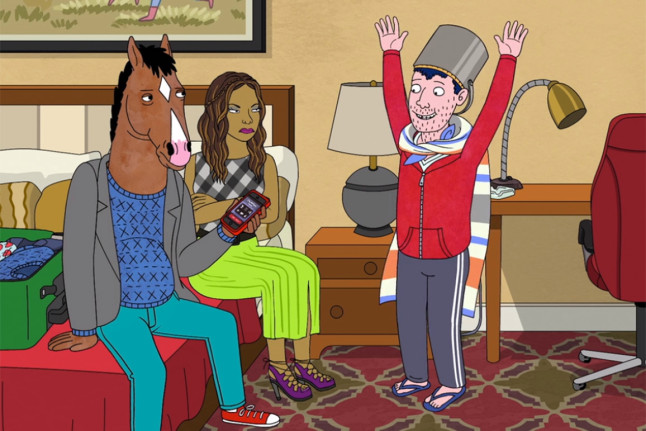
Many see failure in Todd because he can never maintain a job or take things seriously. His life appears directionless, and others’ criticism of that lifestyle can make others feel about not having a specific ‘purpose’ that people like Princess Carolyn tend to have. However, Todd’s unbothered happiness despite his directionlessness inspires audiences to do what they want rather than be happy in the ways others want them to be.
Love For Better Or Worse
In many instances, love becomes a common topic of hope and despair in BoJack Horseman. BoJack struggles with maintaining relationships with others, often preferring one-time hookups over a meaningful relationship. He has trouble receiving love, and his aversion to it leads to many uncomfortable and grave scenes for audiences.
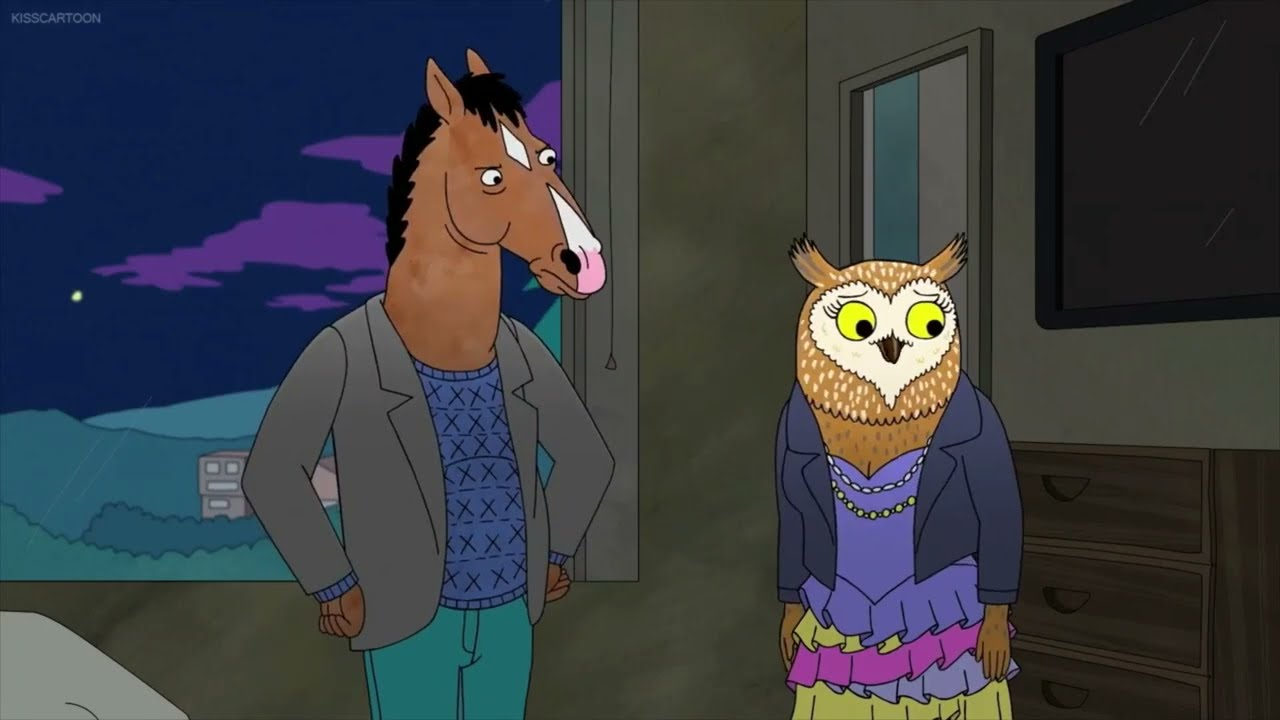
After finding a girlfriend after years without one, the relationship ends with BoJack’s inability to state his love and his girlfriend’s realization of BoJack’s true pessimistic and negative nature. Later on in the series, while in the depths of his drug addiction, BoJack strangles his girlfriend and co-star while on their television set.
If audiences have similar issues displaying love, BoJack’s inability to change his habits can leave audiences despondent about changing their own.
“You know, it’s funny. When you look at someone through rose-colored glasses, all the red flags just look like flags.”4
Similarly, Mr. Peanutbutter, a happy golden retriever TV star and ex-husband to Diane, is extremely optimistic and resilient in his love life but struggles to live independently. He has a history of not listening to his wives, and he often gives them what he wants rather than listening to their own needs.
It is only after he became independent and learned to be comfortable living with himself that Mr. Peanutbutter became happy, teaching audiences that sometimes one needs to work on themselves before they get into a relationship. Some may despair in their lack of successful relationships, while others find comfort in working on themselves rather than finding issue in others.
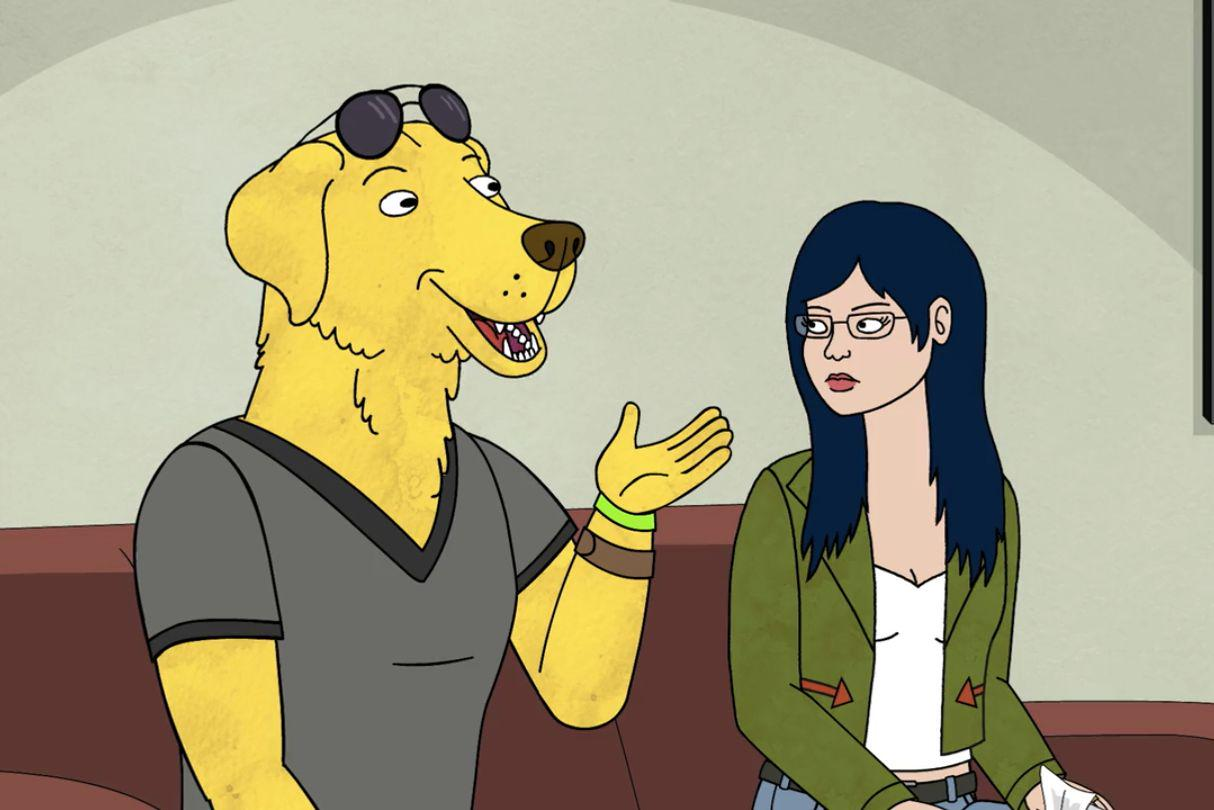
Diane was one of Mr. Peanutbutter’s ex-wives, and like BoJack, she struggles with feeling loved and seen in relationships. Her failure and unhappiness in relationships make it difficult for her to find love, but her happiness with her boyfriend at the end of the series promises hope for those with bad experiences in relationships.
Unlike Mr. Peanutbutter, Diane’s new partner is willing to grow and change with her, revealing what audiences may need to understand to have a healthy relationship. In contrast, Todd’s experience with love offers hope for those desiring asexual relationships. Throughout the series, Todd undergoes the realization of his asexuality and lack of desire for sex in a romantic relationship.
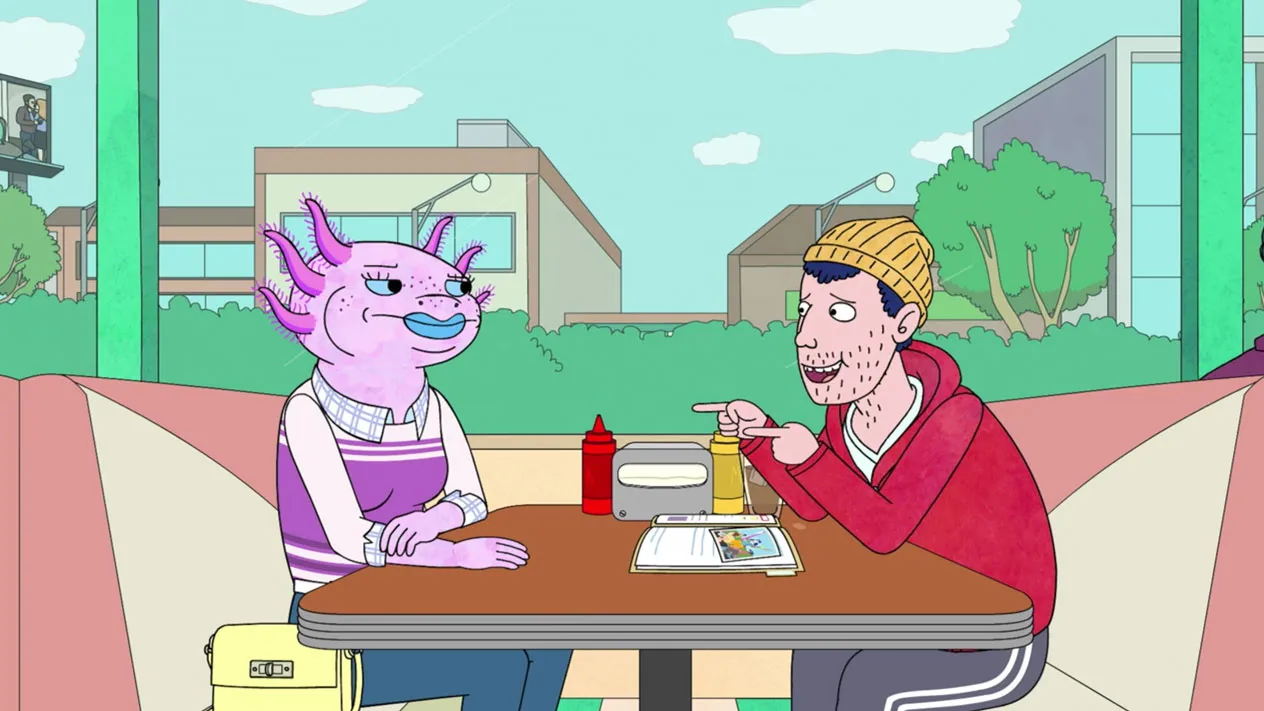
Despite the hardships in the dating pool, he finds someone who understands him and is also asexual, providing hope that one with non-hetero sexualities can find happiness and understanding with their partners.5 It is a rare representation for television series and may bring others understanding and relief with their own sexualities.
Throughout the series, Princess Carolyn struggles to find a lover who is agreeable with her age and desire to have a family. She often struggles to have a partner who understands her extreme work ethic, but she finds hope in her relationship with Judah, a man who can work with all of Princess Carolyn’s needs. Their relationship reveals to audiences how unconventional relationships can still thrive even when hope is hard to find.
“Mental Health On Screen” — How BoJack Mirrors Real Emotional Cycles
The most prominent way of invoking emotions for audiences is through BoJack Horseman‘s depiction of mental illness.
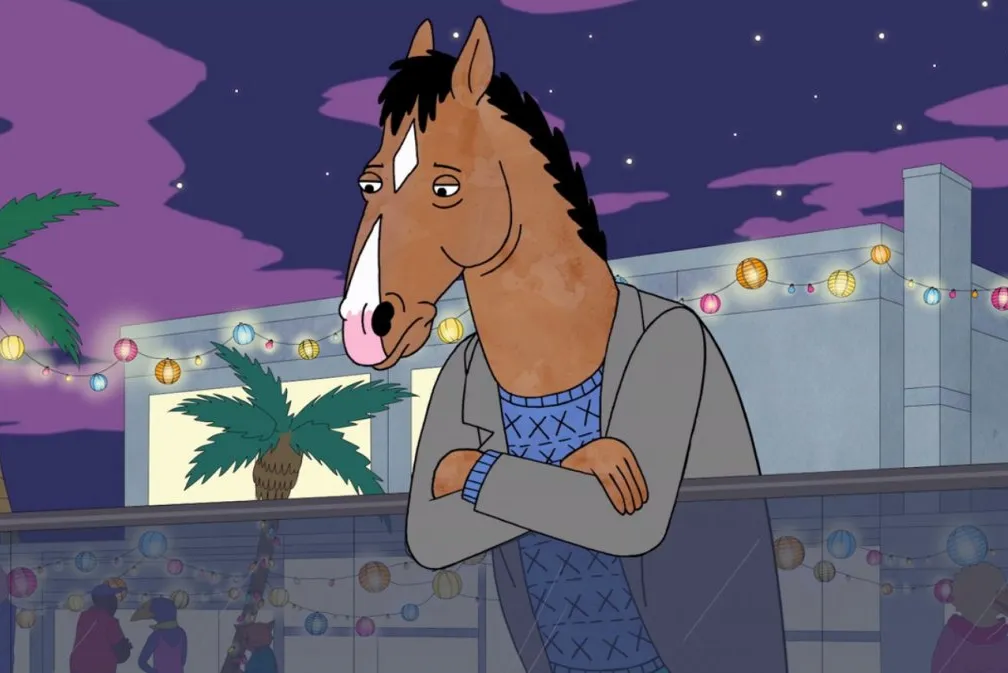
BoJack struggles with depression, self-destructive tendencies, and memories of past childhood abuse throughout the series. Though nothing is confirmed, many fans speculate a diagnosis of Borderline Personality Disorder, supported by BoJack’s repetitive depressive episodes, mood swings, and unstable relationships with others. For some, his struggles bring relatability and comfort with the representation of the disorder that often isn’t seen in media.6
BoJack’s difficulties in his life are displayed in a realistic and genuine way. When he struggles, it affects and damages the relationships around him. His self-destructive tendencies prevent him from maintaining any happiness he holds, and he commits unforgivable actions that often limit his relatability to the audience.
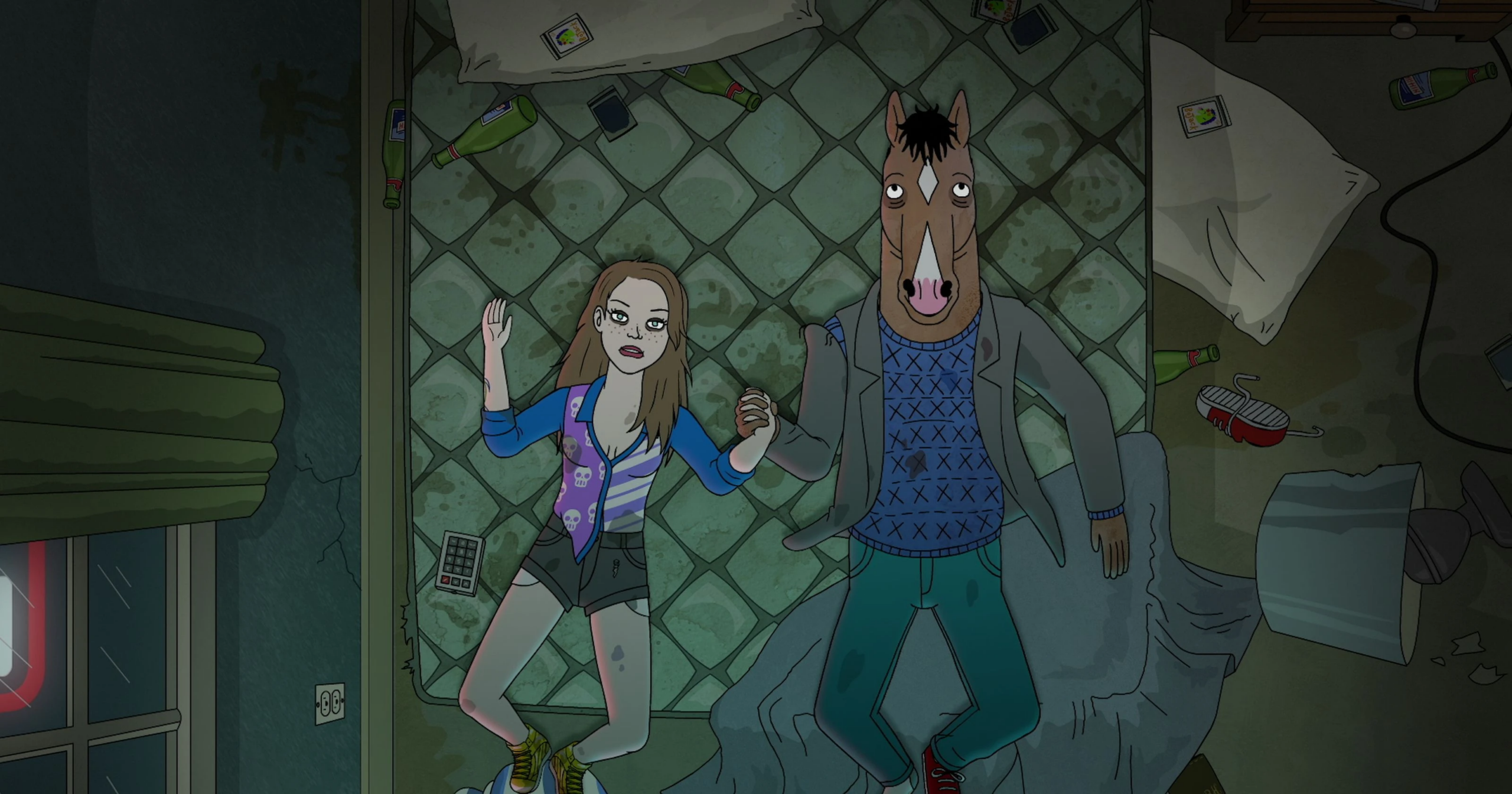
In “Escape from L.A,” BoJack gives a teenager alcohol poisoning, flees the scene to avoid blame, and is caught by his friend preparing to have sex with her seventeen-year-old daughter. Another time, he indirectly contributes to the overdose of Sarah Lynn, a pop star who worked with BoJack when she was a child actor. Many of his actions are inexcusable, and that helps separate his character from the sympathy and projections of the audience. In other ways, his actions can highlight some of the audience’s own mistakes that urge self-reflection.
Despite his actions, people find his character relatable in his depressing thoughts and inability to change to better the lives around him. This inability can make it difficult for the watcher to believe they can change as well. However, this depressing nature is a wake-up call to many audiences about changing their own lives.
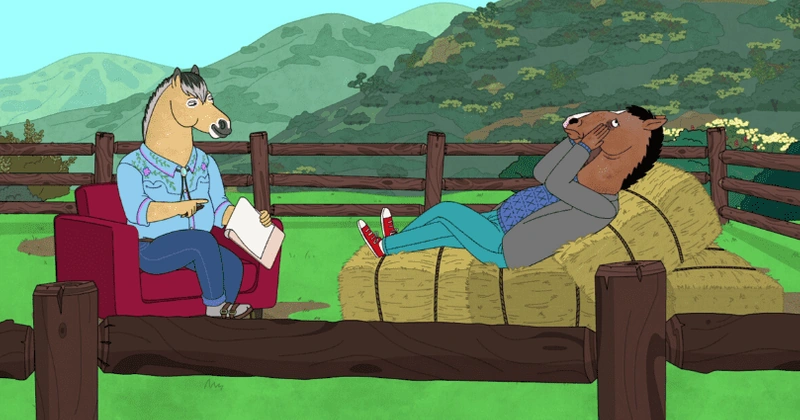
BoJack struggles to change his life on his own, and his release from rehab reveals how change isn’t quick and easy; it’s gradual, requires work, and sometimes has setbacks. It isn’t the happy ending many are looking for, which makes the other characters’ success in their lives shine even brighter for audiences.
Who Finds Hope & Who Finds Despair — & Why?
Despite the show’s duality, many believe that BoJack Horseman is just a generally depressing show. In reality, most moments have a healthy mix of comedy, side plots, and inspirational characters that maintain the show’s diversity.
One Reddit thread highlights this discussion:
“Bojack in writing is like 80% comedy, 15% lore, 5% sad. It’s just your relation to the sad that makes it stronger than it is.”7
The relatability of the show’s tones depends on the audience’s perspective. If the audience has an optimistic eye when watching the show, they will value the lighthearted comedy and hopeful moments of the series. If seen from a pessimistic viewpoint, the dark moments will drag one further into dejection.
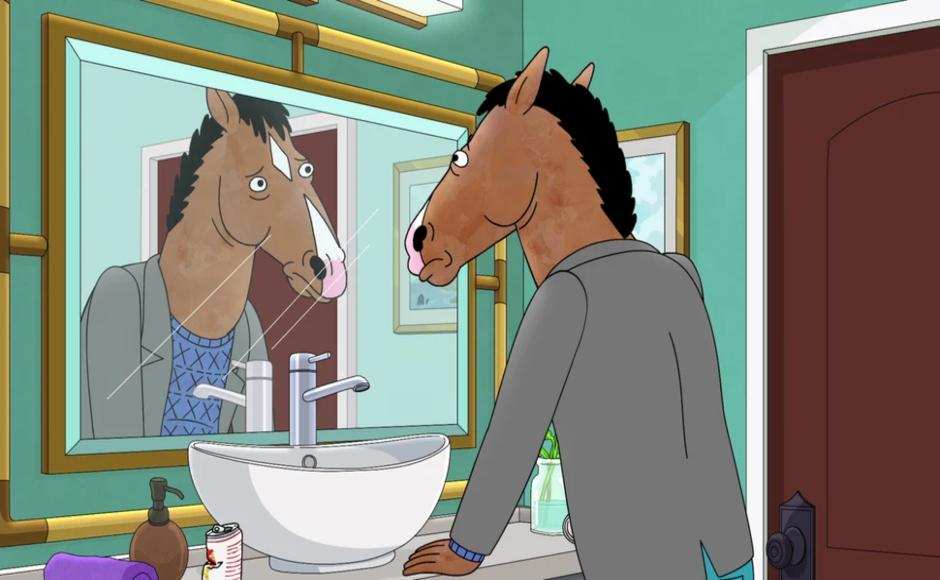
Some, like BoJack, may only be seeking validation over solutions, and BoJack Horseman acts as the escapism for that. Despite its faults, BoJack Horseman provides a thorough breakdown of characters’ ambitions, relationships, and mental health through various emotional moments, and it relies on the audience’s perspective to uncover what to do with it.
Footnotes
- IMDb. “BoJack Horseman.” IMDb. August 22, 2014. ↩︎
- Marche, Stephen. “Netflix and Suicide: The Disturbing Example of ‘13 Reasons Why.’” The New Yorker. May 6, 2019. ↩︎
- missduckling. “When I feel overwhelmed I immediately think of[…]” Reddit.com. 2019. ↩︎
- “Yes And.” BoJack Horseman, season 2, episode 10, July 17 2015. Netflix. ↩︎
- Cuby, Michael. “Why I Find BoJack Horseman’s Depiction of Asexuality Deeply Relatable.” Them. September 26, 2018. ↩︎
- jqx. “Bojack Personality Disorder.” Medium. August 27, 2023. ↩︎
- Anon. “Is Bojack Horseman Depressing?” Reddit.com. 2020. ↩︎