

Table of Contents Show
Since the early 2000’s, there has been a growing trend of celebrities starting book clubs. You can see the progression in bookstores — the new releases shelf stacked with novels that have irremovable stickers advertising their celebrity book club. These stickers build trust with their audience, making people more likely to gravitate toward another book club pick if they have liked previous picks from the celeb.

All sorts of celebrities have hopped onto this trend. From famous talk show hosts to actresses and musicians — everyone wants their own say in what people should be reading. Where reading was once not seen as something “cool,” it is now “trendy.” But what has caused this shift in the way we perceive readers, and is it really reading that is being encouraged, or just pretending that you read?
Oprah’s Legacy And The Celebrity Book Club Boom
When Oprah started as a host of A.M. Chicago in 1983, she had no inkling that it would make The Oprah Winfrey Show, and especially Oprah’s Book Club, into household names. For years behind the scenes, Oprah shared her love of reading with her intern, Alice McGee. Alice suggested that they incorporate those literary discussions into the talk show, but producers were skeptical.

“They said that you can’t talk about fiction on television because no one will have read the book you’re talking about,” Oprah remembers.1
The team decided that if they announced the titles beforehand, their audience would have enough time to read the material and understand the discussions. And on September 17, 1996, Oprah’s Book Club officially began. The book club discussed around eight books a year and was very popular with viewers. Oprah stayed dedicated to debating contemporary literature for many years, the book club continuing to grow in popularity.
“Due to the Book Club’s widespread popularity, many obscure titles have become bestsellers, increasing sales in some cases by as many as several million copies — a phenomenon so universally recognized that the media coined the phrase “The Oprah Effect.”‘2
Oprah’s Book Club helped shape reading as a community activity, encouraging others to see how rewarding it can be to read and discuss with others. What started as Oprah simply wanting to highlight new novels and delve into deeper literary discussions unknowingly started a monumental trend of book clubs to follow.
Reese’s Book Club
Taking advantage of the foundation Oprah built with her club, in 2017, actress Reese Witherspoon started Reese’s Book Club under her media company Hello Sunshine. The club has garnered a dedicated group of readers, and since its start, has taken over bookstores’ new releases section. Every month, a new book is picked, reportedly by Witherspoon herself.

“My big idea was to connect with all of you by shining a light on the stories I found meaningful — stories about women, written by women. I believe as women we all need these charming, hilarious, insightful, and diverse stories.”3
Opposed to Oprah’s book club, Reese does not use her platform to facilitate deeper discussions on the text. She uses the book club to shine a light on women’s stories, bringing in a wide audience of fans to read diverse stories that they might not have read otherwise. The book club also works as a way for her to obtain film or TV rights on the more popular titles for her production company to adapt.
Service95 Book Club
Pop sensation Dua Lipa began her global lifestyle newsletter and book club, Service95, in 2021. Service95 is a website that spans all sorts of topics. From activism to travel, Dua uses her platform to speak on a myriad of meaningful topics.

Unlike Reese’s Book Club, Dua’s operates more like Oprah’s. Every month comes a new pick from the musician, coupled with a Q&A that she facilitates with the author. Dua interviews the authors each month on the Service95 YouTube channel and on its Spotify. Her questions are deeply insightful, with a clear understanding of the context of the text. You can tell that this is a passion project for her as she encourages deeper discussion with her platform. While she does work with a large team of people who help curate book selections on her website, Dua stays at the forefront as the face of the book club.
How Celebrity Picks Shape Publishing Trends
The influence that celebrities have on consumers is astronomical, which has led to a big shift in the publishing industry as celebrities begin to endorse books.

Oprah’s reach has helped catapult books into the mainstream, changing authors’ lives, and being the first example of how celebrities publicly advocating for reading can cause a monumental shift in the way the public views the hobby. Reese’s Book Club and Dua Lipa’s Service95 have continued that shift, reaching new audiences and readers.
Books As Brands, Not Books
Reading always had its place on the internet, but it wasn’t until 2020 that books shifted from older-fashioned book clubs to internet sensations. As the world went into lockdown that year, many people discovered their love for reading. This spread to the internet as well, causing BookTok and Bookstagram — the book-centered sides of TikTok and Instagram — to take off.
By creating these online spaces, readers quickly formed a large community for a hobby that had generally been seen as more of a solo activity, even accounting for the mentioned book clubs. This book boom spread beyond the voracious readers whose whole platform revolved around literature, with more people beginning to take an interest in books. But the focus shifted to being less about reading books that you actually enjoy, to instead choosing books that fit your brand.

With that shift emerged the “book stylist,” a new niche profession, in charge of curating a celebrity’s or influencer’s reading material that they are seen out in public with. While reading has always been political, the use of books as accessories has now turned them into props used to show a celebrity’s tastes, in addition to helping curate the “brand” a celebrity may be going for. Instead of fancy handbags, these “stylists” pick out literature that will send a message on their social media and in paparazzi shots.1
Addison Rae, a TikToker-turned-musician, was seen walking down the sidewalk in LA with Britney Spears’ memoir in 2023. The social media influencer was only just beginning her music career at the time, and was trying to build a pop sound like that of Britney Spears. This book choice to be photographed with helps to craft the brand that Addison wanted to have as a “pop princess.”
Many “cool girl” celebrities, such as Kaia Gerber or Kendall Jenner, can be seen holding literary fiction or feminist essay collections.4 As models, they may not be immediately perceived as smart, but with the literature they are seen out with, they can perpetuate that idea. This is not to say that they don’t actually read or enjoy these books, but there is an emphasis on the performance of posing with the book to intentionally send a message.

Simply being seen holding a specific type of book can give the illusion of perceived intellectualism, depth, or a certain personality that a celebrity may not have at all. Thus, the term “performative reading” was coined, which is the act of using books solely as an accessory, carrying them around to attract certain people, and to “revel in the pleasure of feeling superior to others.”5
That isn’t to say that all celebrities are performative readers, because for most, it is impossible to know if the books they are seen holding are ones that they are actually reading, or ones that just help to build their brand.
Profit Over Passion
As a celebrity curates their brand using books, their book clubs can create unique ways for them to make profit. This begs the question for many celebrities on if their book club is actually a passion project as they say, or just a “cool” way for them to profit.
Since Reese’s book club is done through her production company, they are able to negotiate and acquire the rights to books. The book club acts as a way for the company to test the waters, seeing which titles have the most marketability for adaptations before picking them up.
This has led to adaptations of bestsellers such as Where the Crawdads Sing (2018), Daisy Jones and the Six (2019), and Little Fires Everywhere (2017.) Knowing that an author’s work could get picked up for an adaptation through Reese’s book club, publishers are likely to push for their books to be part of the club so that they can make more sales.
“One single pick from Witherspoon means that the book in question will reportedly overperform by 700 per cent compared to the rest of the fiction market. This figure illustrates what industry insiders now routinely call the “Reese Witherspoon effect.”’6
The modern publishing industry is effectively being reshaped to be entirely focused on celebrity book clubs and BookTok picks. Publishers are taking full advantage of the new accessory culture surrounding books and BookTok picks, which further push trends that they can sell.
While these book clubs do highlight literary fiction authors who may not have seen major success without the sticker of approval from a celebrity, the genre as a whole is highly competitive. Other debut authors are getting lost in the cutthroat industry, while the ones highlighted are boosted to heights far above their competition.

While celebrity book clubs primarily feature female-driven, diverse stories, BookTok leans more toward highlighting the genres of romance and fantasy. The genre of romance has historically dominated the commercial landscape, making $1.4 billion in revenue for May 2022-2023.7
But while romance has always been profitable, BookTok has led publishers to prioritize book influencers over writers. This means that if someone has any kind of following online and wants to publish a book, they can, and they will likely be picked over talented writers.
Ultimately, this means that celebrity book clubs and social media are not only boosting individual sales, but are changing overall genre prioritization, purchase strategies, and risk calculations for publishers.
Discovery Vs. Groupthink — The Modern Reading Debate
A common argument from celebrities who start book clubs is that there are “too many choices” when it comes to what to read. And the selection of literature to choose from out there can be overwhelming. But to solely rely on the recommendations from celebrities or online influencers can severely limit people from experiencing amazing literature.

“She wanted to help narrow down the choices for busy readers, Reese said, “to bring the book club out of your grandma’s living room and online.”8
This has led to a sort of groupthink mentality when it comes to what people are reading and recommending. Oftentimes, it feels like the same books are being suggested over and over again. Leading these book community spaces to feel limited instead of actually helping people to discover new reading material.
It is also important to note that women dominate the celebrity book club space. Stephen Colbert has a book club, and President Obama has an annual reading list that he puts out, but beyond those two, there are no male celebrity book clubs. Women, on average, read more books than men, so it makes sense that they would be the ones spearheading advocacy for literature.
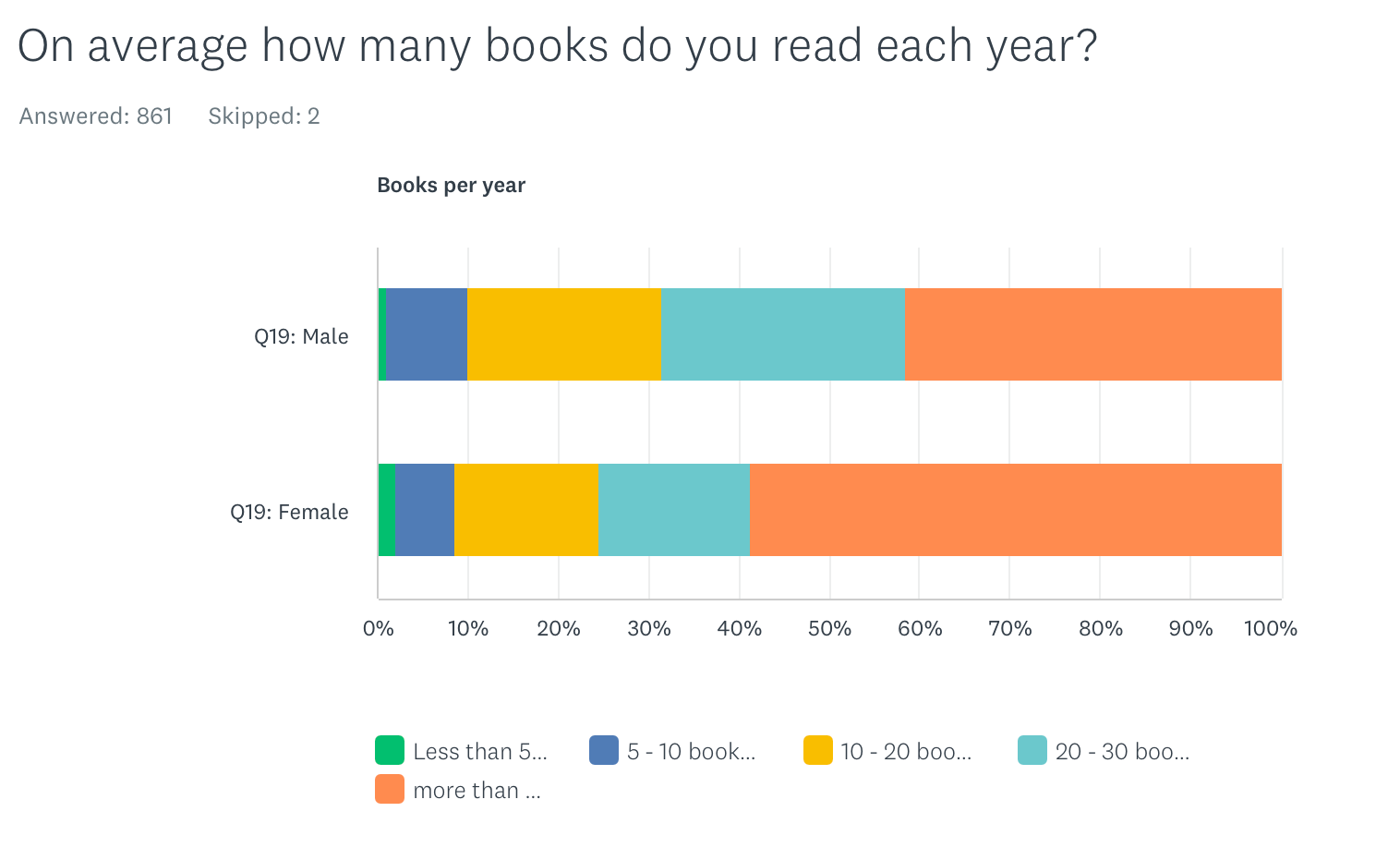
In the long run, if the only books that are profitable in an increasingly unstable economy are the ones that are being endorsed by celebrities, then the average author will not be able to continue writing books. Most authors are not able to make a livable wage from traditionally publishing their books as it is. But if this trend continues, then the authors who are not supported by platforms such as celebrity book clubs or social media may not be published at all.
Who Decides What We Read?
In a time where 21% of adults in the U.S. are functionally illiterate, and literacy rates are continuously dropping, any way in which people learn to enjoy reading should be encouraged. Even if a celebrity poses for the paparazzi with a book they’ve never opened or starts a book club that they hardly engage with, it should be celebrated that books are being talked about at all.

While “performative reading” is a sore subject for readers, this performance is actually a good thing. Even if a book is bought just for the “aesthetic,” someone may still end up discovering value in it. These book clubs are helping make reading more digestible to the general public, helping them dip their toe in the water of a vast ocean of literature.
But celebrity book club picks and social media recommendations should only be the beginning for readers. There is so much good literature to discover when you look beyond the bestseller lists. Pick something up off the bottom shelf that you have never heard of, or choose to read the book with the hideous cover, with a fascinating blurb. Go into your local bookstore, and ask a bookseller for their favorite book. You may just find your new favorite novel that way.
Footnotes
- “How Oprah’s Book Club Came to Be.” Oprah, 5 May 2026. ↩︎
- “How Oprah’s Book Club Came to Be.” Oprah, 5 May 2026. ↩︎
- “Hello Book Lover…” Reese’s Book Club, 2026. ↩︎
- Jackson, Hannah. “The Ultimate Celeb Pap Walk Reading List.” Vogue, 23 October 2024. ↩︎
- Brickner-Wood, Brady. “The Curious Notoriety Of “Performative Reading.”” The New Yorker, 2 December 2025. ↩︎
- Zezelj, Milosh. “The Reese Witherspoon effect: how celebrity book clubs are rewriting the rules of publishing.” The European, 9 February 2026. ↩︎
- Wyatt, Leslie. “The Billion-Dollar Genre: Why Romance Writing Matters.” Writer’s Digest, 11 August 2025. ↩︎
- Egan Elisabeth. “Inside Reese Witherspoon’s Book Club.” The New York Times, 18 May 2024. ↩︎