

Table of Contents Show
Alongside the storm of major anime announcements released during Anime Expo 2025, Cyberpunk and anime fans alike greeted Netflix’s official tease of Cyberpunk: Edgerunners (CD Projekt Red and Studio Trigger, 2022) Season 2 with widespread excitement. David’s dead, but Night City will live on with the help of a star-studded creative team.1
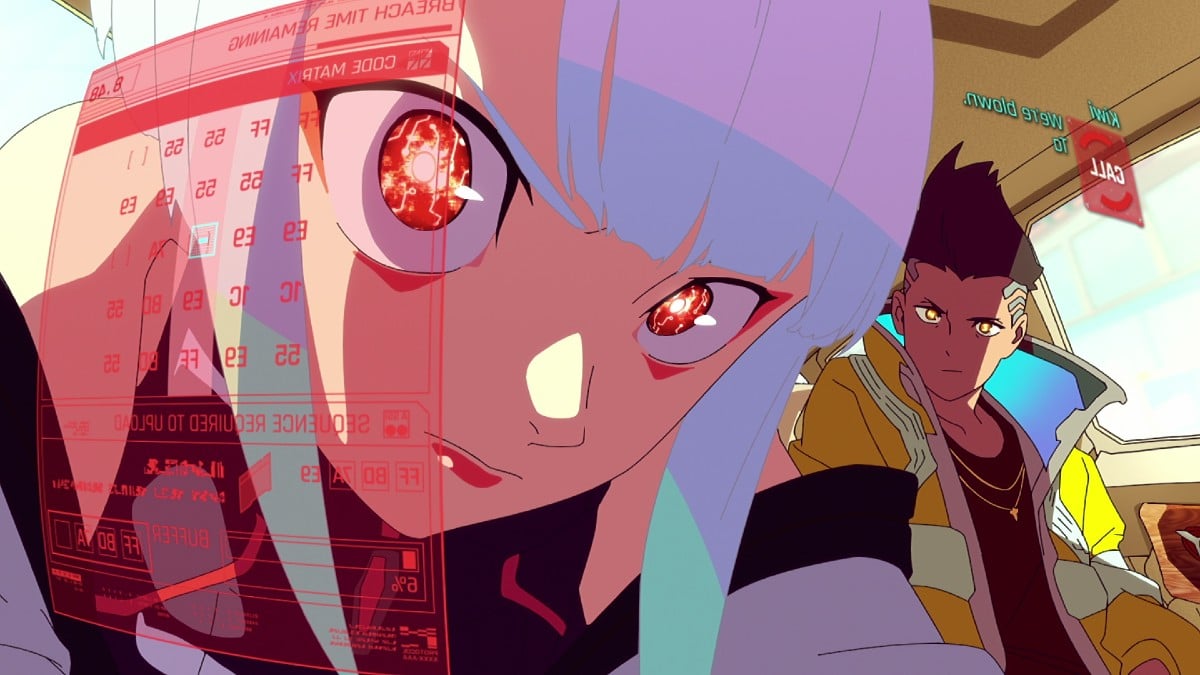
Studio Trigger, credited with animating the hit series Kill la Kill (2014), and carrying Ex-Gainax roots from classics such as Gurren Lagann (2007) and FLCL (2000), will return as Cyberpunk: Edgerunners Season 2’s animation studio, with director Kai Ikarashi taking the helm, and CD Projekt Red’s Bartosz Sztybor returning as head writer and narrative director.
Netflix’s decision to bring back the anime industry’s brightest minds to pull apart Night City’s gritty layers is a testament to the first season’s success, marked by its recognition as Best New Anime of 2022 at Anime Expo, and by a resurgence of “Cyberpunk 2077” (CD Projekt Red, 2020) player engagement across Steam. Night City is not merely a city; it is living, ever-evolving, and all-consuming.
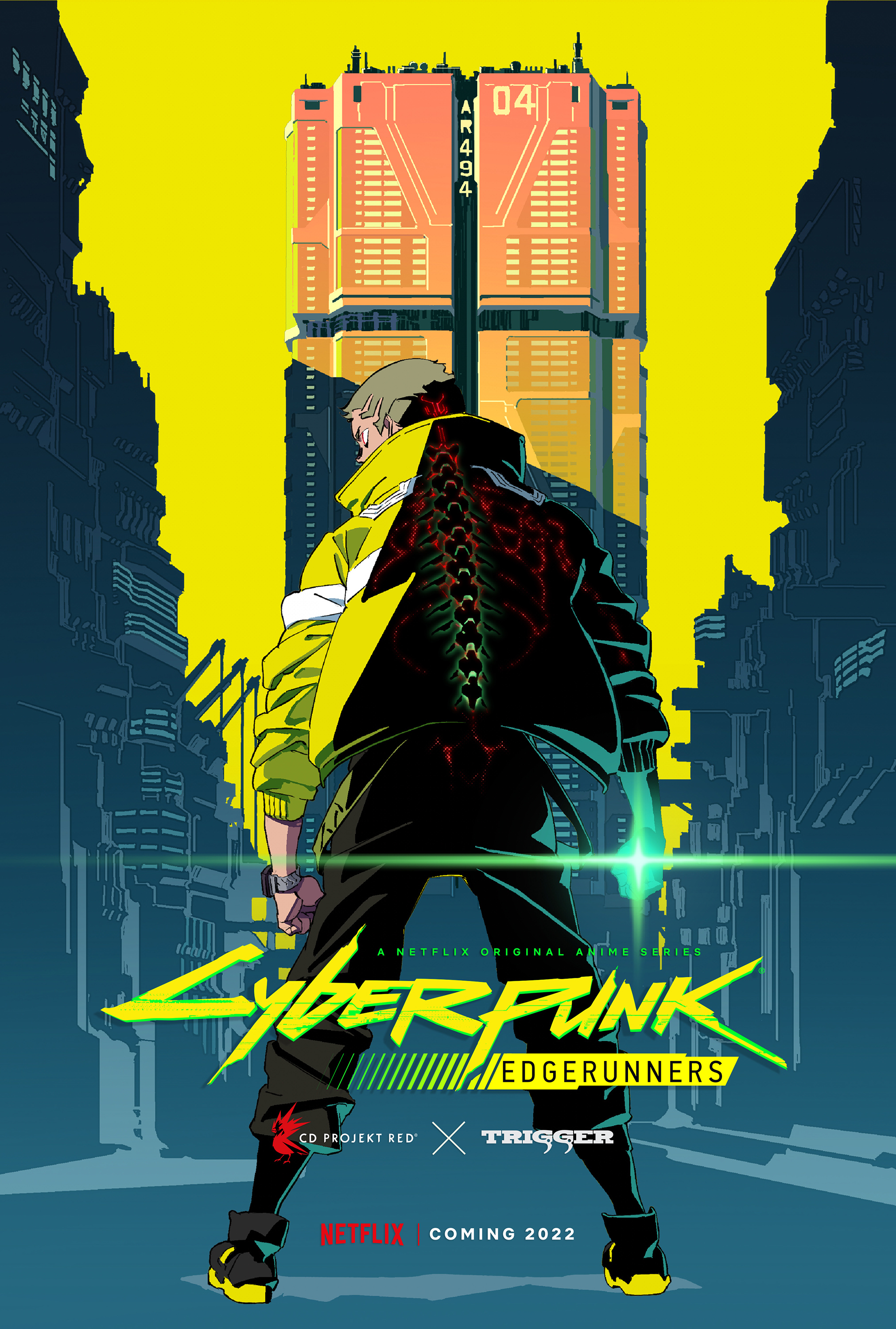
While the Cyberpunk universe first began as a series of tabletop RPG’s and graphic novels, “Cyberpunk 2077” and Edgerunners set the universe into motion, and brought its popularity soaring through the mainstream. But where “Cyberpunk 2077” ends with its titular protagonist, V, Edgerunners doesn’t end with David Martinez. Night City has no shortage of tragedies to tell.
While little has been revealed about the Season 2’s new cast of gritty, tech-hardened edgerunners, Ikarashi tells fans in Cyberpunk fashion to expect more edge, more emotion, and more pain, because nothing will be held back. As one fan comments,2 “New Character, New Trauma, Same Damn City.”
“Reflecting Our Future” — Edgerunners As A Cautionary Tale
“Cyberpunk is a dystopian future, that’s about five minutes from our own current existence,”
Mike Pondsmith, creator of the Cyberpunk universe, warned BBC3 about the release of “Cyberpunk 2077.”
Night City, where the majority of the Cyberpunk universe is centered, doesn’t simply exist in an alternate world; it exists in the near future of an alternate timeline. Located on the border between North and South California, the fictional metropolis groans from the power of rampant technological advances, chokes on violent social stratification spilling onto its neon-lit streets, and buckles beneath the weight of warring corporations.
Night City is a warning that forces audiences to confront real-world anxieties through the brutality of the not-so-different, near-future, and grimly plausible society that Pondsmith feared. At Edgerunners’ core, David Martinez began the series as a gifted student, burdened not only by his mother’s expectations but by life in an underserved community where success offered the only chance of escape.
David’s descent from hopeful student to chrome-addicted mercenary mirrors a world where upward mobility is an illusion, and survival demands self-destruction.

The show doesn’t shy away from exploring economic precarity and burnout as a result of systemic exploitation, and the illusion of choice under corporate rule. Edgerunners succeeds because it tells the story of individuals crushed under a system too vast to resist — a reality painfully familiar to audiences today.
By contrast, other multi-media franchises that have tried to break into the anime space often fail because they treat theme as secondary to brand identity, whereas Cyberpunk: Edgerunners serves as its own authentic, self-contained story.

These adaptations tend to focus on expanding lore or delivering fan service without using the medium to explore deeper ideas. Whether it’s sci-fi, fantasy, or superhero franchises, many stumble when attempting to explore complex themes in ways that feel genuine or self-contained.
Their stories often assume emotional investment without earning it, and they struggle to translate their universe’s stakes into personal ones, causing them to lack the resonance that Edgerunners thrives from.
‘Night City’ — More Than A Setting, A Predator
At a glance, Night City’s vibrant lights, towering skyscrapers, and cutting-edge technology may seem alluring, like an anglerfish. But just as with an anglerfish, once lured into the cage that it is, Night City pounces upon its naive victims.
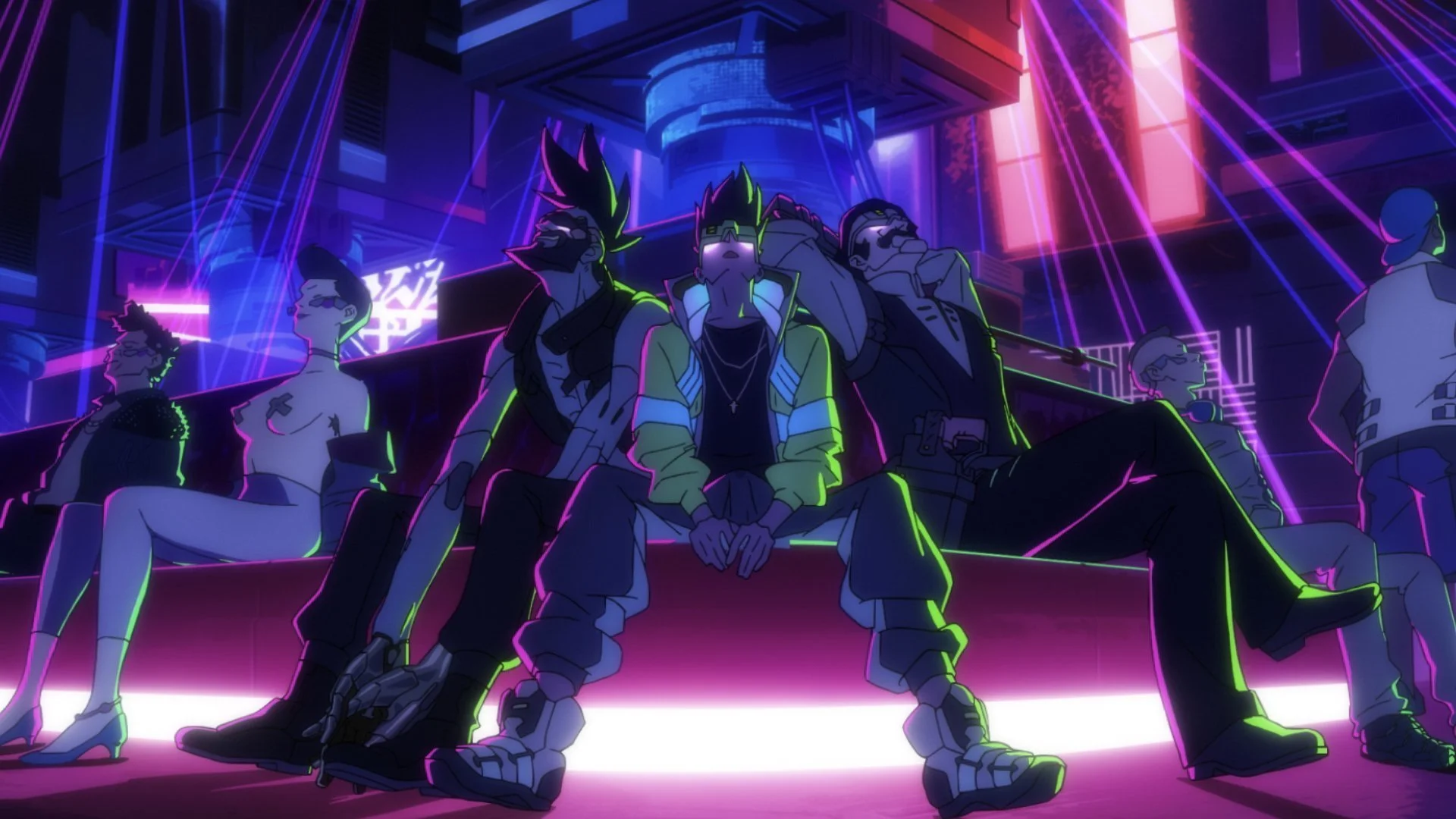
Edgerunners didn’t earn favor from audiences through the use of relatable themes alone, but because of Night City’s depth as a narrative stage. Through the efforts of Pondsmith, members of the Edgerunners creative team, and other official Cyberpunk writers, there’s no shortage of source material covering the universe’s extensive worldbuilding.
Bartosz Sztybor, Edgerunners Season 2’s head writer and narrative director, is no different — notably writing Cyberpunk 2077: Where’s Johnny (2021), Cyberpunk 2077: You Have My Word (2023), and much more.
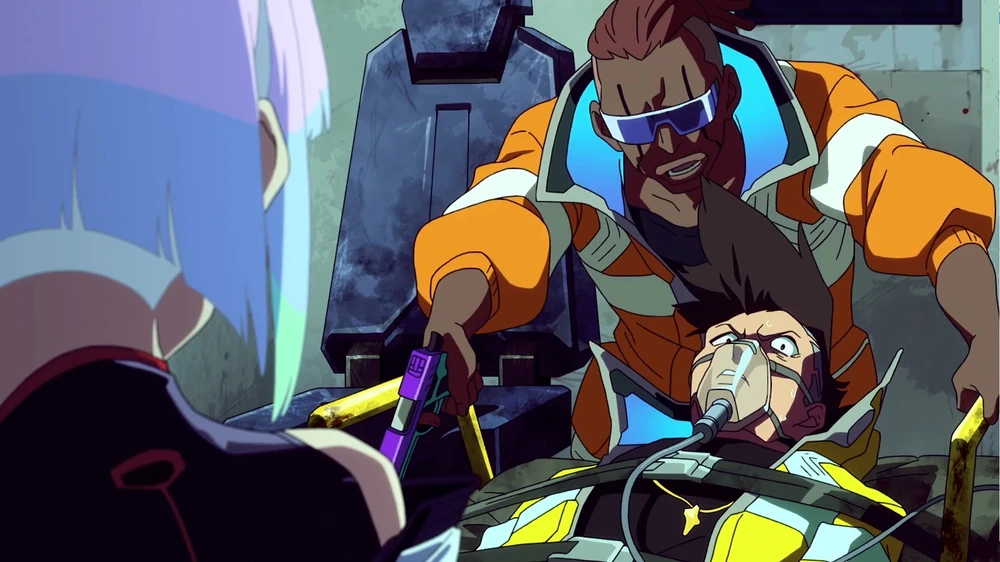
Sztybor understands the intricacies and relationships flourishing within Night City’s ecosystem. Can’t afford rent? Sleep on the streets! Not a Trauma Team client? The Meatwagons got you covered! If the gangsters, the homeless masses, or the other down-on-their-luck drifters showcased along David’s walk to school weren’t indication enough, nobody has a safety net.
Caught In The Corporate Crossfire
Finding no salvation in a system designed to fail him, David resorts to cheating it in order to balance the scales and survive. By events past and present, told and untold, David and his crew are pulled by the strings of Night City despite their rising notoriety as edgerunners.
Because of the nature of the high-profile jobs that they undertake, they interfere with corporate interests and consequently place themselves in the center of a rivalry between Night City’s largest megacorporations: Arasaka and Militech.

The first season of Edgerunners may not explicitly say it, but the Arasaka and Militech rivalry is etched into the Cyberpunk universe’s DNA. For instance, Maine is hinted to be a veteran of a Militech-funded NUSA SpecOps unit, suffering from the PTSD that inevitably triggers his descent into cyberpsychosis. From childhood, Arasaka trained Lucy as a weapon before she eventually escaped as a fugitive.
Ironically, Lucy unwittingly aids Arasaka through the hidden allegiances of the crew’s fixer, Faraday. By the end of the season, the entirety of David’s crew dances to Night City’s tune and leaves the world as just another casualty of the megacorporations’ rivalry.
Their tragedy doesn’t come as a result of a twist; it was a telegraphed inevitability. Each edgerunner carries scars from Night City’s past, with their personal histories entwined with its exploitative systems. This fatalism is a defining trait of the Cyberpunk universe, where systemic control always undermines individual agency.

Thanks to the layered worldbuilding of Pondsmith and his successors, Night City operates not just as a setting, but as an active narrative force. Its influence is insidious, seeping into characters’ lives until their ends feel less like choices and more like foregone conclusions.
‘Why Anime Works’ — Style As Emotion, Dystopia Amplified
Anime allows creators to set David’s story into motion without the shackles inherent in other media, while Edgerunners’ focused narrative propels its cast straight into the chaos. It avoids the open world sprawl of “Cyberpunk 2077,” achieves a visual vibrancy unmatched by live-action thrillers, and bypasses the descriptive limitations of prose.

True to its pedigree of producing high-intensity storytelling, Studio Trigger amplifies the chaos and emotional punch of Night City in a way that feels both grounded and enhanced through its unique style. Through exaggerated facial expressions,4 dynamic camera angles, surreal visual metaphors, and even momentary stillness, anime makes emotional states visible.
When Maine and David’s mental state degrades in their fight against cyberpsychosis, the pacing fractures, the frames unravel, and their minds are paralyzed between memory and the battle at hand.

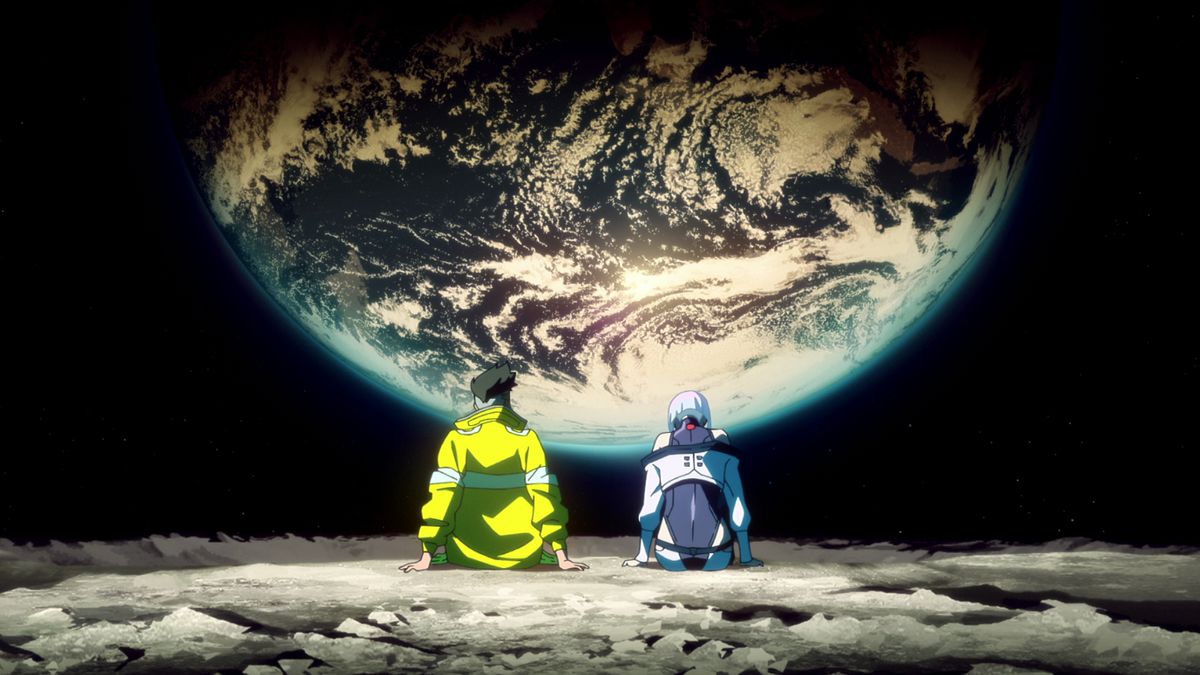
And when David and Lucy find solace on the moon, the animation slows, each frame deliberate and hushed, bathed in cool grays and blues in stark contrast to the overstimulating palette of Night City. It’s in these moments that anime allows Cyberpunk to not just depict emotion, but to embody it.
Edgerunners thrives not because it tells a Cyberpunk story, but because anime is able to bring Pondsmith’s vision to life.
Footnotes
- “Cyberpunk: Edgerunners 2 Is Now In Production!” Cyberpunk.net, 4 July 2025. ↩︎
- [screen name withheld]. comment on “Cyberpunk: Edgerunners 2 | Official Teaser | Netflix.” YouTube, 5 July 2025. ↩︎
- “Cyberpunk 2077 a ‘warning’ about the future.” BBC, 9 December 2020. ↩︎
- Chu, Doan. “Exploring Strength, Sacrifice, And Silent Betrayal In Bleach’s ‘FRIEND’.” The Daily Fandom, 2 July 2025. ↩︎