
Table of Contents Show
Princess Tutu (2002-03), created by Ikuko Ito and directed by Junichi Sato (Sailor Moon seasons 1 & 2 (1992-94), Ojomajo Doremi (1999-2000)) was a rather obscure magical girl anime about ballet.
The show expertly wielded a metanarrative device to make a statement about how storytelling (in various forms) can change the world. Nearly twenty-five years later, it still holds up because of that powerful message.
“Once Upon A Time” — Fairy Tale & Ballet As Staging
Once upon a time, there was a man who died.1
This opening line immediately cast the show as a fairy tale, which is very fitting for what is essentially a ballet in anime form. Fairy tales are popular subjects for ballet, such as Cinderella (1945) by Prokofiev, and of course, Sleeping Beauty (1889) by Tchaikovsky (the one that the Disney film was based on), both of which were referenced over the course of the first season.

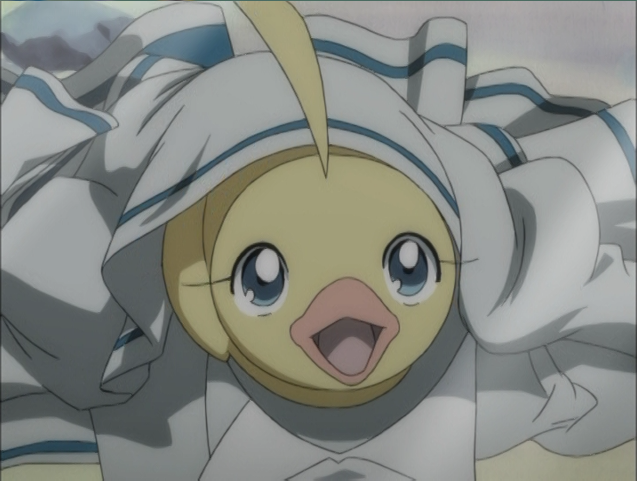
The story began with a duck. She was entranced by a literal heartless prince (he had no heart and no emotions), and vowed to help him. She’s granted the ability to change into a girl (named Duck) who was able to transform into Princess Tutu to retrieve shards of the prince’s heart (his various feelings).
The Prince (named Mytho), was another central character, as was his girlfriend (and dance partner) Rue, and his roommate Fakir. Over the course of the series, all of these characters become embroiled in the tale of Princess Tutu.
Princess Tutu (2002-03) & The Art Of Literary Fairy Tales
Princess Tutu focused on a specific type of fairy tale, the literary fairy tale (as opposed to folkloric fairy tales, which are generally passed down through oral traditions, like most of the Brothers Grimm fairy tales). The literary fairy tale is essentially the fairy tale as art, a tale that leans into writing as an art form.
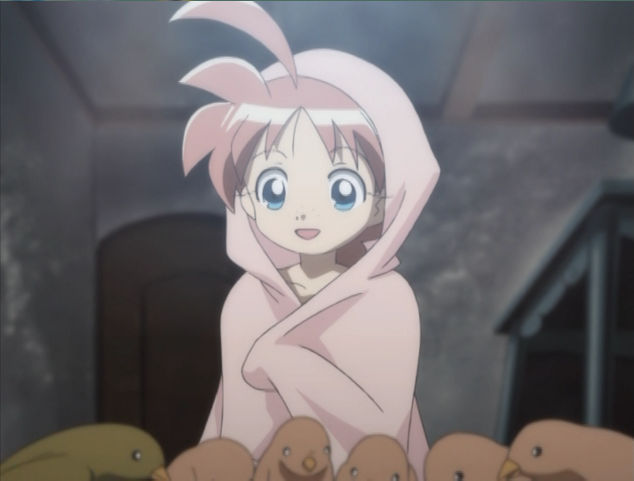
The most prominent influence on the story came from Hans Christian Andersen, who never had a work adapted for ballet, yet had a huge influence on the genre of literary fairy tales. Two popular tales of Andersen that we see Princess Tutu make clear parallels to are “The Ugly Duckling” and “The Little Mermaid.” The only direct reference to an Andersen story is “The Red Shoes,” in episode 9 “The Black Shoes”, wherein Rue took on the role of Tutu’s rival, Princess Kraehe.
There was also some obvious influence from E. T. A. Hoffman, a German Romantic author who wrote the novella that Tchaikovsky’s The Nutcracker (1892) is based on. Both the first and last episodes borrow extensively from the music of The Nutcracker, and also various elements from its story. Additionally, a lesser-known ballet based on Hoffman’s work, Coppelia (1870), serves as a motif mainly in the second season.
“Ballet As Storytelling” — The Art Behind Princess Tutu (2002-03)
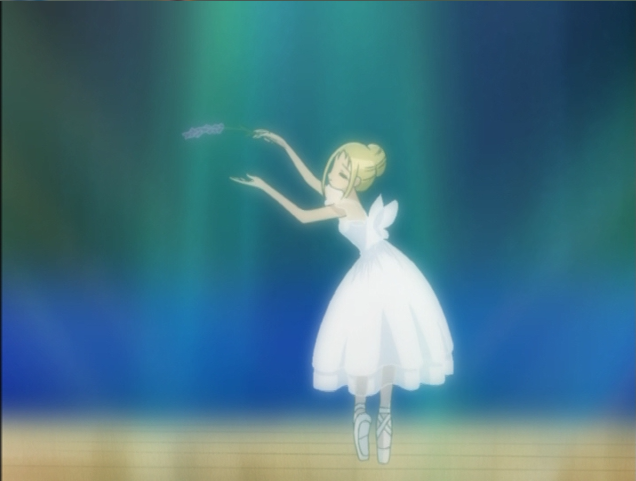
Great care was taken when depicting the artistry of ballet in the show, from careful music selections to replicating choreography from various productions. Princess Tutu almost doubled as a primer on the elements of ballet, presenting everything from basic mimes to the significance of the pas de deux, not to mention depicting the athleticism and discipline required to perform.
Many ballets are referenced throughout the series, but for the most part, the narrator just explains the plot (or an element of the plot), leaving the viewer to make connections to the story at hand. Tchaikovsky’s Swan Lake (1876) is the only one that’s really discussed by characters in-universe, presumably because Princess Tutu is essentially an adaptation of Swan Lake.
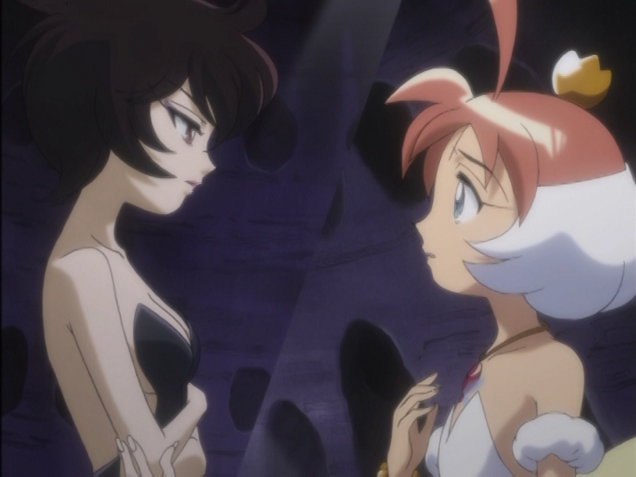
The Prince was revealed to be named Prince Siegfried, the prince from Swan Lake, Princess Tutu and Princess Kraehe’s costumes were modeled after the White and Black Swans, and most importantly, the Swan Lake episode is the season 1 finale, where Kraehe acted the part of the Black Swan. Notably, this doesn’t necessarily spoil the ending, as the ending ranges from totally happy to utterly tragic depending on the production.2
“The Author As Fate” — Herr Drosselmeyer’s Manipulation Of Story
The story is immediately complicated by the existence of Herr Drosselmeyer (an allusion to the character from The Nutcracker), the in-universe author of the literary fairy tale “The Prince and the Raven” – a fictional story that becomes real after both the Prince and the Raven escape from the story.
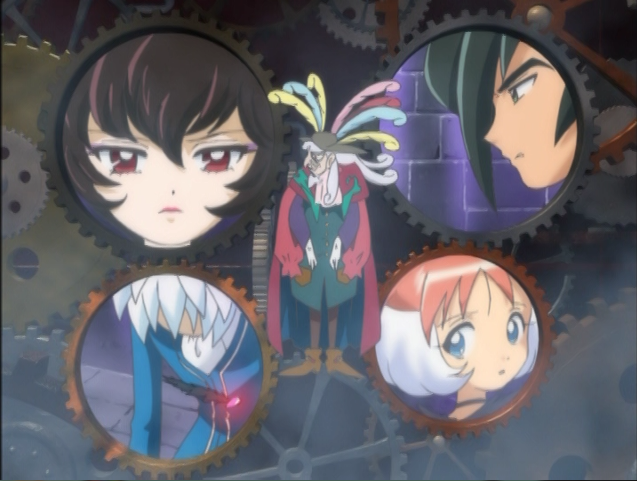
Drosselmeyer never had a chance to finish the tale in life, so he acted from beyond the grave and selected Duck to play the part of Princess Tutu (a character who played only a minor role in his original story).
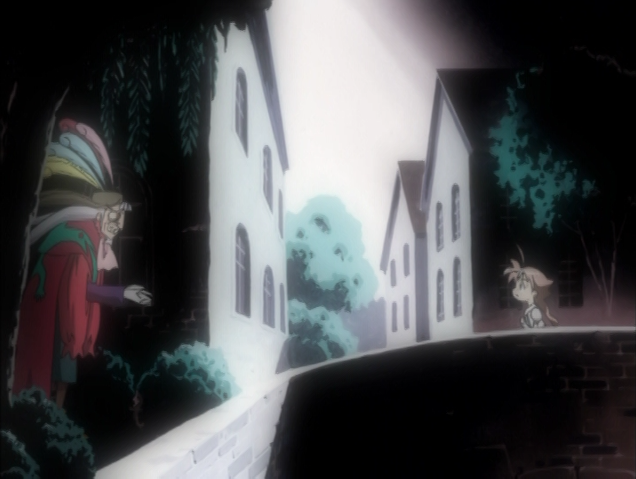
Naturally, he presented it as an opportunity for Duck to help the Prince, but it quickly became apparent to the audience (and eventually, to Duck as well) that Drosselmeyer wanted to force all the characters into tragic endings.
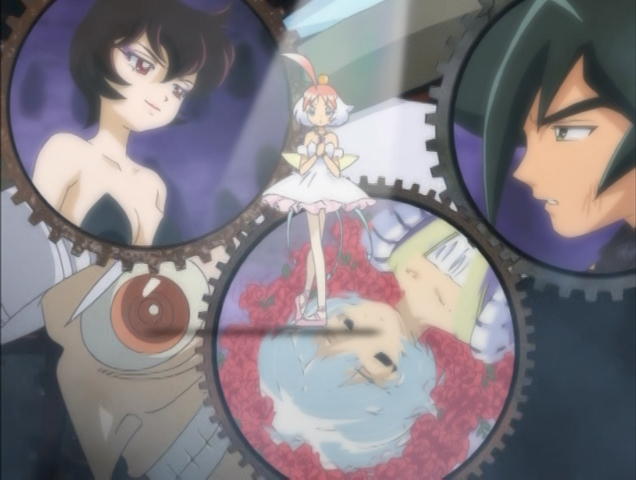
The Prince was written to continue battling the Raven forever, the Knight (Fakir) was “fated” to die in vain, and Princess Tutu was destined to disappear after she confessed her love to the Prince. Hence, this recurring line throughout the first season (which reappears in an altered form in the final arc):
May those who accept their fate be granted happiness; may those who defy it be granted glory.3
“The Tyranny Of The Pen” — Drosselmeyer’s Struggle For Control
Drosselmeyer effectively sought to finish his story by “adapting” it, but of course, the “actors” disagreed with the dark trajectory of the story.
It turned out that Drosselmeyer was always seeking power before his death, writing stories that would come true for the rich and powerful. His stories always tended to end tragically, though, which was what eventually got him killed (the rich and powerful didn’t want their lives to end tragically, so they just ended his). But by then he had already set up a device to control the whole town with his writing.
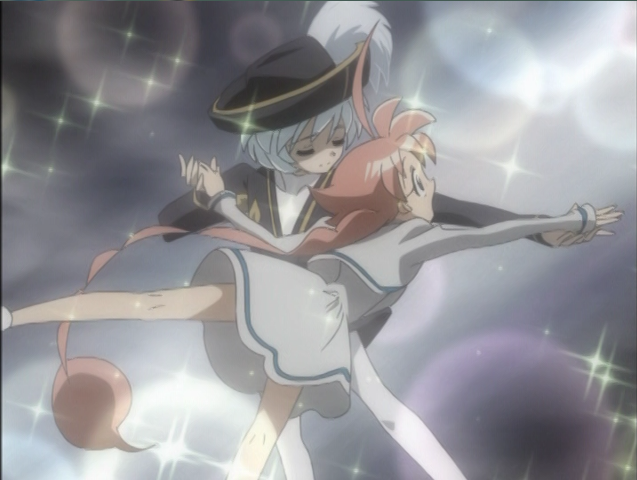
One of the subtler ways in which Drosselmeyer pushed his narrative onto Duck is with his continual insistence that she’s in love with Mytho (because that’s the setup for Tutu’s tragic ending). While Duck wanted to help him from the moment she saw him, and obviously cares about him, she interrogated her feelings about him throughout the story, and eventually concluded that she’s not actually in love with him. Duck is not Drosselmeyer’s rendition of Princess Tutu.
It’s much the same for the other characters. Fakir was not Drosselmeyer’s Knight, and even Mytho evolved into someone a little more selfish than Drosselmeyer’s pure-hearted Prince.
“The Pas De Deux Of Life” — Art As Agency
Art is ultimately what allowed Duck, Fakir, and Rue to change the narrative (Mytho mostly just reacted to the actions of others).
“Dance As Dialogue” — Ballet As A Language In Princess Tutu (2002-03)
One element that becomes obvious in the first few episodes is how ballet can be used to communicate. Whenever Princess Tutu would confront the bearer of a heart shard, she’d ask them to dance with her as a mode of expressing their feelings, something that is more difficult to convey in words.
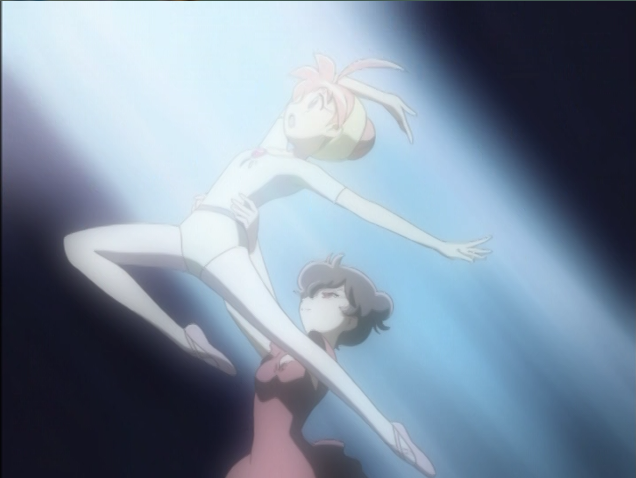
The pas des deux also represent complex forms of communication, as there may be one message for the audience (be it only one or two people) and another “conversation” (not always literal) between the partners.
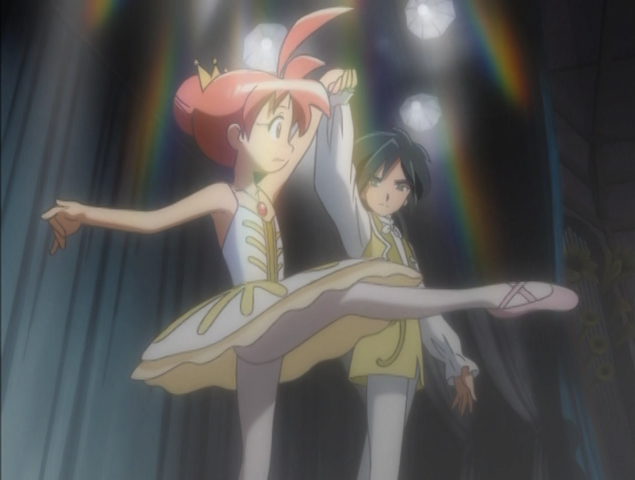
For instance, in episode 6, Fakir danced a pas de deux with Duck, just because he wants a chance to threaten her, but nevertheless, Duck’s energy managed to inspire someone in the audience.
This theme came to a head in the season 1 finale.
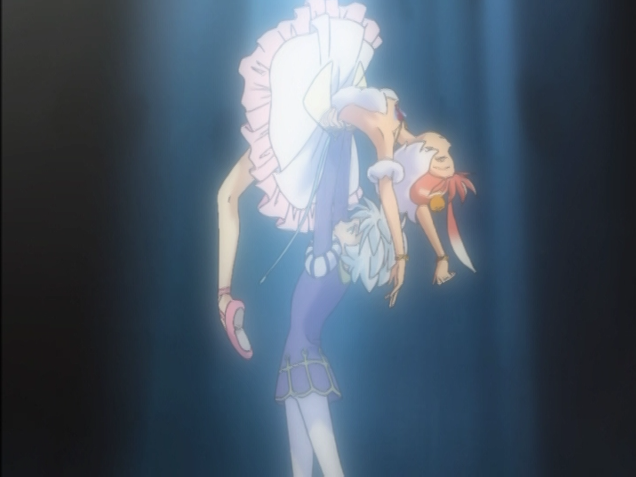
When Princess Tutu was asked to express her love for the Prince (knowing that confessing her love verbally would cause her to vanish), she instead expressed her feelings by performing a pas de deux without a partner, implying that she wanted Mytho to dance with her.
I cannot speak words of love to you – but I can dance. Surely I can convey these feelings through that as well.4
And of course, her feelings get through to him.
“Collaboration / Choice” — Rewriting The Story In Princess Tutu (2002-03)
Over time, Fakir realized that he has the same power as Drosselmeyer did – the power to make stories reality. Unlike Drosselmeyer, however, Fakir recognized what a burden that power is, and vowed to use it responsibly, not merely to toy with the lives of those around him or gain power.
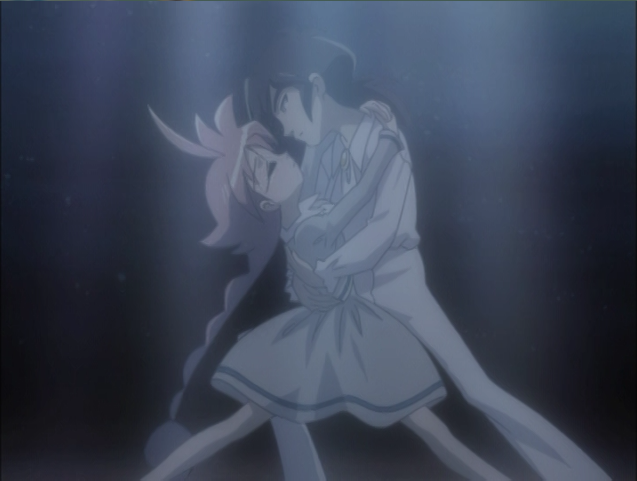
He formed a relationship with Duck over the course of the series, at first merely as an attempt to help Mytho, but a genuine friendship bloomed (and perhaps something more).
They realized that they must work together in order give the story a happy ending, but it would come at a cost: Duck must give up her human form as well as Princess Tutu in order to break Drosselmeyer’s hold on her. But with Fakir writing a story about her, she has the courage to pursue that ending.
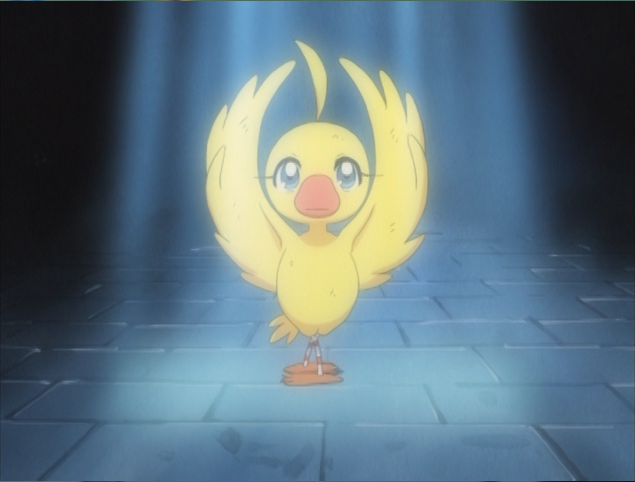
Fakir could sense Duck’s feelings through his writing, and he helped her keep dancing so that she could convey her feelings to those around her, giving them hope.
Let’s all dance together and remember our true selves. The real me is just a duck, but I can still dance, so I should be able to communicate my feelings through dancing, too! I won’t sit and do nothing and then decide I can’t do anything, because I’m the one who’s going to be making my story.5
They were able to give Mytho and Rue a happy ending, and Fakir took over the job of writing the town’s story from Drosselmeyer, with a duck as his companion.
“A Lasting Legacy” — Inspiring Art & Imagination
This ending is more open than most mainstream shows, but that’s the beauty of it. It encourages viewers to make up stories of their own about Duck and Fakir, and if they really want to, write an ending that more suits their tastes (mostly involving them as a couple).
Furthermore, the show often gives viewers an appreciation for ballet, with many seeking out the ballets referenced over the course of the story (as all are available for free on Youtube). In the case of younger viewers, it might even encourage them to take up ballet.
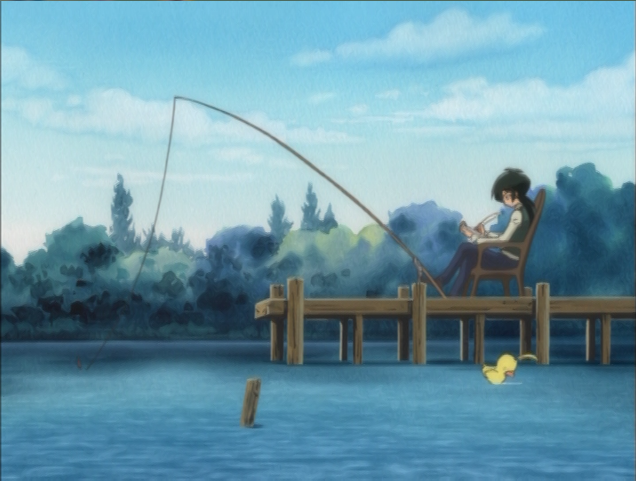
From a still-thriving community of AMV-makers to fanfic writers and even amateur animators, this little show is still inspiring creators to this day. And in an era when so much emphasis is put on media consumption, it’s a breath of fresh air when a story encourages viewers to make art of their own. Art can change the world, so in its own small way, Princess Tutu HAS changed the world.
Footnotes
- “The Duck and the Prince.” Princess Tutu, season 1, episode 1, Hal Film Maker, August 16 2002. HIDIVE. ↩︎
- Swan Lake, “Alternative endings.” Wikipedia. ↩︎
- “Heart Shard” Princess Tutu, season 1, episode 2, Hal Film Maker, August 23, 2002. HIDIVE. ↩︎
- “Swan Lake” Princess Tutu, season 1, episode 13, Hal Film Maker, November 8, 2002. HIDIVE. ↩︎
- “Finale” Princess Tutu, season 2, episode 13, Hal Film Maker, May 23, 2003. HIDIVE ↩︎