
Table of Contents Show
Throughout the first four chapters of “Deltarune” (2018), loneliness and loss fill many characters’ lives. The core three characters often act on these feelings, shaping their actions throughout.

Through their interactions with each other, they begin to heal, showing growth and acceptance of themselves.
“Deltarune” is a video game about two children, Susie and Kris, crossing the veil between darkness and light to “dark worlds” consisting of characters that mirror objects in their reality. They journey with one of these characters, Ralsei, to close the fountains creating these worlds, so that their world is not enveloped in darkness.
Their actions are a result of the “Deltarune” prophecy, which claims that three heroes will save the world from being enveloped in darkness. These heroes resemble the three main characters, leading them to believe that they are the heroes of legend. Together, they seal each fountain and educate the people they meet on the prophecy. Additionally, they relocate those who would be displaced by their actions, proving themselves to be responsible and caring throughout their adventures. Not only do they heal the world through their adventures, but also the people they meet and themselves.
The Prince Of A Ghost Town
Ralsei’s entire existence up until he meets the other two characters is spent entirely alone. He is a prince with no subjects, and it often shows in his actions towards others. Within the first chapter, he has no idea how to conduct himself around others. He is incredibly shy, going as far as to hide his face throughout the entirety of the chapter, as he is worried about how he may be perceived by his peers. He also goes along with things that others say to his detriment, as he wants to please the people around him.
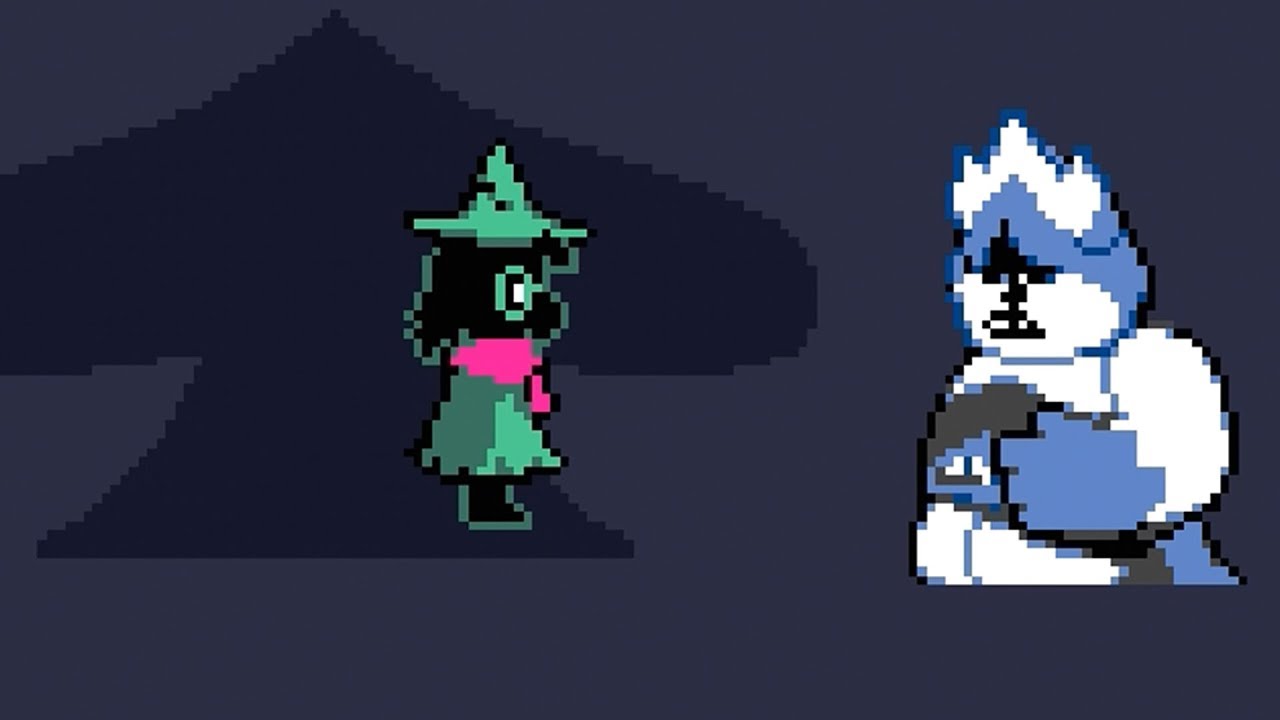
As a player, you can refuse to let him tell you about the game’s prophecy. Though he tries to convince you to listen, he gives up rather easily and does not stand up for himself when you give another character the chance to explain the prophecy immediately afterwards. His entire life has been dedicated to this prophecy, yet he allows you to refuse to listen to its important information if you so choose. It is not until the second chapter that he is taught by his peers to self-advocate, and despite this, he struggles often.
Ralsei is also surprised whenever his friends check in on him or offer him support. He is seen going above and beyond for them, baking them cakes and creating personalized rooms for not only the main characters, but also those who are important to the story.

It is revealed in the third and fourth chapters that he does not have anything in his room, as he believes that making his friends happy is his sole purpose in life. Due to this, he sees no reason to have anything for himself. Even all of his hobbies have been curated especially for his friends. His life has been dedicated to nothing but the prophecy for so long that he cannot see past it and live for himself until his friends encourage him to do so.
Guarded And Barbed
Though Susie acts tough, it is clear from the start that this act is armor built up from years of ostracization. When she is caught eating chalk, she threatens to harm Kris, as she believes that everyone is waiting for her to slip up so they can be the ones to get her expelled. Though it at first seems as though she is exaggerating, it is clear through the many interactions with her peers that this is an understandable concern.
Her classmates treat her as though she is a monster, going as far as to offer condolences to Kris when they are paired with her for their group project. When Kris and Susie become genuine friends, everyone assumes that she is forcing them to be around her. Each interaction at the start of the game with her is defensive, as though she is expecting Kris and Ralsei to abandon her once she expresses herself.

It is not until she meets the character Lancer that her perspective begins to change. Lancer is very enthusiastic and supportive, often calling Susie cool and expressing that he wants to be like her. Susie hasn’t experienced this, so she puts her guard up only to be met with even more enthusiasm. Throughout the story, she tries to kill anyone who gets in her way. However, due to Lancer’s kindness, she begins to change her perspective.
While in the castle of the first chapter, Lancer tries to stop her progress towards the final boss, as it is his dad, and Lancer does not want two people who are close to him to fight. Upon learning this, Susie asks Kris and Ralsei to teach her how to “act” rather than “fight”, chipping away at her tough exterior to reveal a caring individual underneath.

Many instances reveal Susie to have been labeled as a problematic kid. Before moving to the town where “Deltarune” takes place, she tries to learn piano in a public area, only to be chased away from the instrument. Later, someone who has the skills to play is cheered on by a crowd. She had fewer chances to learn due to the adults around her assuming she was being immature rather than trying to learn.
Treating a troubled or disadvantaged child differently from their peers reinforces the idea that they are lesser, and this affects their behavior negatively.1 Toriel also leaves an impression on her when they first meet, as she treats Susie to a sundae. Susie remembers this clearly during the game, as no other individual in her life has done the same.
The Forgotten Child
At the time of the game, Kris’s life and relationships are changing. Their brother is away at college, their parents have gone through a divorce, and a childhood friend has gone missing. They are often caught in the crossfire of their parents’ arguments or are otherwise ignored.
Kris’s father, Asgore, uses Kris many times to inappropriately make advances on their mother, Toriel. She does not reciprocate, with his flowers frequently ending up in the trash. Putting their child in the middle of their fights is not only irresponsible but also damaging. They have no way of avoiding the topic and having a normal childhood when they are the messenger between both parties.
In “Deltarune” chapter 3, the villain is a darkner made from the family’s TV called Tenna. He feels neglected, as the family no longer sits together to watch him. He also references the family’s fights, hinting at their severity. It is implied that Tenna feels protective of Kris, as they were very young when the fighting started, and were often distracted by the TV in an attempt to minimize the damage done to them.
Kris has also lived in their brother, Asriel’s, shadow for a long period of time, so living without him leaves a noticeable absence in their life. Their room seems noticeably empty from the start of the game. Though Asriel has left, his side of the room is still distinctly his, which makes his missing presence even more noticeable. In their shared room, Asriel’s side of the room is filled with awards, color, and nice, new things. Kris’s side has bare shelves and dull colors. Furthermore, many of Kris’s things once belonged to Asriel. Throughout the game, Kris is compared to their brother and asked about him and his life rather than their own by many characters. Even when he is gone, they live in his shadow.
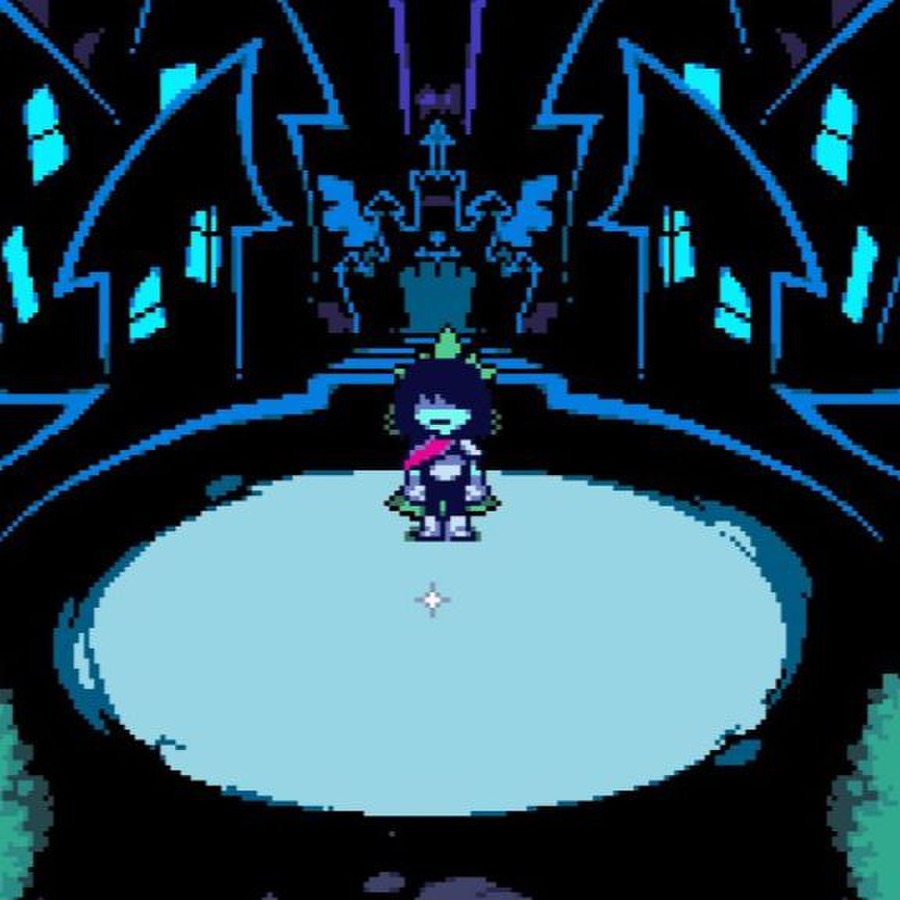
Throughout the story, Kris seems hesitant to rely on other characters. They take the lead role at the beginning of the story, making all of the decisions for the group, and at times go off on their own. This lack of reliance on their peers leads Kris into trouble in some scenarios.
As the game progresses, characters begin to push back on this, and Kris begins to rely on others. This starts with Susie choosing to hang out with Ralsei, questioning why Kris always makes the decisions. Kris then spends time with his childhood friend, Noelle, strengthening their bond and taking the burden of choice away from Kris for a short period of time. Over time, these instances make them become more of a friend than a leader as the game progresses, and give them a community to rely on.
Finding Belonging
Experiences, both good and bad, shape an individual in unexpected and unique ways. One person may respond to something like loneliness with quiet acceptance, while another may respond by shutting themselves off from others and putting on an act.
“Deltarune” displays this very well and gives those who may be struggling with these issues someone to look towards who thinks and acts like them. It makes its players feel seen with the simple act of giving their characters such a common and human issue to overcome.
To find people who accept you for who you are is important, no matter how difficult, as they can teach you to let your guard down, open up, and even stick up for yourself. If “Deltarune” can show that to someone struggling, it may help change their life for the better.
Footnotes
- Brummelman, Eddie. “Children Face Unequal Treatment in the Classroom–With Devastating Consequences.” Scientific American. October 27, 2023. ↩︎