
Table of Contents Show
When searching for a new comic series, browsing the shelves can feel daunting — especially when seeking something outside the medium’s most familiar genres. For readers seeking a high-quality dark fantasy comic, that search may end here.
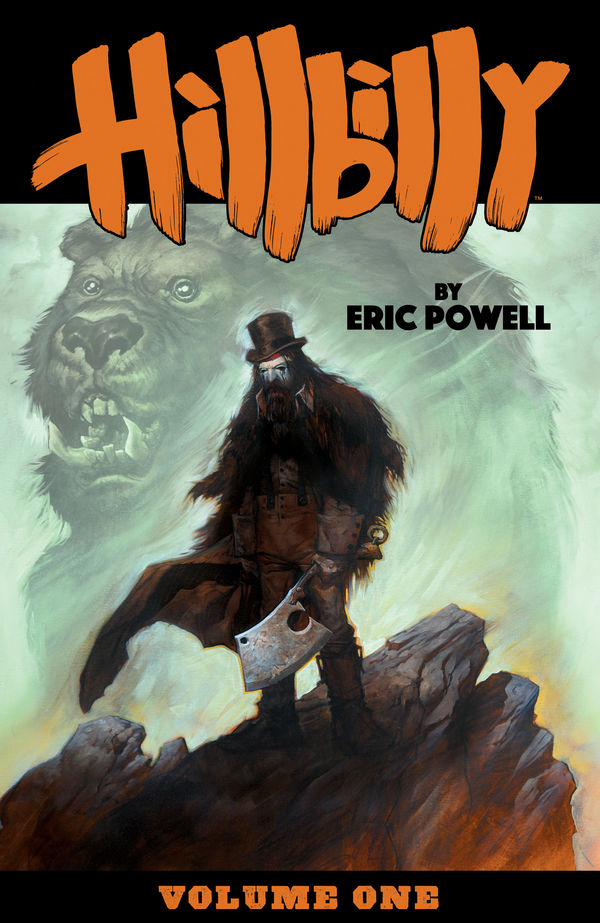
Eric Powell’s Hillbilly invites readers into a dark, folkloric vision of Appalachia. The series distinguishes itself through striking visuals, a tightly woven narrative, and a haunting central figure.
Hillbilly (2017–)
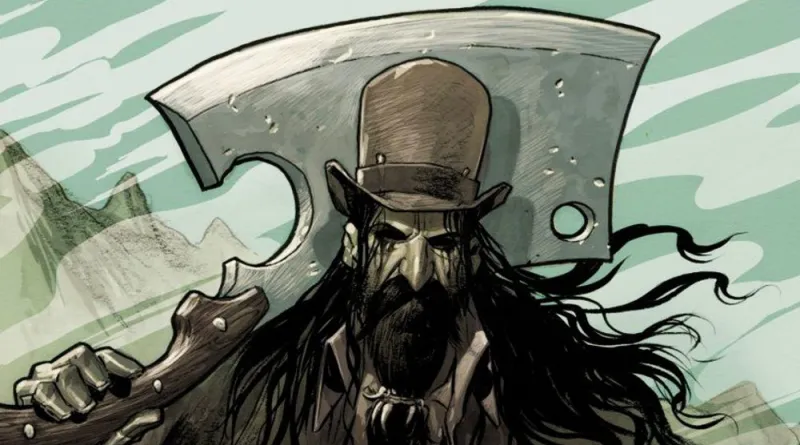
The story follows Rondel, a nomadic wanderer who moves through Appalachia hunting creatures that terrorize local communities. He wields a massive cleaver capable of killing beings that would otherwise be immortal.
Though he lives dangerously, Rondel finds companionship in his childhood friend Esther and a grizzly bear named Lucille. Hillbilly explores themes of grief and betrayal as Rondel seeks vengeance against witches following the destruction of his home.
Painting In Pen Ink — How Powell’s Art Shapes Hillbilly’s Shivers
The comic’s artwork is immediately distinctive, establishing its tone before the first interior page is even read. The covers frequently employ a ghostly green palette, with Rondel’s shadowed figure centered in the composition. Secondary colors draw the eye to key details, often separating Rondel from the world surrounding him.
This theme continues into the comic. Most pages are dominated by this greenish hue, making any shift in color feel intentional and striking. The third story in the first volume uses this technique especially well. It opens with a night scene rendered in a bluish tint rather than the usual green. Three pages later, a single panel introduces red at the bottom of the page to depict a bloody footprint. This isolated splash of color is impossible to ignore, retroactively heightening the unease of the preceding panels.
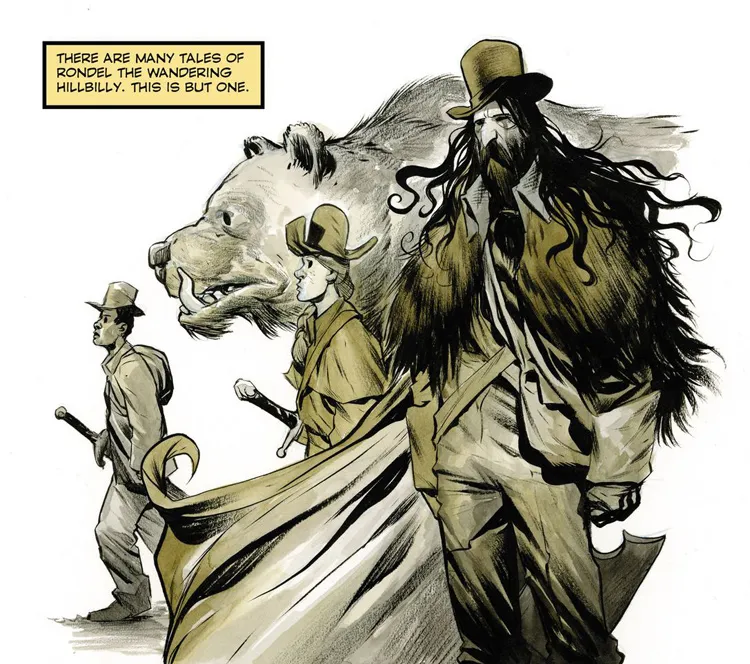
Beyond these palette shifts, some sequences adopt a style that stands apart from the rest of the comic. Stories featuring the Iron Child have a rounder, more playful style.1 That style becomes even more rounded and cartoonish when Rondel tells an Iron Child story as a bedtime tale for two young children.
It reflects the tone and audience, morphing into what it needs to be for whoever Rondel is speaking to. Similarly, the second book includes a sequence designed for 3D glasses as Rondel recounts a prophetic dream. This choice allows the reader to feel just as disoriented as he does.2
Powell’s character design choices feel deliberate. Although rifles are a cultural staple in much of the rural South, firearms are deliberately omitted, allowing Rondel’s cleaver to read as both believable and symbolically resonant.
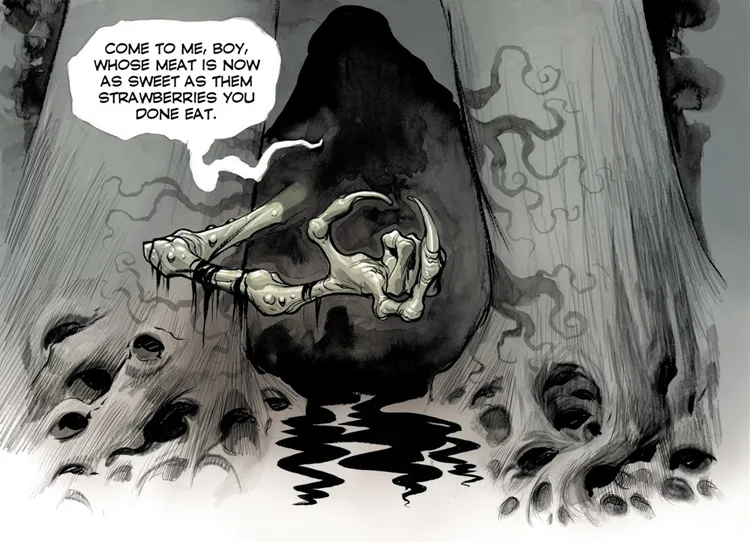
Rondel is drawn with a very dark color palette in all but flashbacks. He shares this trait with few other characters, with the most notable instance being Death. As Rondel ages, his color palette darkens, visually marking his transformation into the reaper-like figure he has become by the time the narrative begins.
Animals in this comic are drawn as monstrous, giving the world a wild and dangerous feel. Their teeth are elongated, and their features are meticulously drawn, showing every bulge of muscle and crease of the brow. Not only does this make the creatures more expressive; it also pulls them toward the uncanny valley.
Culture & Folklore As Dark Fantasy Foundation
Powell is transparent about the inspirations behind the series. The sketchbook gallery at the end of each volume often names the folktales and references that shaped it. Furthermore, his experience as a local of Appalachia shines through with the believable and realistic depictions of southerners.
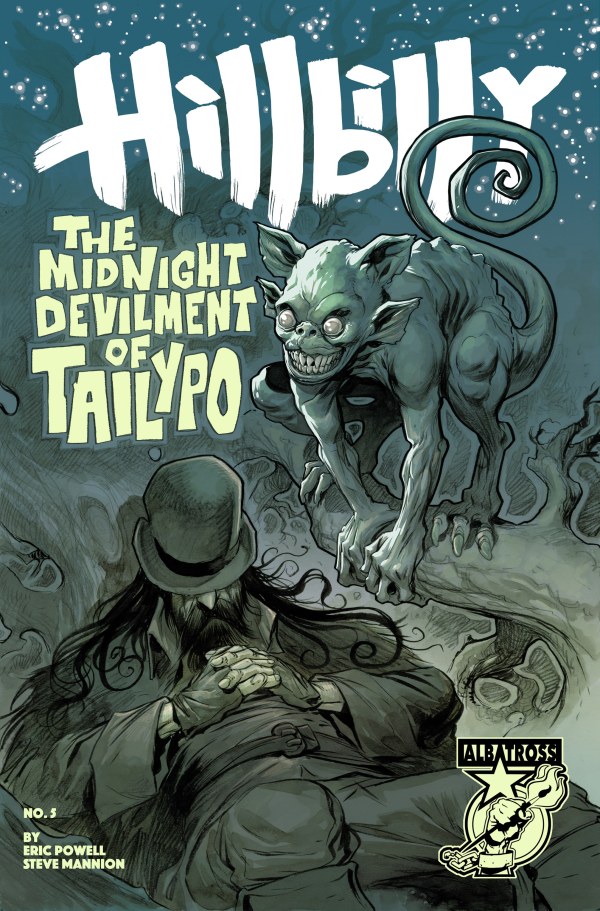
Within the second volume, there is a story revolving around a monster known as Tailypo. Though he seems similar to other monsters in the story, it is revealed within the sketchbook at the end that this monster is in fact from an old Appalachian folktale. Powell retells the folktale within the comic, providing context while integrating original characters and ideas that keep the narrative fresh. He then puts the character into other stories, fleshing him out and giving him his own personality and goals.
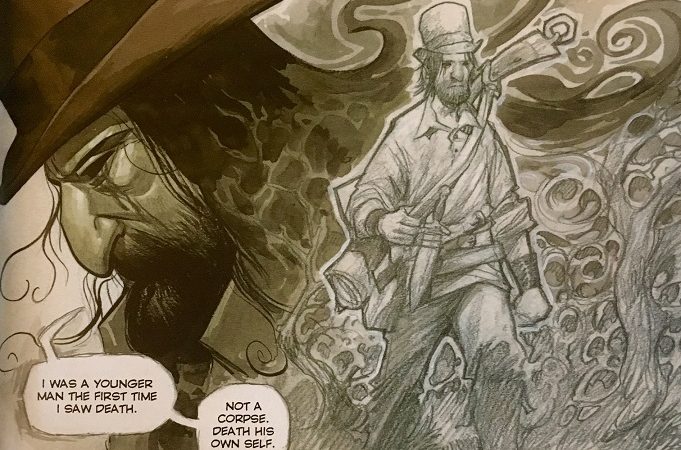
Powell has cited The Hobbit (1977), produced by Rankin/Bass, as a major source of inspiration. His focus on everyday people makes this apparent. A major theme in Tolkien’s stories is that even the smallest person can change the course of the world. Each recurring character — even Rondel — begins with very little. In his backstory, he is a blind child in a small village, rather than a savant or aristocrat. Despite this, he becomes a protector and local legend.
This influence is also reflected in the monsters within his pages. Many of these creatures have similar qualities stylistically. Like orcs and goblins, they are misshapen — twisted by the darkness they serve. A notable example is that of Powell’s rendition of Tailypo, as it is reminiscent of Gollum.3
Many items and experiences within this series are rich with cultural significance. The cursed fiddle in volume one is a prime example. Many old southerners carved their own fiddles, using hair from their own horses for the bows. Though this craft is less common today, it remains fresh in the memories of many southerners who grew up around family or friends who practiced it.
Fiddles have also been closely associated with the South through the Charlie Daniels Band’s folk song, “The Devil Went Down to Georgia” (1979). This song is a love letter to Georgia’s culture, introducing themes and lyrics from folk songs through the protagonist, Johnny’s, solo. The choice of the devil as Johnny’s adversary also gives readers context into the religious culture of the area. The South is often referred to as the Bible Belt, where Christianity heavily influences regional culture.
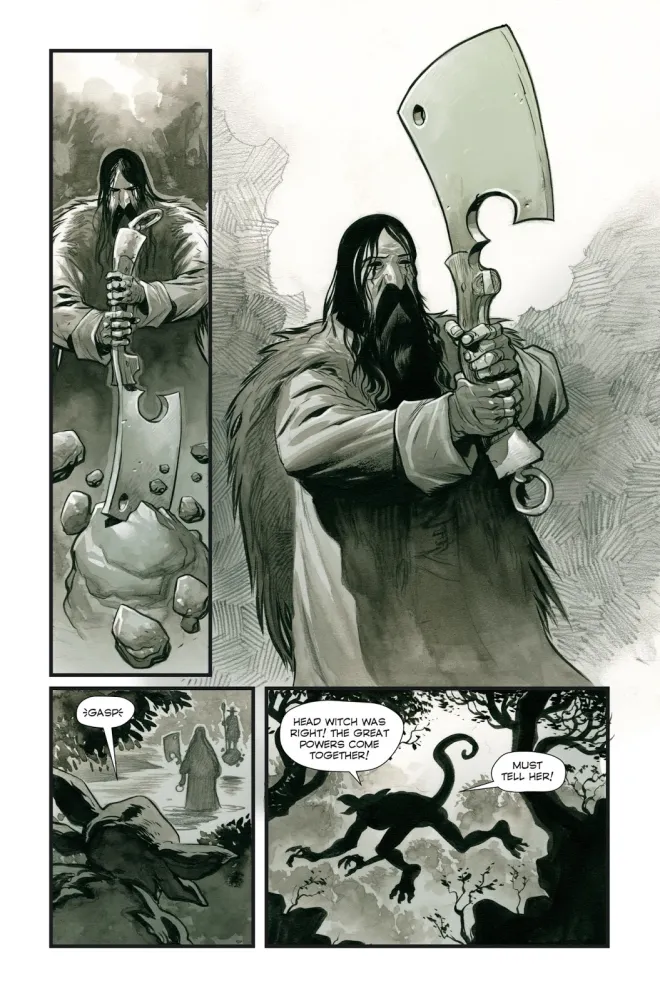
Powell shows elements of this Christian influence by adding demons into his own story. Satan is portrayed as such a powerful force that even mundane objects — like a ladle or cleaver from his kitchen — carry enough power to harm witches and ghouls. As explained in the story, this is due to Satan’s refusal to let any of his servants rival his power. These servants are the witches within this story, playing on the distrust of pagan religions within rural America, and keeping in line with American folklore surrounding witchcraft.
Storytelling is a prized social art across much of the American South. It is an important socialization skill passed on through generations of oral history throughout the family line. When the stories within this series are told by the characters within it, Powell replicates the diction and cadences of these storytellers perfectly.
Sparse Words, Heavy Weight — Storytelling & Worldbuilding In Hillbilly (2017–)
Hillbilly’s art and cultural research draw the reader in — but the writing matches that strength, too. Throughout, Powell shows a level of maturity in his writing by changing things that would otherwise cause the story to suffer. In doing so, Powell embraces the principle of “killing his darlings,” prioritizing narrative cohesion over indulgence.
As previously mentioned, there is a reoccurring character known as the Iron Child. Though the stories about him are interesting, it is easy to run with an idea such as this, causing it to either dominate the story, or need to become a separate story entirely. When writing Hillbilly, Powell made the difficult decision to limit himself when writing about this character.
This is a wise choice: knowing too much about a folklore hero can dilute the awe that surrounds him. Many characters in folklore are not fully fleshed out. They are static, predictable characters meant to fit into campfire and bedtime stories. This helps to prioritize the lessons that they tell rather than their growth. It also invites audiences to imagine themselves in the hero’s place, grafting their own meanings onto the legend. Keeping the Iron Child’s story minimal and speculative makes him feel like he fits right into American folklore heroes like Johnny Appleseed or Paul Bunyan.

Omitting much of Rondel’s childhood was another wise choice. Learning about his past is highly important to his characterization, as the audience needs to eventually know the motivation behind his actions to sympathize with him and keep him from feeling one-dimensional. Even so, a story should not suffer in order to flesh out a character’s past. Even though Powell has noted that he wished he could explore more of Rondel’s childhood, he restrains the backstory to keep the narrative steady and engaging.

Exposition about the world within this series tends to be left up to the reader’s interpretation, often coming from narrators who are piecing the world’s mysteries together themselves. Powell asks readers to believe that every legend has some truth in it, and often opts for what is most interesting rather than what is most realistic. Although this style of worldbuilding can invite plot holes, Powell keeps the rules consistent, which helps the stories remain believable and easy to follow.
Eric Powell’s Hillbilly (2017–) Is A Dark Addition To Your Shelf
Hillbilly sets itself apart through its stylized art, confident writing, and respectful nods to the culture it draws from. For readers drawn to dark fantasy, Hillbilly offers a chilling experience that lingers long after the final page.