

Table of Contents Show
“Fallout: New Vegas” (2010) is an award-winning role-playing game and the fourth main entry in the “Fallout” franchise. It was developed by Obsidian Entertainment and published by Bethesda Softworks in 2010. Like the other games in the “Fallout” series, it explores the consequences of nuclear war in a retro-futuristic version of America. Set in the Mojave Wasteland, the story focuses on factions vying for control of the region and the journey of the player caught in the middle.1

“Fallout: New Vegas” (2010) effectively conveys its themes by intertwining them with various narrative aspects of the game. These include factions, allies and enemies, and the history surrounding the game’s main plot and expansions.
It weaves an interconnected tale about the issues that come with using the past to define the future, when to hold on to what you have, how it’s never too late to start anew and how obsession can have dire consequences.
Factions — Echoes Of The Past
“New Vegas” introduces three major factions, each representing different attempts to restore order and begin a new society.2 Each of their attempts is hampered in that they use the past to try to define their vision of the future.
Originally a small settlement called Shady Sands, the New California Republic (NCR) has grown into a sprawling democratic republic. It strives to rebuild civilization by copying pre-war America. In doing so, it also replicates its bureaucracy, corruption, and imperialist attitudes.3 Wealthy elites manipulate its democracy, and NCR expands like an eastward Manifest Destiny, “domesticating” the tribes that have formed in the wasteland.4
Though it brings structure and order, the NCR fails to adapt to the post-apocalyptic world because it cannot let go of the world that came before it and imposes those problems on everyone else. The NCR shows one of the risks of using the past to define the future: failing to evaluate what aspect of the past needs to change.
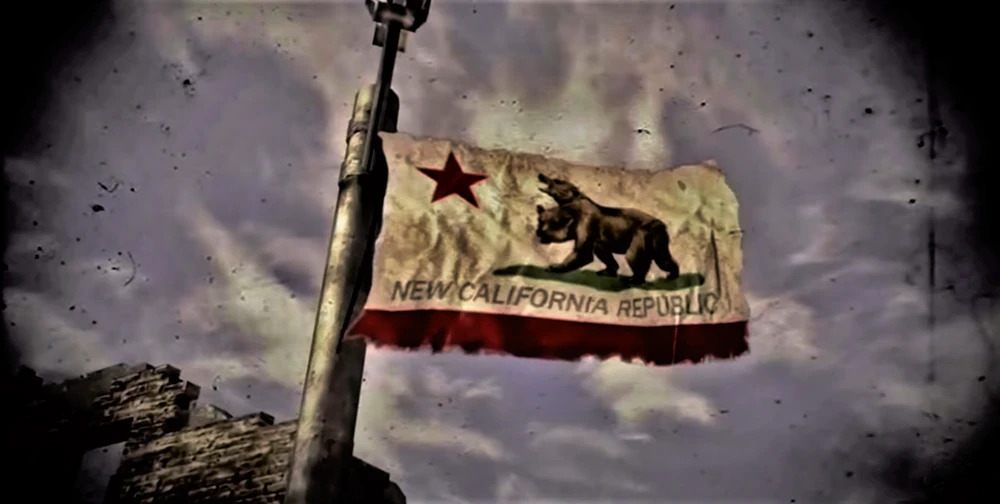
Caesar’s Legion is a brutal, authoritarian society led by Caesar, a former NCR citizen who founded it after conquering several tribes and molding them into a society based on his perception of ancient Rome. It enforces strict discipline and provides safety at a great cost to freedom. Caesar believes identity causes conflict and must be erased for peace; thus, every citizen of the Legion is nothing more than a resource used to further its goals.5
Any who resist the Legion are destroyed, enslaved, or crucified.6 The Legion clings to a warped vision of ancient Rome, but unlike the real Rome, the only thing holding it together is Caesar himself.7 The Legion is born of war and obedience, and most predict that once Caesar is gone, only war will remain — turned inward against itself.8 The Legion shows the consequences of forging a future based on a warped perception of the past.
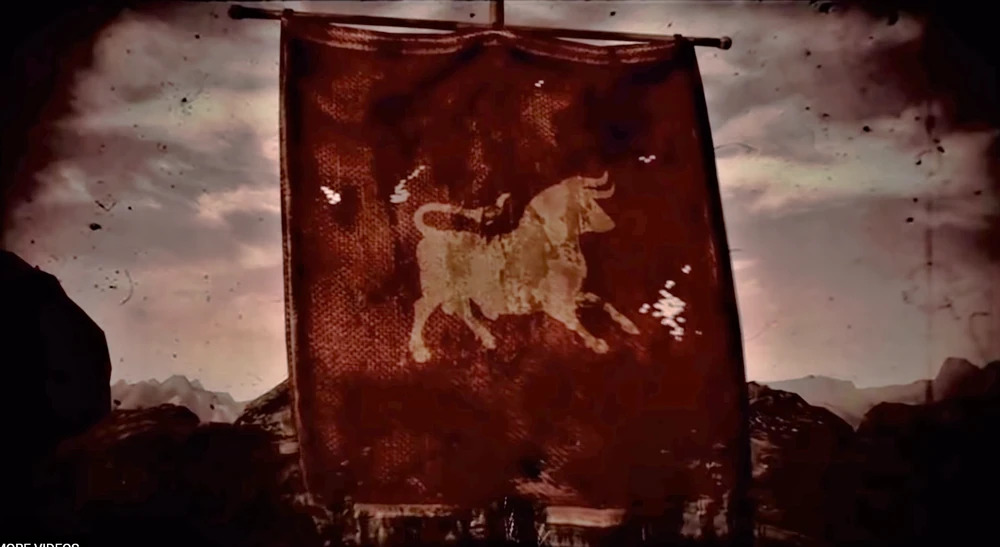
In the city of New Vegas, a wealthy pre-war businessman, Robert House, survives through advanced technology and commands an army of robots from his casino fortress. Using pre-war tech and calculations, he preserved his city from nuclear devastation.
He now rules it as a city-state, independent of the NCR and the Legion, protected by his robots and the Three Families — former tribals reshaped into factions modeled on old-world casino archetypes: the mafia-like Omertas, the fancy White Glove Society, and the Chairmen modeled after a Vegas-style “cool” aesthetic.9
House looks down on both the NCR and Legion and believes that he alone will lead the world into a better future as a technocratic autocrat.

While the other factions use the past to shape the future, Mr. House embodies the past itself. This is reflected in his vision, which exalts unchecked technological progress and rigid control, similar to pre-war America.10
Though he criticizes the NCR’s democratic inefficiency and blames it for the Great War, he fails to acknowledge how the hubris of corporate elites and unaccountable power, figures like himself, also led to ruin. Like the other factions, House cannot look beyond the past; his attempt to lead humanity forward is ultimately another repetition of what led it to the brink.
The Snake In The Checkered Suit
Amid the turmoil of the Mojave, the world is shaped by the actions of the player. They play as a courier whose delivery ends with being shot in the head by a man in a checkered suit.11 They survive and set out to track down the shooter: Benny, leader of the Chairmen and owner of The Tops casino on the New Vegas Strip.
The Chairmen were once the Mojave Boot-Riders, a tribe led by a man named Bingo. When Mr. House offered them a place in New Vegas, Benny was ready to accept, but Bingo refused. So, the two fought to settle the matter, and Benny came out victorious. Under Benny’s lead, the tribe joined the Three Families. While most were discontent with House’s imposed pre-war style, Benny embraced it and urged the others to follow, abandoning their old ways.

But his position as a casino owner still wasn’t enough. Benny plans to overthrow Mr. House by taking over the robot army, instilling the Chairmen as the dominant faction. The courier was unknowingly carrying something essential to that goal. Once he took the chip from them, they were simply another loose end.12
As one of the main antagonists, Benny embodies the darker side of “New Vegas’s” themes of reinvention. Where others struggle to let go of the past, Benny rushes into the future, so long as the future promises power. His story shows that sometimes it is better to hold on to what you have — especially if letting go entails murder and treachery.
Companions & Beginning Again Together
In “Fallout: New Vegas” (2010), there are several individuals that the player can choose as traveling companions. Each of them has stories tied to the themes of beginning again and letting go.
Craig Boone
One companion is Craig Boone, a former NCR sniper haunted by his wife’s enslavement at the hands of Caesar’s legion and his role in an NCR miscommunication that resulted in a civilian massacre. Numb to most feelings except for guilt and hatred for the Legion, he is slow to open up.
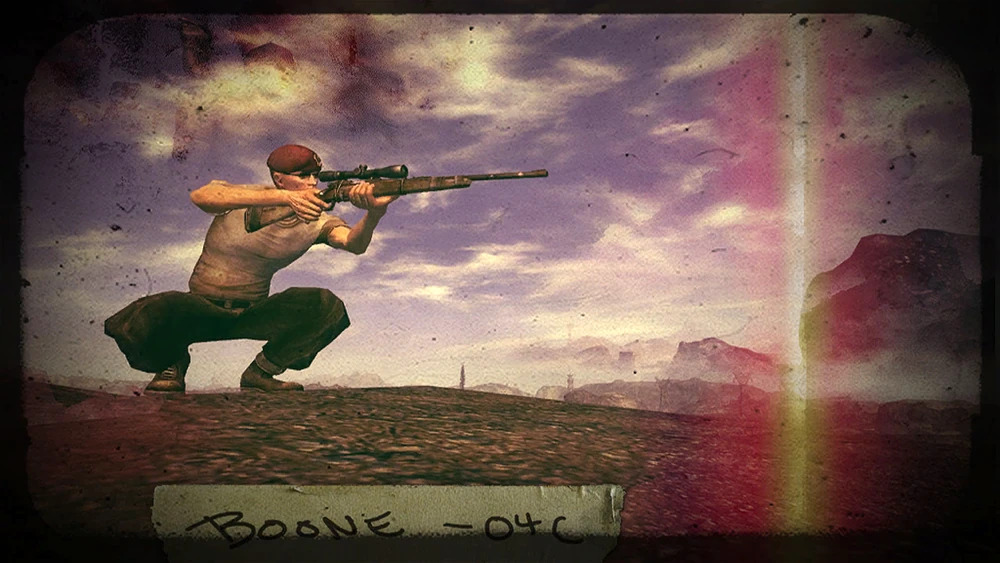
But he gradually does so if the courier helps the NCR. Eventually, the courier can guide him to make amends for the past instead of stewing in regret and resentment.13
Veronica
Another companion is Veronica, a seemingly chipper scavenger and member of the Brotherhood of Steel. She disagrees with her group’s isolationist ways and hopes to inspire change by showing them proof that their current path is making them fail their original mission: protecting the world from dangerous technology.
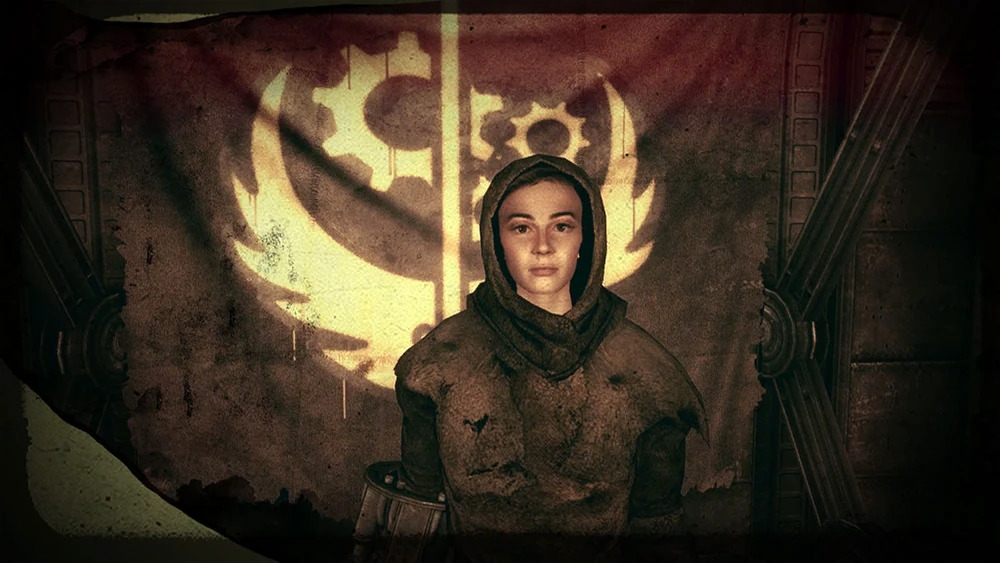
This hope is never realized, much to her dismay. The player can then advise her to stay or move on and put her talents to use with the more open-minded Followers of the Apocalypse.14
Raul
There is also Raul, a mechanic, former gunslinger, and ghoul—an irradiated human with a zombie-like appearance and an extended lifespan. Twice in his life, he failed to protect someone from raiders, and twice in his life, he retaliated with guns and righteous fury.

By the time he meets the courier, he is burdened by past losses and doubts whether he should keep fighting or finally rest on account of his old age. With the courier’s help, he decides whether to embrace retirement or take up his guns to fight those who would prey on the helpless.15
Companions In “Fallout: New Vegas”– Struggles, Growth, & The Power To Begin Again
Though only three of the eight possible companions are mentioned, they are united by the themes of “New Vegas:” each struggles to let go of something. Boone’s grief and vengeance, Veronica’s desire for her family to change, and Raul’s doubt in his usefulness as an old man.
The fact that the courier can encourage them to let go of these things and find ways to begin again shows how anyone can start anew so long as they are willing.
New Beginnings In The Mojave + Beyond
“Fallout: New Vegas” (2010) centers around the NCR, Caesar’s Legion, Mr. House, and their struggle to take Hoover Dam, a massive source of power. Each faction becomes obsessed with controlling the Dam, causing them to stagnate or drain them of resources.16 The war for the Dam ties into “New Vegas'” ideas of letting go by illustrating the consequences of obsession, a theme that is further explored in each of the four major DLCs.
Dead Money: Obsession Paves The Road To Hell (Sierra Madre)
Dead Money is the most direct with its message about obsession. It is set in the Sierra Madre, a city once meant to be a place where people could let go of their worries and begin again. Through a series of unfortunate events, it became a death trap. A lethal cloud surrounds the Madre, now populated by hostile holograms and undying “ghost people.”

A madman named Father Elijah captures people and forces them to help him break into the Sierra Madre to take the treasure rumored to be hiding within. The courier is taken as another of his victims.17
Father Elijah has abandoned all morality to seek its treasure. Two of the companions in the DLC are here because of an obsession. There is Christine, an assassin obsessed with her mission to kill Elijah.18 The second companion is Dean Domino, a pre-war singer-turned-ghoul who holds a centuries-old grudge against Frederick Sinclair.19 Sinclair, the proprietor of the Sierra Madre, originally built it to protect Vera Keyes, a woman he is obsessively in love with, from the bombs.
When he finds out that Vera and Dean are conspiring to rob him, his obsession darkens, and he converts it into something more like a prison. He ultimately perishes in the Madre’s vaults after forgiving Vera and attempting to undo his actions.20

Dean planned to rob the Madre because he hated Sinclair, and Sinclair took the path of revenge by turning it into a prison. Two hundred years later, Father Elijah arrived and lured countless to their deaths in his attempts to get in.
Perhaps none of this would have happened the way it did if any of these men had learned to let go. Dead Money teaches that obsession leads to no treasure, only hell.
Honest Hearts: The Demons Of The Burned Man (Zion Valley)
Honest Hearts follows the courier into Zion Valley, where they meet Joshua Graham, a man haunted by his violent past as Caesar’s former right-hand man. He is leading the Dead Horses tribe against the White Legs, a hostile tribe trying to join Caesar’s Legion. The courier is given a chance to help him and the native tribes of Zion.21

Honest Hearts is steeped in the themes of beginning again and letting go. But it shows the consequences of obsession mainly in Graham and the tribe that follows him. While he seeks redemption, his obsession with vengeance threatens to corrupt those around him.
This obsession culminates in a final choice to let the leader of the White Legs live or to spare him. The former strengthens Graham’s inner demons and causes the tribes he is allied with to idolize his violent behavior.22

But the latter gives him the chance to make peace with himself and sets an example of mercy for the tribes to look up to. Graham’s story reminds us how obsession can rot more than just our own hearts, but also the hearts of others if we do not learn to let go.
Old World Blues: Progress Without Meaning (Big MT)
In Old World Blues, the courier is taken to Big MT, a pre-war research facility where some of the smartest minds gathered. These scientists, referred to as the “Think Tank,” are still alive, preserved as brains in floating machines.
The bombs dropping prevented the government from intervening in their affairs, which caused them to start experimenting with little to no ethical restraints.23
They’ve created a variety of strange and terrifying things with their science, including but not limited to snake-coyote hybrids, giant tarantula hawk wasps, a gun powered by a dog’s brain, and a homicidal toaster.24

The Think Tank’s obsession with “progress” has driven them to madness. They create things with good intentions at first, only to forget the good intentions and continue developing them in new, terrifying ways. Some of their experiments have even gotten to the Mojave and the Sierra Madre.25
The chaotic experiments seen in the Big MT illustrate the dangers of becoming obsessed with poorly defined ideals, especially “progress.”
Lonesome Road: A Divide Between Couriers (The Divide)
In Lonesome Road, the courier is called to The Divide, a region plagued by deadly storms and hostile, skinless ghouls, by a fellow courier named Ulysses.26
He is something of a hidden antagonist, being the one who told Elijah about the Sierra Madre when the two met at the Big MT, trained the White Legs to fight, and turned down the platinum chip job, causing the courier to take it instead and initiating the main plot of “Fallout: New Vegas” (2010).
According to the lore of Lonesome Road, the courier has been to The Divide long before it became the inhospitable ruin seen in-game. Ulysses claims that they brought a delivery that caused several dormant nuclear missiles in the region to awaken and detonate after colliding with their sealed silo walls.
This caused the ground to split, killing those who lived there, as well as NCR and Legion forces sent to secure the land. Ulysses nearly died but managed to pull through. The courier dashed his hopes for a new home in Hopeville, one of the cities that once stood in The Divide.

Ulysses witnessed the assimilation and erasure of the identity of his tribe, the Twisted Hairs, at the hands of Caesar’s Legion. He served as a spy for the Legion until eventually losing his faith in it, believing that Caesar was all that was holding it together. He had no faith in the NCR either, because of their corruption and infighting.
When he got to Hopeville, he saw a chance for a new nation, something that could be stronger and better than the other two. When those hopes were burned away, he tried to derive a lesson from it.
All of this happened because the courier came and unintentionally activated the missiles with their package. It proved to him that sometimes a single person was all it took to make or break something bigger than themselves.
Once he learned of unlaunched nuclear missiles hidden in the Divide, he set out to return there and launch them at the NCR.27 He plans to wait for whatever rises from the ashes, perhaps something like the nation he saw in Hopeville.
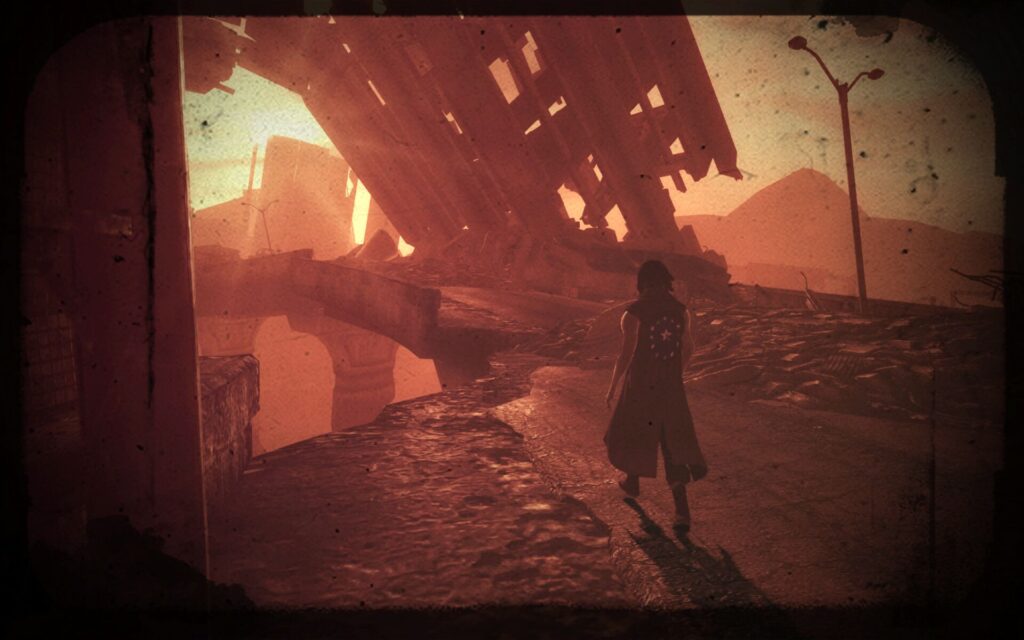
His convictions have driven him to the use of nuclear weapons, as did the convictions of those who launched the bombs all those years ago, dooming America to become a nuclear wasteland. His plan to launch nukes reflects how obsession and grief can twist into destructive conviction.
All of these stories come together to convey the consequences of obsession. They add to the inherent themes of beginning again and letting go by showing us how refusing to let go can be catastrophic.
“Fallout: New Vegas” (2010) — How Its Themes Of Renewal & Letting Go Make It One of the Best-Written “Fallout” Games
With its thematic consistency across nearly every aspect of the game, it’s no secret why “Fallout: New Vegas” (2010) is considered one of the best-written entries in the franchise.
By connecting all of its factions, companions, and stories with the themes of beginning again and letting go, “Fallout: New Vegas” (2010) manages to strongly convey them and highlight the messages that each application of these themes delivers.
It shows that a better future is held back when you can’t let go of the past, that it’s better to hold on to what you have if what you can gain is paid for in blood, that a person can always begin again, and that obsession can be a deadly thing.
Footnotes
- Wikipedia contributors, “Fallout: New Vegas”, Wikipedia, Accessed 14 August 2025. ↩︎
- “Fallout: New Vegas Intro,” Nukapedia: The Fallout Wiki, Accessed 14 August 2025. ↩︎
- “History of the New California Republic,” Nukapedia: The Fallout Wiki, Accessed 14 August 2025. ↩︎
- “Tribals,” Nukapedia: The Fallout Wiki, Accessed 14 August 2025. ↩︎
- “History of Caesar’s Legion,” Nukapedia: The Fallout Wiki, Accessed 14 August 2025. ↩︎
- “Caesar’s Legion,” Nukapedia: The Fallout Wiki, Accessed 14 August 2025. ↩︎
- Wikipedia contributors, “Roman Republic”, Wikipedia, Accessed 14 August 2025. ↩︎
- “Caesar,” Nukapedia: The Fallout Wiki, Accessed 14 August 2025. ↩︎
- “Robert House”, Nukapedia: The Fallout Wiki, Accessed 14 August 2025. ↩︎
- “United States of America”, Nukapedia: The Fallout Wiki, Accessed 14 August 2025. ↩︎
- “Fallout: New Vegas Plot”, Nukapedia: The Fallout Wiki, Accessed 14 August 2025. ↩︎
- “Benny”, Nukapedia: The Fallout Wiki, Accessed 14 August 2025. ↩︎
- “Craig Boone”, Nukapedia: The Fallout Wiki, Accessed 14 August 2025. ↩︎
- “Veronica Santangelo”, Nukapedia: The Fallout Wiki, Accessed 14 August 2025. ↩︎
- “Raul Tejada”, Nukapedia: The Fallout Wiki, Accessed 14 August 2025. ↩︎
- “Mojave Campaign”, Nukapedia: The Fallout Wiki, Accessed 14 August 2025. ↩︎
- “Dead Money”, Nukapedia: The Fallout Wiki, Accessed 14 August 2025. ↩︎
- “Christine Royce”, Nukapedia: The Fallout Wiki, Accessed 14 August 2025. ↩︎
- “Dean Domino”, Nukapedia: The Fallout Wiki, Accessed 14 August 2025. ↩︎
- “Frederick Sinclair”, Nukapedia: The Fallout Wiki, Accessed 14 August 2025. ↩︎
- “Honest Hearts”, Nukapedia: The Fallout Wiki, Accessed 14 August 2025. ↩︎
- “Honest Hearts Endings”, Nukapedia: The Fallout Wiki, Accessed 14 August 2025. ↩︎
- “Think Tank (faction)”, Nukapedia: The Fallout Wiki, Accessed 14 August 2025. ↩︎
- “Big MT”, Nukapedia: The Fallout Wiki, Accessed 14 August 2025. ↩︎
- “Cloud”, Nukapedia: The Fallout Wiki, Accessed 14 August 2025. ↩︎
- “Lonesome Road”, Nukapedia: The Fallout Wiki, Accessed 14 August 2025. ↩︎
- “Ulysses”, Nukapedia: The Fallout Wiki, Accessed 14 August 2025. ↩︎