
Table of Contents Show
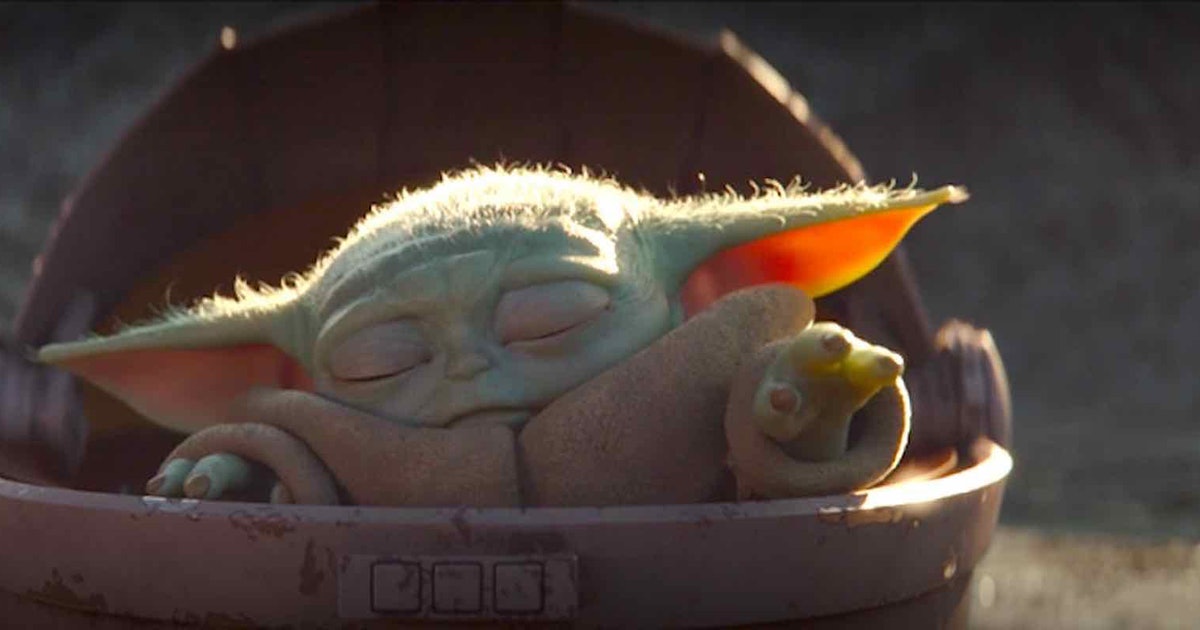
When Grogu is introduced in Star Wars: The Mandalorian [2019-], he is presented as an enigma rather than a character with a defined identity. He has no name, no spoken language, and no immediate explanation. The only thing we know is that multiple factions are willing to kill or capture him for unknown reasons. This lack of identity and explanation becomes the driving force of the early story.
Grogu’s importance is established through reaction rather than exposition. Din Djarin (The Mandalorian) is hired to retrieve him, the Client treats him as an asset, and Imperials pursue him with urgency. Before the audience understands who Grogu is, the narrative has already made it clear that he matters deeply to the galaxy’s power structure.
This approach differs from many traditional Star Wars character introductions, which often rely on explicit exposition, established lineage, or mythic framing to signal importance. Luke Skywalker is introduced through a classic hero narrative in which his role is gradually clarified through mentorship and revealed destiny, while Anakin Skywalker is immediately positioned as exceptional through prophecy and references to unprecedented Force potential.
By contrast, Grogu’s significance emerges through mystery and external obsession rather than narrative declaration, making his role feel politically and structurally important before it becomes personally defined.

Likewise, Anakin Skywalker is immediately framed as extraordinary through prophecies about the Chosen One and discussions of his unprecedented Force potential. Grogu, however, is introduced almost entirely through mystery. The audience learns about him indirectly through the fear, obsession, and desperation of others, which makes his significance feel political and symbolic before it feels personal.
Rather than being defined by prophecy or heroic destiny, Grogu’s importance emerges from the way competing factions attempt to control him, reinforcing the series’ themes of power, survival, and identity. Instead, Grogu’s value is communicated indirectly through the actions and anxieties of those around him, creating intrigue before revealing his identity or abilities.1
Fear, Survival, & Instinctive Force Use
Grogu’s earliest Force use stems from survival rather than training or intent. One of the clearest examples is the mudhorn incident in Season 1, where he lifts the charging creature to protect Din Djarin.2 The act is powerful but uncontrolled, causing Grogu to immediately collapse afterward, physically drained by the effort.
This pattern repeats across the series. When Cara Dune, a mercenary and key ally to Din Djarin (The Mandalorian) in protecting Grogu, threatens Din during a misunderstanding, Grogu instinctively uses the Force to choke her.

In each case, he uses the Force in response to emotional stress or danger rather than deliberate choice. These reactions frame the Force not as a heroic ability, but as a survival mechanism shaped by trauma and fear. Rather than acting with the calm discipline associated with traditional Jedi in Star Wars, Grogu responds like a child protecting the only safety and attachment he has left.
This distinction matters philosophically because it reframes the Force as something deeply connected to emotional experience rather than purely spiritual control or combat mastery.
In many earlier Star Wars narratives, emotional attachment is treated as dangerous because it can lead to fear, anger, and corruption. Grogu’s arc complicates that idea by suggesting that attachment can also become a source of healing, identity, and moral grounding.

Through him, The Mandalorian questions whether emotional detachment is truly necessary for balance, or whether rigid adherence to that philosophy contributed to past failures.3
These scenes establish a consistent pattern: Grogu’s connection to the Force is reflexive. It emerges under pressure, not through instruction. The Force, in his case, behaves less like a learned skill and more like an automatic response to threat and emotion.
This distinction reinforces the series’ portrayal of Grogu not as a fully trained Jedi, but as a traumatized child whose connection to the Force is inseparable from his fear, survival instincts, and emotional vulnerability.
Growth Outside The Jedi System
Jedi training emphasizes control through discipline and emotional restraint, while Grogu’s development comes from experience, stress, and attachment.4 In The Mandalorian, his progression is shown less through dialogue and more through a steady accumulation of small behavioral changes.
Early on, his use of the Force is brief, instinctive, and often leaves him exhausted, suggesting a raw power he cannot yet control or sustain. Over time, this pattern shifts in subtle but consistent ways: he can maintain Force actions for longer periods, apply them with greater precision, and recover more efficiently without the same level of physical strain.

For example, in “The Jedi” (Season 2, Episode 55), Grogu shows better control. A clear example of this progression appears when Grogu levitates a stone sphere, sustaining focus for longer periods than in earlier instances of Force use. His control also becomes more refined over time: early on, he reacts repeatedly under stress with uncoordinated bursts of Force energy, while later his responses are fewer, more deliberate, and more efficiently executed.
This shift is also visible in how he manages the physical cost of his abilities. Earlier, even relatively advanced acts — such as healing others — leave him immediately exhausted and unable to continue, whereas later minor Force applications produce little to no noticeable recovery delay, indicating improved efficiency in low-intensity use even as high-exertion actions remain taxing.
At the same time, his use of the Force becomes more selective. Where he once responds to stress with frequent, instinct-driven activation that escalates under emotional pressure, he later demonstrates more restraint, intervening only when necessary and with greater control over duration and intensity.
Finally, his awareness develops from immediate reaction to anticipatory perception. Instead of only registering emotional cues or responding after contact, he begins to anticipate incoming threats during training scenarios, suggesting a developing integration of emotional sensitivity with emerging tactical awareness.

Across these patterns, Grogu’s development is characterized less by structured mastery and more by gradual refinement in informal, non-institutional settings. His trajectory departs from the Jedi framework not in its result, but in its underlying structure: it is fragmented, relational, and reactive rather than systematic and doctrinal.
In doing so, The Mandalorian challenges the idea that meaningful growth requires strict institutional discipline and emotional detachment. Grogu learns primarily through lived experience, personal relationships, and survival rather than through rigid hierarchy or formal instruction, yet the series still presents his growth as legitimate and morally constructive.
This distinction is significant because the Jedi Order in earlier Star Wars narratives often treated structure, control, and separation from attachment as necessary safeguards against failure. Grogu’s progression suggests the opposite: that emotional connection and informal guidance may foster a healthier relationship with the Force than strict doctrine alone.
His bond with Din Djarin becomes a source of stability rather than corruption, contrasting sharply with earlier Jedi fears surrounding attachment in characters like Anakin Skywalker. By portraying Grogu’s fragmented development as both effective and emotionally grounding, the series implies that wisdom and balance do not need to emerge exclusively from institutions like the Jedi Order.
Instead, The Mandalorian reframes growth as adaptive, relational, and deeply personal, suggesting that identity and morality are shaped as much by connection and care as by formal teaching.

Some viewers may argue that Grogu does not fundamentally redefine Force development at all, but instead continues long-established Star Wars themes surrounding unconventional mentorship and innate Force ability. Characters such as Luke Skywalker and Anakin Skywalker also developed outside traditional Jedi systems at important stages of their journeys, suggesting that informal guidance and emotional attachment have always existed within the franchise.
From this perspective, The Mandalorian may not be rejecting earlier Jedi ideas so much as extending an already established pattern in which personal relationships influence growth alongside formal training. However, the series places far greater emphasis on emotional connection as a stabilizing force rather than a potential weakness, making Grogu’s development feel distinct from earlier portrayals of Jedi progression.
However, this interpretation underestimates the degree to which The Mandalorian shifts emphasis from exceptional “chosen” trajectories toward sustained, everyday relational development. While earlier characters occasionally deviate from Jedi orthodoxy, their arcs still ultimately resolve through engagement with institutional or quasi-institutional structures of training and destiny.

Grogu’s progression, by contrast, is not anchored to prophecy, formal mastery, or integration into the Jedi Order, but to iterative experience shaped by survival and attachment outside any stable institutional framework. This distinction matters because the series does not merely show Force ability developing informally — it consistently frames that informal, relational mode as sufficient and even preferable for stability and ethical action.
As a result, what may appear as continuity with earlier Star Wars narratives is actually a recalibration of what counts as legitimate development within the Force itself.
Identity, Belonging, & The Choice Between Paths
Unlike a traditional Jedi apprentice, Grogu has no consistent training path. His abilities develop sporadically in gaps, interruptions, and survival situations rather than structured lessons. This is significant in Star Wars lore because Jedi training is traditionally rigid, disciplined, and carefully supervised from early childhood to teach emotional control and prevent fear or attachment from influencing the Force.
Even when Luke Skywalker briefly trains him, the focus is not on expanding aggression or combat skills. Instead, Luke emphasizes calm focus and detachment when Grogu is asked to choose between the chainmail and the lightsaber.6 That moment reveals more than a conflict between discipline and attachment; it also becomes a question of identity and belonging.

Grogu is forced to decide whether he belongs within the traditional Jedi Order or alongside Din Djarin, whose care has shaped his sense of safety, connection, and self. Rather than fully embracing the isolated identity expected of a Jedi, Grogu chooses a path that blends attachment with individuality, suggesting that his development challenges older Jedi ideas about what belonging and balance should look like. That moment shows the core tension of his arc: control versus attachment.7
Grogu does not reject the training itself; he simply does not experience it as a complete, continuous Jedi system.
Attachment As Emotional Stability
Grogu’s relationship with Din Djarin serves as one of the series’ most consistent emotional anchors. What starts as a guardian-child relationship gradually develops into mutual attachment, subtly influencing Grogu’s behavior throughout the story.

Across multiple episodes, such as Season 2, Episode 58 mentioned above, Grogu’s emotional state clearly affects his Force usage. When Din is nearby and safe, Grogu is calm and less emotionally agitated. When separated or threatened, his abilities become more unpredictable and emotionally charged.9

This dynamic is especially clear in moments where Grogu reaches out both emotionally and physically when Din tries to leave, or shows distress when Din is injured or not present. He also uses his abilities in direct defense of Din when he is threatened. Over time, Din becomes a central parental figure in Grogu’s life.10
Rather than framing attachment as a weakness, the series repeatedly shows it as a stabilizing influence in Grogu’s development. His bond with Din Djarin functions as a consistent emotional anchor, giving him a relational framework through which his abilities are directed rather than suppressed. This stands in direct contrast to traditional Jedi models in Star Wars, where attachment is often positioned as the primary vulnerability that leads to fear, loss, and ultimately the dark side.

Grogu’s trajectory, therefore, reconfigures what “discipline” looks like within the Force. Instead of achieving control through emotional separation, he develops stability through emotional connection — his choices are shaped not by detachment from others, but by his sustained commitment to them.
In this sense, The Mandalorian does not simply soften Jedi philosophy; it actively reorients it, suggesting that relational bonds can function as ethical grounding rather than moral risk. Grogu’s development ultimately positions attachment not as the opposite of mastery, but as one of its possible foundations.11
Redefining What Force Maturity Looks Like
Grogu’s development is shown through behavioral progression rather than direct explanation, moving from instinctive Force responses toward increasingly deliberate and controlled use over time.12 His Force use becomes more controlled, selective, and efficient, reflecting a shift from immediate reaction to deliberate action.
These developments are never explicitly explained to the audience; instead, they are conveyed through repetition and contrast across different situations. This narrative pattern ultimately emphasizes Grogu’s increasing capacity for self-regulation, suggesting that his growth is not simply about accumulating power, but about learning when not to use it. Through that progression, The Mandalorian challenges the traditional Star Wars assumption that strength is defined primarily by combat ability or mastery of the Force.
Instead, the series frames maturity as emotional restraint, relational awareness, and the ability to choose compassion over impulse. Grogu’s development suggests that true balance comes not from suppressing emotion entirely, as the Jedi often attempted, but from understanding how to act responsibly while still maintaining attachment and connection to others.

His more selective engagement with the Force reflects a shift from instinct-driven reaction to emerging intentionality, where restraint itself becomes a form of development. Likewise, his faster emotional recovery after intense encounters signals not just adaptation, but a growing resilience that allows him to navigate threat without becoming fully destabilized by it.
Across the series, this creates a clear throughline: Grogu is not simply growing stronger, but becoming more deliberate in how and when he uses his abilities. His growth is measured less in raw power and more in control, awareness, and restraint.
Redefining Power & Identity In Star Wars
Grogu’s arc ultimately reframes what power means within the Star Wars universe by directly opposing traditional Jedi models of development, which privilege detachment and structured mastery. Instead, his growth — shaped by survival, attachment, and lived experience — suggests that power can also emerge through relational and emotional grounding.

In doing so, he introduces a model of Force use that does not separate emotion from control, but instead shows how stability can emerge through relationships rather than isolation. Grogu does not merely redefine power; he represents a character constructing identity outside inherited systems, suggesting belonging can emerge through chosen relationships rather than institutional expectations. In that sense, Grogu is not just a powerful character. He is a quiet redefinition of how power itself is understood in the galaxy.
Footnotes
- Ward, Cassidy. “Science Behind the Fiction: Baby Yoda Can Use the Force. How Do Baby Animals Compare?” SYFY Wire, November 27, 2019. ↩︎
- Sideshow. “Grogu’s Most Powerful Force Abilities.” Sideshow Blog, June 13, 2024. ↩︎
- Bacon, Thomas. “Why Baby Yoda Gets So Tired After Using the Force.” ScreenRant, December 5, 2020. ↩︎
- Bacon, Thomas. “What Grogu Really Learned From Luke Skywalker’s Jedi Training,” ScreenRant, September 11, 2022 ↩︎
- Ryan Leston, “The Mandalorian Season 2 Episode 5 Recap & Review: ‘The Jedi,’” Coming Soon, November 27, 2020. ↩︎
- Bacon, Thomas. “Luke Skywalker’s Grogu Test Unwittingly Shows His Hypocrisy.” ScreenRant. February 19, 2022. ↩︎
- Romano, Nick. “The Book of Boba Fett: Why Grogu’s Choice Matters,” Entertainment Weekly, February 2, 2022 ↩︎
- Ryan Leston, “The Mandalorian Season 2 Episode 5 Recap & Review: ‘The Jedi,’” Coming Soon, November 27, 2020 ↩︎
- Di Placido, Dani. “‘The Mandalorian’ Season 3: Why Are Mando and Baby Yoda Reunited?” Forbes, January 17, 2023. ↩︎
- Youtini. “The Complete Story of Grogu.” Youtini, March 14, 2024. ↩︎
- “Grogu.” StarWars.com Databank. Accessed May 15, 2026. ↩︎
- Saavedra, John. “The Mandalorian’s Grogu: Baby Yoda’s Real Name and Star Wars Origin Explained.” Den of Geek, November 27, 2020. ↩︎