
Table of Contents Show
The Harry Potter books, penned by J.K. Rowling from 1997-2007, was a global phenomenon unlike anything else in the 2000s. However, it was never without its critics, leading to bans1, and even book burnings,2 long before Rowling’s transphobia came to light.3

Due to this initial backlash about witchcraft4, conservative Christians were quick to provide children with a more “moral” substitute, The Chronicles of Narnia (1950-56) by Christian apologist C. S. Lewis. These two fantasy series have a surprising amount in common, including their decidedly mixed legacies and upcoming reboots.56
Morality, Myth, & The Rise Of Pottermania In Children’s Literature
Harry Potter and the Philosopher’s Stone (1997) (or as it was known stateside, Harry Potter and the Sorcerer’s Stone (1998)) sold over 100 million copies, one of the best-selling books of all time.7 It was a popular title to read to grade schoolers,1 which might have helped popularize it with children, who would go on to read the series on their own.
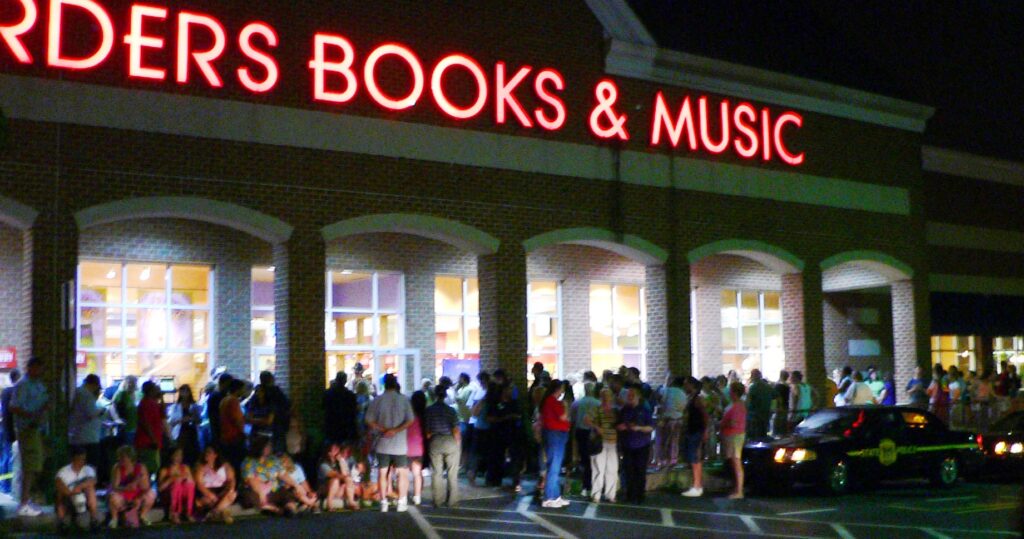
“Pottermania”8 permeated pop culture in those days, spawning legendary midnight release parties.9 Societal ideals shifted in an unprecedented way for children’s media, leading to Harry Potter becoming the best-selling children’s book series of all time.10
Harry Potter (1997-2007), Witchcraft Fears, & The Christian Backlash
Perhaps due in part to this pop-culture saturation, conservative Christians were far more leery of these books than otherwise. There have always been sects of Christianity that frown upon any secular media, but few outright ban it, even for their own families. There is one area where Christians tend to be overreactive, however: Witchcraft.
Witchcraft (especially in the early 2000s) was associated with pagan rituals, and many parents still remembered the Satanic Panic of the eighties.11 Despite the fact that Harry Potter‘s “witchcraft” was merely waving wands to cast (mostly benign) spells, that word triggered conservative Christians, resulting in many bans.1213
In light of Harry Potter‘s success, Christian parents wanted a “safe” alternative (despite the fact that Rowling herself was a Christian14). The Chronicles of Narnia was, if not equally compelling, then alluring in a different way, and written by famed Christian convert15 (and friend of Tolkien16) C.S. Lewis.
Aside from the Narnia books, Lewis was most famous for his book Mere Christianity (1952); he was an ardent Christian, after a phase as an atheist in his youth (he credited Tolkien for leading him back to faith13). Thus, much like The Lord of the Rings (1954-55), many Christians gave The Chronicles of Narnia a pass for its use of magic, thanks to its reinforcement of Christian values.17
Harry Potter Vs. Narnia — Two Distinct Approaches To Fantasy Storytelling
While Harry Potter focused on building a plot over the course of the whole series, the Narnia books were relatively episodic — even the cast shifts over the course of the series. The main appeal of Harry Potter was the pacing and mysteries, with each book having its own driving question that would ultimately contribute to the larger plot of Harry’s conflict with Voldemort, seeing how the hero would defeat the villain.

The format was relatively repetitive (especially in early books), following the same pattern of each school year, but perhaps that helped with readability, which was especially noteworthy considering that the later books were well over 500 pages long. The fact that kids could (and would) race through these books in a day or two was no easy feat.
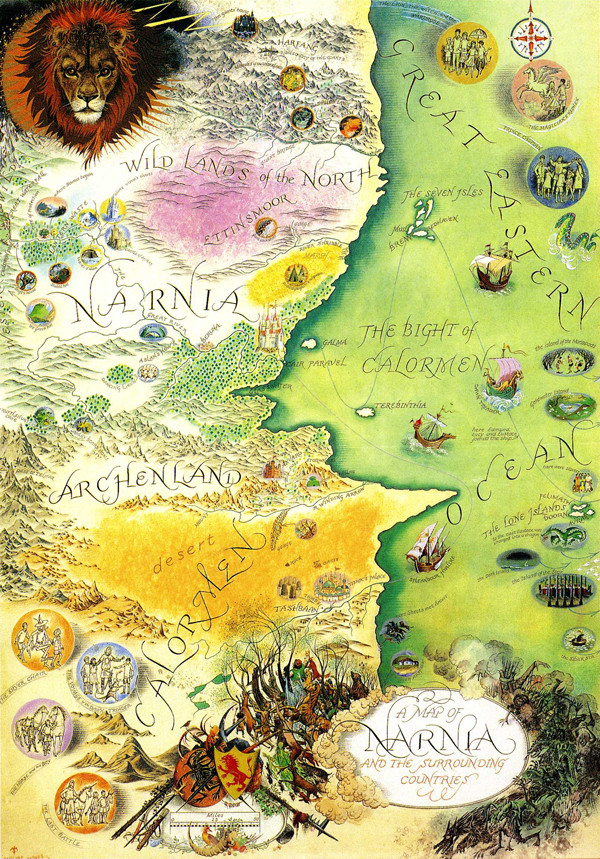
The Chronicles of Narnia, on the other hand, is about exploring the world of Narnia, telling a story from Narnia’s birth in The Magician’s Nephew (1955) to its ultimate demise in The Last Battle (1956). Each book has a unique tone and aesthetic, and is made to be savored slowly, one chapter at a time.
Content/Context — The Values Behind Harry Potter & Narnia
Beyond getting kids excited about reading, both series carry distinct moral frameworks. Harry Potter leans toward moral complexity, personal choice, and the gray areas of good and evil, while Narnia delivers more allegorical, faith-based lessons tied to divine order. Each invites readers into a different vision of courage, loyalty, and the fight for what’s right.
Heroes, Saviors, & The Politics Of Fantasy
The central conflict of Harry Potter is Harry finding a way to defeat Voldemort. There are, naturally, groups in support of both, but it ultimately comes down to a duel between the two, emphasizing the necessity for a singular hero — or perhaps, a savior.
This is similar to the plots of The Lion, the Witch, and the Wardrobe (1950) [“LWW“] and Prince Caspian (1951), wherein the protagonists play a key role in overthrowing a tyrannical ruler (The White Witch in LWW and Miraz in Caspian).

Peter is typically deferred to as the leader of the Pevensie children by dint of being the eldest, but the younger siblings have roles to play, too. Aslan, however, is the one who saves the day in both books, implying that everyone must do their best to save the day as they are able. Aslan is also the one who dies and is resurrected in LWW for the sake of Edmund, while Harry himself takes that savior role for all of Hogwarts at the end of the series.

Harry, being the one hero destined to save the world from an outside fascist takeover, sets a dangerous precedent, but one in line with conservative ideology — and Lewis presents similar situations, even if he avoids singular heroes in favor of divine intervention.
In addition to the foreign tyrants of LWW and Prince Caspian, The Silver Chair (1953) presents a similar threat, if one that hasn’t yet taken over, in the form of the Lady of the Green Kirtle. The only times that threats arise from within the Narnian population are when they forget Aslan, with godly rulers having peaceful reigns (aside from the king in The Last Battle).
Racism & Representation
And speaking of the flaws Harry Potter and Narnia share, now we come to racism. Narnia’s racism is mostly concentrated in the characterization of the Calormenes, a people to the south of the country of Narnia who are depicted as dark-skinned, participating in the slave trade, and wanting to take over Narnia and form an empire.
They are also the only people in that world who seem to have an organized religion (mainly centered on worshipping a demon and human sacrifice, naturally), a sort of orientalist mishmash of Islam and Hinduism. This culture mainly features in The Horse and His Boy (1954), but it rears its head again in The Last Battle, when they finally manage to take over Narnia thanks to some treacherous Animals.

The racism in Harry Potter is more subtle (seeing as the story is ostensibly opposed to racism), but perhaps more insidious. One of the more blatant examples is the portrayal of the goblins as antisemitic caricatures, based partly on their appearance and partly because they control the banks.18
The non-white characters are also largely tokenistic in nature, most notably Kingsly Shacklebolt and Cho Chang. Cho Chang is particularly egregious for the name alone, as not only does it consist of two last names, but two Korean last names for a Chinese character.19
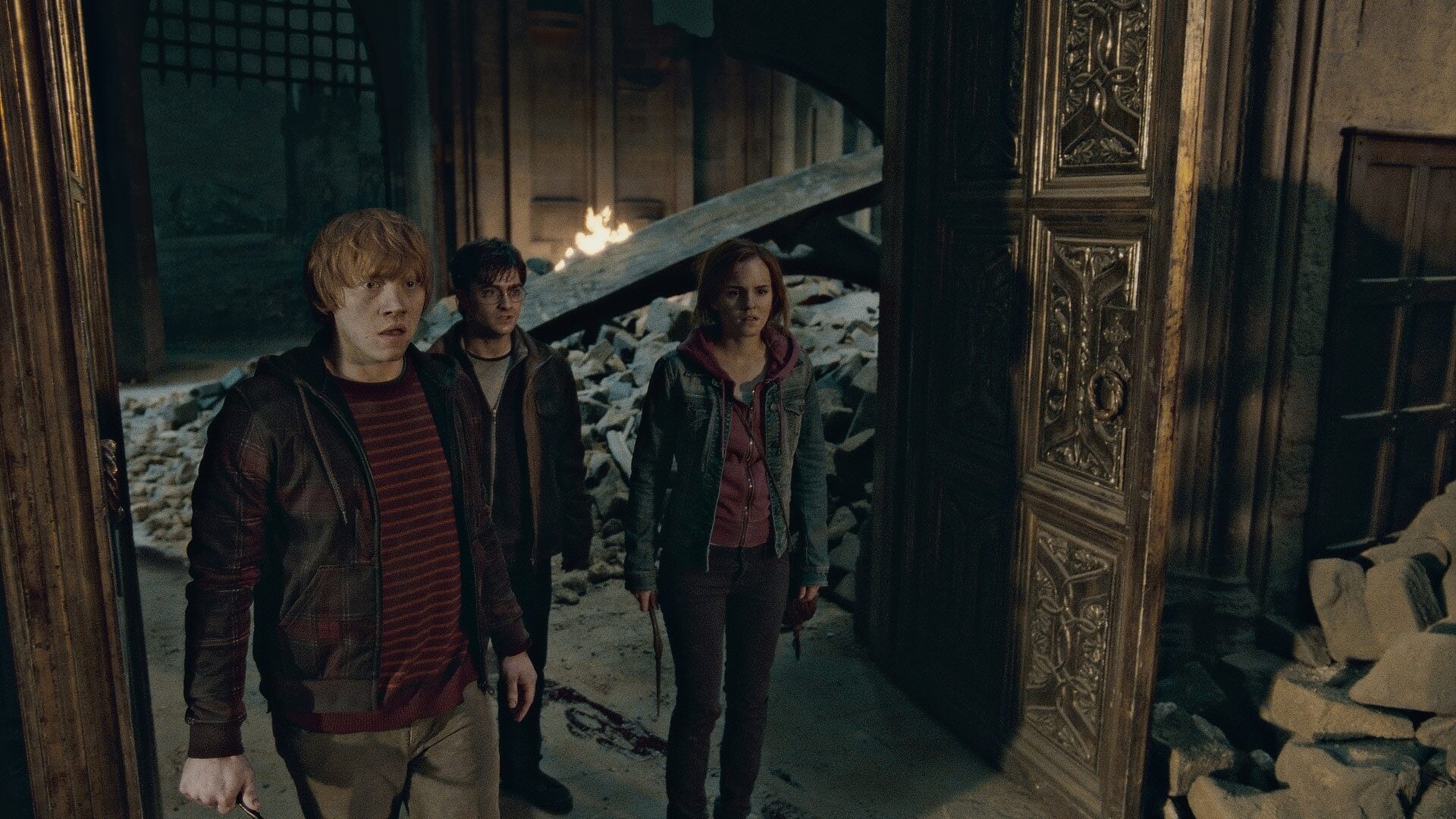
Ultimately, Chang only serves as a non-white romantic false lead for Harry before she all but disappears in the last book. And then we get to the House Elves, who totally enjoy their slavery (at least Lewis depicted slavery as definitively bad).
Wizards, Humans, & Anthropocentrism
This leads into a discussion of wizard and human supremacy in the narratives of both. J.K. Rowling and C.S. Lewis seemed to be enjoying the fantasy element so much that they didn’t consider the ramifications of the existence of other sentient species.
In Narnia, there are a variety of different sentient beings (the Talking Animals, dwarves, tree and water spirits, etc.), but only humans are “meant” to rule Narnia, despite the fact that they themselves come from a different world.
It makes the other creatures seem like lower-class citizens. While the “good” rulers treat all their subjects equally, in a monarchy, there’s always a chance that the next ruler will mistreat their subjects.
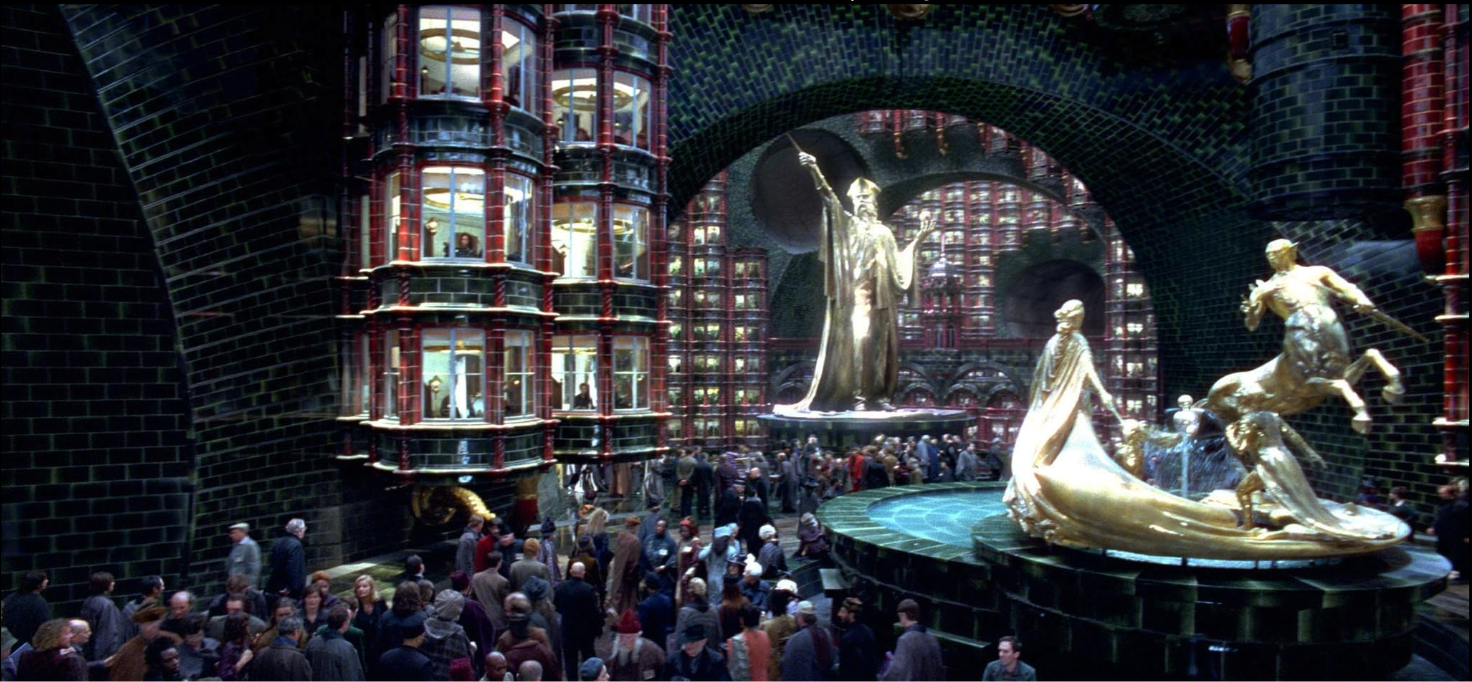
Harry Potter has a similar issue with wizards effectively ruling the world, even though they are a relatively small portion of the population, even among humans (let alone people like centaurs and goblins). And the wizards even demonstrably treat Muggles as second-class citizens, giving them no representation in the wizard government, despite the fact that the doings of wizards frequently impact their lives.
Sex, Sexuality, & Gender Roles
Finally, let us consider the treatment of female characters. In Harry Potter, Hermione is generally the most competent person in the main trio, but she is also dismissive of other girls and “girliness” in general. Additionally, she’s left with most of the emotional labor in the friendship, because heaven forbid Harry and Ron be left to process emotions on their own.
This is a common theme for Harry Potter‘s women and girls — the really girly ones are either mocked or vilified, with the most hated villain being not Voldemort, but Dolores Umbridge with her girlish affect. Additionally, all of the characters pair off in heterosexual relationships at the end (and the queer or queer-coded characters are killed off to boot).

Narnia’s issues with sexism are similarly complicated. In The Lion, the Witch, and the Wardrobe (the first book Lewis wrote), he explicitly states (through Santa Claus, no less) that, “battles are ugly when women fight.”
Evidently, he got flak for this even back then, and as early as The Voyage of the Dawn Treader (1952), he walked this sentiment back, with Lucy fighting as an archer, and Jill ends up an archer, too (in addition to Aravis, who is probably a better fighter than Shasta).
Lewis & The Susan Problem
Susan is a different story. She’s easily the most feminine of the girls, being an excellent archer, but refusing to fight. This “gentleness” gets her into trouble in The Horse and His Boy, when she’s a queen of Narnia, and she accidentally leads on an evil prince, almost starting a war.
But the infamous “Problem of Susan,” where she stops believing in Narnia because she’s too interested in “nylons and lipstick,” seems to represent both a condemnation of girly-girls and of any sexuality. Indeed, there is a consistent lack of sexuality throughout the series, only partly due to the main characters being children.

Lewis remained a bachelor well into his fifties and likewise wrote most of his characters as uninterested in romance. The only time he has protagonists get married at the end is in The Horse and His Boy, a story where marriage is a key plot point. In terms of gender roles, they’re more or less equal, although the boys tend to get more development (Susan has little to no development in LWW).
Religion & Inclusivity
One area unique to Narnia is the prominence of religious themes and allegory. There are frequent discussions about God, and even the occasional philosophical argument.
One aspect that comes across as uniquely progressive (even in this day and age) is the case of Emeth, who got into heaven despite being a fantasy-Islam, essentially because he was faithful and did what he thought was right. Part of the point of The Last Battle is that you can’t always tell who will get to heaven. The atheists, on the other hand, had far crueler fates.
A unique aspect of Harry Potter is its attempts at fostering inclusivity. While it falls short in many ways, like the complete absence of explicit queer representation in the books (Rowling didn’t even announce that Dumbledore was gay until after the last book came out20), or the racism or ableism,21 it made the attempt, and that resonated with audiences.
Rowling didn’t seem to understand how bigotry and fascism worked in the real world, as evidenced by the very existence of Slytherin, a house that is explicitly founded on racism, which the other students of Hogwarts are expected to tolerate. However, a lot of her fans did understand how those sorts of systems worked, hence why it’s practically a rite of passage for leftists to critique Harry Potter for its failures.
How Adaptations Reshaped The Novels’ Messaging
While The Chronicles of Narnia had various radio and television adaptations over the years (including the first animated feature film made for television by Bill Melendez), we will focus on the feature film adaptations, which begin with Harry Potter.
The Harry Potter Films — Faithful, To A Fault?
Rowling worked directly with the filmmakers, and evidently, what she wanted was a faithful adaptation, which they largely gave her. With the exception of Harry (accidentally?) killing a professor in his first year, the main plot was never fundamentally changed; there were also a few action set pieces added in later films, but the main issue they all ran up against was what to cut. The requisite Quidditch sublot was cut once or twice, but the main losers were the non-human characters, mainly the House Elves.

In Harry Potter and the Goblet of Fire (2000), after Hermione discovers that Hogwarts keeps House Elves (and seeing the mistreatment of Winky, who used to belong to a Ministry of Magic official), she is appalled.
She starts protesting to allow them literally ANY rights, but all of the other characters dismiss her concerns because “they like to work,” and take offense at being paid, so clearly she’s wrong to want to liberate this underclass.
Even if Hermione is mocked for this and “proven wrong,” it’s still the only time in the entire series that characters actually question the modus operandi of the wizarding world. And naturally, it was cut from the film, along with the entire character of Winky.
While it seems understandable for the filmmakers to focus on the human characters (which generally require less special effects), the absence of contributions from non-human people (even what little they did in the books) works to the detriment of a film series that is supposed to be opposed to racism.
The Narnia Films — Updated, For Better & For Worse
The Chronicles of Narnia, having a substantial history of adaptation under its belt, was ready enough to accept change. Douglas Gresham, Lewis’s stepson, who is also responsible for his IP, clearly understood this.
The Lion, The Witch, And The Wardrobe (2005)
The Lion, the Witch, and the Wardrobe was a product of the fantasy boom in the early 2000s, spearheaded by The Lord of the Rings trilogy and, naturally, the Harry Potter films. The main influence one can see from The Lord of the Rings, besides Weta Workshop (the company responsible for the practical effects of both series), is the big battle at the end, which was mostly offscreen in the book, since Aslan and the girls only show up at the end of it with reinforcements.

Notably, Father Christmas’s line is cut short in the film, so he only says, “Battles are ugly affairs,” and all of the children seem to be preparing to fight in the battle (but Lucy mostly sits it out). This is a huge change to Susan’s character, but it’s understandable that they’d want to give her more to do.
The Chronicles Of Narnia: Prince Caspian (2008)
The Chronicles of Narnia: Prince Caspian (2008) changed things up more significantly, but arguably to better effect. The most obvious change was the racebending of the Telmarines (Caspian was blond in the books, although they were descended from pirates).
It makes sense in the context of the story, and in such an overwhelmingly caucasian story, it’s a welcome change…but they’re still the tyrants, so it’s something of a lateral move. The film also explores the effects of oppression more deeply than the book.
The Pevensies are fleshed out more, Susan is still an archer girl, and they also add a romantic “subplot” between her and Caspian (it’s really just a couple of looks and a kiss), indicating that the filmmakers weren’t committed to the “no romance” angle.
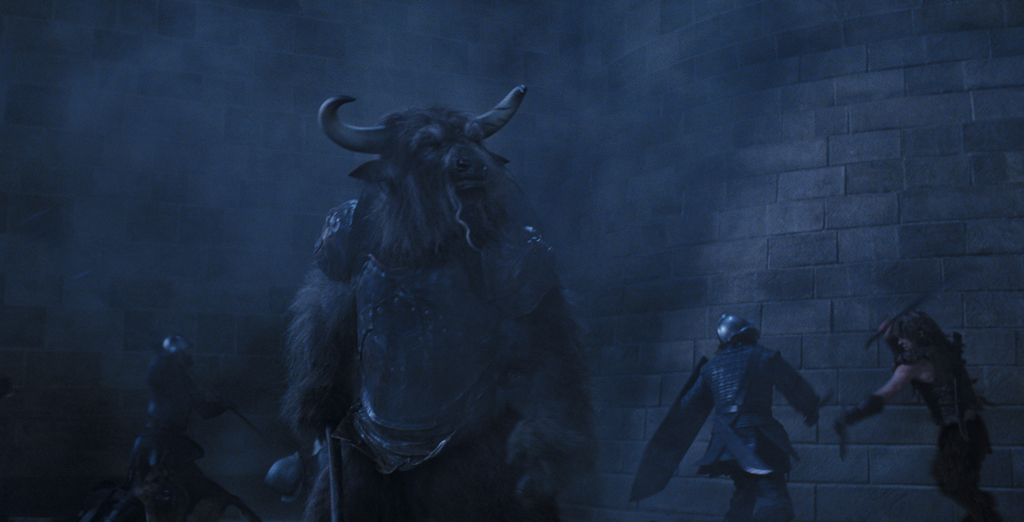
Additionally, they added creatures like minotaurs, who were relegated to being “evil creatures” in the books, to the ranks of the good guys (presumably because they’re cool). It’s subtle, but it shows that evil isn’t quite so black and white in the films.
The Voyage Of The Dawn Treader (2010)
Finally, there’s The Voyage of the Dawn Treader (2010), when the changes become overbearing. The problem is, Dawn Treader doesn’t really have a plot, just a quest, and things happen that may or may not have bearing on said quest. But the filmmakers tried to crowbar a plot in, anyway, and it was a mess.
They added a stowaway girl, and they had Eustace stay a dragon until the finale (which is, like the battle in the first movie, pretty much par for the course). They also changed Lucy’s character arc slightly, so instead of wanting to be more beautiful than Susan, she wants to be Susan.
Reboots & Reimaginings — What Is At Stake In The New Adaptations?
The new Netflix series is a huge deal for The Chronicles of Narnia, as the only adaptations to cover all seven books thus far have been radio programs.22 Greta Gerwig has signed on to make the first two films, beginning with The Magician’s Nephew (2026), and presumably going in “chronological order,” following it up with The Lion, the Witch, and the Wardrobe.23

It’s particularly exciting because the Disney films weren’t made by big-name directors, but Gerwig has experience adapting a classic novel in a way that satisfies the purists while also updating it (Little Women 2019).
What’s more, Douglas Gresham has proven himself willing to make significant changes for adaptations, so Gerwig may have more leeway. Significantly, The Magician’s Nephew is also the most overtly feminist book (or at least, the least sexist) in the series, which Gerwig could definitely highlight.
While there’s no telling who will be hired to adapt the other books, it looks to be in capable hands. There are plenty of themes in the books that have yet to be explored — for instance, if they changed the Calormene religion so that it critiques all forms of religious extremism (including Christianity), it could help lessen the xenophobia of the original text.

The new Harry Potter series, on the other hand, seems mostly superfluous. The film adaptations were already extremely faithful; it looks like a cynical cash-grab after the failure of the Fantastic Beasts movies.24 While there has been more diverse casting (with both Snape and Hermione cast as people of color), it feels more like liberal pandering to make everyone forget Rowling’s very real transphobia.
Because Rowling hasn’t just been vocal, she’s consistently funded transphobic causes.25 For someone who wrote a whole series about standing up to fascism and bigotry to now be standing side by side with fascists and bigots is deeply ironic and tragic. Despite so many people critiquing Harry Potter in good faith in the decades since its release, Rowling doesn’t seem to listen to any of it.

The TV show will only be another reiteration of the same story, and even if they cast multiple diverse people, that doesn’t change the fact that it’s putting more money into Rowling’s billionaire purse,26 money she’ll likely put to more transphobic ends.
To be fair, Douglas Gresham worked with Focus On The Family, a conservative Christian organization, to produce a radio drama in the early 2000s, but he’s generally a private person and hasn’t made news in over a decade. And at least he seems well aware that The Chronicles of Narnia overall is not perfect.
Legacy/Imagination — What Endures, & Why It Matters
From children investigating wardrobes for hidden worlds, to pretending they’re wizards and playing Quidditch with their friends, these are both stories that sparked the imaginations of children around the world.
The Chronicles of Narnia spurred the creation of Phillip Pullman‘s His Dark Materials (1995-2000), and even Harry Potter itself.27 Harry Potter, in turn, inspired the creation of stories like Steven Universe (2013-19) and The Owl House (2020-23).
However, we must be careful not to put these stories on pedestals. As discussed earlier, both of these series have flaws, but the authors responded to criticism differently.
Lewis acknowledged his sexist writing early on, and eventually improved in that area; Rowling, on the other hand, never seemed to take critiques to heart. Nearly 75 years later, The Chronicles of Narnia still resonates with children deeply; 50 years from now, will that be true for Harry Potter?
Footnotes
- Flanagan Knapp, Nancy. “In Defense of Harry Potter: An Apologia”. School Libraries Worldwide, Vol. 9, no. 1, 2003, pp. 78-91. ↩︎
- Associated Press (2001, December 31). N.M. pastor leads flock in ‘Potter’ book burning. Deseret News. ↩︎
- Morrow, B. (2025). A timeline of JK Rowling’s anti-trans shift. The Week. ↩︎
- Plugged In. Book Review: Harry Potter and the Sorcerer’s Stone – “Harry Potter” Series. Focus on the Family. ↩︎
- Verhoeven, B. (2018, October 3). Netflix to Develop Series, Films Based on CS Lewis’ ‘The Chronicles of Narnia’. The Wrap. ↩︎
- Goldberg, L. (2023, April 12). ‘Harry Potter’ TV Series Officially Happening at Max. The Hollywood Reporter. ↩︎
- Chalton, Nicola. 20th century in bite-sized chunks. Chartwell Books, 2017. ↩︎
- Tucker, E. (1999, October 22). No end in sight for Pottermania. From Chicago Sun-Times through ProQuest. ↩︎
- Associated Press (2005, July 15). Harry Potter hits midnight frenzy. CNN. ↩︎
- Best-selling book series for children. Guinness World Records, 2025. ↩︎
- Satanic Panic. Wikipedia, 2025. ↩︎
- O’Kane, C. (2019, September 2). Nashville school bans “Harry Potter” series, citing risk of “conjuring evil spirits”. CBS News. ↩︎
- American Library Association (2017). Top Ten Most Challenged Books Lists. American Library Association. ↩︎
- Adler, S. (2007, October 17). ‘Harry Potter’ Author J.K. Rowling Opens Up About Books’ Christian Imagery. MTV News. ↩︎
- Lewis, C. S. Mere Christianity. 1952. ↩︎
- Inklings. Wikipedia, 2025. ↩︎
- Rivera Y Carlo, R. (2001, December 20). The Lord of the Rings. Focus on the Family. ↩︎
- Berlatsky, N. (2022, January 5). J.K. Rowling’s ‘Harry Potter’ goblins echo Jewish caricatures. NBC News. ↩︎
- To JK Rowling, from Cho Chang. Youtube, uploaded by TeacherOnTheGo. November 6 2021 ↩︎
- Daily News Staff (2007, October 19). Rowling dubs Dumbledore of ‘Harry Potter’ books as gay. NY Daily News. ↩︎
- Harry Potter is Also Ableist. Youtube, uploaded by Ember Green. December 9, 2024. ↩︎
- Narniaweb Staff (2025). Other Narnia Adaptations. Narniaweb. ↩︎
- Glumpuddle (2023, July 3). Greta Gerwig to Write, Direct 2 Narnia Movies for Netflix! Narniaweb. ↩︎
- Fantastic Beasts: Destroying A Legacy. Youtube, uploaded by Friendly Space Ninja. October 23, 2022. ↩︎
- Adamczeski, R. (2025, May 28). J.K. Rowling uses Harry Potter wealth to fund anti-transgender organization. The Advocate. ↩︎
- Watson, J. and Kellner, T. (2004, February 26). J.K. Rowling And The Billion-Dollar Empire. Forbes. ↩︎
- Renton, J. (2001, November 28). The story behind the Potter legend. The Sydney Morning Herald. ↩︎