
Table of Contents Show
As a genre, animation has been a staple for millions since childhood. From wacky cartoons to colorful commercials, it has a subtle influence on everyday life. As animation continues its journey through innovation and capitalization, its life and captivation of audiences are lost. However, with Adult Swim’s Smiling Friends (2022-), the boundaries of animation are tested, ultimately emphasizing the importance of creativity and individuality in animation.
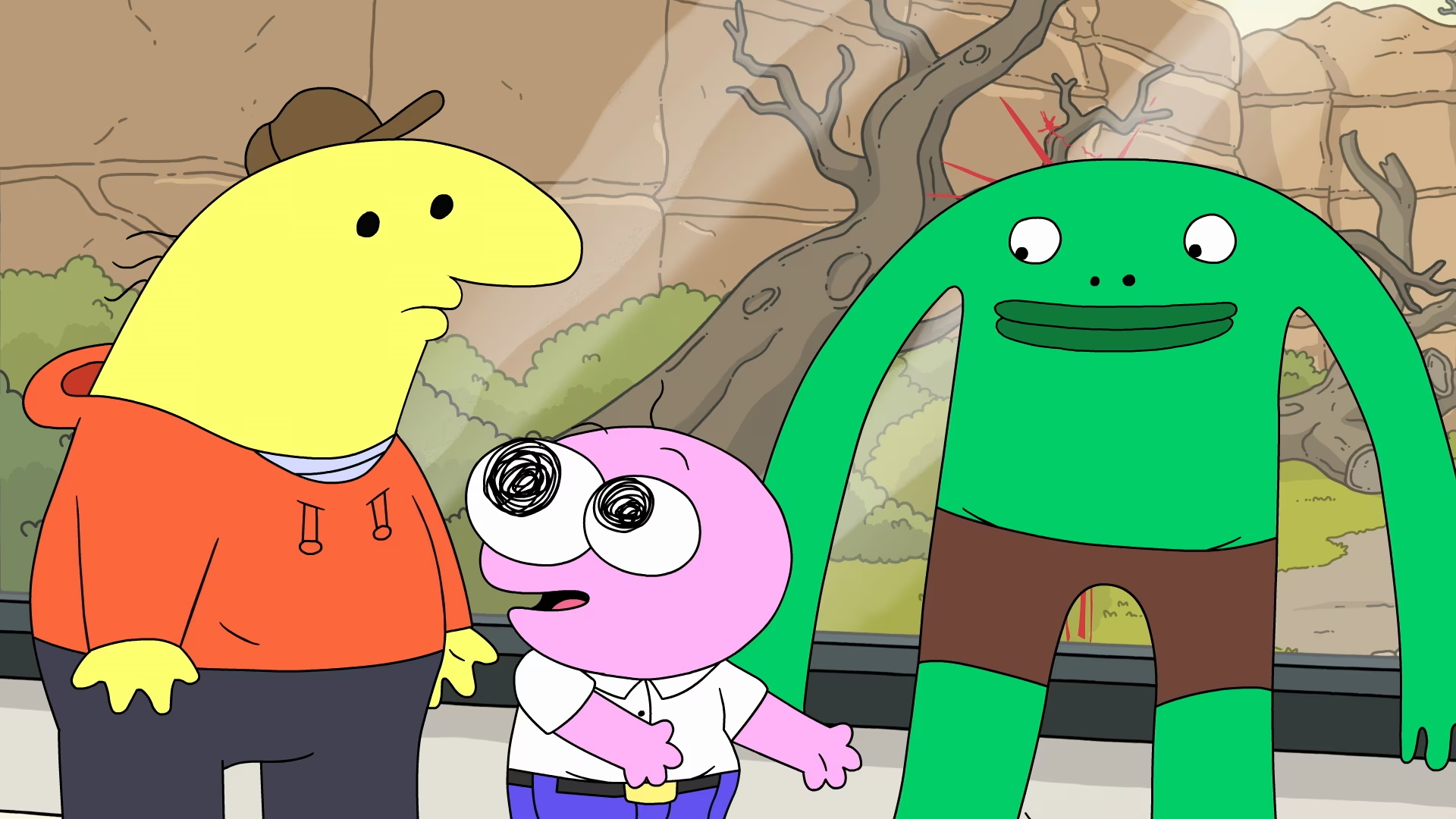
Smiling Friends takes advantage of a plethora of animation styles with each ten-minute episode, and it follows the adventures of Pim and Charlie, who are colorful characters working for the Smiling Friends with the goal of making people smile. Thanks to the show’s unique animation and the team’s wacky hijinks, Smiling Friends keeps punchlines fresh and audiences engaged and scrambling for more.
“From House Style To Hybrid” — Why Pipelines Drift Toward Sameness
Studios typically pick a specific animation pipeline to maintain uniformity in their creations. For 2D (two-dimensional) animation, scenes are carefully planned and drawn frame by frame through either hand-drawing or software.1 Movements of the animation are then rigged, or controlled, to save time, and various elements are combined into a final rendering of the scene.
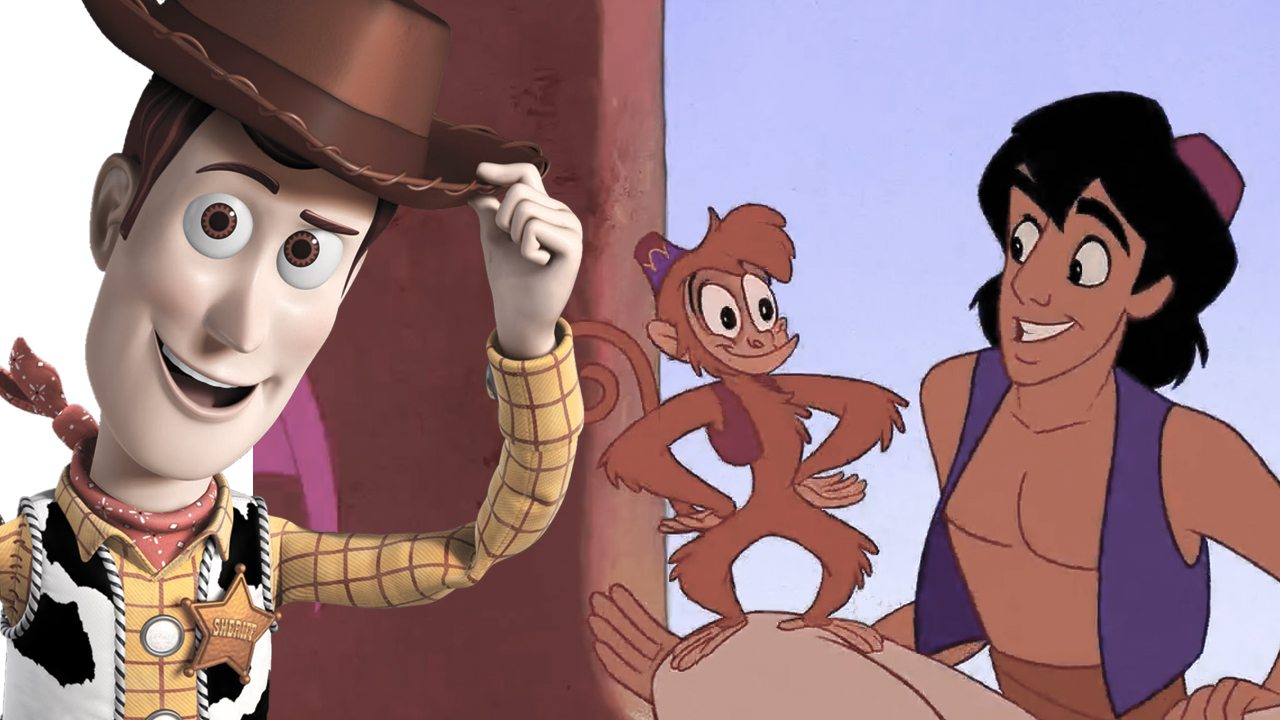
For 3D (three-dimensional) animation, models and layouts are placed in a 3D space with more range and realism than 2D animation. Intricate details like texture and shading are added, then the animation can be rendered into 2D frames for the final look.
Animation studios often have a ‘house style’ that is recognized in each of their works. Disney, for example, is best known for their extensive history in animation. They’ve shifted from their older experimental films in hand-drawn 2D animation to their newer emphasis on perfecting the details of their 3D works.
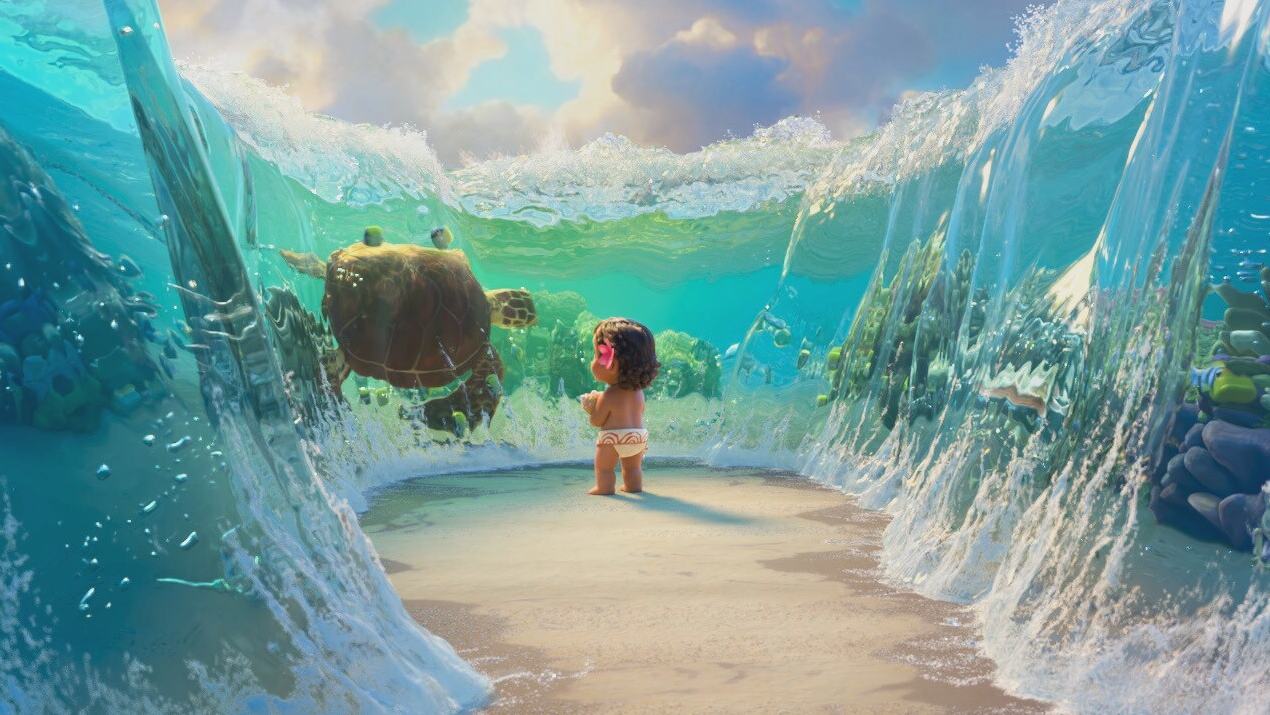
For example, during the making of Moana (2016), Disney recruited mathematicians to help perfect the realistic look and movement of the ocean water.2 Despite their strong attention to detail, Disney has drifted away from 2D animation in their films and shifted to their specialty in 3D animation, mainly to lower labor and production costs. Their 2D animated films weren’t performing as well as predicted, and it took too much time from singular artists to finish drawing scenes, so they decided to follow Pixar’s success by fully switching to 3D animation and letting go of all their veteran artists in 2D animation. 3
Disney’s success has acted as a role model for the rest of the animation industry. Other animation studios have followed in creating detailed, 3D animated films for audiences. Most animated movies are animated in 3D because of the high risk animated movie productions bring. These companies rely on their predicted success to gain back the money they spent on the production of the movie and make a profit, so the ‘house-style’ minimizes risk-taking and prioritizes past success.
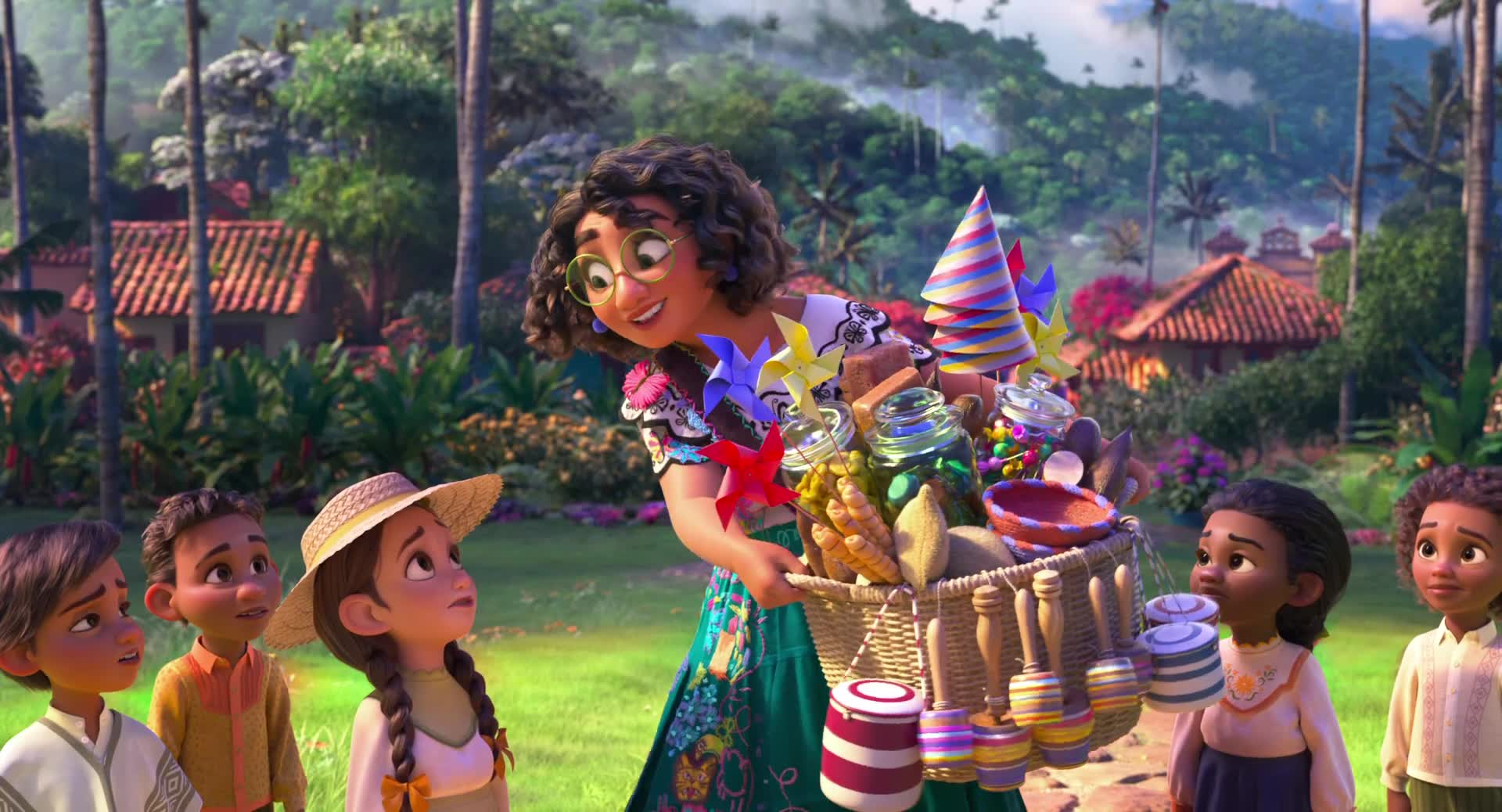
While most animated movies are 3D animated, television series need episodes to be created quickly and with less emphasis on technical details, leading to a mixture of both 3D and 2D animated series. Thanks to the different risks of TV productions, too, they’re free to experiment and explore in groundbreaking ways.
Risk/Reward With Television & Indie Productions
Animated shows have less risk when being released, so they can take bigger risks with their animation styles. However, some have been criticized for their ‘CalArts’ style, a 2D art style with thin-lined characters that have ‘bean-shaped’ heads and round eyes.4 This style is criticized for commonly occurring in animated shows, and is popularized by the California Institute of the Arts since many students of the school end up working for the big-name animation studios like Disney and Pixar.
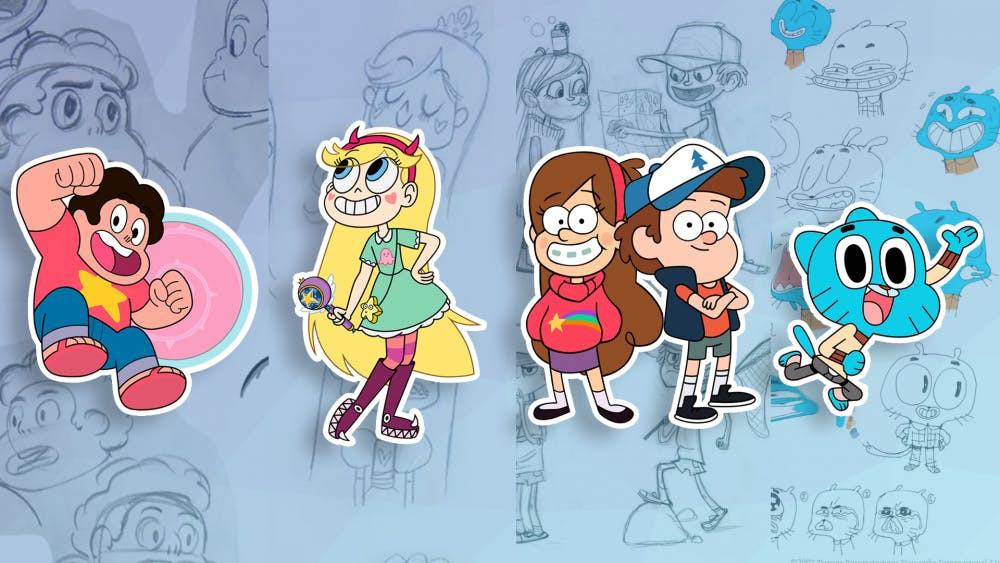
While this style is common, the simplicity helps animators make episodes faster and prioritize storytelling over worrying about detailed character designs. These styles also branch out in other ways to draw audiences, like how Steven Universe (2013-2019) has colorful landscapes in its backgrounds and The Amazing World of Gumball (2011-2019) contrasts cartoony characters with realistic backgrounds from the real world.
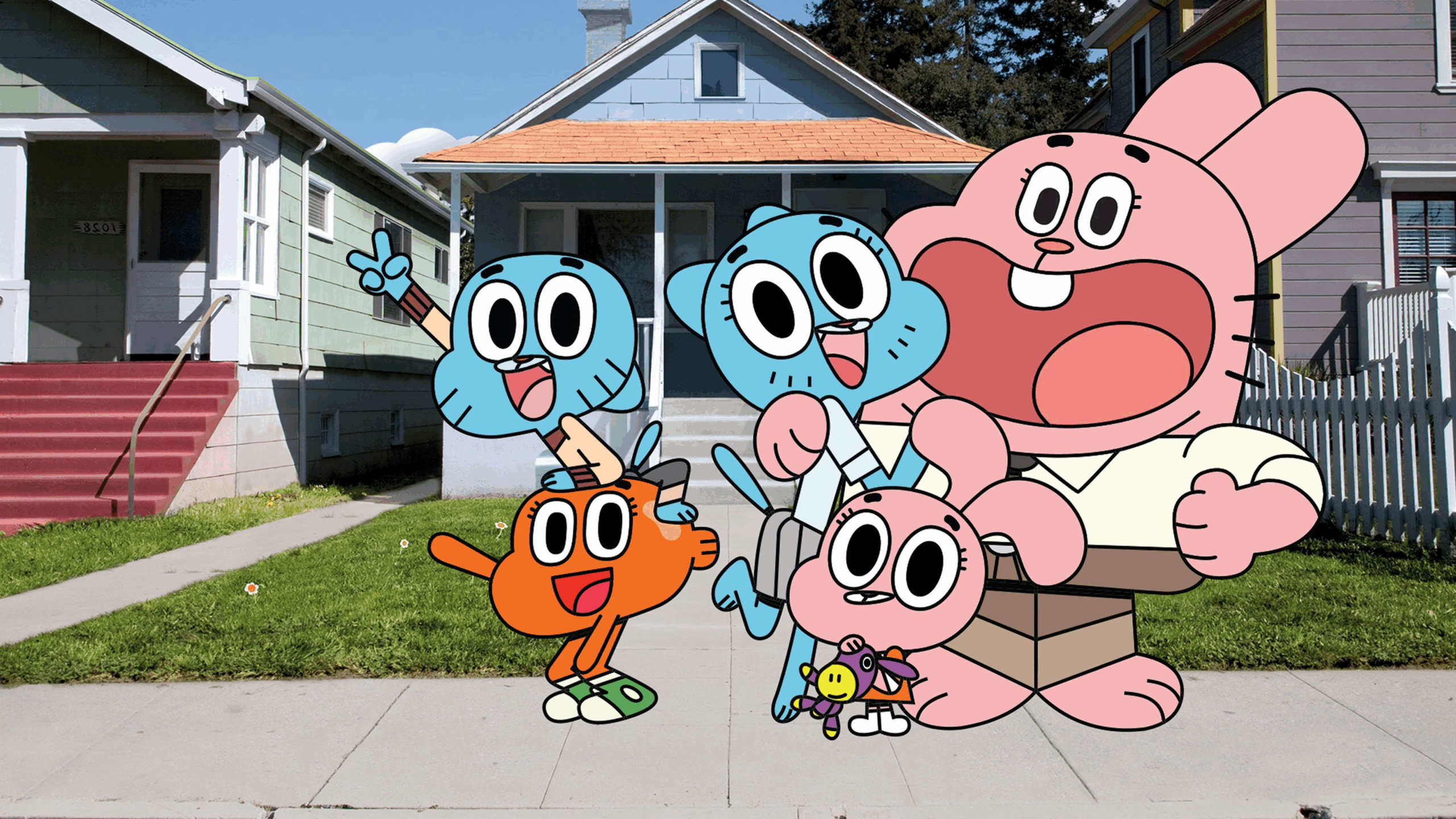
Working from what’s popular and previous inspirations is much easier for studios than creating an entirely new style. Many animated shows create a 3D model of characters to manually puppeteer the limbs for a seamless look on screen. Others reuse scenes and character expressions to help save time for moments that require more time and detail.
While studios are broadcast under one television network or streaming service, some of the heavy-lifting of the animation work can be outsourced to other studios, giving shows more unique styles made by animators with different animation techniques.
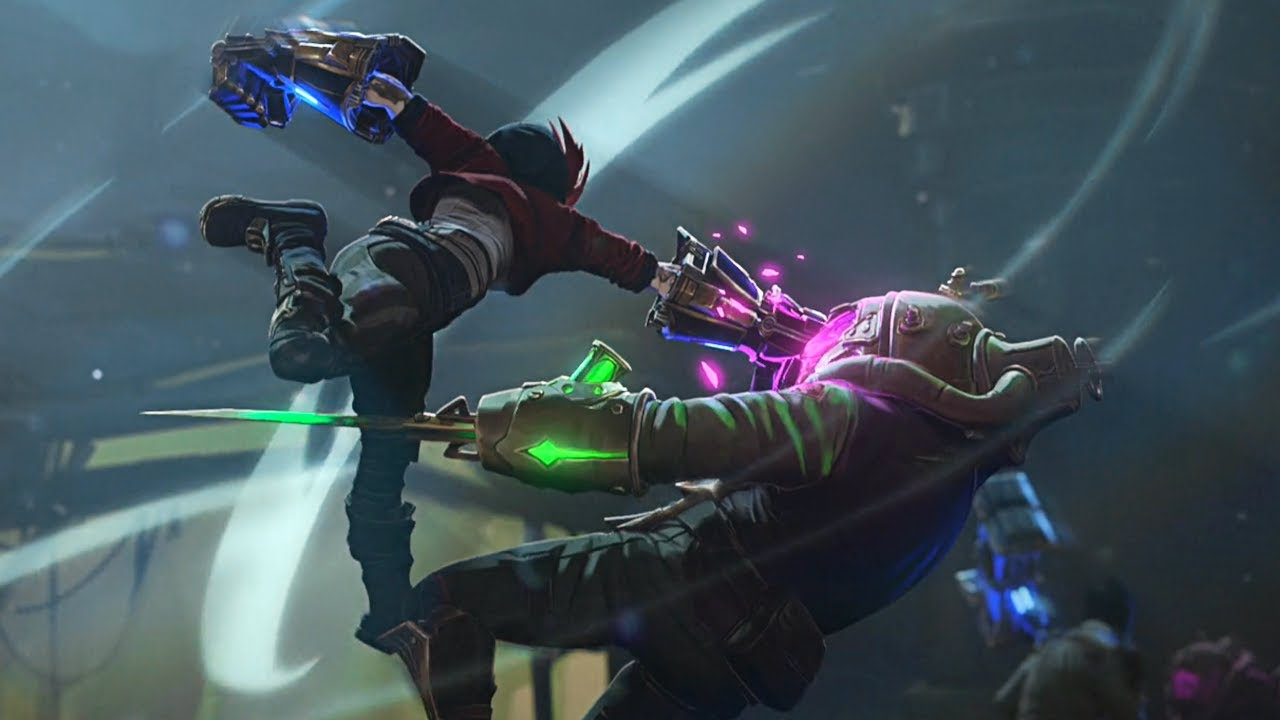
Although animation is time-consuming, people have taken its challenges in stride, with animated shows like Arcane: League of Legends (2021-2024) painstakingly replicating the video-game-like quality the show was derived from. Arcane outsourced its animation from Fortiche, a French animation and production company that helped bring its style to life. With more flexibility in release dates and style, the animation overlays 2D animation with its 3D counterpart, showing a more artistic quality and giving the show interesting visuals in the audience’s minds.
Most large studios’ “house styles” are made to be recognizable for audiences and boost audience engagement, but other indie animation studios have less risk in their productions that leave room for experimentation. Adult Swim is one of these studios, and they successfully aired Morel Orel (2005-2008), which was entirely produced in Claymation, a stop-motion animation technique where models of clay are moved and photographed frame by frame. Morel Orel isn’t Adult Swim’s only show with an uncommon animation style. With Smiling Friends, a plethora of animation styles push the show into securing memorability for audiences.
“The Smiling Friends (2022) Palette” — Mixing Mediums For Punchlines & Tone
While Smiling Friends mostly keeps a consistent 2D animation style with its background art and main characters, it makes the show even more striking when the style suddenly changes.
The show focuses on randomness and chaos as the main source of humor, sometimes using the audience’s expectations against them. In “The Smiling Friends Go To Brazil!,” the audience clearly expects the episode to follow the Smiling Friends exploring Brazil with their usual wacky hijinks, like the episode title implies. Instead, the characters argue in Brazil’s airport after messing up the reservations, then decide to go home, subverting audience expectations with the show’s random and banal sense of humor.
Comedic shifts like these help justify the unpredictable switches in animation style compared to other animated shows. One gag used is the television inside the Smiling Friends breakroom, which plays a lifelike 3D animated model in contrast with the 2D characters watching it. Then, the model on the television jumpscares the camera and characters, causing chaos for a surprising and humorous end to the episode.
The animation style’s mismatched nature is often used to its advantage, helping to foreshadow events and establish an unsettling atmosphere for both the characters and the audience. In the episode, “Erm, the Boss Finds Love?,” the crew’s boss, Mr. Boss, gets a girlfriend named Brittney. Her body is stylized as a hyper-realistic female body while having a disturbingly detailed demon face. Her animation is kept unnervingly still throughout the episode while Pim and Charlie repeatedly attempt to see the best in her. Her odd mannerisms exhibited through her animation add a creepy factor that helps the team realize her secret intention of stealing Mr. Boss’s soul.
Other styles are pushed to invoke fear in audiences. In “A Silly Halloween Special,” the forest demon hunting Pim is animated in Claymation for a more terrifying chase. Claymation is similarly utilized with the aliens in “Charlie, Pim, and Bill vs. The Alien” to replicate the foreign emotions and unpredictability experienced by Pim and Charlie after being abducted.
After Pim bursts into the workroom Halloween party with the forest demon at his tail, another style shift occurs with the use of rotoscoping, an animation technique where live-action footage is traced over frame by frame.5 The fear that had been building in the scene is disrupted when one of the party attendees accuses the forest demon of blackface in this rotoscoped style, breaking the tension with the randomness of the moment.
The forest demon’s horrific design suddenly becomes comical with the contrast against the various animated styles, and rotoscoping often appears slowed and detailed in animation, mirroring the ‘record-scratch’ effect at the demon’s arrival. His unique animation style versus the rotoscoped character’s challenges the tone that the forest demon created, ultimately leading to a funny end to the episode with the demon’s demise.
The various animation styles in Smiling Friends help establish the tones of scenes while also existing as a punchline for running jokes. However, other animation choices establish deeper understandings of the characters and their internal thoughts.
“When Design Is The Joke” — How Style Choices Drive Characterization & Humor
While some style choices affect the punchline, others help drive characterization and open new opportunities for humorous plotlines.
In “Enchanted Forest,” Pim and Charlie enter an enchanted forest containing all the fantastical qualities of a traditional fairy tale. A traveler of the forest, Mip, goes with the two characters to find a worthy deliverer of his gift to the princess. Mip is animated fluidly and with a softer style compared to Pim and Charlie. His style has striking similarity to the traditional 2D animation that is seen in the older animated fantasy worlds. Many fans have noted how Mip’s design is inspired by Rankin/Bass Productions’ 1977 film of The Hobbit, reflecting the deceptively innocent nature that soon turns dangerous towards the end of the episode.
This unique animation style echoes the fantastical storyline of the episode, and it helps show how Pim emotionally changes throughout the story as well. As Charlie and Mip spend more time together, Pim’s jealousy of their relationship grows, and Pim progressively transforms into a Gollum-like creature. As the episode is animated with The Hobbit‘s influence in mind, Pim’s animation change symbolizes how obsession and envy can corrupt a usually positive and moral personality.
One character’s unique animation style is the joke of the entire episode. Named ‘Silly Samuel,’ this character is a constantly moving 3D rendering of a combination of many wacky objects. Despite his design, Silly Samuel is jaded and troubled by the fact that no one will take him seriously with his appearance, contributing to his humor.
The smiles on his shoes and colorful demeanor contrast the audience’s expectations of his character with the jaded being he really is. His limbs stretch and twist like a traditional cartoon, and these factors weigh in to the serious way he presents himself. The more silly he is, the more miserable.
Even the show uses his looks to the audience’s advantage, with many gags being Silly Samuel’s obstacles. One scene at the doctor’s office reveals that his appearance physically cannot be changed in any way, for even the cuckoo clock on his head is essential for his survival and existence. The Smiling Friends then have to search for a more creative way for him to be treated seriously, which adds to the plot and draws out the episode.
Similarly, another episode follows the Smiling Friends trying to help Gwimbly, a washed-up creature who was once the star of a hit video game series. His design consists of pixelated, low-resolution polygons, mirroring the 90s videogame mascots from early games.6 As Gwimbly joins a new videogame at the end of the episode, his animation style gets cleaner and less glitchy, symbolizing his renewed purpose in life after it was absent for so long.
With such a diverse collection of animated characters and styles, there is no telling what’s to come for Smiling Friends, and this unpredictability is what keeps audiences engaged and ready for each new episode.
Where Animation Goes Next — Practical Ways Variety Scales Without Chaos
Although Smiling Friends is suitable for depicting a variety of animation styles, it’s unrealistic to expect every show to do the same. Smiling Friends relies on chaos and randomness to achieve its punchlines, and most animated shows require different tones to accomplish their story.
Experimenting with different styles needs more time and energy than maintaining a single one, and animators rely on those styles to keep a show’s consistency and an audience’s engagement. However, Smiling Friends‘ unique lens with animation is an example of how taking calculated risks can pay off.
Animation studios could consider incorporating more diluted differences of animation style in their individual pieces to represent subtle shifts in characterization and tone. This integration already has a record of success from Puss in Boots: The Last Wish (2022) and Spider-Man: Into the Spider-Verse (2018) with their unique and stylized approaches to animation.7 If they break from traditional animation, studios can make their works stand out and inspire audiences to find a new appreciation for animation.
Footnotes
- Heyland, Rose. “What Is the Animation Pipeline: A Comprehensive Guide.” CG Spectrum. March 24, 2025. ↩︎
- Wolpert, Stuart. “UCLA Mathematicians Bring Ocean to Life for Disney’s ‘Moana.’” UCLA. January 3, 2017. ↩︎
- Ebiri, Bilge. “Disney Animated Movies: What Happened to Them?” Vulture. July 23, 2019. ↩︎
- Bursley, Joe. “What is ‘CalArts’ style?” Ball State Daily. September 5, 2018. ↩︎
- Glovart, Mikey. “What Is Rotoscoping Animation and How to Do It |Adobe.” Adobe.com. ↩︎
- Contributors. “Gwimbly.” Smiling Friends Wiki. Fandom, Inc. 2024. ↩︎
- amisha. “Puss in Boots: The Last Wish & into the Spider-Verse | the Future of Animation?” Cinematicwallflower. March 3, 2023. ↩︎