
Table of Contents Show
In an era in which Hollywood plays it safe due to its never-ending obsession with pre-existing IP, reboots, remakes, and sequels, originality is rare. Originality usually stems from new ideas and fresh voices, but very rarely, it may come in the form of a “requel” — a reboot/sequel hybrid. While that may sound contradictory, as the very nature of sequels and reboots is to “steal” material from their predecessors, in some cases, they manage to elevate the very material they’re borrowing from.

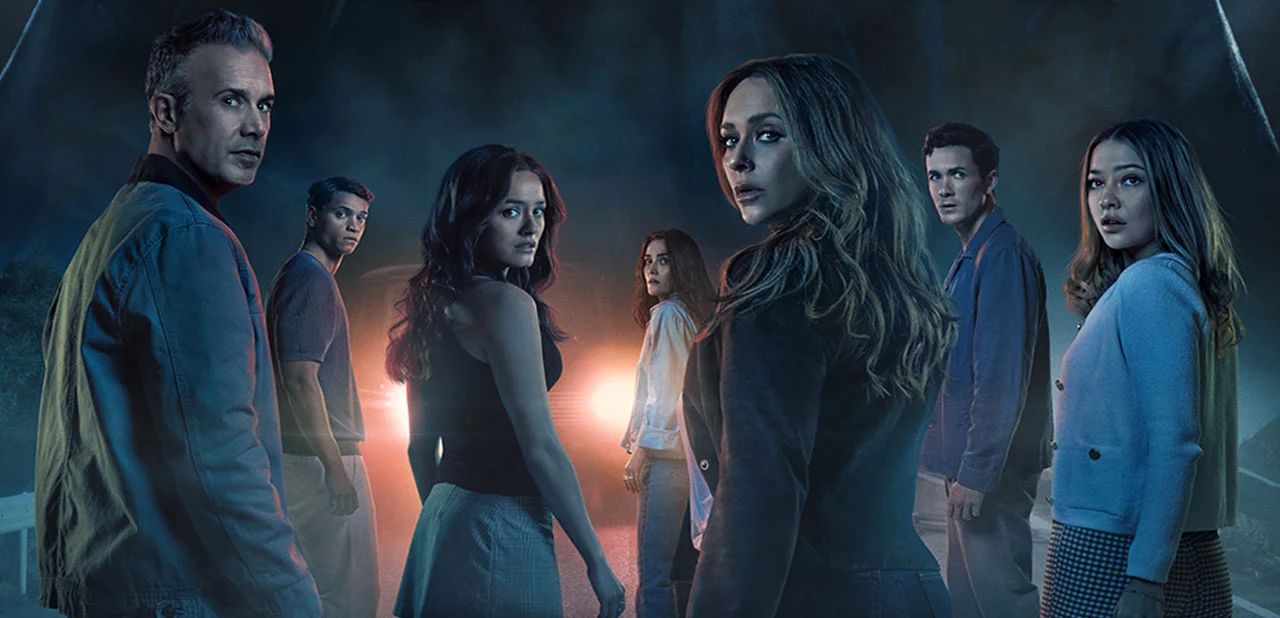
Jennifer Kaytin Robinson’s 2025 I Know What You Did Last Summer1 had some big shoes to fill. The original 1997 I Know What You Did Last Summer2 by Jim Gillespie is a defining entry in teen-slasher canon, riding the coattails of Wes Craven‘s Scream3 (1996) — both films written by horror whodunnit legend Kevin Williamson — and boasting a cast of up-and-coming stars. Despite Robinson’s version underperforming financially and receiving mixed reviews, one thing about her reboot is undeniable: it stays true to its slasher roots and mystery framework, making it one of the most true-to-form modern horror requels.
It isn’t just a blood-soaked nostalgia trip; it’s a film that interrogates guilt, complicity, and the silence of tight-knit communities that protect their own at any cost without relying on common tropes like meta-humor or genre-winks to justify itself. With a solid slasher foundation, it offers systematic critiques while remaining deeply entertaining and thematically rich, turning its original source material into something bolder. It’s not a cash grab of a franchise, it’s a resurrection.
“Beyond Nostalgia” — Why This Slasher Reboot Deserves Your Attention
At first glance, I Know What You Did Last Summer (2025) might seem like just another glossy slasher filled with hot teens and brutal kills. But Robinson layers the spectacle with purpose. The film doesn’t just revel in revenge — it critiques the systems that allow harm to be ignored, buried, and repeated. The reboot subtly weaves commentary on class, policing, and the politics of silence in small-town America.

Unlike the original, where the group’s decision to cover up a hit-and-run was driven by panic and fear of future consequences, this version reveals the deeper rot: a town whose institutions have normalized cover-ups to protect the powerful, unmasking the authorities’ priority to protect the town’s image against protecting its people as they ignore the characters’ continuous cries for help.
Even worse, the very protagonists take part in this rotten cycle, as one of their fathers (Teddy’s) uses his wealth and status to bury their crime (which, while accidental, was still due to negligence).
The new killer isn’t just out for vengeance — they’re also calling out a rigged system. The police force, notably corrupt or indifferent for most of the film, becomes an accomplice in the tragedy that unfolds. Robinson doesn’t hammer these ideas over the audience’s head but embeds them in the killer’s logic and the town’s apathy.

Horror, in this context, isn’t just about a masked figure with a hook; it’s about the violence of indifference. It’s about what happens when grief is ignored, when trauma is left to fester, and when institutions fail to protect the vulnerable.
This layer of meaning places IKWYDLS in conversation with modern horror that seeks to reflect societal issues, joining the likes of The Invisible Man4 (2020) and Candyman5 (2021). But Robinson’s approach is less overt, allowing the slasher formula to carry the message organically through masterful symbolism and foreshadowing, and heightening it once the killer is revealed and their motivations are uncovered as a result of the murky corruption lying beneath the surface.
The kills are still inventive and disturbing, but their context — who dies, how, and why — makes them land with heavier emotional weight and enhances the narrative’s core themes of trauma, corruption, and how they all intertwine to create a deeply resentful killer.
“Motives That Bleed” — Trauma & The Birth Of A Killer
What truly sets this reboot apart is its treatment of character motivation, especially in the killer. The simple trope of a masked figure with a mysterious past is gone; instead, the killer in Robinson’s vision is shaped by unresolved trauma, abandonment, and the feeling of being invisible. This isn’t just revenge for the sake of it — it’s about finally being heard.

The film cleverly and subtly foreshadows and then slowly unravels the backstory of its antagonist, making their “hiding in plain sight” reveal both shocking and, disturbingly, understandable due to the context viewers get early on. This reveal doesn’t come out of the blue, but simply completes a larger puzzle that was quietly established throughout.
The antagonist isn’t a supernatural force or an invincible stalker; it’s a victim-turned-avenger, molded by years of being overlooked and tossed aside by the very community that was supposed to help them. It recontextualizes the violence not as gratuitous but as a desperate cry for help and misguided anger that ended in violence, with the fatal accident the protagonists caused being the final straw in this doomed soul’s existence.

This emotional nuance is what gives the reboot its edge. Even the “final girl” trope gets an iteration that feels more modern and less tropey. Rather than being a virginal, pure figure, the protagonist, Ava (Chase Sui Wonders), is flawed, complicit, and emotionally numb — a more accurate reflection of how people cope with shared guilt.
By hesitantly agreeing to keep the accident a secret, she first appears to be the moral compass of the group. However, once she places herself before the person the group caused to drive off a cliff, the audience realizes she’s just like the others; a morally gray person caught in a potentially life-ruining situation who ultimately decided to put herself first and now must live with her guilt.

Themes of gaslighting, generational neglect, and the failure to process grief permeate the script, enriching even the quieter scenes between kills. The film taps into a very Gen Z anxiety: what happens when you inherit broken systems and are expected to stay quiet about them?
This is not only true about the corrupt town that these characters have been shaped by and are expected to support blindly, but by the very people who raised them and are now part of this town’s corruption problem. By making the killer’s motives rooted in emotional truth rather than generic revenge, IKWYDLS transforms its murder mystery into something almost tragic.
“Slashing With A Conscience” — The Social Stakes Of Horror Reboots
In the crowded field of horror reboots and sequels, I Know What You Did Last Summer doesn’t just stand out — it stands tall. While recent hits like Scream6(2022) cleverly deconstructed fandom and legacy, and Halloween Ends7 (2022) tried (and stumbled) in adding metaphorical weight to its saga, Robinson’s film strikes a rare balance: homage with meaning.

Unlike Scream, which often veers into self-aware parody, IKWYDLS takes its characters and their trauma seriously. It doesn’t need to wink at the audience or constantly reference horror history to justify its existence. Its reinvention lies in tone and theme, not meta-commentary. And compared to the Texas Chainsaw Massacre8 (2022) reboot or Firestarter9 (2022), which relied heavily on aesthetics or shock value, Robinson’s reboot anchors its horror in humanity.
While previous franchise entries focused more on the mystery and vengeance aspects of the plot, the 2025 reboot chooses to focus on something even more horrifying and relatable for modern generations: trauma.
The first movie attempted to, in a way, gloss over Julie’s (Jennifer Love Hewitt) trauma due to her involvement in the infamous car accident, and only did so during the film’s setup. It then seemingly forgot about Julie’s PTSD and focused more on her fearing for her life.

The 2025 version not only brings the spotlight back to Julie’s mental state in the aftermath of the events, but takes its sweet time delving into how this has affected every single character.
Perhaps most importantly, IKWYDLS never feels like it’s trying to cash in. Even though it rides the wave of IP nostalgia, its commitment to character, message, and mood makes it feel like a passion project rather than a studio-mandated rehash.
It is the kind of horror reboot that proves reinvention doesn’t have to mean disrespecting the source — it can mean expanding on it, deepening it, and using it as a vehicle to say something that matters while still holding on to the very essence that made it iconic.
“A Perfect Blend Of Retro Vibes & Fresh Blood” — This Requel Earns Its Place
I Know What You Did Last Summer (2025) is a rare gem amongst horror reboots. It respects its roots but refuses to be confined by them, daring instead to inject emotional realism and social awareness into a genre often dismissed as superficial. By focusing on the consequences of silence, the trauma of being ignored, and the rot beneath idyllic surfaces, Robinson turns a familiar slasher story into a haunting commentary on complicity and grief.
This reboot also speaks to a larger trend in horror where filmmakers are no longer content to scare audiences just for the sake of it. They want to haunt them with ideas, to ask uncomfortable questions about the systems society lives in and the traumas they bury. Robinson doesn’t reinvent horror, but she retools it just enough to make audiences sit with their discomfort — and that’s what good horror should do.

Whether fans come for the kills or the commentary, there’s something in this reboot worth their attention. It may not have broken box office records, but in terms of narrative ambition and thematic resonance, it’s one of the strongest horror requels in recent years. Horror fans and skeptics alike should take another look — this time, what they did last summer might actually stick with them.
Its resonance will likely grow over time, especially as conversations around institutional accountability, mental health, and generational silence become more central in media. IKWYDLS positions itself not just as a film, but as a mirror. It doesn’t just ask what the protagonists did last summer — it asks what they ignored, who they failed to listen to, and whether they’re ready to face the consequences.

In that way, Robinson’s reboot may just be ahead of its time. The genre will always have room for scream queens and shocking kills, but when those elements are wrapped around a story that genuinely tries to mean something, fans should pay attention. Because sometimes, the scariest thing isn’t the killer in the shadows — it’s the truth everyone else refuses to face.
Footnotes
- I Know What You Did Last Summer. Directed by Jennifer Kaytin Robinson. United States: Columbia Pictures, 2025. ↩︎
- I Know What You Did Last Summer. Directed by Jim Gillespie. United States: Mandalay Entertainment, 1997. ↩︎
- Scream. Directed by Wes Craven. United States: Dimension Films, 1996. ↩︎
- The Invisible Man. Directed by Leigh Whannell. United States: Universal Pictures, 2020. ↩︎
- Candyman. Directed by Nia DaCosta. United States: Universal Pictures, 2021. ↩︎
- Scream. Directed by Matt Bettinelli-Olpin and Tyler Gillett. United States: Paramount Pictures, 2022. ↩︎
- Halloween Ends. Directed by David Gordon Green. United States: Blumhouse Productions, 2022. ↩︎
- Texas Chainsaw Massacre. Directed by David Blue Garcia. United States: Legendary Entertainment, 2022. ↩︎
- Firestarter. Directed by Keith Thomas. United States: Universal Pictures, 2022. ↩︎