

Table of Contents Show
While Stephen King’s It1 remains a beloved classic and a defining work in the horror genre, the excitement surrounding yet another film adaptation raises an important question: are we revisiting its brilliance, or simply disguising its narrative shortcomings with glossy Hollywood appeal?
Derry, Maine (The Fictional Town Of King’s It)
The eleven-hundred-page novel tells the story of an evil entity that haunts the town roughly every twenty-seven years. The entity primarily takes the form of a clown and terrorizes the children of Derry, Maine.2 The story alternates between 1958 and 1985, both years in which Pennywise the clown returns.
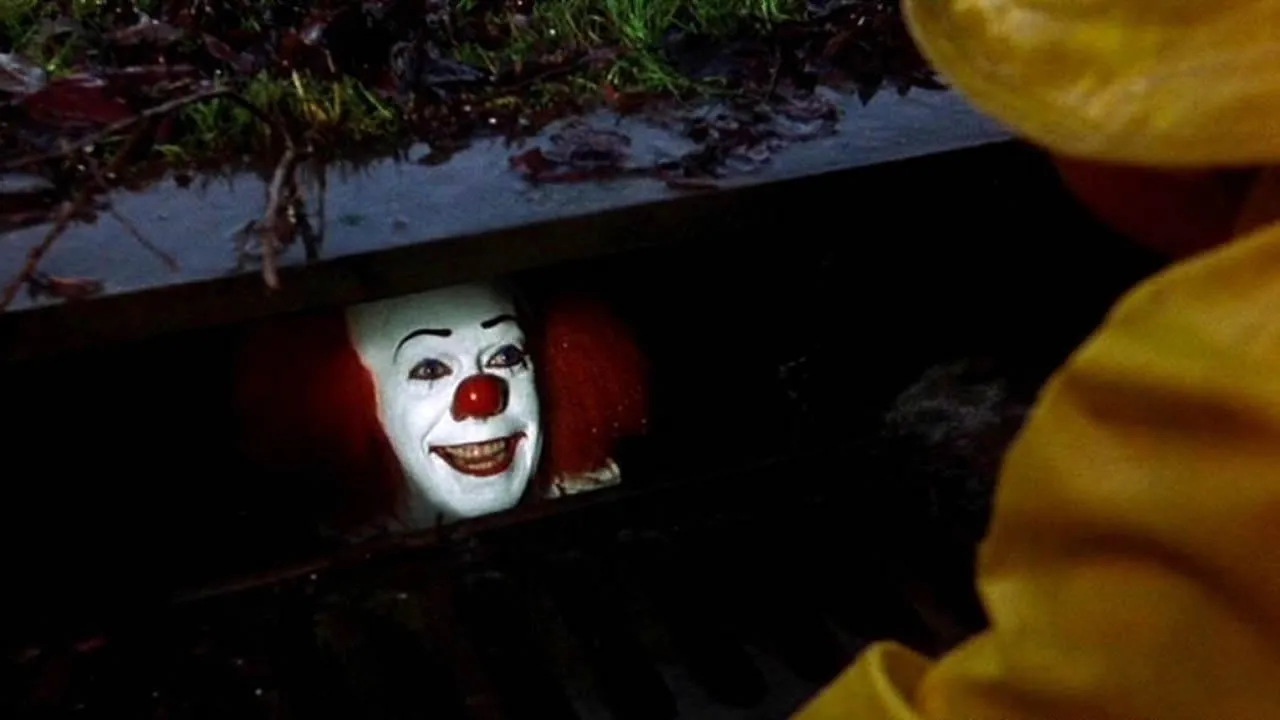
The 1958 plotline follows the group as eleven-and twelve-year-olds encountering Pennywise for the first time, while the 1985 timeline revisits them twenty-seven years later when they are called back to defeat It once more. Pennywise exploits their deepest fears, luring them into the town’s sewers and taking on the forms of a mummy, a leper, and a bird, among others.

While the town is fictional and the plotline fantastical, Stephen King employs real-world language and scenes that push the boundaries of appropriateness.
The Dark Side Of 1950s Suburbia In Stephen King’s It
After World War II, the United States entered a period often described as a national “boom.”3 Many families, hopeful for peace and prosperity, moved to the suburbs and began building new lives. Yet this vision of the American Dream was not universal. Racial inequality deepened as the gap between white and Black Americans widened, and women were increasingly confined to domestic roles as housewives.
The 1950s marked the height of the Civil Rights Movement4, including the landmark Brown v. Board of Education5 case, which declared school segregation of Black children unconstitutional. By contrast, the 1980s were defined by another national crisis — the AIDS epidemic.6 Together, these pivotal moments frame the social backdrop for King’s novel.

Even without Pennywise’s presence, Derry is steeped in violence. Early in the 1980s, King portrays a horrific assault and attempted murder of a gay man, employing the “f” slur repeatedly in both narration and dialogue. Throughout the novel, King continues to use slurs and explicit depictions to highlight the harsh social divides and prejudices surrounding race, gender, and sexuality.
Given the era, such language and behavior were unfortunately commonm– but the impact remained the same: discrimination. This theme lies at the heart of the novel, driving the relentless bullying that binds together “The Losers Club” — a group made up of misfits: a nerd, an overweight boy, a girl, a stutterer, and a Black boy, all marked by traits that defy social norms.

While bullying is a familiar trope in stories about childhood, King’s depiction stands apart for its rawness — using slurs and unsettling sexualization to portray eleven-and twelve-year-olds in ways that are both uncomfortable and revealing.
Inside Stephen King’s Mind — The Origins Of Pennywise & It
Stephen King found inspiration for his novel on a walk to pick up his car from a AMC dealership in Boulder, CO.7 Forgoing the option of a cab, King hiked the three-miles of deserted land while nearing twilight. He came across a wooden bridge and was reminded of the Three Billy-Goats Gruff fairy tale. The troll under the bridge progressed into Pennywise hidden under the town, and the bridge the goats were crossing was a symbol of growth and transformation.

The story kept coming back to him, and eventually he remembered Stratford, Connecticut, a town he used to live in as a child, and the library that had a short corridor separating the children’s section from the adult section. Another bridge like symbol of progress; one that must be crossed to reach adulthood.
The folktale is up for many interpretations, however, relevant to King’s case, the most popular message is that fear goes both ways, and you stand a better chance facing what you fear, rather than running away from it.8
Problematic Depictions Of Childhood, Race, & Abuse In Stephen King’s It
The 1958 storyline centers on ‘The Losers Club,’ a group of six boys and one girl who bond over shared experiences of bullying and their terrifying encounters with seemingly impossible monsters.9 Most of King’s characters are preteens, each with a well-developed backstory of family life — or lack thereof — that directly shapes their characterization.

Ben Hanscom’s mother fosters his unhealthy eating habits; Bill Denbrough is neglected by parents consumed with grief after his younger brother George’s death; Beverly Marsh endures abuse from her father and the absence of her mother; and Eddie Kaspbrak’s overbearing mother manipulates him into believing he has asthma, reinforcing his fear of illness and germs.
Henry Bowers — The Making Of A Monster In It (2017-2019)
Arguably one of King’s most psychologically complex characters, Henry Bowers grows up under the influence of a violently unstable and abusive father — an upbringing that fuels much of the novel’s cruelty. Ben’s weight makes him an easy target for Henry’s sadism.

When Ben refuses to let Henry cheat on a school test, the bullying escalates to a horrifying act of physical violence: Henry and his gang corner him, carve Henry’s initial into Ben’s stomach, and leave him scarred both physically and emotionally. Though Ben narrowly escapes, the encounter cements Henry’s role as a symbol of real-world brutality — proof that Derry’s evil doesn’t begin or end with Pennywise.10
It: Chapter Two (2019, Muschietti, A)
By the time of the 2019 sequel, It: Chapter Two (2019, Muschietti, A), Henry resurfaces as a deranged adult, having spent decades institutionalized after taking the fall for several murders. Still under Pennywise’s influence, he escapes and continues his violent rampage, a haunting echo of the trauma that began in his childhood.
Mike Hanlon & Racism In It (2017-2019)
When the story turns to Mike Hanlon’s perspective, readers are confronted with some of the novel’s most disturbing depictions of racism. Henry Bowers repeatedly hurls the n-word at Mike — over ten times on a single page11 — using it as a weapon to dehumanize and isolate him.

Having grown up on neighboring lots, Mike has long endured Henry’s hatred, which mirrors that of Henry’s father, Butch Bowers, who blamed his own misfortunes on Mike’s father, Will Hanlon.
This generational racism establishes a cycle of violence and prejudice that bleeds through Derry itself, suggesting that evil in King’s world isn’t limited to supernatural clowns, but deeply rooted in human bigotry.
It: Chapter Two (2019, Muschietti, A)
In the 2019 sequel, It: Chapter Two, this racial tension remains largely understated but ever-present. Mike — now the only member of the Losers Club who stayed in Derry — carries the psychological weight of both his friends’ trauma and the town’s unhealed racism.
While the film tones down much of the overt slur-based violence from the novel, it still portrays Mike as the emotional anchor of the group, a survivor not only of Pennywise but of a lifetime of racial othering.
Beverly Marsh & The Sexualization Of Girlhood In It (2017-2019)
There are numerous moments in the novel where Beverly Marsh’s body is described in striking, almost uncomfortable detail. As the only girl in “The Losers Club,” she inevitably becomes the subject of innocent childhood crushes, yet King goes beyond the boys’ perspective, lingering on her prepubescent body in ways that feel voyeuristic.

When divorced from the lens of adolescent fascination, these passages read as an adult man writing about a young girl’s physicality — an unsettling choice that continues to raise questions about the male gaze and the ethics of portrayal in horror fiction.
It: Chapter Two (2019, Muschietti, A)
In the 2019 film adaptation, It: Chapter Two, this discomfort evolves rather than disappears. The focus shifts from Beverly’s body to the emotional scars left by her abusive relationships — first with her father, then with her husband. Jessica Chastain’s portrayal reframes Beverly as a survivor of generational trauma, moving the conversation from objectification to empowerment.
Still, the lingering echoes of her childhood sexualization in the 2017 film remind viewers how thin the line can be between depicting innocence and exploiting it.
Eddie Kaspbrak’s Fears, Phobias, & “The Leper Scene” Explained In It (2017-2019)
As if that weren’t disturbing enough, there are at least three moments in the novel where children are either involved in sexual acts or taunted by the threat of them. One of the most unsettling occurs during Eddie Kaspbrak’s first encounter with It at 29 Neibolt Street — a decaying, abandoned house that acts as a portal to Pennywise’s domain.
There, Eddie is confronted by a grotesque leper who embodies both disease and predation. The creature first offers Eddie money for a kiss, then escalates the proposition, chasing him while suggesting increasingly explicit sexual acts — culminating in an offer to perform one “for free.”
This scene, drenched in both horror and perversion, underscores King’s recurring theme: that evil manifests through human fears as much as supernatural terror, often preying on children’s innocence.
It: Chapter Two (2019, Muschietti, A)
In the 2019 sequel, It: Chapter Two, this dynamic is reimagined through a more psychological lens. Eddie, now an adult, encounters the leper once again in a haunting echo of his childhood trauma.
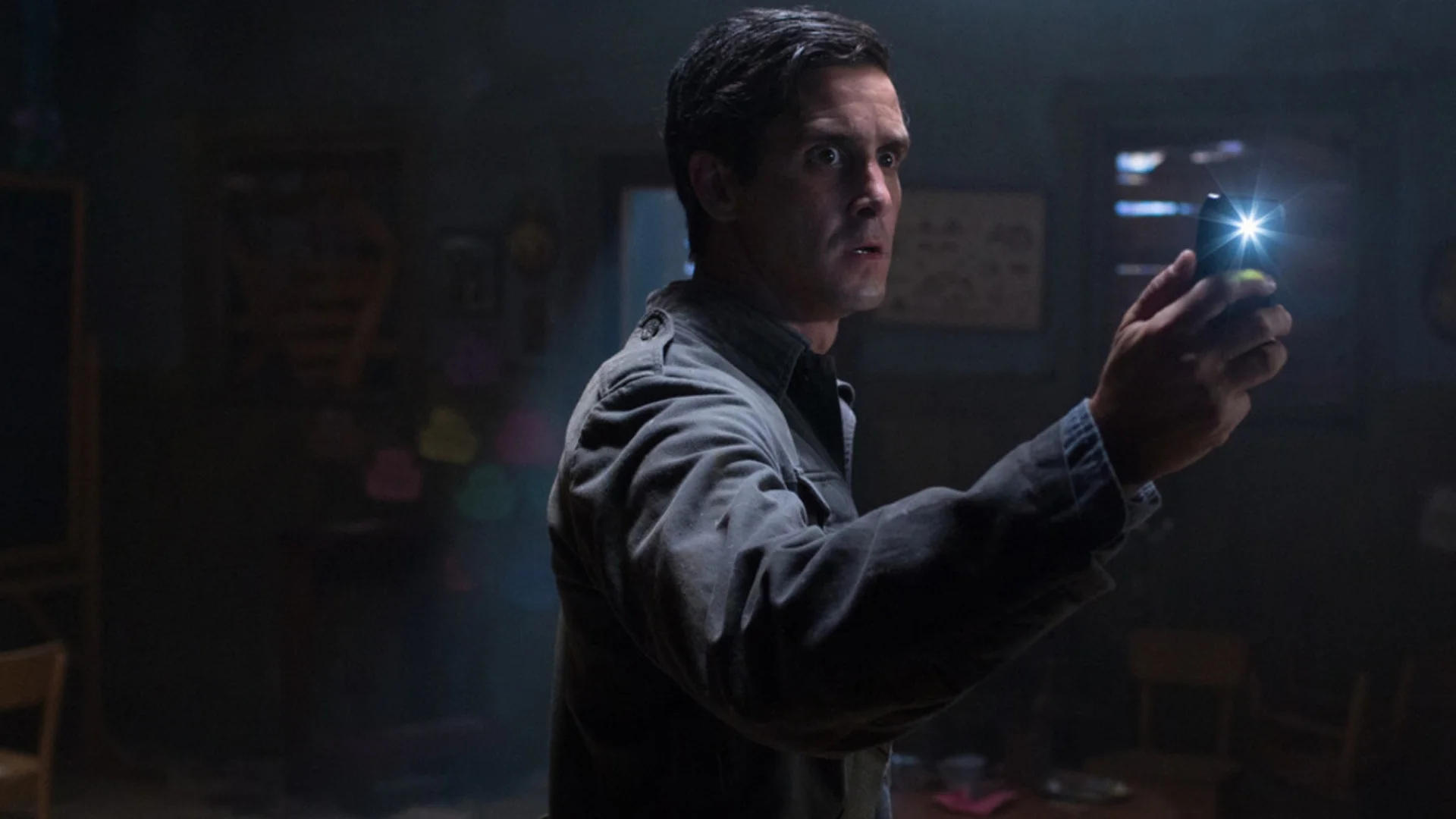
The scene mirrors the original’s grotesque tone but replaces overt sexual provocation with symbolic disgust — representing Eddie’s deep-seated shame, fear of contamination, and repressed anxieties around control and vulnerability.
The shift in the film reflects a modern discomfort with the sexualization of children in horror, choosing instead to explore how childhood fears mutate into adult psychological scars.
Patrick Hockstetter’s Sadism & The Darkest Moments In It (2017-2019)
Later, we’re introduced to Patrick Hockstetter, one of Derry’s most disturbing figures and arguably the most sadistic of Henry Bowers’ gang.12 Patrick’s backstory is laced with horror — he murders his infant brother and tortures animals without remorse, acts that mark him as a textbook sociopath even before his involvement with Pennywise’s terror. His interactions with the other bullies are equally unsettling, revealing his complete lack of empathy and fascination with cruelty.

In one particularly disturbing scene, Patrick and Henry are alone, waiting to ambush their next victims. Patrick propositions Henry, offering to show him something that “feels good.”13 Unbeknownst to them, Beverly hides nearby, witnessing Patrick perform a sexual act on Henry.14 When Patrick attempts to escalate the encounter, Henry reacts violently — punching him in the face and storming off in disgust.
The scene exposes not only Patrick’s predatory impulses but also the toxic mixture of repression, aggression, and shame that defines so many of Derry’s young characters.
It: Chapter Two (2019, Muschietti, A)
In It: Chapter Two (2019), Patrick’s presence is reduced to a brief, spectral reminder of the past — his body reappearing as one of Henry’s hallucinations, resurrected by Pennywise to goad him into further violence.
Though the explicit sexual undertones are absent, his inclusion continues to symbolize the festering corruption that Derry breeds: a cycle of cruelty and denial that doesn’t die, even decades later.
The Sewer Scene & The Bonding Of Friendship — King’s Most Controversial Moment In It (2017-2019)
To take things further, in one of the concluding scenes of the 1958 story line, all the children are lost in the sewers with no telling of which direction to go, when Beverly proposes that the boys take turns having sex with her.

When asked about the reasoning behind the scene, Stephen King explained,15 “Intuitively, the Losers knew they had to be together again. The sexual act connected childhood and adulthood.”
He framed it as a moment of unity — an attempt to regain clarity and direction while trapped in the tunnels. However, such a scene could never be translated to film: first, because it would constitute child pornography, and second, because it is profoundly inappropriate for eleven-and twelve-year-old children to engage in sexual activity, particularly given the actors’ ages.
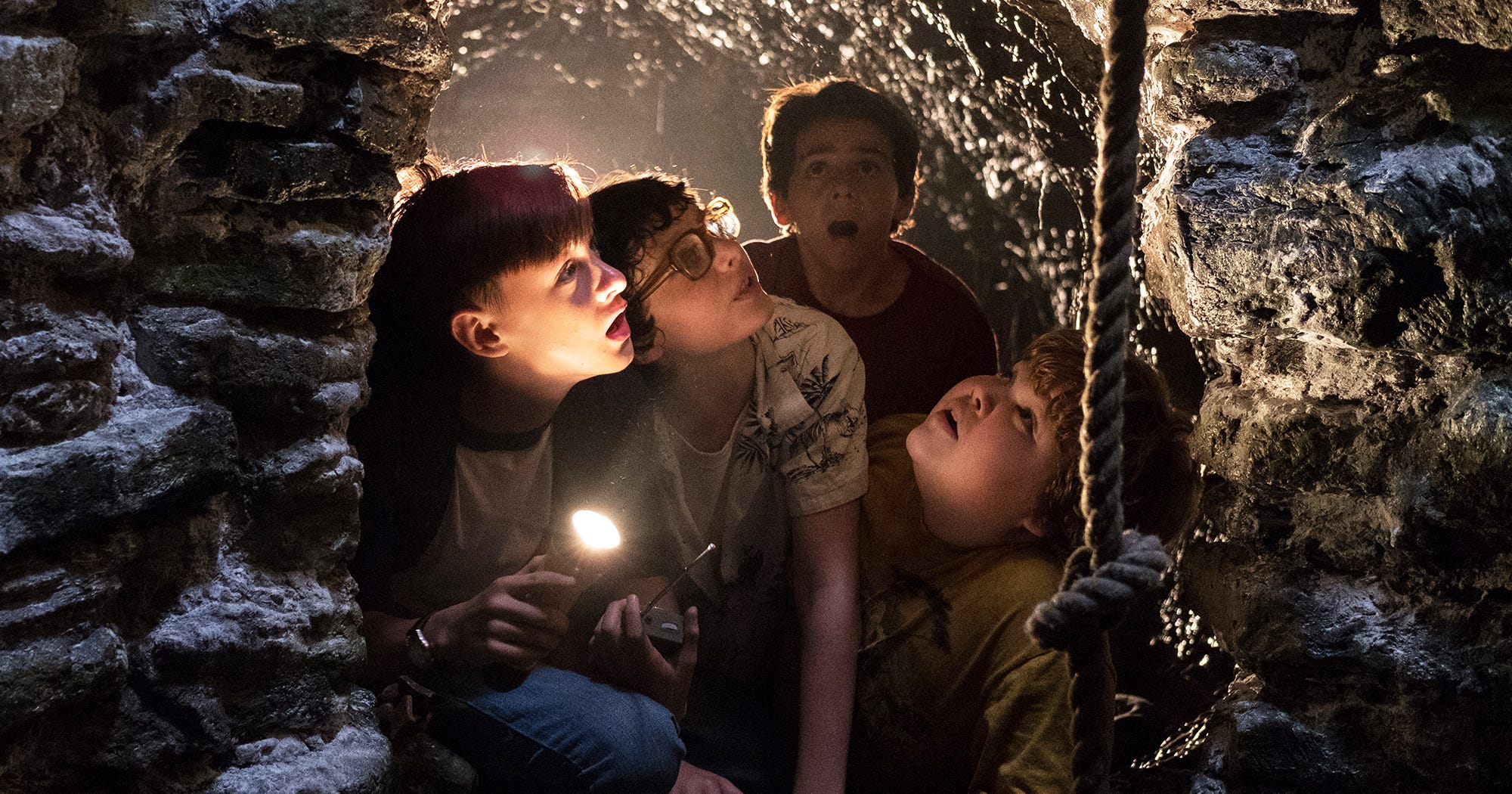
There are far more effective and ethical ways to illustrate the transition from childhood to adulthood if that moment were truly essential, but its absence in on-screen adaptations proves it would not be missed.
‘Reader Reactions’ — Fatphobia & Discomfort In Stephen King’s It (2017-2019)
While It remains a beloved classic among King’s readers, it’s not immune to criticism — many fans praise its depth and terror, but others find parts of it deeply troubling. For some, the unsettling scenes are easy to overlook; for others, they cast an unshakable shadow over the entire narrative.
One 2021 review16 calls attention to King’s apparent fatphobia, particularly in his portrayal of eleven-year-old Ben Hanscom. King nicknames Ben “Haystack,” after a six-hundred-pound wrestler, and repeatedly uses harsh, almost grotesque language to describe his body. Scenes involving Ben often include demeaning imagery — his “bouncing tits” and “pendulous gut” — that go beyond realism and veer into ridicule.
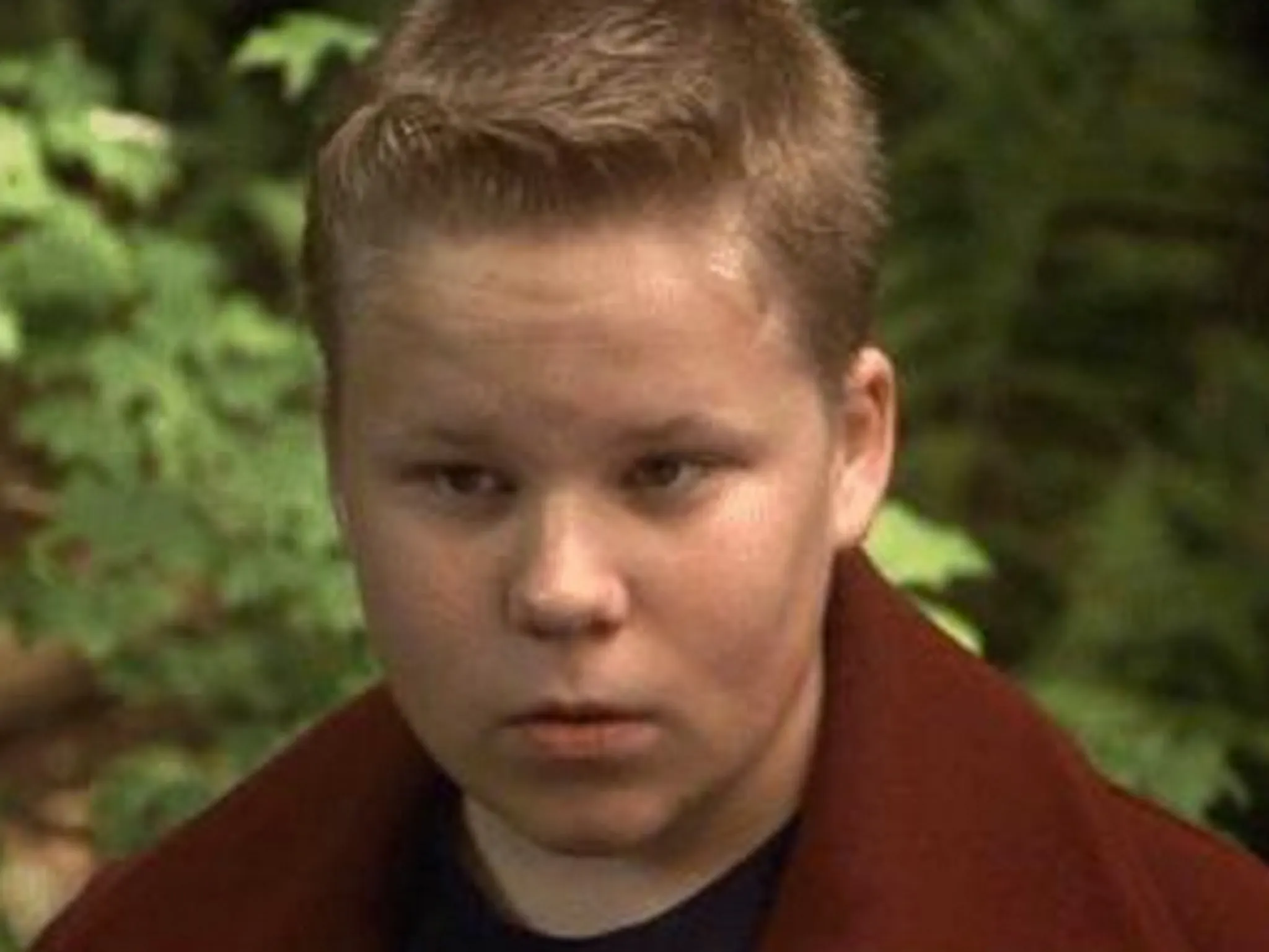
This bias extends beyond Ben. When it comes to his crush on Beverly, Ben’s insecurity is framed almost entirely around his weight, with his self-doubt rooted in the assumption that she could never love someone “fat.”
Meanwhile, King’s depictions of overweight women, like Eddie Kaspbrak’s mother, are even more severe. Mrs. Kaspbrak — arguably one of King’s most exaggerated maternal figures — teeters on the edge of Munchausen’s by Proxy and is described in viscerally unflattering terms: her size and physical affection are portrayed as suffocating, her large breasts “crushing” Eddie whenever they embrace.

Throughout It, obesity becomes feminized — associated with weakness, excess, or grotesque physicality. This pattern raises uncomfortable questions about how King’s narrative equates body size with moral or emotional failure, reflecting both the fatphobia and gendered discomfort embedded in his writing.
Necessary/Gratuitous? Revisiting King’s Most Controversial Choices In It (2017-2019)
Since the novel’s release, It has been adapted for the screen three times—It (dir. Tommy Lee Wallace, 1990), It (dir. Andrés Muschietti, 2017), and It: Chapter Two (dir. Andrés Muschietti, 2019). Although Stephen King was not directly involved in any of these productions, each found success in its own way, captivating audiences across generations.
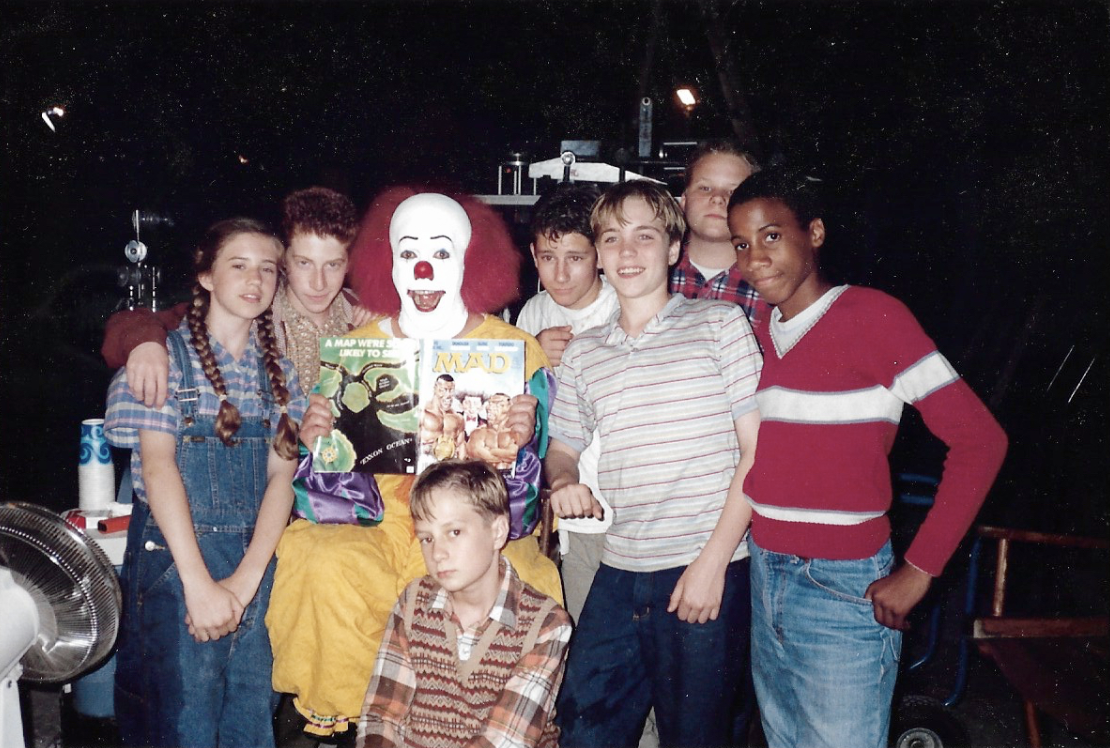
Of course, condensing an eleven-hundred-page novel into a film inevitably means leaving out certain details, but it also raises a more interesting question: were all those details necessary in the first place?
The First It Adaptation (1990) — What Changed & Why It Matters
The first adaptation, the 1990 miniseries, was produced not long after the novel’s publication. Although Stephen King was not directly involved, the series stays relatively faithful to the source material — carefully maintaining the story’s essence while excluding its most controversial elements. For instance, Henry Bowers still uses the n-word twice, and while the slur remains jarring, its limited use effectively conveys his violent, unhinged nature without the excessive repetition found in the book.
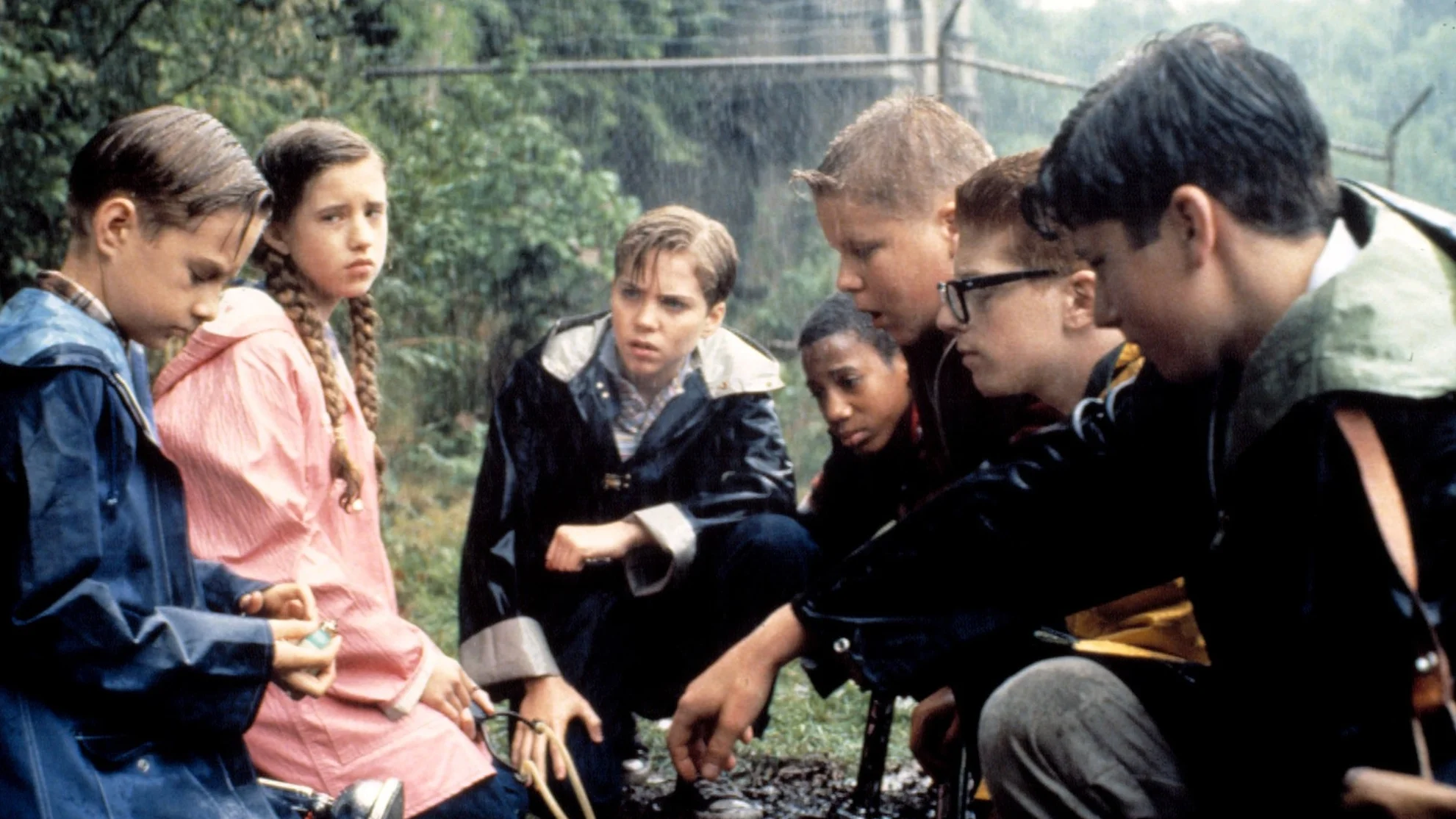
As is common in film, older actors are often cast to play younger roles for stronger performances; however, all three It adaptations chose child actors who were the same age as their characters. This choice adds authenticity, ensuring the dialogue and behavior feel age-appropriate. Yet this realism also reinforces why King’s original sewer scene is so deeply troubling — because no ethical production could ever depict eleven-year-olds in such a graphic and intimate context. The fact that every adaptation has rightfully omitted it speaks volumes about how unnecessary it truly was to the story’s emotional core.
(Both) Modern Adaptations — It (2017) & It: Chapter Two (2019)
The later two adaptations, released decades after the original miniseries, reflect a clear evolution in social awareness and cinematic standards. The 2017 film reimagines the story by aging the children slightly and shifting the timeline from the 1950s to the 1980s — a change that makes the tone and maturity of certain moments feel more natural and era-appropriate.
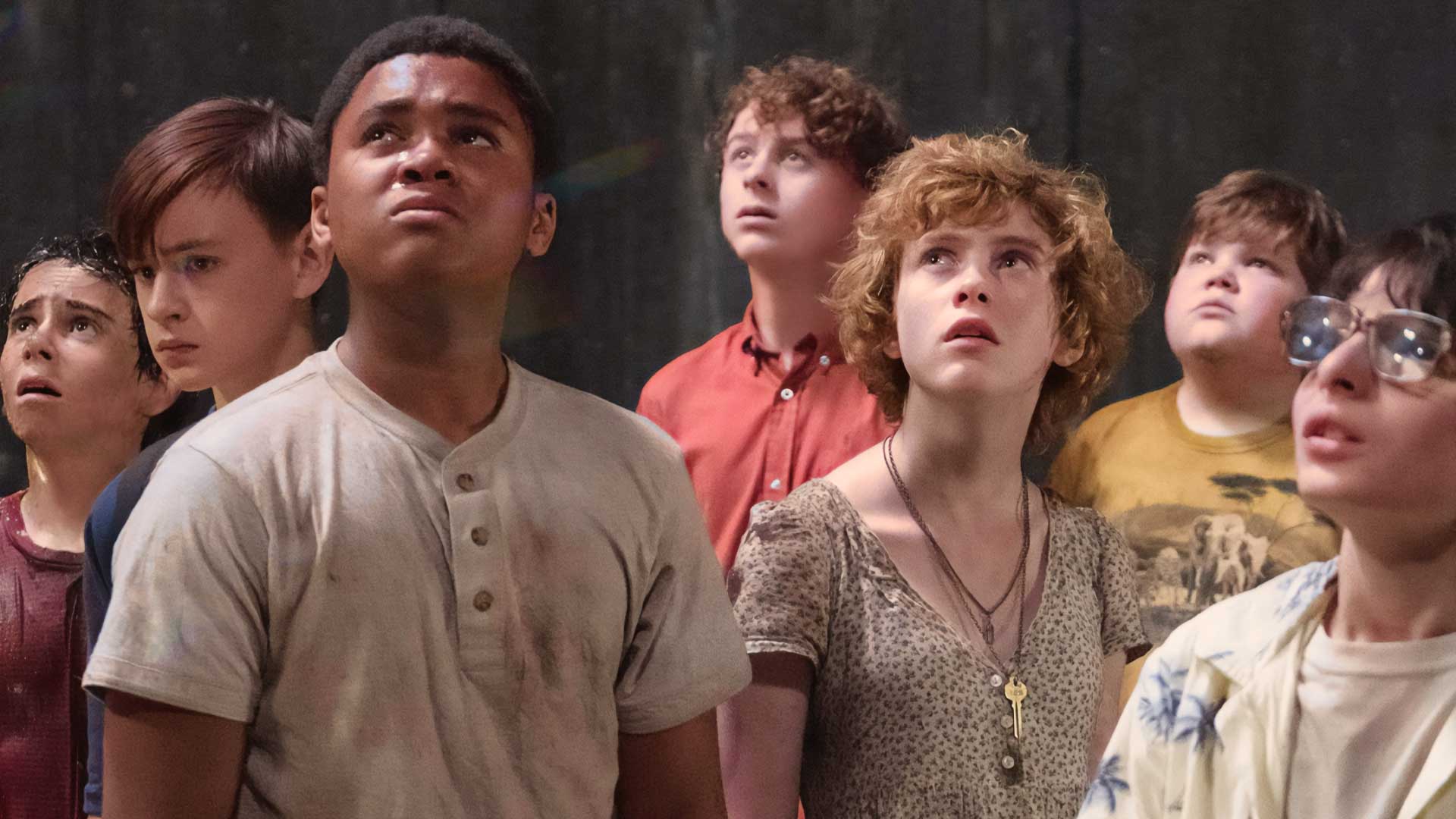
Despite this adjustment, director Andrés Muschietti deliberately keeps the film free of the excessive vulgarity and explicit sexual content found in the novel. There are moments of crude humor, particularly from Richie Tozier, but his occasional innuendos feel believable for a thirteen-year-old boy, not exploitative.
In taking a cleaner approach, the film also reframes how racism is portrayed. Rather than relying on repeated racial slurs as the novel does, It (2017) explores prejudice through subtext and atmosphere. Mike Hanlon’s isolation — living on the outskirts of town, being homeschooled, and standing out as the only Black boy in Derry — speaks volumes about the quiet, systemic racism embedded in the town’s culture.
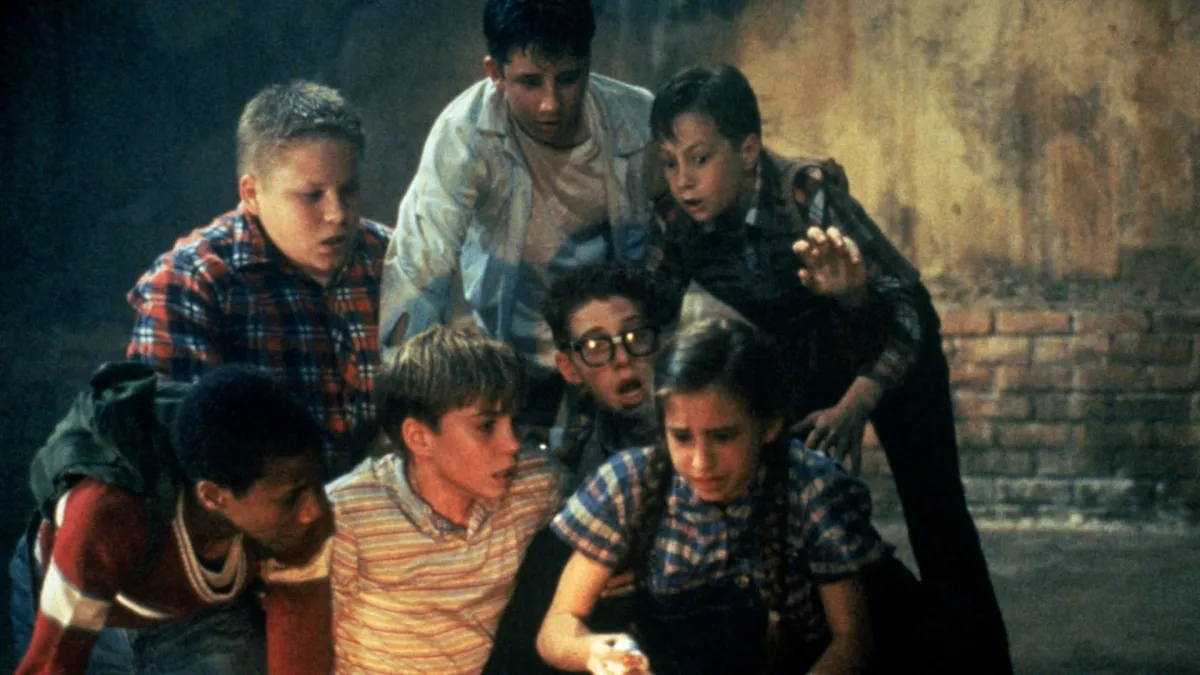
The viewer doesn’t need explicit language to sense how he is “othered.” Henry Bowers’ cruelty toward Mike, while less verbal, remains deeply violent and unrelenting. His psychosis is evident not through words, but through his actions — his sadistic attacks on the Losers and even the chilling moment when he holds a knife to his own father’s throat.
There is no question about Henry’s depravity, and the film proves it doesn’t take slurs or sexualized content to convey evil. Muschietti’s version demonstrates that horror, and character depth, can thrive just as effectively through restraint.
It: Rights, Adaptations, & King’s Creative Control
King is well known for selling the rights to his stories while keeping his creative distance, suggesting a level of comfort with allowing filmmakers to reinterpret his work. In fact, he has viewed each adaptation of It and openly praised their success, even when they deviate from his original vision.

Yet this distance invites a deeper question: has King ever reconsidered the necessity of all eleven hundred pages — the relentless slurs, the unsettling depictions of children, the moments that push beyond discomfort into controversy? And, perhaps more poignantly, does he regret any of them?
Will A New It Adaptation Fix The Original’s Problems?
The unease and fear meant to be evoked by Pennywise often emerge instead from the novel’s more troubling narrative choices, elements that have little to do with the clown itself. The enduring success of the films, coupled with plans for yet another adaptation, raises a larger question: will the original story’s intent be lost in translation, or might the upcoming TV series invite audiences back to the source material with a more critical lens?

A new generation of viewers, more socially conscious and vocal about representation, may not overlook what earlier readers accepted without question. King’s goal was always to disturb, to tap into the darkness lurking beneath everyday life, but it’s worth asking: can It still unsettle and terrify without leaning on the extreme, controversial elements that defined its past?
Footnotes
- King, Stephen. It. Viking Press, 1986. ↩︎
- King, Stephen. It. Viking Press, 1986. ↩︎
- “The 1950s.” History.Com, A&E Television Networks, 27 May 2025.
↩︎ - “Civil Rights Movement.” History, A&E Television Networks, 17 Jan. 2018. ↩︎
- Brown v. Board of Education of Topeka. 347 U.S. 483. Supreme Court of the United States. 1954. Oyez. ↩︎
- “How AIDS Remained an Unspoken-but Deadly-Epidemic for Years.” History.Com, A&E Television Networks, 28 May 2025, ↩︎
- THORN, Shelby. “Retro 102.5.” Retro 102.5, 12 Sept. 2017. ↩︎
- Boyle, Michael. “Stephen King Created Pennywise out of an Innocent Children’s Tale.” SlashFilm, SlashFilm, 29 June 2024.
↩︎ - King, Stephen. “The Apocalyptic Rockfight.” It , Simon & Shuster, New York, NY, 2017, pp. 667–710.
↩︎ - King, Stephen. “Ben Hanscom Takes a Fall.” It , Simon & Shuster, New York, NY, 2017, pp. 165–221.
↩︎ - King, Stephen. “The Apocalyptic Rockfight.” It , Simon & Shuster, New York, NY, 2017, p. 673.
↩︎ - King, Stephen. It. Viking Press, 1986. ↩︎
- King, Stephen. It. Viking Press, 1986. ↩︎
- King, Stephen. It. Viking Press, 1986. ↩︎
- Sullivan, Kevin P. “How ‘It’ Handles the Book’s Most Controversial Scene.” Entertainment Weekly, 8 Sept. 2017. ↩︎
- Elison, Meg. “All the King’s Women: The Fats.” PSYCHOPOMP.COM, 14 Jan. 2025.
↩︎