The release and success of Netflix and Sony Pictures Animation’sKPop Demon Hunters(2025) proves that audiences are actively rejecting the established franchises and tropes of animated movies. Instead, they are gravitating towards original stories told through unique perspectives and filmmaking techniques.
Kang, Maggie. KPop Demon Hunters. Netflix. 2025.
The film’s premise revolves around Rumi, Zoey, and Mira, members of the K-pop girl trio Huntr/x who perform sold-out concerts by day but must stop up-and-coming demon boy band The Saja Boys from stealing their fans’ souls by night.
KPop Demon Hunters’ story, which is told through beautiful animation inspired by art forms like anime, K-drama, and music videos, simultaneously celebrates and touches upon Korean culture, mythology, and society.
Kang, Maggie. KPop Demon Hunters. Netflix. 2025.
Audiences’ unprecedented love for KPop Demon Hunters shows that Sony Pictures Animation is setting a new standard for what is considered a truly great animated movie, and proves that the animation industry and animation fans are favoring a more experimental approach to filmmaking.
“Animating Identity” — Korean Roots As The Heart Of Kang & Appelhans’ Strategy
KPop Demon Hunters (2025) stood out because directors Maggie Kang and Chris Appelhans brought something big studios like Disney and Pixar are currently missing: a willingness to take risks on an original idea instead of relying on franchises or remakes.
Thompson, Ami. KPop Demon Hunters. Netflix. 2025.
After Kang made her feature directorial debut with Appelhans on Sony’s Wish Dragon(2021), Kang’s idea for KPop Demon Hunters was derived from her desire to “see Korean people on film in animation.”
“So it actually started off as just a demon hunter project where I wanted to showcase Korean demons,” said Kang. “Because demon hunting is usually a side job that’s done in secret, it was like, what is their day job?”1
The directors of KPop Demon Hunters meticulously considered how each of the movie’s concepts and details related to each other. For instance, their desire to showcase Korean demons and mythology led to the idea to also showcase Korean culture, and by extension, Korean music. Kang imagined an animated musical fantasy film “about a pack of female K-Pop stars who slay evil spirits in between gigs” that would serve as “a love letter to K-pop and her Korean roots.”2
Kang, Maggie. KPop Demon Hunters. Netflix. 2025.
As a result, Kang and the filmmakers took particular care to ensure the world the movie was set in did not just feel immersive, but authentically Korean in both its merits and its flaws. From the unique set of foods and flavors shown throughout KPop Demon Hunters to Rumi’s struggle with hiding her imperfections, which is not unlike what many people in the Korean entertainment industry have to face, the movie shows an appreciation for Korean culture without overly glamorizing it.
In one review of the movie, David A. Tizzard of The Korea Times explains:
“It’s a rare thing, to be honest: a film that makes Korean culture strange again, not exotic, not diluted, but strange in its full, vivid, magical realism. It takes K-pop, folklore, feminist angst, and emotional healing and somehow makes them all dance on stage together. And they hit every note.”3
“From Vision To Voice” — Diversity As The Foundation Of KPop Demon Hunters (2025)
When Maggie Kang initially came up with the idea for KPop Demon Hunters, her original intent was to create a movie about Korean people on film. However, as the movie’s storyline developed, it became clear to its development team that KPop Demon Hunters was no longer just about representing Korean culture.
Kang, Maggie. KPop Demon Hunters. Netflix. 2025.
In an industry where “original films are its lifeblood,” Kang’s disappointment with the dwindling number of opportunities in the animation industry for those of color to grow pushed the team to “put a premium on authentic stories told by people from diverse backgrounds.”
“At first it was very difficult, but I landed in a place where I had to just make a movie that I believed in, and I think it’s important for everybody to know that everyone has a different relationship to their culture. You’re not going to be representing things exactly the same way as somebody else is. It just means that we have to make more movies about every culture.”4
Kang explained that the lack of training and mentorship “across the board in every department” means that people are not often able to build relationships and connections that pave the way for them to move up in the industry.
Jeong, Ken. KPop Demon Hunters. Netflix.2025
“When I was coming up, we would all gather in the cafeteria at DreamWorks and talk shop,” said Kang. “As you’re doing that, you get to know each other and build these relationships. That’s how you jump from being an artist to a supervisor to a director. I feel like that bridge is not really happening anymore.”
Sony and Netflix were very supportive of Kang and Appelhans’s vision, and Kang hopes that the success of films like KPop Demon Hunters will allow the industry will be able to release more films that “are very creator-forward” and place priority on the input of those who work on them.
“Creating A Golden Movie” — Bringing Creativity Back Into Character Design
The filmmakers’ focus on creating a movie unlike its peers extended to the narrative, character design, and animation of KPop Demon Hunters.
Throughout the movie’s development, Kang, Appelhans, and screenwriters Danya Jimenez and Hannah McMechan reinforced its storytelling by placing their own spin on its countless inspirations from elements in the real world and in media, particularly Korean media.
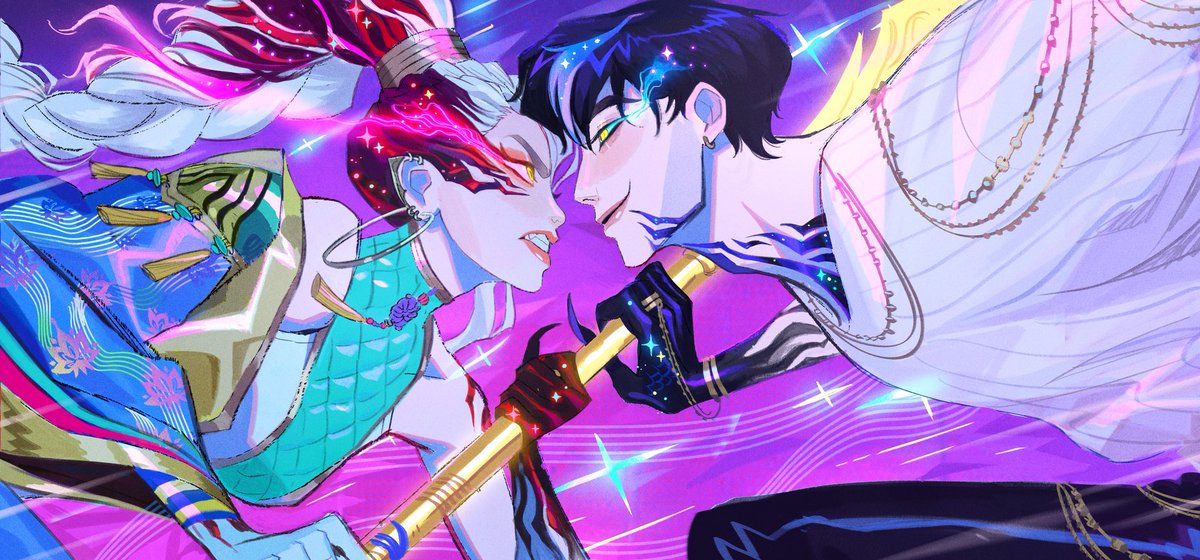
Park, Seon-ho. Business Proposal. Netflix. 2022.
Straying from mainstream conventions of “Marvel heroines” who are perceived as “just sexy and cool and badass,” Kang focused on creating protagonists who would display heroic qualities when performing and freely embrace more authentic traits when relaxing.
“I wanted to see girls who had potbellies and burped and were crass and silly and fun, because that’s really what I am,” said Kang. “So I just wanted to create something that encompassed all of those elements.”5
Kang, Maggie. KPop Demon Hunters. Netflix. 2025.
Each character has both an on-stage and off-stage persona, which allowed writers and designers to play around with contrast in their personalities and movements. Between Rumi’s perfectionism contrasting her secretive demon origins, Mira’s aggressive demeanor and sensitivity, and Zoey’s highly intense and bubbly excitement, each character’s insecurities highlight their complexities. This created a more realistic narrative arc that drew audiences in.
How The Characters Tie Into Mythology — Jeoseung Saja & Minhwa
In addition to borrowing from real-world artists, the filmmakers also derived their character designs from real figures in Korean mythology. Most notably, The Saja Boys wholly reference Korea’s Grim Reaper equivalents, the Jeoseung Saja.6
Kang, Maggie. KPop Demon Hunters. Netflix. 2025.
The Jeoseung Saja are a class of “spectral bureaucrats” who work for Yeomna, the king of the Korean underworld, and escort souls into the afterlife. Representing death and mortality, they’re portrayed with sunken eyes and pale complextions, completely black hanbok, or Korean traditional clothing, and a gat, or wide-brimmed black hat, to accentuate their authority and mysterious aura. Audiences, especially Korean ones, immediately noticed the inspiration from these figures on the demon forms of the boy band, who wear similarly foreboding outfits.
Kang, Maggie. KPop Demon Hunters. Netflix. 2025.
Mythology and tradition also inspired one of the film’s breakout characters, who was nicknamed “Derpy Tiger.” “Derpy,” an oversized blue cat who acts as Jinu’s mailbox of sorts, spawned countless amounts of fan art, memes, and compilation videos. He is accompanied by his companion, a magpie nicknamed “Sussy.”7
“I made it for the tiger, but the bird keeps taking it.”
Designed by story artist Radford Sechrist, most of the tiger and magpie’s design is based on hojak-do minhwa, a genre of traditional folk art that depicts those two animals. Originally hung up at entrances for the new year during the Joseon dynasty, tigers were believed to ward off evil, and magpies were believed to deliver good luck.
Eventually, these minhwa transformed into a satirical commentary on the aristocratic class, with the tiger painted foolishly to represent the aristocracy and the magpie flipping them off.
Pushing the Boundaries Of Storytelling — Turning Demon Hunters Into KPop Demon Hunters (2025)
Since the film’s characters were written as not just demons and demon hunters but also as K-pop idols, music became a big priority for its development team. Much to the team’s surprise, turning what was originally a movie with an accompanying soundtrack into a full-blown musical didn’t appear to be an easy task.
“It took me an embarrassingly long time to realize how much of a musical this was,” Kang remarks. “I don’t know why. I just thought that it was going to be a great pop soundtrack. When that started to happen, I was deathly scared of how we were going to pull this off.”
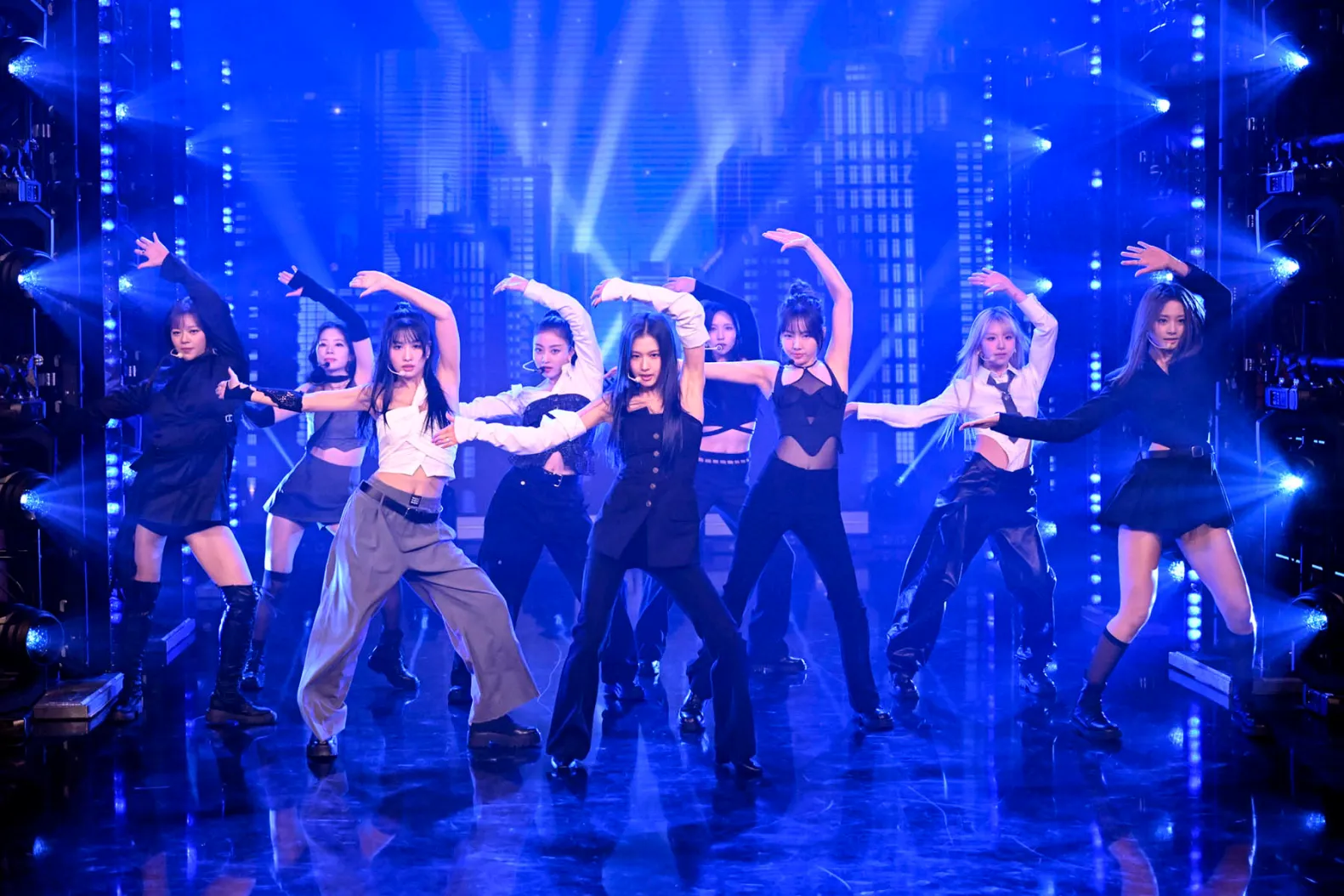
The resulting soundtrack album incorporates the work of multiple big names in the Korean music industry, including Teddy Park, who has worked with BLACKPINK and Meovv, and TWICE, whose previous single “Strategy” is included in the film. Additionally, musicians Jeongyeon, Jihyo, and Chaeyoung perform the song “Takedown.”
TWICE. NBC. 2023.
Thanks to the movie’s success, its soundtrack album has broken records for a K-pop album, surpassing major established acts in South Korea. Debuting at number eight on the Billboard 200, the album spawned the songs “Your Idol” and “Golden,” which have peaked at number one and two on the US Spotify chart, dethroning records previously set by K-pop heavyweights BTS and BLACKPINK.
BTS. WireImage. 2020.
“Golden” in particular has seen major success outside of the movie and its soundtrack. The song peaked at number 6 on the Hot 100 and has become the first song by a fictional musical act since 2009 to reach the top ten.
Additionally, Netflix has submitted the song for awards consideration and released it as the lead single from the album along with instrumental and acapella versions of it.
A New Yet Familiar Visual Language — Merging K-Dramas, Anime, & Into the Spider-Verse (2018)
An observation shared by many who watched KPop Demon Hunters was how the movie’s maximalist animation and visual language bore striking similarities to Sony’s previous releases The Mitchells vs. the Machines (2021) and Spider-Man: Into the Spider-Verse (2018). Though it is easy to compare the three movies, Kang and Appelhans emphasize that each of them is inherently different. Their superficial similarities stem from the fact that they were crafted with the same focus on telling a unique story through a complementary visual perspective.8
Persichetti, Bob. Spider-man: Into the Spider-verse. Sony Pictures Animation, 2018.
“What they both did so well was something new,” said Appelhans. “In a way, they raised the bar, which is ‘Bring something fresh and new to the animation sphere.’”
The Spider-Verse movies are about “Spider-Men from different universes who collide and must work together.” They accomplish this by referencing various comic book and superhero tropes, including reinterpretations of the Spider-Man formula.
The Mitchells vs. the Machines could be described as being about “a family who saves the world from technological takeover.” The film embraces this vision by including easter eggs and callbacks to movies with similar themes, includingMad Max (1979) and Terminator 2: Judgement Day (1991).9
Rianda, Mike. The Mitchells vs. The Machines. Netflix. 2021.
KPop Demon Hunters is about exactly what its title describes: “demon hunter K-pop idols.” The movie plays to this unique pitch by combining motifs from demon hunter shows like anime and archetypes from K-pop idol culture.
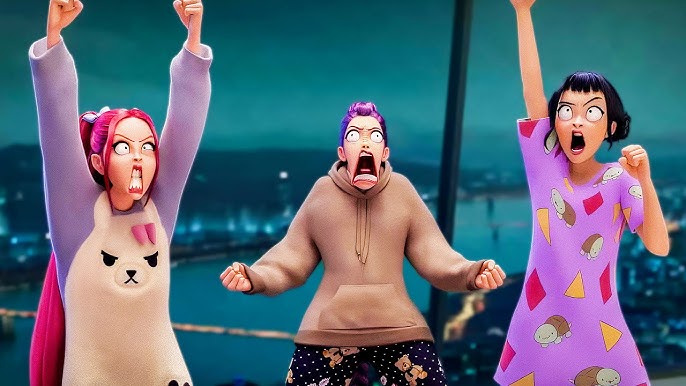
Kang and Appelhans draw from numerous real-world inspirations to create a world that feels dramatic yet simultaneously immersive. From Mira and Zoey’s exaggerated facial expressions and body language to when Jinu suddenly trips Rumi in a dramatic sequence heavily inspired by K-dramas, the movie strongly references many characteristics of Asian media while subverting the expectations of audiences who may be familiar with it.
“We drew inspiration from a different set of influences: music videos, editorial photography, K-dramas, concert lighting, a touch of anime,” said Appelhans. “All the artists, animators and lighters on the film embraced that challenge and did a fantastic job to realize our vision.”
Kang, Maggie. KPop Demon Hunters. Netflix. 2025.
[screaming] “So hot.”
On a surface level viewing, it may seem KPop Demon Hunters, The Mitchells vs. the Machines, and Spider-Man: Into the Spider-Verse are nothing alike because the story they tell and the design elements they are built upon make each of them unique. However, this is exactly what makes them so similar and impactful. By using their influences to create a look that is tailored to each movie, these three movies create an aesthetic that feels very similar.
What KPop Demon Hunters (2025) Reveals About Creative Storytelling
Since its release on Netflix, KPop Demon Hunters has become a contender for one of the year’s best movies and currently holds a 95% rating on Rotten Tomatoes.
Kang, Maggie. KPop Demon Hunters. Netflix. 2025
Though some criticism has been directed at how Mira and Zoey are largely played as “comic relief until the film’s climax,”10 fans and critics both internationally and in South Korea are eagerly stuffing the movie down their throats the same way Rumi stuffs a kimbap down hers.11
The film’s easter eggs and references have quickly inspired a thriving fandom that brings avid K-pop listeners, moviegoers, artists, and writers together to celebrate how it is both inventive and a homage to Korean culture.
Kang, Maggie. KPop Demon Hunters. Netflix. 2025.
It is becoming increasingly clear that audiences are proving that animation studios need to harness their teams’ creativity and take inspiration from a wide variety of sources to keep them engaged and rushing to the big screen.
Sony Pictures Animation managed to combine new ideas with real-world influences to create something entirely novel in KPop Demon Hunters. A new era of original, experimental animated movies seems to be beginning, and KPop Demon Hunters is the first preview of “what it sounds like.”










Great story! I really enjoyed it.
My main takeaway is that I’m more excited than ever about the Rebecca Sugar/Matt Braly movie…