

Table of Contents Show
The 2000s were an interesting turning point in hip hop. In the decades leading up to it, the sound was largely dominated by boom bap, a style and subgenre characterized by hard-hitting drums and gritty lyricism,1 popularized by East Coast artists such as The Sugarhill Gang and LL Cool J.
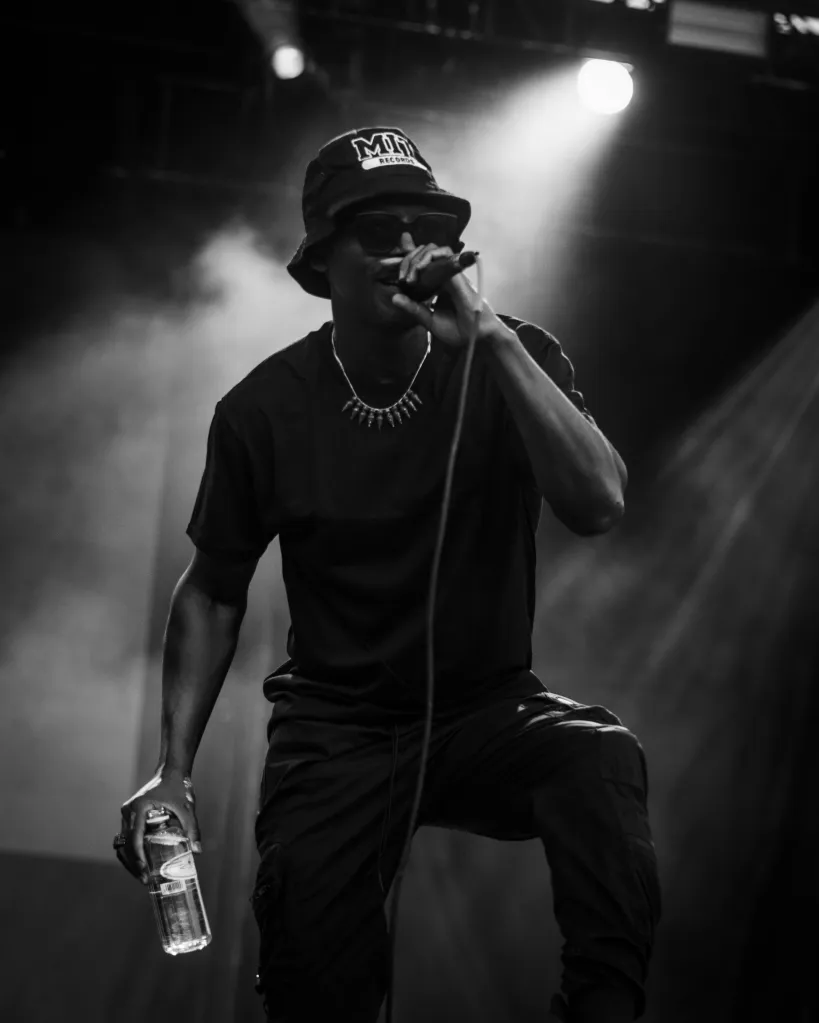
Not long after, however, a Chicago native would begin his ascent to hip-hop stardom and leave a lasting imprint on the genre. Under the moniker Lupe Fiasco, the self-described hip-hop hater-turned-rapper would go on to win a Grammy, earn numerous award nominations, appear on soundtracks across various forms of media, and ultimately help prove that Nas’s infamous claim that hip hop was dead held far less weight than it once seemed.
At The Crossroads — Early-2000s Hip Hop & Its Shifting Priorities
Still a relatively young genre, hip hop found itself at a crossroads during the twilight years of the 20th century and into the early 2000s. Rappers increasingly leaned toward a more pop-oriented sound, often distancing themselves from the gritty realities of everyday life in marginalized communities in favor of broader commercial appeal and record sales.

While many made this shift at the expense of artistic integrity, a select group of artists managed to secure radio play without fully abandoning the foundations laid by their predecessors. Through sharp storytelling, layered wordplay, and distinctive flows, these rappers often wove personal anecdotes about life before fame into their music, maintaining a sense of authenticity even as their profiles grew.
Artists such as Jay-Z and 50 Cent were particularly adept at recounting their struggles in crime-ridden neighborhoods and the choices they made to survive and succeed. Their narratives grounded the genre, reinforcing its roots even as hip hop’s commercial reach expanded.

This balance persisted throughout the 2000s. As rap singles increasingly topped the charts, it became clear that hip hop had entered an era where artists could sell out larger venues and even fill stadiums — though such opportunities were largely reserved for those signed to major labels.2
Amid this landscape, a fresh, self-assured “Lu,” as he would call himself, began a brief yet influential rise to prominence after being propelled into the spotlight by fellow rising star Kanye West.
Breaking Through The Noise — When Intelligence Went Mainstream
After releasing several mixtapes and catching the attention of Atlantic Records with his originality and sound, Lupe Fiasco signed with the label, officially beginning his breakthrough into hip hop’s mainstream. In doing so, he joined a roster that included artists such as Twista, Kid Rock, and T.I.
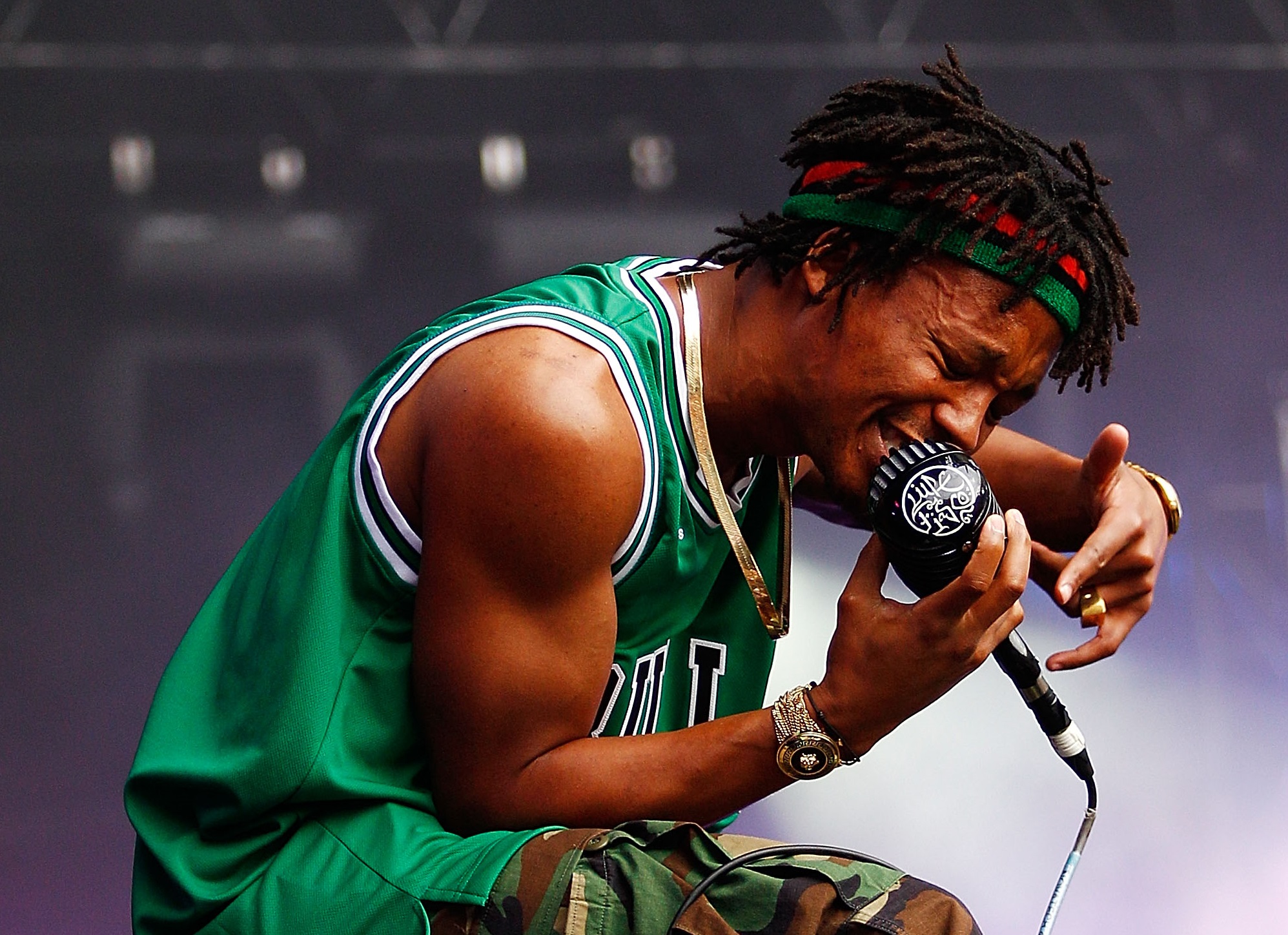
Much like the artist who featured him on a sophomore LP before he had even released his own debut studio album, Lupe Fiasco displayed a natural inclination toward the unconventional. He embraced a hip, openly nerdy persona, peppered with references to counterculture and an unapologetic love for fandom — an approach that set him apart in a genre often resistant to such openness.
At a time when gangsta rap dominated the charts, many rappers felt pressure to embody the hardened persona popularized by 50 Cent — complete with luxury cars, excess alcohol, and hyper-performative masculinity. The image became so desirable that some artists would later face scrutiny over whether they had actually lived the adversity they claimed in their lyrics.

Despite having experienced struggles similar to those of gangsta rap’s biggest names, Lupe’s music deliberately rejected glorifying that lifestyle. Instead, his work explored political realities, abstract concepts, and deeply personal interests, positioning intellect and curiosity as viable forms of authenticity within hip hop.3
In an era defined by oversized T-shirts, heavy chains, and headbands, Lupe stood out visually as well — sporting a small ninja keychain hanging from his pants and wearing designer fashion that would not reach global popularity until years later. His image, much like his music, felt ahead of its time.
Concepts, Craft, & Conscious Rap
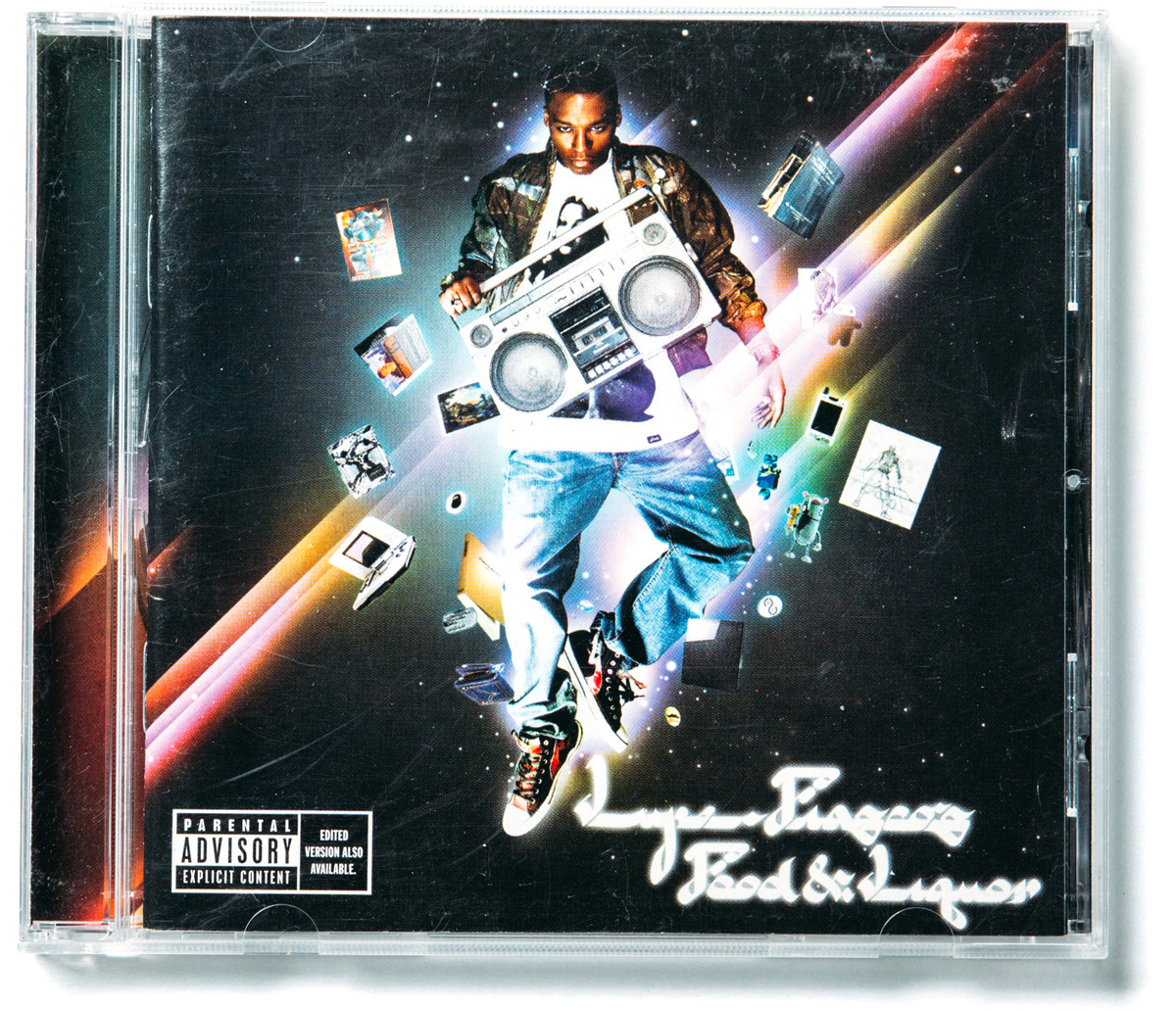
In his first single to chart,4 released from his debut album Lupe Fiasco’s “Food & Liquor,” Lupe tells the story of a skateboarder who is rejected by society and turned away wherever he goes because of his passion. The song frames alienation not as failure, but as a consequence of refusing to conform.
As the narrative unfolds, the protagonist continues to pursue what he loves despite constant criticism, gradually gaining confidence in himself. This self-assurance leads to friendships with a crew of like-minded individuals and even a romantic relationship with a girl who resists being cast as a damsel-in-distress figure. The track functions as both metaphor and manifesto, reinforcing Lupe’s commitment to individuality and self-definition.

Lupe’s role as an innovator within hip hop became even clearer with his sophomore album, Lupe Fiasco’s “The Cool,”5 a concept-driven project released just one year after his Grammy-winning debut. The album expanded his thematic scope significantly, addressing issues ranging from illness and systemic violence to the use of child soldiers in Africa.
From its opening track, “Baba Says Cool for Thought,”6 a spoken-word poem performed by his older sister Ayesha Jaco, it becomes immediately apparent that “The Cool” would diverge sonically from “Food & Liquor.” Where the debut relied on more accessible, soul-inflected production — similar to what might be found in Common’s catalog — the follow-up leaned into darker, more unconventional soundscapes.
Although Lupe’s messaging remained just as pointed as before, it arrived with a colder, more ominous tone. “The Cool” featured production few rappers of the era could comfortably navigate, further distinguishing Lupe as a risk-taker unwilling to rely on the prevailing sonic trends.
Rather than gravitating toward beats from hitmaking producers like Timbaland or The Neptunes, Lupe embraced a sound that emphasized mood, narrative cohesion, and conceptual ambition.
Overall, the album sold well and elevated fan expectations higher than ever before7 — though behind the scenes, Atlantic Records had plans that would soon complicate Lupe’s artistic trajectory.
When The Industry Pushes Back — Control, Compromise, & “Lasers”
By the late 2000s and early 2010s, hip hop had firmly established itself on the Billboard Hot 100 as more rappers leaned into pop-leaning production and crossover appeal. With catchy hooks and polished instrumentals designed for mass consumption, it became increasingly clear why the most radio-friendly records continued to dominate sales.
Eager to capitalize on this momentum, record labels began pressuring their most marketable artists to abandon carefully constructed identities in favor of hit-making formulas. Bound by contractual obligations, Lupe found himself with little choice but to navigate these expectations, even as they clashed with his artistic priorities.
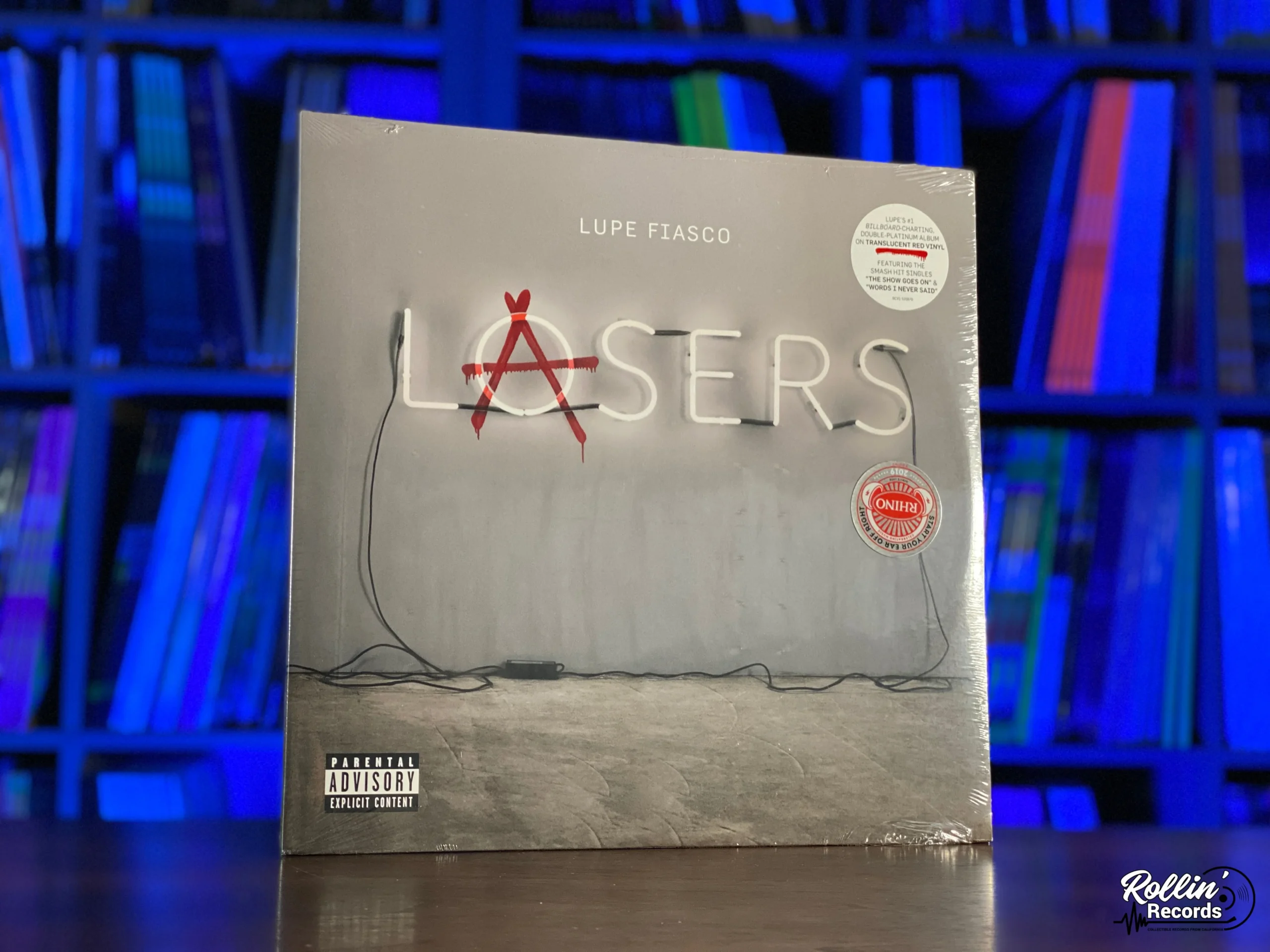
In a well-documented chapter of hip-hop history, the years that followed were marked by fewer releases and increasing tension between Lupe and what the industry framed as “market demands.” In the lead-up to his third studio album, “Lasers” (Atlantic Records, 2011), repeated delays fueled mounting frustration among fans, who grew impatient as the project seemed perpetually stalled.
During the album’s recording process, Lupe later claimed that he rewrote verses for several tracks multiple times, only to receive continued negative feedback from label executives. The constant revisions and conflicting expectations exemplified the creative gridlock that defined this period of his career.
The situation reached a peak when Lyor Cohen, then CEO of Warner Music Group — Atlantic’s parent company — publicly addressed a crowd of protesters demanding the album’s release. In an attempt to defuse the tension, Cohen reportedly brought a stereo outside and played snippets of an unreleased song slated to appear on “Lasers.”8

When the album finally arrived, it sold relatively well compared to Lupe’s first two releases. However, longtime fans were largely disappointed by the final product, feeling that it lacked the depth and creative freedom that had defined his earlier work. For many, “Lasers” signaled a turning point — less a natural evolution and more a compromise shaped by corporate intervention.
In the years that followed, Lupe released several albums that received mixed receptions, largely fulfilling his remaining contractual obligations. Eventually, he departed Atlantic Records entirely, emerging free from what he would later describe as the restrictive weight of corporate control.

During a live performance years later, Lupe revealed that the music video for one of the songs from his fourth studio album had been funded entirely out of pocket, without label support — yet another illustration of the resistance and instability that characterized his time surrounding the “Lasers” era.
The Lineage Of Influence — Artists Who Picked Up The Torch
Though he is no longer the household name he once was — or perhaps could have been — Lupe’s influence continues to echo throughout hip hop. Many artists have openly praised him and credited his work as formative to their own creative development. Tyler, the Creator, widely regarded by many as one of the current faces of hip hop, has publicly criticized the industry’s role in sidelining Lupe’s career, expressing his frustration on X, formerly known as Twitter.
Over the years, numerous videos have also surfaced online showing Tyler enthusiastically rapping along to Lupe’s songs while sharing the stage with him — moments that feel less like performances and more like genuine celebrations of influence and mutual respect, shared with fans of both artists.9

Kendrick Lamar, another towering figure in the genre, has likewise spoken highly of Lupe. During a live show in Chicago, Kendrick praised Lupe onstage, receiving that admiration in return just one month before releasing “Good Kid, m.A.A.d City”10 — a moment that many view as symbolic of a generational handoff.
In many ways, Kendrick represents a version of Lupe whose brilliance was allowed to fully reach a global audience. He would go on to become one of the most dominant voices in hip hop for over a decade, largely due to his ability to craft intricate narratives rooted in deeply relatable lived experiences — an approach that closely mirrors Lupe’s own strengths as a storyteller.

While not as critically revered as the artists mentioned above, Logic has never shied away from acknowledging his influences. On what many believed would be his final album in 2020, Logic paid direct homage by sampling one of Lupe’s most beloved songs, “Gold Watch,”11 further cementing Lupe’s lasting impact on artists who came after him.
What Comes Next — Risk, Innovation, & The Future Of Hip Hop
The current state of the genre has left much to be desired. Many labels are once again forcing artists to follow rigid formulas in pursuit of the highest possible returns, prioritizing quantity over quality. While this approach was not entirely uncommon in the 2000s, today it has become routine for rappers to release albums with 20 or more tracks that repeatedly circle the same themes without much variation or depth.

As a result, the number of hip hop songs landing on the Billboard charts has steadily declined, with fewer listeners tuning in to weekly releases from the newest generation of artists. Hip hop remains a relatively young genre when compared to those that came before it, and if labels hope to regain their footing on the charts, they may need to take risks once again — seeking out innovators like Lupe and allowing them the freedom to fully develop their creativity and sound.
Footnotes
Hip Hop Music History Boom Bap: A brief history of the subgenre. 2025. ↩︎Tarver, Keisha M. “From the Streets to the Charts: The Impact of Hip Hop in the 2000s.” Hype Off Life. 15 Jan. 2025. ↩︎“Lupe Fiasco: Two Sides to Everything.”NPR. 11 March 2011. ↩︎- “Kick, Push,”
Lupe Fiasco. “Kick, Push.” Lupe Fiasco’s Food and Liquor. Atlantic Records. 2006. ↩︎ Lupe Fiasco. Lupe Fiasco’s The Cool. Atlantic Records. 2007 . ↩︎Lupe Fiasco. “Baba Says Cool for Thought.” Lupe Fiasco’s The Cool. Atlantic Records. 2007. ↩︎- Wikipedia contributors. “Lupe Fiasco’s Food & Liquor.” Wikipedia, October 9, 2025. ↩︎
Anas, Marielle. “Exclusive Video: Lupe Fiasco Fans Protest Outside Label Office.” Rolling Stone. 15 Oct. 2010. ↩︎Sadler, Armon. “Tyler, the Creator Shows Love to Lupe Fiasco After Coachella Set.” Vibe. 17 April 2024. ↩︎Kendrick Lamar. Good Kid, m.A.A.d City. Interscope Records. 2012. ↩︎Lupe Fiasco. “Gold Watch.” Lupe Fiasco’s The Cool. Atlantic Records. 2007. ↩︎