
Table of Contents Show
As Gabriel Garcia Marquez faced a cheerful crowd during his acceptance of the Nobel Prize. He remembered a distant afternoon when he first conceived the idea of One Hundred Years of Solitude (1967).

Marquez, a critically acclaimed novelist from Colombia, is one of the most beloved and influential writers of all time. He entered the mainstream with his best-selling novel, One Hundred Years of Solitude, which would go on to win many awards, inspire a literary movement, and even ban its creator from the United States for a time when he was accused of spreading communism.1

The novel’s unique tale chronicles both the magical and the accursed happenings of the Buendia family throughout seven generations. It teaches many lessons about humanity that are still relevant today, almost sixty years after the masterful work was first published.
Magical Realism & The World Of Macondo
The Buendia family’s story spans many generations. It begins with José Arcadio Buendía, a curious and adventurous man, and Ursula, his level-headed and loyal wife. After murdering a man in a duel over an insult, the couple had no choice but to flee their hometown and start new lives elsewhere. While leading a small group of settlers, José Arcadio Buendía stumbled upon what he believed to be the perfect area for a new settlement. He decided to end the trek and establish the city of Macondo.
2In Macondo, all things start with the belief that everyone is equal under the sun3. To enforce that belief, Jose Arcadio Buendia designed the new village, which he nicknamed “the city of mirrors,” in a particular way so that no household received more sunlight than another one. While the world of One Hundred Years of Solitude mirrors the real world in many ways, what sets it apart from other beloved novels of the time and those that have been published since is its brilliant and mind-boggling use of magical realism, which is a writing style that incorporates magical elements into an otherwise “normal” world.

There are many paranormal elements in Macondo, such as ghosts, which are often treated as a common occurrence, the usage of flying carpets, and abnormal “natural occurrences” such as hurricanes4. In one portion of the novel, a brutal storm blocks out the sun for many years, and blue skies are replaced by grey clouds that pour heavy rains down over the village’s hopeless inhabitants, leaving the village in a state of decay5. Even through supernatural events, the characters somehow manage to survive and accept things as they are in a matter-of-fact way.
Although the novel never explores the world outside of Macondo enough to give a better understanding of what its world is like on a global scale, it provides great insight into the question through the use of traveling groups or individuals who visit the village and bring new ideas, mysterious objects, and even diseases along with them. These visitors make it much easier for readers to imagine the workings of the world outside Macondo6.

After the Buendias accept a young, mysterious girl named Rebeca from outside of Macondo into their home, the people of the village are struck with an insomnia plague that leaves the entire population sleepless7. As the sickness progresses, the villagers begin to lose their memories and are forced to leave notes on different objects to remember what they are. When a mysterious recurring figure named Melquiades returns to Macondo, the entire population is cured, and their madness wears off8.
Despite seemingly working as a sort of shock factor, these supernatural elements are sometimes used as symbolism that exaggerates certain emotions and characteristics. One example of this symbolism is when Mauricio Babilonia, a young mechanic for the banana company, falls in love with Meme Buendia, the disobedient daughter of Aureliano Segundo, and often finds himself being followed by butterflies.
This event symbolizes love in an extraordinary fashion and the anxieties that come with having to hide it9. In another bizarre segment of the novel, a woman named Remedios Buendia, who is renowned for her purity, floats away into the heavens and is never mentioned again in any meaningful way, emphasizing her difference from the rest of the village.
Generational Cycles & The Repetition Of Mistakes
One of the key points of the novel is how each of the central family’s generations produces a new Buendia or Buendias who commit the same mistakes as those who came before them. These tendencies are seemingly inevitable and passed down through the generations like genes.
To further emphasize this idea, Marquez gave many of these characters the same name. Throughout the family’s lineage, there are over four different Jose Arcadios and Aurelianos. They always share similarities with one another as they grow from children to adults.
Among the most common of these family members’ repeated mistakes is a constant need for isolation from the rest of their family. Every generation that follows the family’s founders, José Arcadio Buendía and Ursula, has at least one person who shuts themselves away from the rest of the family to drown in sorrow or marvel over their obsessions in solitude.

When Rebeca’s husband, Jose Arcadio Buendia, dies under unusual and unconfirmed circumstances, she locks herself away in her home and stays secluded for the rest of her life.
Many decades later, Rebeca is remembered, and people are sent to her home to find her. They discover that she is still alive and has never left the village. This moment and others like it present the novel’s readers with a sense that there is no genuine love within the Buendia family10. Despite being happy for a time in their relationships, many of the Buendias turn to different people for love and are willing to gamble their love lives for flashes of lust.
Ursula, who is arguably the most grounded member of the Buendia family, never changes after setting foot on Macondo. She remains a caring individual and advisor to her family, even though they hardly ever listen to her. Throughout the family’s mistakes, it becomes clear that the fathers of each new Buendia keep repeating the same mistakes as their ancestors and are unwilling to change their ways. They raise their children to have mindsets similar to their own, setting them up to repeat their family’s mistakes.

The novel ends on a dramatic note with the entire city of Macondo being destroyed by a hurricane. Aureliano Babilonia, the last Buendia, who is not free from repeating his ancestors’ mistakes, becomes obsessed with loneliness and decides to dedicate his life to deciphering a manuscript written by Melquiades during the founding of Macondo.
When he finally uncovers its secrets, he learns that everything that happened since José Arcadio Buendía founded Macondo was destined to happen. The novel’s conclusion serves as a metaphor for how refusing to change for the better will result in a catastrophic end that cannot be escaped11.
War, Power, & Political Conflict In The Novel
Marquez was the grandson of a liberal veteran who fought in the ‘Thousand Days’ War and a journalist. He was greatly inspired by the stories he heard and reported on, particularly those that were politically charged.12 A major focal point in the novel is an exaggerated scenario of how much political differences in families can tear them apart, serving as a cautionary tale for family members on different sides of the political spectrum.
Throughout One Hundred Years of Solitude, Macondo goes through a state of political tug-of-war as revolution takes center stage. The conditions of its inhabitants are dependent upon who is in charge of it. When the Conservative Party of Colombia moves to take control of Macondo and enforce order, Aureliano Buendía, son of José Arcadio Buendía, decides to take up arms and lead a liberal rebellion against them.

During the most intense moments of the war, Aureliano gets so caught up in his philosophy that he loses touch with himself. He bounces between different ideologies and threatens, arrests, and executes multiple of his friends and allies, reaffirming the belief that great power can influence people negatively13. Unfortunately, even entire governments are susceptible to bending a knee in exchange for “great returns.”
In one of the most notable scenes of the novel, José Arcadio Segundo, one of the union leaders for the banana company, participates in a strike for better working conditions on a banana plantation. During the strike, the Colombian Army opens fire on its opposition.
Segundo becomes the sole survivor of the attack and awakens hours later in a train full of corpses. Upon his return to Macondo, he goes around town asking about the massacre, but he is denied any truths about the tragedy. The government used its ability to instill fear in the citizens of Macondo to successfully cover up the sad fates of those who opposed them.
“Materialism Versus Family” — What Truly Endures
The city of Macondo was never intended to reinforce capitalist tendencies, but many of the novel’s characters exhibit an extreme fondness for material objects. They sometimes prioritize them over their families. Even the founder of the village succumbs to his curiosity and greed, becoming a hermit who almost completely disregards his wife and children after a new obsession takes him by storm.
José Arcadio Buendía immediately became obsessed with trying to find gold after buying magnets from Melquiades14. His obsession became a lifelong quest to uncover the secrets of alchemy to create gold. His son, Aureliano, serves as a cautionary tale about how pointless and mundane life can become. When Aureliano finally gives up on his war efforts, he spends the rest of his life miserable and secluded. He repeatedly melts pieces of fish-shaped gold, then remakes them over and over every day.

These characters’ sadness reinforces the novel’s theme of making genuine connections with family and friends being more important than spending every moment chasing one thing. Even Ursula, who stands firm throughout the Buendia family’s generations as its heart and soul through the betrayals and other drama brought forth by her descendants, is not a perfect individual. She relies on her traditional values too much and uses her faith as the basis for almost everything she does.
When José Arcadio Buendía’s obsession becomes more than his family can bear, many family members, including Ursula, ultimately decide to tie him to a tree. He remains there for the rest of his life. If there was true love in the Buendia family, would he have suffered this inhumane treatment and fate?
The Global Impact Of 100 Years Of Solitude
One Hundred Years of Solitude is as relevant as it was when it was first published. The novel has sold over 50 million copies since its original publication, and a TV show adaptation of it was recently developed. Thanks to Marquez’s magnum opus, Latin American literature began to receive much more international attention throughout the 1960s and beyond. This attention allowed other writers with similar styles, including Julio Cortázar and Mario Vargas Llosa, to receive international attention as well15.
Outside of the literary world, the novel has inspired other major works of art, including Disney and Pixar’s Encanto, which shares many similarities with One Hundred Years of Solitude16. Marquez’s hometown of Aracataca has become a tourist attraction for fans who wish to explore and experience the atmosphere that inspired the novel. While the city does not host any events related to the novel, visiting Aracataca can fulfill a reader’s desire to feel as though they are in the world of One Hundred Years of Solitude.
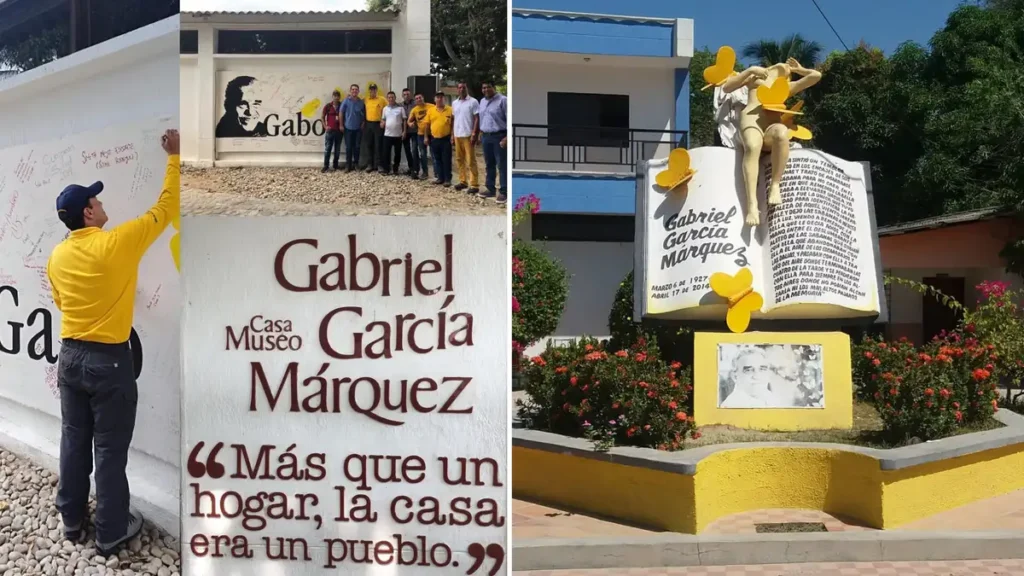
The Casa Museo Gabriel Garcia Marquez, a nearly identical replica of the home that the writer grew up in, is a museum that has been open to the public since 2010. Marquez’s original home was demolished in the 1970s, so the museum is the closest thing that fans of the novel have to experiencing the site of the story’s most crucial inspiration.
The Lasting Lessons Of 100 Years Of Solitude
The message of One Hundred Years of Solitude is that humankind must take every opportunity to grow for the better.
In the current global political climate, the novel’s theme of equality for all is relevant. As José Arcadio Buendía proved, even the right message can get muddled and overwritten if greed overtakes one’s ability to love and respect others.
Footnotes
- Dwyer, Colin. “Book News: Gabriel Garcia Marquez’s Collection Gets A Texas Welcome.” NPR. 2014, November 25. ↩︎
- Marquez, Gabriel Garcia, One Hundred Years Of Solitude. Harper Perennial Modern Classics, ch. 1. ↩︎
- Marquez, Gabriel Garcia. One Hundred Years Of Solitude. Harper Perennial Modern Classics, ch. 1. ↩︎
- Marquez, Gabriel Garcia. One Hundred Years Of Solitude. Harper Perennial Modern Classics, ch. 2, 20. ↩︎
- Marquez, Gabriel Garcia. One Hundred Years Of Solitude. Harper Perennial Modern Classics, ch. 16. ↩︎
- Harris, Matthew. “No One Is Alone In A City Of Mirrors.” Medium. 2017, June 10. ↩︎
- Marquez, Gabriel Garcia. One Hundred Years Of Solitude. Harper Perennial Modern Classics, ch. 3. ↩︎
- Marquez, Gabriel Garcia. One Hundred Years Of Solitude. Harper Perennial Modern Classics, ch. 3. ↩︎
- Grullon Paz, Isabella. “How Will Netflix Do Justice To ‘One Hundred Years Of Solitude?'” The New York Times. 2019, March 21. ↩︎
- Marquez, Gabriel Garcia. One Hundred Years Of Solitude. Harper Perennial Modern Classics, ch. 11. ↩︎
- Marquez, Gabriel Garcia. One Hundred Years Of Solitude. Harper Perennial Modern Classics, ch. 20. ↩︎
- Martin, Gerald. “‘Gabriel Garcia Marquez: A Life.'” The New York Times. 2009, May 27. ↩︎
- Marquez, Gabriel Garcia. One Hundred Years Of Solitude. Harper Perennial Modern Classics, ch. 9. ↩︎
- Marquez, Gabriel Garcia. One Hundred Years Of Solitude. Harper Perennial Modern Classics, ch. 1. ↩︎
- Rendon, Catherine. “Remembering Gabriel García Márquez (1927-2014)” The Brooklyn Rail. 2014, June. ↩︎
- Paquet, Kevin. “Disney Invites You to a Refreshing 109 Minutes of Solitude in ‘Encanto.'” The Herald. 2021. December 2. ↩︎