
Table of Contents Show
What’s scarier than a scary movie? Surely living inside one! The Scream (1996-)1 franchise, while heavily inspired by earlier horror films, does something unusual: directly references horror tropes through a recurring “movie-inside-a-movie” structure.

The Scream (1996-) franchise sustains itself by turning horror repetition into part of the story itself, using the in-universe Stab films and constant rule-breaking to transform sequel fatigue into the very engine that keeps the series alive.
“There are certain rules that one must abide by in order to successfully survive a horror movie. For instance: 1. You can never have sex. The moment you get a little nookie — you’re as good as gone. Sex always equals death. 2. Never drink or do drugs. The sin factor. It’s an extension of number one. And 3. Never, ever, ever, under any circumstances, say ‘I’ll be right back.'”
Randy Meeks2
How Scream (1996-) Turned Self-Awareness Into A Formula
The Scream (1996-) films follow Sidney Prescott as she is repeatedly targeted by different killers using the Ghostface identity. At a time where slasher films were becoming predictable, Scream (1996), while presenting a relatively straightforward slasher story, displays a self-awareness that revives the genre without abandoning its conventions.3 The later movies follow the lead of the first, recognizing the conventions of their placement within a slasher franchise and using meta commentary in a mocking, yet sustainable, way.

After reporter Gale Weathers publishes a book reciting the details of the attack on Sidney in Scream (1996)4 — and, consequently, the synonymous murders in the small town of Woodsboro — the story is adapted into an in-universe horror film titled Stab. The second movie follows the repercussions of the Stab movie release. Superfans of the movie attempt to replicate the original, but this time aiming to succeed in the original’s goal of killing Sidney Prescott.
Each new attack leads to another Stab film within the story, which in turn justifies another Scream film for the audience. The franchise openly acknowledges its place within horror history. The characters in the movies have seen the same horror movies we have seen and use the genre’s tropes to try and survive — unless, the character is the killer, in which case the tropes become a blueprint for violence.5
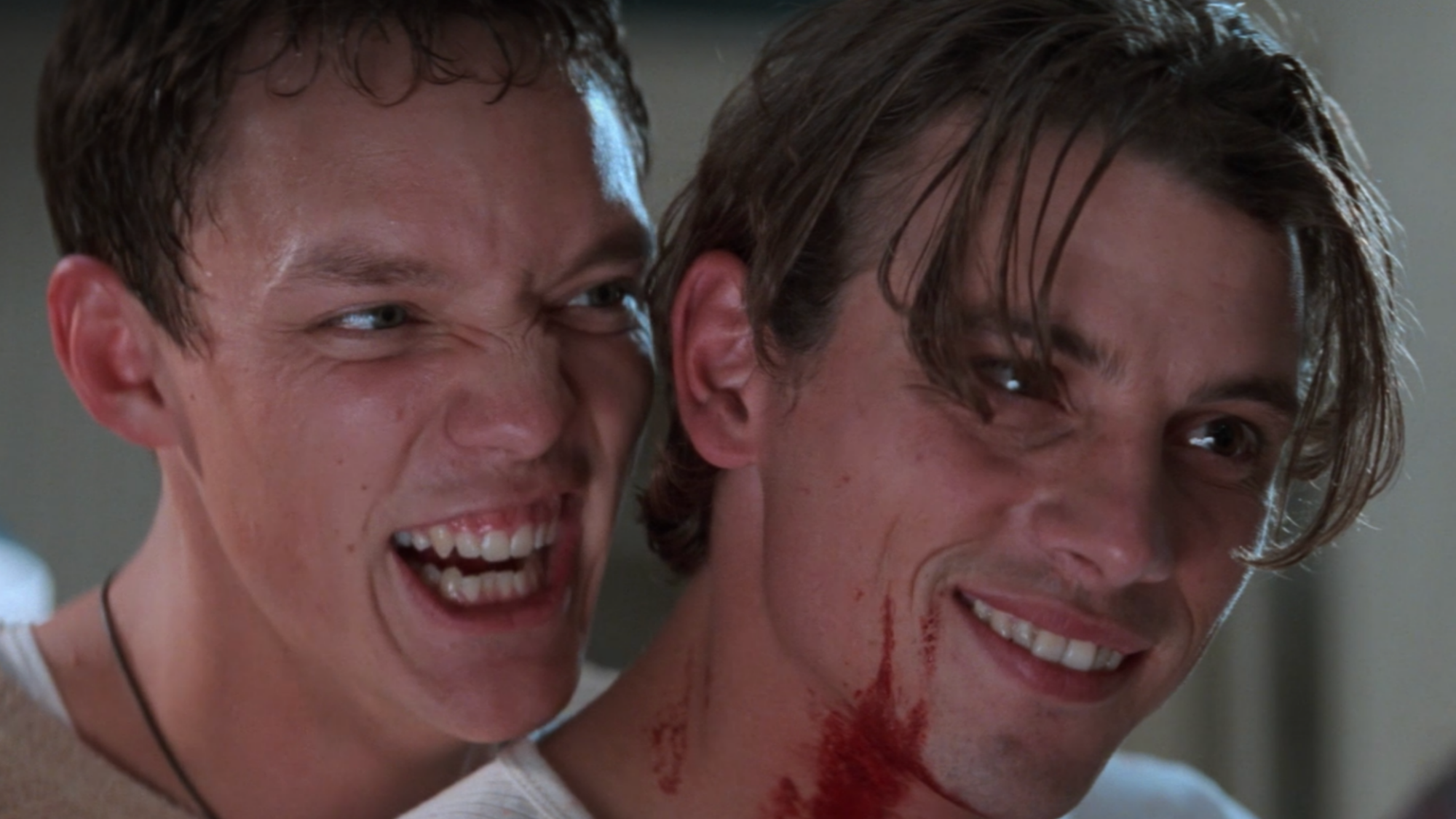
“No Sid, don’t you blame the movies. Movies don’t create psychos. Movies make psychos more creative!”
Billy Loomis6
Unlike iconic slasher villains such as Michael Myers, Freddy Krueger, or Jason Vorhees, Ghostface is not a single character with a fixed origin. Ghostface is different in each film, often driven by resentment, revenge, or obsession, but the proximity to Sidney is sure, which allows the franchise to constantly reset its mystery.
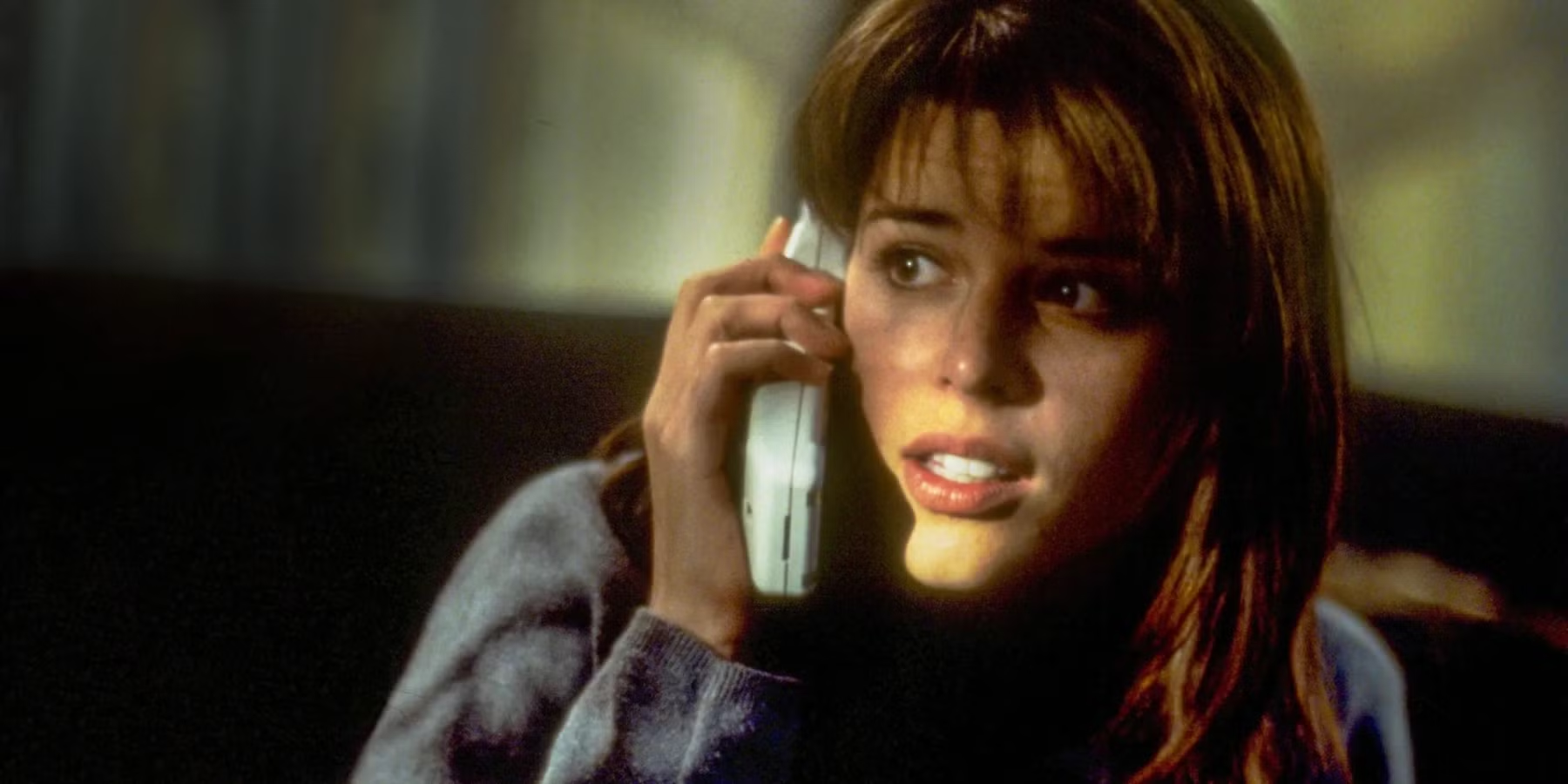
“They’re all the same; some stupid killer stalking some big-breasted girl who can’t act who’s always running up the stairs when she should be going out the front door. It’s insulting.”
Sidney Prescott7
The Stab Films, Sequels, & The Endless Loop
In the first movie, Billy Loomis and Stu Macher are the Ghostface killers motivated to kill Sidney Prescott in an act of revenge and anger over her late mother’s affair with Billy’s father which ultimately led to his mother leaving. It is a deliberate use of a classic slasher twist: the boyfriend is the killer.
A string of murders in a small town becomes sensational media material, and the perfect inspiration for a horror film. Scream 2 (1997)8 starts with the premiere of Stab, the movie inspired by the book “The Woodsboro Murders” written by reporter Gale Weathers. In a crowded theater filled with fans in Ghostface costumes, the first of many lives are taken. News spreads quickly as the victims were fellow students at Sidney’s college, and once again she is wrapped into the plot of another scary movie.
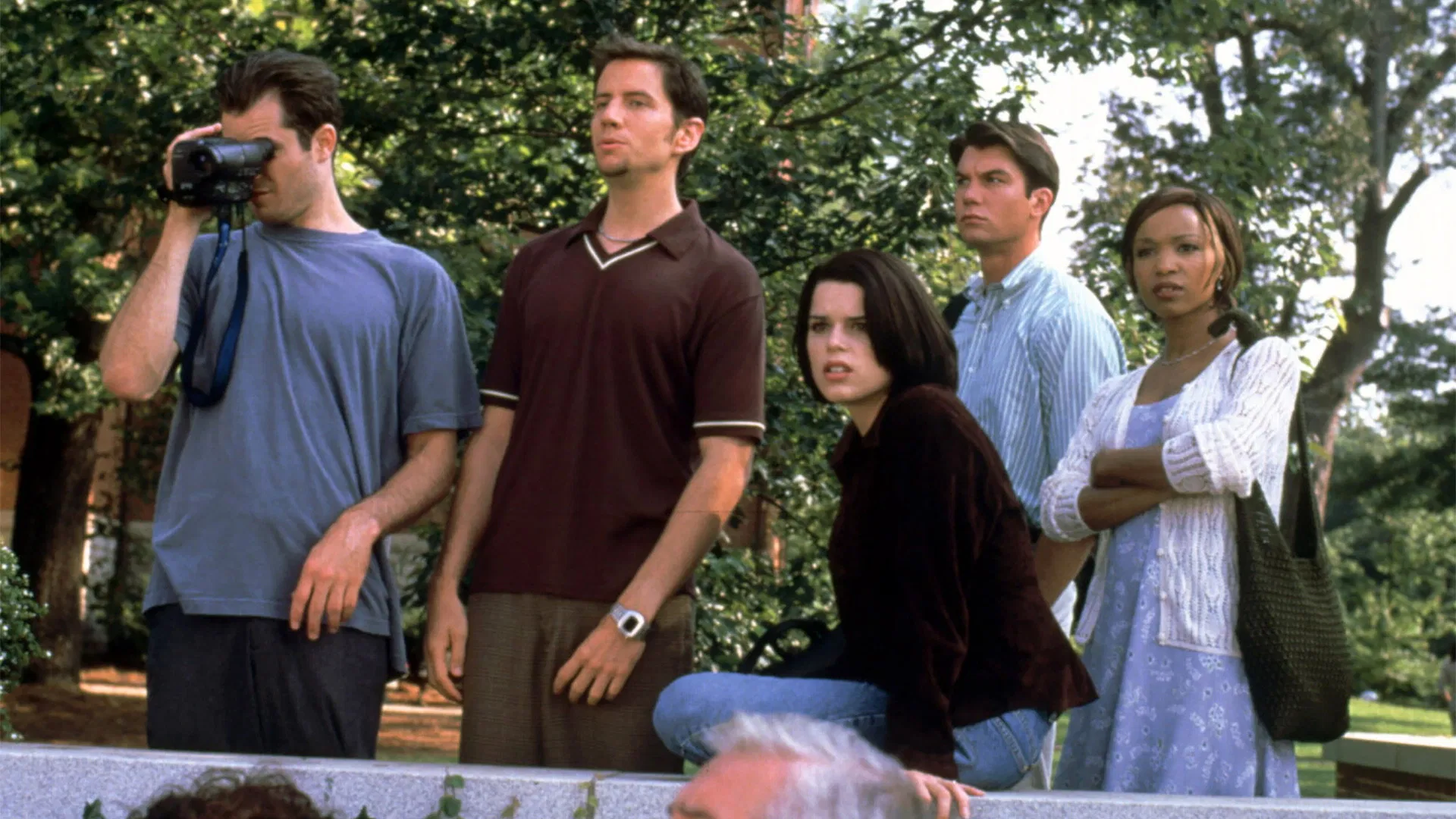
Mickey Alteri is a film student who falls in the same friend group as Sidney at Windsor College. The new Stab movie provides the perfect cover for his homicidal tendencies, allowing him to lean into the blame of violence in movies for his actions. Joining forces with Ms. Loomis, Billy Loomis’s mother, they aim to finish what her son started and avenge him in the process.9
Scream (1996) comments on horror rules, turning them into the plot. By introducing the Stab films, the franchise creates a built in explanation for why the same plot keeps happening, therefore justifying another movie, where new rules come to light. Repetition is at the narratives core, it becomes necessary as a strength, not a weakness.
To elevate the story yet again, Scream 3 (2000) begins openly playing with trilogy conventions. The killer is basically superhuman, unable to be killed by stabbing or shotgun, anyone can die, including the main character, and all loose ends from the past will come back to haunt you.
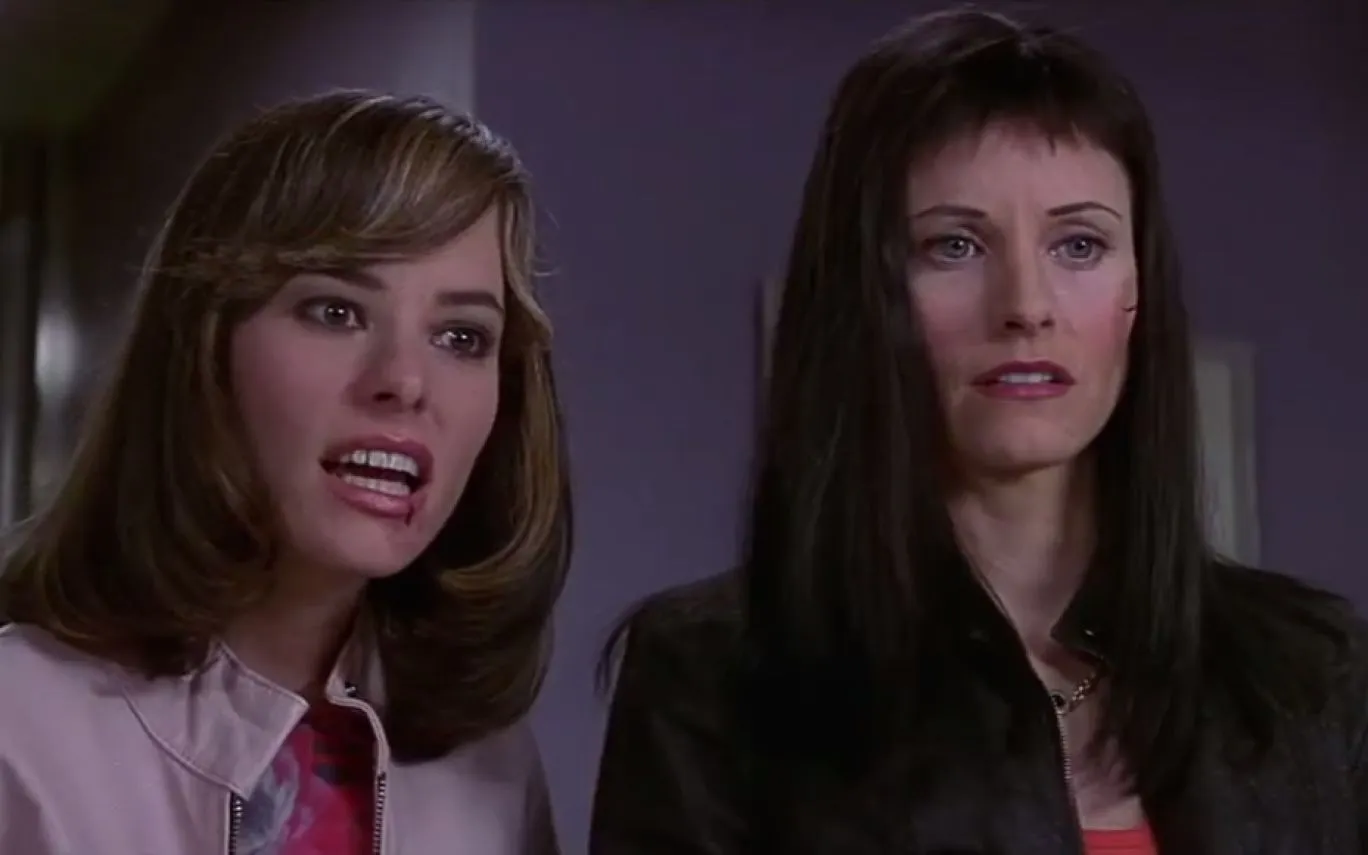
To take the “movie-inside-a-movie” idea even further, the third film literally takes place on the set of Stab 3 in Hollywood. One by one the actors are killed off, drawing back members of the original cast: Deputy Dewey, Gale Weathers, and of course, Sidney Prescott.10
The film creates a layered structure: a movie about characters making a movie based on earlier events. By turning the franchise into the setting, Scream 3 suggests that the series can only continue by openly acknowledging its own artificiality. The third movie is the only in the franchise where there is only one killer, and in an attempt to wrap everything up in typical trilogy fashion, he is revealed to be the long lost son of Sidney’s late mother, Maureen Prescott.
The reveal connects the killer to Sidney’s family history, reinforcing the series’ pattern of personal motives. Roman Bridger grows up to be the director for the third Stab movie, allowing him the perfect opportunity to tarnish the fame Sidney has gained from being the child Maureen chose to keep.

It is later revealed that Roman, having stalked his mother for years after discovering his true parentage, was the one who told Billy Loomis about his father and Maureen’s affair, lighting the match that sparked the entire franchise. The end of the movie shows Sidney worry-free at home with her dog and future husband, Mark Kincaid, the cop who assisted in catching Roman, as well as Dewey’s proposal to Gale, suggesting a happy ending to the franchise.1112
“EVERYBODY’S A SUSPECT!”
Randy Meeks13
Sidney Prescott As The Franchise’s Constant
Scream 4 (2011)14 didn’t come out until a decade after the third movie, bringing the original cast back, but also introducing a new generation and new killer. The distance between the two movies allowed director Wes Craven, and writer Kevin Williamson, time to comment on how the horror genre had evolved.
Taking inspiration from movies like Paranormal Activity (2007)15, the film references the found-footage trend as a way for the killer(s) to elevate the murders, and therefore, their legacy.16 By live-streaming each kill, there is life-long evidence that ensures Ghostface can’t be forgotten this time around.
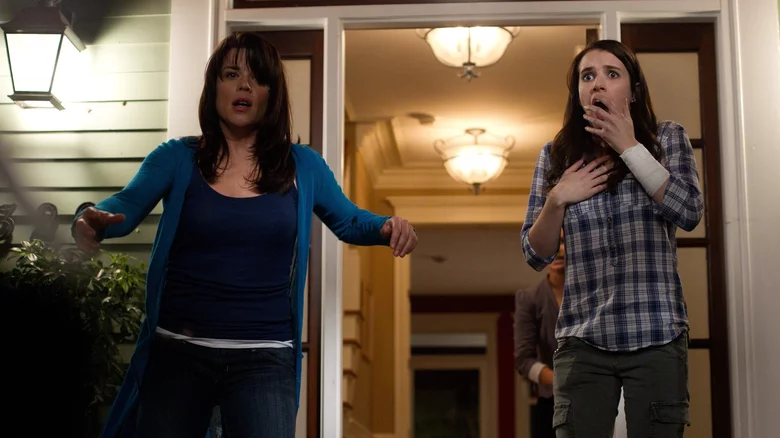
With characters like film geek Kirby being introduced — in a fashion comparable to Randy Meeks — alongside Sidney’s very own niece, Jill Roberts, Scream 4 (2011)17 seems to set up the next generation for the franchise, but of course, in a surprising twist, Jill is revealed as Ghostface.
Her entire childhood was marred by what happened to Sidney, so she plots to kill Sidney herself, but not before injuring herself severely and framing her boyfriend for the murders, in an attempt to rewrite the original narrative, but making her the last one standing.
A dissatisfying ending that would be, but Sidney Prescott refuses to be killed. Reporter Gale Weathers and Sheriff Dewey are, of course, back in Woodsboro where the killer has returned, and aid Sidney in the ultimate defeat of her niece. Sidney once again survives, reinforcing her status as the ultimate final girl.
Her survival in each of the films is pivotal to the structure of the franchise. Fans rely on the familiar central character to balance each reinvention.
“Careful. This is the moment when the supposedly dead killer comes back to life, for one last scare.”
Randy Meeks18
Reboots, Requels, & Writing Around Sequel Fatigue
Eleven years after Scream 4 (2011), another movie is released. Scream (2022)19 takes place twenty-five years after the original Woodsboro murders with a new Ghostface attacking a new group of teenagers connected to the towns past.

“There are certain rules to surviving. Believe me, I know. Rule number one: Never trust the love interest. Rule number two: The killer’s motive is always connected to something in the past. Rule number three: The first victim always has a friend group that the killer is a part of.”
Dewey Riley20
The fifth film introduces the idea of the “requel,” a sequel that also functions as a reboot. After Stab 8 comes out, following the same pattern of being both a sequel and a reboot, two fans attempt to “fix” the franchise after criticizing its direction. So, the two give the franchise some real-life experience to work with.21
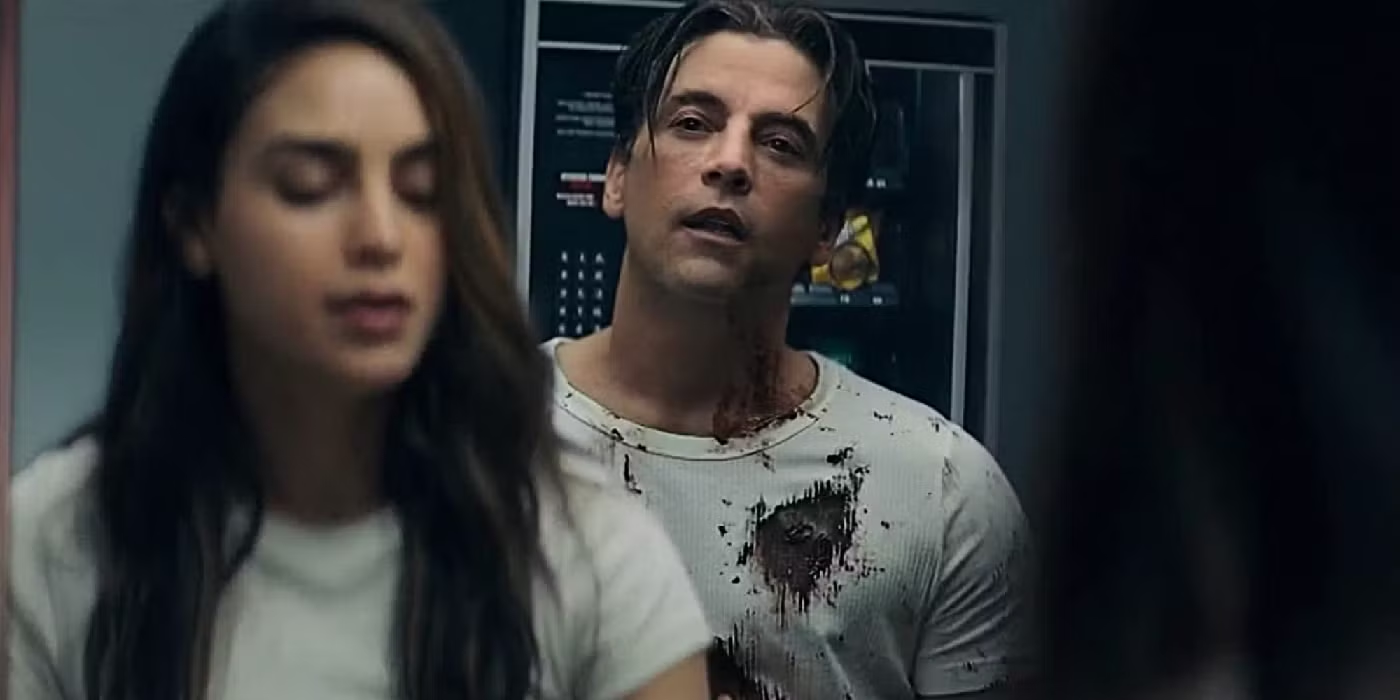
When Tara Carpenter is attacked in the opening scenes of the film, her sister, Sam, must return to Woodsboro to protect her and help uncover who is the new face under the Ghostface mask. In order to do so, Sam must confront the truth of her past, the truth of her parentage.
Needing help, Sam and her boyfriend, Richie, recruit Dewey, who, retired and divorced, has confined himself to a trailer riddled in empty bottles. Finding purpose again, he agrees to help find the killer, but not before insisting Gale and Sidney stay far away. With special help from Mindy and Chad Meeks-Martin, niece and nephew to the late Randy Meeks, the group conspires that whoever is behind the murders must be trying to make a sequel or a remake of the original Stab.22
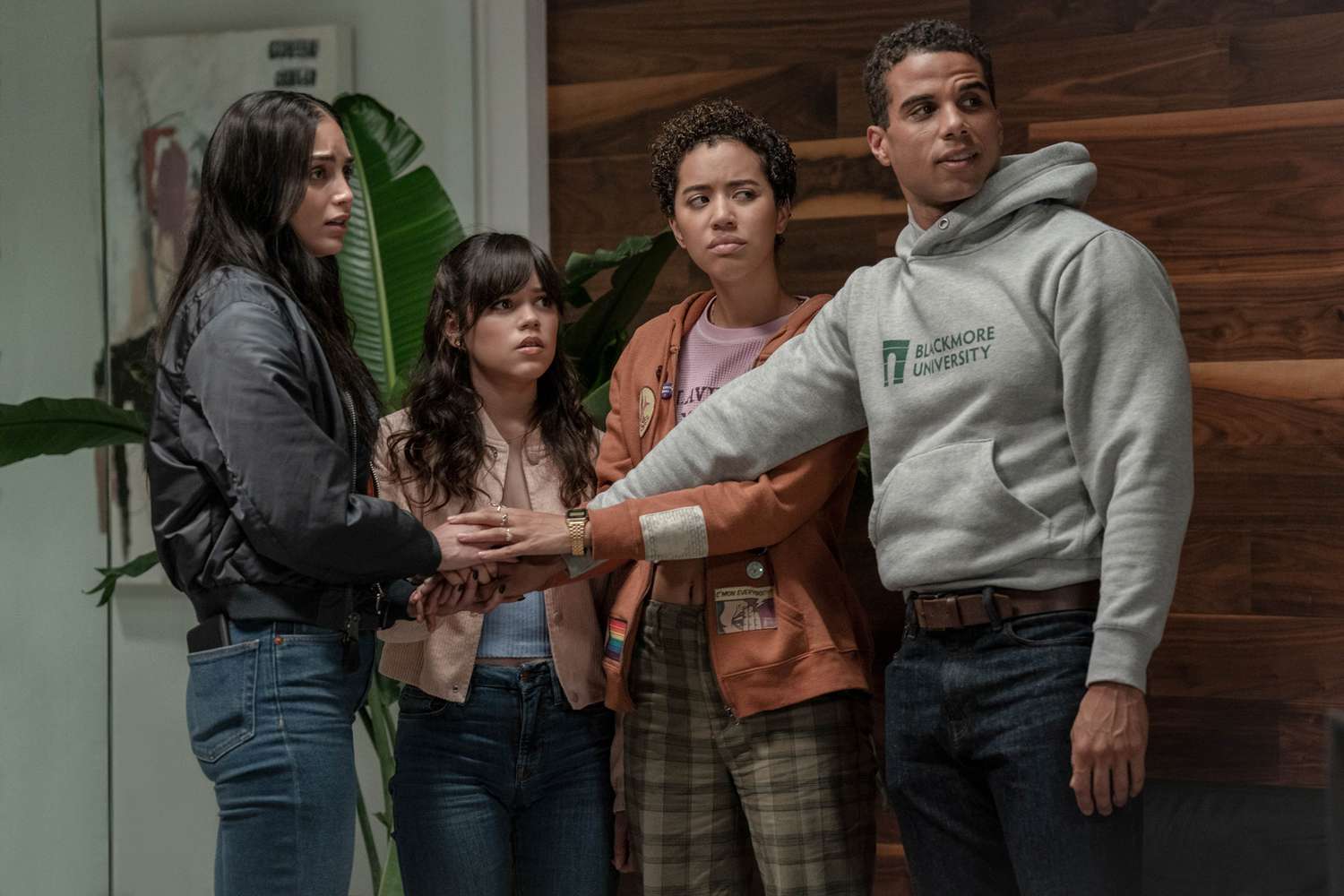
Gale Weathers can never stay away from a good story — or her ex-husband it seems — so returns to do what she does best: insert herself into other people’s business. However, after Dewey is vitally injured, Sidney also comes home, helping Gale and the Carpenter sisters put an end to the killer.
As the horror genre shifted towards reboots, remakes, and legacy sequels, Scream (1996-) adapted by making those trends part of the story itself. The franchise continues to evolve by the genre standards, but doesn’t lose sight of its identity.
“There’s always some stupid bullshit reason to kill your girlfriend. That’s the beauty of it all! Simplicity! Besides, if it gets too complicated, you lose your target audience.”
Randy Meeks23
After surviving homicidal friends and boyfriends, the Carpenter sisters move to New York to start a new chapter, but as it always does, the past seems to follow them. Twins, Chad and Mindy Meeks-Martin, follow the sisters to the big city where Scream 6 (2023)24 takes place. Finishing where the last killer left off, Ghostface returns, but more brutal than ever.
Mindy, following in her uncles footsteps, lays out the new rules: everything is bigger, no one is safe, expect the opposite of what happened last time. With no Sidney and no Dewey, Gale is the only OG in the city to help. The film also brings back Kirby Reed, (Scream 4 (2011)25)now a cop, barring her scars as motivation to continue the fight.
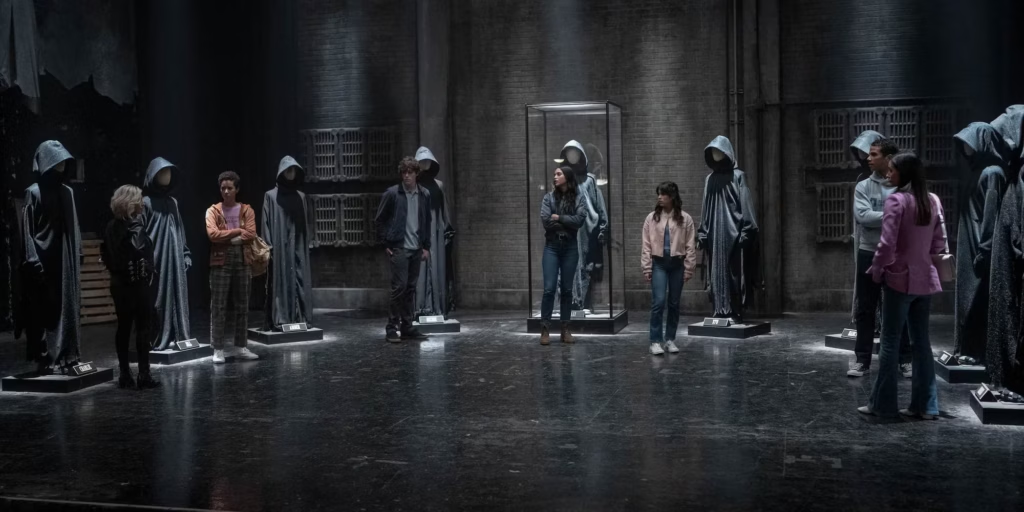
Located amongst a shrine memorializing all the Ghostface killers prior, the unmasking takes place. Following the blueprint of Scream 2 (1997)26, father and siblings to the latest Ghostface killer, attempt to avenge their dead son and brother. Scream’s (1996-) own history is used as a physical setting, drawing nostalgia into the horror, and showing that the past can never be separated from the present in a long-running series.
The Future Of The Franchise Loop In Scream (1996-)
With Scream 7 (2026)27, the franchise once again returns to its own history. After years of fan-based controversy over whether one of the original killers, Stu Macher, actually died when Sidney dropped the TV on his head in the first film, Scream (1996) writer Kevin Williamson leans into these theories in a whole new way of carrying on the franchise.
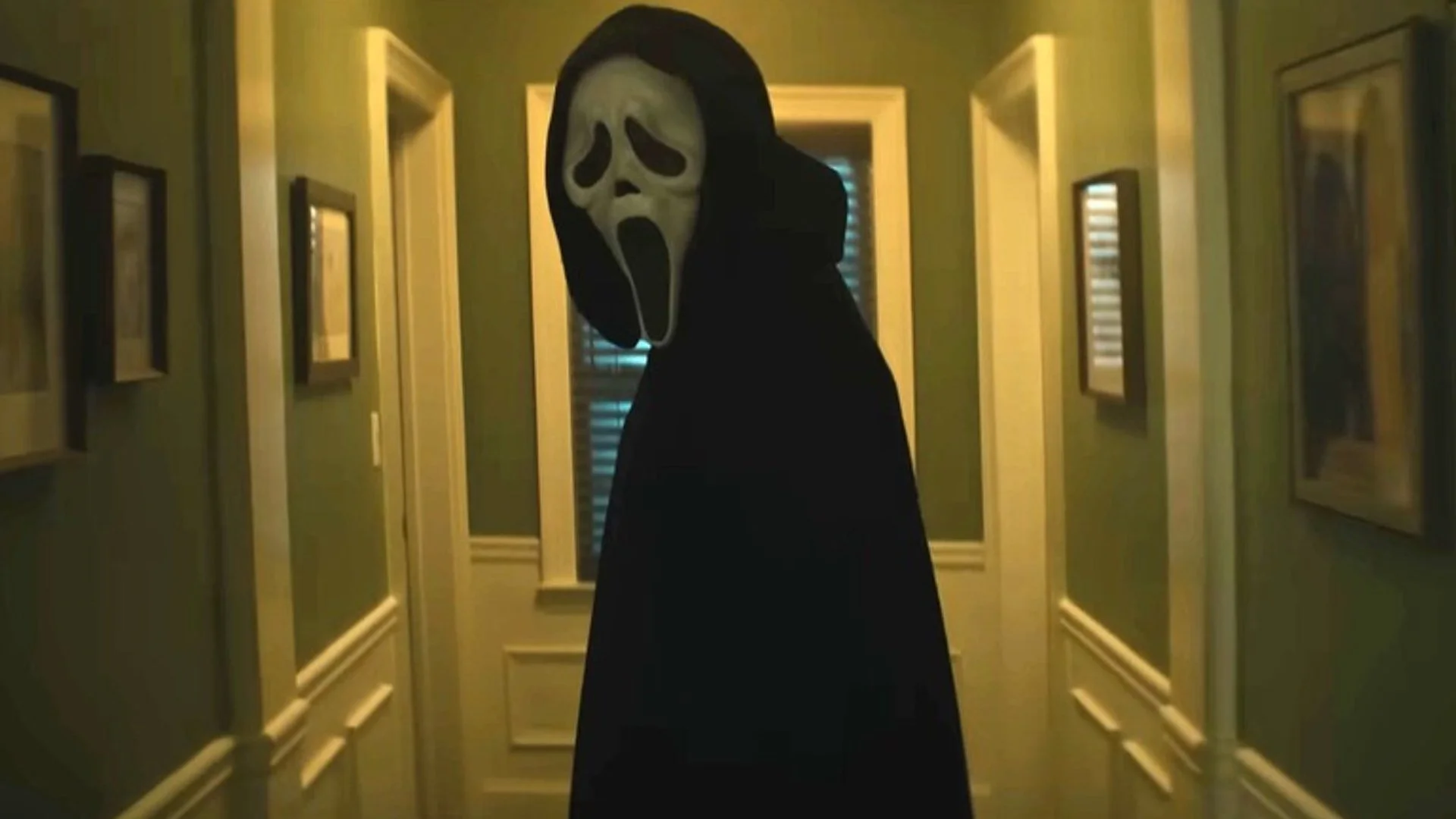
Sidney, having restarted her life in a new town with her police officer husband and three children, is suddenly struck with her deepest fears when ‘Stu Macher’ returns, but this time targeting Sidney’s eldest daughter.
With the new age of media, there is no telling whether the video calls between Stu and Sidney are authentic or artificial, but no matter, there is a very real killer coming after her family. The ongoing possibility that Stu could return — the lack of confirmation in terms of his death — reflects the franchise’s ongoing reliance on its own mythology.

The franchise persists not by escaping its past, but by rewriting it. The Scream (1996-) franchise endures because it refuses to pretend that horror stories ever truly end. By turning sequels, remakes, and fan expectations into part of the narrative itself, the series transforms repetition into reinvention, ensuring that as long as horror has rules, Scream (1996-) will have another movie to break them.
Footnotes
- Scream. Directed by Wes Craven; Screenplay by Kevin Williamson; Dimension Films / Woods Entertainment; Dimension Films, 1996. ↩︎
- Scream. Directed by Wes Craven; Screenplay by Kevin Williamson; Dimension Films / Woods Entertainment; Dimension Films, 1996. ↩︎
- Scream. Directed by Wes Craven; Screenplay by Kevin Williamson; Dimension Films / Woods Entertainment; Dimension Films, 1996. ↩︎
- Scream. Directed by Wes Craven; Screenplay by Kevin Williamson; Dimension Films / Woods Entertainment; Dimension Films, 1996. ↩︎
- Velez, George A. “Why ‘Scream’ Is the Best Horror Franchise of All Time: Scream 1 & 2 | by George A. Velez | the Cinemonograph Collection | Medium.” Medium, 18 Jan. 2022. ↩︎
- Scream. Directed by Wes Craven; Screenplay by Kevin Williamson; Dimension Films / Woods Entertainment; Dimension Films, 1996. ↩︎
- Scream. Directed by Wes Craven; Screenplay by Kevin Williamson; Dimension Films / Woods Entertainment; Dimension Films, 1996. ↩︎
- Scream 2. Directed by Wes Craven; Screenplay by Kevin Williamson; Konrad Pictures / Craven‑Maddalena Films; Dimension Films, 1997. ↩︎
- Scream 2. Directed by Wes Craven; Screenplay by Kevin Williamson; Konrad Pictures / Craven‑Maddalena Films; Dimension Films, 1997. ↩︎
- “The Rules | Scream Wiki | Fandom.” Fandom. Accessed 11 Mar. 2026. ↩︎
- Pinney, Dustin. “The Entire Scream Timeline Explained.” Looper, Looper, 23 May 2022. ↩︎
- Jacobs, Eammon. “Here’s Who the Killers Were in Each Scream Movie.” Looper, Looper, 14 Nov. 2022. ↩︎
- Scream. Directed by Wes Craven; Screenplay by Kevin Williamson; Dimension Films / Woods Entertainment; Dimension Films, 1996. ↩︎
- Scream 4. Directed by Wes Craven; Screenplay by Kevin Williamson; Corvus Corax Productions / Outerbanks Entertainment; Dimension Films, 2011. ↩︎
- Paranormal Activity. Directed by Oren Peli; Screenplay by Oren Peli; Blumhouse Productions; Paramount Pictures, 2007. ↩︎
- Jacobs, Eammon. “Here’s Who the Killers Were in Each Scream Movie.” Looper, Looper, 14 Nov. 2022. ↩︎
- Scream 4. Directed by Wes Craven; Screenplay by Kevin Williamson; Corvus Corax Productions / Outerbanks Entertainment; Dimension Films, 2011. ↩︎
- Scream. Directed by Wes Craven; Screenplay by Kevin Williamson; Dimension Films / Woods Entertainment; Dimension Films, 1996. ↩︎
- Scream. Directed by Matt Bettinelli‑Olpin & Tyler Gillett; Screenplay by James Vanderbilt & Guy Busick; Spyglass Media Group / Project X Entertainment / Radio Silence Productions; Paramount Pictures, 2022. ↩︎
- Scream. Directed by Wes Craven; Screenplay by Kevin Williamson; Dimension Films / Woods Entertainment; Dimension Films, 1996. ↩︎
- Pinney, Dustin. “The Entire Scream Timeline Explained.” Looper, Looper, 23 May 2022. ↩︎
- Scream 3. Directed by Wes Craven; Screenplay by Ehren Kruger; Konrad Pictures / Craven‑Maddalena Films; Dimension Films, 2000. ↩︎
- Scream. Directed by Wes Craven; Screenplay by Kevin Williamson; Dimension Films / Woods Entertainment; Dimension Films, 1996. ↩︎
- Scream VI. Directed by Matt Bettinelli‑Olpin & Tyler Gillett; Screenplay by James Vanderbilt & Guy Busick; Spyglass Media Group / Project X Entertainment / Radio Silence Productions; Paramount Pictures, 2023. ↩︎
- Scream 4. Directed by Wes Craven; Screenplay by Kevin Williamson; Corvus Corax Productions / Outerbanks Entertainment; Dimension Films, 2011. ↩︎
- Scream 2. Directed by Wes Craven; Screenplay by Kevin Williamson; Konrad Pictures / Craven‑Maddalena Films; Dimension Films, 1997. ↩︎
- Scream 7. Directed by Kevin Williamson; Screenplay by Kevin Williamson & Guy Busick; Spyglass Media Group / Project X Entertainment; Paramount Pictures, 2026. ↩︎