

Table of Contents Show
With television being a plethora of visual narratives, there are limitations to shows’ feasibility on-screen. Especially when media translates from literature to film, many details found crucial to creators are lost.
Music plays an integral role in closing this gap, and breaking down its purpose in the hit television show Better Call Saul (2015-2022)1 highlights music’s impact, expanding music’s possibilities in storytelling and raising the expectations of television.
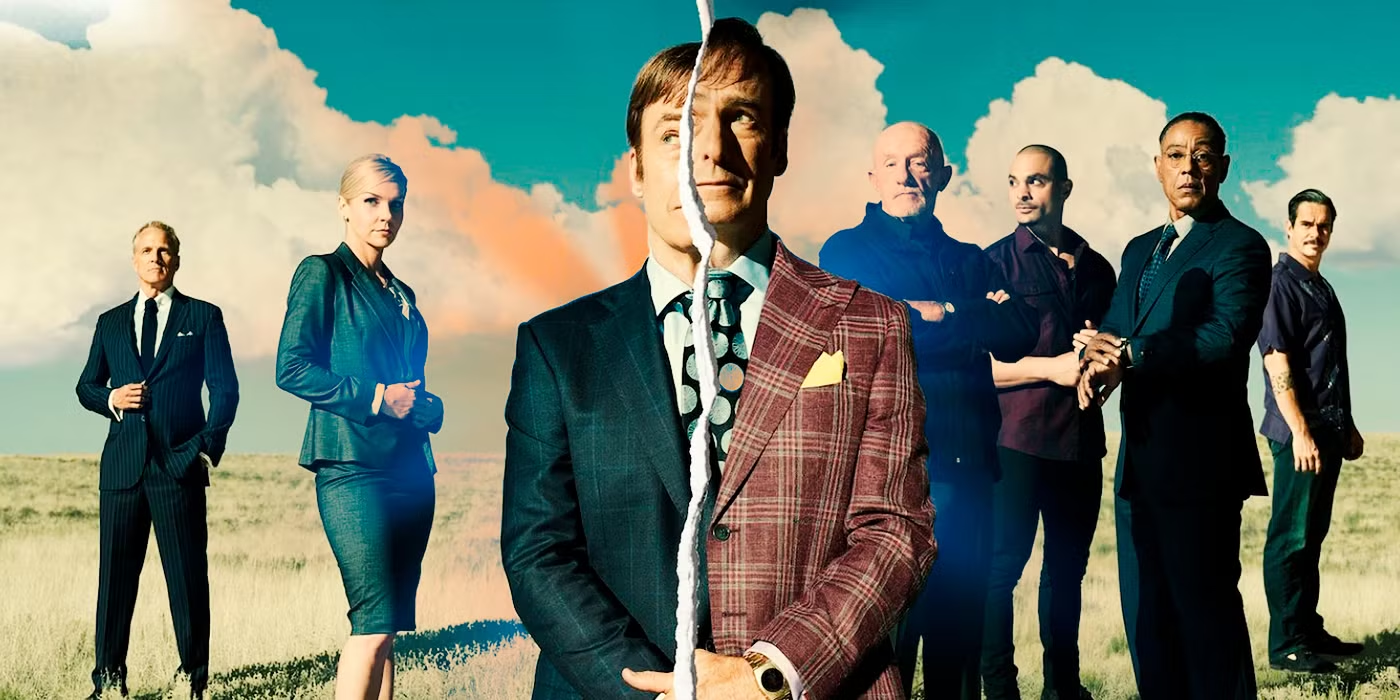
Better Call Saul is a crime drama created by Vince Gilligan and Peter Gould that prequels the series of Breaking Bad (2008-2013). Depicting the life of Jimmy McGill, later known as Saul Goodman, before the events of Breaking Bad, the show tells the story of how Jimmy became the morally ambiguous lawyer that Breaking Bad fans know and love.
The Surprising Integration Of Music In Visual Media
From classic films to dystopian features, music has a wide range of applications in television.
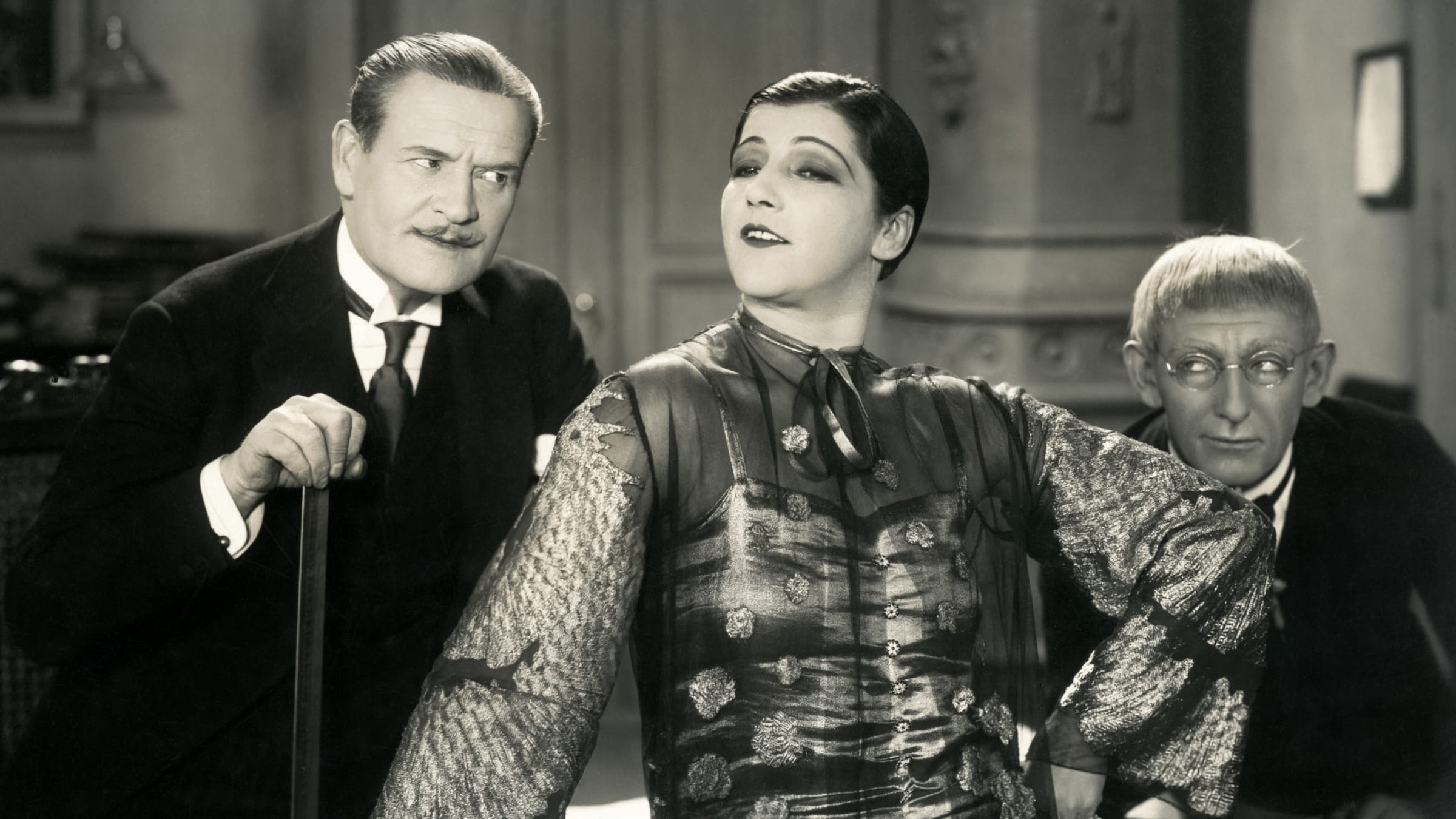
Originally sprouting from silent films, music in television began as hand-picked orchestras for Hollywood that artfully matched the music with the events portrayed in the stories.2 With the advancement of more technological approaches to film, music has shifted from the background to an effective storytelling technique.
Music’s dynamic nature assists in depicting a variety of emotions and setting the tone for the entire work. In Baby Driver (2017), the movie intricately choreographs the music to the events in the story. In a scene where Buddy holds the Baby’s girlfriend hostage, the song “Never, Never Gonna Give You Up” by Barry White plays.

As the suspense and volume of the song reach their peak, Buddy sings along to the lyrics, turning a sweet love song into a threatening promise towards Baby.
Specific tempos highlight the tone of the scene; slow music speed builds suspense or suggests a dark moment, while a fast one indicates a character’s panic. With Baby Driver, the beat and rhythm are perfectly timed with action sequences, acting as a satisfying visual for audiences.

Similarly, instruments add insight to character thoughts. The playing of a violin often symbolizes romance or deep passion3, and the harp represents tranquility, spirituality, and harmony4. Depending on the cultural history of the instrument, its background symbolizes certain cultures, like the combination of classical guitar with congas, indicating a Latin American background.
The Mastermind Behind The Score
Dave Porter, the music composer of both Breaking Bad and Better Call Saul, took extra consideration in collaborating with Vince Gilligan and Peter Gould before writing the music.
“Just the difference in a few frames can make a huge difference in how it’s received or how it’s implied — what the music is doing.”5
Dave Porter on Better Call Saul.
Porter’s careful examination of the scenes he was composing allowed for a more complex version of the music. Along with being allowed creative freedom, his experimentation with different ideas added a unique perspective that perfectly connected the music to the story being told.

The soundtrack consists of a variety of both carefully-chosen songs and Dave Porter’s compositions, and the diverse selection of genres introduces audiences to new and unique music that never risks getting old.
Some songs made a greater impact while others held much weight in their simplicity, such as “Al Compás De Mi Caballo” by Los Imperial’s, which is used for the antagonist’s introduction into the series, and the lower-toned instruments reflecting the darker change in Saul’s environment. Here are some of the most impactful scores of the series.
Small Musical Moments With Big Impact
With so much detail going into Better Call Saul‘s scoring, even small musical moments have their purpose.
When the characters are in Mexico, the music shifts from songs in English to songs in Spanish for a more implicit change in setting. Even in scenes with Latin American characters, the music adjusts to fit the character.
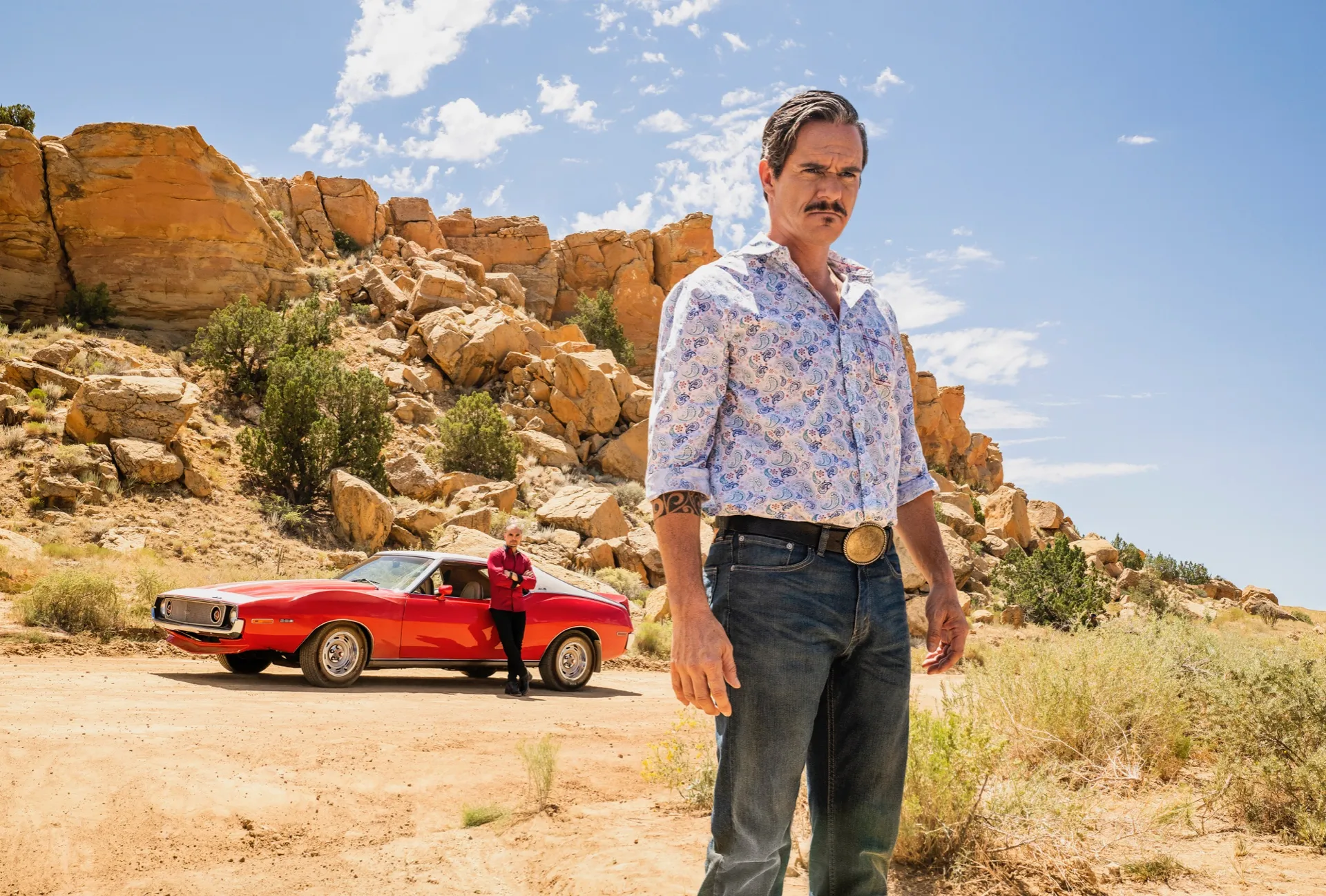
Eduardo “Lalo” Salamanca is a prominent antagonist of the series who threatens Saul’s livelihood on many occasions. As a prominent member of the cartel, Lalo leads the drug operation after his uncle is hospitalized, threatening the power of Nacho, one of the cartel leaders.
To represent this shift in power, Lalo’s first introduction is through his takeover of Nacho’s place of business while cooking and singing to “Al Compás De Mi Caballo” by Los Imperiales. The unassuming mariachi song, coupled with Lalo’s cheerful singing, foreshadows Lalo’s role in the rest of the series, depicting the charisma contrasting with Lalo’s harmful actions in the future.
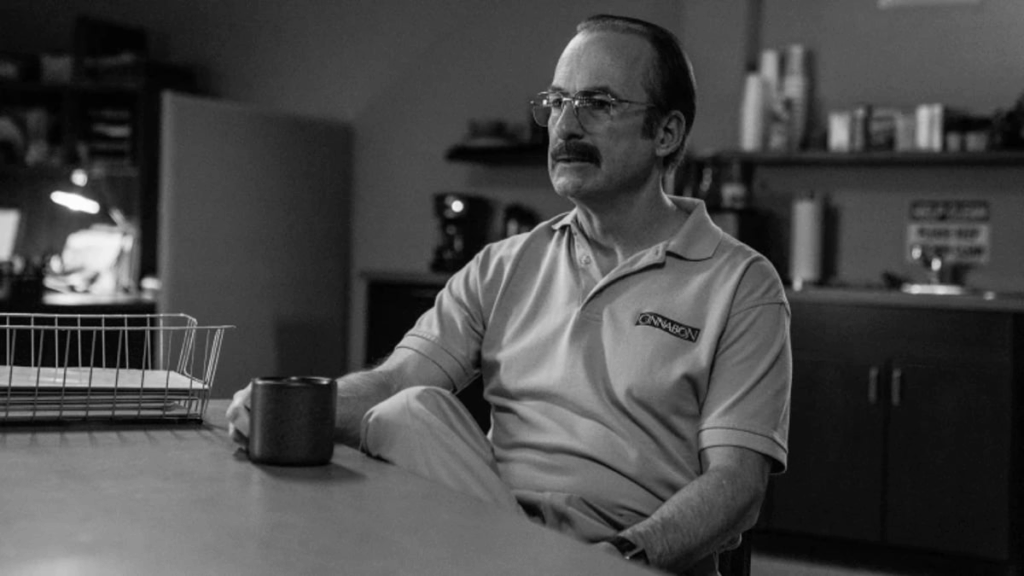
To represent Saul’s change throughout the show, the narrative splits between Saul’s future as Gene Takavic and his past as Jimmy McGill. With the future scenes distinguishable by black and white film, the music changes in turn.
The music begins as a single, low bass clarinet to depict the lonely future ahead of Saul, then evolves into an ensemble of low woodwinds, flutes, and clarinets for Saul’s unavoidable progression into the future.6
The Beauty Of Illustrating Romantic Division
One of the most striking integrations of music in Better Call Saul begins as a montage with Lola Marsh’s cover of the song, “Somethin’ Stupid.” Originally written by Clarence Carson Parks but popularized by Frank and Nancy Sinatra, the song is a jazzy duet, depicting a romance that is uncertain to succeed.
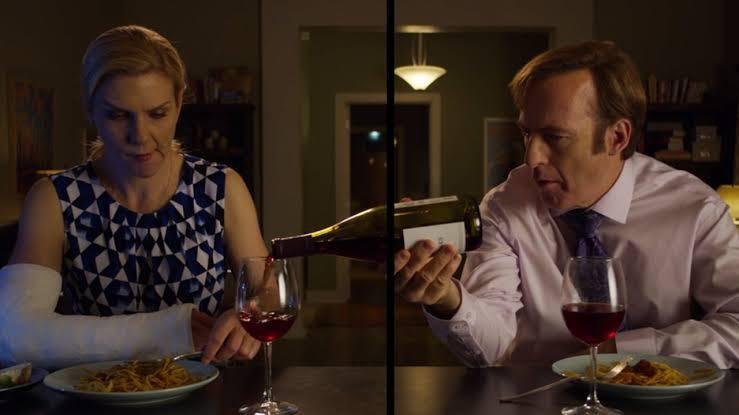
The song’s message is reflected in Better Call Saul with a split-screen of Saul and Kim Wexler, Saul’s romantic and professional partner, as they balance the separation between their professional and romantic relationship. The song’s lyrics reveal the relationship’s contrast with the narrator having more attachment to his lover than she does to him, with:
"And if we go some place to dance / I know that there's a chance / You won't be leaving with me."

As the song progresses, Kim climbs the career ladder while Saul works in retail and sells to criminals on the side. While the singers have the same lyrics, they are singing different notes, mirroring the divided paths the montage is depicting: Kim working for the law while Saul actively working against it.
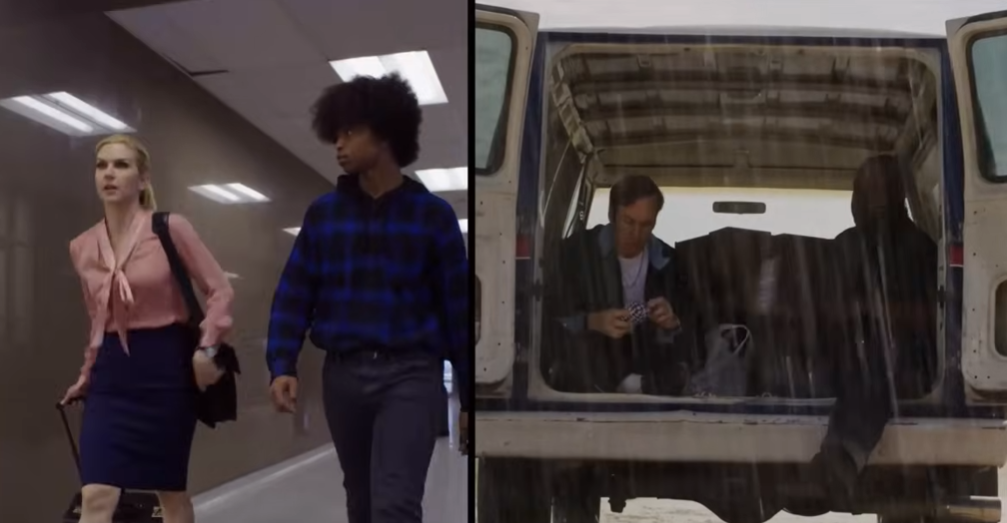
Despite the romantic themes of “Somethin’ Stupid,” Saul and Kim rarely display their affection for one another. Their relationship exists as implied love rather than an explicit statement, and that idea is encouraged with the song’s lyrics:
"And then I go and spoil it all / By saying somethin' stupid like 'I love you.'"
This refusal to show affection develops issues for Saul and Kim, foreshadowing Kim ending their relationship and Saul not confessing his love until it is too late.
Their differing attachment to one another is also emphasized by the lyrics, “And though it’s just a line to you / For me it’s true / And never seemed so right before.” As Better Call Saul is from Saul’s perspective, these lyrics represent his thoughts towards Kim, a dependency on her that she doesn’t have for him, reflected by her higher occupational status and moral standards.
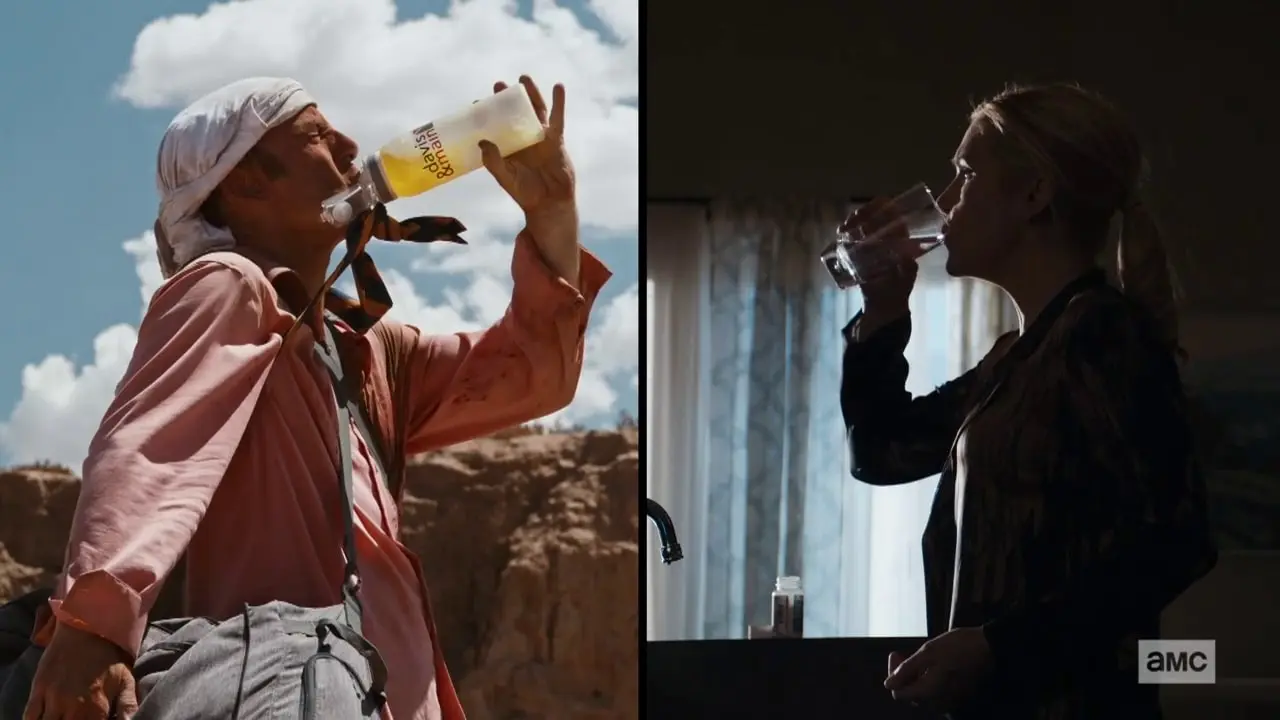
Further on in the series, when Saul agrees to transport seven million dollars across the desert for Lalo, Saul gets stranded in a shootout and is led out of the desert by Mike, an introspective companion. A similar montage plays with “Somethin’ Stupid” being hummed lightly in the background, and a split-screen of Saul and Kim appears, with Kim being distraught for Saul’s safety. This music change represents the strain in their relationship. What once was a relationship of routine now becomes a fear of not seeing the other person again.

At the end of the montage, the music ends in silence with a focus on Saul being left alone in their bed, representing the silence and loneliness he feels without Kim. Together, “Somethin’ Stupid” enhances the audience’s view of Saul and Kim’s relationship and provides effective insight into their unspoken feelings.
When Brotherly Love Reaches Its Limits
In addition to Saul’s romantic relationship, the music in Better Call Saul also illustrates the complexities of familial love.
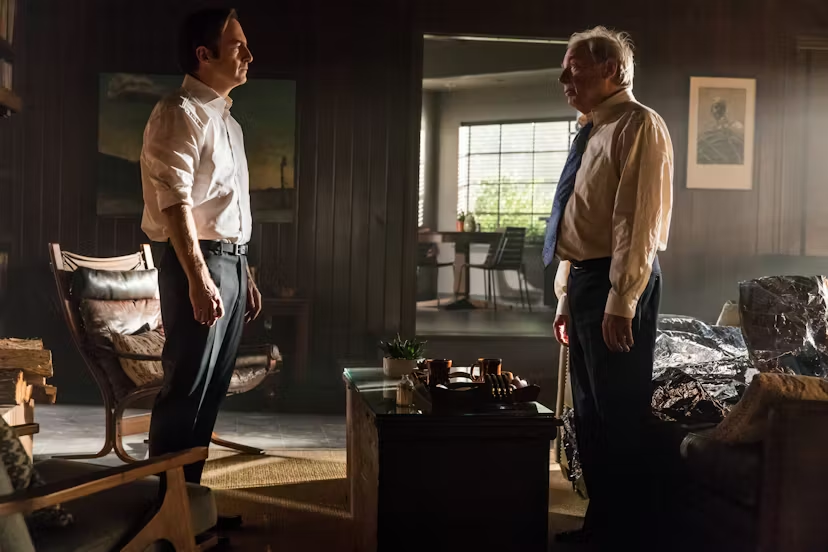
Throughout the series, Saul faces many issues with his brother, Charles “Chuck” McGill. Growing up together, Chuck accomplishes his goals through hard work and following the rules. Saul, however, is known as the con-man, “Slippin’ Jimmy,” bailed out of jail by Chuck more times than he could count.
As a last-ditch effort to help his brother, Chuck employs Saul in the mailroom at his law firm, which inspires Saul to become a lawyer. Despite his eventual successes, Chuck continues to view Saul as a delinquent, and his resentment prevents Saul from achieving fulfilling employment, sowing the seeds for the relationship to split apart.
Singing “The Winner Takes It All”
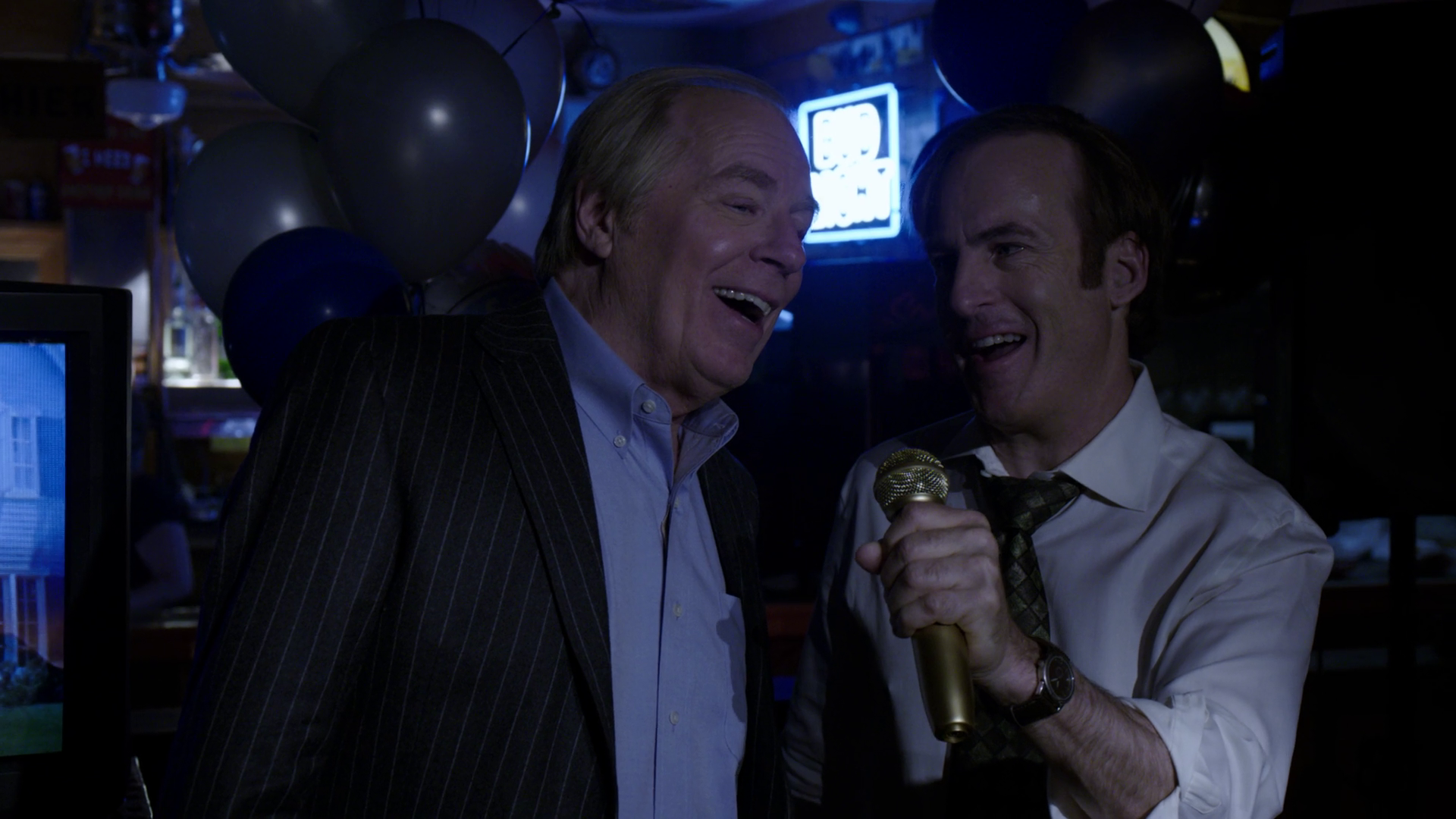
In the last episode of Season 4, the audience receives a flashback of Saul and Chuck after Saul officially becomes a lawyer. At a bar to celebrate, Saul sings “The Winner Takes It All” by ABBA for karaoke, with lyrics that perfectly encapsulate Saul and Chuck’s relationship.
Saul sings the song playfully, which represents the unseriousness with which Saul treats their brotherly relationship. When Saul convinces Chuck to sing along too, Chuck treats it like a competition, purposefully singing better than Saul and even stealing the microphone away to solo.
This superiority from Chuck continues throughout the series, reflecting the contrast between Chuck’s competitiveness and Saul’s camaraderie.

When Saul first begins singing, he sings the lyrics,
"I don't wanna talk / About things we've gone through / Though it's hurting me / Now it's history."
As a reflection of the lyrics, whenever Chuck wants to have a meaningful conversation with Saul, Saul pushes him away instead. With this flashback occurring after the events of Chuck’s tragic death, now the audience can gain insight into Saul’s unbothered approach to his own grief; he avoids the feelings despite the harm it’s causing him.
As Saul and Chuck start singing together, the song shifts into the chorus: “The winner takes it all / The loser’s standing small,” representing the growth of their competitive relationship. Each time one of them trumps the other, it just fuels the rivalry to go even further.
The lyrics, “But I was a fool / playing by the rules,” represent the advantage Saul has when competing against Chuck. Known for his rule-breaking tendencies, Saul would break the law just to win against Chuck, and Chuck’s refusal to break the rules leads to his eventual downfall, echoed by the lyrics of regret for upholding moral standards.
"The gods may throw the dice / Their minds as cold as ice / And someone way down here / Loses someone dear."
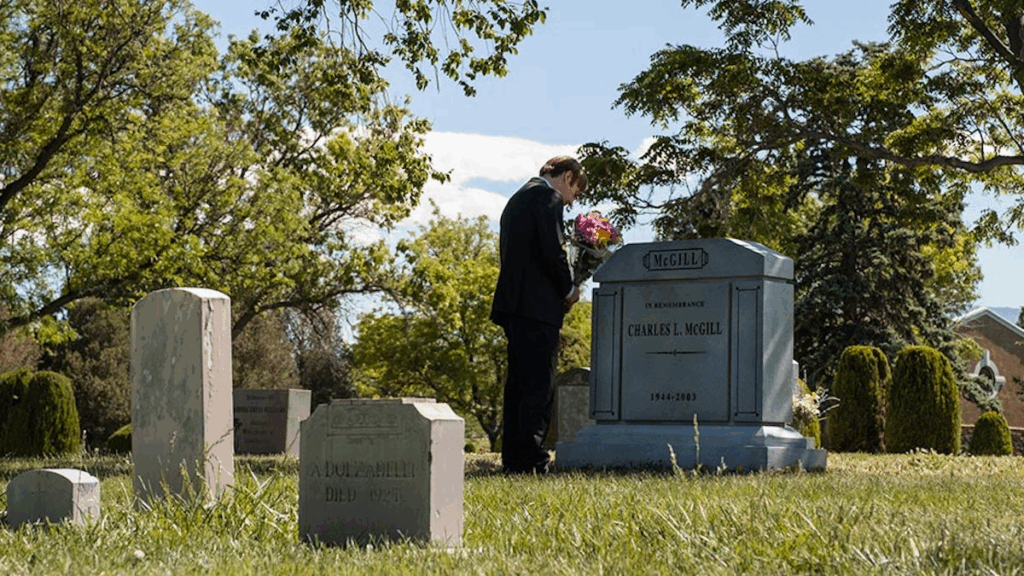
As their rivalry grows, they lose sight of their love for each other. They both see themselves as “gods,” or superior to the other, with Saul doing whatever it takes to win and Chuck never viewing his brother as an equal. This resentment leads to a prank gone wrong by Saul, with Chuck losing his ability to practice law and committing suicide.
These lyrics and the brothers’ approach to singing “The Winner Takes It All” add value to the music in Better Call Saul, highlighting both the rivalry and unspoken emotions that led to the division of their brotherly relationship.
Finding A New Appreciation Of Television Through Music
Television is often seen as an escape from the modern day, and the effort creators put into their shows is often lost. Audiences can elevate their appreciation for music by taking Better Call Saul‘s into consideration; listening for lyrical parallels, instrument nuances, and shifts in tone adds deeper understanding to television storytelling, ultimately modeling effective storytelling techniques for show creators and enhancing audience enjoyment.
Footnotes
- Gilligan, Vince and Gould, Peter. Better Call Saul. AMC, 2015. ↩︎
- Paris, Olajide. “The Fi Hall of Fame: A Brief History of Film Music.” Film Independent, July 5, 2024. ↩︎
- veena24. “The Significance of the Violin in Classical Music | Notes N Beats.” Notes N Beats. September 12, 2023. ↩︎
- Levitan, Dan. “The History of the Harp – Stanford Live.” Stanford.edu. October 31, 2024. ↩︎
- Score: The Podcast. “The unique musical approach of ‘Better Call Saul’ | Dave Porter.” YouTube, September 3, 2022. ↩︎
- Combermale, Leslie. “‘Better Call Saul’ Composer Dave Porter on Playing Jimmy McGill Out.” Motion Picture Association. August 8, 2022. ↩︎