

Table of Contents Show
Pretty Cure (interchangeably known as Precure) is a magical girl franchise that’s been running continuously since 2004, but never really caught on in the West due to inconsistent dubbing and distribution.

It is frequently overshadowed by Toei’s more recent French coproduction, Miraculous Ladybug (at least outside Japan). Although the series took a few years to find its footing, Precure has grown into a franchise that produces consistently good magical girl shows for children, and it’s worth getting acquainted with for any fan of the genre.
Dubbing & Localization — From ‘Sailor Moon’ (1992-97) To ‘Miraculous Ladybug’ (2015-)
The main hurdle for Pretty Cure in the West has been its inconsistent dubbing. For anime aimed specifically at children, such as Precure, the common wisdom is that children will only watch a show presented in their own language. But before we get to Pretty Cure, we need to go back a decade or so, to the smash hit Sailor Moon (1992-97).
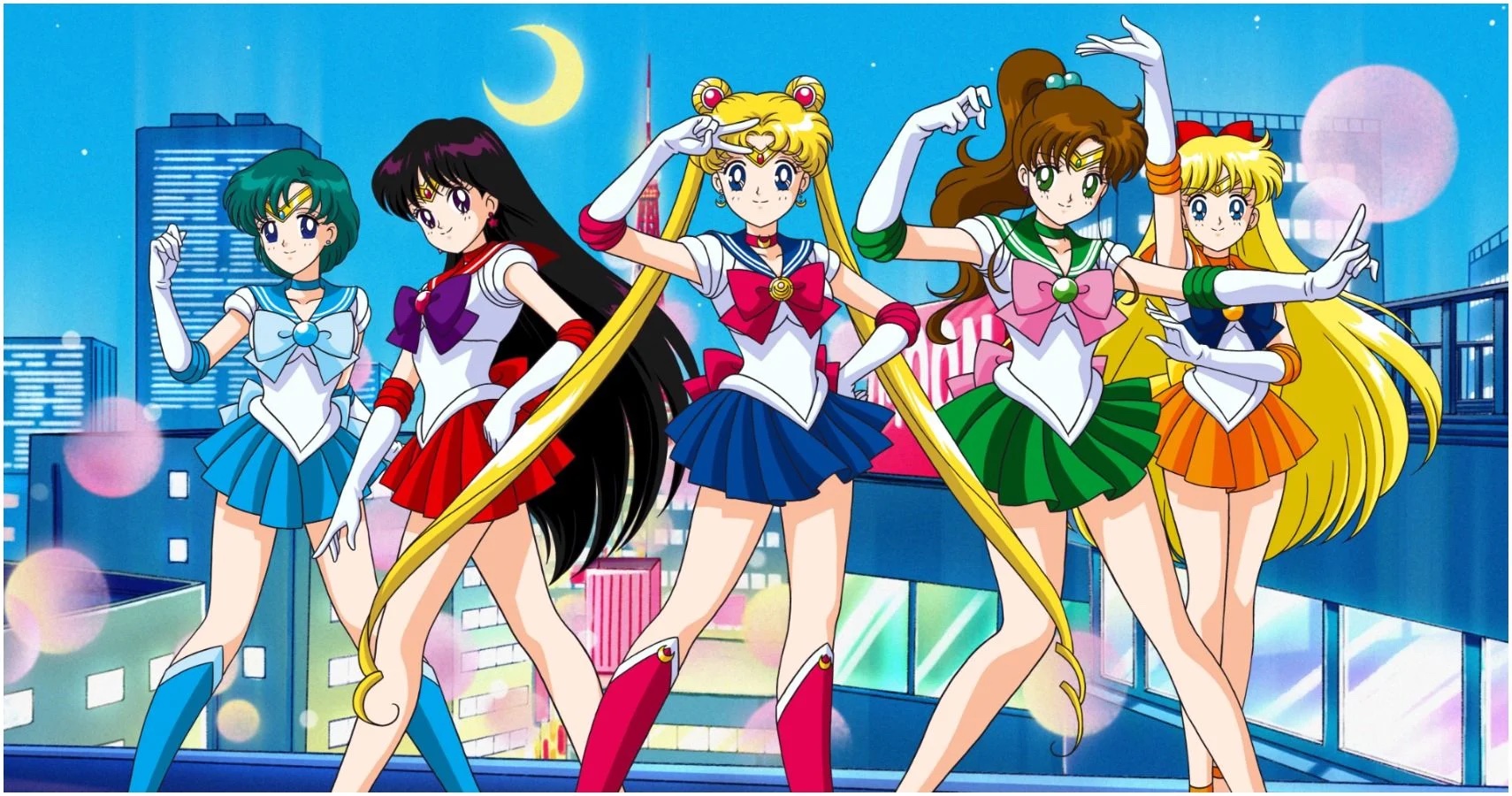
“Rewriting Magic” — The Westernization Of Sailor Moon
While Sailor Moon was the first magical girl show that really broke into the West, it struggled to find an audience for years before it finally found a home on Toonami.1
Dub Changes
The DIC dub, produced for North American broadcast in the 90s, changed the names of the characters (i.e., “Usagi” to “Serena,” and “Mamoru” to “Damien”), in addition to censoring things like nudity or violence towards children. Most infamous, of course, was the censorship of queer characters and relationships, particularly making Sailor Uranus and Neptune “cousins” rather than girlfriends.2
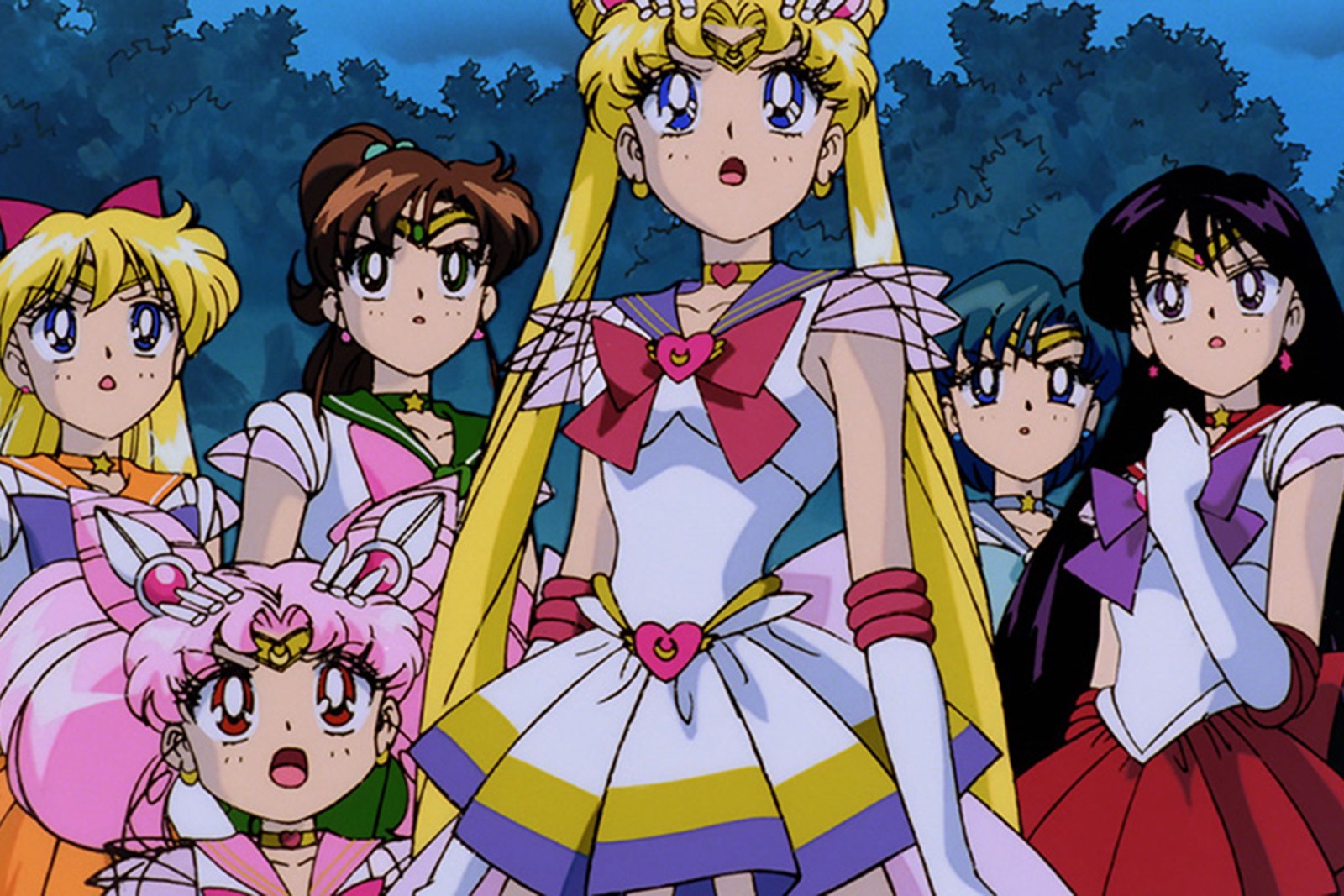
These major changes were made in an attempt to appeal to contemporary ideas both of what a children’s show should be and what would appeal to American children — that is, not too foreign, and not too gay. The dub first aired from 1995 to 2000, but only the first four seasons – the fifth season would be relegated to fansubs until the Viz Media dub was released in 2014.
The Failed Magical Girl Follow-Up
While Sailor Moon proved that there was a market for magical girls in the West, the DIC dub also seemed to imply that they would only be popular if they didn’t seem foreign. Two more magical girl shows received similar broadcast dubs, Cardcaptor Sakura (1998-2000) and Ojomajo Doremi (1999-2000).
Cardcaptor Sakura
The first new magical girl show to get this treatment was Cardcaptor Sakura, dubbed as Cardcaptors, which aired from 2000 to 2001.

It was somehow even more censored than Sailor Moon (which left seven episodes unaired),3 with only thirty-nine out of seventy episodes being broadcast, although the full series was released on home video in the following years.4
Ojomajo Doremi
The only other magical girl show Toei managed to air in America was Ojomajo Doremi, as Magical DoReMi (2005-08). While Magical DoReMi only left one episode unaired, Toei seemed to have given up on popularizing the magical girl genre globally at that point, focusing instead on shonen hits like Dragon Ball and One Piece (1999–).
Madoka Magica (2011), Renewed Interest In Magical Girls, And New Life For ‘Sailor Moon’
In the wake of this shift toward shonen anime, magical girl shows became something of a niche fandom in the West. Then along came Puella Magi Madoka Magica (2011). While the show made its mark as a mature deconstruction of the concept of magical girls, there was also a clear love of the genre at its heart. With anime growing more mainstream in the 2010s, Madoka served as an introduction to the genre for some younger fans.

In the following years, copycats arose with other dark magical girl shows, but few had real staying power like Madoka. Instead, magical girl enthusiasts turned to the past, highlighting the darker elements of earlier shows like Sailor Moon, and hence bringing new viewers to older magical girl shows.5

In 2014, Viz Media bought the rights for Sailor Moon, and announced a new dub that would be based on the original Japanese script, as has become common practice for anime dubs, finally making the full series accessible in America. Additionally, Toei announced a reboot that would be more faithful to Naoko Takeuchi’s original manga, Sailor Moon Crystal (2015), and would share the same English dub cast.
Miraculous Ladybug, Glitter Force (2015-17), And Growing Awareness Of Precure
With magical girl shows growing in popularity, a French animation studio partnered with Toei to produce Miraculous: Tales of Ladybug and Cat Noir (2015-), a sort of hybrid between a magical girl and superhero show set in Paris.6
Why It Succeeded
The show had both a male and female protagonist (and the superhero angle didn’t hurt either, considering the dearth of female superheroes in 2015), but Miraculous Ladybug found its niche as a magical girl show, becoming hugely successful when it was picked up by Disney.

Unlike Sailor Moon, it was presented uncensored to American audiences, without trying to hide that it was set in another country. And whether that was because France is more often framed as “high culture” or American audiences were used to animation from other countries, it worked.
Glitter Force
On the other hand, Precure was still struggling to find a place in the global market. Around the same time, Netflix started releasing a dub of two seasons of Pretty Cure, Glitter Force (2015).

While Netflix had the right idea in adapting later entries in the franchise, the problem was simply that they felt the need to adapt it at all. They similarly Westernized the names and excluded some episodes from the lineup, thinking that what audiences wanted was a throwback to the 90s Sailor Moon dub, when what Precure fans wanted was just a way to legally stream Pretty Cure shows, which had been limited to fansubs for over a decade at that point.
However, there turned out to be a silver lining, as in 2016, Crunchyroll finally picked up the original series for streaming,7 eventually leading them to start simulcasting Pretty Cure shows as they aired.8
What Is Pretty Cure?
Precure has evolved over the years (mostly for the better), but at its heart, it’s about middle school girls (and occasionally boys) fighting evil while navigating life together.
The first thing you need to understand about Pretty Cure is that, with rare exceptions (like the movies), each season is a completely separate narrative, with the sole connecting thread being the presence of two or more magical girls called “Pretty Cures” (or just “Precures” or “Cures”).

The first two seasons focus on Honoka and Nagisa, who transform into Cure White and Cure Black. While it’s an original franchise, the stories seem heavily influenced by the 90s Sailor Moon anime, which focused more on fleshing out the characters than the original manga, which was much more plot-focused.
Also, merch is a huge element of the show. All the transformation trinkets (which inevitably change from season to season) are sold in Japan, following the long and ignoble tradition of using cartoons as toy commercials. However, the best of Precure is much more than that.
Finding Its Groove
It took the creators a few seasons to figure out what worked for the franchise.

For starters, in the first five seasons, there are two seasons that are sequels to the last one (featuring mostly the same creative teams), but from the sixth season (Fresh Pretty Cure (2009-10)) on, they brought in different creative teams to tell distinct stories (until the 2020s, but we’ll get to that later).
‘Pretty Cure’s’ Problems
Aside from the lack of consistent dubs, as with any long-running franchise, there are problems that tend to arise in Pretty Cure‘s narratives — one that’s a common issue for shoujo properties, and another that’s often specific to magical girl shows.
Age-Gap Romances
If it’s shoujo, there’s a good chance you’ll run into an age-gap romance. The original Sailor Moon anime featured Mamoru as a college student dating fourteen-year-old Usagi (a bigger age gap than the manga, where he was only in high school).9 Cardcaptor Sakura is even worse, with two teacher-student romances, including a fourth-grade girl.10 While they’re mostly left out of the anime adaptation, it contributed to a troubling precedent.

And what do we find in Pretty Cure but a teacher-student romance? Granted, Coco (the adult) wasn’t her teacher when they first met, and it’s never clear exactly how old he was, but he was still clearly an adult when she was in middle school.11 They only double down on this relationship in future seasons,12 ending with them officially getting together as adults.13
Student-teacher relationships are particularly touchy in shows aimed at children, so while it’s better to have them get together in a show aimed at adults (as Power of Hope ~Precure Full Bloom~ is intended to be), it was still problematic to depict such a relationship in the first place.

While the age-gap romance in Soaring Sky! Pretty Cure is less problematic, it is still notable because it’s so recent, which combined with the romantic climax in Power of Hope, seems to indicate that the creators might not be opposed to including such relationships in the future.
The relationship in Soaring Sky! is the first official Cure-Cure romance (naturally including the first male Precure, Cure Wing), but it still manages to be weird by pairing him up with a literal baby. Naturally, she magically ages up to his age by the end of the show (a surprisingly common occurrence in the franchise), but it’s still weird.14
Queerbaiting
Since Soaring Sky! contained the first canonical Cure-Cure romance, it naturally follows that they never made any of the many, MANY sapphic-coded relationships in the franchise canon.

This started in the very first series, where the relationship between Cure Black and Cure White was a central part of the narrative, and they even had to hold hands in order to transform. Furthermore, Nagisa (Cure Black) was established to be very popular with girls,15 but only expressed romantic interest in boys.16
The first season that featured new characters, PreCure Splash Star (2006-07), had a similar dynamic, with Saki (Cure Bloom) being the sporty girl, but only expressing interest in boys.17

After they moved toward larger teams (from Yes! Precure 5 on), they avoided the issue more, but there have been notable pairs with romantic vibes, such as Cure Chocolat/Cure Macaron in Kira Kira Precure a la Mode (2017-18),18 or Cure Sky/Cure Prism in Soaring Sky! Pretty Cure.19 The most blatant example, however, is Witchy Precure! (2016-17), where they returned to the duo dynamic, and even lived together and raised a (fairy) child!20
The fact that Pretty Cure has so many examples of couples that can be (and often are) read as gay, but has never made any of them canon (opting instead to confirm a student-teacher romance) is disheartening to see in one of the most popular magical girl franchises.
Taking Notes From Miraculous Ladybug
While Miraculous Ladybug is far from perfect itself, it does some things much better than Pretty Cure (which is a big reason for its global popularity).
What Is Miraculous Ladybug?
Miraculous Ladybug is a show about two Parisian middle schoolers, Marinette Dupain-Cheng and Adrian Agreste, who can transform into the magical superheroes Ladybug and Cat Noir. Over the course of the series, however, they recruit many allies, mainly classmates, to fight with them.21
Toei’s main involvement seems to be sharing background assets from a film set in Paris (Heart Catch Pretty Cure! The Movie: Fashion Show in Paris! (2010)), but they’re still listed as producers for the show to this day. It’s possibly because the animators from Zagtoon based their backgrounds on the ones from Toei, but it’s more likely an excuse to invoke the name of a world-famous animation studio.22

Much like Sailor Moon before it, Miraculous Ladybug initially struggled to find its audience, starting on Nickelodeon23 before switching to the KidsClick programming block, where it aired until the block closed in 2019.24
But the show gained much more traction streaming, which Netflix handled for the first three seasons (premiering many of the English episodes). After 2019, however, Disney picked up the show for broadcast and streaming, beginning with season four.25

Aside from the stylish fights, the main draw for the show is the characters. Marinette and Adrian are trapped in a frankly absurd two-person love square, but they manage to keep it up for five seasons without feeling stale. Additionally, they’re able to flesh out a colorful cast, giving many of them character development such that people who start out as victims can grow into heroes over the course of the series.
Miraculous Ladybug’s’ Issues
Some persistent problems are racism/colorism and misogyny.
Racism
While director Thomas Astruc attempts to paint a picture of Paris as a multiethnic metropolis, the focus is constantly on white and white-passing characters (Marinette is technically biracial, but you’d hardly notice except when you see her Chinese family members, or occasionally when she wears more traditional Chinese-style clothes).

The beta couple consists of two of the darker-skinned characters (Nino and Alya), who also happen to be the respective best friends of Adrian and Marinette, and aside from the occasional lovers’ quarrel, they rarely receive any focus outside of their roles as “best friends of the (white) main characters.”
Misogyny
And with a predominantly male writer’s room,26 it’s sadly unexpected that the show has a misogynist bent, which is particularly unfortunate for a show primarily aimed at young girls. The male villains (and antivillains) are always depicted sympathetically, and often get shots at redemption, but the female ones rarely receive the same grace.
The most heinous is probably the treatment of Hawk Moth as opposed to Queen Bee. The original Hawk Moth (an adult man) terrorized the people of Paris (in addition to hurting his own family), but he’s ultimately framed as a tragic villain who happened to go too far, and really loved his family despite it all.

Queen Bee (aka Chloe), on the other hand, is a teenage girl, but is demonized throughout the series. She’s initially framed as just a bully, but over the course of the series, she constantly betrays the heroes, only briefly becoming a “hero” herself to stroke her own ego. She’s replaced by the heroes at the first opportunity, and as of season six, she’s clearly aligned with the baddies, with no indication that the writers ever intend to redeem her.
And that’s not even counting the hate sink that is Lila Rossi, the dark-skinned girl who’s been an antagonist since season one.
Steps To Improve Precure
Whether it’s due to the timing of its release in America or simply the immediate dub, Miraculous Ladybug still overcame its own problems to become a global hit, and it’s fairly obvious by now that Pretty Cure is playing catch-up with it. While a consistent dub for Precure would be fantastic, Crunchyroll only dubs potential hits, and children’s anime don’t generally fit the bill (aside from mainstream titles like Anne Shirley (2025) or Digimon (1999-)).

Despite the fact that magical boys have been a thing at least since Shugo Chara! (2007-2008), Precure didn’t begin toying with the idea until 2018,27 after Miraculous Ladybug had begun to gain traction on the global stage.

In 2023, eight years after Miraculous Ladybug premiered, Pretty Cure finally debuted its first magical boy,28 also opening the door for (heterosexual) Cure-Cure romances. In the seasons since, there has been at least one male Cure per season, if only for an episode or two.

In 2025, the creators of Miraculous Ladybug finally answered the pleas of their fans and made two gay magical girl/boy couples canon, finally upgrading them from “best friend” status.29 One can only hope it doesn’t take Pretty Cure eight years to follow suit.
Where To Start In Pretty Cure
Despite its flaws, Precure is still worth a shot for any fan of the genre. With sixteen seasons of the franchise currently streaming, however, where should one begin? For once, the beginning isn’t a great place to start, as the first season is generally considered one of the weakest,30 although its sequel is a bit more highly regarded.31 Here, instead, are a few series that are considered highlights of the franchise.
Witchy Precure (2016-17)
There’s a reason it was one of the first series to get a sequel!

Unlike previous Precure pairs, Mirai and Liko (Riko? there is some dispute on that point) are more than just a sporty/elegant pair. They come from (literal) different worlds, with Liko hailing from a magical world and Mirai from Japan. They meet, discover that they can transform into Precures together, and enjoy travelling between worlds (while also fighting evil when called for).
Eventually, they find a fairy child, and they take parenting her seriously until she grows up to be Cure Felice.32 While there are some issues with the subtitles early on (or were when it started streaming),33 it manages to be the best version yet at portraying the Precure pairs. Despite never making Liko and Mirai a canon couple, the series goes about as far as it could in that direction (including baby Ha-chan literally calling them her mothers).
And even if the “grown-up” sequel series Witchy Precure! -MIRAI DAYS- (2025) didn’t confirm their relationship, it didn’t do anything like giving one of them a boyfriend, either. Whatever way you look at it, though, the series has genuinely sweet found family vibes.
Soaring Sky! Pretty Cure (2023-24)
This series was made to commemorate the twentieth anniversary of the franchise, hence why it contains so many firsts (aside from the first male Cure and such, it also features the first adult Cure in eighteen-year-old Cure Butterfly).

It includes all the elements we’ve come to expect from Pretty Cure, both good and bad, but it’s mostly just fun and chill. Soaring Sky spends plenty of time setting up the relationship between Sora and Mashiro (Cure Sky and Cure Prism) before introducing the other Cures into the mix, and they’re the heart of the story. It also includes some lovable villains that you’re happy to see get redeemed (or at least slightly reformed) by the end. The plot is a bit more epic than your average Precure, but the everyday doings of the kids are still what stand out the most.34
Take Your Pick!
The fun thing about Pretty Cure is that, at this point, there are just so many flavors to choose from!

If you’re curious about the early seasons, you should probably check out Power of Hope ~Precure Full Bloom~ first (at least for adults). While it is technically a sequel, it’s more of a legacy sequel, functionally starring new characters.
It’s about adults pursuing their dreams and trying their best to make the world a better place, and it makes it clear that being magical girls isn’t the only way to do that. Also, it’s only a twelve-episode series, making it a good way to get a taste for the characters before you dive into fifty or a hundred episodes.

The only problem is that, while it includes characters from the first five seasons, Crunchyroll is only currently streaming the first four seasons. Back to the regular seasons, if you’re an animal lover, Wonderful Precure! (2024-25) is, well, wonderful. It’s all about pets and their people working to make the world safe for other animals (and includes the first Cure-Cure romance that’s completely normal!). Delicious Party ♡ Precure (2022-23) is one for the foodies, but if you prefer sweets, Kira Kira Precure a la Mode (2017-18) has you covered.

If you miss Smile Precure!/Glitter Force with its fairy tale theme, maybe give Go! Princess Precure (2015-16) a shot. It’s more about the idea of a princess than actual fairy tales, but it still has some similarities, and lots of fancy dresses.

Healin’ Good Precure (2020-21) is a series about health and healing that has a surprisingly dark plotline about bodily autonomy. While it’s not the best Precure has to offer (it was produced during the pandemic, to be fair), if you or a loved one has ever been seriously affected by illness, it might be for you.
Tropical Rouge! Precure (2021-22), on the other hand, is a fun series that combines a summer/ocean theme with an emphasis on how makeup can help girls express themselves.
The latest series to finish, You and Idol Precure♪ (2025-26), is generally regarded as lower-tier Pretty Cure, but it has some interesting elements, so if magical girl idols sound fun, go right on ahead!35

2026’s series, Star Detective Precure!, is shaping up to be very interesting, featuring the writer that gave us Witchy Precure! with a detective theme and a time-travel plot.
Magical Girls On The Rise
While it’s hard to go wrong with either Miraculous Ladybug or Pretty Cure, there’s a reason Precure’s stuck around for two decades, despite its relative obscurity in the West. If you want more concise narratives and a wider variety of themes, Pretty Cure is a great option as long as you’re okay with subtitles (kids can get into them just fine if given the chance).36
But if you prefer stylish fights and more of a focus on romance, Miraculous Ladybug might be for you. While both of them are uneven franchises, each with their share of flaws, they’re also fantastic shows in their own ways, and it’s a great time for fans of the magical girl genre.
Footnotes
- Close, Samantha. “Moon Prism Power!: Censorship as adaptation
in the case of Sailor Moon.” Participations – Journal of Audience & Reception Studies, vol. 14, no. 1, 2017. ↩︎ - Sailor Moon, “Production and broadcasting – Editing and censorship.” Wikipedia, 1 March 2026. ↩︎
- List of Sailor Moon episodes. Wikipedia, 14 February 2026. ↩︎
- List of Cardcaptor Sakura episodes, “Episode list.” Wikipedia, 18 January 2026. ↩︎
- Arleigh. “AMV of the Day: Imagica.” Through the Shattered Lens, 23 November 2011. ↩︎
- Miraculous: Tales of Ladybug & Cat Noir. Wikipedia, 1 March 2026. ↩︎
- Silverman, Rebecca. “Futari wa Pretty Cure Streaming.” Anime News Network, 25 February 2016, ↩︎
- Silverman, Rebecca. “Healin’ Good Precure Streaming.” Anime News Network, 24 February 2021. ↩︎
- Tuxedo Mask, “Profile.” Wikipedia, 9 January 2026. ↩︎
- List of Cardcaptor Sakura characters, “Recurring characters in manga.” Wikipedia, 9 March 2026. ↩︎
- “The Precure of Hope is Born!” Yes! Precure 5 episode 1. Toei Animation, Feb. 4 2007. Crunchyroll. ↩︎
- Yes! Precure 5, “Characters – Coco.” Wikipedia, 18 January 2026. ↩︎
- “The Power of Hope.” Power of Hope ~Precure Full Bloom~. Toei Animation, Dec. 23 2023. Crunchyroll. ↩︎
- Soaring Sky! Pretty Cure. Toei Animation, 2023-24. Crunchyroll. ↩︎
- “You Want Us to Transform? No Way!” Pretty Cure. Toei Animation, Feb. 1 2004. Crunchyroll. ↩︎
- Pretty Cure (2004 TV series), “Characters – Nagisa Misumi.” Wikipedia, 25 February 2026. ↩︎
- PreCure Splash Star, “Characters – Saki Hyuga.” Wikipedia, 18 February 2026. ↩︎
- Kira Kira Precure a la Mode. Toei Animation, 2017-18. Crunchyroll. ↩︎
- Soaring Sky! Pretty Cure. Toei Animation, 2023-24. Crunchyroll. ↩︎
- Witchy Precure! Toei Animation, 2016-17. Crunchyroll. ↩︎
- Miraculous Ladybug. Zagtoon, 2015–. Disney+ ↩︎
- Miraculous: Tales of Ladybug & Cat Noir. “Production, – Hiring companies.” Wikipedia, 1 March 2026. ↩︎
- List of programs broadcast by Nickelodeon, “Former programming – Acquired programming.” Wikipedia, 9 March 2026.
↩︎ - KidsClick, “Programming.” Wikipedia, 25 January 2026. ↩︎
- List of Miraculous: Tales of Ladybug and Cat Noir episodes. Wikipedia, 8 March 2026. ↩︎
- Miraculous: Tales of Ladybug & Cat Noir Full cast & crew. IMDb. ↩︎
- Sherman, Jennifer. “‘Even Boys Can Become Princesses!’: Hugtto! Precure Anime Stands Up to Traditional Gender Roles.” Anime News Network, 16 June 2018. ↩︎
- “Wings of Courage, Fly Cure Wing!” Soaring Sky! Pretty Cure. Toei Animation, Apr. 1 2023. Crunchyroll. ↩︎
- Miraculous Ladybug, season 6. Zagtoon, 2025–. Disney+. ↩︎
- Silverman, Rebecca. “Futari wa Pretty Cure Streaming.” Anime News Network, 25 February 2016 ↩︎
- Silverman, Rebecca. “PreCure Max Heart Episodes 26-47 Anime Series Review.” Anime News Network, 28 December 2024. ↩︎
- Witchy Precure! Toei Animation, 2016-17. Crunchyroll ↩︎
- Silverman, Rebecca. “Witchy Pretty Cure! Episodes 1-25 Anime Series Review.” Anime News Network, 8 August 2024. ↩︎
- Soaring Sky! Pretty Cure. Toei Animation, 2023-24. Crunchyroll. ↩︎
- Silverman, Rebecca. “You and Idol Precure♪ Episodes 37 – 49 Anime Review.” Anime News Network, 7 February 2026. ↩︎
- Farris, Christopher and Dupree, Nicholas. “This Week in Anime – The Rise and Evolution of Old Classic Dubs.” Anime News Network, 8 August 2023. ↩︎