
Table of Contents Show
Ballet — a dance full of poise, grace, and elegance — is not often an art form that brings forth feelings of fright. Unlike staples of the horror genre like gore, grotesque figures, and jump scares, ballet is usually grounded in beauty.
Yet, with horror stories like Suspiria (1977; Dario Argento), Suspiria (2018; Luca Guadagnino), Black Swan (2010; Darren Aronofsky), and Abigail (2024; Matt Bettinelli-Olpin and Tyler Gillett), ballet has continued to secure its place among the horror genre, offering a creative bridge between horror and the visually appealing world of dance.
Amazon’s Pretty Lethal (2026; Vicky Jewson) is yet another installment within the horror ballet sub-genre.1 Released on March 25, the film follows the lead of other ballet-horror tales, centering dance among its darker narrative.

Though at the surface the pairing of horror and ballet might seem an unlikely choice, many layers within the ballet world make the dance ripe for horror. The relationship between horror and ballet lies in shared themes of bodily discipline, obsession, and the correlation between beauty and suffering.
The Brutal Reality Behind Ballet’s Beauty
Ballerinas endure years of intense training, injury, and extreme body standards for the sake of their craft. There is an expectation for dancers to grace the stage with utter perfection and have complete control over their bodies. Often, this means performing despite unseen ailments like torn ligaments, joint pain, and sprained limbs.
Throughout their short careers, ballerinas are at times held to an extremely, unmaintainable standard — both physically and mentally. There is a demand in ballet to be thin, beautiful, and near perfect at all times. This is an expectation that sets its dancers up for strife, with many experiencing depression, eating disorders, and various levels of anxiety.2
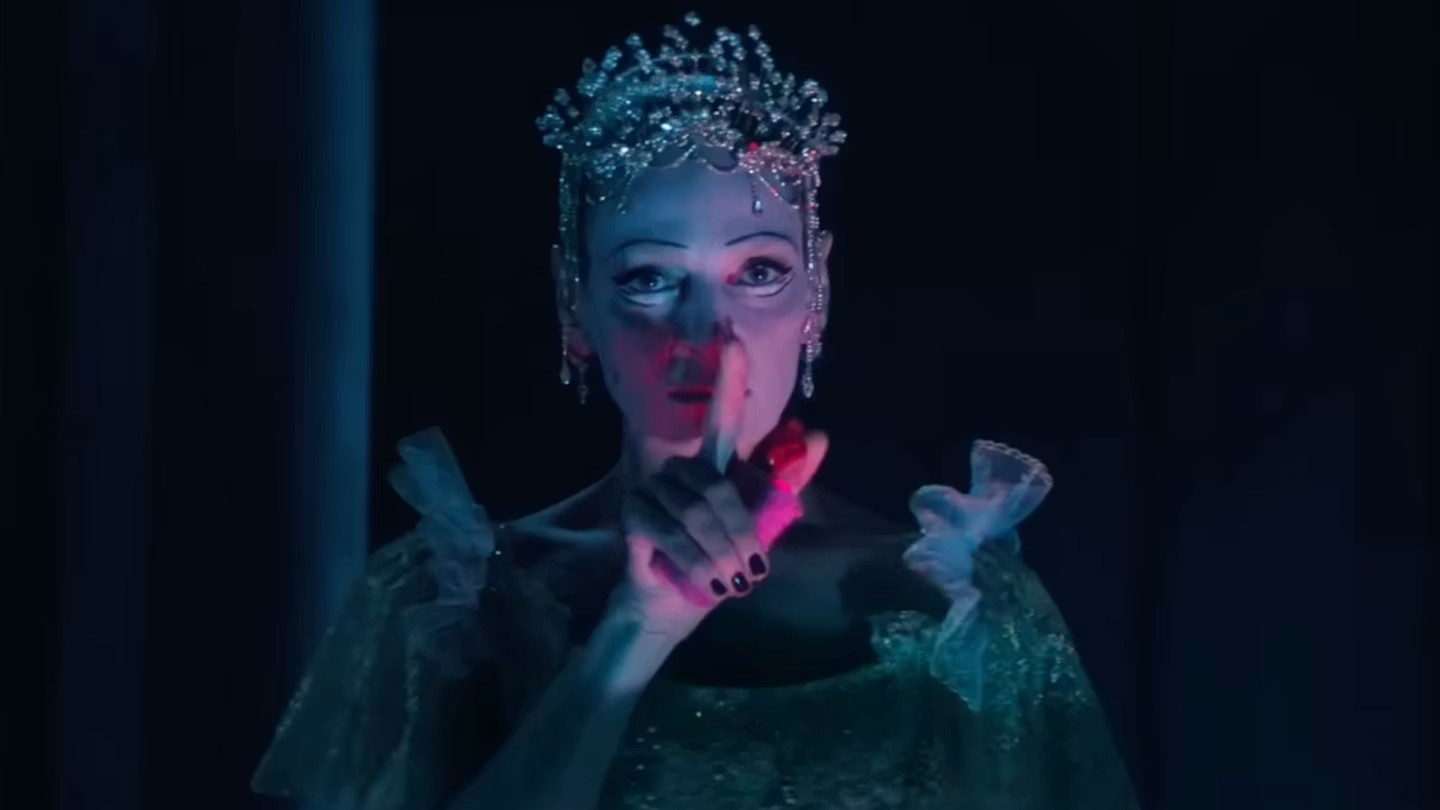
It is not uncommon for dancers to be overlooked or replaced when their value falls short of ballet’s standard. The lack of security supports the ballerina’s extreme striving for perfection. The brutal reality of ballet is that it isn’t just what it appears to be: there is competitiveness, unrealistic body standards, constant pain, and physical sacrifices that go into making the dance beautiful.
Why Ballet And Horror Work So Well Together
The horror genre draws on the unnatural — it aims to unsettle its audience, to play on their fears and the limits of their comfort. A way in which it does that is through its visuals. Ballet-horror takes this goal and poses the question: what is more unsettling than the decay of something beautiful?

Ballet offers horror visual juxtapositions that are difficult to look away from: the beautiful ballerina versus the toll the sport takes on her body. A dancer’s collected drive for improvement versus their spiral into obsession. With ballet’s intense pressure and body standards, horror is a natural home to explore its extreme conditions.
Along with the psychological horror opportunities of ballet’s expectations, body horror is an avenue easily tied to ballerinas. The flexibility and complicated choreography associated with the dance appear uncanny at times, while the unnatural constraint of the pointe shoe often leads to broken nails, bruised toes, and bloody feet — all of which pairs perfectly with horror’s aim to unsettle its audience.

Beyond the genre’s visuals, the challenges ballerinas endure for their art lend themselves naturally to themes explored in horror. There are lines within ballet that, when blurred, can become grim: ambition turning into madness, discipline turning into self-destruction, dedication turning into sacrifice. When the lens begins to dig deeper, it’s easy to make a connection between horror and ballet’s darker reality.
Pretty Lethal And The Weaponization Of Dance
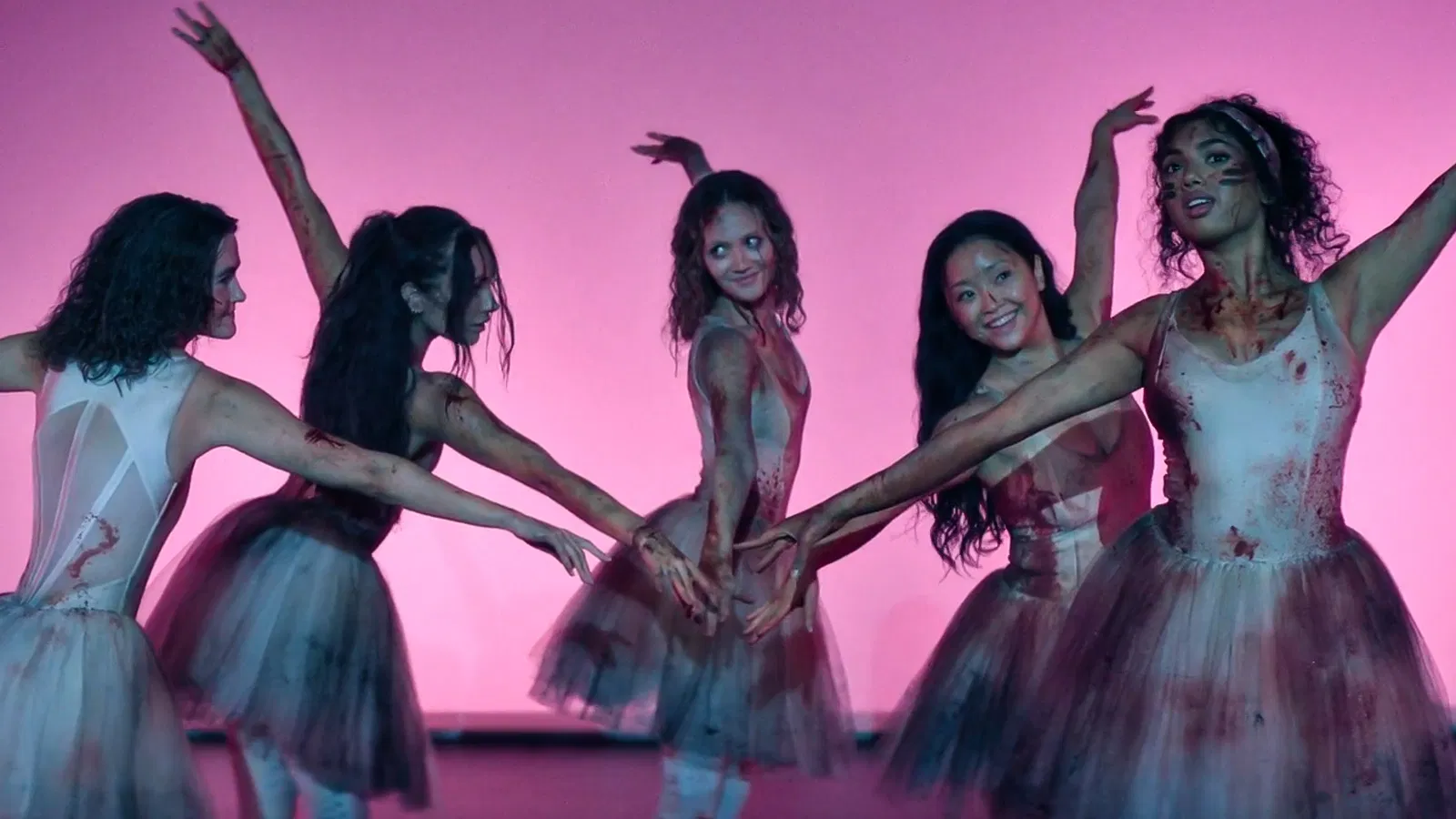
As the newest installment in the ballet horror world, Pretty Lethal uses its ballet-centric narrative to explore the discipline ballerinas display and ballet’s value in perfection. The film follows an ensemble cast of ballerinas, led by Bones (Maddie Ziegler), as they find themselves trapped in an inn with a gang of criminals.3

The blend of horror and action while the girls fight for their lives creates a thriller that weaponizes the graceful ballet-style dance. To fight back, the ballerinas stick razor blades in their pointe shoes and transform their dance choreography into a type of fight choreography, slashing their way through the men who hold them hostage.
Pretty Lethal shows ballet transcending from a mere art form into a form of survival, representing the strength and resilience that is demanded by ballerinas and challenging the stereotypical image of the innocent, delicate ballerina. The girls’ beautiful, pink costumes are bloodied by the time they perform their final dance for the competition — a representation of the hardships they’d just endured, unbeknownst to the audience, as they flawlessly execute their number.

Bones and the rest of the ballerinas use their years of training against the men who underestimate them, leaning into the resilience built after years of pain and practice. Ultimately, it is because they are ballerinas that they survive — a testament to the harsh reality behind ballet that is shown through the girls effortlessly killing their way through their captures, laughing in the face of what many would call torture (ripping off toenails), and still making it to their performance on time. It’s as Bones said:
“Are you kidding me? My toenails break all the time. And you know what I do? I peel them off, I put a smile on my face, and I dance. Because I’m a ballerina!”4
Bones, Pretty Lethal
Pretty Lethal highlights the dedication it takes to be a ballerina, weaponizes the dance, and empowers the girls themselves. It merges the beauty and brutality of ballet, exposing both sides of the sport.
Obsession, Body Horror, And Psychological Pressure
The physical and emotional toll ballerinas face is often exploited through horror, with the genre emphasizing discomforts like broken bones, exhaustion, and mental breaks. Black Swan is an example of this, with the film centering on Nina’s (Natalie Portman) descent into paranoia and obsession over her role.5

Nina’s psychological deterioration is paired with disturbing hallucinations and transformations, with the pressure of the role, her darkening mental state, and declining health all leading to her own destruction. The film doesn’t rely on any true external antagonist like Pretty Lethal, instead grounding its horror in the concept of one’s body becoming unfamiliar and threatening.
Other films like Abigail lean more into body horror than the psychological. When a young, kidnapped ballerina transforms from prey into predator, the film quickly evolves into a bloody tale.6 The film leans into Abigail’s vampiric transformations and unnerving contortions, building its horror on the contrast between the ballerina’s pretty, innocent form and the monster beneath the surface.

Like Pretty Lethal, Abigail gives control back to the dancer. Though portrayed mainly as the antagonist for the main group of characters, the character Abigail is able to draw on her skills as a dancer to effortlessly hunt down those who kidnapped her. It similarly weaponizes the dance to Pretty Lethal, showcasing the strength and aesthetic of ballerinas right alongside the film’s gore.
Why Filmmakers Keep Returning To Ballet Horror
Ballet pairs so naturally with film itself because of its visuals: the dazzling sets, the extravagant costumes, the intricate movements. It lends itself naturally to other art, like filmmaking, that relies heavily on the aesthetic.

This relationship between the arts has been a long-established one, with books, films, and ballet all drawing on one another. Story ballets that adapt famous works like Dracula7 (1897) and Frankenstein8 (1831) present the thrilling tales in dance form, utilizing haunting music and movements to encompass the novels’ emotions. These performances juxtapose beauty alongside the darker tale beneath, in a similar fashion to the rising ballet horror film genre.
Ballet History: A Melting Pot For Film Aesthetics
Though the connection between ballet and horror continues to grow in popularity, there are links between the two that date all the way back to the nineteenth century. With popular Romantic Era ballets like Giselle9 (1841) and La Sylphide10 (1832) transitioning the ballet aesthetic from a colorful, male-dominated art to one full of white-tulle and women leads, ballet had a major influence on the visuals that make up Gothic horror.11
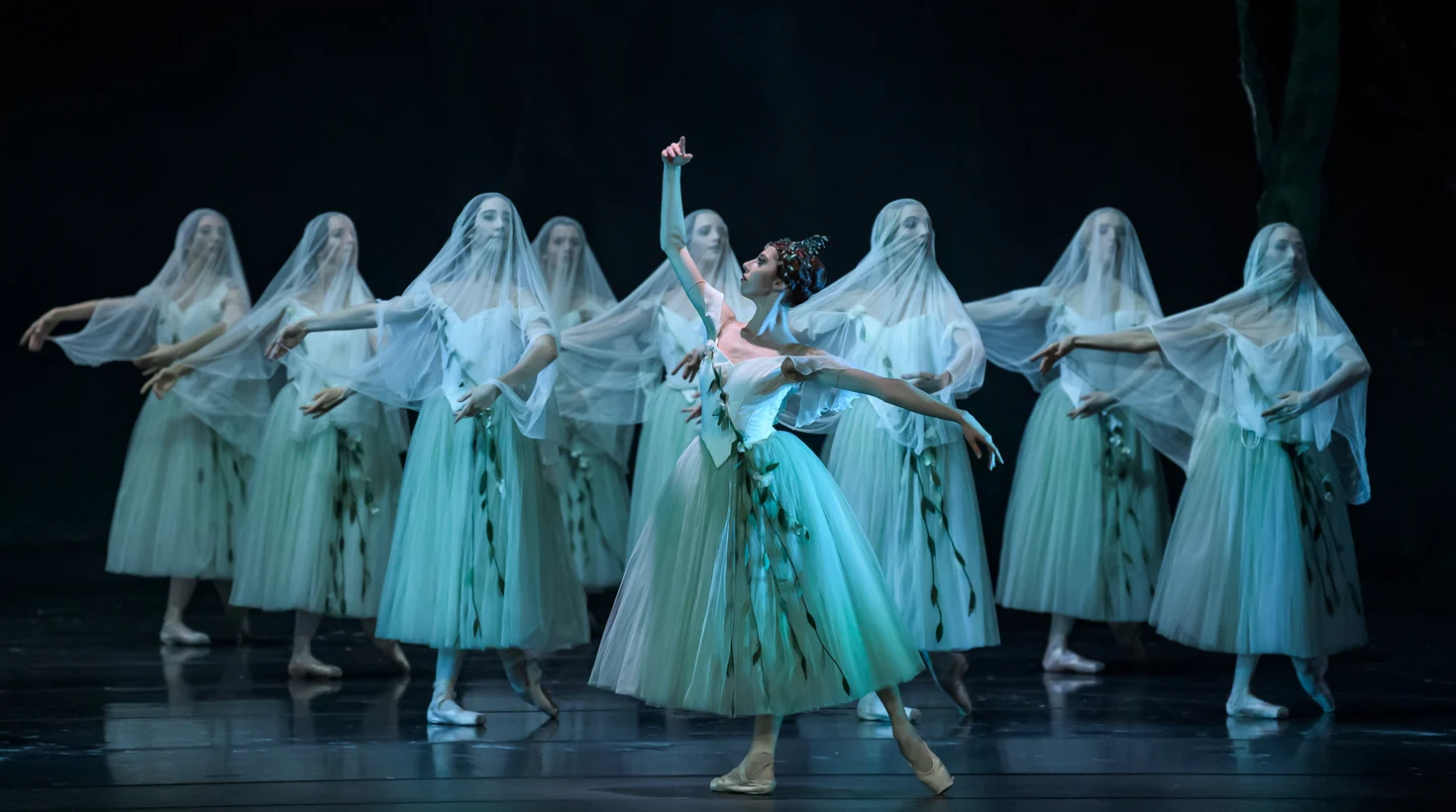
The “white ballet” saw a rise in the ethereal aesthetic, with women in flowy white dresses often occupying the stage to represent ghostly figures and femme fatales. The pointe shoe grew in popularity in order to make the dancers appear as if they flowed across the stage12, and darker themes like good vs. evil began to take more space within dance — all of which influenced cinema aesthetics and genres, eventually leading to films like Black Swan and Pretty Lethal.
Beyond the borrowing of aesthetics, filmmakers continue to return to ballet horror because of its well of possibilities. The practiced movements and physical toll ballet demands are perfect for body horror, and the extreme pressures of the art form are perfect for psychological horror — a natural muse in the making for the genre.
Beauty And Brutality On The Same Stage
The intersection between ballet and horror is not merely a trend. It reflects an ongoing fascination with the limits of the human body. Ballet pushes its dancers in the same way horror aims to push its audience, toying with the lines between the comfortable, the unnerving, and the absolute breaking point.
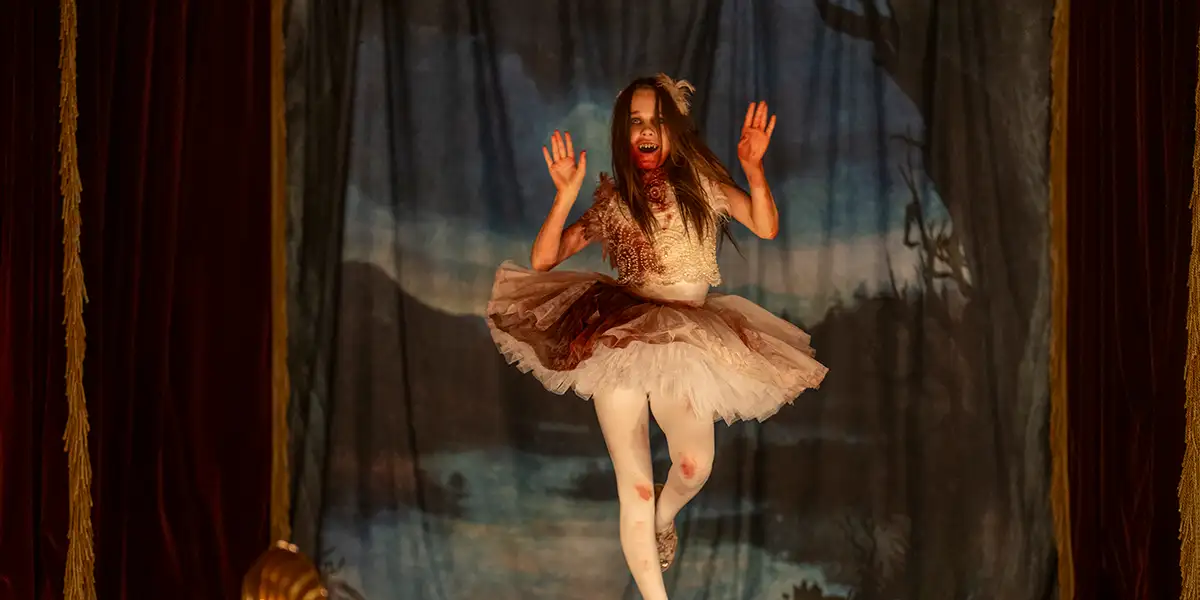
Ballet horror represents both the beauty and the suffering found in the art form. Beneath the elegance of performance lies a harsher reality, one full of pain, brutal expectations, and sacrifice which — when laid out and examined — pair perfectly with the grotesque so often explored in horror.
Footnotes
- Jewson, Vicky. Pretty Lethal. Amazon MGM Studios, 2026. ↩︎
- O’Hara, Lily. “Ballet: A Cursed and Complicated Beauty.” Boston University Deerfield Journal, 2022. ↩︎
- Jewson, Vicky. Pretty Lethal. Amazon MGM Studios, 2026. ↩︎
- Jewson, Vicky. Pretty Lethal. Amazon MGM Studios, 1:10:57-1:11:10. March 25, 2026. ↩︎
- Aronofsky, Darren. Black Swan. Searchlight Pictures, 2010. ↩︎
- Bettinelli-Olpin, Matt and Tyler Gillett. Abigail. Radio Silence Productions, 2024. ↩︎
- Stoker, Bram. Dracula. Archibald Constable and Company, 1897. ↩︎
- Shelley, Mary. Frankenstein. Colburn and Bentley, 1831. ↩︎
- Coralli, Jean, and Jules Perrot. Giselle. Théâtre de l’Académie Royale de Musique, Paris, 1841. ↩︎
- Taglioni, Filippo. La Sylphide. Salle Le Peletier, Paris, 1832. ↩︎
- Nicolas, Margaux. “Giselle, A Distinctly Romantic Ballet.” Atlanta Ballet, December 16, 2025. ↩︎
- Sorabella, Jean. “The Ballet.” The Metropolitan Museum of Art, October 1, 2004. ↩︎