Table of Contents Show
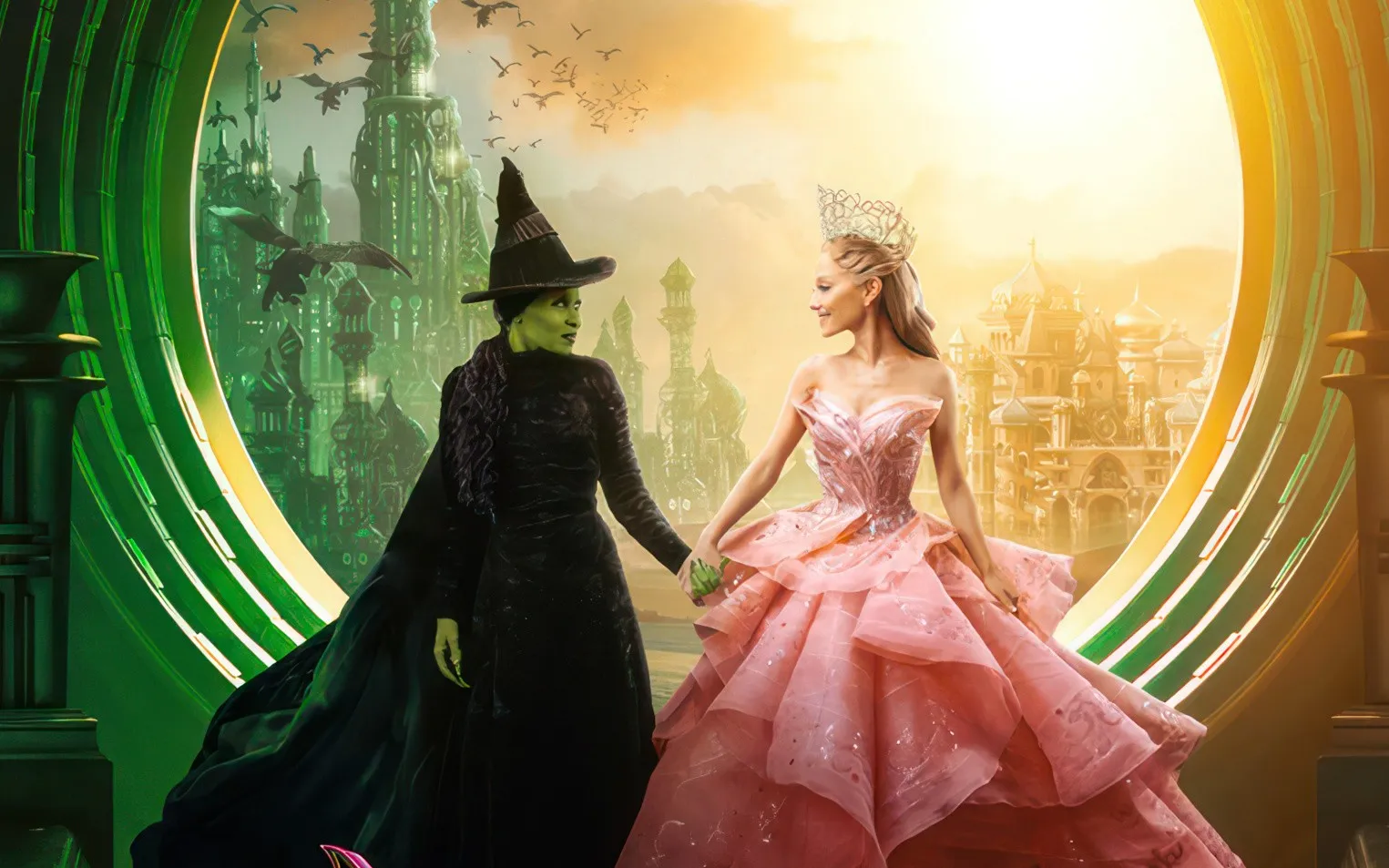
Wicked (2024) and Wicked: For Good (2025) were both top-rated movies of the year, generously noted for inclusive representation surrounding gender, race, and sexuality. But amongst the cheerful expressions and celebration, there are the lurking inadequacies when it comes to positively portraying people with disabilities.

Wicked tells the narrative of Oz, specifically the origin of Glinda the Good Witch and Elphaba the Wicked Witch of the West, before Dorothy and the Wizard of Oz (1939) movie. The original Wizard of Oz (1939) movie creates the vision that the Wicked Witch of the West is exactly that, wicked.
However, it is not Elphaba whose differences lead towards evil, but her sister, Nessarose, whose wheelchair-bound experiences create immense spite and wickedness on her end, complicating the victim complex that follows people with disabilities, and casts a shadow on Wicked’s disabled representation.
The Thropp Sisters — Difference, Family, & The Origins Of Conflict
Elphaba Thropp was born to Melena and Frexpar Thropp, the governor of Munchkinland, however, due to the unusual green tint of her skin, her father rejects her and consistently treats her as a burden. When Melena became pregnant with their second daughter, Nessarose, Frexpar forced her to chew milk flowers, hoping to counteract any chance of birthing another green baby (milk flowers would suggest white was the ‘normal’ skin color).
But instead, the flowers caused Nessa to be born prematurely with the umbilical cord wrapped around her legs, leaving her paralyzed from the waist down. There were quite a few adjustments to the Broadway performance, and later the movies as well, to better and more sympathetically represent the sisters.

In Gregory Maguire’s novel, Nessarose is born without arms (which would have been exceedingly more difficult to cast in a way that accurately represented the disability), and she is much more liked than Elphaba, leading her older sister to resent her. In the novel as well, Elphaba is labeled to have joined a terrorist group, participated in an affair, and committed homicide — all of which is handled more delicately in the later renditions.1
The movie holds Elphaba in higher regard, even if her parents don’t. In response to Nessa’s disability, their father often gives her preferential treatment, sometimes in an ableist way. Elphaba was the only one to treat her as an equally capable human being despite being in a wheelchair.

Elphaba was always subject to taunting and discrimination from both her father and her peers, and she was not going to allow the same feelings of shame to fall upon her younger sister. As children, this companionship was shared between the sisters, but when Elphaba is forced to accompany Nessa to school, the latter wants no such correlation to be known.2
Shiz University & The Politics Of Belonging
Shiz was the college in which Nessarose was meant to attend, alone. However, because of her father’s overbearing and underestimated opinion towards her, he makes Elphaba attend as well to look after her, much to Nessa’s dissatisfaction. Elphaba, in efforts to appease her sister, agrees to limit drawing any attention to either of them, but the prominent difference in skin color and her magic-wielding abilities professes the sentiment short-lived.
Her uniqueness does, however, fascinate her new roommate, Glinda. Despite a fractured start to their relationship, in which Glinda orchestrates a prank against Elphaba — upset at the intrusion to not only her room at Shiz, but also infringing upon any desire Glinda had at becoming a witch herself — the two ultimately became unlikely friends.

Glinda wishes to harbor the same magical powers as Elphaba, a talent publicized as one you can be taught, not just inherited. Elphaba agrees to convince Madame Morrible — a professor who is fascinated by Elphaba’s power and offers to teach her to use it — to allow Glinda to attend their sessions, and, in return, Glinda wishes to make ‘Elphie’ popular.
Despite Madame Morrible’s intent on not allowing Glinda in, Elphaba refuses to continue her own lessons unless her friend can be a part of them.3 The selflessness that Elphaba possesses inspires Glinda, and suddenly it’s not about her wishes to be just as, if not more, powerful, but simply being the support for Elphaba to follow her dreams. The show of affection between an outcast and the most popular girl in school is the main introduction to universal inclusion and acceptance of those different from ourselves.

Not all students at Shiz were as receptive to the unexpected duo. Despite students’ respect for Glinda the Good, any action or opinion Elphaba made in support of their animal professor, Dr. Dillamond, her peers questioned whether she had ulterior motives against the school. The conflict that separates the first movie from the second revolves around the Animal discrimination taking place in Oz, and prominently at Shiz.
Animals are meant to hold the same importance/societal position as humans, so when some of the Animals are removed from hierarchical positions — Dr. Dillamond — and newborns are restricted from partaking in society at all — the origin of the Cowardly Lion — Elphaba becomes determined to put an end to the segregation.

Elphaba’s magical gifts eventually land her an invitation to visit The Wizard in the Emerald City. Recognizing Glinda’s desire to meet him as well, Elphaba wishes her friend to come along, hoping they both will rise to the top together. Elphaba attempts to bring up the issue with the Animals, but instead she discovers The Wizards’s true motives, in which he wants her to help carry out the removal of all Animals from society.
Elphaba refuses to do his bidding, ultimately resigning herself to public villainy, though morally she is protecting her beliefs and the freedom of their society. In the ultimate moment of acceptance, despite their differing opinions on what is right and wrong for the two friends, Elphaba and Glinda part, defying gravity — offering not only reference to the two’s exceptional abilities (whether real or make-believe), but symbolism on the limitlessness they share in direct contrast to Nessa’s physical disability.4
Nessarose & Narrative Marginalization
After all, there would be no story of Elphaba and Glinda meeting if it hadn’t been for Nessa’s enrollment in university. Having been coddled by her father her entire life, Nessa desires to gain a sense of independence at Shiz, and most importantly, find love. After removing herself from correlation to Elphaba, Nessa is pushed to the margins of the narrative, only seen again when she meets a boy — who is not all he makes out to be.

Boq comes from Munchkinland and builds a crush on Glinda early on, but when she rejects his proposal to attend the Ozdust ball together, she also pushes him in the direction of Nessa. In hopes of appealing to Glinda, Boq asks Nessa to the ball. Amidst her excitement, Nessa does attempt to confront Boq about his having asked her only because she is in a wheelchair.
While this explanation would be sure to hurt Nessa, it was more harmless than the truth: he only ever thought of Nessa because Glinda asked him to. Instead of offering the truth and therefore subjecting her to embarrassment and hurt, he feels pity, and offers that it is unfair for someone so beautiful to be confined to a chair, and that is why he asked her.5
Shortly after the ball, is when Elphaba and Glinda part from Shiz in search of the Wizard, leaving all other characters out of the narrative. Nessa is overjoyed to have found love with Boq, but in the moment the two witches are departing, Nessa seems to have some suspicion in the way Boq looks after Glinda. That suspicion builds in part two, ultimately leading towards her tyranny.
The Missing Context — What the Deleted Scene Reveals
Both actors for Elphaba and Boq (Cynthia Erivo and Ethan Slater) commented on a scene that was removed from the final cut in which the two characters have a conversation about Nessarose before Elphaba leaves for the Emerald City. Erivo expressed disappointment in the decision as it showed more of a relationship between the two characters that we don’t otherwise see.

In the clip, Elphaba reveals that pretty much everyone knows who Boq really has feelings for, and that he does not love Nessa. She asks why he can’t tell Nessa the truth, to which he asks the same of her in terms of admitting her love for Fiyero. Elphaba quickly denies the allegation, ending their conversation, but if this scene were considered in the narrative, it would show that Elphaba knew Boq was lying to her sister all along, validating any anger or resentment Nessa takes out on her in the second movie.
Either way, Nessarose becomes a ruthless governor, having Boq act as her servant rather than a lover in their first introduction in part two.6
Two Wicked Witches — Reframing East And West
In the original Wizard of Oz (1939) movie, there are two wicked witches: The Wicked Witch of the East and The Wicked Witch of the West. The Wicked Witch of the East is hardly recognized, though, seeing as she is crushed by the house swept up by the tornado that rips through Kansas in the early scenes.

Wicked, while mainly focused on Elphaba’s story as The Wicked Witch of the West, also has the villain origin of The Wicked Witch of the East. When Elphaba — on the run — returns to Munchkinland seeking refuge, she learns of her father’s death, having left Nessarose to inherit his position as governor.
Nessarose gets dubbed The Wicked Witch of the East by the Munchkins she rules over in a tyrannical way. Coming to terms with the fact her young love with Boq wasn’t real, she restricts any Munchkin, especially Boq, from leaving Munchkinland in an act of revenge.

Originally, upon the sisters’ reunion, Nessa is said to confront Elphaba about the resentment she had towards her for never having used her powers to reverse the paralysis in her legs; however, in the movie, she is furious over Boq’s betrayal and wishes to go back to her days at Shiz. In her rage, she takes the Grimmerie — the book of spells Elphaba took from The Wizard — attempting a spell to make Boq love her, but instead it shrinks his heart. Trying to save him from suffering, Elphaba casts a spell turning him into the Tin Man.7
Elphaba’s actions terrify Nessa, leading her to exile her sister from Munchkinland. This is the last time the two see each other before the tornado that signifies the beginning of Dorothy’s story in Oz, and subsequently the demise of both sisters individually.
Nature, Nurture, And The Politics Of Difference
At the core of Wicked, there is the long debate over nature vs nurture: whether we are inherently born to be a certain way or whether we are designed by societal pressures and expectations. The people in Oz are white and able-bodied as far as we can see, and of course, the majority are human.
In the end, both sisters are fated to disappear, whether in death or exile. What must that say for those who see themselves in Elphaba and Nessarose? Wicked is a fantasy story, but historically, societies are shaped by the books we read and the media we consume. The lack of proper representation for marginalized groups harbors feelings of oppression and erasure, directly translating to inferiority in the real world.

Modern renditions aim to mend unforgiving representation in the original novel. The story highlights Elphaba’s alienation, but more so how she doesn’t allow it to define how she sees herself. In doing so, the narrative allows for other marginalized communities to feel such hope while also forcing viewers to confront their own biases — perhaps inspired by Glinda.
While there are effective changes in Nessa’s story as well, the fact stands that there is still more to be done in society and in media representation when it comes to the disabled community.8
Casting, Authenticity, & The Push For Representation
Tiffany Little Canfield and Bernard Telsey were the casting directors on the set of both Wicked (2024-2025) films. Both had previously worked on casting for Broadway productions In The Heights (2008) and Kiss of the Spider Woman (1993).

In a chat between the two casting directors, Telsey says, “With what’s going on in our world, you see how intense or corrupt The Wizard is, and we’ve all experienced a little bit of what’s happening in the wizard land.”
Little Canfield adds, “These stories, about activism and people advocating for people who are disadvantaged or just looking for equality, these stories always seem to be relevant,” directing attention to the parallels between the fantastical world of Oz and the real world.9
Queer Visibility Behind The Curtain
“As I stand here in front of you: Black, bald-headed, pierced and queer, I can say I know a thing or two about being the other”10
Cynthia Erivo
Erivo, starring as Elphaba Thropp, the main character of the story, has commented on what it means to be both Black and queer and how that has manifested in her portrayal of the character.

It is important to notice that a large population of the Wicked (2024-2025) cast is openly queer, which, intentional or not, directly draws that connection from what is fantasy to what is real. The actors may not be playing queer characters, but the inclusion not only being in the film but also on set sends a powerful message.
Marissa Bode And Authentic Disability Representation
The casting directors were later asked in the interview with Gold Derby what it meant to be able to cast someone as talented as Marissa Bode, who also represented what it meant to actually be a wheelchair user. In Broadway reproductions of the story, it was difficult to cast someone in a wheelchair for many reasons, so to be able to do so for the film production was huge.

Little Canfield addressed the challenge that came with casting, seeing as there has been such little representation. They ended up reaching out to the community and offering worldwide digital open calls in hopes of creating the most authentic characterization for Nessa.
When Representation Becomes Problematic
Nessarose is often referred to as ‘tragically beautiful’ and dependent upon her sister, essentially blaming her disability for the circumstances she has ended up in. But even though the role often holds ableist undertones, that hasn’t stopped those wheelchair-using actresses who portrayed Nessa from using their position to promote disability awareness and acceptance.11
Rewriting Nessarose — Attempts At Narrative Repair
Bode did an interview with Bustle in which she discusses changes they made from the original story in order to negate the stereotype that people with disabilities are victims of it. All actors that had played Nessarose prior to Bode were able-bodied, making the original script — where Nessa guilts Elphaba into reversing her disability so she can walk — possible.
Chu’s film redacts that scene in exchange for Nessa’s wish to go back to her days at Shiz and the freedom that came with it, which Elphaba then gifts her the silver shoes that allow her to fly. This rendition gives the lyrics to “Defying Gravity” a special nod to people living with disabilities, and Nessarose in particular.12

Bode expresses such hope for the future of people with disabilities, especially when it comes to Hollywood and Broadway. On March fourth of 2025, Jenna Bainbridge becomes the first wheelchair user to play Nessarose on Broadway.
Bainbridge discusses that there were no changes to her Wicked script like there were in the film. She is, however, able to walk on occasion, which could provide reasoning for there being no change, but no less, she brings an authenticity to the character that would have been missing in any other able-bodied actresses.13 The narrative centers on the recognition of difference, but to fit modern expectations and acceptance, changes must be made.

The movies show definite strides in terms of race, not allowing Elphaba’s kindness to be overshadowed by any jealousy of her father’s greater love for her sister, or labeling her a terrorist in line with her efforts to rebel against the extinction of Animal equality.
There are also successful attempts in disability representation for Nessarose, but there are still some issues surrounding her bitterness and whether the treatment she received over her disability justifies her lashing out at others.
Fans must recognize progress in the movement for the LGBTQ community and for actors with disabilities. Though the latter two could be easier to miss in the film, it is a big step for inclusivity in the business and will hopefully encourage similar strides in society.
Footnotes
- Wiki, Contributors to Wicked. “Wicked: The Life and Times of the Wicked Witch of the West.” Wicked Wiki, Fandom, Inc.
↩︎ - Odom, Dani Kessel. “Elphaba’s Family Tree in Wicked Explained.” ScreenRant, Screen Rant, 13 Nov. 2024.
↩︎ - Desai, Arya. “10 Best Wicked Scenes That Highlight Glinda & Elphaba’s Powerful Friendship.” ScreenRant, Screen Rant, 9 Dec. 2024.
↩︎ - Desai, Arya. “10 Best Wicked Scenes That Highlight Glinda & Elphaba’s Powerful Friendship.” ScreenRant, Screen Rant, 9 Dec. 2024.
↩︎ - Dance, Joshua, et al. “Why Does Boq Lie to Nessarose?” Science Fiction & Fantasy Stack Exchange.
↩︎ - Gallagher, Eidhne. “Wicked Cut a Scene That Made Nessarose’s Story Even More Heartbreaking.” ScreenRant, Screen Rant, 12 Jan. 2025.
↩︎ - Felt, Klein. “Wicked Part 2: Here’s How Nessarose Becomes the Wicked Witch of the East.” The Direct, The Direct, 27 Nov. 2024.
↩︎ - Danzig, Peter Andrew. “‘Wicked’ and the Importance of Marginalized Representation.” Psychology Today, Sussex Publishers, Jan. 2025.
↩︎ - Warner, Kara. “‘Wicked: For Good’ Casting Directors Tiffany Little Canfield and Bernard Telsey on Favorite Scene Stealers and ‘Resonant’ Finale.” Gold Derby, Gold Derby, 14 Nov. 2025.
↩︎ - Upadhyaya, Kayla Kumari. “Who All’s Gay in Wicked?” Autostraddle, 11 Dec. 2025.
↩︎ - Mazzeo, Esme. “Wicked’s Jenna Bainbridge on Reframing Nessarose’s ‘Tragic’ Disability.” Vulture, Vulture, 4 Mar. 2025.
↩︎ - Viswanath, Jake. “Exclusive: Marissa Bode Reveals How Ariana & Cynthia Welcomed Her to ‘Wicked.’” Bustle, 24 Nov. 2025.
↩︎ - Mazzeo, Esme. “Wicked’s Jenna Bainbridge on Reframing Nessarose’s ‘Tragic’ Disability.” Vulture, Vulture, 4 Mar. 2025.
↩︎