
Table of Contents Show
Multiplayer and cooperative games have always been a dominating force in gaming. The first-ever video game, “Tennis for Two” (1958, Higinbotham), was created for two people to play together. Recently, a new sub-genre of co-op games has experienced an explosive rise.
During the COVID-19 pandemic, many shifted to digital forms of connection to avoid ill-advised potential exposure. Many turned to cozy, lighthearted games to relieve stress. Even more turned towards co-op games.
All cooperative multiplayer games experienced an explosive rise in popularity, but one sub-genre in particular shifted the gaming environment. Specifically, low-cost games with simple objectives made it easy to learn. The requirement of playing with friends has led to the sub-genre earning the name “friendslop” games.
Even five years out from the height of the pandemic, the popularity of these “friendslop” games has not wavered. Their rise coincides with the rise of loneliness and isolation. Some are calling it a “loneliness epidemic,” and young adult men were recently reported to be the loneliest of all.
Despite the younger generations’ affinity for technology, the loneliness disparity is rising. “Friendslop” games may play a more important role in socialization and combating loneliness than experts give them credit for.
What Is “Friendslop?” — The Genre Born From Isolation
The term “friendslop” has sparked online discourse over the emerging genre made by indie developers. The X user who coined the term was humorous in intention, but represents a growing frustration amongst some gamers at the oversaturation of the market. Most media regarding “friendslop” games disagree with the dismissive terminology. The term “slop,” some argue, is considered negative and should be reserved for AI-generated media.
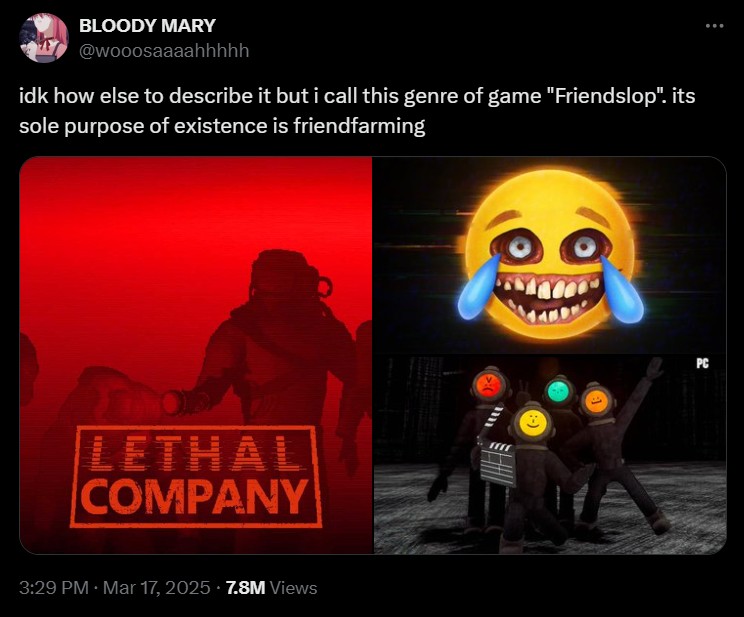
This style of rogue-like — typically four-player co-op survival games that aren’t graphically demanding, have simple mechanics, and are under $15 — endured an explosive boom with the COVID-19 lockdown. Hundreds of millions across the world were staying at home, either by mandate or choice. They turned towards streaming services, multiplayer games, and other digital forms of social companionship and interaction.
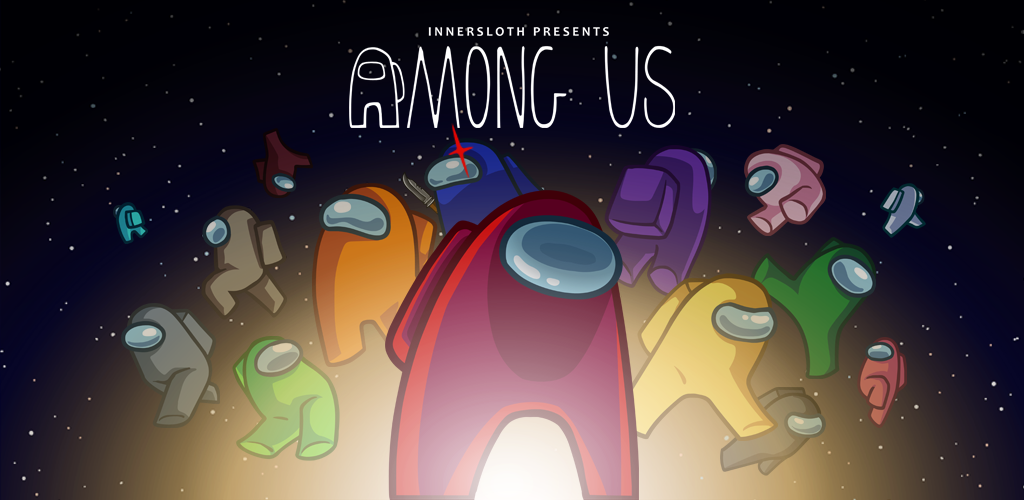
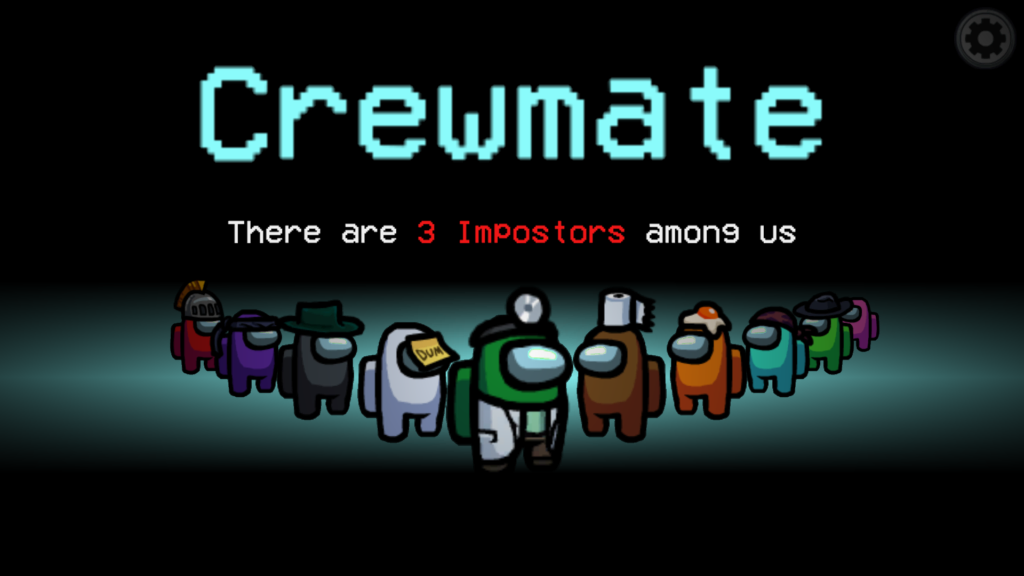
The arguable originator of this subcategory of co-op games is “Among Us,” which launched in 2018. The mechanics are simple, and the objective is straightforward — there are impostors and crewmates. Crewmates need to find the impostors and vote them off; for the impostors, they need to get away with killing as many crewmates as possible.
The game received one million downloads in 2019, but the COVID-19 lockdown brought millions of additional users to the internet. In addition to the increase in potential gamers, “Among Us” gained popularity with streamers. By September 2020, 60 million people were playing.1 “Among Us” proved not just a one-time phenomenon, but the start of an immensely popular emerging genre of gaming.
Now, people aren’t encouraged or required to isolate. Even though people don’t necessarily need to spend time socializing online, millions of people across the world are spending more time alone or online. Five years out, and “friendslop” games haven’t lost any of their popularity.
“Pandemic Play” — How Connections Became Gamified
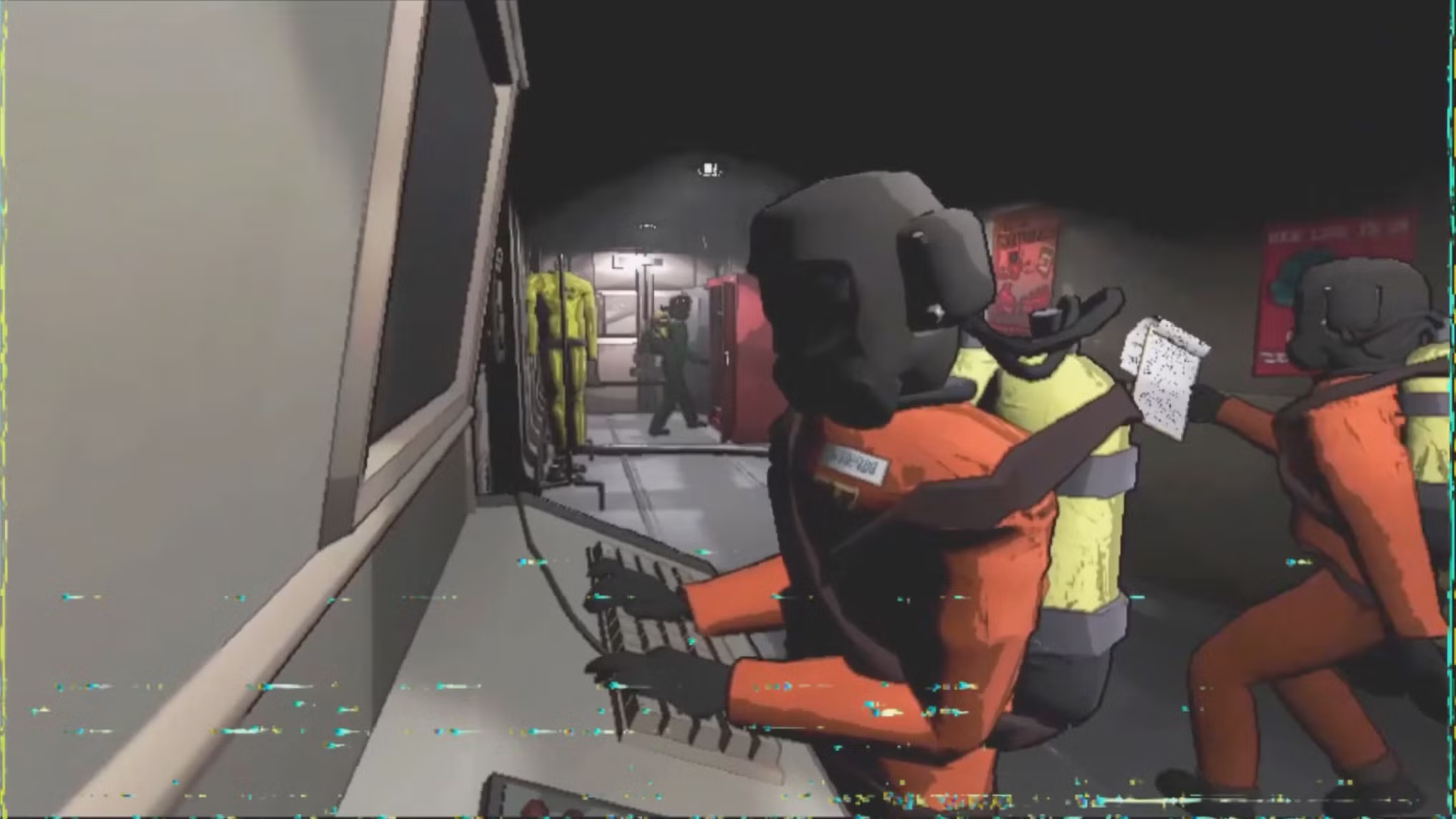
The most popular “friendslop” games, like “Lethal Company” and “R.E.P.O.,” include elements that necessitate collaboration. Proximity-based voice chat is intrinsic to the game, adding suspense and humor–like listening to friends’ audio become garbled by water when drowning or hearing distant screams. Despite the jump scares and lethal monsters, the core of the games is enjoyment with friends.
In 2023 alone, nearly 800 co-op games were released on Steam. The rise of this subgenre coincided with the COVID-19 pandemic. The number of co-op games released on Steam nearly doubled from around 380 in 2019 to around 650 in 2020.2 Like anything that becomes massively popular, other developers made their own interpretations of the subgenre.
Within a few years, hundreds of “clones” — games with similar friendslop playstyles — hit Steam stores. “Totally Reliable Delivery Service,” “Content Warning,” “Chained Together,” “Murky Divers,” and “Roadside Research” are amongst the highest rated games, demonstrating continuous demand for unique takes on this genre.

With hundreds of games available, the cost would add up quickly if someone wanted to try them all. Usually, someone’s friend tells them about the game. Everyone will need to purchase a copy if they want to play together. This type of player acquisition is called “flywheel,” dependent on players as the main mode of acquiring new players, ideally through engaging and enjoyable gameplay. The sole developer for Lethal Company, Zeekerss, says that tapping into social dynamics is what drove the 10 million copies his game sold.
“When my friend dies from a lightning stike…I pretend to cry out and say, ‘Noooo!’ as if he won’t just be resurrected in five minutes, and I know everyone else does the same thing, because it’s funny to see the stupid guys in cartoon space suits experiencing actual tragedy.” -Zeekerss3
For “Peak,” a survival game with the goal of climbing mountains featuring mechanics familiar to “Legend of Zelda” players and silly graphics, developers worried about their prospective game. It had lost funding in 2019, and the launch followed the massively popular “Content Warning.” The game ended up selling a million copies within the first week of launch.4
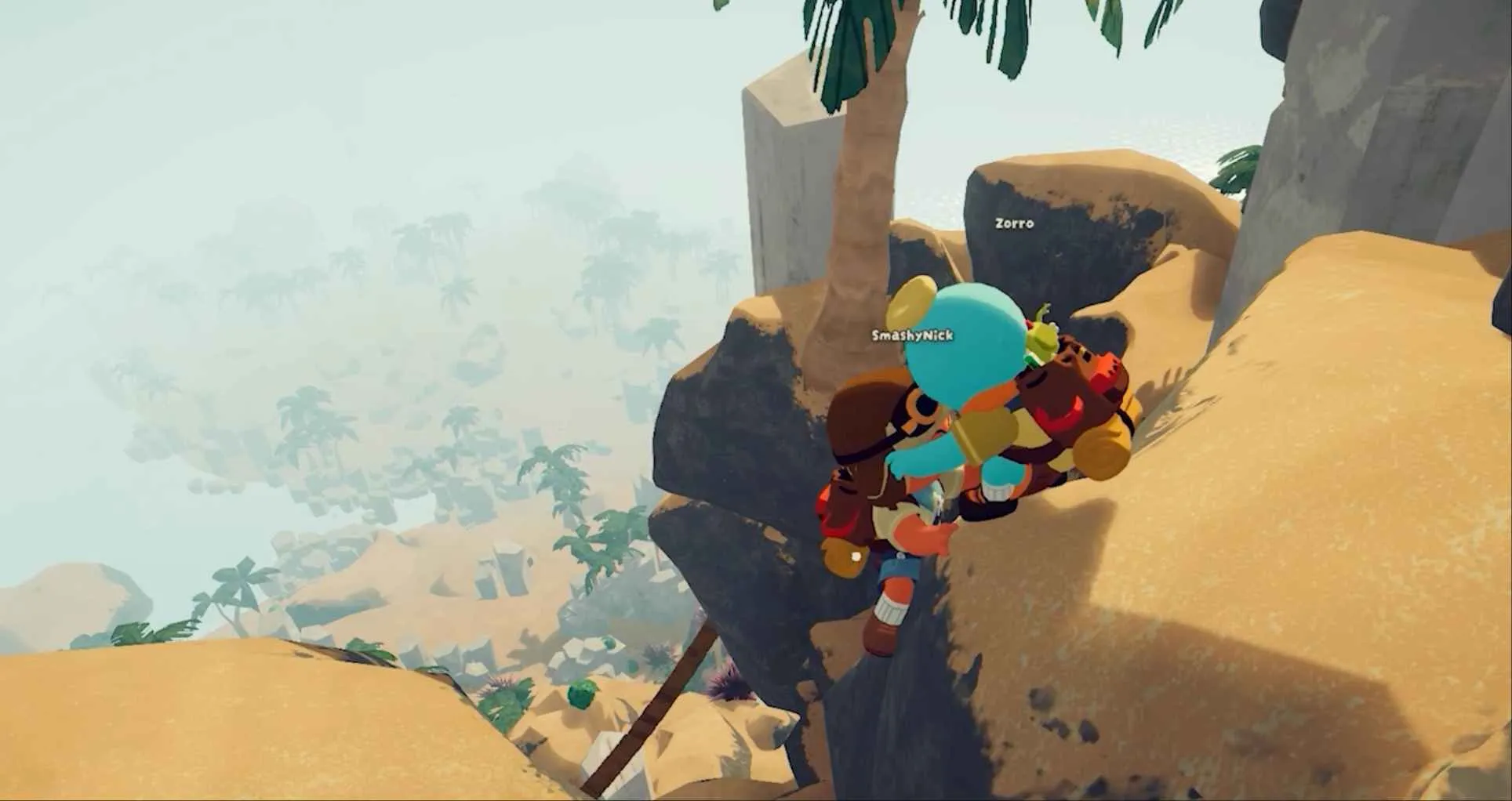
The sheer popularity of the relatively new genre indicates that its emphasis on friendship is still desirable. People are willing to spend money on collaborative games for the sake of having fun with their friends. The post-pandemic social climate continues to trend towards isolation and loneliness. “Friendslop” games facilitate spending time with friends, which could help decrease the loneliness the younger generation struggles with.
“Lonely Together” — Friendship In The Era Of Digital Proximity
It shouldn’t come as a surprise that the notoriously stressed-out and technologically-obsessed generations report the highest levels of loneliness. Comparing the U.S. to other countries, however, highlights the loneliness disparity. Despite the continuous rise of loneliness, the younger generations are finding new ways to stay connected.
New Challenges In Connection
Polls from 2023 already found that three out of four Gen Z Americans were lonely sometimes or always.5 Another study by Gallup found that only three countries had significant disparities in loneliness between young adult men and other adults–the U.S., Iceland, and Denmark. The U.S. gap of 25% compared to 17%, however, was the most dramatic.6 These studies imply that the younger generations are suffering the worst, with the boys and men facing the worst.

This can have detrimental effects on physical and mental well-being, and loneliness has persisted long before the COVID pandemic sent so many into isolation. Many pinpoint the shift in social interactions to the rise in smartphones and similar technology. The typical mediums of social connection were halted during the pandemic lockdown, but even five years out, loneliness isn’t going away.
Business Insider journalists postulate that Gen Z lacks the wider social networks and community that other generations experienced, like the loss of “third-spaces,” which is leading them to spend more time alone.7 The younger generations have fewer options for socializing. Another study similarly found that most Gen Z and Millennials are spending money to attend social events, despite one in four reporting difficulty saving due to social events.8

Psychological researchers from Stanford argue that the rise of economic inequality has left millions “in a state of relative precarity.” They also have found that the inundation of negative media, from both social and legacy media platforms, has real consequences on the mental state of the younger generations.9 In addition to negative media, TV shows and movies skew towards sexually-explicit and drug-filled material, such as Euphoria (2019; Sam Levinson) and The Idol (2023; Sam Levinson).

There is an unaddressed and underrepresented desire for media that more accurately reflects the experiences of the younger generation–one focused on friendships and connection. A survey by the Center for Scholars & Storytellers from UCLA found that over half of Gen Z want social and traditional media to center friendships and connections rather than drama and sex.10
“Evidently, younger people still want to go to the movies, share in the common experience with their friends and talk about what they watched,” Andrew McGowen from Variety writes. Over half of the people reported wanting friendships as the central relationship in media. Despite the desire, media continues to focus on drama, romance, and sex. For clickbait or engagement, social and traditional media leave the younger generations unsatisfied with the lack of friendship portrayed.
Lonely Together, Digitally
Even in the intentionally isolating internet-sphere, where engagement drives monetary profits, the younger generations are finding ways to connect. The Life in Media Survey by the University of South Florida found that 72% of 11-year-olds have smartphones. This rises to 84% for 13-year-olds.11 People are becoming interconnected at younger and younger ages, exposing children to an infinite source of information and entertainment, but also to their friends.
Many psychologists are concerned about the rise of smartphones and the correlations to the rise in time spent online and reported loneliness. Others think that it is how the devices are utilized that dictates whether there are harmful or helpful impacts.

To add to the complexity of digitally connected friendships, nonverbal and asynchronous communication can add confusion or create misunderstandings. Conversely, it allows for space and time before responding. “It was noted that OCT’s [online communication technology] provide an opportunity to immediately end conversations without resolution,” researchers Sara Fränneby and Sian Meenan found, “This can perhaps be seen as a positive or negative action, depending on the situation.”12
Their main findings, however, found that digital tools like Snapchat and Discord allow children and teenagers to maintain contact with friends who have moved away. This applied especially to those who had emigrated to another country. “Participants raised the topic of their long-distance friendships almost immediately.”13

Developmental psychologist Wendy Rote, PhD, from the University of South Florida, found that children with smartphones spent more face-to-face time with friends than children who didn’t own them. However, children who were posting to social media publicly reported higher rates of depression and anxiety, 44% versus 36% and 42% versus 26%, respectively.14
Similarly, a study on how gaming impacted gamers during the COVID-19 pandemic found that games could have positive or negative impacts, depending on the type of player and genre played. Recreational players had higher rates of gratification and reported less loneliness when playing first-person shooters, fighting games, and sports games.
Conversely, competitive gamers playing multiplayer online battle arenas (MOBAs) or massive multiplayer online role-playing games (MMORPGs) were less gratified and lonelier.15 These findings suggest that, like smartphones, it’s how platforms are used that dictates the impact.
“Beyond The Screen” — Can Gaming Replace Real Connections?
The younger generation yearns for connection, but opportunities to connect are disappearing or require some monetary cost. The affordable “friendslop” video games that can be played on cheaper laptops or mobile devices enable a wider group of people to play. “Friendslop” games are accessible to a much wider audience of casual or serious gamers, making it an easy medium of social interaction.
Many discussions on loneliness blame the internet and social media, but technology can help facilitate social interactions and decrease loneliness. It seems paradoxical that loneliness rises during an age where people are more interconnected than ever before. Research is suggesting that dedicating time to play “friendslop” games with friends may serve a more important purpose in social development than dominant narratives around gaming and loneliness imply.

Studies have found that playing video games with friends help develop intimacy, as they often discuss personal topics or bond while playing. Researchers have also found that, even before the pandemic, gaming has helped relieve stress and alleviate loneliness. There was even a movement, #PlayApartTogether, to bring awareness to the positive effects of gaming with friends.16 “Friendslop” games have exploded in popularity since the COVID-19 pandemic, so maybe it is time to treat the genre as a potential way to combat loneliness.
It is undeniable that digital interactions cannot replace human interactions. Newer technological developments that intend to do so. The increasingly popular and sophisticated AI chatbots have routinely been found to violate ethical standards. Interactive technology like “friendslop” games that focus on having recreational fun with friends offer more engaging experiences with other, real people.
Rather than replacing human interactions with social media, video games, or chatbots, technology should be used to facilitate interactions. Setting aside time in busy schedules, be it from work or homework, and spending time with friends playing “friendslop” games can connect those across time zones and alleviate some of the loneliness permeating American society.
Footnotes
- Fisher, Alice. “Among Us: the video game that shot 100 million players into outer space.” The Guardian. November 29, 2020. ↩︎
- “Rise of Co-op Games.” SensorTower. July 2, 2024. ↩︎
- Rigney, Ryan. “The 10-Year Journey Behind Lethal Company’s Success.” Push to Talk. January 19, 2024. ↩︎
- Hernandez, Patricia. “Peak went from a canceled game that couldn’t get funding to selling millions on Steam.” Polygon. July 9, 2025. ↩︎
- Bakhtiari, Kian. “Gen-Z, The Loneliness Epidemic And The Unifying Power Of Brands.” Forbes. July 28, 2023. ↩︎
- Vigers, Benedict. “Younger Men in the U.S. Among the Loneliest in West.” Gallup. May 20, 2025. ↩︎
- Kaplan, Juliana. “Gen Z is the loneliest generation — but boomers are feeling good.” Business Insider. January 16, 2025. ↩︎
- “New Ally Bank Survey Reveals the Hidden Financial Cost of Friendships.” Ally Media. July 30, 2025. ↩︎
- De Witte, Melissa. “Why is social connection so hard for Gen Z?” Stanford University. March 20, 2025. ↩︎
- Carlson, Nyah. “Gen Z is Breaking the Mold, Preferring Films Centering Around Friendship Over Romance.” October 30, 2025. ↩︎
- Silva, Heslley Machado. “The Reconfiguration of Social Bonds in the Digital Age: Virtual Connections vs. Face-to-Face Relationships.” Shanghai Society of Anthropology. February 18, 2025. ↩︎
- Fränneby, Sara and Sian Meenan. “CHILDREN’S ONLINE AND OFFLINE FRIENDSHIPS: A Study Exploring Young Adolescents Relationships and Social Interactions.” Linköping University. December 16, 2024. ↩︎
- Fränneby, Sara and Sian Meenan. “CHILDREN’S ONLINE AND OFFLINE FRIENDSHIPS: A Study Exploring Young Adolescents Relationships and Social Interactions.” Linköping University. December 16, 2024. ↩︎
- Bakour et al. “Life In Media Survey: A baseline study of digital media use and well-being among 11- to 13-year-olds.” University of South Florida. 2025. ↩︎
- Cook et al. “Gaming during the COVID-19 pandemic: Examining its effect on loneliness & motivation, playing and gratification differences between competitive and recreational gamers.” Telematics and Informatics Reports. August 22, 2023. ↩︎
- Cook et al. “Gaming during the COVID-19 pandemic: Examining its effect on loneliness & motivation, playing and gratification differences between competitive and recreational gamers.” Telematics and Informatics Reports. August 22, 2023. ↩︎