

Table of Contents Show
“The Elder Scrolls V: Skyrim” (2011) is an action role-playing game that took the world by storm, selling millions of units within the year it was released. Developed by Bethesda Game Studios and published by Bethesda Softworks, “Skyrim” is the fifth main installment of the “Elder Scrolls” franchise.1
Many gamers, especially those who prefer role-playing games, have played or at least heard of “Skyrim.” But not many have played the game that came long before it, the game that started everything.

Before there was “Skyrim,” there were many “Elder Scroll” games. “The Elder Scrolls IV: Oblivion” (2006), “The Elder Scrolls III: Morrowind” (2002), “The Elder Scrolls II: Daggerfall” (1996), and a few spin-offs. But it all began with “The Elder Scrolls: Arena” (1994), the very first game in the “Elder Scrolls” series.
“Arena” was an ambitious project that ended up being far removed from its original concept and acted as the start of a legendary franchise. “Arena” is a reminder that our first step towards our ambitions is often more of a stumble. But that stumble is often where the true journey begins.
Humble Beginnings — The Development & Release Of “Arena”
The creation of “The Elder Scrolls: Arena” is credited to 17 Bethesda Softworks employees.2 Writer and video game designer Ted Peterson said in an interview that Vijay Lakshman and Julian LeFay “really spear-headed the initial development of the series.”3 Despite being named “Arena,” the game actually doesn’t feature any arena-based combat.
It started with the concept of traveling around the land while managing a team of gladiators who fight in return for money and fame. However, the developers eventually shifted their focus to quests and dungeons. By the time they entered the coding stage, they had decided that “Arena” would be a full-blown RPG.4
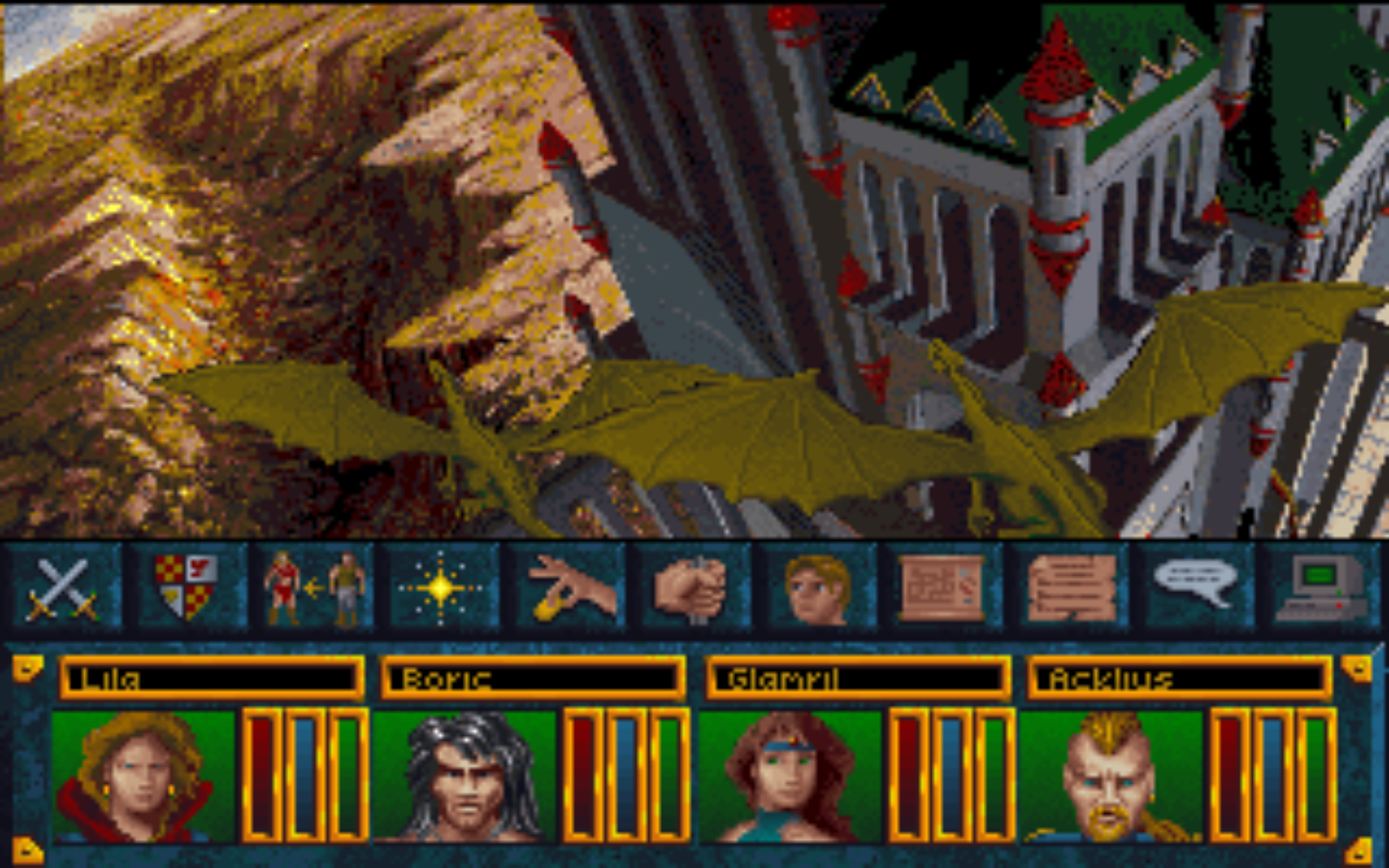
“Arena” was initially met with poor sales, but after some time it gained popularity and was met with praise for its size, graphics, and immersion. The sales increased, making the game a success.5
While seemingly dull in comparison to modern games, many of the features in “Arena” were impressive for the 90s. But a question remains: How well does this trailblazing classic hold up today?
The “Arena” Experience
“Arena” is not an easy game. A typical “Elder Scrolls” fan may find that “Arena” proves to be vastly different from what they are used to. The player’s first challenge is often the very first level. Unlike “Skyrim” or “Oblivion,” the player is not capable of clearing entire locations of enemies at level one. Despite this, the player starts with a single weapon in a dungeon filled with rats and goblins. For many players, the only way to progress is to find the exit as fast as possible.
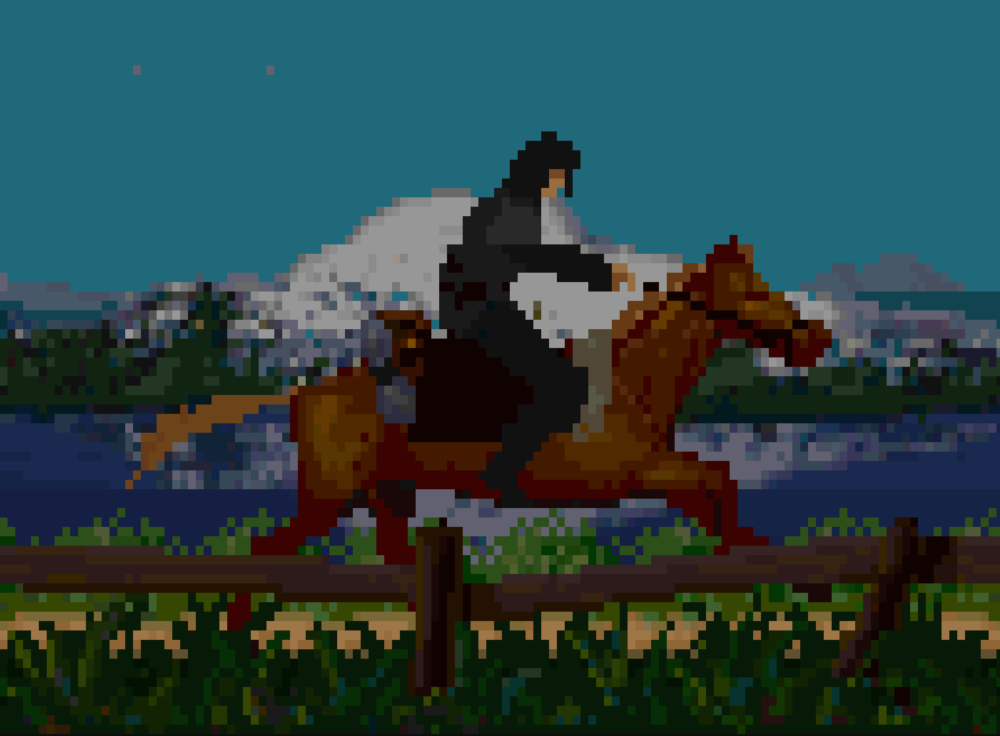
There are no quest markers to rely on. Instead, there is a map that would be filled as the player navigated their current location. If a player is hurt, they can only heal with magic or by resting. The latter can be done by visiting inns or within dungeons by finding small safe crevices and hoping that enemies don’t wander nearby.
Gameplay — Simple Yet Compelling
The game has a rigid class system, where the player must choose a class that heavily defines how they play. Some classes allow the player to cast magic, pick locks, perform critical hits, or have some other special bonus that other classes lack.
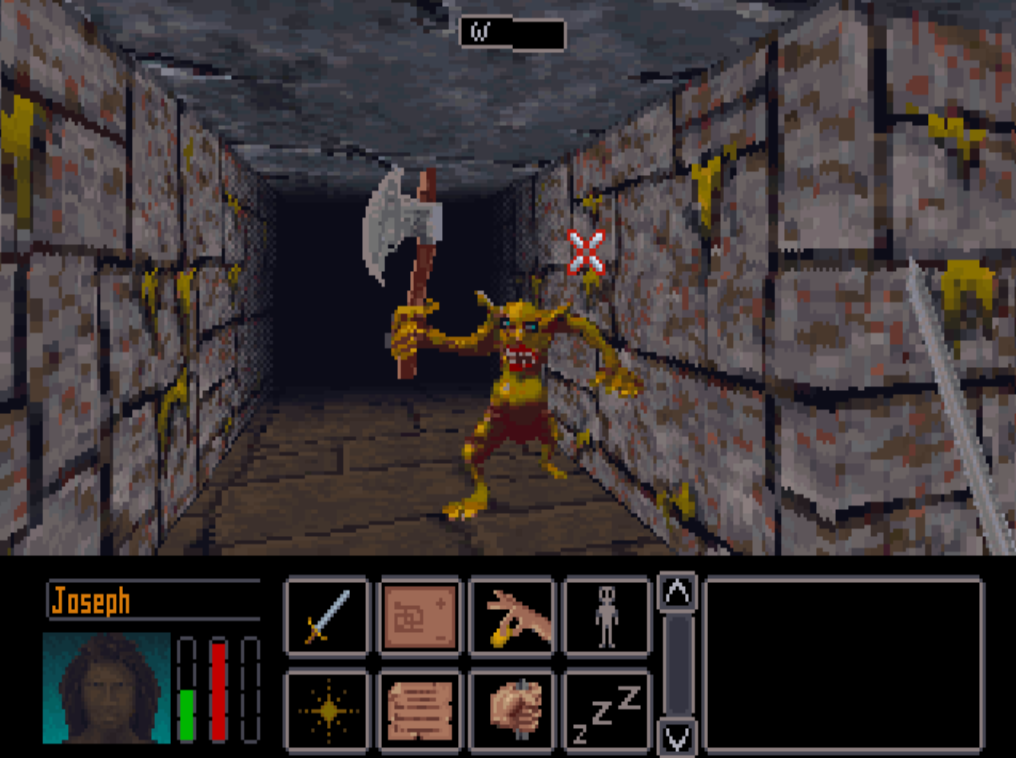
It is a far cry from later games, which either removed classes or ensured that a class did not completely restrict the player from certain skills and abilities. Not all classes are balanced; some are far worse than others. The wrong class will guarantee a fairly poor experience. However, sometimes this is just because the class in question takes longer to make full use of.
Combat is mainly done by holding down right-click while dragging the mouse in the direction that the player wants to swing. It’s a bit different for bows, of course. And there’s also the option to deal damage via magic. But that requires spell points, which even the most powerful of magic-based classes have a limited amount of, especially at low levels.
Different classes provide different experiences, and “Arena” has a total of 18. With a selection this wide, each new playthrough is guaranteed to be completely different. Overall, the gameplay is solid and varied enough to keep itself entertaining. Though the game’s archaic controls still diminish the experience a little (nothing a mod can’t fix, though).
A Straightforward Story
Tamriel, “dawn’s beauty” in the elvish tongue, is a diverse and magical land. From the snowy mountains of Skyrim to the vast deserts of Hammerfell and the mysterious swamps of Argonia, just to name a few. At the heart of Tamriel is Cyrodiil, the seat of the Empire that rules most of the continent.
In “The Elder Scrolls: Arena,” you play as a minor member of the Imperial court, caught up in the schemes of the traitorous Imperial battlemage, Jagar Tharn. Using foul magic, Tharn has managed to seize the throne by impersonating the emperor. The real emperor is imprisoned, powerless to stop his former battlemage.

The player is rescued from prison by the ghost of Jagar Tharn’s apprentice, Ria Silmane, and is tasked with retrieving pieces of an artifact known as the Staff of Chaos, which is the key to defeating Jagar Tharn and saving the emperor. It’s a fairly standard story. The player goes on a grand adventure, fetching plot-relevant items to stop the big bad evil guy. Not bad, but nothing too spectacular.
Dawn’s Beauty — The Atmosphere Of “Arena”
The overall atmosphere of the game is vastly different from the subsequent entries. The darkness of the dungeons combined with the enemies that have a habit of spawning right behind the player, almost make it feel like a horror game. The player might eventually develop a habit of swinging their weapon whenever they turn around.

In the daytime, the game has an adventurous high fantasy feel, not too different from “Daggerfall” or “Oblivion.” People walk around towns under the shining sun as whimsical music plays in the background. Taverns are bustling and lively, filled with multiple NPCs (most of which won’t appreciate you interrupting their drink). In terms of atmosphere, “Arena” doesn’t disappoint.
From “Arena” To “Skyrim” — A Legendary Legacy
“Many such adventures still await your hand. This was but one chapter in the story of the Elder Scrolls…” — this is a line delivered in the ending of “Arena.”6 At the time, many players might not have thought much of it. Or perhaps it caused them to speculate on a possible sequel, as fans of both of Bethesda’s prized franchises often do.
Looking back now, the phrase evokes fond memories of the sequels that fans of “The Elder Scrolls” have played. Investigating a murder in “Daggerfall,” fulfilling an ancient prophecy in “Morrowind,” securing the realm from malevolent otherworldly forces in “Oblivion,” and slaying dragons and absorbing their souls in “Skyrim.”

“But one chapter,” indeed. It all started with that one chapter, with the idea of “Arena.” Before then, Bethesda Softworks had only developed a sports game and “The Terminator” (1991), a game based off the movie of the same name.
When they chose to create “Arena,” they chose to establish a legendary franchise. Though the game did not immediately boom in popularity and though the developers strayed from the original idea, causing a few minor inconveniences with marketing and promo material that had been built around said original idea, they persevered and created “The Elder Scrolls.”
An Inspiration To Aspiring Creators
While Arena has its flaws, it still holds up decently enough in the modern age. Like most Bethesda games, many of its problems can be fixed with a handful of mods. Though they didn’t have anything of the sort in the 90s and it still managed to be a success.

Arena is a good example of how even the grandest things start small. A journey of a thousand miles begins with one step, as they say. That’s a message written all over this 90s passion project, a message that all aspiring creators can take. Not just game developers, but artists, writers, musicians and more. For the first project, the first focused drop of passion, is but one chapter in the life of a creator.
Footnotes
- “The Elder Scrolls V: Skyrim.” Wikipedia, Accessed 18 January 2026.
↩︎ - “Arena: Development Team.” UESP Wiki, Accessed 27 January 2026. ↩︎
- “General: Ted Peterson Interview.” UESP Wiki, Accessed 27 January 2026. ↩︎
- “The Elder Scrolls: Arena.” Wikipedia, Accessed 19 January 2026. ↩︎
- “The Elder Scrolls: Arena.” UESP Wiki, Accessed 19 January 2026. ↩︎
- The Elder Scrolls: Arena. Developed by Bethesda Softworks, Published by Bethesda Softworks, 1994. PC. ↩︎