
Table of Contents Show
Everyone was a kid once, right? And even if you somehow skipped that chapter, chances are you still know Nickelodeon’s1 flagship series SpongeBob SquarePants2 — a show that has accomplished the unimaginable since its 1999 debut. By nailing the essence of childhood in the show’s early seasons, creator Stephen Hillenburg3 captured the hearts of kids worldwide.
The Power Of “Playful Innocence” In SpongeBob SquarePants (1999-)
Suppose you are not already aware of the premise of the global phenomenon. In that case, the show follows the misadventures of a young anthropomorphic sponge and his friends in the underwater city of Bikini Bottom.4

Despite holding down a job and living on his own like an adult, his peers often treat him as if he’s much younger (as his age is never revealed throughout the show5). Even without his friends hinting at his age, SpongeBob’s quirks and hobbies mirror those of children: annoying his neighbors, jellyfishing (the undersea version of catching butterflies), idolizing superheroes, and holding an almost boundless optimism about life.
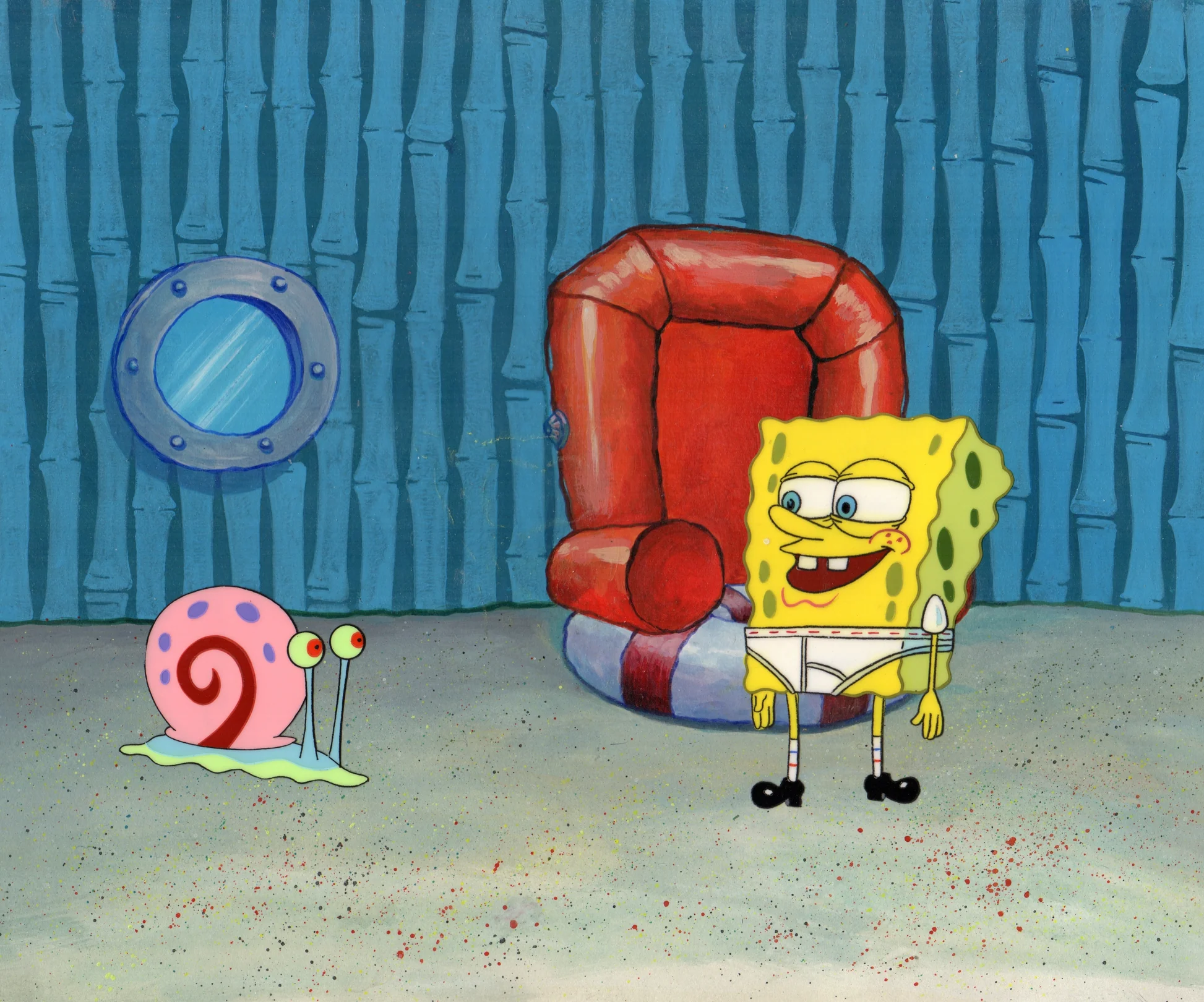
At heart, SpongeBob is like a kid: fun comes first, and he’s rarely without a friend tagging along for the adventure. Though well-intentioned, SpongeBob’s endless pursuit of fun often clashes with his neighbor’s need for peace — and occasionally causes outright chaos.

An example of this appears in the episode “Band Geeks” (Season 2, Episode 15b6), where chaos breaks out among the members of Squidward’s marching band. Hillenburg’s decision to make SpongeBob an anthropomorphic sponge was brilliant: of all possible objects, none better captures the essence of a child’s mind — endlessly absorbing everything around it.
Influence, Manipulation, & The Psychology Of Childlike Imagination
SpongeBob’s childlike imagination makes him highly impressionable, whether by real events or something as simple as a TV show. In “Krab Borg” (Season 3, Episode 9a7), SpongeBob mistakenly believes his boss, Mr. Krabs, to be a robot after watching a film where the world was taken over.

The series repeatedly highlights SpongeBob’s gullibility. In “Wet Painters” (Season 3, Episode 10a8), Mr. Krabs tasks SpongeBob and Patrick with repainting his house, threatening to ‘cut off their rear ends and hang them like decorations’ if they misplace a single drop of paint.
Naturally, they spend the episode terrified about what may become of their backsides and do everything in their power to avoid facing the unusual punishment. Unsurprisingly, the episode ends with Mr. Krabs laughing at their gullibility, which he is very well aware of as he sees them as kids.
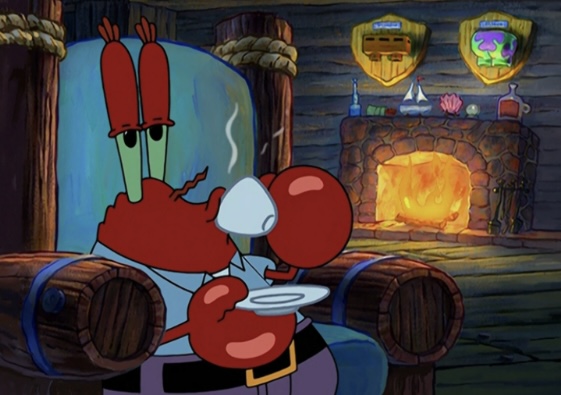
This scenario effectively reflects the psychology of children, whose brains are still developing and therefore not yet equipped for advanced critical thinking or complex reasoning. By this same logic, the children who watched episodes like this shared the emotional distress of both SpongeBob and Patrick and could only hope that they fulfilled their task without fail in order to avoid facing the consequences.
How SpongeBob SquarePants Explores Fear, Growth, & The Learning Process
Like many children, SpongeBob harbors irrational fears — such as hiding his love for his grandmother9 when friends are around. Many episodes show SpongeBob trying to act ‘cool’ or ‘tough’ to impress others — but his efforts usually backfire.
Yet through these missteps, SpongeBob usually learns a lesson — often after receiving guidance from his older, more mature friends. This formula perfectly represents childhood because at this stage in life kids are still too young to know right from wrong without proper guidance from parents or loved ones.
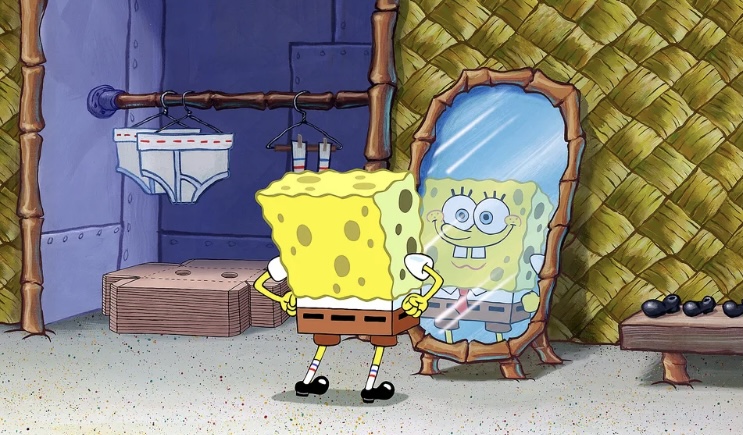
In “Hooky” (Season 1, Episode 20a10), Mr. Krabs, warns SpongeBob about the dangers of playing around with fishing hooks, which he was influenced to do by Patrick.
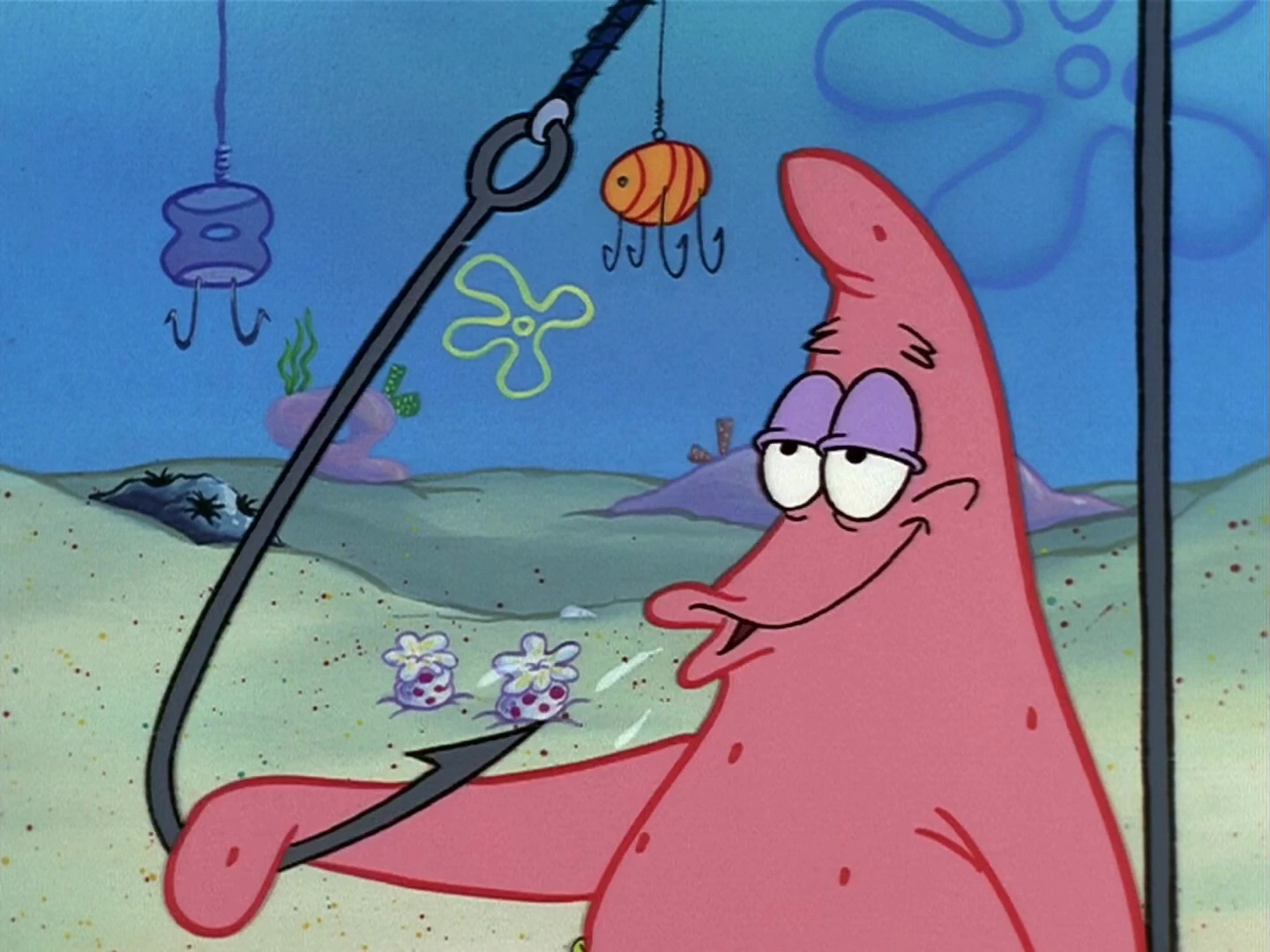
Despite his pleads, SpongeBob continues to put his life at risk and eventually ends up getting caught in one of the hooks. When he runs to Mr. Krabs for help, the only way out is to disrobe — something SpongeBob initially resists out of embarrassment.
The Absurdity Of The “Adult World” In SpongeBob SquarePants (1999-)
Of course, the adult world is hardly without its flaws, either. Bikini Bottom mirrors any real-world city, complete with both charm and dysfunction, the latter of which is usually an absurd depiction of adult life.
Among the most representative of these foils to the childlike wonder and optimism SpongeBob possesses are the likes of Squidward and Mr. Krabs. Whenever Squidward spots his childlike neighbors, SpongeBob and Patrick, he demands they stop their antics — often exploding in frustration, complete with steam blowing from his head.
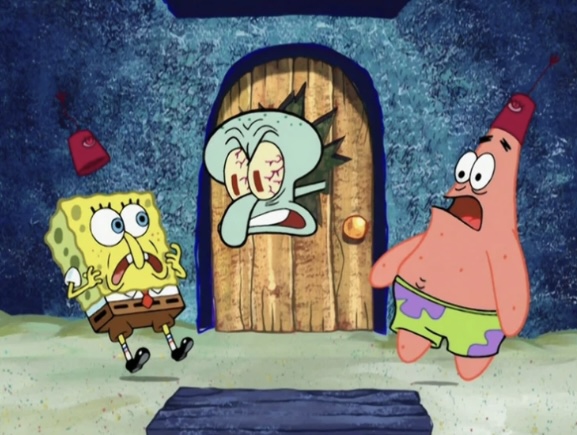
In “Squidville,” (Season 2, Episode 6b11) Squidward finally gets what he wants and moves into a neighborhood with people who share all the same characteristics as him, he quickly learns that the lifestyle is not as perfect as he imagined and he immediately starts to feel the pain of living a mundane life without the spontaneity that SpongeBob once brought into his life.
Mr. Krabs satirizes capitalist greed, embodying the adult world’s obsession with money over joy of the world and how their pursuit of money above all else comes at the cost of their inner child. At the Krusty Krab, employees like SpongeBob endure unfair treatment: low wages, grueling 24-hour shifts, and exploitation — all so Mr. Krabs can edge out his rival across the street.

Luckily for Mr. Krabs, the naive SpongeBob finds it to be a most pleasurable experience flipping patties and serving customers despite the pay he takes home for it, so much so that he would reject mandatory vacations if it were not for the potential fine his boss would receive for unfair labor practices.
Unsurprisingly, Mr. Krabs is not the only individual who benefits from the detriment of others in Bikini Bottom. The system in SpongeBob’s hometown is crooked in many ways that reflect our very own world, especially when it comes to the accessibility and affordability of resources such as healthcare for the average adult.

In “The Lost Mattress” (S4, E2a12), Mr. Krabs falls into a coma of sorts and gets taken to the hospital to be treated. Upon finding out that he has no insurance to cover the cost of his hospital visit, he gets tossed out of his room and out into the hallway by one of the nurses attending to him before eventually making his way outside of the building.
Work, Joy, & Responsibility
SpongeBob remains perfectly content with his job as the fry cook at Bikini Bottom’s most beloved restaurant, even though he — and his coworker Squidward — often get the short end of its success. Unlike his coworker, SpongeBob finds joy in cooking fast food, which could be attributed to the emphasis he places on having fun no matter where he is or what he is doing.
While flipping patties, he puts on quite a show — always smiling as he uses a variety of over-the-top techniques to craft each burger, often finishing with a playful touch, like arranging the pickles or ketchup into a cheerful face.
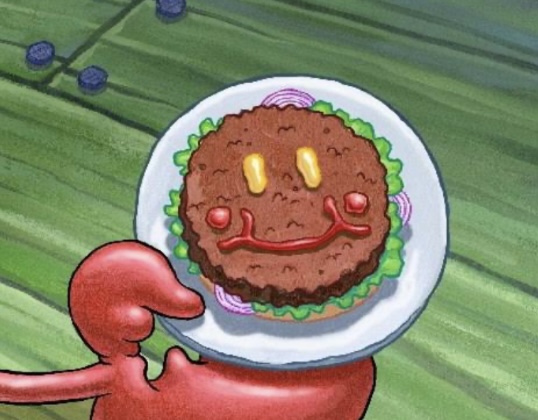
There has even been one instance where he blankets two pickles using the cheese and kisses the confection to sleep. If that weren’t kid-like enough, he once mourned a patty left behind by a customer because he had to throw it into a furnace since it was not eaten (“Born Again Krabs” — Season 3, Episode 16a).
Even though he loves his job more than most things in his life, the nature of SpongeBob’s being tends to get in the way at times. He is more driven by emotion than his duties so he sometimes disregards work etiquette when he believes he must do what he believes is right.
In “My Pretty Seahorse” (Season 4, Episode 2b13), he finds a lost sea horse and brings it to work to care for it behind Mr. Krabs’ back despite the chaos it causes in the restaurant.
SpongeBob’s Background Characters — A Hidden Commentary On Conformity & The System
One of the show’s most notable elements — and a growing topic of discussion over the years — is its background characters. The unwarranted negativity often displayed by these random citizens of Bikini Bottom serves as a reflection of conformity and the complacent attitudes that sustain the status quo.

At seemingly random moments throughout different episodes, these background fish, who serve little to no purpose in the plot, will suddenly appear just to hurl an insult at one of the main characters, then casually walk away as if nothing happened.
In a way, these background citizens embody the essence of conformity — they’ve traded individuality for the comfort of a system that rewards compliance, much like parents who push their children toward “safe” careers while discouraging pursuits that stem from genuine passion.
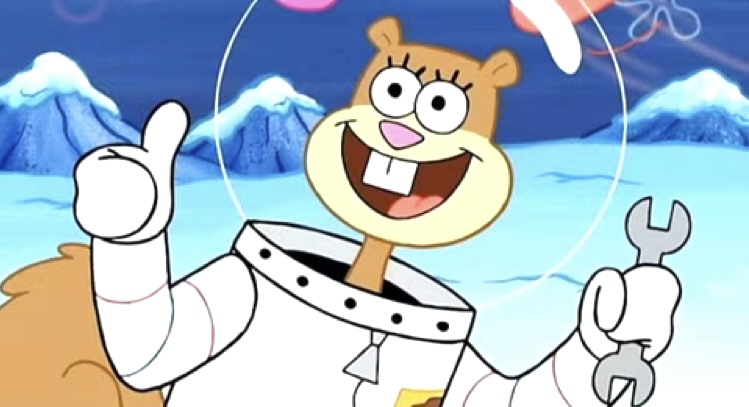
Adults often become so preoccupied with appearances that they’ll go to extraordinary lengths to impress people who likely aren’t paying attention, or simply don’t care at all.
Squidward vs. Squilliam — How SpongeBob SquarePants (1999-) Turns Conformity & Jealousy Into Comedy
In “Squilliam Returns” (Season 3, Episode 8b14), Squidward stumbles upon his former classmate, Squilliam, from band class. He is afraid of what Squilliam will think of his livelihood because of how much wealthier his rival is than him.
Squidward ends up getting permission from Mr. Krabs to take charge of the restaurant for a day to try and impress his adversary; he demands that SpongeBob toss away his childlike ways for the temporary owner of the Krusty Krab to seem as though he runs a professional, classy establishment.
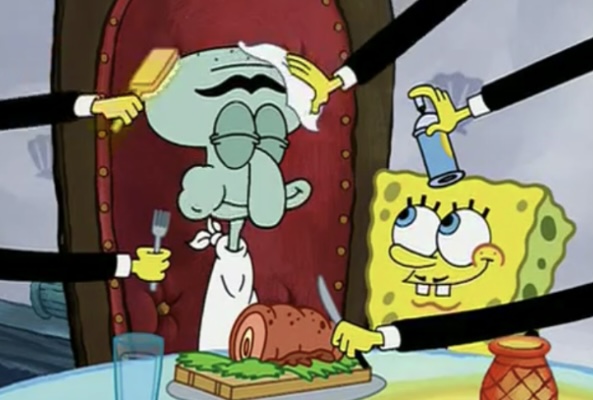
SpongeBob’s mind literally deletes every single thing that has nothing to do with fine dining or breathing to act in accordance with Squidward’s wishes, so much so that he manages to impress the aloof Squilliam, who is known for not valuing anything above the monetary objects of life.
The way SpongeBob lives his life as a free-spirited individual who does not care for the glamour and riches, it would be hard to imagine him having feelings of jealousy to the level that Squidward displays.
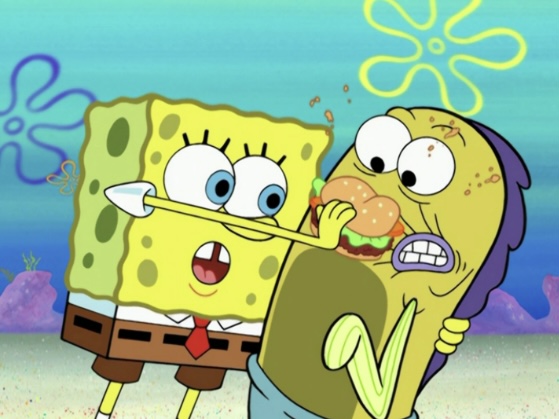
Like adults, children are not safe from unwanted feelings like jealousy and the need to impress others to feel some sort of validity. SpongeBob himself has had moments where his jealousy has gotten the better of him and, as he is basically a child himself, he finds it difficult to contain his rage and takes it out on the source of his anger.
When Patrick got his driver’s license before SpongeBob in “Driven to Tears” (Season 4, Episode 17a15), he gradually became more frustrated with his inability to receive one himself.
“Absurdity As Art” — How SpongeBob SquarePants (1999-) Redefined Nickelodeon’s Golden Age
During SpongeBob’s early peak, other Nickelodeon hits like Rugrats (1991, created by Arlene Klasky, Gábor Csupó, and Paul Germain), The Fairly OddParents (2001, created by Butch Hartman), and The Adventures of Jimmy Neutron, Boy Genius (2002, created by John A. Davis) were also thriving.
These shows, which all varied drastically from each other in terms of character designs, atmosphere and plot lacked the creativity and even nonsensical quirks that have become synonymous with the SpongeBob world.
Where each of the other shows had a set of rules or logic established throughout their respective universes to establish limits, SpongeBob did not shy away from building things up and breaking them down from episode to episode.
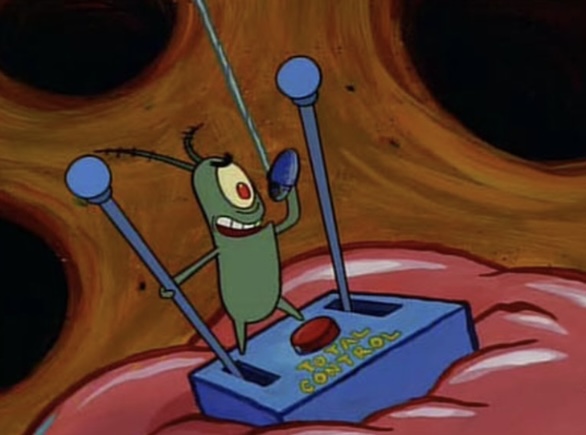
The SpongeBob SquarePants theme song itself perfectly embodies the show’s essence in the lyric that goes
“if nautical nonsense be something you wish… then drop on the deck and flop like a fish…”
Even with fierce competition, SpongeBob consistently ranked in Nickelodeon’s top two shows, outselling rivals in both ratings and merchandise.
Revisiting SpongeBob SquarePants (1999-)
As the years have passed and the show’s reception has waned, many fans have questioned exactly when things began to decline, especially after such a strong and beloved run in its early seasons. It is common among longtime fans — those who remember the show at its peak — to place blame on the later showrunners for failing to find writers who could recapture the magic of early SpongeBob SquarePants.
Yet, rather than dwelling on what was lost, that energy might be better spent celebrating everything the series achieved during its brief but brilliant prime.

The first three seasons, which are almost unanimously agreed upon by fans of the show to be the most entertaining, did not shy away from “taking it there” like every season that followed.
Almost as if the writers were teasing the media regulations set in place for kid’s shows, they touched on elements of suspense with certain episodes like “Nasty Patty” (Season 3, Episode 4a16) where Mr. Krabs and SpongeBob believe they have killed a health inspector and try burying his body to avoid being arrested and sentenced to prison.

Other episodes like “Sailor Mouth” (Season 2, Episode 18a17) and “Mid-Life Crustacean” (Season 3, Episode 15b18) added controversy into the mix for their vulgarity, which might not have looked out of place on shows like Family Guy (Seth MacFarlane, 1999-) or The Simpsons (Matt Groening, 1989-).
The latter of the aforementioned SpongeBob episodes was even banned from airing after Nickelodeon later determined that a certain infamous scene was not appropriate for kids.
The Enduring Influence Of SpongeBob SquarePants (1999-) — Inspiration, Nostalgia, & Cultural Memory
Unlike many shows that measured success by revenue alone, SpongeBob SquarePants (1999-) was also able to inspire kids and bring good into the world. In 2010, an eight-year-old boy saved a child from drowning using a technique he said he learned from a SpongeBob character — a story that made international headlines and proved the show’s power to inspire in real life.

Every fan of the show has their own reason for coming back to it even after all these years, but, whatever that reason may be, these returns demonstrate that it still provides much needed comfort to this day. Whether it takes you back to first grade afternoons on the couch or high school moments of catching your sibling giggling at the TV, SpongeBob has always been there when needed — and still waits for us to return.
Footnotes
- Nickelodeon. SpongeBob SquarePants, created by Stephen Hillenburg, 1999–present. ↩︎
- SpongeBob SquarePants. Created by Stephen Hillenburg, Nickelodeon, 1999–present. ↩︎
- “Stephen Hillenburg.” Wikipedia, 14 Sept. 2025. ↩︎
- SpongeBob SquarePants. Created by Stephen Hillenburg, Nickelodeon, 1999–present. ↩︎
- SpongeBob SquarePants. Created by Stephen Hillenburg, Nickelodeon, 1999–present. ↩︎
- SpongeBob SquarePants. Season 2, Episode 15b: “Band Geeks.” Nickelodeon. 1999-Present. ↩︎
- SpongeBob SquarePants. Season 3, Episode 9a: “Krab Borg.” Nickelodeon. 1999-Present. ↩︎
- SpongeBob SquarePants. Season 3, Episode 10a: “Wet Painters.” Nickelodeon. 1999-Present. ↩︎
- SpongeBob SquarePants. Season 2, Episode 16a: “Grandma’s Kisses.” Nickelodeon. 1999-Present. ↩︎
- SpongeBob SquarePants. Season 1, Episode 20a: “Hooky.” Nickelodeon. 1999-Present. ↩︎
- SpongeBob SquarePants. Season 2, Episode 6b: “Squidville.” Nickelodeon. 1999-Present. ↩︎
- SpongeBob SquarePants. Season 4, Episode 2a: “The Lost Mattress.” Nickelodeon. 1999-Present. ↩︎
- SpongeBob SquarePants. Season 4, Episode 2b: “My Pretty Seahorse.” Nickelodeon. 1999-Present. ↩︎
- SpongeBob SquarePants. Season 3, Episode 8b: “Squilliam Returns.” Nickelodeon. 1999-Present. ↩︎
- SpongeBob SquarePants. Season 4, Episode 17a: “Driven to Tears.” Nickelodeon. 1999-Present. ↩︎
- SpongeBob SquarePants. Season 3, Episode 4a: “Nasty Patty.” Nickelodeon. 1999-Present. ↩︎
- SpongeBob SquarePants. Season 2, Episode 18a: “Sailor Mouth.” Nickelodeon. 1999-Present. ↩︎
- SpongeBob SquarePants. Season 3, Episode 15b: “Mid-Life Crustacean.” Nickelodeon. 1999-Present. ↩︎