
Table of Contents Show
Spoiler Warning: This article will contain major spoilers for Squid Game (Hwang, 2021-2025) seasons one through three.
“Squid Games”1 season three concluded at the end of June, bringing an end to the dramatic spectacle of life and death, at least for now. The Korean dystopian broke Netflix records by becoming the first series ever to receive 106.3 million views in less than two weeks and placing third in Netflix’s most viewed non-English shows. Number one and two are “Squid Games” seasons one and two, respectively.

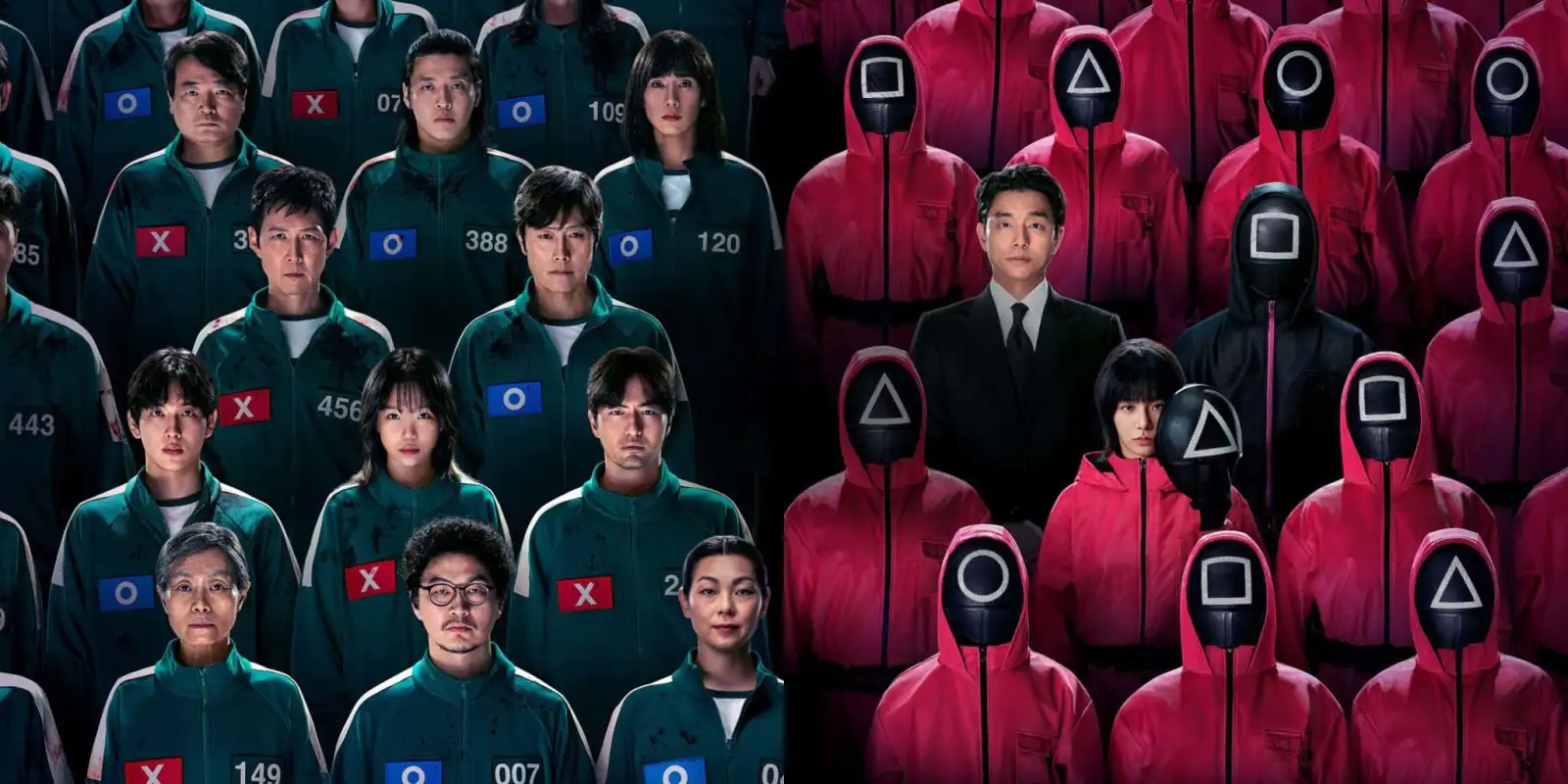
“Squid Games” season one achieved virality, exposing the violent lengths people will go to for survival and the systems that push them into desperation. Audiences follow Seong Gi-hun2, a divorced father struggling with debt and horse-race betting, who enters a game for billions of won. Audiences bought into the series’s tense emotional stakes, contributing to the ever-growing list of brand and merchandising collaborations that add millions to Netflix’s revenue.

After waking up to their new reality of iconic green jumpsuits and brutalist-style bunkbeds, the 456 players compete in deceptively simple children’s games. The basic premise directly connects to and critiques South Korean culture and capitalism worldwide. Some cultural context may be missed on non-South Korean audiences, like the importance of workers’ rights movements and how Gi-hun was involved.

Like Parasite (2019), the show centers mediums of exchange and its detrimental impact on society. “Squid Game” is a story about fatalistic fights for survival with characters undeserving of their fate, where every person carries a bounty. The narrative is enriched by exploring the implications of democracy, capitalism, and community — dragged down by the insatiable beast it critiques.
“The Korean Context” — What Westerners Miss In Squid Games
The decades after the Korean War saw exorbitant development for South Korea, dubbed the one of the four “tiger economies.” Despite Japanese occupation, political and social unrest, and economic stagnation, under Park Chung Hee’s authoritative leadership into the 60’s and 70’s industries boomed, economic expansion into global markets solidified, and education grew. Park mimicked the zaibatsu system from Meiji Era Japan, allowing wealthy, family-owned businesses — like Hyundai — to enjoy special privileges3.

The chaebols (translating to ‘rich family’ or ‘financial clique’) received special privileges, monopolizing corners of markets — like Samsung’s control of sugar imports4. While chaebols grew in power, smaller competitors suffered. Decades later, South Korean youth still lament how hard it is to survive without having a career at one of the wealthiest companies.
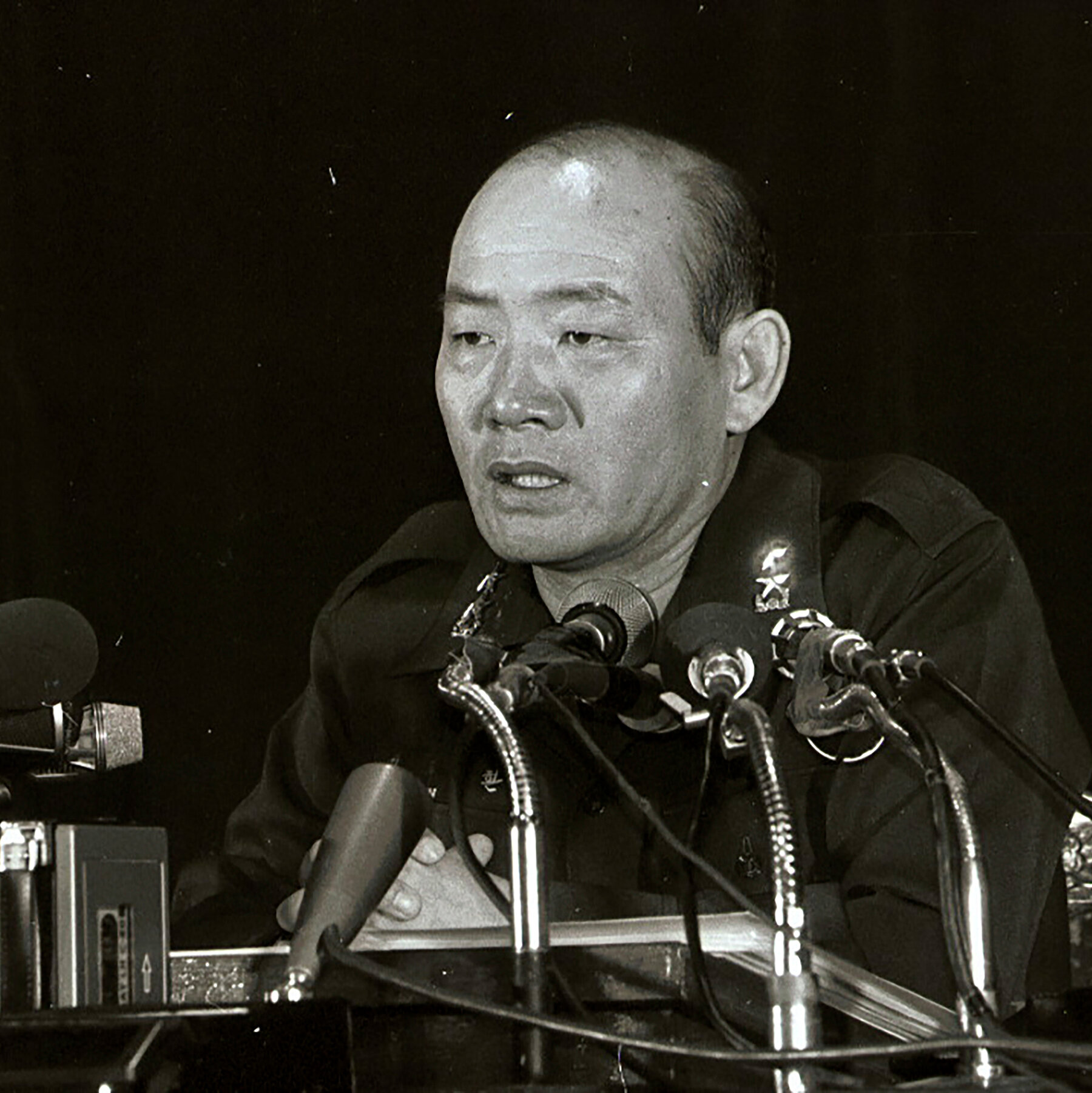
After Park’s assassination in October of 1979, Chun Doo-hwan took power. Protests became a popular form of resistance, especially led by student groups vying for democracy and fighting authoritarianism5. Some hoped Chun would adopt a more democratic constitution, but on May 17, 1980, he established martial law across the nation, closing universities and suppressing the press6. The next day, thousands took to the streets undeterred by political repression. In the Gwangju Uprising, a week of deadly clashes between Chun’s military kicked off7.
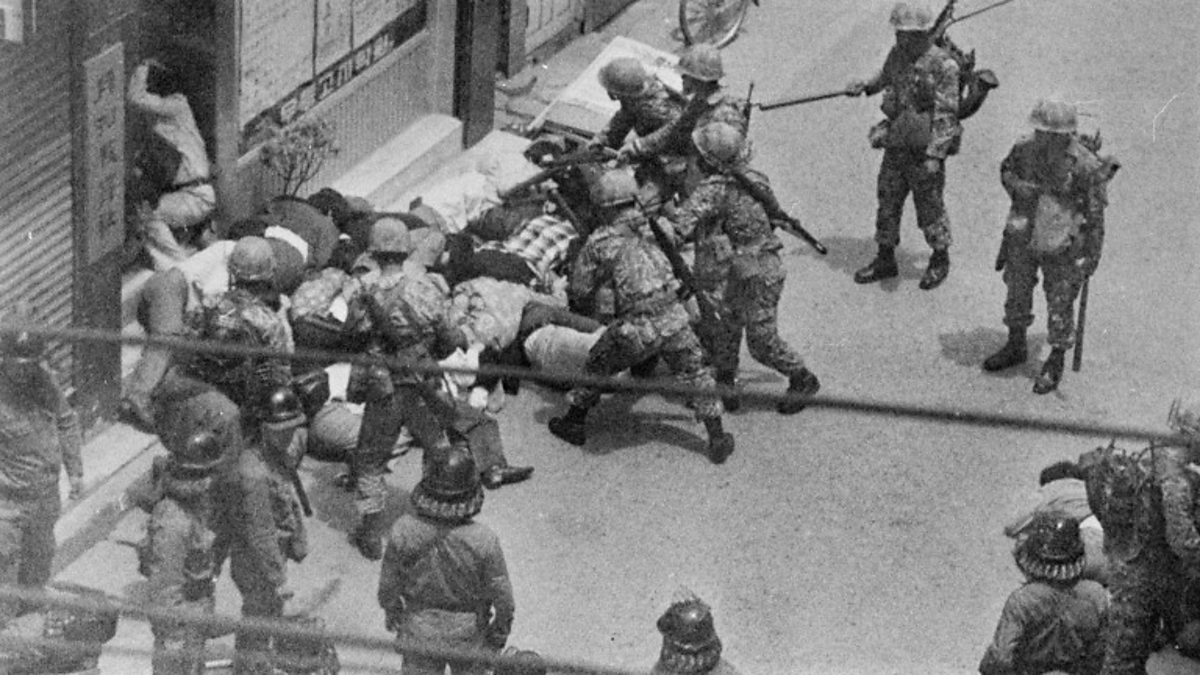
The official death toll is over 200, but many more are expected to have been killed based on eye-witness accounts8. One year later, in 1981, Seoul was chosen to host the 1988 Summer Olympics. This encouraged Chun to quell political tensions, lessening censorship, increasing media access, and releasing political prisoners9.

In the June Democratic Struggle of 1987, millions of students, laborers, and white collar citizens took to the streets — protesting the deaths of students Park Jong-cheol and Lee Han-yeol, and Chun’s chosen successor. Chun caved to demands and established elections10.
“The Poverty Problem” — Hell Joseon 헬조선
South Korea’s economy saw income inequality grow in the 1990s. These changes are concentrated to Korea’s lowest economic half, a characteristic unique to South Korea11. The gap between the wealthiest and most impoverished is growing, with the elderly at greater risk of falling into poverty12. In 2020, 40.4%, of elderly people in South Korea fell below the poverty line –one of the highest in OECD, or Organization for Economic Co-operation and Development, countries. This is a coalition of 38 countries from all continents pushing for equity worldwide, like education access and energy renewability.

Oftentimes, elderly people rely on their employers to provide benefits rather than government assistance. Middle-sized or smaller, family owned businesses suffer while large corporations, like chaebols, garner more money and power. The South Korean government, specifically the Yoon administration, has attempted to address income and education inequality, but with little effect due to political disapproval after a brief martial law declaration on December 3, 202413.

The younger generation is facing continual employment struggles. Since 2023, youth unemployment has risen every year. In the first quarter of 2025, the age group of 25-29 lost nearly 100,000 jobs alone. Even when accounting for the shrinking youth population, disproportionate jobs are lost. Online job postings have decreased by over half between 2020 and 2025, and job ads have disappeared by almost 90%14.
“Being born in South Korea is tantamount to entering a hell where one is immediately enslaved by a highly regimented system that dictates one’s entire life course.”
Se Woong-koo — Korea Exposé
It is unsurprising, given the competitive nature of education, job markets, and housing costs, that South Korean youth would forgo marriage and family for careers. The term “헬조선” or “Hell Joseon” has proliferated online since 2015, referencing the Joseon dynasty characterized by group of small, rich elites and generationally poor masses15. Youth vent frustrations via social media, feeling trapped in a vicious cycle of competition and familial expectations instilled since childhood.
Squid Games As A Mirror Of Reality
Seong Gi-hun, the protagonist of “Squid Games,” is financially unstable from the start, struggling with mounting debt while trying to provide for his mother and daughter. His job loss is represented on the show, though it is less discussed than his other troubles.
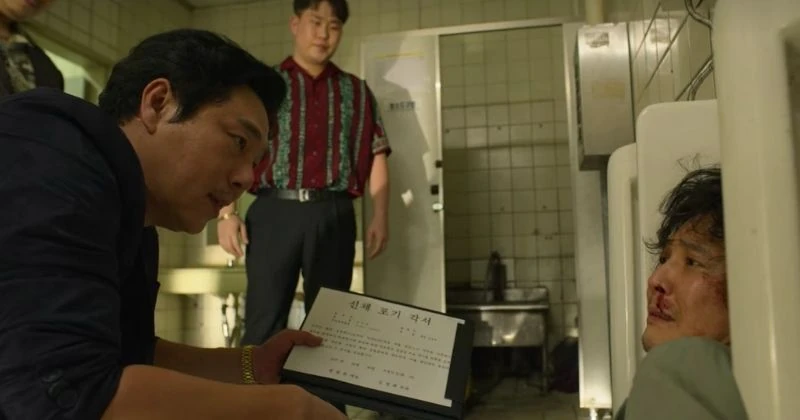
Modeled after the 2009 Ssangyong Motor Co. strike, where thousands of laid-off workers fighting for job security were met with violent company-hired guards, Gi-hun was part of a strike and witnessed his friend bludgeoned to death. Ever since, he seems to have struggled with keeping a job — and money.
Squid Game Season One — Family, Money, & Violence
Capitalism commodifies relationships, and families are no exception. Gi-hun’s inspiration for joining the death-games is spurred by his debt — he offers his kidney, and eventually his eye, to moneylenders if he doesn’t pay up. When he meets the “Squid Game” recruit16, they play a game of ddakji, a traditional South Korean game where players throw a folded piece of paper down onto another, trying to flip the opponents paper.
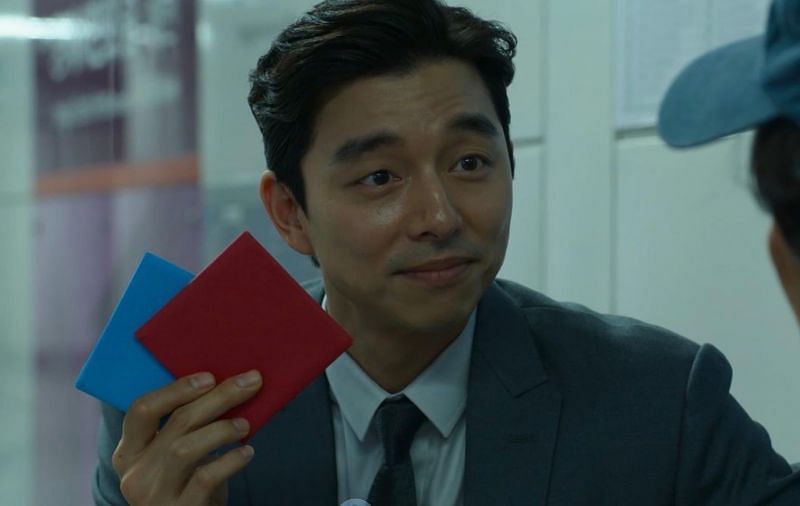
Gi-hun gambles money he doesn’t have, but the recruit mentions he can “use [his] body to pay.” The recruit persuades him to join the games by mentioning he has already ‘sold’ his body. Alongside Gi-hun are other impoverished, disadvantaged people. Gi-hun bonds with player 001, an elderly man with dementia. Gi-hun realizes that even the elderly and medically-frail are desperate enough to join. The lack of social safety nets drove the number of older adults in the games.
Drawing on dual-party democratic systems, the players are offered one chance to return to their lives. After the first game, a majority of recruits voted to end the games early. Gi-hun returns home to find that his mother is undergoing necessary medical treatment, noting she cannot rely on him to provide.

Other players return to their similarly depressing lives. Cho Sang-woo, Gi-hun’s childhood friend, finds he has warrants. Ali Abdul, a Pakistani immigrant who saved Gi-hun’s life in the first game, ends up assaulting his boss and stealing his withheld wages, telling his wife to flee the country with their infant son.
Player 001 and Gi-hun have dinner shortly before everyone reenters the games — with player 001 telling him that the truth of reality is more cruel than that of the games. The vicious cycle of the powerful growing more powerful while the vulnerable are left behind drove Ali to seek better opportunities, only to find himself in similarly dire circumstances immigrants often face.
The shrinking job market, competitive educational system, and excessive reliance on assets pushes characters further into desperation. Like so many struggling in the real world, they’d rather better their lives (if they win) than continue to struggle.
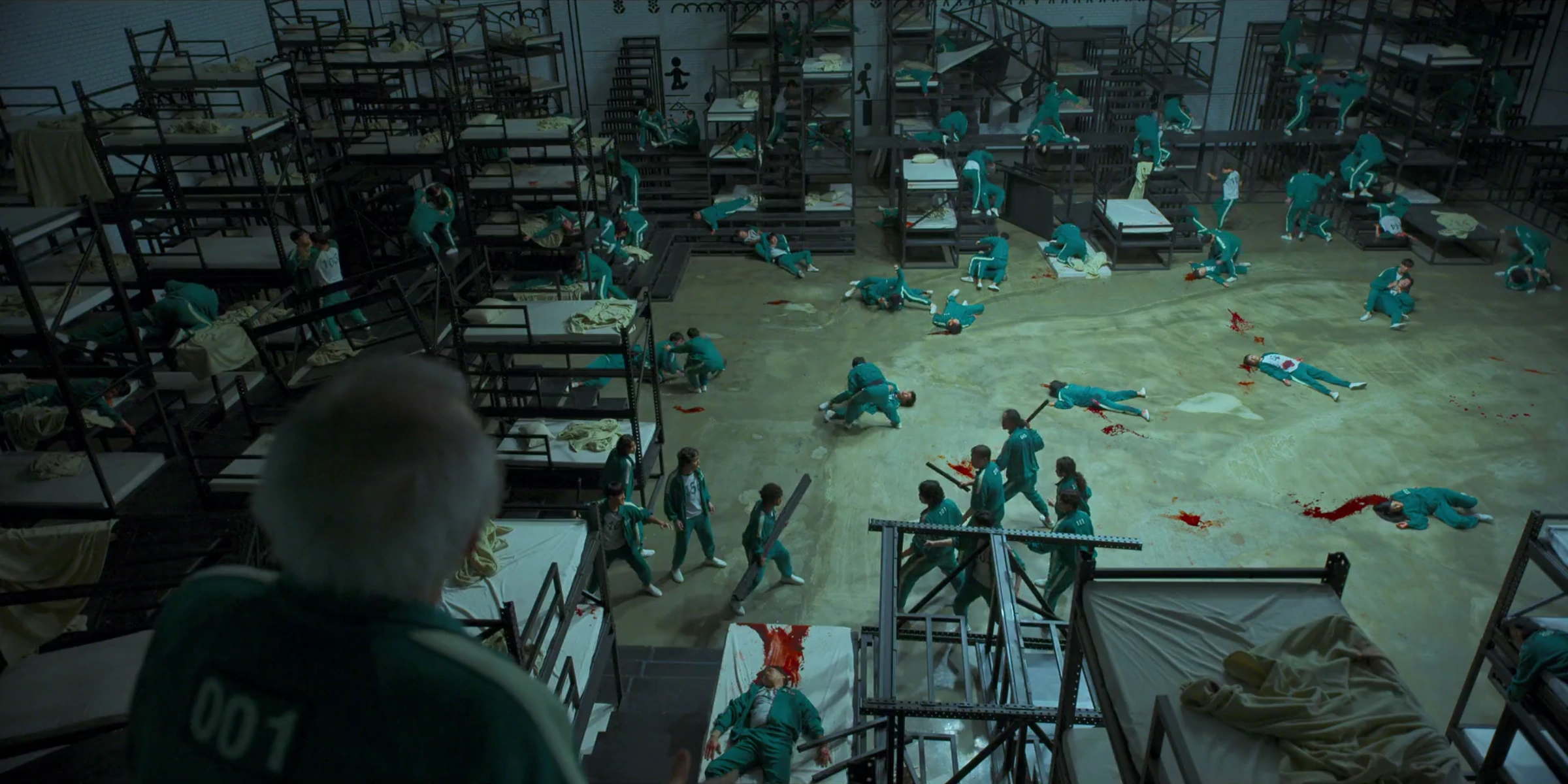
Jang Deok-su17 is a main season one antagonist, and the first to kill another player outside of the games. He represents the violence poverty sparks; hands-on and physical rather than the distant and indirect violence perpetrated by the VIPs and those running the games. He isn’t above murdering outside of the games, inadvertently revealing their bounties remain no matter how they are “eliminated.”
That night, the infamous “Lights Out” game, ensues. Teams fight together with the goal of either killing or defending as many people possible. The groups out for blood are the groups of men. Similarly, the games (like the following one, tug-of-war) generally favor strong men, making the women hard-pressed to find groups willing to play with them. Despite blatant inequality, the game runners insist on fairness.

18Mi-nyeo, a woman who survived thus far by attaching herself to strong, influential men (first, Deok-su, then Gi-hun), exposes the gendered inequality of “Squid Game.” Desperate after being kicked out of Deok-su’s group due to her perceived lack of strength, she attempts to appeal to Sang-woo’s sexuality. When he ignores her, she tries to appeal to Gi-hun’s emotions, and is ultimately successful.
Detective Hwang Jun-ho19, investigating his brother’s disappearance, breaks into the island and learns that employees are more dispensable than players. English-speaking VIPs adorned in golden animal masks bet millions on contestants. One even attempts to force himself on Jun-ho.
They get to play the games by different rules based on their status — immune to laws and seemingly, morality. Some workers collaborate with a player, a doctor, operating an organ harvesting scheme. They give him advance knowledge of the games, allowing him to strategize. Everyone involved is killed by the Front man when he finds out.
“These people suffered from inequality and discrimination outside in the world and we’re giving them one last chance to fight fairly. But you broke that principle.”
In the season one finale, Gi-hun questions the Front man in the limousine ride back home. “You people are like horses on a racetrack,” the Front man explains, “we bet on you.”

Later, Gi-hun receives an invitation to an address from his gganbu, or friend, who shares the pain and triumph together. The word matches the episode title for the notorious marbles game, where partners were pitted against each other, leading to psychologically torturous endings for many beloved characters.

His gganbu, player 001, is revealed to not only be alive, but the creator of the games. He chose to play to “have some fun,” growing bored with merely spectating. He desires one last game — if a drunk man passed out in the snow doesn’t get help before midnight, he wins. If someone helps him before, Gi-hun wins and he’ll explain why he started the games. The game symbolizes their respective belief and disillusionment with humanity.
Gi-hun’s original plan is to follow his daughter to America, but upon seeing the recruit play ddakji with another person, he realizes the system continues if he chooses to benefit from it rather than try to end it. And he intends to do the latter.
Season Two & Three — The Legacy Of Squid Game
Season two’s premiere is titled “Bread and Lottery,” with the recruiter offering homeless, elderly people in a park the choice between food or a scratch-off. All but one choose the scratch-off, gambling rather than eating. The recruit dumps the remaining food and stomps it to pieces while emphasizing, “I’m not the one here who wasted this. It was you people.” The recruiter reflects opinions of the upper class, viewing the impoverished as victims of their own irresponsible choices.
The recruit explains to Gi-hun later that he started off burning bodies for the games, but was able to execute his own father when he was eliminated. When he did, he says that’s when he realized he was cut out to work for the games. He embraces the violence that his work requires, something made easier by dehumanizing the players.
After the initial red-light green-light game, where Gi-hun’s advice helps minimize casualties, the votes to end the game come to a dramatic tie — it comes down to 001’s vote, revealed to be the Front Man. He votes to continue the games, toying with Gi-hun further by saying he was the inspiration to vote “O.”
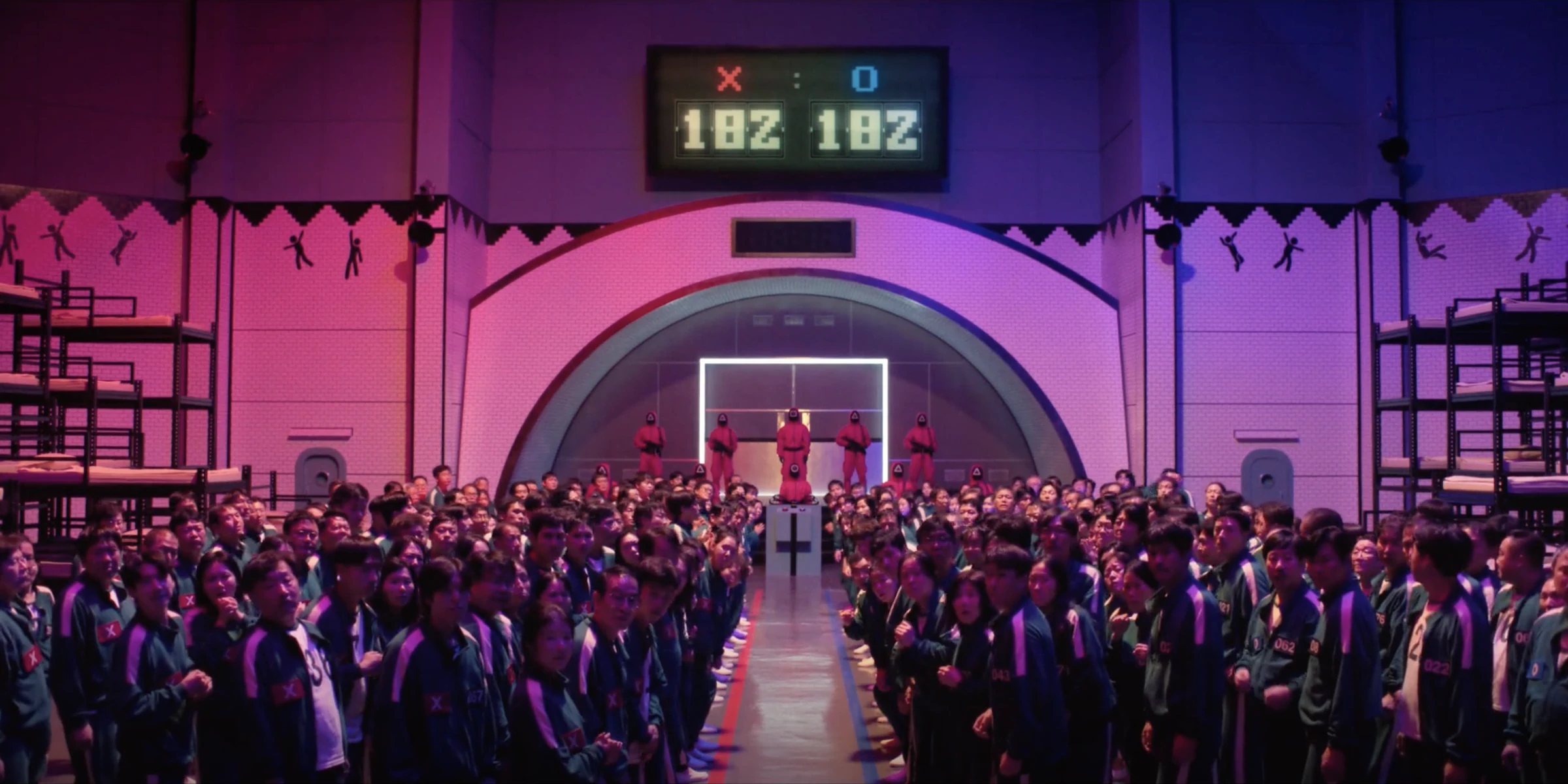
Notably, in season one, they are only able to vote to end the games once. In the latter seasons, they can vote after each game and split the money they’ve earned so far. They’re providing players ample opportunities to walk away without consequence. Ending the games would require a majority of players to value life over the fattening golden piggy bank, but the money proves too tempting.
In addition to voting “O” to continue or “X” to end the games, they later receive patches to reflect their vote, adorned on their uniform. Towards the middle of the season, the workers even divide the room in half with tape, physically separating the two halves before handing them metal utensils with their meals. Perhaps to taunt Gi-hun, they are encouraging a divisive environment and giving them weapons to enact violence. Even the color scheme, red versus blue, is a common way to differentiate groups.

“So many free democratic countries around the world are choosing their leaders…to provide the right direction for a society to head. However, as we all see, it is actually leading people to even further division, hostility against one another…” Hwang said in an interview with Salon.
“Democracy & Hope” — What Is Left For The Future
The players rationalize their “O” votes by saying they will just play one more game. Once the money is high enough for the survivors to pay off their debt, they will end the games.

The Front Man, In-ho, tells the VIPs that as the games continue, their inhibitions will decrease and their propensity for violence will rise. He is proven right when the metal utensils are used for their dual purpose, with battle lines pre-drawn.
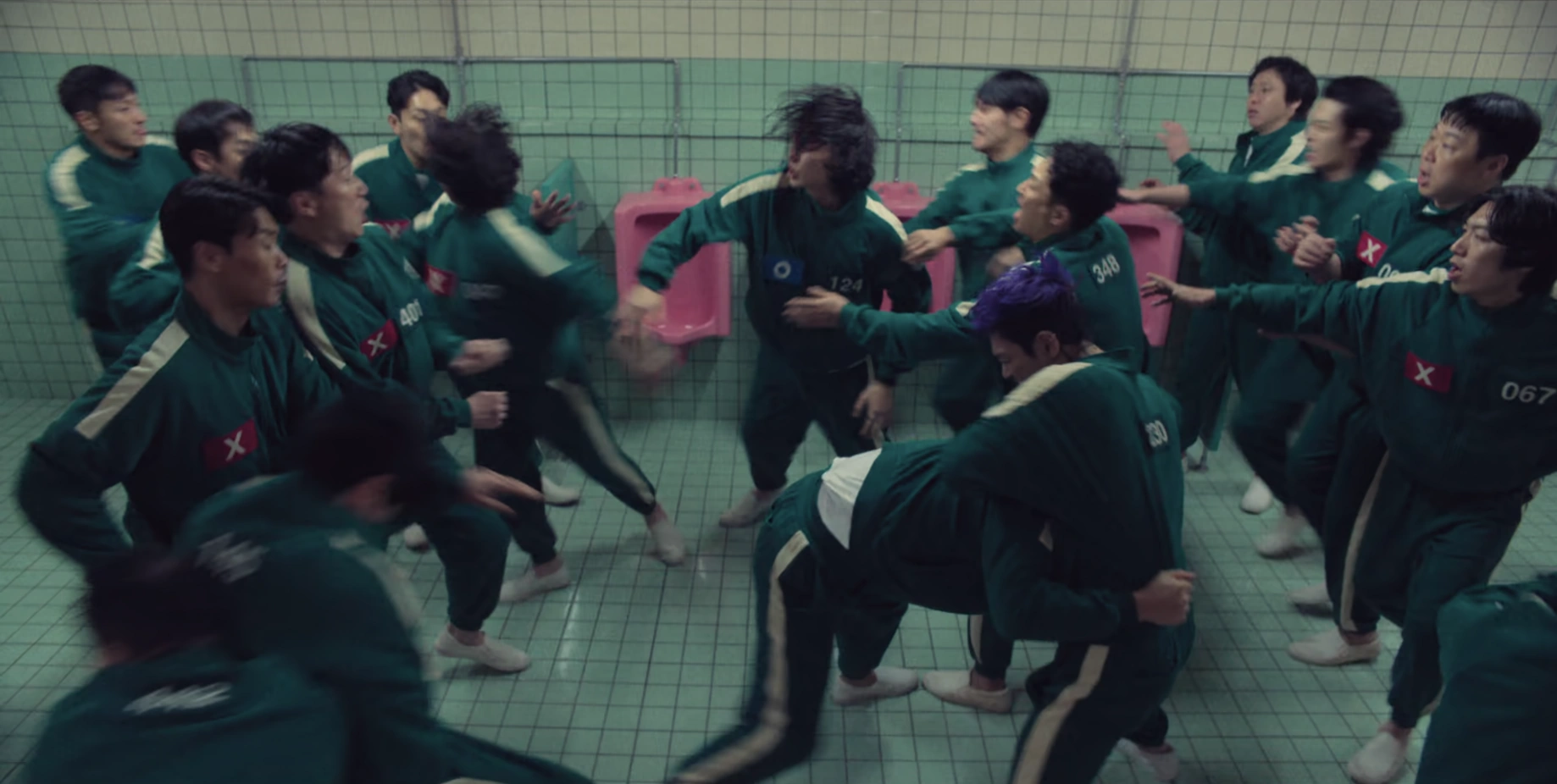
Unsurprisingly, the side with the increased appetite for violence survived with larger numbers. Where season one saw the continued violence out of necessity, the players in season two emphasize their need for more money, thus more bodies. “Squid Game” creator Hwang Dong-hyuk says in an interview with Vanity Fair that he wanted to reflect how the world continued to devolve in economic inequality, addressing the climate crisis, and the increasing threat of war across worldwide.
“It felt like the younger generations were losing more and more hope for the future… I thought that in order to leave the world for better generations, it was time for us to put a halt to our incessant greed and selfishness — at least to some extent.”
Hwang Dong-hyuk — Vanity Fair
The future generation is represented literally. Jun-hee’s baby is infamous for being poorly-done CGI that took the immersion away from some (putting aside questions of prenatal and post-natal care) but underscored the inherent unfairness of the games. Jun-hee cannot leave her baby behind; she is considered a participant in the games and will be eliminated if she doesn’t compete.

Jun-hee’s baby has infinite potential but is reliant on the actions of adults around her. A pregnant player already calls to question the morality of players continuing the game, but the thought of eliminating a baby as if they were a player reflects the depravity of the remaining survivors in the last game.
During the final game, called the ‘Flying Squid Game,’ the iconic square, circle, and triangle symbols tower overhead as pillars. Like the systems that keep capitalism functioning, they are cracking and crumbling. The game is to push one another off, which will unlock a bridge to the next platform.
The order of the platforms follows the worker hierarchy, another connection to the necessity of blood to elevate status. Hwang says he:
“wanted that space to reflect this system that’s starting to fall apart.”
Gi-hun’s honorable sacrifice to ensure the baby is the sole winner and his final words were unexpected and met with mixed reactions from viewers. Dozens of Reddit threads speculate what Gi-hun meant when he said “Humans are…” Others appreciated the paradoxical relationship between altruism and survivalism.
The Real Squid Game
There was never supposed to be a “Squid Game” season two or three. Hwang spent over a decade trying to sell the story with the intention of making a movie; living with his mother and selling his laptop to raise money at one point.
When Netflix offered him an undisclosed amount, he took it despite the contract lacking residuals. While filming and directing season one, he famously lost multiple teeth due to the stress.
“Even though the first series was such a huge global success, honestly I didn’t make much.”
The first season brought $900 million to Netflix and an additional 4.4 million subscribers to the platform20.

The success inspired him to continue the show, but he notably mentioned focusing solely on the show while staying informed on other “Squid Game” ventures. Some viewers have speculated if the officially licensed Halloween costumes available online year-round were inspiration for the setting of season two’s second episode, where the workers hide amongst Halloween party-goers.
In 2023, Netflix released a reality competition show called “Squid Game: The Challenge,” where 456 players faced off for $4.56 million. Red light green light was made more difficult by the addition of freezing temperatures and, allegedly, lasting around eight hours. Pre-dating Geum-ja21 and Yong-sik22 from season two, there is an iconic mother-son duo that decide to do a picnic reward together, only to be forced to play the marbles game.

In Madison Square Garden, people could pay around $30-50 for a green gel wristband, an official picture and player number, and participate in the games. London, Seoul, and Sydney had similar experiences available to the public — for a price. Netflix’s vice president of consumer products said, “You watch these shows and you can’t help but start to wonder, how would I react if I were put in one of these situations.”
Millions across the world do not need to imagine being put in the circumstances that drove players to participate in the games.

There are official mobile games and dozens of copy-cat games on platforms like Roblox for children to reenact the show and untold brand collabs. In total, the “Squid Game” brand has accumulated around $9 billion. There is dual irony in the political message of the show becoming drowned out by the reason it was ever brought to audiences. The message of curbing incessant greed and advocating for the protection of vulnerable communities is overshadowed by the entertainment companies commodifying the show’s content.
Financiers admire the profitability Netflix accrued from a single series, like the $90 customizable tracksuit jacket available on Netflix’s official store, but the creator is exhausted from the work. In his Vanity Fair interview, he said, “I’m so sick of my life making something, promoting something. So I’m not thinking about my next project right now.”

The show’s ending alludes to international “Squid Game” potential, despite immediate fan backlash over American people playing ddakji as opposed to a culturally relevant children’s game. Critics have noted that tackling American wealth inequality and social commentary through the “Squid Game” series seems inadequate23.
His final message to fans of the series is a warning,
“if we continue down this path of endless competition and growth, we are definitely headed for a very dark future…it’s time for all of us to stop this race to have more, and to start thinking about how we can leave behind a better world for future generations. Even if that means sacrificing some of our own comfort and gains.24“
Footnotes
- Hwang, Dong-hyuk, creator. Squid Game. Siren Pictures Inc. and Netflix Entertainment. 2021-2025 ↩︎
- Lee, Jung-Jae. ↩︎
- Jeon, Soeun. “Beyond The Miracle: Inequality in South Korea’s New Economy.” The Diplomat. July 18, 2025. ↩︎
- Rhyu, Sang-young. “The Origins Of Korean Chaebols and their Roots in the Korean War.” The Korean Journal of International Studies, vol. 3, 2005. ↩︎
- Engel, Benjamin. “Controversial Gwangju: Why May 18 Stands Out Amongst Korea’s Democratization Movement Anniversaries.” Korea Economic Institute of America. May 5, 2022. ↩︎
- Lim, Andy, Seiyeon Ji and Victor Cha. “Yoon Declares Martial Law in South Korea.” Center for Strategic & International Studies. December 3, 2024. ↩︎
- Breen, Michael. “Chun Doo-hwan: Last Dictator.” The Korea Times. November 23, 2011. ↩︎
- Duster, Chandelis. “Long before this week, South Korea had a painful history with martial law.” National Public Radio. December 5, 2024. ↩︎
- Breen, Michael. “Chun Doo-hwan: Last Dictator.” The Korea Times. November 23, 2011. ↩︎
- Devedzic, Imran. “How the Olympics of 1988 led to a social and political change in South Korea.” World Supporter. 2022. ↩︎
- Kim, Chang-hwan and Andrew Taeho Kim. “Aging and the rise in bottom income inequality in Korea.” Research in Social Stratification and Mobility, vol. 89, 2024. ↩︎
- “Widening income gap.” The Korea Times. January 6, 2025. ↩︎
- Mackenzie, Jean. “The unravelling of Yoon Suk Yeol: South Korea’s ‘stubborn and hot-tempered’ martial law president.” BBC. April 3, 2025. ↩︎
- Moon, Joon-hyun. “Koreans in their late 20s face worst job market in 12 years.” The Korean Herald. April 15, 2025. ↩︎
- Aurora. “Hell Joseon: Korean Hell.” Bonjour Coree. March 23, 2023. ↩︎
- Gong Yoo. ↩︎
- Heo Sung-tae. ↩︎
- Kim Joo-ryoung. ↩︎
- Wi Ha-joon. ↩︎
- Bilderbeck, Poppy. “Squid Game creator reveals shock earnings from first series despite it becoming Netflix’s biggest ever show.” Unilad. December 11, 2024. ↩︎
- Kang Ae-sim. ↩︎
- Yang Dong-geun. ↩︎
- Rosenberg, Josh. “Why Squid Game Shouldn’t Continue with an American Spin-off.” Esquire. July 10, 2025. ↩︎
- Kim, Regina. “Squid Game’s Creator Dreamed Up a Happy Ending. THen He Thought Better of It.” Vanity Fair. July 1, 2025. ↩︎