

Table of Contents Show
Over five years after its final episode, Steven Universe Future (2020), the epilogue series to Steven Universe (2013-2019), serves as a reminder that the “Hero’s Journey” template so commonly found in animated storytelling should not be a set rule, but a foundation for shows to create their own unique narrative structures.

Whereas characters in other narratives and shows completely grow and mature by their end, Steven Universe Future breaks this mold by recontextualizing its protagonist’s experiences as trauma. In doing so, it subverts tropes found in traditional monomythic storytelling while continuing the show’s mission of groundbreaking mental health representation, showcasing the damaging effects of untreated complex post-traumatic stress disorder (C-PTSD).
While not perfect, the franchise’s unique approach to its epilogue series demonstrates that shows should be more flexible with the way they structure their stories, flipping each checkpoint on its head to create a plot line unique to it. This approach is rooted in the original series’ long-standing focus on emotional and psychological realism.
“’Here Comes A Thought’” — Steven Universe (2013-2019) And Mental Health In Children’s Television
In 2011, Cartoon Network Vice President of Comedy Animation at the time, Curtis Lelash, asked the team working on fellow show Adventure Time (2010-2018) for ideas for a new show.1 Rebecca Sugar, an animator on the team who had previously worked on over twenty-one episodes through the show’s run, pitched her proposal for what would eventually become Steven Universe, which was chosen to be further developed. She worked simultaneously on both shows, but eventually pivoted full-time to Steven Universe.

The show’s characters were based on those Sugar drew since her childhood, and its concept evolved from a short story Sugar wrote named “Ballad of Margo and Dread,” which revolved around a sensitive child who helped teenagers with problems they were not able to verbalize. Eventually, the show landed on being what The Washington Post describes as an “action-fantasy cartoon about gem-powered superheroes.” Sugar named the main character of the show, Steven Universe, after her own younger brother of the same name.2 Speaking to The Washington Post, Sugar said:
“‘We were best-friend siblings, and people would tell us, ‘Oh, um, that’s unusual. I tried to make the character like him, where you’re so comfortable in your life because you get all the attention, but you also want to rise up and not be the little brother.’”
In the show, Steven is an unprecedented half-gem, half-human hybrid that learns to control his powers and joins his three Gem companions, turned motherly figures, Garnet, Amethyst, and Pearl, on intergalactic missions. As a part of the Crystal Gems, the four-member team of extraterrestrial superpowered beings swears to protect the Earth after the former three defected from their home planet, Homeworld, over 5,000 years ago.

Renowned for its groundbreaking serial-based storytelling, the show has won multiple awards and has become a milestone show in the representation of mental health and LGBTQ+ individuals in children’s animation.3 Sugar also used the show to explore a multitude of other related real-world themes, including the complexity of relationships (both with oneself and with other people), identity and diversity, actively exploring these issues through key episodes that foreground specific psychological struggles.
“Rose’s Scabbard (S1E45)” — Codependency And Grief
In “Rose’s Scabbard,” Steven and Pearl comb through the remnants of a battle on Earth, with Steven’s pet lion revealing a scabbard that Rose, Pearl’s companion and Steven’s mother, used to own.4 When Pearl offers to take Steven to a special place she claims only she and Rose used to know to store it, Steven reveals he had already been there. Not only that, but he had also already found Rose’s sword for the scabbard. When Pearl realizes that Rose hid secrets from even her, she runs off in a fluster.
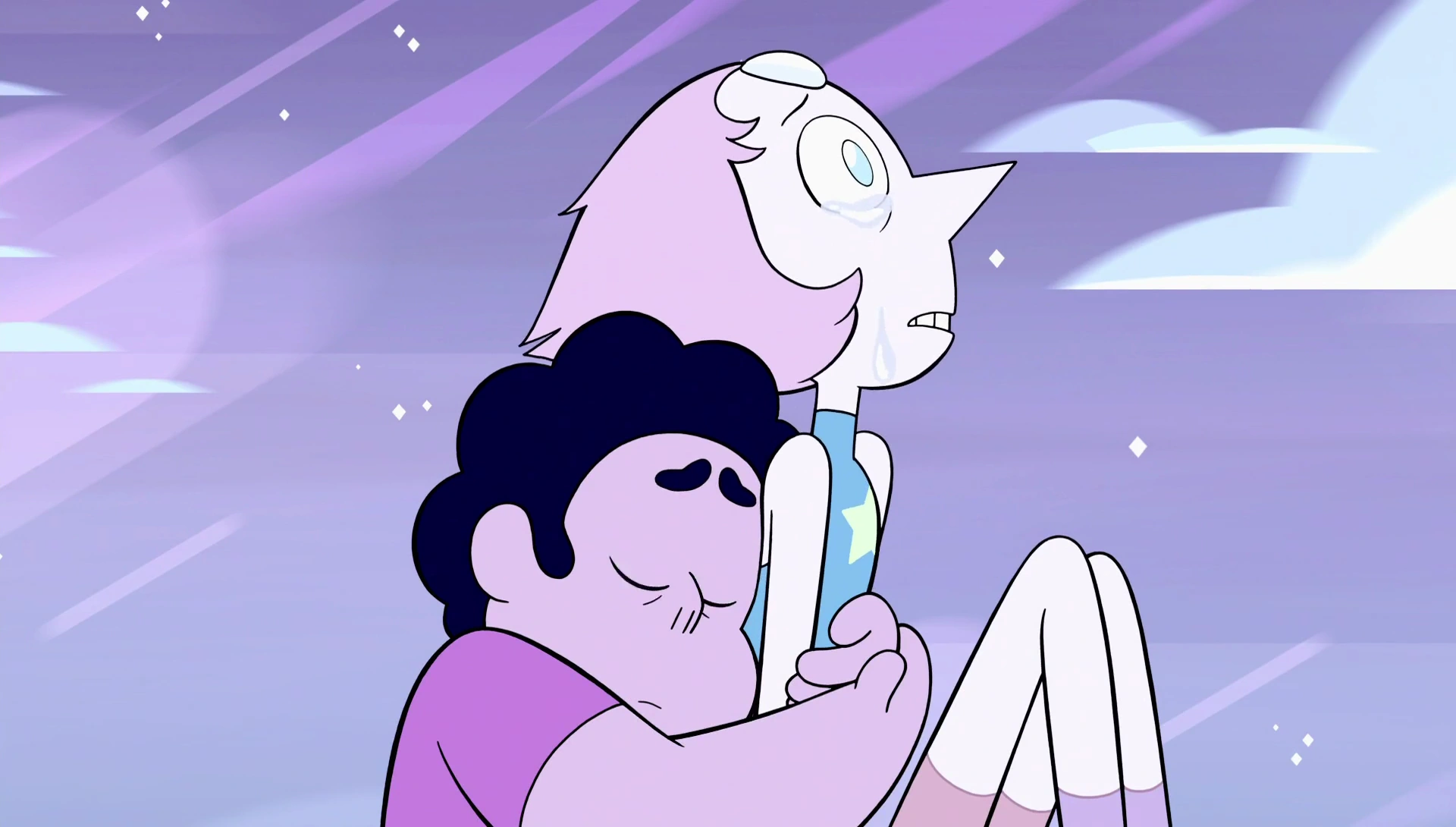
Not only does the episode reveal the extent of Pearl and Rose’s relationship, but it also explores her grief and her eventual toxic attachment to her. Pearl became so deeply in love with Rose that she swore to protect her at all costs, including sacrificing herself for her, and upon her passing, to bring Steven into the world; she was unable to come to terms with both her loss and conflicting information about her legacy. It is only with Steven’s support that she starts to accept things and move on.
“Mindful Education” — Guilt, Anxiety, And Intrusive Thoughts
While “Rose’s Scabbard” focuses on grief and codependency, later episodes expand this focus to internal struggles like anxiety and intrusive thoughts.
In “Mindful Education,” Steven and his best friend Connie prepare for sword-fighting training, although initially, Connie seems distraught.5 As the two of them fuse as “Stevonnie,” an intrusive thought about one of Connie’s mistakes disrupts her and forces the two to unfuse, with Connie running away. Although Steven says it’s best not to think about the thought, Garnet instead advises them to accept the thoughts for what they are.
The two of them sing “Here Comes A Thought,” a song about accepting intrusive thoughts without letting them control oneself. In the song, Garnet and Stevonnie sing:
Take a moment. Remind yourself
to take a moment and find yourself.
Take a moment and ask yourself
if this is how we fall apart.
Through controlled breathing exercises, Garnet teaches Connie that she can get some distance from her thoughts and accept how bad they feel or what mistakes she made without having them overwhelm her, symbolized in the show’s animation as swarms of white butterflies.
Through these exercises, Connie moves past her mistakes and makes amends, showcasing viewers how one can handle anxiety and intrusive thinking in a healthy way and let it help them make better decisions in the future. Connie, in turn, uses the lessons she learned from Garnet to help Steven when he becomes interrupted by his thoughts, letting the two accept and learn from the thoughts, re-fuse, and land safely on the ground.
Taken together, these character-driven explorations set the stage for the show’s broader structural departure from traditional storytelling frameworks.
“The Hero’s Journey” — Subverting Tropes In Traditional Animated Storytelling
In most forms of traditional storytelling, narratives often loosely follow a multi-step template known as the “monomyth,” or “The Hero’s Journey.” Coined and popularized by American writer Joseph Campbell, his book “The Hero With a Thousand Faces (1949)” explores throughout mythology what his foundation describes as “a universal pattern that is the essence of, and common to, heroic tales in every culture.”6 Through three stages: departure, initiation, and return, Campbell posits that almost all great stories follow a common pattern of events.
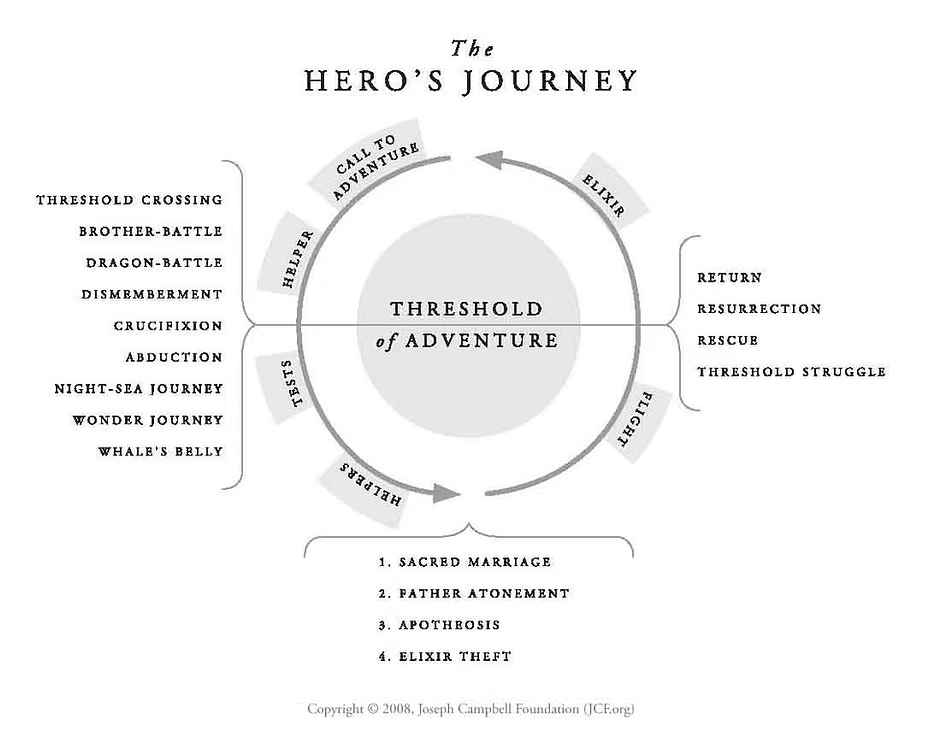
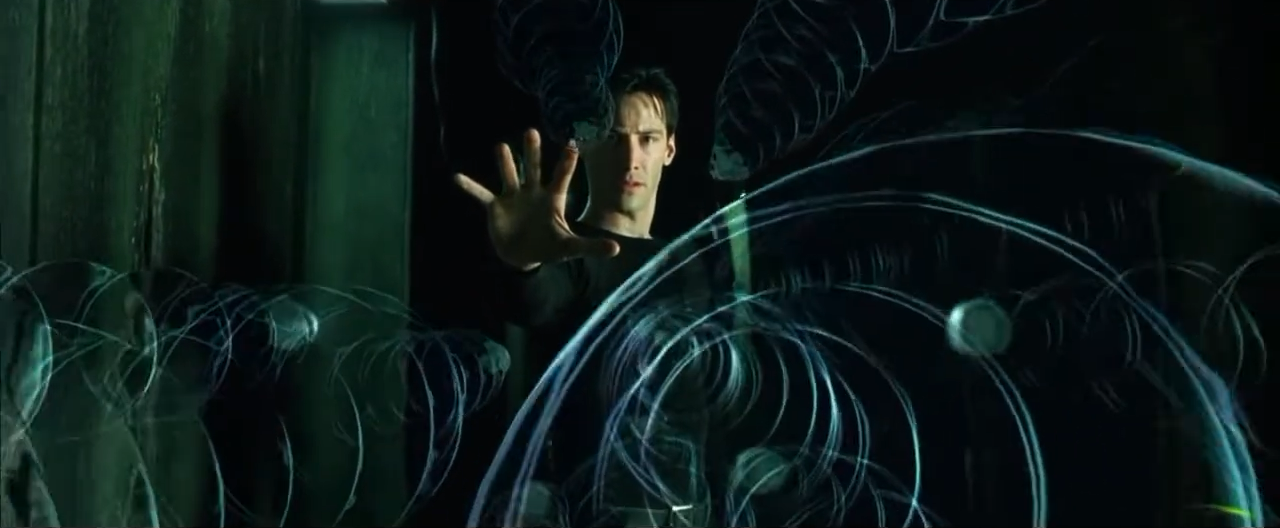
According to Campbell’s work, most, if not all, great stories involve but are not limited to a 12, sometimes 17-step process where a protagonist crosses over into a new world, overcomes challenges with the help of a mentor or ally, and eventually returns with an “elixir,” whether that be physical or metaphorical. This series of defined events has often defined stories for generations, with examples being found in all kinds of narratives ranging from The Matrix (1999) to Avatar: The Last Airbender (2005-2008).
However, Campbell’s “monomyth” concept does not define exactly how a protagonist’s story should be structured. While Campbell describes the “Hero’s Journey” as a set of stages that every protagonist must go through to complete a story, Stephen Gerringer of the Joseph Campbell Foundation points out that those same protagonists do not always face “all the possible variations within each stage.” In fact, Gerringer points out:
“Much critical analysis gets bogged down in mistaking Campbell’s discussion of the most common elements of these stages as setting forth rigid, sequential steps found in all hero myths, which is not what Campbell was suggesting in his work.”
Over time, stories began to stick to static definitions of Campbell’s “Hero’s Journey,” sometimes dulling the final result. Disillusioned writers, in turn, have begun to reject this traditional means of storytelling and instead have begun playing around with their protagonists’ experiences, challenges, and events that do not strictly follow twelve steps. As one Medium writer and author, Alex Mell-Taylor, describes it, “there’s a growing movement among creators and critics to reject the Hero’s Journey as the dominant format in Western media.”7
How Steven Universe Reimagines the “Hero’s Journey” As Inspiration
Sugar and her show’s team join this movement with the series by having Steven, the Crystal Gems, and other characters in the show face events that cannot be easily categorized as one step. For example, the show establishes in the show’s first episode that Steven never really chose to accept or deny the “call to adventure.” Rather, he was born into a destiny to save the universe and therefore never had a choice in the matter. As Mell-Taylor describes it:
“We meet him already immersed in the fantastical world of the Crystal Gems (Deedee Magno, Michaela Dietz, Estelle) — the rebellious aliens fighting a battle against the imperialist Diamond Authority. They have raised Steven since he was a child, and his magical destiny is not a secret he has to discover from an old wizard, a desert hermit, or a Giant motorcyclist.”
Even if the Crystal Gems and other characters in the show are supposed to develop the setting and narrative of the world they live in, acting as Steven’s mentors, they often face unresolved issues that bring them to their brink. In turn, Steven, who is traditionally supposed to be the hero guided by the Gems, must act as the mentor himself, switching the characters’ roles and revealing a story structure that the Hero’s Journey cannot easily encompass.

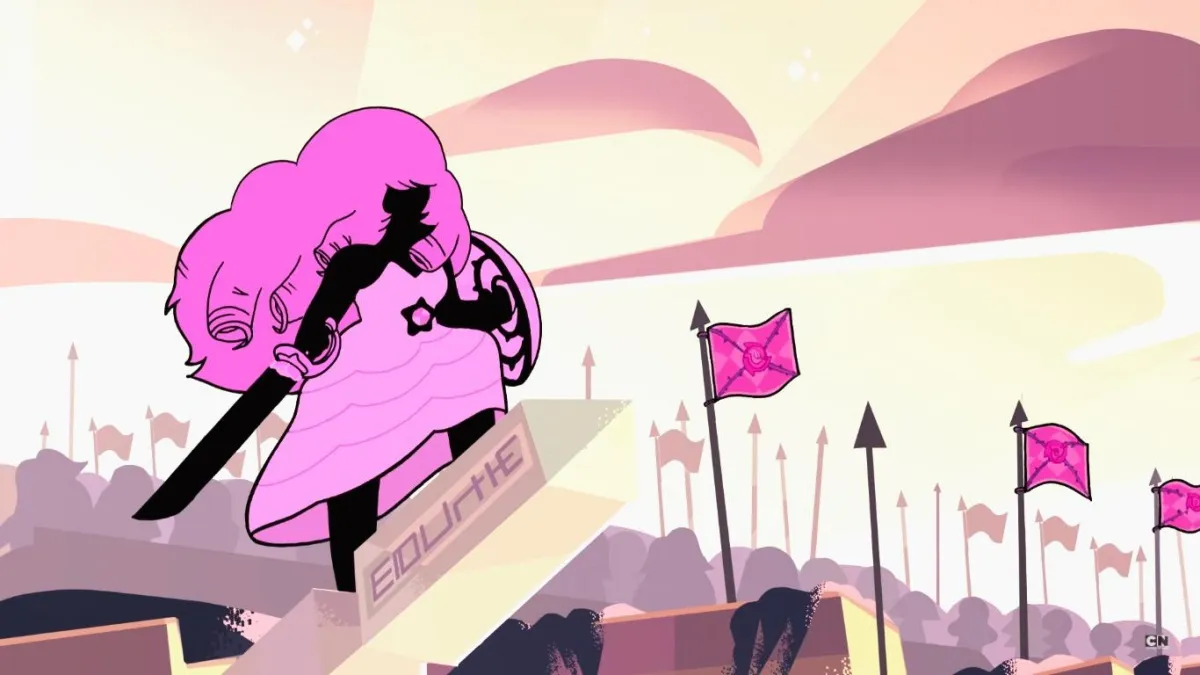
And while it is a common plot element even in stories that more closely follow Campbell’s 12-step formula to have an ally or mentor suddenly turn on the hero as part of their ulterior motives, Steven Universe differs in that it paints one of its timeline’s main characters, Steven’s mom Rose Quartz (or Pink Diamond), in an increasingly ambiguous light as her legacy is unpacked. Her good motives but destructive actions force audiences to analyze her morality in a way that does not overly skew in either direction.
Most notably, however, Steven Universe departs the most from traditional portrayals of the “Hero’s Journey” in its epilogue series, Steven Universe Future, by portraying Steven’s experiences during the “return” phase in a way where the ramifications of previous events in the canon continue to be felt. Rather than simply disregarding the main show’s events and the movie, Steven Universe: The Movie (2019), as parts of different plotlines, Future continues to bring previous events in the main show back into the conversation.
Steven’s Trauma — How Future (2020) Recontextualizes And Transforms The Original Show
After the events of Steven Universe: The Movie, which take place two years after the main show’s finale “Change Your Mind,” Steven and the Crystal Gems build “Little Homeworld”, a place on Earth where Gems and humans can live peacefully. As the main conflict of the show has been resolved, however, Steven is allowed to process everything that has happened over the last few years, resurfacing in the present.
By having moments from the original series pop back up in Future, the show repaints these events not just as catalysts for character development, but also as incidents where Steven’s psyche and logic were severely affected.
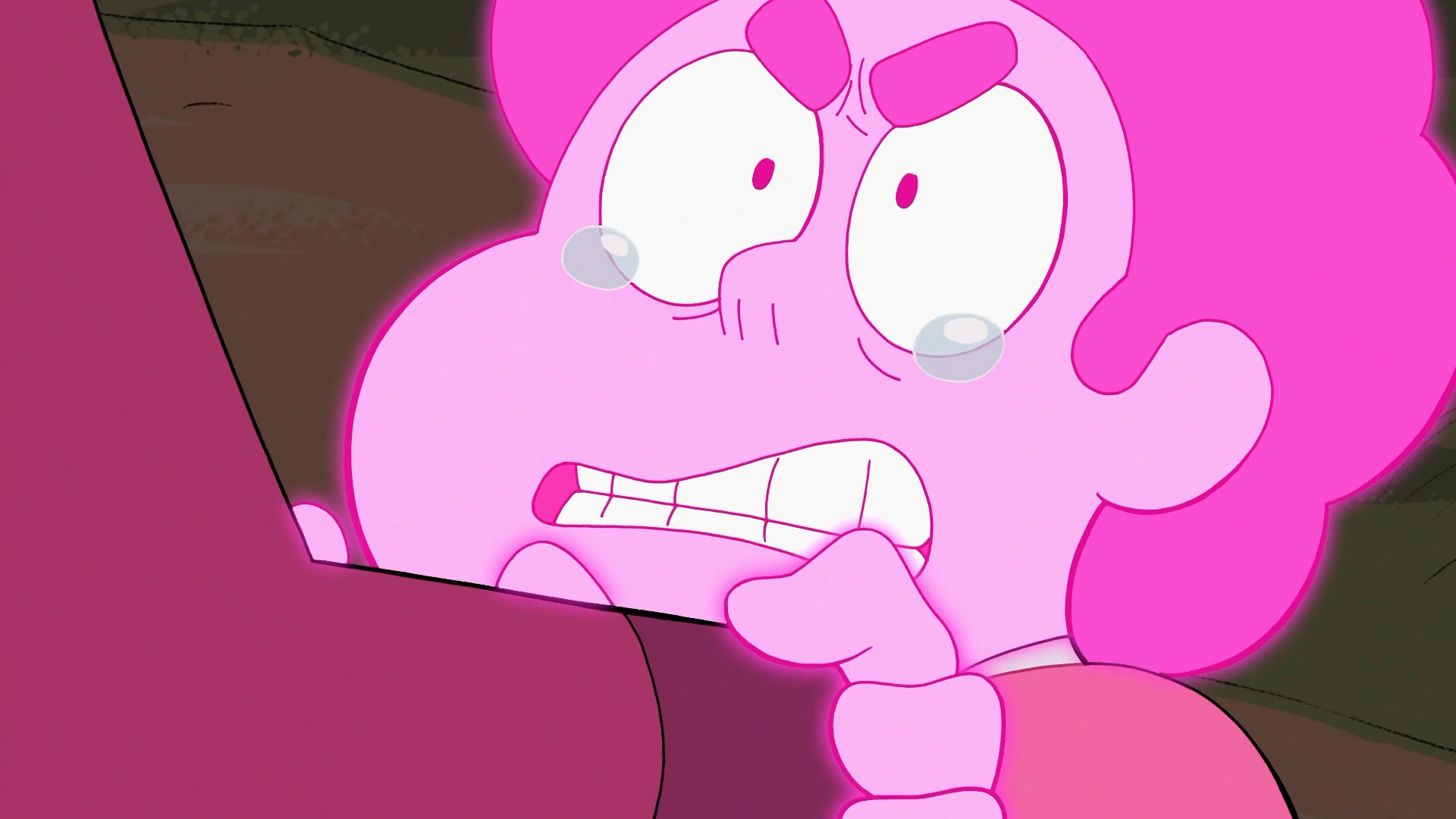
One of Future’s focal points in its plot is the introduction of Steven’s new “Pink” form, which grants him supernatural strength and abilities far beyond his current powers.8 While even Steven initially sees this as a positive, the show actually paints his new form as a consequence of his trauma, resulting in him engaging in destructive behaviors that affect those around them, ironically not unlike his mother.
“Volleyball” — Generational Trauma And Conflict of Interest
In the episode “Volleyball,” Steven fails to heal Pink Diamond’s original Pearl, nicknamed “Volleyball,” who has a crack in her gem.9 When Steven, Volleyball, and White Pearl (the one we know in the series) visit “The Reef,” a structure used for creating and maintaining Pearls, its AI reveals that Volleyball’s gem is actually perfectly intact and that her damage is psychological, meaning it can’t be helped.

Volleyball reveals that, contrary to what Pearl and Steven think, it was Pink Diamond that cracked her gem by throwing violent and destructive tantrums. During one episode, she stood too close to her, and Pink ended up damaging her, which eventually pushed White Diamond to replace her with the Pearl we know. Despite this, she remains apologetic and justifies Diamond’s actions.
Volleyball and Pearl eventually argue over their conflicting experiences with Pink Diamond, which causes Steven to turn Pink. He becomes angry that he has to once again deal with what his mother left behind, damaging The Reef much like Pink Diamond damaged things around her, and nearly resetting both Pearls’ character development.
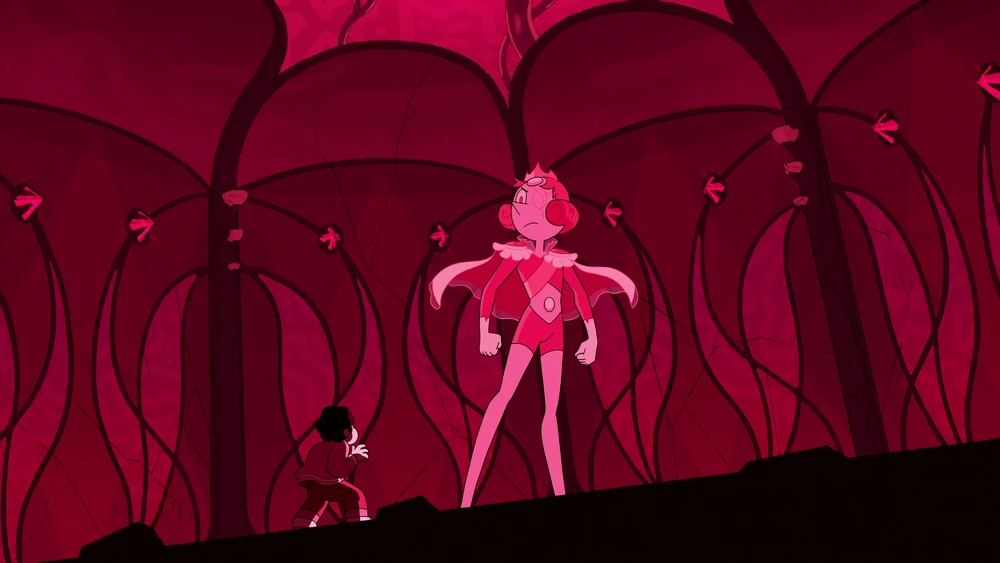
Connecting over how Pink inadvertently hurt both of them, the two Pearls fuse, a process by which Gems can combine their physical forms into a bigger one with stronger powers, letting each Gem understand each other on a deeper level. Through this, the three of them eventually escape, and though Steven is unable to fix Volleyball’s Gem, Pearl says the experience will help the two of them move on. However, the episode reminds Steven and the audience that he must continue to deal with his mom’s aftermath, haunting him and exacerbating his issues.
“Prickly Pair” — Isolation And Unhealthy Coping Mechanisms
“Prickly Pair” dives deep into Steven’s psyche and coping mechanisms as he picks up gardening to keep himself occupied.10 As Steven’s magical powers bring one of his plants back to life, however, Steven begins to vent and discuss his problems with it, revealing how he feels stuck while the rest of the gems move on with their lives.
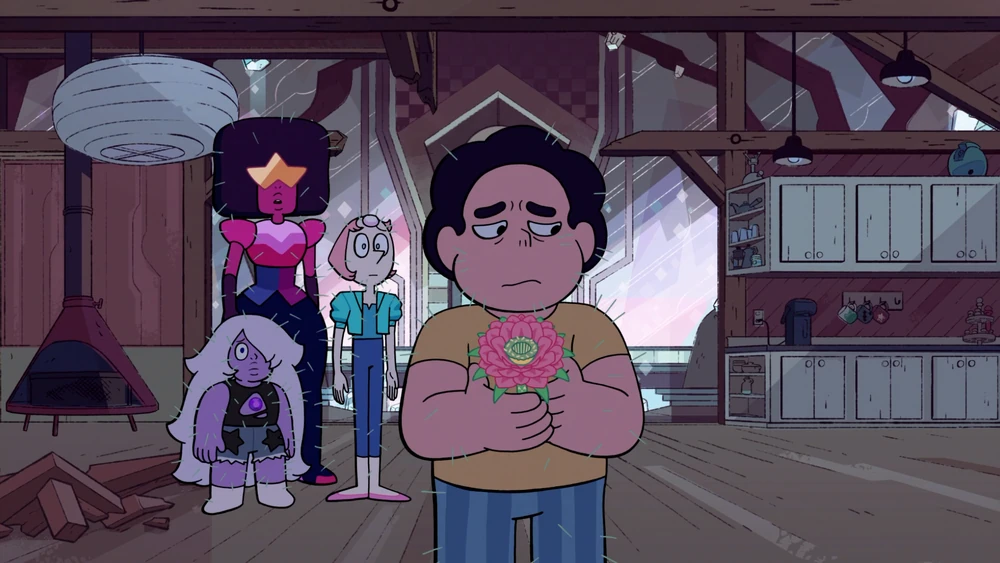
Steven tries to hide what eventually becomes a mutant, though his efforts fail as the Crystal Gems eventually have to face what Steven has created. The plant repeats Steven’s complaints about the other Gems back at them, however, making them confused and ultimately revealing Steven’s deeper internal conflict. Lea C of cartoon analysis channel Toon Ruins explains this conflict is what drives much of Future’s episodes, as Steven continues to act out in ways inconsistent with his perceived identity and values:
“The reason why Steven Universe Future hurts so much is because its a complete breakdown of those strong relationships that we saw for the entirety of the first show. Instead of being open and honest with the Gems, he pushes them away when he needs their help.11“
Steven eventually neutralizes the threat by hugging it, but Garnet, Amethyst, and Pearl are left asking Steven if he wants to talk to them about anything. Steven’s refusals to accept that something is wrong and that he needs help indicate his continuing spiral into mental illness, as it becomes more difficult for Steven to recognize that his trauma is what holds him back in the present.
“Growing Pains” — Reinterpreting The Original Show As Trauma
“Growing Pains” is when the show finally recognizes the events in the original show as traumatic, definitively underscoring how Steven’s past is beginning to catch up to him and impact his overall well-being in Future. Over the show’s next few episodes, Steven’s body swells as he enters his pink state on impulse, directly caused by not having sufficient support pillars and overreacting to reminders of both his past and his mistakes. On recommendation from Connie, Steven eventually heads to the doctor for a checkup.12

Though Connie’s mother, Dr. Priyanka Maheswaran, finds that Steven is physically fine and has made multiple “miraculous recoveries”, she begins to wonder if Steven is manifesting not physical issues but mental ones. Steven brings up multiple traumatic moments in his childhood, which the show reveals to actually be episodes in the original show’s five seasons that viewers are likely familiar with, including multiple near-death experiences. Dr. Priyanka Maheswaran states:
“I think all these experiences have been subjecting your body to a harmful amount of stress, and that’s affecting your ability to respond to new forms of stress in a healthy way. You’ve been dealing with genuine threats from such a young age, your body is now responding to minor threats as if your life were in danger!”
Through Dr. Maheswaran’s analysis, we learn that Steven’s swelling and emotional outbursts are because experiencing traumatic events has trained his body to react the same way to any perceived threat, even minor ones. Recollecting more and more of his past, we see how Steven was forced to see and experience things even most humans would be incapable of handling. These thoughts resurface and manifest as damage in his relationships and even to the hospital building, bringing the original show back into the conversation but reframing how they affect Steven now in the present.
“Homeworld Bound” And “Everything’s Fine” — Violent Intrusive Thoughts And Damage
After the events of the previous episode, Steven, in “Homeworld Bound,” runs off in a fluster to escape the Gems and spend some time with those who are technically his family, the Diamonds.13 While Steven asks Yellow and Blue Diamond to help him both physically and emotionally, their abilities (Yellow changing the physical size of Gems and Blue creating clouds that turn sadness into joy) ultimately are unable to help him, leading Steven to seek the advice and help of White Diamond, the progenitor of the entire Gem species.
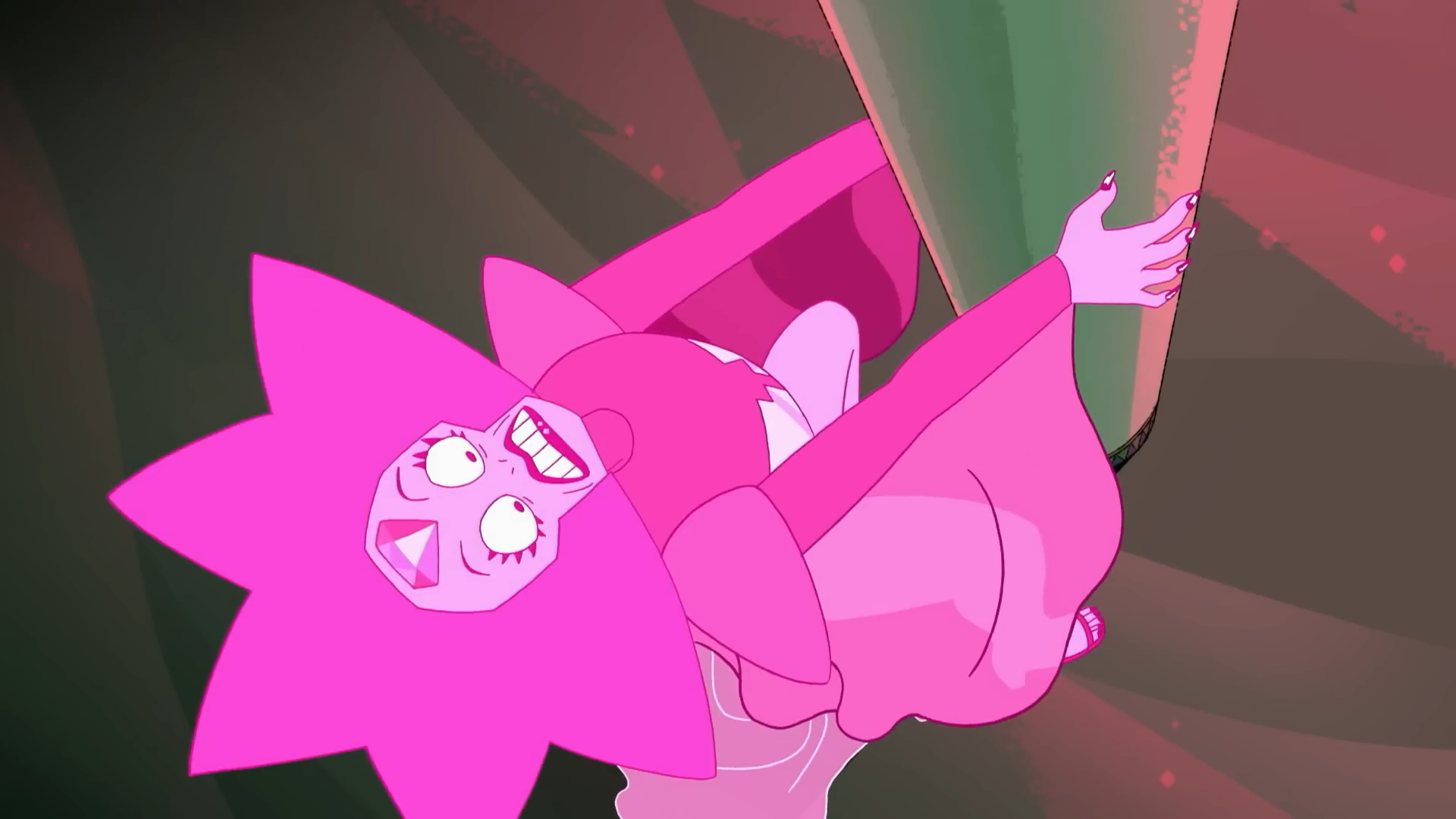
White Diamond, in an attempt to make amends, has other Gems take control of her, letting her see things from their point of view. However, when Steven takes control of White himself, he uses White Diamond to lash out, destroying part of the room. Reminded of the events in “Change Your Mind,” where White Diamond forcefully took out Steven’s gem and left him for dead, Steven vengefully attempts to get White to shatter and kill herself, before he loses control in the nick of time. Asked about his intentions, Steven flees Homeworld.
The next episode, “Everything’s Fine,” sees Steven continuously descend into a mental health crisis as he insists he’s “fine,” even though he is causing clear damage to the things and people around him.14 Lea explains the episode shows how disturbing the events of “Homeworld Bound” were to Steven because, never having these kinds of thoughts before, he believes that thinking about hurting someone is the same as actually doing it:
“How could he preach a message of love, forgiveness and acceptance if he himself was no longer fully committed to that pacifist ideology in his mind? If he thought about doing these violent actions, it must mean that he no longer believes that way. And this isn’t at all true considering violent intrusive thoughts are normal, especially if you’ve been traumatized…but if you don’t know that you can scare yourself into thinking you’re a bad and dangerous person.”15
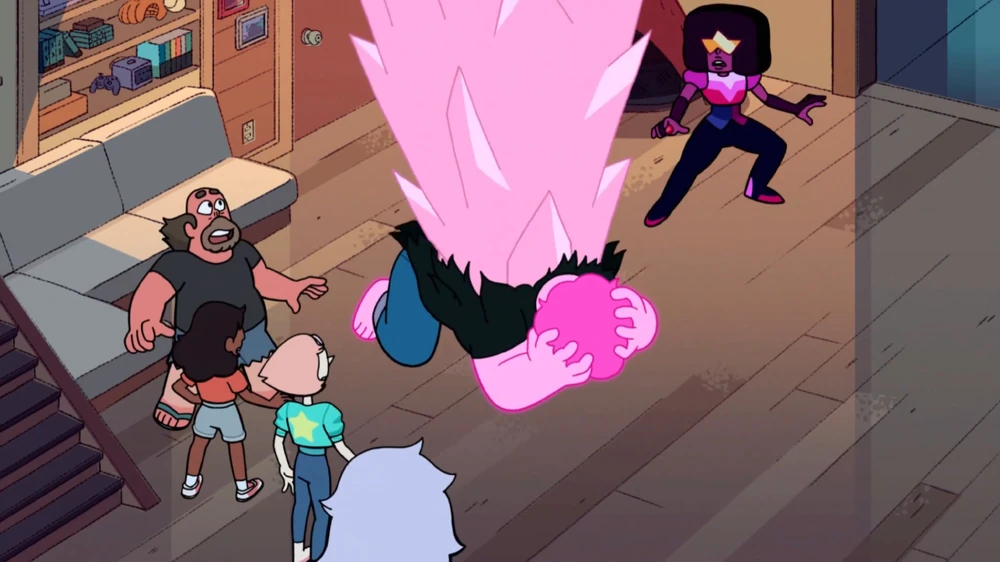
In the end, Steven’s loved ones hold an intervention for him, to which he confesses to having violent, intrusive thoughts and even nearly acting upon them, such as nearly shattering White Diamond. This shocks the Gems, but Steven continues to spiral, discussing how he feels expected to always fix other people’s problems instead of prioritizing his own. By the end, he snaps and declares himself to be a “fraud” and a “monster,” completely losing control and transforming into one. This downward spiral culminates in the series’ final two episodes.
“I Am My Monster” And “The Future” — Handling Breakdowns and Recovery
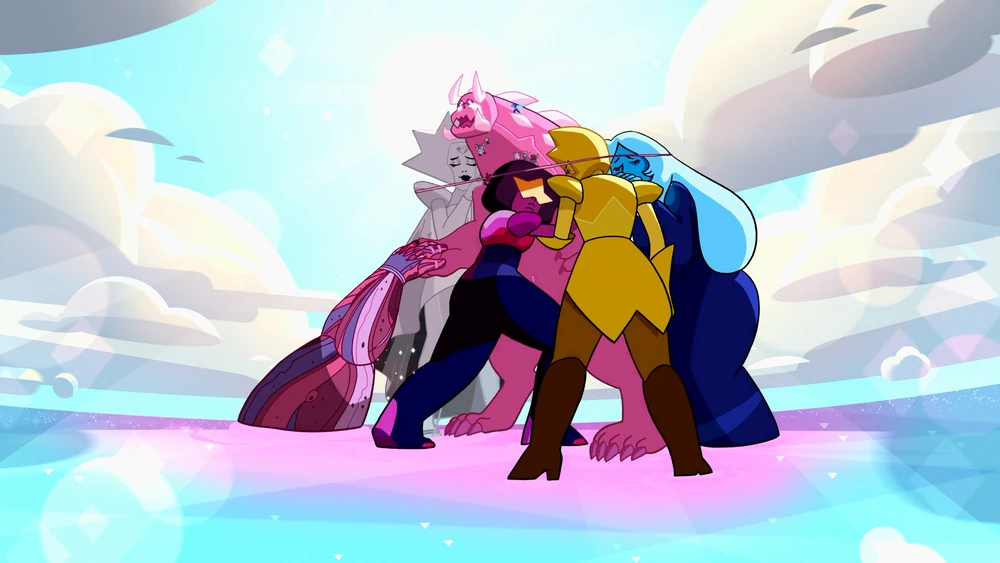
In the series’ penultimate episode, “I Am My Monster,” Steven suffers a complete mental breakdown as he becomes a humongous pink monster who even the Diamonds are unable to help.16 Blinded by his decimated self-image, Steven’s state of mind ultimately guilt-trips the Gems, reminding them of the mistakes they made in their interactions with Steven. That is, until Connie jumps in, reminding the Gems that even though they did hurt Steven, Steven ultimately always tried to help them all in the end, and that, therefore, this time, they need to help Steven in turn.
The characters ultimately pull Steven out of his mental spiral not by fighting the monster he believes he is, but by reminding him of his true humanity: a person whose empathy ultimately allows him to help people, including everyone around him. As the Gems embrace Steven in a hug, Connie reassures Steven that, even seeing this toxic side of himself, they still want to be there for him and that they love him for who he is.
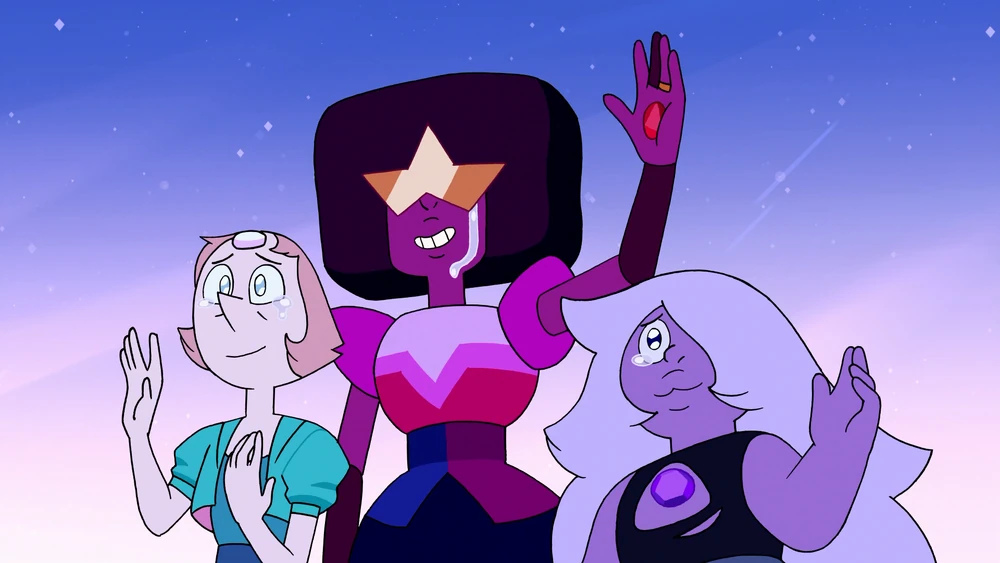
The series ultimately ends a few months later in “The Future” as Steven chooses to leave Beach City, distancing himself from his traumatic past and the future while remaining in contact with his loved ones.17 The episode explicitly confirms Steven has finally begun seeing a therapist for his issues, and the franchise ultimately ends not by tying up every single loose end, but by leaving its characters off on a hopeful note. Medium writer Dani Kirkham interprets this ending as a reflection on the nature of healing from mental illness, explaining that it is not something that can be easily shared with other people. Kirkham writes:
“It is a deeply personal experience that takes much longer than the 3 1/2 hours of the series, or even the implied half a year within the narrative. It takes time, and help, and you have to overcome an entire life’s worth of trauma and personal neglect to finally be able to figure out who you are.”18
By keeping Steven’s journey from here on out private from the viewer, Sugar makes a final statement on both the nature of recovery and monomyth storytelling. Like in real life, Steven’s story does not end conclusively, but rather becomes much more tame as he enters a new chapter in his life. And after basing his entire life trying to help those around him, Steven, from here on out, will learn how to help himself.
Why Future’s Approach To Storytelling Matters
In a landscape full of narratives about heroic main characters, Sugar sets the Steven Universe franchise and especially Future apart by deviating from the norms found in traditional monomythic storytelling. In Future, Sugar refuses to give Steven a traditional static ending, instead diving deep into how his psyche has been impacted by past events. By returning to major events during the main show’s run, viewers reframe how they perceive past events, increasing the connection and engagement audience members feel with the franchise.
Mell-Taylor said:
“We expect a hero to save us, but real salvation comes when we all come together to help each other. If we can’t recognize that the current hero archetype is unhealthy in our fantasies, then how can we expect to build a world of real heroes in the here and now?”
Given the opportunity, other shows can follow suit, refusing strict adherence to Campbell’s 12-step formula. This shift allows characters to face their issues in increasingly realistic and relatable ways, paving the way for more meaningful representation of overlooked problems in media. In turn, audience members will feel an even deeper connection to their favorite characters, becoming more dedicated to the show as a result. And perhaps, by the end, viewers can walk away with a lesson or two learned, much like fans did with Steven Universe Future.
Footnotes
- McDonnell, Chris. Steven Universe: Art & Origins. Abrams Books, 2017. ↩︎
- Cavna, Michael. “‘Steven Universe’ creator Rebecca Sugar is a Cartoon Network trailblazer.” The Washington Post, 1 November 2013. Accessed 5 April 2026. ↩︎
- Whitley-Berry, Victoria. “After Decades In The Background, Queer Characters Step To The Front In Kids’ Media.” NPR, 30 June 2021. Accessed 5 April 2026. ↩︎
- “Rose’s Scabbard (S1E45).” Steven Universe Wiki. Fandom. Accessed 5 April 2026. ↩︎
- “Mindful Education (S4E4).” Steven Universe Wiki. Fandom. Accessed 5 April 2026. ↩︎
- Gerringer, Stephen. “The Hero’s Journey and Joseph Campbell.” The Joseph Campbell Foundation. Accessed 6 April 2026. ↩︎
- Mell-Taylor, Alex. “‘Steven Universe’ Destroyed What It Means to Be a Hero.” Medium, 23 April 2020. Accessed 6 April 2026. ↩︎
- “Little Homeschool (S1E1).” Steven Universe Wiki. Fandom. Accessed 6 April 2026. ↩︎
- “Volleyball (S1E4).” Steven Universe Wiki. Fandom. Accessed 6 April 2026. ↩︎
- “Prickly Pair (S1E10).” Steven Universe Wiki. Fandom. Accessed 7 April 2026. ↩︎
- “Steven’s Future Without the Gems.” Toon Ruins. YouTube, 26 March 2020. Accessed 11 April 2026. ↩︎
- “Growing Pains (S1E14).” Steven Universe Wiki. Fandom. Accessed 7 April 2026. ↩︎
- “Homeworld Bound (S1E17).” Steven Universe Wiki. Fandom. Accessed 18 April 2026. ↩︎
- “Everything’s Fine (S1E18).” Steven Universe Wiki. Fandom. Accessed 18 April 2026. ↩︎
- “Why Corrupted Steven Couldn’t Be Beaten.” Toon Ruins. YouTube, 5 April 2020. Accessed 18 April 2026. ↩︎
- “I Am My Monster (S1E19).” Steven Universe Wiki. Fandom. Accessed 18 April 2026. ↩︎
- “The Future. (S1E20)” Steven Universe Wiki. Fandom. Accessed 18 April 2026. ↩︎
- Kirkham, Dani. “Let’s Talk about Steven Universe Future.” Medium, 13 April 2020. Accessed 18 April 2026. ↩︎