Table of Contents Show
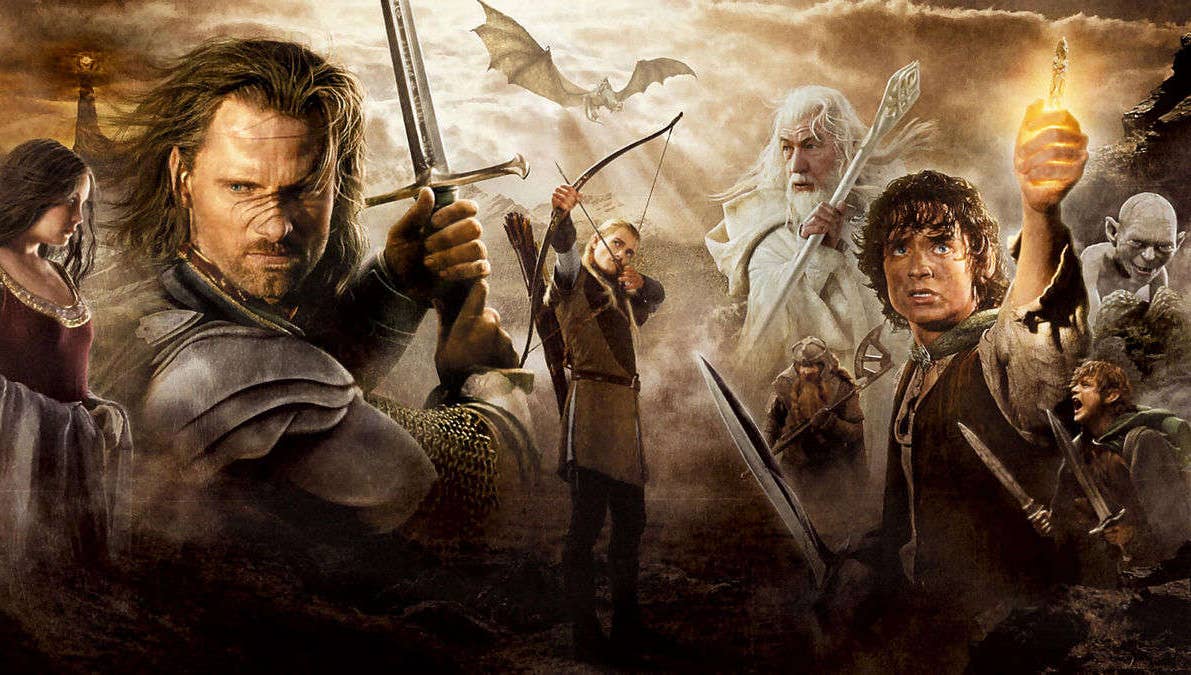
Adaptation is the translation of a story from one medium to another. Some take more liberties with the story than others, but the best are typically the ones that understand the source material and are in conversation with the original in some manner. Peter Jackson’s The Lord of the Rings film trilogy (2001-03) was an ideal adaptation, engaging with the themes of Tolkien’s original novels (1954-55), while updating the story in various ways to create compelling films for contemporary audiences.
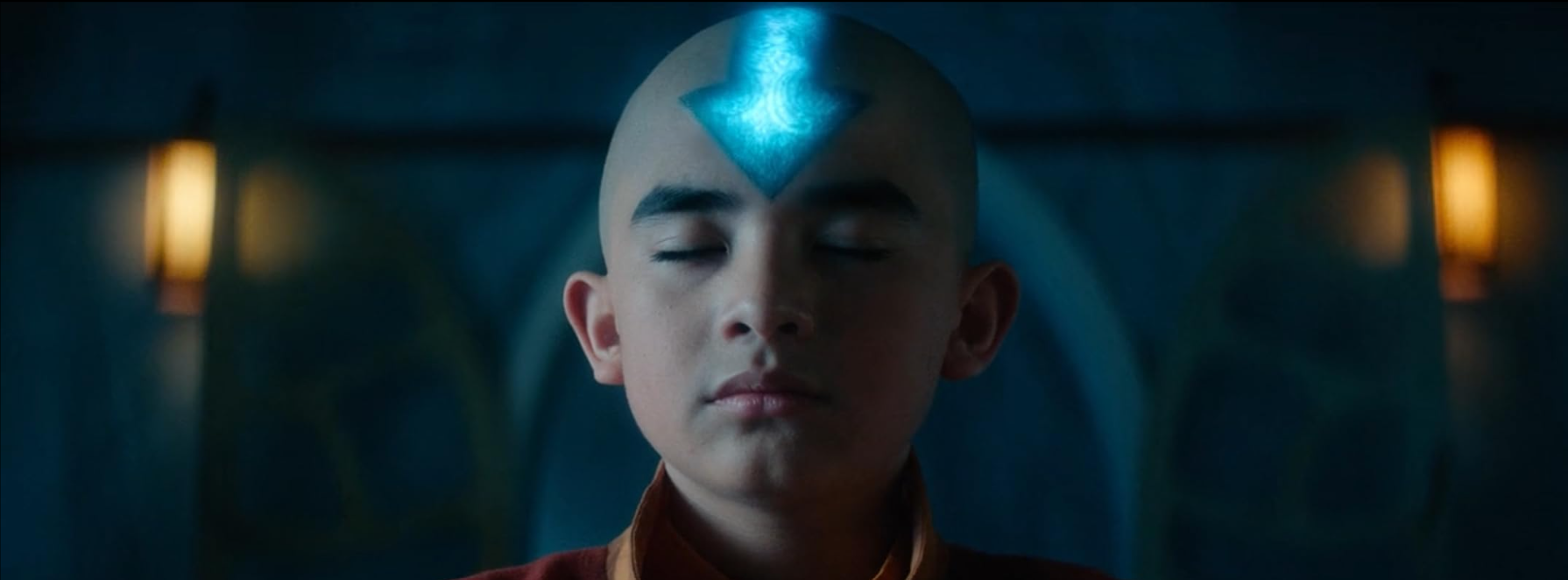
A live-action remake is a type of adaptation that takes an animated film or show and adapts (or sometimes readapts) it for live-action, as is the case for Avatar: The Last Airbender (2024-). In the past decade, thanks in part to advances in digital effects, live-action remakes have become increasingly popular for studios to produce. But often, these remakes forget to be good adaptions and settle instead for being simple regurgitations of popular intellectual properties that fail to respect the source material enough to seriously engage with it.
Here, we’ll make the case that live-action remakes are better when the creators consider them adaptions of the original animation, as opposed to simple remakes of an animated film or series.
What Makes A Great Adaptation?
But first, allow us to consider what makes a good adaptation by examining The Lord of the Rings (“LOTR”).
J. R. R. Tolkien’s The Lord of the Rings (1954-55) was a fantasy epic, which was unheard of in the 50s. Fantasy was generally considered a realm of whimsy and children’s tales (like Alice in Wonderland (1865) and The Wizard of Oz (1900)), or else pulp fiction like Conan the Barbarian.1 Tolkien was largely responsible for the invention of high fantasy, fantasy stories inspired by medieval epics such as Beowulf, but set in fictional worlds.2
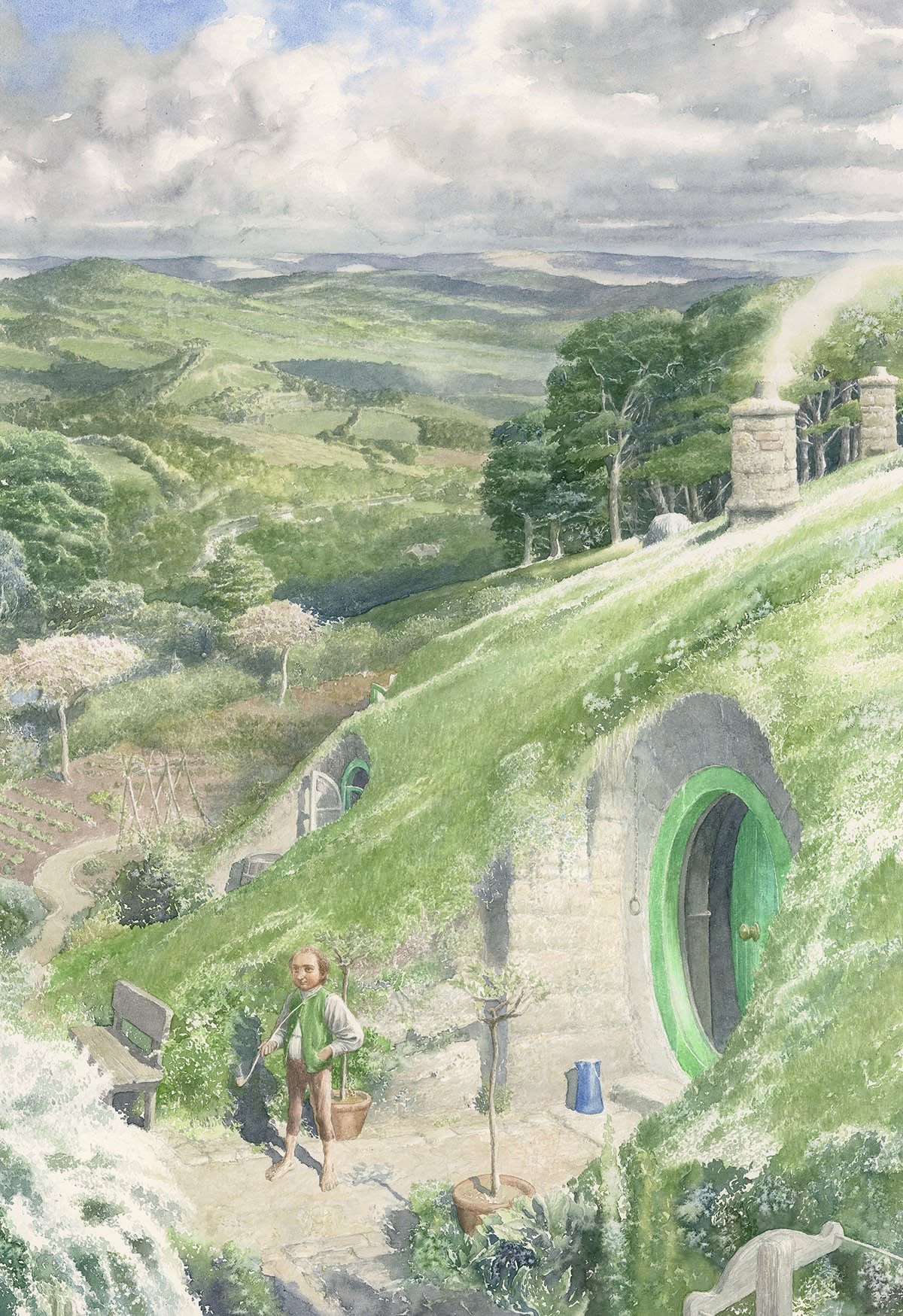
Initially pitched as a sequel to The Hobbit (1937) (which was originally intended as a children’s book), LOTR grew into a much bigger and deeper story (not to mention longer — the trilogy clocks in at more than 1000 pages). The tale of a hobbit who gets swept up in a battle for the future of Middle-Earth, its themes of courage and community in the face of evil are timeless. However, that wasn’t Tolkien’s only intent with the book: What he really wanted was to create a world for his Elvish languages to live in!3
Tolkien’s epic fantasy trilogy has always been divisive — early reviews were a mix of love and hate.4 If one can look past the occasional lore tangent or exposition dump and get through many a poem (sometimes in fictional languages), there’s a powerful story to be found.
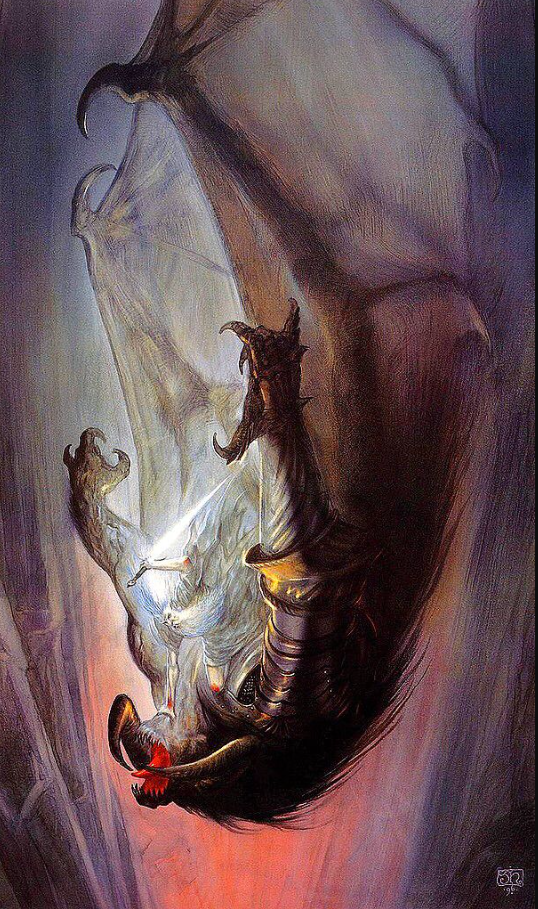
Although it’s not a book for everyone, The Lord of the Rings forever transformed the fantasy landscape. In addition to popularizing figures such as wizards, elves, dwarves, and orcs, LOTR also normalized the use of constructed languages in fantasy and science fiction. Even George R. R. Martin’s A Song of Ice and Fire (1996-) is written as a sort of rebuttal of Tolkien’s more optimistic philosophies.5
How The Lord Of The Rings (2001-03) Redefined Live-Action Adaptation
Adapting Tolkien’s masterpiece would be a massive undertaking in any era, but with the technology available at the turn of the 21st century, it was hard to imagine.
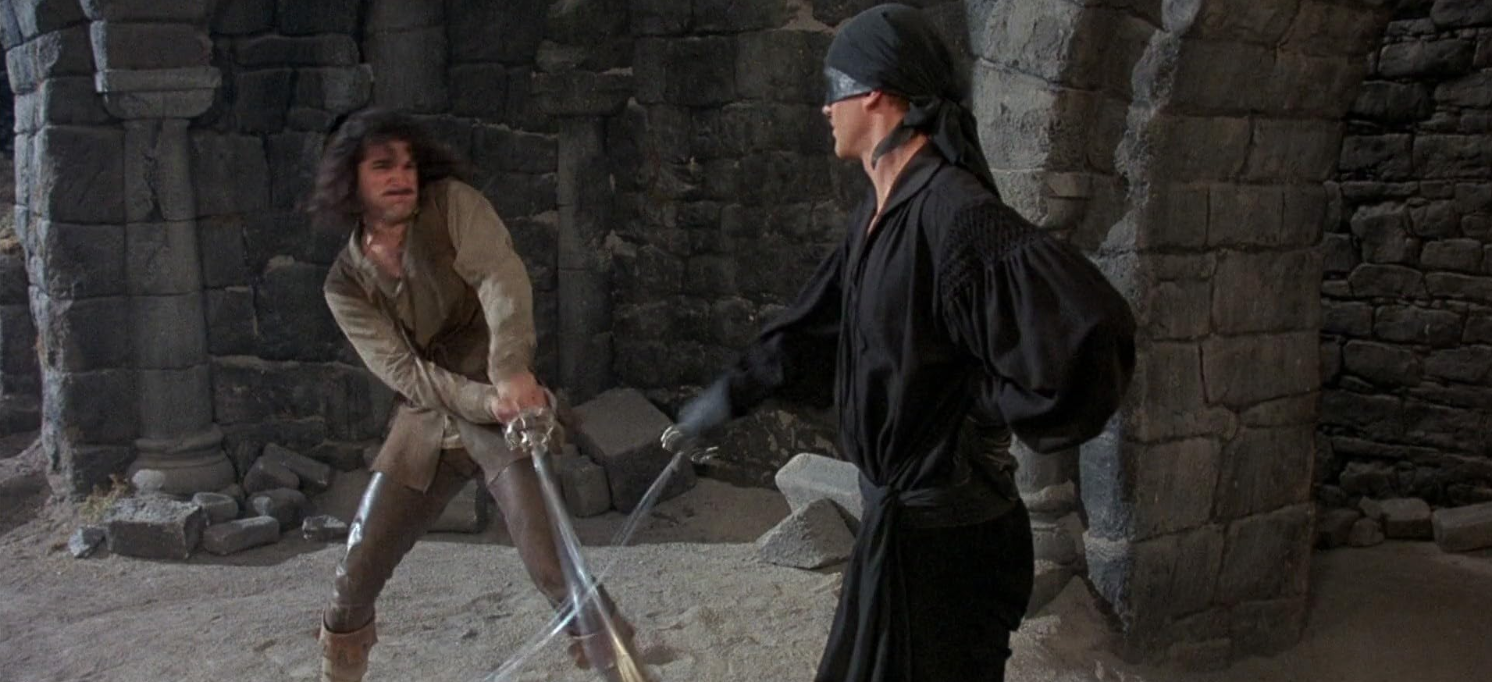
In the 80s and 90s, live-action fantasy movies, similar to fantasy books in the 50s, were mainly composed of films for families, with the occasional swords-and-sorcery film thrown in.67 Movies such as The Princess Bride (1987) or Labyrinth (1986) relied on charm and levity more than production values, frequently reusing sets and props from older films. If you wanted to get swept away to fantastical worlds, your best bet was quality animation.
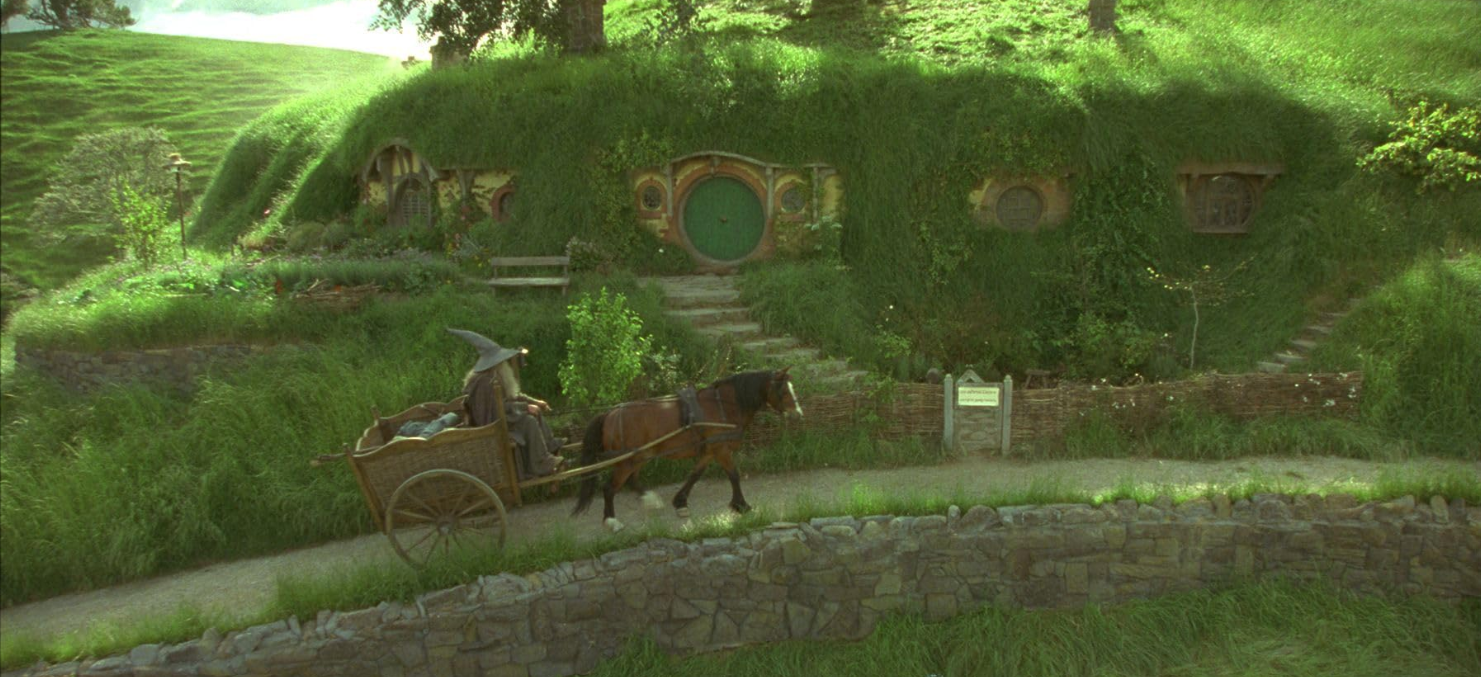
But, determined to succeed with live-action, Peter Jackson used a mix of old technologies (forced perspective, miniatures, and matte paintings) and pioneered new ones (most notably motion capture and CG animation engines) to create an immersive world that still mostly holds up to this day, 25 years later. Additionally, creative studio and special effects house Weta Workshop handmade new props and sets for the films, going as far as forging swords and creating leather and faux chainmail armor. They carefully considered the form and function of items in-universe, even ones that never appear on film, thus filling cultural gaps in the story and making the world feel lived-in.8
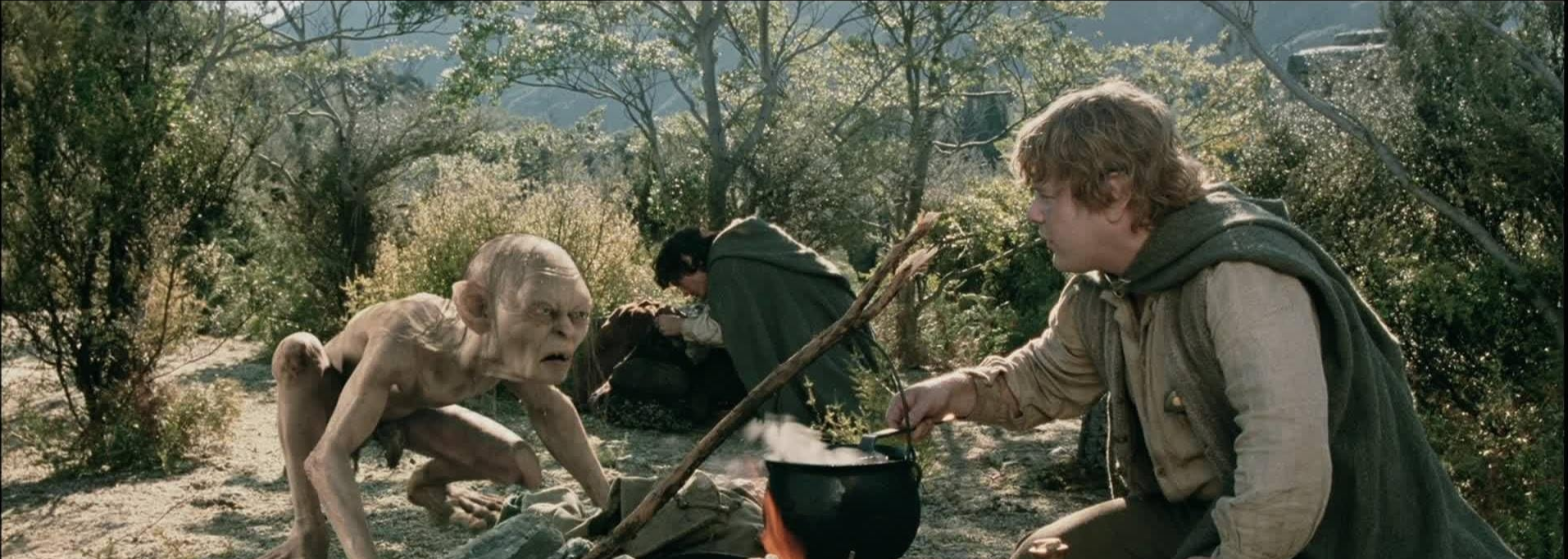
In addition to taking a massive gamble by filming all three movies at once (contemporary wisdom was that you only make a sequel if the first movie is a success), the story itself was tricky to adapt. The first book featured a fairly standard narrative structure, but by the third, you had four separate plotlines occurring simultaneously. Jackson also opted to incorporate various bits from the appendices (the additional worldbuilding placed after the end of the last book), most notably “The Tale of Aragorn and Arwen.” This was because in the books proper, Aragorn’s romance was never actually explained.
And speaking of Arwen, she’s also one of the characters whose role was fleshed out in the movies (alongside Éowyn), because one thing that was sorely lacking in the books was complex female characters, which Jackson’s co-writers, Phillippa Boyens and Fran Walsh, were eager to remedy. While it was a controversial move to make Arwen’s first scene action-oriented (replacing a fan favorite, Glorfindel, in the process), considering that she spends basically the rest of the story just pining in Rivendell, it was probably for the best.
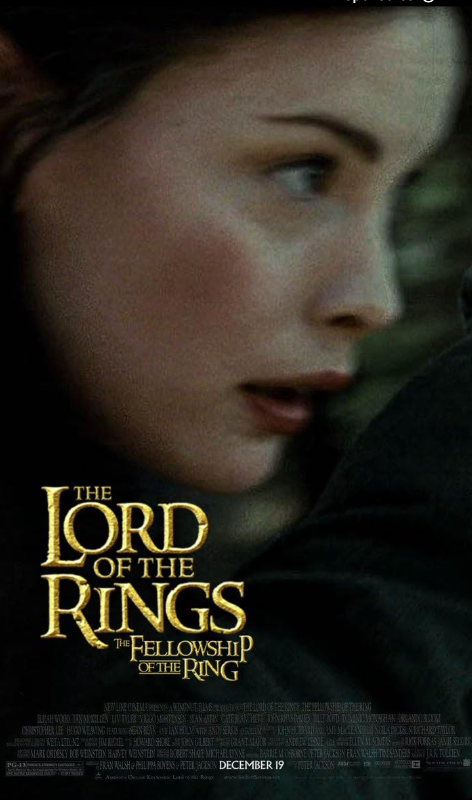
There are two changes that are possibly the most controversial for fans of the books: The forced conflicts, and the abridged ending (yes, it was originally LONGER). Jackson had a tendency to insert conflicts into the story where there was none in the books, most notably the tension between Frodo and Faramir in The Two Towers, and Frodo breaking up with sending Sam away in Cirith Ungol. As for the ending, in the books, there are six chapters and nearly 100 pages after Mount Doom (for context, six chapters are also how many Éowyn features in).
To be fair, Jackson also cut out Tom Bombadil and most of the other chapters in the Shire at the beginning, but Bombadil just sort of came out of nowhere in the books and didn’t really play a role in the plot anyways. “The Scouring of the Shire,” on the other hand, was a culmination of the hobbits’ development (and a few plot threads), not to mention dealing with the fate of Saruman. Tolkien was building up to that denouement with the extended ending and removing that chapter also removes most of the point of the lengthy ending.9
Overall, Jackson’s adaptation set the stage for more serious live-action fantasy stories. From the incorporation of worldbuilding in props and set design to the innovations of motion-capture technology that would become staples for everything from sci-fi and fantasy to superhero movies. Given all this, it’s no wonder that The Lord of the Rings: The Return of the King still holds the record for a clean sweep at the Oscars.10
When Animation Becomes Live Action
Now that we’ve established what a good adaptation can look like, let’s turn to our primary focus.
Avatar: The Last Airbender (2005-08) (“ATLA”), created by Michael Dante DiMartino and Bryan Konietzko, was unlike any cartoon airing in the 2000s.
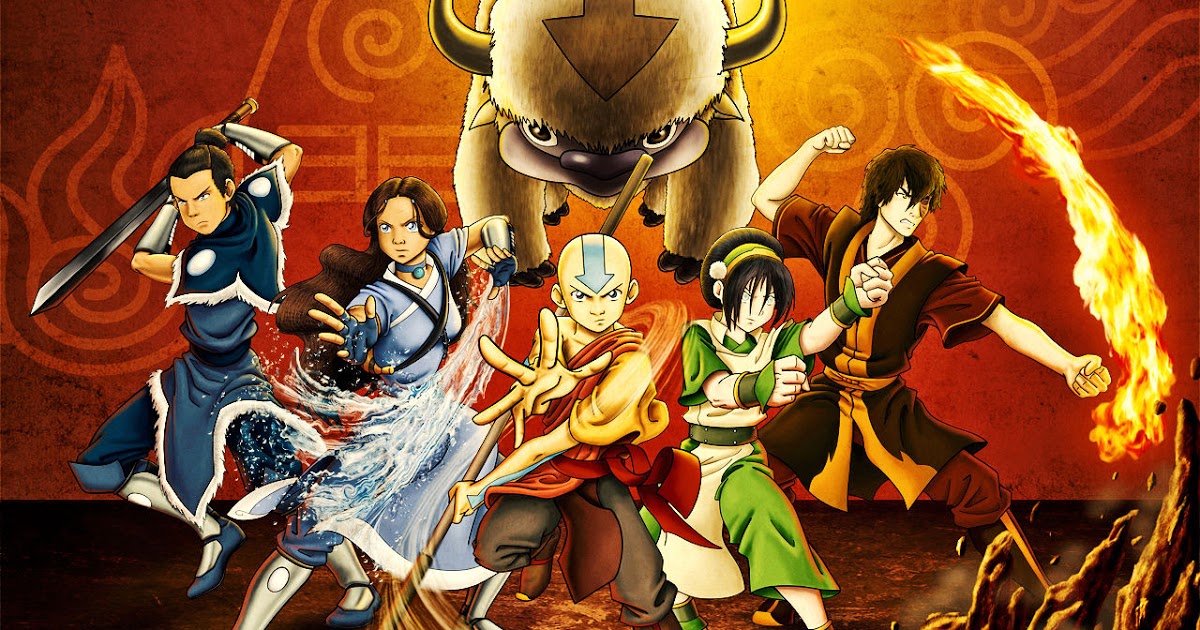
Not only did it tell a sequential story (as opposed to the fundamentally episodic cartoons that have historically dominated American animation), but it was clearly inspired by anime on many fronts, from the character designs to their writing. Furthermore, the main characters were all visibly Asian (or indigenous), and the writers and animators intentionally borrowed from Asian and indigenous cultures in writing the story.11
It was also an epic narrative about saving the world (back when that was less common in children’s media). It was a story about war from a child’s perspective, and even if the Y7 rating prevented them from fully showcasing its brutality, it still tackled issues like parental abandonment and abuse, even family deaths and genocide. It took its audience seriously, because kids can and do deal with that sort of thing.12
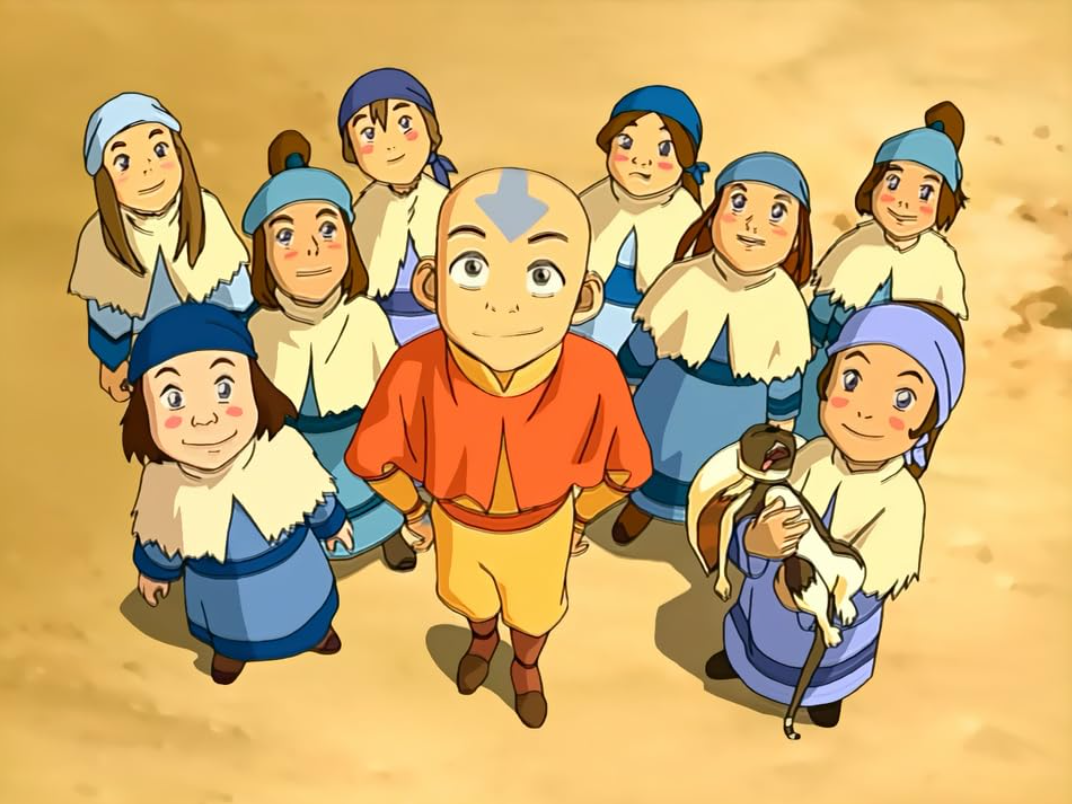
But at the same time, it had its fair share of goofiness (especially in the first two seasons), because the titular Avatar Aang was still only a child, even after he’d had the world thrust onto his shoulders. He was still a fun-loving kid, and that’s why he wanted to bring peace to the world, so that more children could experience fun childhoods.
It had its share of flaws, however. It’s a story primarily focused on Asian culture, written primarily by white men. The focus on Zuko’s “honor” in particular is frankly ridiculous. The show takes the vast majority of its influence from Japan, and sometimes China, but rarely any other Asian countries (and the indigenous representation feels very surface-level). The only significant roles played by actors of Asian-Pacific heritage were Zuko (Dante Basco) and Iroh (Mako). Although, to be fair, it’s only in the past decade or so that American creators have begun to consider such representation important.

The story is very cis-heteronormative as well (which certainly didn’t help when Korra ended up with another girl in the sequel series…). Just about every character ends up in a heterosexual relationship at the end, even when it’s a bit forced. For example, the girlfriend Zuko secretly had all along (despite never mentioning her), or the relationship between Aang and Katara, when Katara consistently treated him as family rather than a love interest. The show struggled to write romance in general but felt the need to include it anyway.
Yet one of its most pernicious flaws is the focus on redeeming the Fire Nation, despite that nation being responsible for one genocide and attempting at least one more. The narrative presents it as “fine” once Zuko takes the throne, and they’re never called to account for their war crimes. That’s another issue: Since the series avoids showing or implying death, they’re often able to handwave and ignore the atrocities of war and imperialism.13
Still, the simple fact that we’re still talking about this cartoon twenty years later is because it did so many things right. It helped usher in a golden age of cartoons in the next decade by introducing concepts from anime and largely holds up despite its flaws.
Why Avatar: The Last Airbender (2024-) Struggles As A Live-Action Adaptation
This live-action remake (created in collaboration with Albert Kim) actually had great potential in concept! After all, one of the big complaints about the original was the way they were forced to avoid explicit conversations about the darker aspects of war to get it aired on Nickelodeon. But of course, that’s not really where they go with it.

While the series is indeed explicit about the death and carnage (but avoids showing the many fire deaths onscreen, so that they can still pretend it’s meant as a family show), they quickly lose sight of what the original show was saying with what darkness it did present.
In the very first episode, for instance, the remake opens with an airbender fighting a firebender, in what is clearly the beginning of the genocide of the Air Nomads. Again, it might not be a bad idea in and of itself to show that, but not at the beginning of the series, before any of the characters have been introduced. The focus is instead on watching an airbender fight, as we never actually saw any of the airbenders (besides Aang) fight in the original series.

While there are some improvements (the romances are generally much more natural, for one), the remake still pales in comparison to the original. Any iconic images are stolen from the cartoon, as well as the rare moments of genuine emotion (such as when it tugs at your heartstrings with Lu Ten’s theme song from the original playing at his funeral). The focus is on spectacle, but even that was more appealing in the original, where it really felt like another world, even if it was, like the hodgepodge animals that populated it, somewhat derivative to begin with.
The remake does have some good ideas, like letting Aang meet his mentor Gyatso one last time in the Spirit World, or adding queer characters, such as making the founding myth of Omashu about two women separated by prejudice and having Azula’s friend’s bisexuality be more explicit.
They also include elements that clearly come from the much more diverse cast and crew. For instance, the presence of visually impaired people on-set obviously informed the choice to make Toph literate (in some form of raised characters), and the abundance of people with Chinese heritage lends weight to the interpretation of Ba Sing Se as a critique of the modern Chinese surveillance state.
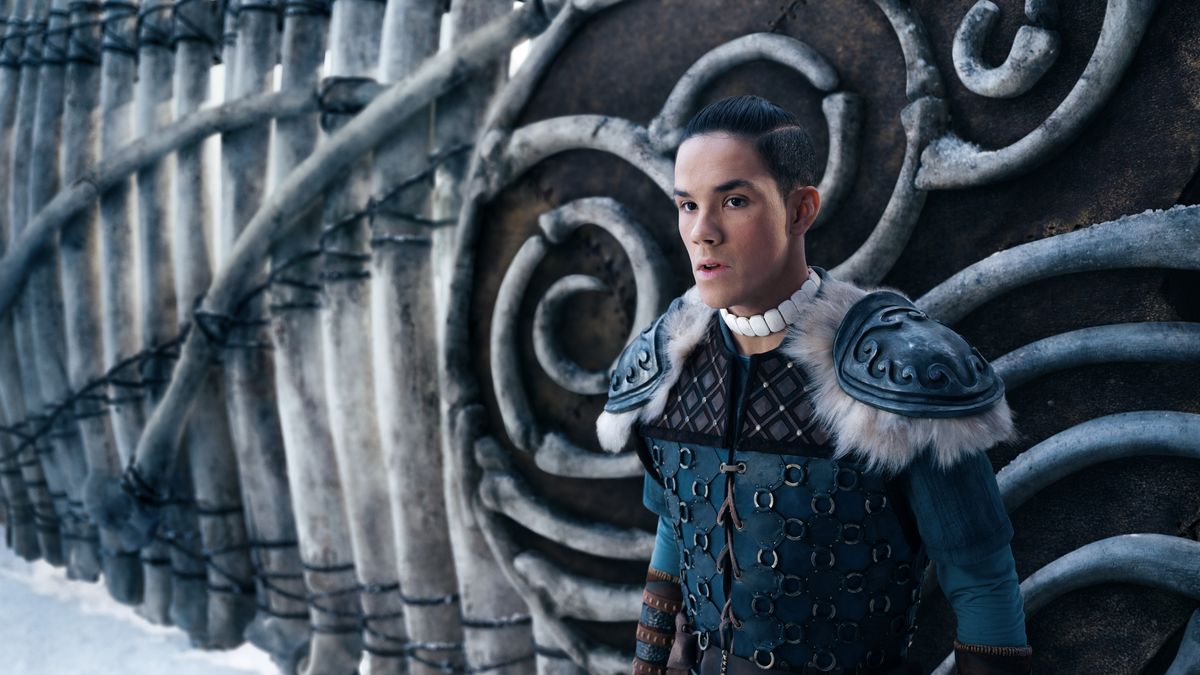
However, those good ideas don’t come together into an interpretation that adds much to the narrative of ATLA. The inclusion of character deaths doesn’t mean much when you never really get to know those characters in the first place, and somehow they focus even less on the oppression inflicted by the Fire Nation on the peoples of the other kingdoms, preferring to highlight squabbles within those nations. In their attempt to streamline the story by removing episodic narratives, they also remove many of the everyday dangers that the Fire Nation poses to ordinary people. The only refugees we really see are those that we met in Omashu (or political fugitives, like Zuko and a handful of defectors from the Fire Nation).
The most glaring flaw, however, is the lack of characterization for the heroes. Their rough edges are smoothed over in the first season, with Sokka notably lacking his character arc of overcoming misogyny, but Katara and Aang are equally flat. Whereas in the original series, Katara did a morally grey thing by STEALING the waterbending scroll from pirates, in this version, she owns it legitimately. Similarly, Aang did some selfish things, most notably lying to Sokka and Katara when there was news of the whereabouts of their father.14
But they do double down on delving into the lives of the Fire Lord and his family, and while Iroh actually acknowledges the lives lost in his siege, it’s still largely focused on his loss of his son, rather than the people of the Earth Kingdom who died defending their homes (or worse — starved in the siege).15
Overall, this show just seems superfluous on many fronts. It doesn’t manage to delve much deeper into the war themes, and it certainly doesn’t delve deeper into the characters. When the thematic depth is so similar, and the cartoon has much more aesthetic appeal, it just feels like a duller retelling of the same story.
What Makes A Live-Action Remake Work?
While that’s often how live-action remakes turn out, it’s not how it has to be.

Netflix itself had already made one of the best live-action reimaginings of a cartoon in One Piece (2023-). It manages to appeal to fans both new and old by leaning into cartoonish absurdity, rather than being embarrassed by it.
But there have been other live-action adaptations that are more successful than ATLA for various reasons.
The Little Mermaid (2023) — Adapting A Classic For A New Audience
While Disney’s been making live-action adaptations the longest (even if you don’t include 101 Dalmatians (1996)), it’s struggled to make a case for their existence.

This is a live-action remake that really gets at the heart of the original film (which is quite distinct from the original tale by Hans Christian Andersen) and reimagines it for a new audience. It respects the 1989 animated film enough to echo its themes of self-discovery and adventure in a different context.
Although it remains largely faithful to the plot of the original, making Ariel Black gives the story different connotations. After all, she’s only the third Black Disney Princess, after Tiana from The Princess and the Frog (2009) and Asha from Wish (2023) (who isn’t actually a princess). Halle Bailey’s performance anchors the movie, even when the requisite uncanny CG sidekicks are sometimes distracting. Since it changes things (even if it’s only “skin-deep”), it holds up as a true adaptation.
How To Train Your Dragon (2025) — Preserving The Heart Of The Original
This live-action remake is very similar to ATLA in many ways, but it pulls it off mostly because it never forgets the heart of the original 2010 film.
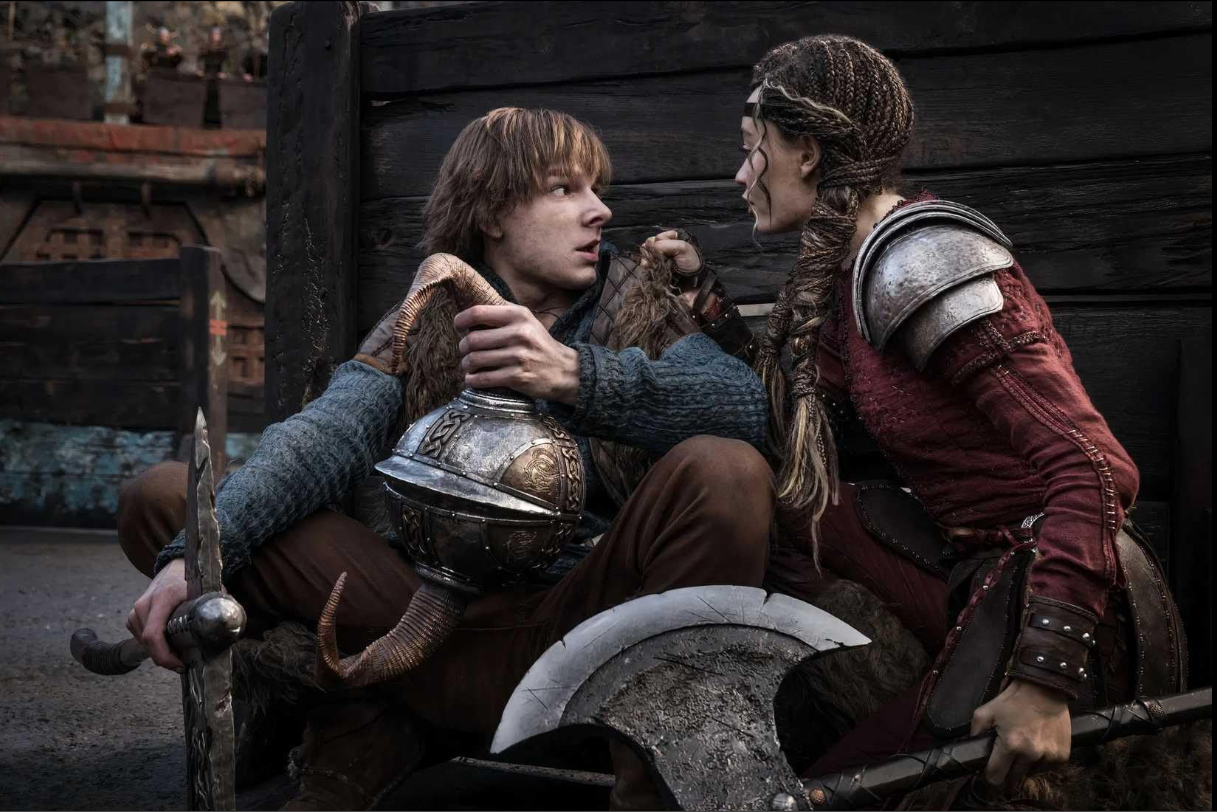
This is Deblois’s first mainstream live-action feature (he directed some independent projects in the 2000s). The film forges a distinct identity mainly through the young actors, who must have been raised with the original movies, and are obviously happy to be here. The main difference story-wise (besides dropping hints that will be important in the sequels) is the way it fleshes out its young cast. Whereas the original film featured a cast of kids that was largely composed of stereotypes, this film gives the kids room to develop as their own characters. Astrid and Hiccup’s relationship is different, so when they’re saying lines you recognize from the original, you’re seeing those lines from a different perspective,
But first and foremost, unlike in ATLA, this movie clearly understands what the original was about: Compassion and empathy being more powerful than violence and vengeance.
Why Live-Action Remakes Should Be Adaptations
What the best live-action remakes of animated films/series have in common is respect for the source material, even if it is “a silly cartoon.” Because if it was just that, it would never have been revived in the first place. Remakes are thus best considered an adaptation of animation, with all due respect to that classic animation and its themes that have obviously stood the test of time.
Footnotes
- History of Fantasy, “Modern Fantasy.” Wikipedia, 12 August 2026. ↩︎
- Influences on Tolkien, “Mythology.” Wikipedia, 8 July 2026, ↩︎
- Tolkien, J. R. R. The Fellowship of the Ring: being the first part of the Lord of the Rings, “Foreword”, pg. viii. Ballantine Books, 2001. ↩︎
- Literary reception of The Lord of the Rings. Wikipedia, 13 June 2026. ↩︎
- Tolkien’s impact on fantasy. Wikipedia, 5 August 2026. ↩︎
- List of fantasy films of the 1990s. Wikipedia, 18 July 2026. ↩︎
- List of fantasy films of the 1980s. Wikipedia, 25 July 2026. ↩︎
- Production of The Lord of the Rings film series. Wikipedia, 15 July, 2026. ↩︎
- The Lord of the Rings. Wikipedia, 11 August 2026. ↩︎
- Academy Awards, “Milestones.” Wikipedia, 8 August 2026. ↩︎
- World of Avatar: The Last Airbender. Wikipedia, 22 July, 2026. ↩︎
- Konietzko, Bryan. Avatar: The Last Airbender. Nickelodeon, 2005-08. ↩︎
- Empire and Imperialism in Children’s Cartoons — a super light topic. Youtube, uploaded by Princess Weekes. 22 Jun. 2020. ↩︎
- Konietzko, Bryan. Avatar: The Last Airbender Book 1. Nickelodeon, 2005-08 ↩︎
- Kim, Albert. Avatar: The Last Airbender. Netflix, 2024-. ↩︎