
Table of Contents Show
Imagine the date is January 10, 2020. COVID is not considered a Pandemic, and Disney has just launched its brand-new streaming app: Disney+. The Marvel Cinematic Universe has all but come to an end, Disney is beginning to prioritize remaking its classic films over releasing new animated ones, and fans are looking for something new to fill the gaps left by these fading franchises. In retrospect, this opened the doors for something new to potentially come in to take the space of these beloved franchises.

Enter The Owl House — still just a pilot episode, but one that quickly begins capturing the hearts of millions of fans around the world. The show continues to receive higher acclaim over the next year, eventually being renewed for a second season. Then, in October 2021, it is announced that this beloved series will be canceled with a significantly shortened third and final season.

In this series, I will review The Owl House1 episode by episode, with the first installment examining creative choices, the original pilot, and the show’s broader cultural impact.
How The Owl House Shapes Its Characters
In the first three scenes of The Owl House, a great deal of narrative work is done to establish the characters, conflicts, and world before the story truly begins.
Scene One
The show opens2 on Luz Noceda–who is dressed in an Azura costume — fighting a giant purple snake. She refers to herself as Azura — indicating that she really sees herself in her — and she defeats the snake only for the scene to cut to Luz in the principal’s office, where we’re introduced to her mother, Camila Noceda.
Camila is immediately framed as a parent trying to help her daughter, even if that help comes at the cost of suppressing Luz’s creativity and unique interests. It also establishes Luz as something of an oddball, and someone who lives in her own world to the point of it becoming dangerous to other people — like how she planned to set off massive fireworks in her classroom and kept a bunch of snakes unsupervised in her locker.
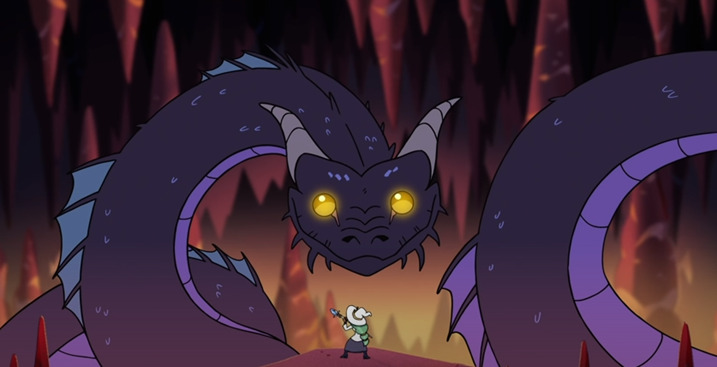
The interaction in the principal’s office immediately sets up both Luz and Camila’s main conflicts throughout the series, as well as the themes of the show as a whole. Camila is not painted as a bad person or a bad parent by suggesting summer camp to her daughter — she’s as gentle and understanding as possible toward Luz while also understanding that her actions are becoming a real problem. And Luz is just a kid. A kid in a small town that doesn’t understand her or her interests, resulting in her acting out in desperation.
Scene Two
The next scene is outside Camila and Luz’s house. The audience doesn’t see the house, only Luz, Camila, the sidewalk, and the trashcan. This choice may be deliberate, suggesting that Luz no longer views her home as a true safe space, since just a few minutes later in the episode we get to see the titular Owl House in its entirety.

Camila further tries to convince Luz that she will have fun at camp and that learning to conform a little bit would make her happier. This contrasts sharply with how Eda later speaks to Luz (i.e “us weirdos have to stick together”).
She is shown to be a lot more supportive of both Luz’s weirdness and her more destructive behavior and tendencies, which is ultimately shown to be both a good and bad thing, as it forces Luz to behave more responsibly while also allowing her to feel safer.
Scene Three
Camila telling her that she needs to make real friends and get out of her own mind is what prompts Luz to throw her Azura book in the garbage can. Camila gets a call and leaves, and Luz immediately goes to pick up the book again, showing her propensity for hiding things from her mother.
It sets a precedent for how Luz will continue to act throughout the show, as well as how she feels about her mother. This sets the groundwork for their eventual reconciliation, as both characters are positioned to recognize their mistakes and grow.

Luz discovers that an owl has stolen her book and is so desperate to get it back that she chases the animal into an old, dilapidated house in the woods. Clearly, there was something extra important about that book that made her willing to risk being hurt to get it back.
The book itself acts as, not only foreshadowing for something that is revealed later on, but also as a representation of Luz’s innocence and personality that she is afraid to lose, hence why she decides to ditch the bus to camp and chase after the book instead.
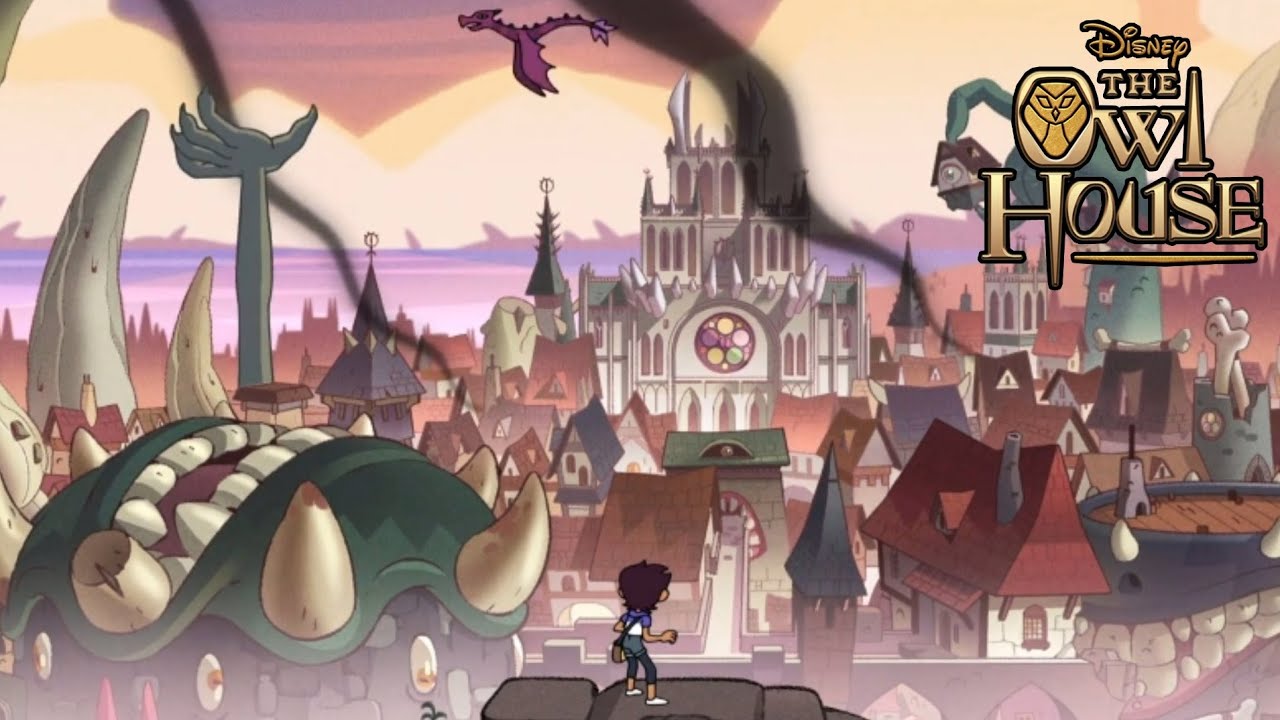
Even upon entering a brand new, very different, scary looking world, Luz is still hyper-focused on her book. She jumps out of hiding, grabs the book, and runs off, which is when she officially meets Eda the Owl Lady. After a slight altercation with Coven Scouts, Eda takes Luz back to her home and introduces her to her “roommate,” King.
Sound, Color, & Clothing — The Unseen Fundamentals Of Animation & What They Tell Us
In animation, nearly every decision is intentional, often labored over for weeks or even months. This includes the background colors, minor character designs, clothing, facial expressions, and music.
Clothing
Clothing is one of the most important things about designing a character. Clothes are meant to subliminally tell the audience certain things about a character and even how they relate to other characters and plot points.
Camila & Eda
For example, Camila dresses in light blue scrubs and wears her hair in a bun. This tells the audience many things about her character.
She is presented as kind and caring, yet also calm and understanding–both hinted at by the light blue color of her outfit. It’s also worth noting that everyone in the Human Realm seems to have cool undertones to their skin and clothes, whereas Luz and Camila both have warm-toned skin.
This, mixed with the light blue scrubs and bun of Camila’s outfit, suggests that Camila is actually a lot like Luz. She’s “weird” and has a lot of unconventional interests and ways of understanding things, but she “masks” with conventional, cool toned clothes, which is something that is confirmed in season three.
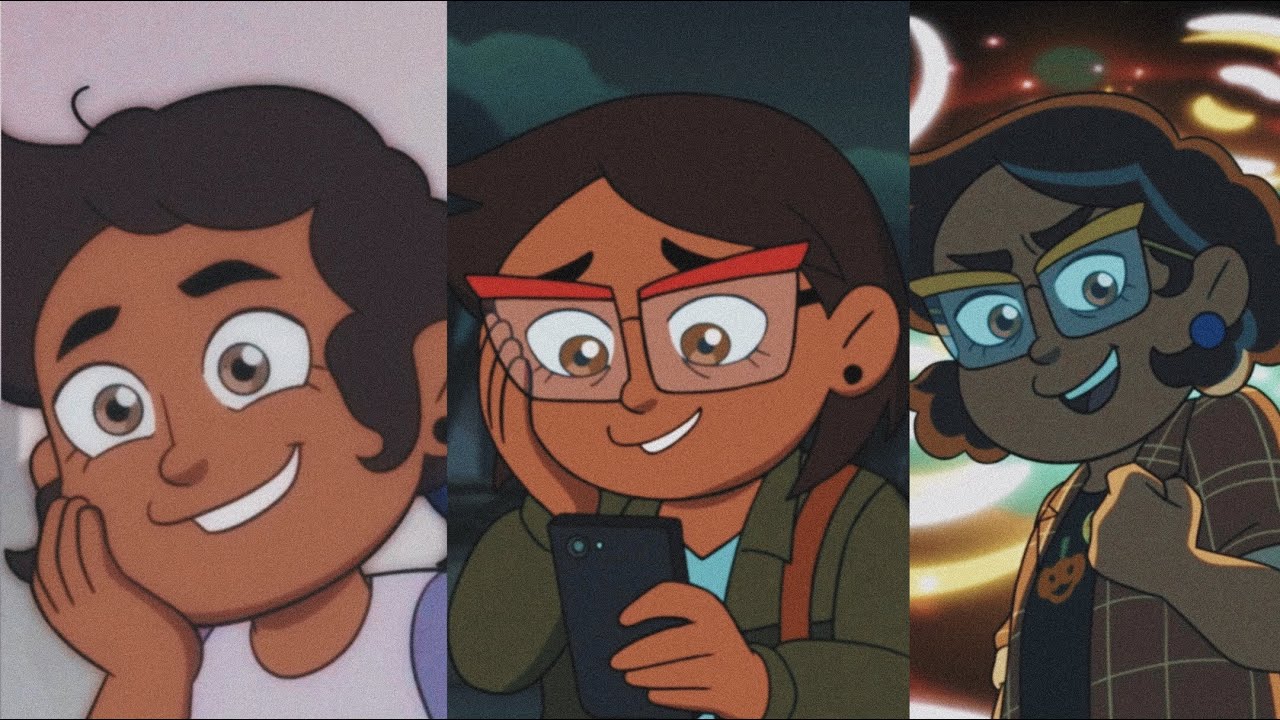
Camila’s appearance also completely contrasts with Eda’s appearance. Eda’s main colors are red, white, and gold, while Camila’s are brown, tan, and light blue. Eda’s hair is long and messy, while Camila’s is short and in a bun. Eda has more sharp, angular features, while Camila has more soft, round features. This contrast sets up their differing roles in Luz’s life, as well as both of their character arcs and personalities.
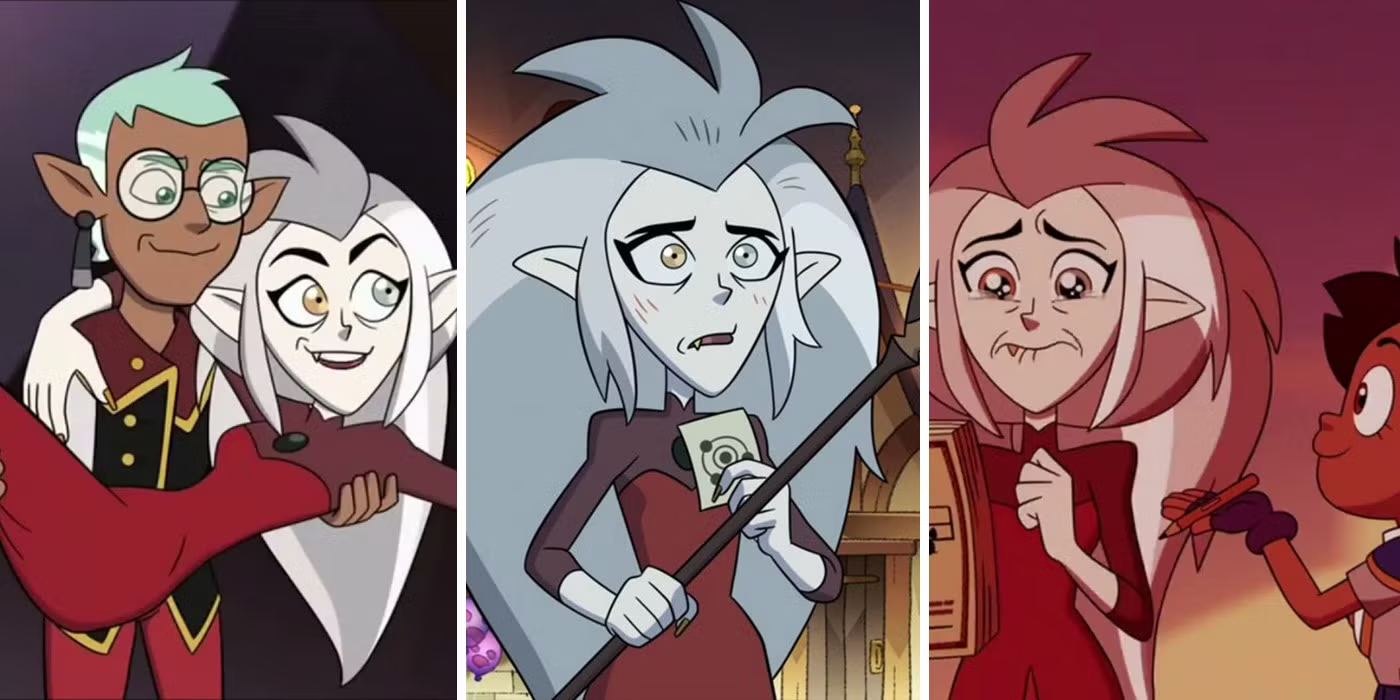
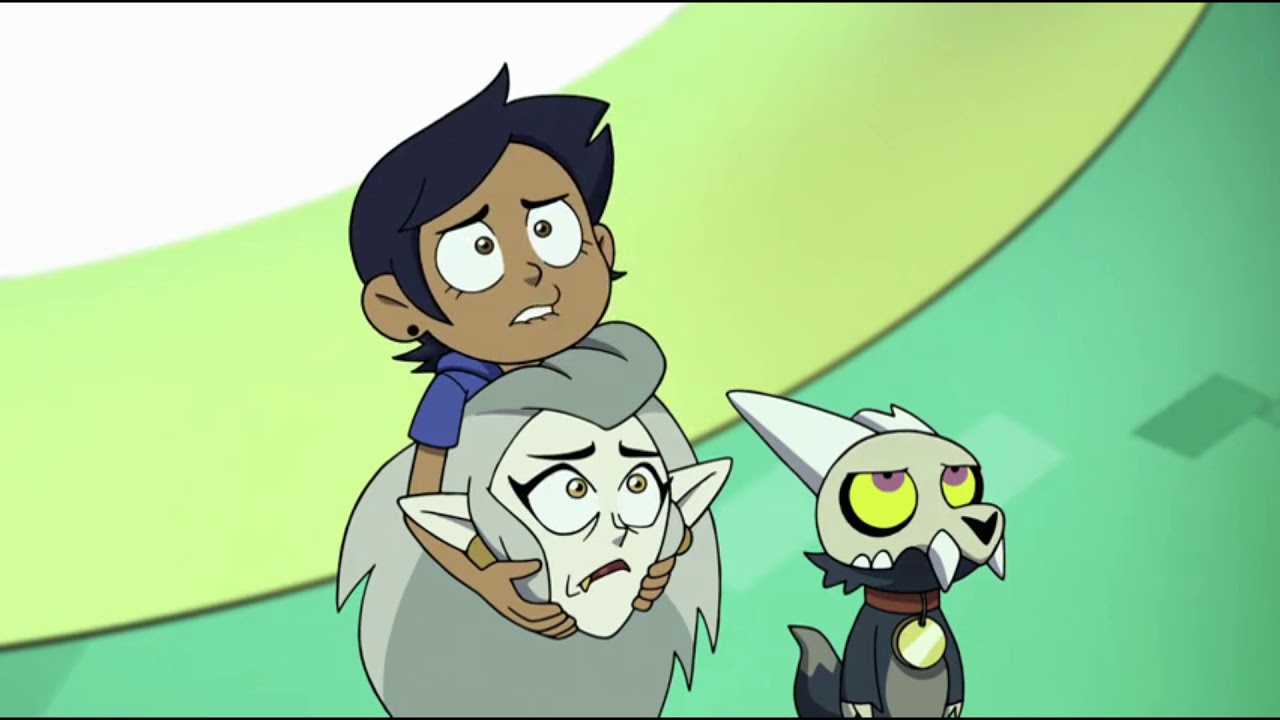
In the Pilot and throughout most of the series, it’s Eda that does most of the heavy lifting in this regard because everything we learn about Eda can be assumed to be mirrored in Camila’s character. When Eda does something crazy like take her hand off, we instinctively know that it’s both something Camila would find amusing and alarming, based on both the little moments we had with her in the pilot and the visual representation of how different the women are. We can infer how Camila would act based on how her visual opposite acts.
Luz
The way Luz dresses is particularly significant. Her clothes don’t show her personality as much as they show her character arc. Luz’s main colors are brown/tan, purple, white, gray, and black, in that order.

The cool, purple color of the top of Luz’s shirt shows her desperation to fit in with the people in the Human Realm, attempting to mask her weirdness.
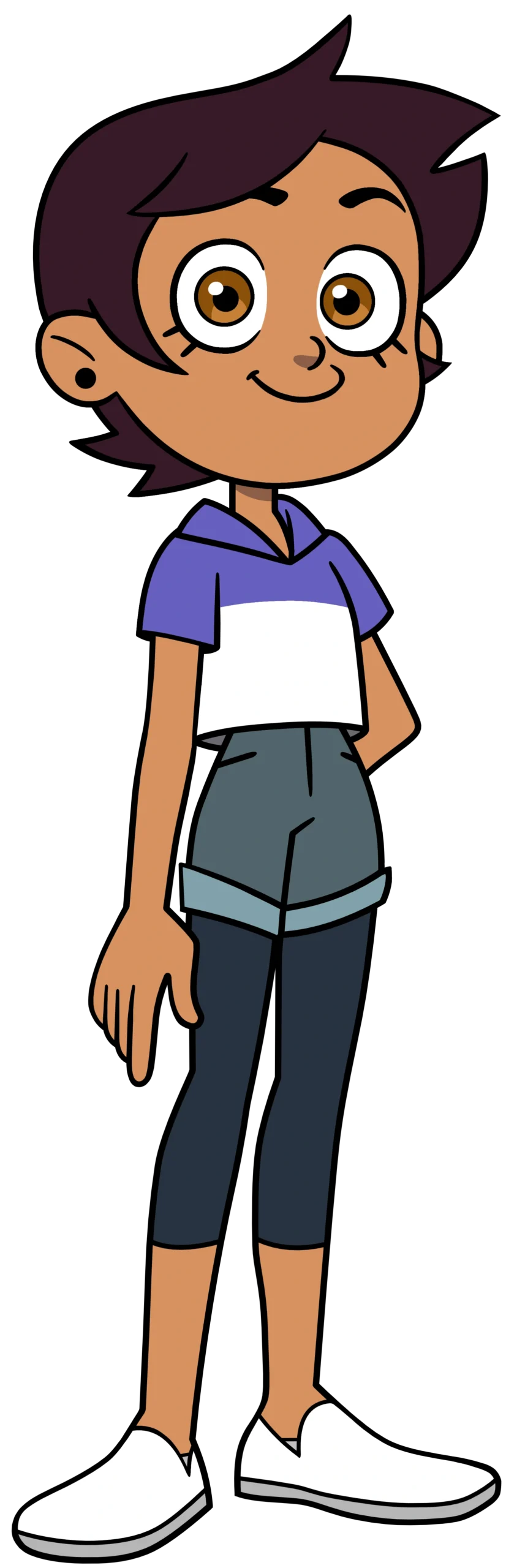
The transition to white on her shirt could signify her freedom once she finally finds her people in Season 1 and makes a home for herself in the Boiling Isles–going to school, learning magic, working for Eda, and spending time with her friends.
The gray could signal her shift in Season 2, where she is forced to cut off all potential contact with her mother in the Human Realm and take part in a rebellion against Emperor Belos, whose sole purpose is to destroy the life she’s built with the people she’s come to love.
The black color of the leggings could represent her jaded emotions and depression in the end of season two and throughout season three, where the fight to save the Boiling Isles continues, and she continues to blame herself for causing it. Then the tan of her legs and white of her shoes represents her developing into someone who is still weird, optimistic, and friendly, while also developing a new understanding of the world and her place in it.
Another extremely important part of animation and production is coloring. The Owl House shows two completely different worlds throughout its runtime, and the way it differentiates them by color is not only thematically relevant but also tells the audience a lot about Luz herself, given that the series is viewed mostly through her eyes.
Coloring
The Human Realm is mostly shown in cool-toned colors. There’s a lot of blues, whites, grays, purples, and duller versions of warm colors. The Human Realm isn’t meant to be seen as bad, but more boring than the brightly colored Boiling Isles. Even the sky in the Human Realm is a dull gray as opposed to the jewel toned oranges and reds of the sky in the Boiling Isles. The buildings in the Boiling Isles are more colorful and messier as well. The Boiling Isles are characterized by vibrant, chaotic color palettes.

The show makes it clear that neither is the “better alternative,” but rather both are good in their own ways. The duller colors of the Human Realm are meant to be calming and relaxing. Duller colors are helpful for mental clarity and emotional regulation. The bright, deep tones of the Boiling Isles are meant to be fun and almost overwhelming. They balance each other, and this foreshadows Luz’s choice to go back and forth between worlds in the end of the series. She can’t live without both worlds.
Sound Design & Music
The music and sound design also set both worlds apart from one another while also connecting them. The scores for both worlds are orchestral in nature, however, the Boiling Isles uses more string and wind instruments to create faster paced, lighter sounds, while the score for the Human Realm is more subdued, even if it uses the same sets of instruments. The sound design for the Human Realm is deliberately quiet. The only things you hear there are the voices of the characters with very little, soft music.
The Boiling Isles, however, is louder. There’s nearly constant background noise, talking, music, and the movements of other characters. By having these contrasting environments, it allows the series to further explore and experiment with its own characters and soundscape. Virtually anything can fit into this world now, no matter how strange.
What The Creators Changed In The Original Pilot And Why It’s Important
The show, of course, had to start somewhere. In fact, the original pilot–which can be found on YouTube here and here–was quite a bit different compared to the finished version.
Changes
For starters, the storyboard pilot begins with Luz actively in class giving the book report rather than being in the principal’s office. The other students aren’t attacked by snakes but rather told off by Amity for picking on Luz. Luz immediately decides that Amity must be her friend, and finds her in the hall after class, offering a drawing she made of them.
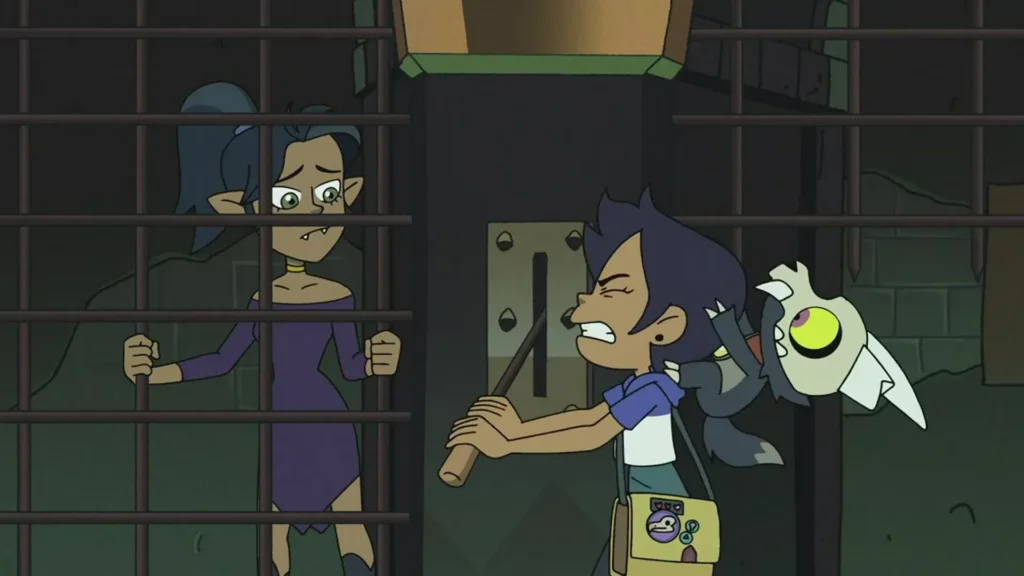
Amity drops a passport with horns on it as she’s walking away, and Luz follows her in an attempt to give it back, which is how she gets into the Boiling Isles in the storyboard pilot. She still does meet Eda and King, and their mission together goes similarly to how it does in the official episode. Luz goes to give Amity the passport, only to hear that Amity doesn’t actually like or want to be her friend, which hurts her feelings.
Another significant change that’s made is that Lilith shows up and is revealed as Eda’s sister in the pilot. She’s also shown to be a lot more dangerous and menacing than she was in the official show. Lilith is also revealed to have a bat-like curse similar to Eda’s Owl Curse.
Possible Reasons For Changes
These changes were likely made to give the pilot a self-contained antagonist as opposed to someone who is meant to show up frequently. This is because the pilot is typically meant to be very different than the show in its entirety, meaning that there’s a good chance that a lot of the characters would have changed quite a bit in the transition from episode one to episode two.
It’s a lot easier to make this transition seamless when the villain isn’t going to show up again, so they don’t have to spend the time rewriting their character to fit a larger narrative. They also likely removed Amity from the pilot because that would have overloaded the cast with characters too early on.

The audience needs time to adapt to the world and the character’s they’re going to be following, so adding more side characters could have risked overloading the audience.
A massive change that was made was that, in the original pilot, Eda was unwillingly working with Emperor Belos. It was likely that this was changed because Eda had been characterized throughout the episode as a rebel who would never bend to the will of another person. Adding that sub-plot of her being indebted to Belos in some way would have taken away from that, especially in a pilot episode–where characters are at their most fragile in terms of creation and reception.
How The Owl House (2020-2024) Changes The Culture Of Cartoons
Before The Owl House was released, a lot of Disney Channel’s adult fanbase had moved on from their animated shows after the ending of Gravity Falls. They had just started watching Amphibia, but a lot of fans (such as myself) had moved on as they’d gotten older. Then, The Owl House pilot was released on Disney Channel and Disney’s YouTube, and those shows exploded in popularity again as memes and clips of the show began surfacing everywhere.

The show’s popularity surged with the introduction of Amity, and the implication that there would be a romantic relationship between her and Luz–one of the first and best developed queer main characters to be shown on, not just a Disney show, but any show throughout the history of animated shows. Something that had been such a problem in the past that Alex Hirsch nearly risked his own show being cancelled over the implications of two male background characters being together.
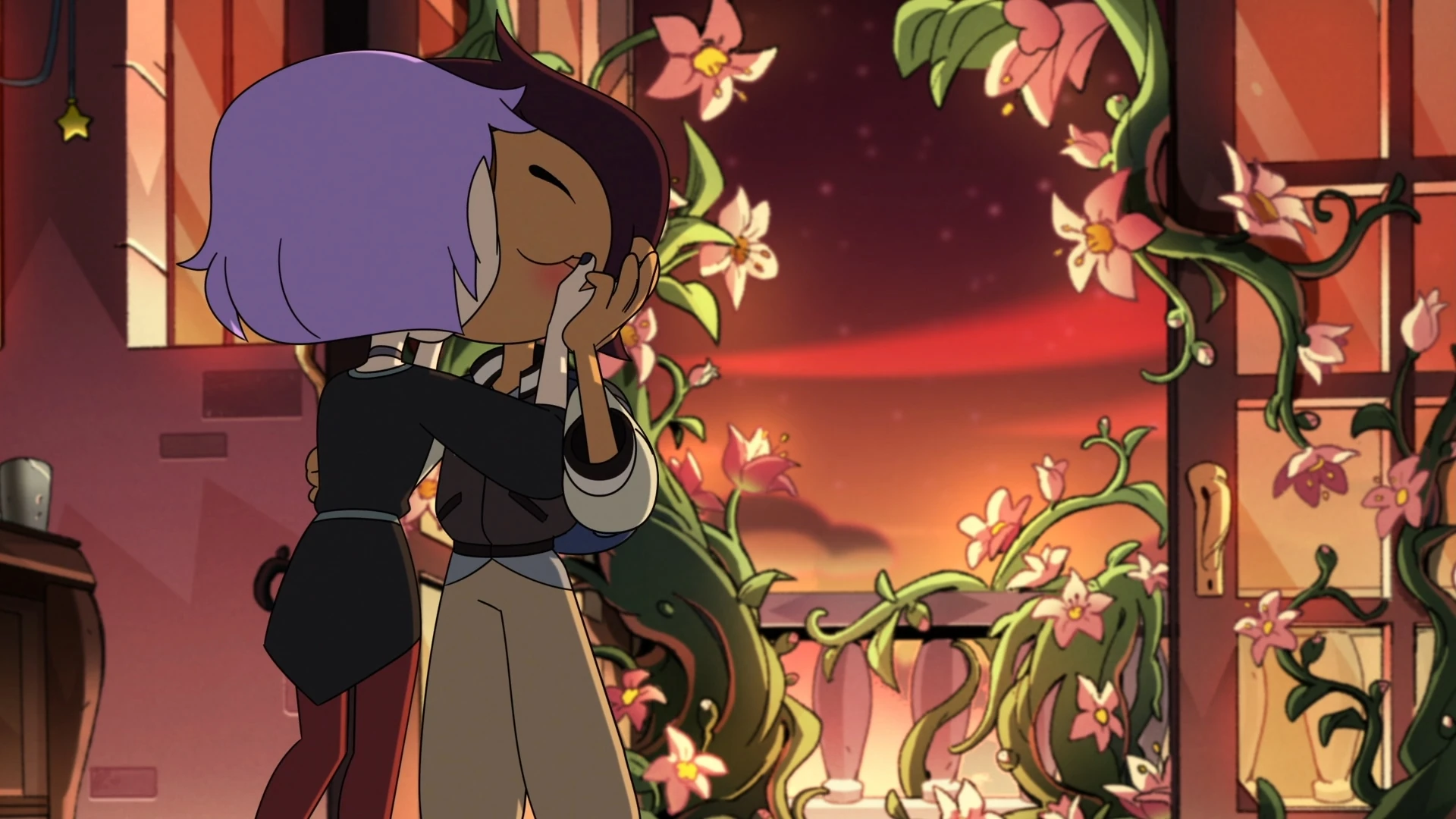
The series quickly became one that anyone could relate to, with the show receiving nearly perfect scores on critic sites and rave reviews on all platforms. Due to this, we got more shows and movies from more studios that were finally able to see the appeal of creating something with more unconventional main and side characters.
In many ways, the cancellation of The Owl House became both a blessing and a curse, as the bravery of Dana and her team was what gave us such impactful characters and stories, but also what ultimately got the show cancelled. Because of their fight, we started seeing more media that truly included more marginalized identities in meaningful ways.
Footnotes
- Dana Terrace, creator. The Owl House. Disney+ and the Disney Channel, 2020. ↩︎
- The Owl House. “A Lying Witch and a Warden.” Disney+, 23:49. January 10, 2020. ↩︎
- The Owl House. “Original Pilot Episode (Storyboard) (Found Media!).” Youtube, 21:33. April 25, 2024. https://www.youtube.com/watch?v=qAoY9EjWrno ↩︎