

Table of Contents Show
When Crazy Ex-Girlfriend1 (2015) first introduces Valencia Perez, the audience has little reason to like her. She is beautiful, confident, athletic, and popular. She has dated Josh Chan for years; she has a life in West Covina that she genuinely enjoys and, unlike Rebecca Bunch, seems completely comfortable with herself.

Then Rebecca sees Josh again. But by his side is Valencia Perez, the perfect woman. She’s thin, feminine, and socially dominant.
After running into her childhood boyfriend at a bar in New York, Rebecca becomes convinced that moving across the country to West Covina is the answer to everything wrong with her life. She follows Josh back to California, gets an apartment, takes a job, and slowly inserts herself into his life. The problem is that Josh already has a girlfriend, Valencia.

From Rebecca’s perspective, Valencia is everything she is not. Rebecca is anxious where Valencia is confident, awkward where Valencia is polished, unhappy where Valencia appears content. More importantly, Valencia has the one thing Rebecca wants most: Josh.
Meet The Mean Girl — Valencia Perez
Because Rebecca is the protagonist, the audience is given immediate access to her inner world. We hear her thoughts, see her fantasies, and understand her insecurities, even when her behavior is irrational or destructive.
Her songs make her emotions impossible to ignore. We know why Rebecca does what she does, which makes it easy to sympathize with her even when she is objectively making terrible decisions.
Valencia does not initially receive that same privilege.

She enters the series as an obstacle in somebody else’s romantic story. Rebecca sees her before the audience has any reason to see her as anything else. Valencia becomes the woman standing between Rebecca and the life she thinks she is supposed to have.
The important part is that Rebecca is not completely wrong about Valencia.
Valencia really can be mean. She is jealous, judgmental, competitive, petty, and sometimes cruel. She can be dismissive of other women and incredibly concerned with appearances. Crazy Ex-Girlfriend does not eventually reveal that Rebecca simply misunderstood a perfectly nice woman.

Instead, the show asks a more interesting question: What happens when a woman who really does have ugly qualities gets reduced to those qualities?
That is the trap of the mean girl archetype. It takes something a woman genuinely does and turns it into everything she is. Valencia’s development is not about proving Rebecca wrong. It is about proving that Rebecca was never seeing the whole picture.
How The Mean Girl Archetype Was Born
The mean girl2 archetype is built around a contradiction. She possesses the qualities society tells women they should want: beauty, confidence, popularity, femininity, and social status. Yet those same qualities become evidence that something is wrong with her.
She is too pretty, so she must be shallow. Too confident, so she must be arrogant. Too feminine, so she must be vapid. Too socially successful, so she must be cruel.

The audience is usually encouraged to identify with the “everygirl” instead. She is insecure, awkward, and overlooked, and therefore easier to sympathize with. The mean girl becomes the woman against whom she measures herself. Crazy Ex-Girlfriend builds that distinction almost immediately.
Rebecca is an accomplished “Yale law, Harvard undergraduate” with a successful career, but none of those achievements have made her happy. In fact, the reason she did not graduate from Harvard was her torrid affair with a married professor.
After the professor broke up with her, Rebecca was charged with arson after burning his home down. Her past is even implied in the Season 2 theme, “I’m Just A Girl In Love,”3 where her mother’s in-court testimony is turned into her own theme song to excuse her disturbed and crazed actions.

Valencia, meanwhile, appears to have everything Rebecca believes she lacks. She is physically confident, comfortable with her femininity, socially established, and seemingly secure in her relationship.
Rebecca does not simply dislike Valencia. She compares herself to her constantly. That comparison becomes especially clear in “I’m So Good at Yoga,”4 one of the show’s earliest examples of Rebecca constructing Valencia in her own mind.
Rebecca’s Insecurities Take Center Stage
Rebecca arrives at Valencia’s yoga class wearing a Harvard shirt. Rebecca, despite not getting her law degree from Harvard, still uses her prestigious education as a way of feeling superior to other people. Especially when she learns that Valencia did not go to college and is financially struggling to fund her dream of starting her own yoga studio.
It is a small visual detail, but it exposes the hierarchy Rebecca has created between them. Valencia has the body, the boyfriend, the confidence, the social ease. Rebecca has Harvard, the brain, the money. She is wearing the one thing she believes she can flaunt over Valencia. Then come the repeated lyrics:5
“Look at me, look at me / I'm so good at yoga!"
The phrase is reminiscent of schoolyard taunts. “Oh, look at me!” is the exaggerated voice people use when imitating someone they think is showing off. Rebecca is imagining Valencia’s inner thoughts. And, even in Rebecca’s mind, Valencia is mocking her.

The imagined Valencia is a caricature of the mean girl Rebecca needs her to be: someone who walks into a room, shows off how pretty or talented she is, and practically begs everyone to notice.
When Rebecca imagines Valencia saying, “I’m so much better than you!” the song makes its real subject clear. Rebecca is translating her own insecurity into Valencia’s voice. She is not hearing Valencia say these things. She is deciding that Valencia must think them.
The absurdity of the song escalates when Rebecca imagines Valencia bragging, “My father didn’t leave me.” Rebecca piles everything she envies into Valencia’s mouth, from physical confidence to emotional security, and turns those advantages into imagined insults.
The fantasy tells us more about Rebecca than it does about Valencia. Rebecca assumes that because Valencia possesses qualities she envies, Valencia must be using those qualities to make her feel inferior.

That is how the audience is taught to see Valencia before it knows her. Rebecca does not have to prove that Valencia is cruel. She only has to imagine what cruelty would sound like coming from her.
And because Rebecca is the protagonist, the audience is initially primed to believe her.
Rebecca’s Worst Enemy… Another Woman
Rebecca needs Valencia to be more than Josh’s girlfriend. If Valencia is simply a woman Josh loves, Rebecca’s pursuit of him looks invasive. If Valencia is the villain, Rebecca can turn that pursuit into a heroic story. She can convince herself that she is reclaiming something that was always meant to be hers.
The villain makes the fantasy work.

This is why “I’m So Good at Yoga” matters beyond its jokes. Rebecca does not simply observe Valencia. She turns her into a spectacle. The repeated “Look at me” becomes an accusation: Valencia is supposedly desperate for attention, desperate to prove she is better and desperate to make Rebecca feel small. But the competition is largely one-sided.
Valencia knows Rebecca as the woman who followed her boyfriend from New York to California and keeps inserting herself into their relationship. Rebecca knows Valencia as the personification of everything standing in her way. Rebecca sees a romantic comedy. From Valencia’s perspective, the same story could reasonably look much closer to a horror movie.

That imbalance is what makes the audience’s initial hatred of Valencia so revealing. We understand why Rebecca feels threatened by her before we understand anything about Valencia herself. Rebecca has an interior life. Valencia initially has a function.
She is the obstacle.

That does not mean Valencia’s behavior is imagined. In fact, the show eventually gives us plenty of reasons to criticize her. But once the audience sees where those behaviors come from, “mean girl” becomes an increasingly inadequate explanation.
“Women Gotta Stick Together”6 is one of the clearest examples.
The song begins with Valencia declaring, “Women gotta stick together / Each and every day.” It sounds like a straightforward celebration of female solidarity. Then Valencia immediately begins tearing other women apart.
One woman needs to “pluck her eyebrows.” Another needs different jeans and “a size up.” She categorizes women’s bodies, criticizes their appearances, and judges their sexual behavior, all while insisting that women need to support each other. The contradiction is the point.

Valencia believes in sisterhood, but she has also internalized the standards that make women compete for approval in the first place. Her idea of helping another woman is inseparable from telling her how she should look. Her version of solidarity still has winners and losers.
That is internalized misogyny played for comedy, but it also explains something essential about Valencia. She is not simply a woman who enjoys putting other women down. She has learned to understand femininity through judgment, and she applies those rules to everyone, including herself. Her treatment of Rebecca is an extension of that worldview.

When Valencia calls Rebecca a “weird troll,” she is being cruel. But she is also responding to a real threat to her relationship. Rebecca really did move across the country to pursue Josh. Valencia’s hostility is not invented by Rebecca, even if Rebecca’s interpretation of Valencia is exaggerated.
That distinction matters. The show does not ask us to excuse Valencia. It asks us to understand her without reducing her.
Understanding The Woman Behind The “Mean Girl”
The easiest way for Crazy Ex-Girlfriend to challenge its own mean girl would have been to reveal that Valencia was never actually mean. Instead, it lets her be mean.
Her growth does not erase her worst qualities. It gives those qualities context. Valencia can be vain and generous. Judgmental and insecure. Competitive and loyal. She can sincerely want female friendship while carrying around years of learned competition with other women. Those contradictions make her more believable than a redemption arc ever could.

It becomes especially clear after she breaks up with Josh. For years, their relationship has been central to how Valencia understands her future. Once it ends, she has to build an identity that is not organized around being somebody’s girlfriend.
That process eventually opens up another part of her identity when she realizes she is bisexual through her relationship with Beth.
The show does not treat Valencia’s sexuality7 as a shocking revelation that suddenly explains her. It is quieter than that. Valencia meets a woman and falls in love. She, and the audience, discovers a new part of her story that was long repressed.

That matters because Valencia is finally being allowed to have a story that does not begin with Josh. For so much of the early series, she is defined through comparison: Josh’s girlfriend, Rebecca’s rival, the prettiest woman in the room, the woman who appears to have everything figured out.
Her relationship with Beth gives the audience another dimension of her without erasing any of the others.
She is not discovering that she was secretly a different person all along. She is discovering that she contains more than the version other people had already decided on.

The same is true of her friendships, career, and eventual relationship with Rebecca. Once Josh stops being the center of her narrative, Valencia has room to become someone who wants things for herself.
That makes the show’s treatment of her more complicated than a simple redemption story. Valencia does not become less flawed because she becomes more sympathetic. We simply gain enough information to understand that her flaws were never the whole character.
Crazy Ex-Girlfriend (2015) — We Were Never Supposed To Hate Her…
“This Is My Moment”8 captures that shift because Valencia is finally looking toward a future rather than measuring herself against somebody else. She asks, “What does the future hold?” and later sings, “This is my time to shine, step out of the line.”
The language is different from the Valencia the audience first encountered. Early Valencia’s identity is tied to how she has compared to other women. Valencia is asking what she wants when there is no competition to win.
That distinction changes how her confidence reads. At the beginning, her confidence is a threat because Rebecca experiences it as evidence of her own inadequacy.

In the end, Valencia’s confidence belongs to Valencia. It does not need an audience or an opponent. Her friendship with Rebecca completes that shift.
Once Rebecca actually knows Valencia, the rivalry becomes difficult to sustain. Valencia is no longer just the beautiful woman who has Josh. She is someone with her own insecurities, ambitions, sexuality, friendships, and bad habits. Rebecca cannot keep treating her like a symbol once she has to interact with her as a person.

And the audience has to make the same adjustment.
That is ultimately what Crazy Ex-Girlfriend does so well with Valencia. It does not dismantle the mean girl by pretending she was never mean. It dismantles the archetype by showing how little the label actually explains.
Beyond The “Mean Girl” Label — Allowing Valencia To Be Human
Rebecca was right about Valencia’s flaws. Valencia was petty. She was judgmental. She could be cruel. She had internalized the same beauty standards and competitive instincts that she sometimes used against other women.
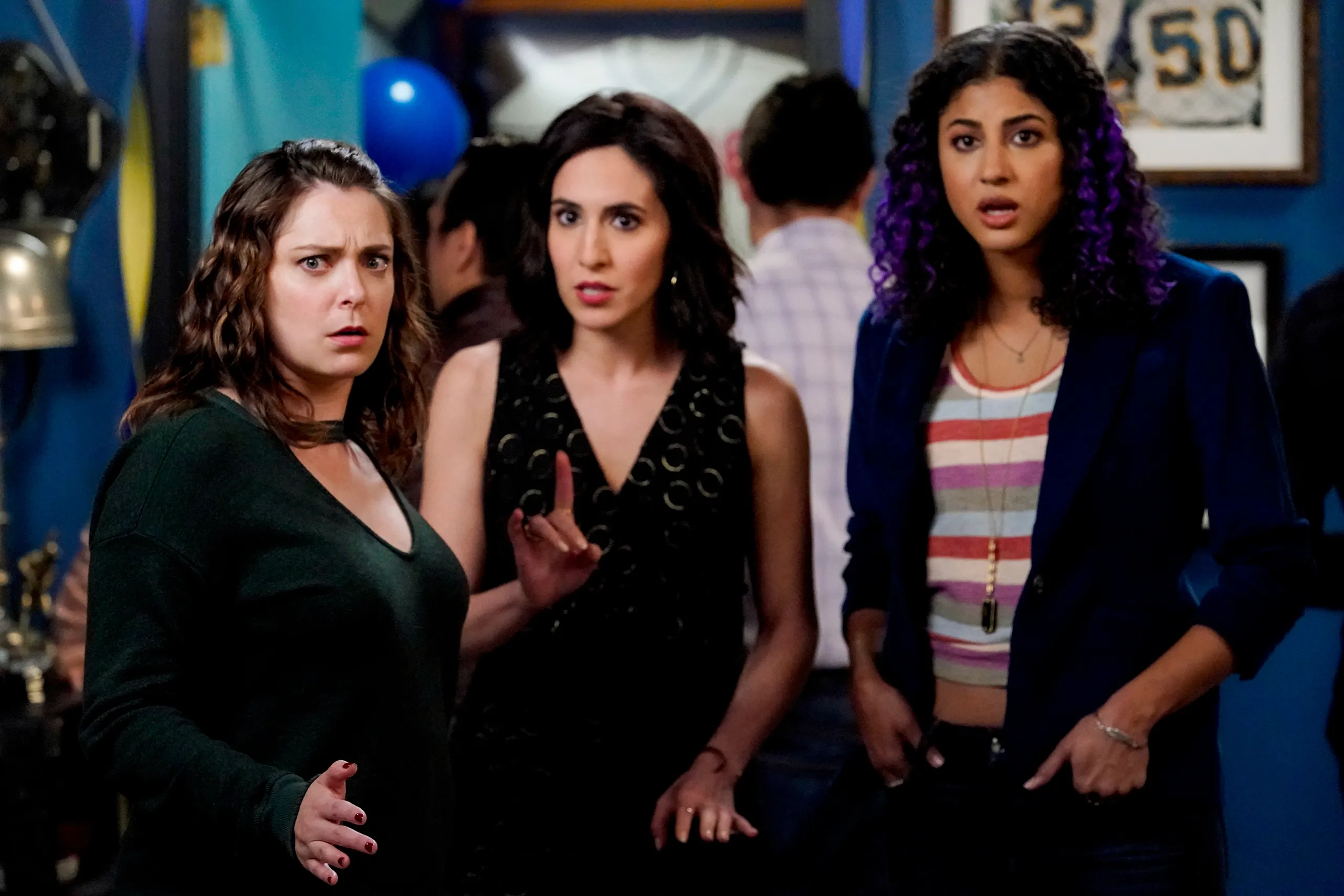
But those facts were never a complete explanation of who she was. The problem was not that Rebecca feared something that wasn’t there. The problem was that she feared Valencia so much that she mistook projection for the truth.
Just as the audience does.
We are given Rebecca’s insecurity before Valencia’s interiority, so Rebecca’s interpretation becomes our first impression. We hear Rebecca’s jokes, songs, and fantasies, while Valencia initially exists mostly through what Rebecca notices about her. The audience is not simply watching Rebecca dislike Valencia. It is being taught how to dislike her.

Valencia, initially, did not hate Rebecca. She wanted to be her friend. However, it becomes increasingly clear to the audience that she only wants to befriend Rebecca because she is unthreatened by her.
Juxtaposed by her recurring comedic references to a girl named Denise Martinez, referred to as “that bitch I cannot stand” by Valencia. It is only once Valencia sees Rebecca as a threat to her relationship that she begins to grow hostile towards her.
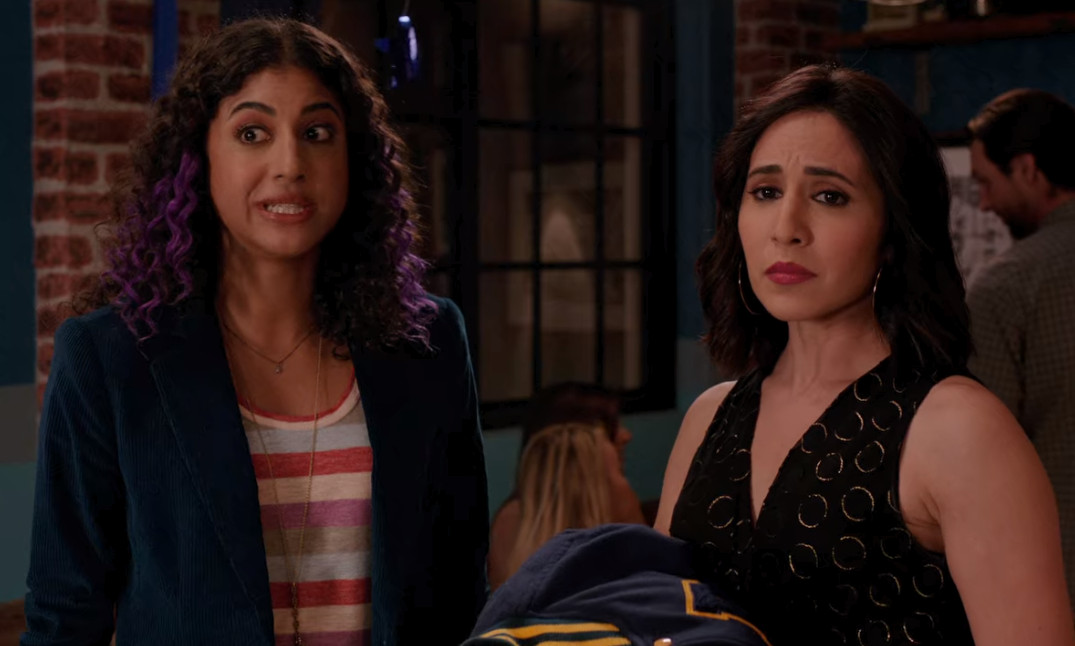
Valencia can be vain without being shallow. Confident without being cruel. Competitive without defining herself by competition. Judgmental without being incapable of growth. She can hurt other women and still learn how to love them. She can spend years believing she understands herself and still discover that she is bisexual.
None of those contradictions cancel each other out. They are what the archetype leaves out.

The mean girl works because she is easy to understand from the outside. She is beautiful, so we assume she is shallow. She is confident, so we assume she is arrogant. She is popular, so we assume she is cruel. Once those assumptions become the character, there is nowhere left for complexity to go.
Valencia’s story exposes that limitation. She does not become a better character because she becomes a better person. She becomes a better character because Valencia is allowed to be a person and not an archetype.
Footnotes
- Crazy Ex-Girlfriend. (2026). In Wikipedia. ↩︎
- Kaplan, A. (n.d.). ‘Stop Trying to Make Fetch Happen’: The Disempowerment of Women’s Voices in the Film Mean Girls. ↩︎
- Just A Girl In Love. (n.d.). ↩︎
- I’m So Good At Yoga. (n.d.). ↩︎
- Crazy Ex-Girlfriend (OST) – I’m So Good At Yoga lyrics. (n.d.). ↩︎
- Crazy Ex-Girlfriend (OST) – Women Gotta Stick Together lyrics. (n.d.). ↩︎
- Valencia Has A Girlfriend On ‘Crazy Ex-Girlfriend’ & The Show Treats Their Relationship Perfectly. (2018, February 3). ↩︎
- This Is My Moment. (n.d.). ↩︎