

Table of Contents Show
Monster House (2006) is an animated horror/comedy film made for kids. The film was directed by Gil Kenan, with executive producers Steven Spielberg and Robert Zemeckis.1 Since its release, Monster House has achieved cult classic status as a gateway into the horror genre. Its slow-building dread and high-intensity action sequences give young viewers a taste of what the genre has to offer. Additionally, Monster House balances its horror elements with emotional maturity, introducing young viewers to complex themes of grief and trauma.

The story follows DJ, a preteen boy obsessed with spying on his neighbor, Mr. Nebbercracker, and his house. Nebbercracker is a grouchy old man who yells at kids to get off his lawn and takes toys kids leave on his property. On the eve of Halloween, a basketball rolls onto Nebbercracker’s lawn, and DJ tries to retrieve it. Mr. Nebbercracker comes out of his house screaming at DJ and ends up suffering a heart attack. DJ is convinced that he has killed his neighbor as the ambulance takes him away.

The morning after Nebbercracker is taken away, DJ gets a call from the house. DJ is convinced that Nebbercracker’s ghost is now haunting the house. DJ and his best friend, Chowder, begin watching the house constantly. Jenny Bennett — a local girl trying to sell candy — almost gets eaten by the house but is saved just in time by the two boys. The three of them then team up to try and bring down the house before trick-or-treat night.
Monster House is a unique take on “the monster,” anthropomorphizing a house and using it to symbolize being haunted by grief. Through their respective journeys, DJ and Nebbercracker learn the importance of empathy over judgment and the necessity of letting go.
How Trauma Transformed Constance Nebbercracker
Horace Nebbercracker lives alone, but rumors circulate in the neighborhood that he murdered and ate his late wife. It isn’t until DJ, Chowder, and Jenny go inside the house that they learn the actual truth about his wife.
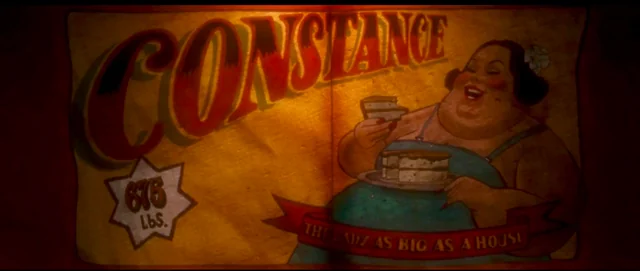
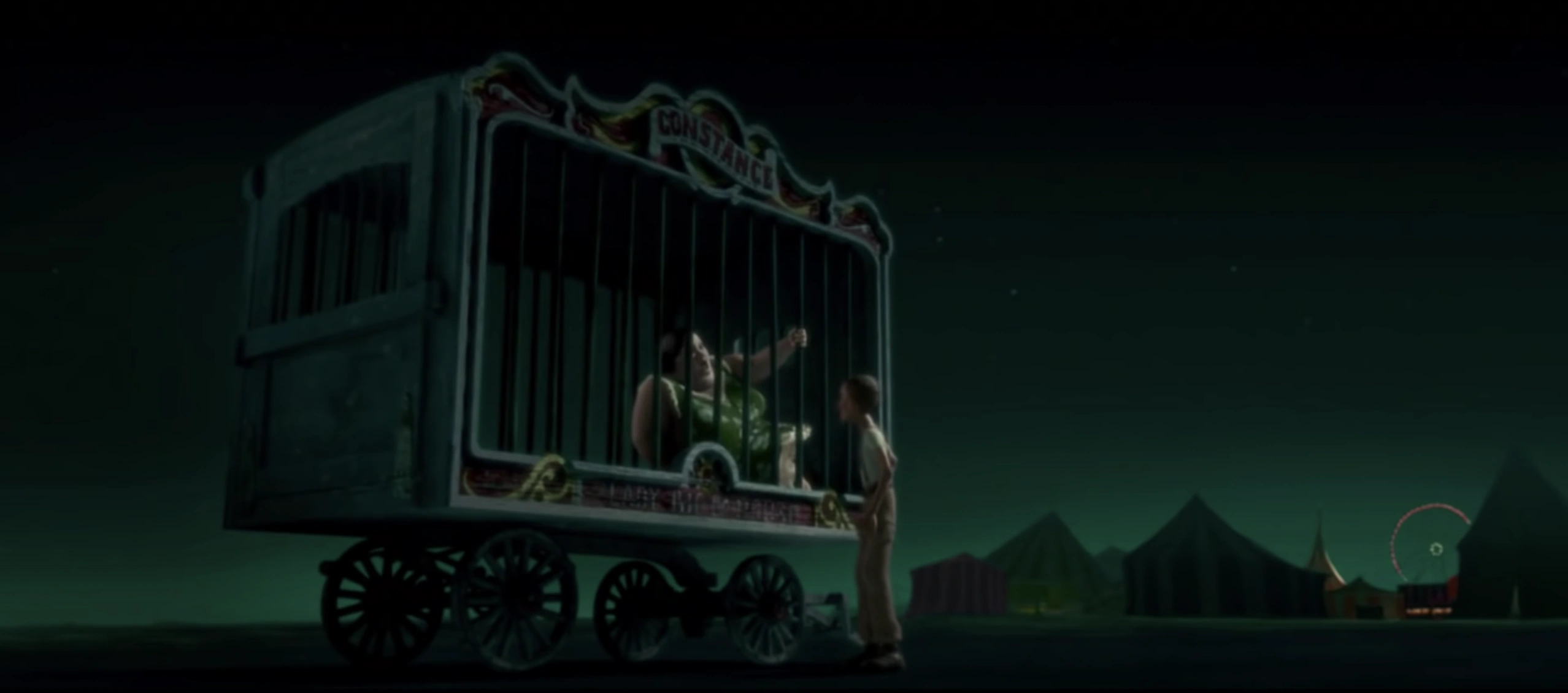
Constance Nebbercracker — formerly known as ‘Constance the Giantess’ and ‘The Lady as Big as a House’ — was a circus attraction at the circus Horace Nebbercracker visited. She was kept in a cage where people marveled at her size; patrons ridiculed her and threw things at her. Horace Nebbercracker saved her from that situation and later married her.
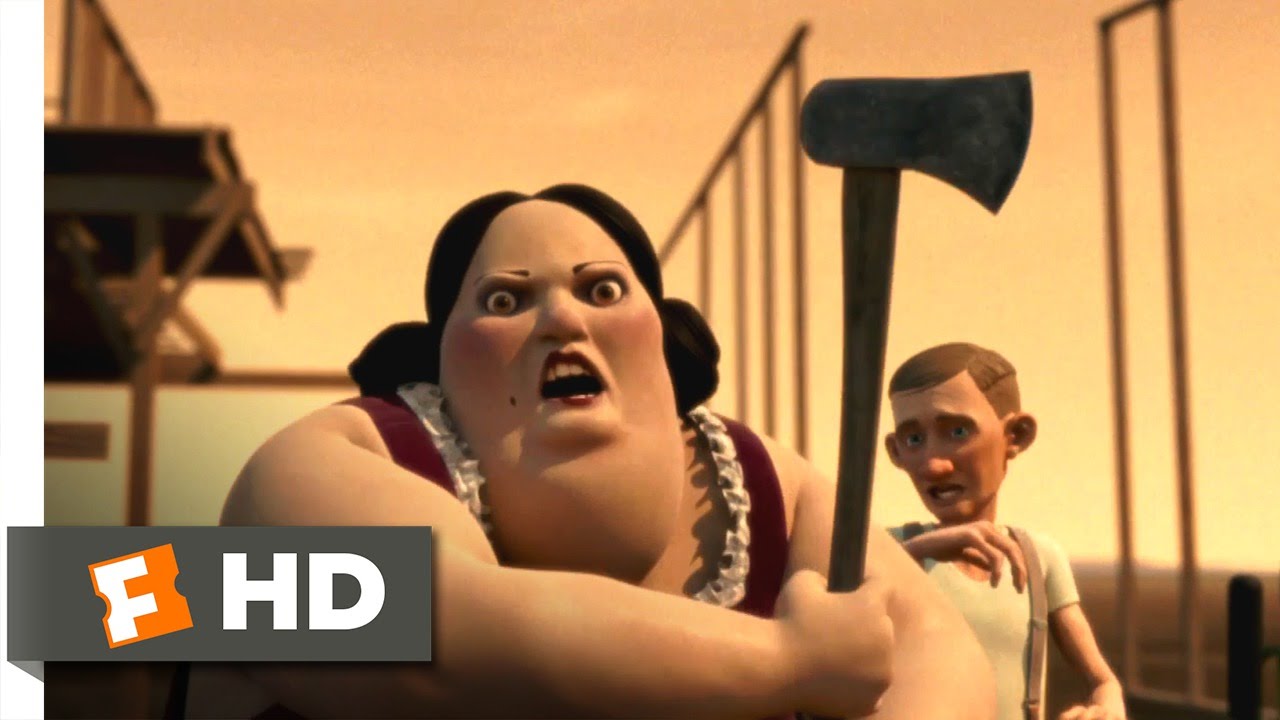
The two began building a house far away from the circus and started a life together. Although Constance had left the circus behind, the trauma of her experiences there remained. She is unable to let it go, lashing out at kids who come near their home and even threatening them with an axe. She sees the house as an extension of herself:
“No, no, no, it’s my house and they’re HURTING ME!”2
So when these kids throw things at her house during Halloween, she gets reminded of all the times she was pelted in the circus. Even when Horace reminds her, ‘They’re just kids, dear. It’s Halloween,’ Constance is unable to see reason.
In her panic, Constance trips backward and falls into the basement, where she becomes covered in cement. Mr. Nebbercracker continues to build the house around her cement-covered body — Constance’s spirit becoming one with the house as it is built.
How Monster House Turns Grief Into Horror
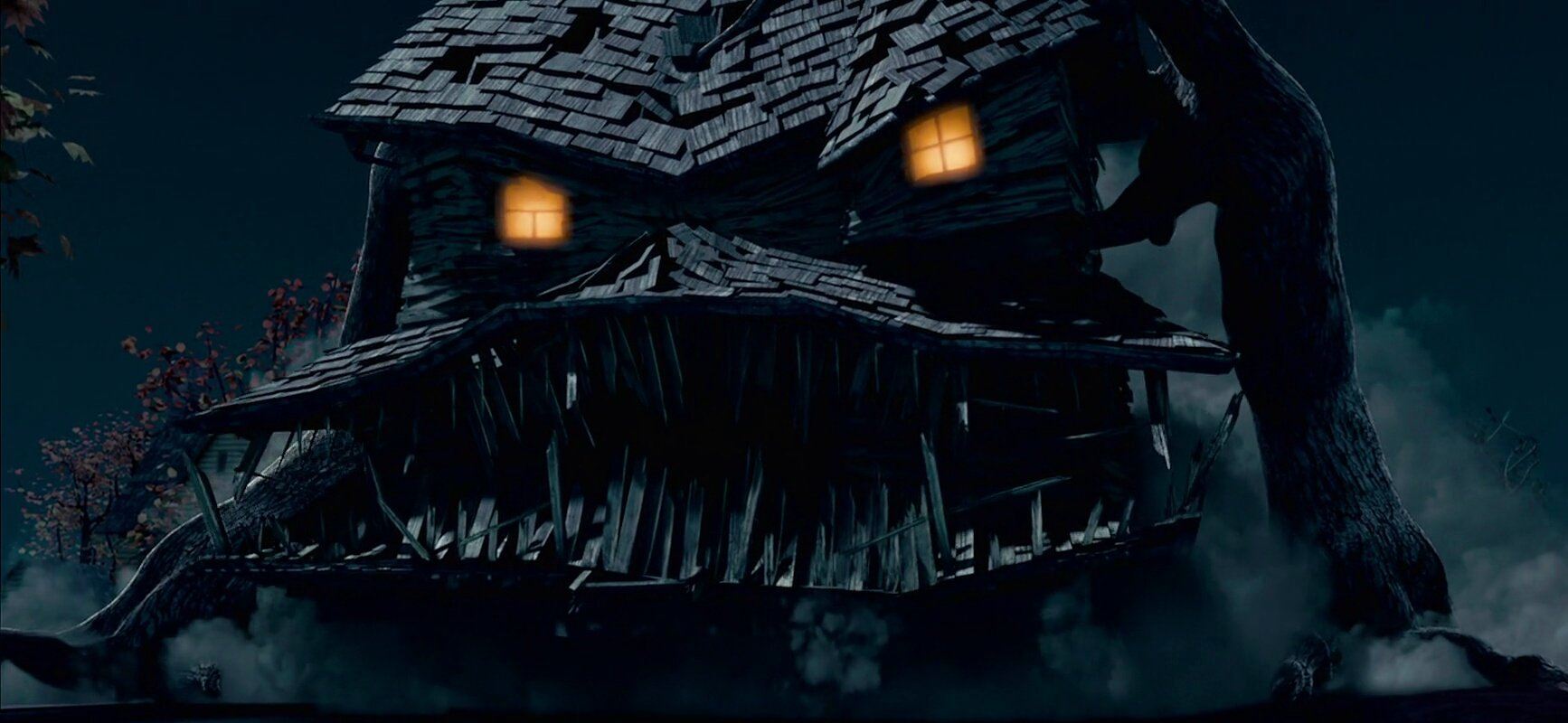
The house is a living, breathing thing. The layout of the house acts as a representation of different parts of the body: the eyes being the windows, the carpet runner being the tongue, the surrounding trees acting as the house’s limbs, and the furnace as the heart.
Nebbercracker is surrounded not only by the memory of his wife through all the pictures that hang on the walls, but is entirely surrounded by her presence. Because Constance became one with the house, Horace was never able to fully grieve her. He constantly lives with the grief of losing her, but is still entirely controlled by her.

When Nebbercracker yells at kids or steals their toys, it is his only way of trying to keep them safe from his wife. He tries to scare kids away because he doesn’t want anyone else to get hurt because of the house. Nebbercracker knows that Constance is dangerous—that the house she has become poses a serious threat to the neighborhood. However, he cannot let go of the remaining connection he has to his wife.
“But if I let her go, I’ll have no one.”3

DJ is able to break through to Nebbercracker by telling him that he isn’t alone. The two become unlikely friends, giving Nebbercracker the support he needed to finally say goodbye to Constance. His isolation allows him to remain trapped in his grief for so long; nobody is able to pull him out of the sorrow that consumes him.
The house not only acted as a prison for Horace to live within his grief, but also as a new prison for Constance. The walls of the house became a new cage for her to live in. She could watch her husband but could never truly live with him, continuing to grieve the life they could have shared. The house itself is a painful reminder of the life they were supposed to have together.

“Forty-five years… we have been trapped for forty-five years… and now we’re free!”4
After forty-five years, both Horace and Constance are set free when DJ blows up the heart of the home. Constance’s ghost is set free, able to dance and smile at her husband for one last time before she is gone. And Horace is set free from the house that had ruled over his life, and all the grief that was associated with it.
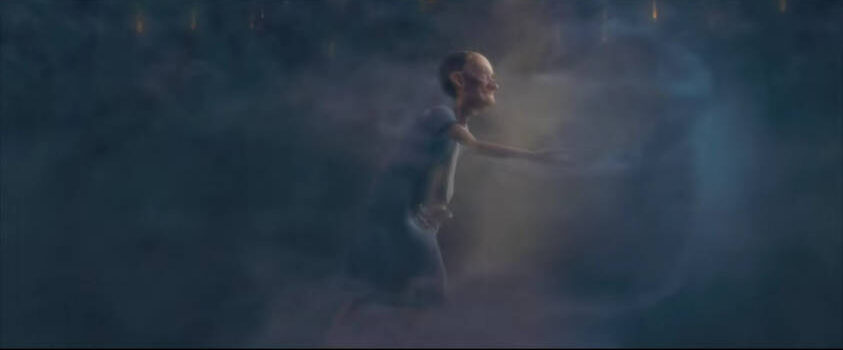
DJ, Chowder and Jenny stand beside Nebbercracker as he says goodbye to his wife. The group all go back to Nebbercracker’s lawn–where just the basement of his house remains–and work together to return the stolen toys to the neighborhood kids. Nebbercracker sends the kids off with a wave and a smile saying, “you go on. I’ve got some work to do.”5
How Monster House Challenges Our Idea Of A Monster
DJ spends the majority of the movie claiming that he is not a kid. He says he is too grown up to go trick-or-treating and scoffs at Chowder’s childish antics. DJ’s main focus is proving to the adults around him that there is something wrong with Nebbercracker’s house.
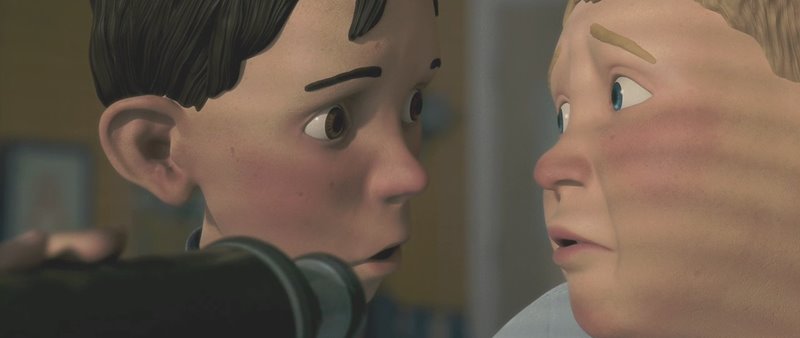
However, once he actually gets to know the whole story of Nebbercracker and the house, he is forced to face his preconceived notions. Everything that DJ thought was going on is flipped on its head; the house is possessed by Mr. Nebbercracker’s wife, not the man himself, and Nebbercracker is not a bad man, just a grieving one.
As he learns these truths and gets in over his head trying to take down the house, he accepts his youth.
“We ARE babies! What were we thinking? We tried to put a house to sleep with cold medicine. How lame could you get?”6
Through this acceptance, DJ begins to grow up. He listens to Nebbercracker, stopping to help him as they are running, and is compassionate to the old man as he says goodbye to his wife. DJ is able to take the facts of the situation that he has learned and have empathy for both Nebbercracker and the Monster House, even though they have been previously cruel to him.

DJ decides to go trick-or-treating with Chowder, holding on to the final years of his childhood while learning an important lesson: Monsters are not born but are made through the cruel words and actions of others.

And grief can be a monster unlike any other. But through compassion to others, you can stop monsters from being made and help grouchy old men smile again.
Why Empathy Is The Answer To Monstrosity
It takes courage to show compassion, especially to those who have wronged us before. Monster House is a film that explores that, showing young viewers that not every monster needs to be slain. Some “monsters” are just people who have been ridiculed or are deeply lonely. It takes courage to look at a monster and choose empathy over judgment.

Horace Nebbercracker is courageous as he takes Constance away from the circus, and compassionate as he tries to work through her trauma. DJ matures as he learns that not every monster is as they appear, becoming friends with Mr. Nebbercracker even after the way he had previously been treated by the old man.

Monster House was never just a movie about a monster house. The film has stayed relevant because of its deeper explorations of grief, trauma, growing up, and learning to let go. It stands as a monstrous interpretation of the grief that haunts us and illustrates how easily we can become lost within it.
Footnotes
- “Monster House.” Wikipedia, 8 October 2026. ↩︎
- Kenan, Gil. Monster House. Columbia Pictures, 2006. ↩︎
- Kenan, Gil. Monster House. Columbia Pictures, 2006. ↩︎
- Kenan, Gil. Monster House. Columbia Pictures, 2006. ↩︎
- Kenan, Gil. Monster House. Columbia Pictures, 2006. ↩︎
- Kenan, Gil. Monster House. Columbia Pictures, 2006. ↩︎