

Table of Contents Show
For centuries, during October, the leaves fall, the air gets a chill, and the monsters come out to play. Every year, “Spooky Season” is filled with an array of TV series, shorts, and films that highlight serial killers, monsters, and even creepy-crawlies.

Slasher films and gore dominate many horror watchlists, but how much attention does body horror receive? What distinguishes body horror from traditional horror, and what makes the subgenre so uniquely unsettling?
The Fly (1958) Vs. The Fly (1986) — Reimagining A Horror Classic
Although audiences are shown to frequently be unsure about old films getting remakes for fear that the remake will not do the original justice,1 many directors through the decades have taken it upon themselves to remake well-known films across all different genres.
Popular horror films that have had remakes include, but are not limited to, The Fly (1958), Dawn of the Dead (1968), The Crazies (1973), and most recently, The Exorcist (1973), whose remake is rumored to be released in early 2027.
Though remakes tend to be risky, The Fly (1986) is a marvelous success story that has recently celebrated its 40th anniversary this year. The remake was such a success story because it kept the core values and message of the film intact while modernizing it and showing all of the tragedy — both physical and emotional — the film had to offer.

The original The Fly — directed by Kurt Neumann — was released in 1958, starring David Hedison as Andre, the troubled scientist turned mutant fly, Patricia Owens as Helene, the faithful wife, and horror icon Vincent Price (whom you might recognize for his vocal work in Michael Jackson’s “Thriller“) as Francois, Andre’s brother.
While both films follow very similar storylines of a scientist’s experiment going haywire, they notably vary in a few key aspects. Two of the most notable are the change from the scientist’s mutation being an instant change to a gradual, intense, and grotesque change over time.
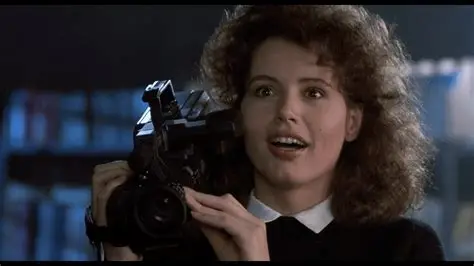
The removal of the scientist’s wife and child from the plot, instead opting to substitute the wife, Helene, for Veronica Quaife — a young, driven journalist played by Geena Davis — and an unborn child that was very likely afflicted by the same monstrous mutation as its father.
This change is welcome, however, since it created room for a deeper, more complex emotional storyline. As put by Cronenberg, “It is a horror film, but of course, as you yourself can vouch for, it is also a romance. It is a love story.”
A horror film with a balance of rich, interpersonal storytelling balanced with the perversion of scientific advancement was a rarity in the slasher-paradise of the 80s.
Body Horror & Romance– The Emotional Core Of The Fly
In recent years, body horror as a subgenre has increased in popularity with modern films such as The Substance (2024) and Old (2021), but even with the increased prevalence of the genre, discussions about it are usually spearheaded by mentions of The Fly and John Carpenter’s The Thing (1982).
So, what is it about this movie’s execution of body horror that keeps it as a staple of the subgenre all these years later? Cronenberg’s approach to body horror in The Fly is unique in its stages. Cronenberg homes in on the scientific breakdown not only of the physical appearance of Seth Brundle — played by Jeff Goldblum — but on his and Quaife’s minds alike.
Seth Brundle — the scientist in the 1986 remake — does not just morph into the slimy, winged creature. His transformation — and downfall — is a gradual one. Like a fly breaking down its meal, Brundle’s body slowly begins to putrefy, being turned into a wet, fleshy splice of housefly and man.
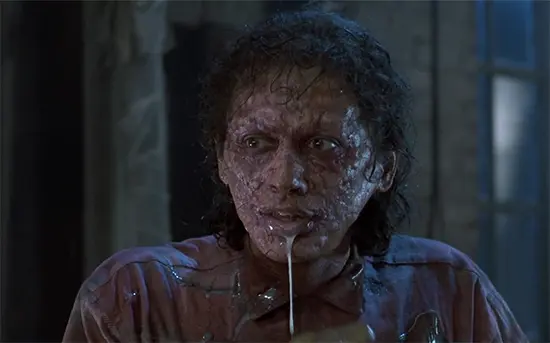
The beginning of the romance between Quaife and Brundle is sweet and sensitive. Initially wanting nothing more than to get a good story from Seth, Veronica nags him until he agrees to let her write a story about him, but only after he has perfected his experiment, as it could change the world as they knew it.
As quickly as she begins to fall in love with Brundle and his brilliant mind, it begins to slip away. Not only does his body begin to change, but he starts to lose his humanness — she is no longer safe with him. The addition of the romantic relationship adds another level of depth, making the film all the more tragic because she watches the man she loves slip away into a person — a creature — that she no longer recognizes.
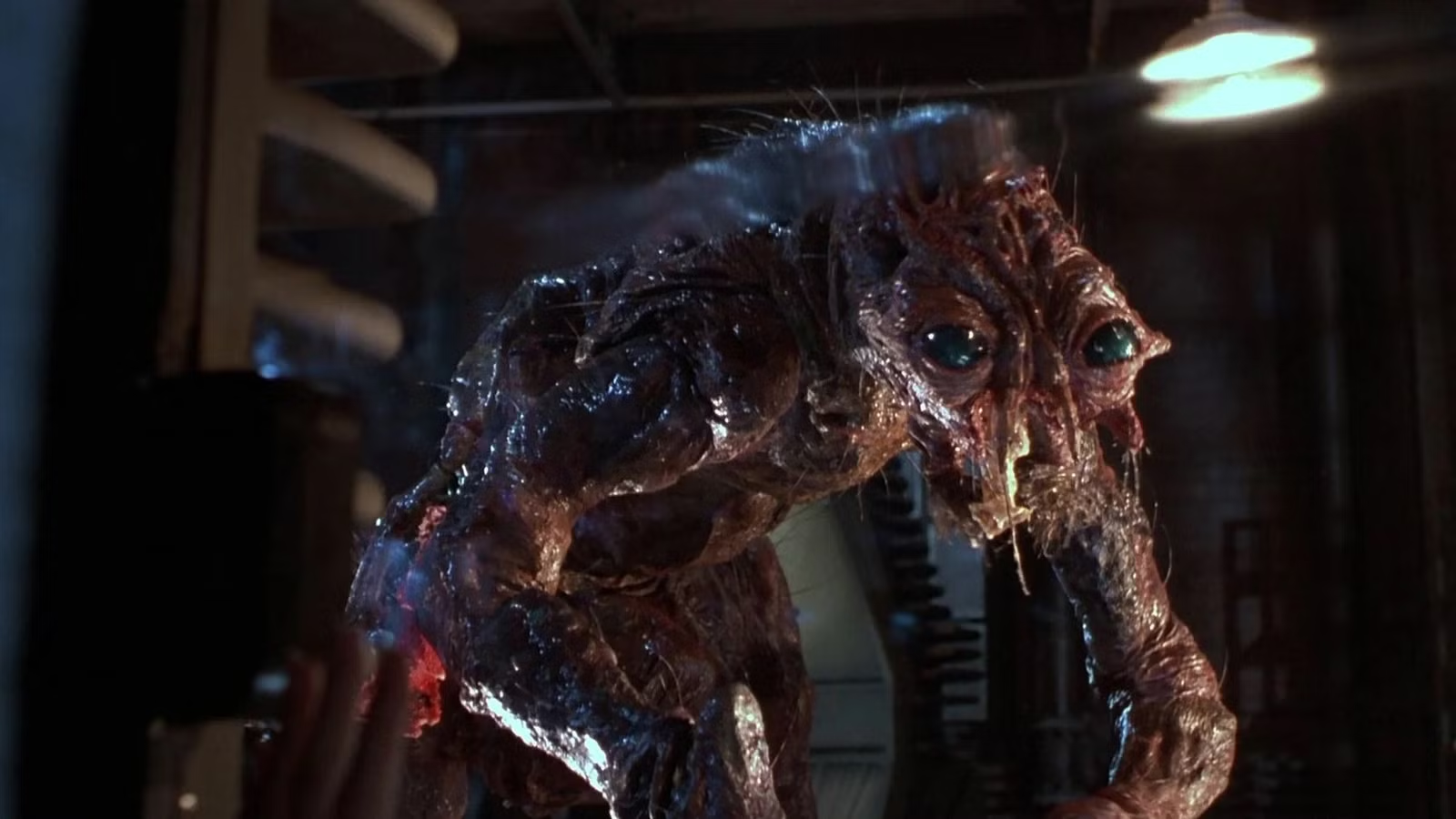
Though Veronica never really gives birth (there is a horrific nightmare birth scene),2 she suspects she is pregnant with Seth’s child, and this thought alone is enough to make audiences’ skin crawl. It is made clear that the “child” is conceived after the gene-splicing mishap, and she wishes to be rid of the child as soon as possible.
This notion is enough to drive “Brundlefly” — the name Seth has given himself — mad, and this is what starts his murderous rage and the beginning of the end.
The Practical Effects Behind The Fly‘s Grotesque Transformation
Being able to achieve imagery as disturbing and skin-crawling as The Fly, especially in 1986, is no small feat. Melting exoskeleton, a missing jaw, vomit, peeling fingernails. Award-winning special effects artist Chris Walas, who also worked on films such as Airplane! (1980) and Return of the Jedi (1983), and makeup artist Stephan Dupuis created the look of the film with only three months to spare. 3
To achieve a realistic timeline of the breakdown of Seth, they couldn’t just have him go from human to mostly fly in the matter of seconds. The transformation took a lot of planning, and frankly, they got lucky. The amount of skill and precision it took to pull off the iconic looks is astonishing. So astonishing that it won them Best Makeup at the Academy Awards in 19874.
Chris Walas says in an interview,
“Breaking all that stuff down was probably the hardest part because [Seth] had to be so far at a certain point, but he shouldn’t be that far,”
said Walas.
“We want to keep him, Jeff Goldblum, for as long as we possibly can. So it became a real time-consuming effort to break that all down into exacting specifics: how many stages? Where each one begins. Where each one ends. Do we want to vary each stage of makeup a little bit with a different hairpiece?… I think there was more conceptual planning on The Fly than any other picture I ever worked on.”
Practical Effects Vs. CGI — Why The Fly Still Holds Up
With only three months to pull off the effects for this horror film, the easiest, most cost-effective, and time-efficient way to achieve the looks would have been CGI. Computer-generated imagery offers more flexibility and is more forgiving; however, practical effects can look more realistic when using materials like latex, foam, puppetry, and paint.
Though they could’ve taken the “safer” route, they didn’t want to jeopardize the film’s integrity. The reason The Fly works so well and achieves such strong reactions from audiences is because of the realistic look of the practical effects. Each prosthetic was placed on Goldblum layer by layer in order to make the decay of his body look authentic.
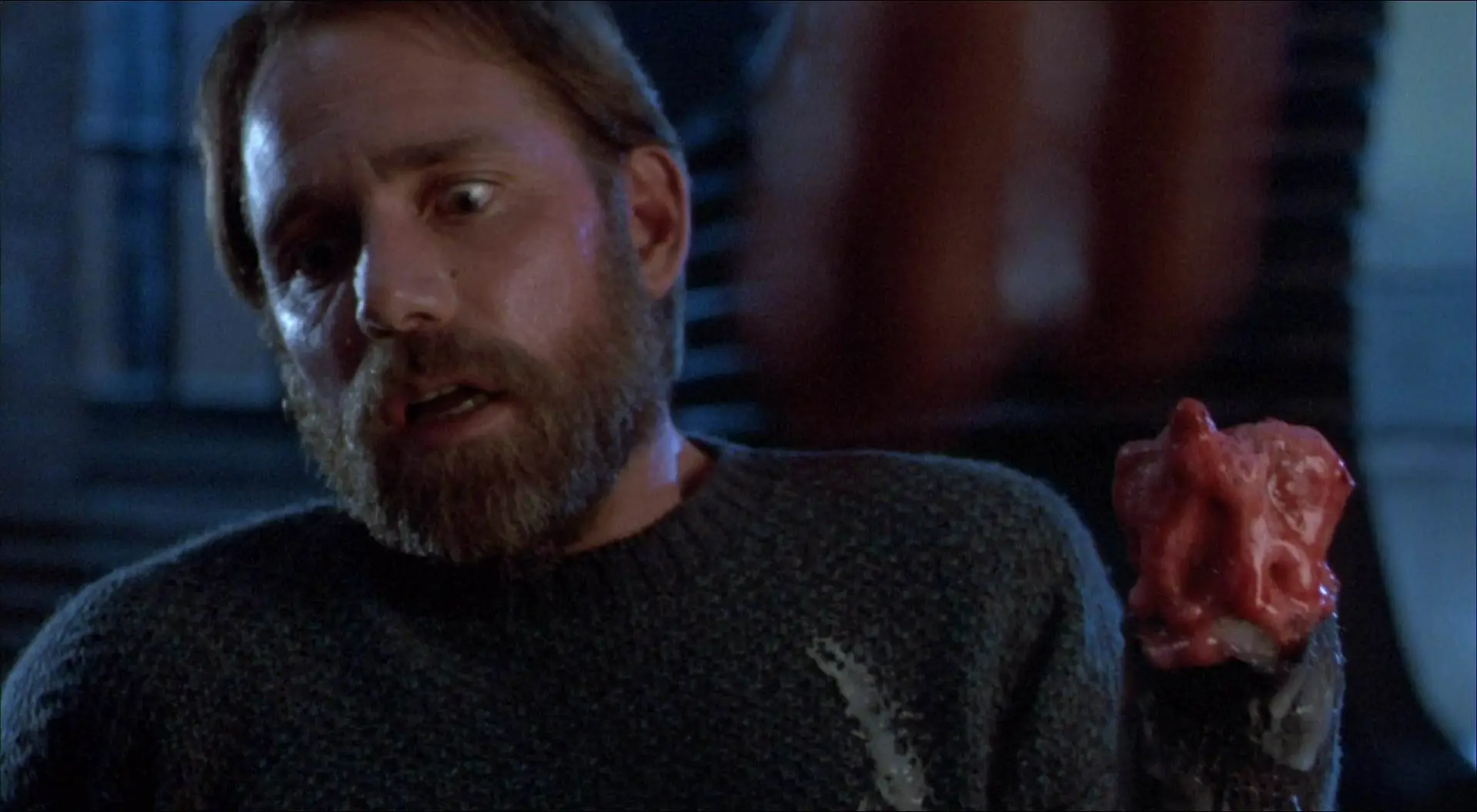
Not only were the effects on Goldblum stomach-churning, but the putrefaction of Stathis Borans (editor of the Magazine Victoria Quaife works for) foot and hand were made to look incredibly real. To create the oozing liquid that came from Goldblum’s mouth when he dissolved his food — and Stathis’ hand and foot — was a combination of honey, milk, and eggs.5

Many body-horror films have been released since the airing of The Fly, and yet it stays at the top of people’s lists when speaking about the subgenre. Whether the film’s success is because of the star-studded cast, the practical and special effects, or the refreshing romance-to-horror ratio, The Fly is a film that will always make a good addition to a “Spooky Season” watchlist.
Footnotes
- Insider Contributor. ‘Film Critique Explores Why Modern Hollywood Remakes Continue To Disappoint Audiences.’ Film Critic Explores Why Modern Hollywood Remakes Continue to Disappoint Audiences – Insider Weekly. 5 October 2026. ↩︎
- Alicia Fletcher. ‘Canadian Film Encyclopedia: The Fly’. Canadian Film Encyclopedia – The Fly. 20 October 2026. ↩︎
- Kirsten Lopez. 40 Years Later, The Fly’s VFX Artist Reveals How A Masterpiece Came To Life’.40 Years Later, ‘The Fly’s’ VFX Artist Reveals How A Masterpiece Came To Life. 5 October 2026
↩︎ - IMDb. The Fly Awards. The Fly (1986) – Awards – IMDb. 10 October 2026. ↩︎
- All The Right Movies. “Pretty fly for a sci-fi: prosthetics and pus in Cronenberg’s The Fly. Pretty fly for a sci-fi: prosthetics and pus in Cronenberg’s The Fly – All The Right Movies. ↩︎