

Table of Contents Show
In Guillermo del Toro’s Crimson Peak (2015)1, aspiring author Edith Cushing marries Thomas Sharpe, an enigmatic English aristocrat, and moves with him to his crumbling ancestral home alongside his sister, Lucille.
As strange apparitions begin to emerge from the manor’s blood-red clay, Edith discovers that Allerdale Hall harbors far more than restless spirits. Beneath its decaying walls lies a family history of abuse, obsession, and murder, one that refuses to remain buried.
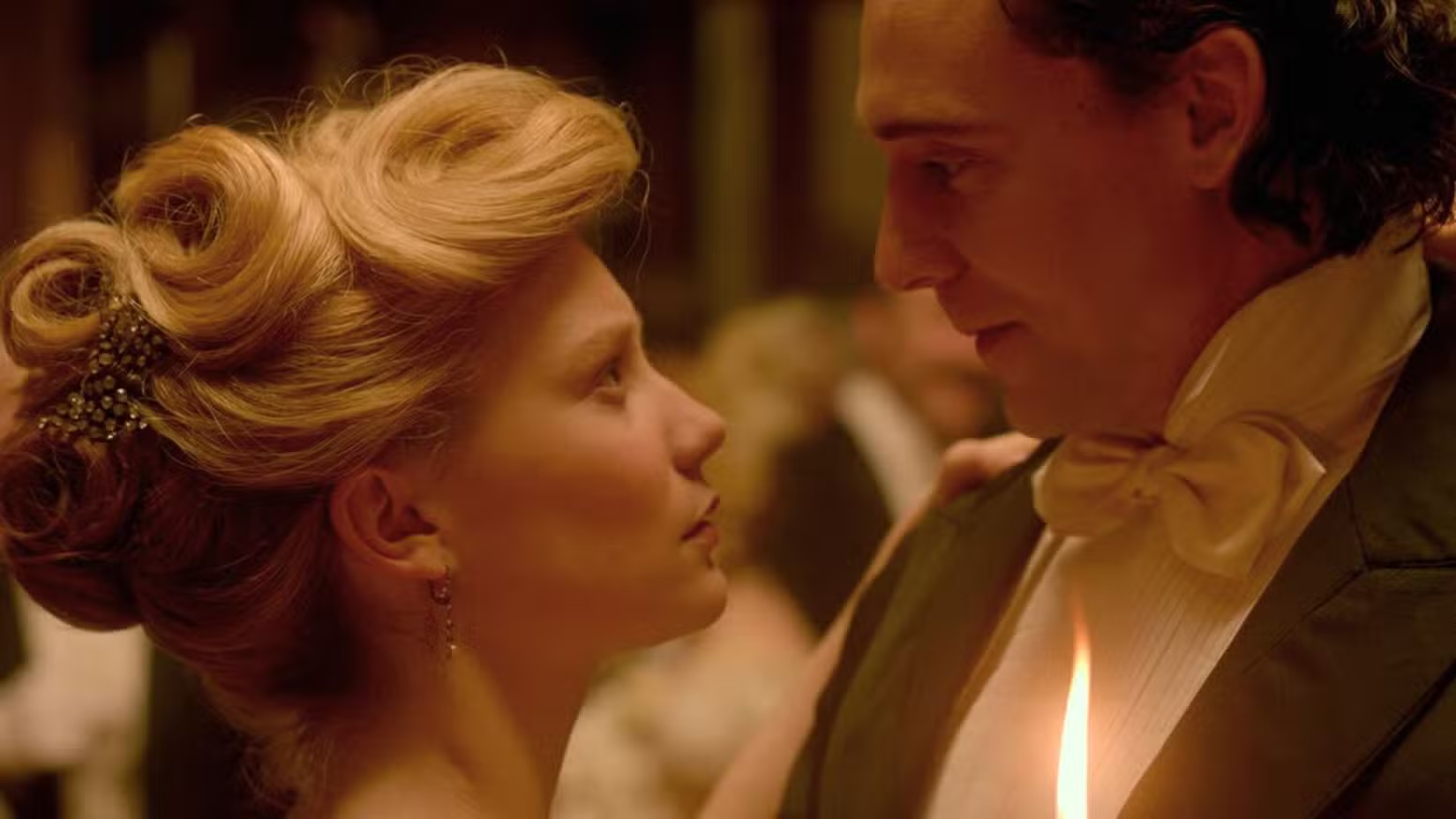
The ghosts of Crimson Peak do not haunt Allerdale Hall because they have nowhere else to go. They haunt it because something else inside the house refuses to die: trauma. They emerge from the darkness with broken bodies and blood-streaked faces, their skin almost translucent against the black corridors of the manor. One drags herself through the snow.
Another appears with a skull crushed inward. Their bodies are not simply frightening; they are evidence. Each ghost carries the circumstances of her death on her body, turning the private violence of the Sharpe family into something that can no longer be hidden. And the house remembers.
A House That Bleeds Secrets
Allerdale Hall is already decaying when Edith Cushing arrives. Its roof has collapsed inward, leaving the ballroom exposed to the sky. Snow drifts through the broken ceiling. Red clay seeps through the ground beneath the manor, staining the landscape crimson. The house seems to be bleeding from its foundations, as though the violence committed inside it has contaminated the structure itself.
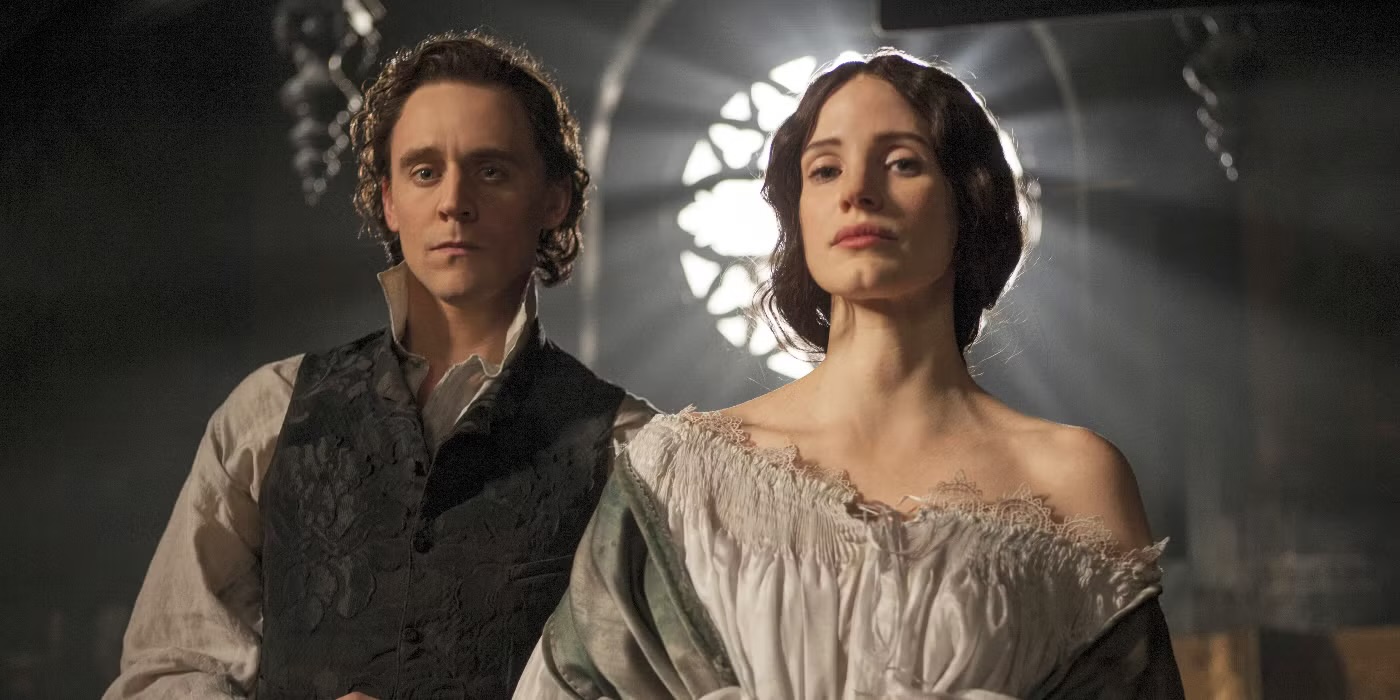
Guillermo del Toro’s Crimson Peak uses that grotesque beauty to tell a story about what families leave behind. The Sharpe siblings do not simply inherit a ruined mansion and a dying family fortune. They inherit violence, secrecy, grief, and a profoundly distorted understanding of love.
Lucille and Thomas grew up in a household where cruelty had become part of domestic life, where their parents failed to protect them and where the only person either sibling could depend on was the other.
That dependence eventually became something darker. Their incestuous relationship, Lucille’s control over Thomas, and the murders they committed as adults all grew from a family history that had already been poisoned before Edith ever crossed the Atlantic.
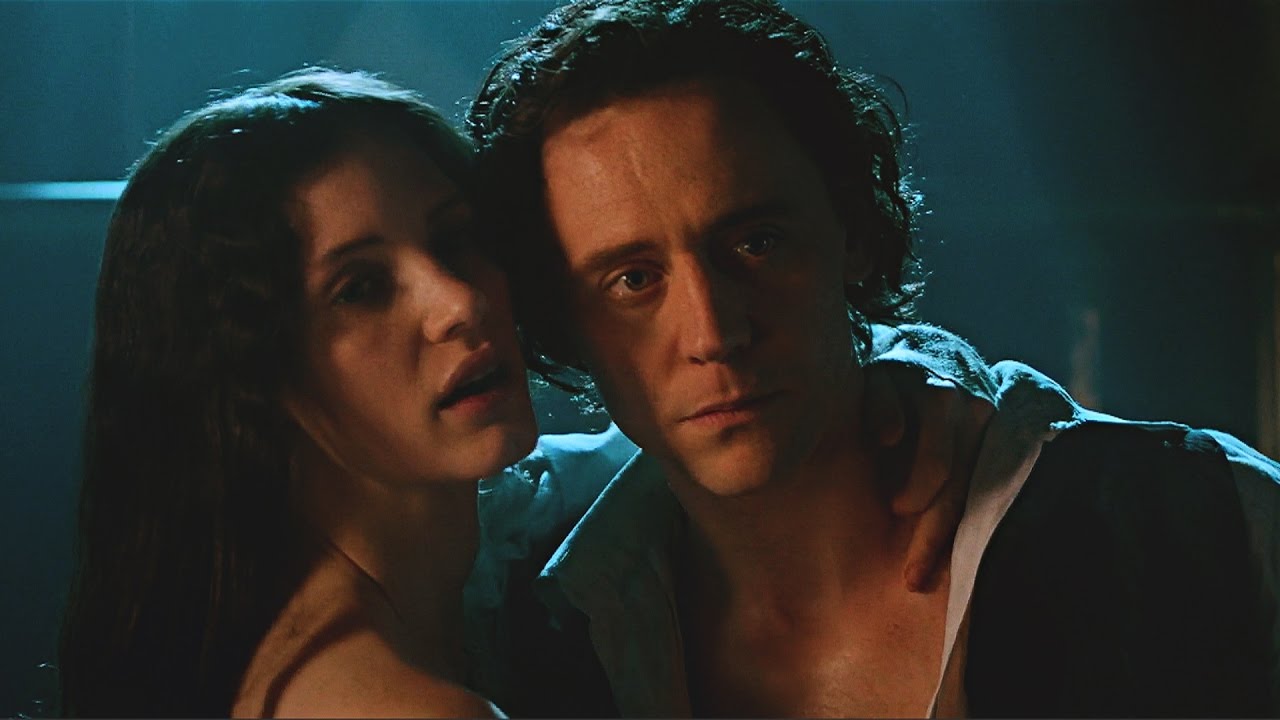
The film does not suggest that trauma automatically turns victims into abusers. Instead, it explores what happened when children survived violence without ever escaping the world that had taught them how to survive it.
In Crimson Peak, generational trauma becomes literal. It is built into the house, carried through the family and given a body in the ghosts that refuse to disappear.
The Dead Do Not Stay Silent
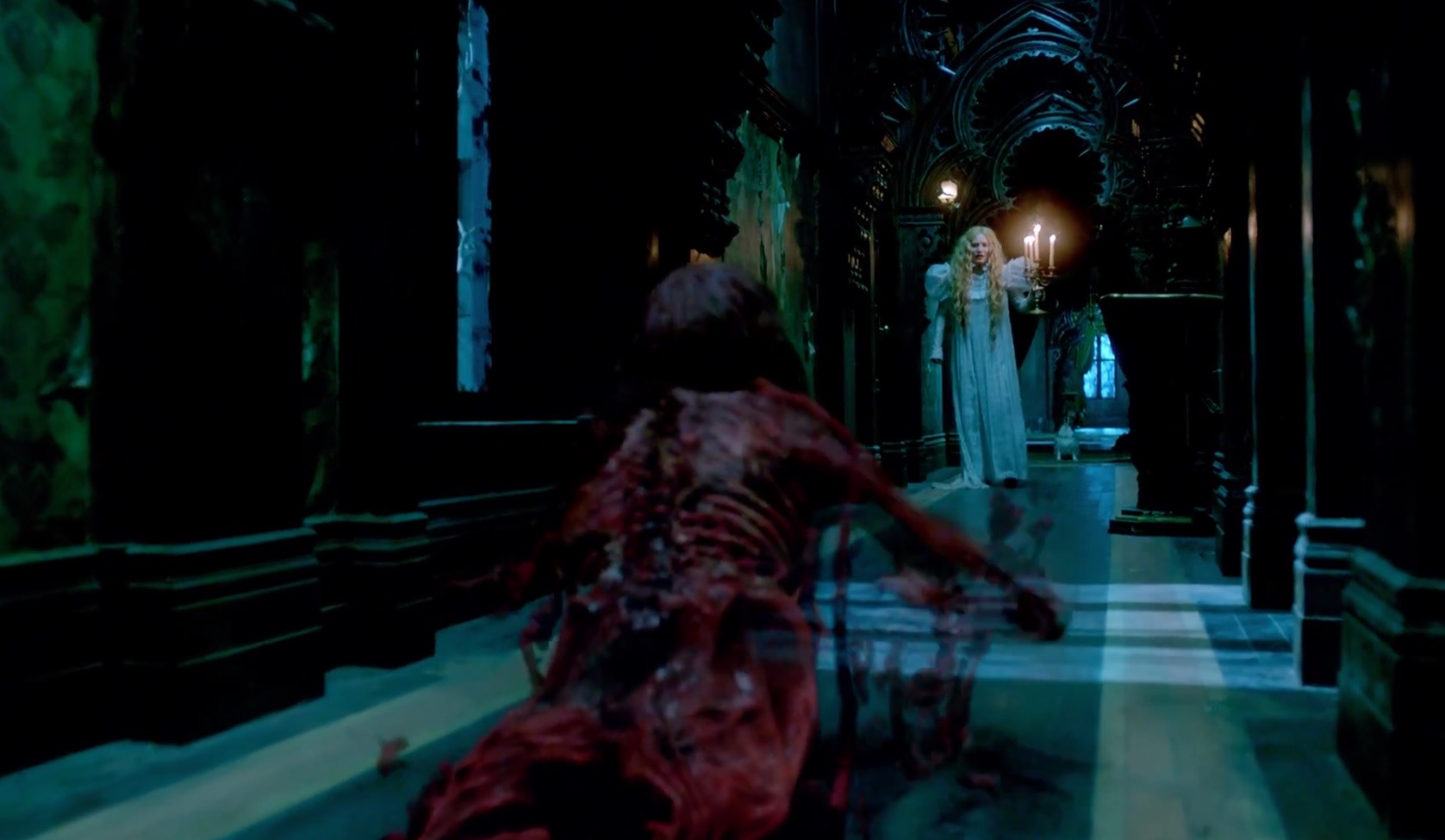
Before Edith understands what happened inside Allerdale Hall, the ghosts2 already know. They appear throughout the manor like wounds reopening. Their bodies are distorted by the deaths they suffered, with blood, broken bones, and unnatural movements making their histories visible.
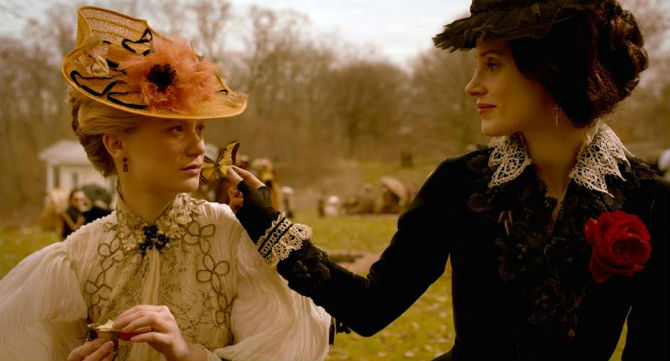
They are not traditional specters floating aimlessly through an old house. They seem tethered to the place because the place is tethered to what happened to them. Allerdale Hall is less a home than a grave that was never properly sealed.
The first we see is Edith’s mother, who appears to her as a dark, ghostly figure when Edith is a child, warning her to “Beware of Crimson Peak”; 3 unlike the others, she was not killed by the Sharpes, and the film does not establish her exact cause of death in detail.
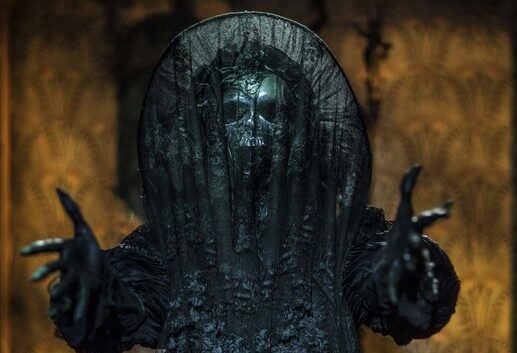
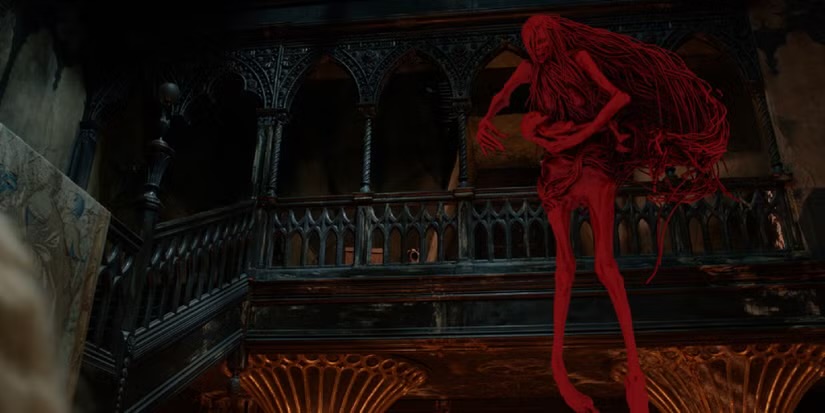
Lady Beatrice Sharpe, Lucille and Thomas’s mother, appears as a dark, skeletal figure after Lucille killed her with a cleaver in the bathtub when she discovered the siblings’ incestuous relationship. Pamela Upton, one of Thomas’s former wives, appears as a gaunt, blood-red figure after Lucille poisoned her to steal her fortune.
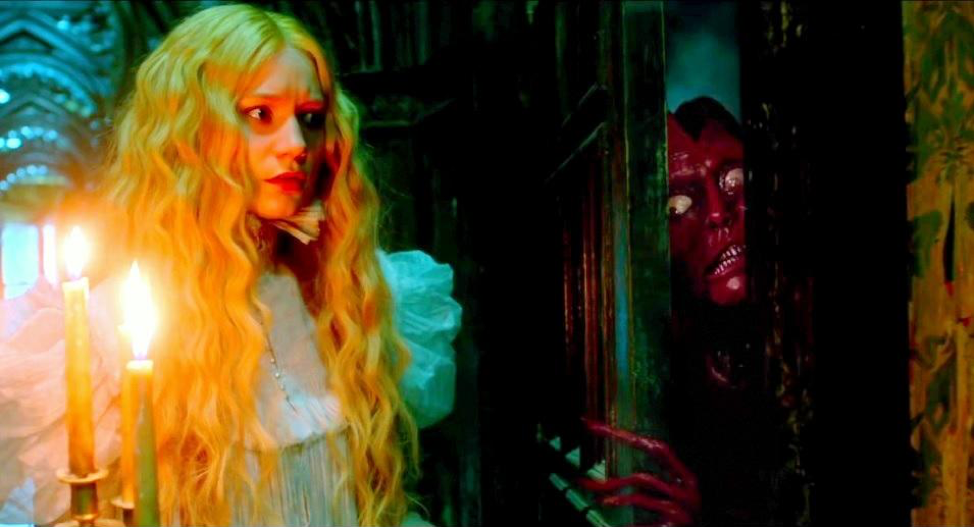
Margaret McDermott, another of Thomas’s wealthy wives, also returns as a grotesque, red-stained ghost after Lucille poisoned her as part of the siblings’ scheme to finance their failing estate.
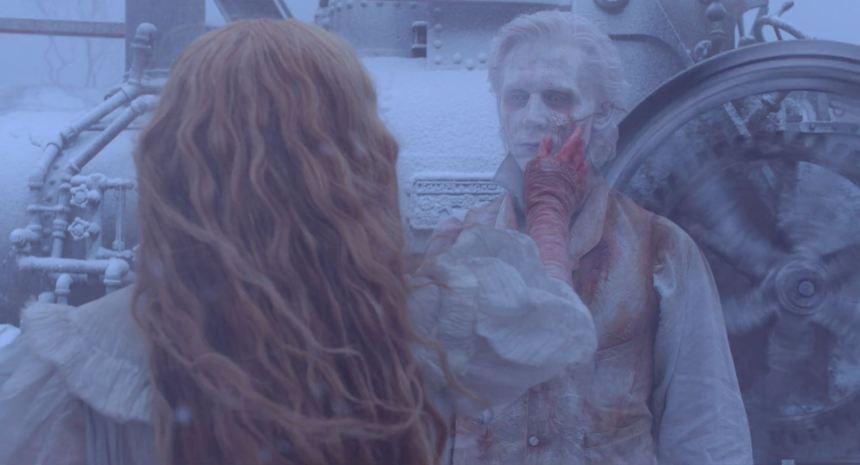
Finally, there is Enola Sciotti who holds a malformed baby in her hands. The audience later comes to find out that Enola was Lucille’s housemaid and the baby was actually Lucille and Thomas’, but Lucille violently killed the baby after its birth alongside Enola.
Thomas himself later becomes a ghost after Lucille stabbed him to death for trying to protect Edith and escape their destructive relationship. Lucille’s own ghost eventually haunts the manor, appearing as a dark, shadowy figure playing the piano after Edith killed her with a shovel.
They Speak Through The Cracks
The manor itself seems to share the ghosts’ affliction, unable to escape the violence and secrets that have festered within its walls. The manor had belonged to the Sharpe family for generations, but by the time Edith arrives, it is barely standing. The estate is sinking into the red clay beneath it, its foundations weakened by the mine Thomas hopes will save the family fortune. The walls are cracked. The roof is broken. Snow falls inside. Water stains the ceilings. The earth is slowly consuming everything.
The house’s physical decay mirrors the family history buried within it. The Sharpes tried to preserve the appearance of an aristocratic lineage while the family itself deteriorated from within. Their wealth had disappeared. Their parents had died. Their relationships had become twisted by abuse and secrecy. The estate remained, but almost everything that once made it a home had rotted away.
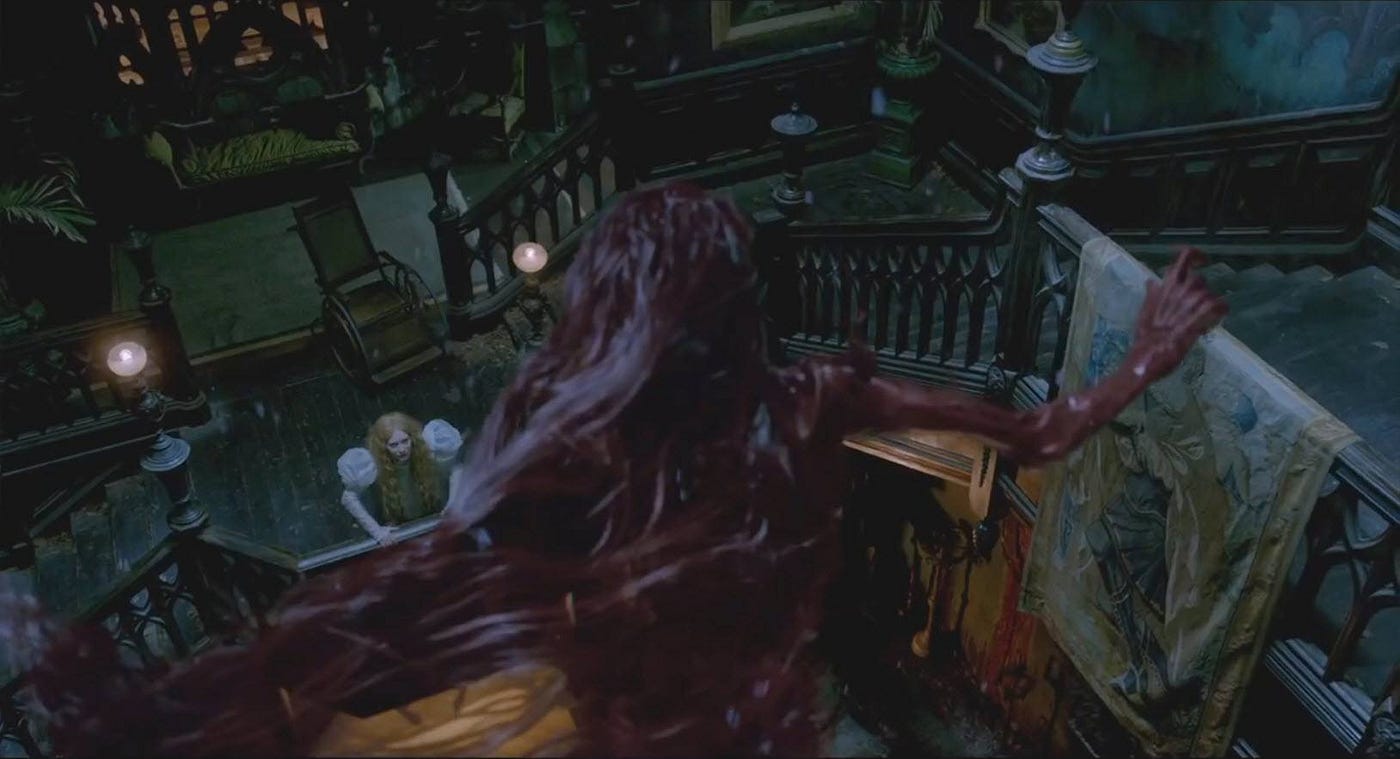
The ghosts expose that contradiction.
The women who died at Allerdale Hall do not return to frighten Edith. They lead her toward the truth. They appear in corridors, behind doors and at the edge of rooms, repeatedly forcing her attention toward the parts of the house that the living have tried to conceal. Their deaths had been treated as secrets, but death does not make those secrets disappear.
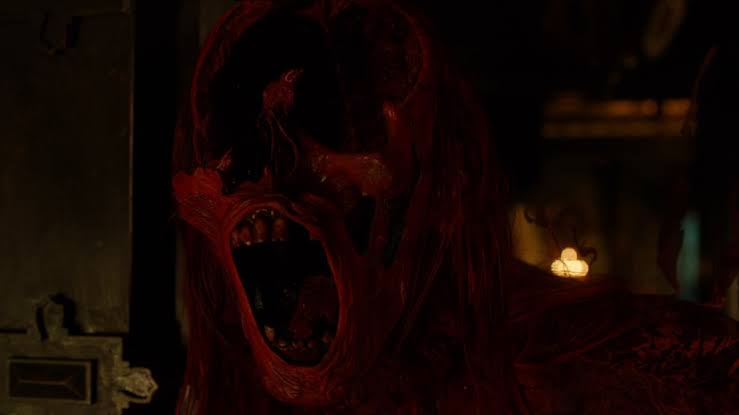
Instead, the dead become witnesses.
The violence inside Allerdale Hall has always been gendered. Thomas’s wealthy wives had entered the house believing they were loved by him, only to become part of Lucille’s murderous scheme. Lucille poisoned them so their money could keep the Sharpe family afloat. Their bodies disappeared, but their deaths remained embedded in the house.
The ghosts4 are therefore not random manifestations of the supernatural. They are the physical consequences of a family history that had been repeatedly hidden.
The red clay beneath Allerdale Hall makes that imagery even more grotesque. It stains everything around the house, giving the land the appearance of blood. The nickname “Crimson Peak” eventually feels less like a geographical description and more like a warning. The house is surrounded by the color of violence because violence is what has sustained the family for years.
The past does not stay in the past simply because the people who caused the damage stop talking about it. At Allerdale Hall, it seeps through the walls.
Monsters Making Monsters
Long before Edith arrived, Lucille and Thomas had already learned that home could be a dangerous place.
Their father had abused their mother, while their mother had also subjected the children to cruelty and neglect. Lucille had cared for her mother after their father’s violence, even as their own mother became another source of fear. At one point, their mother’s leg had been broken, and Lucille had taken on the role of caretaker despite being a child herself.
Thomas and Lucille had been confined to the attic nursery and punished there. Their childhood became increasingly isolated from the outside world, leaving the siblings to build their own understanding of intimacy inside a space where normal boundaries had already collapsed.
Lucille had become Thomas’s protector because there had been no reliable adult to protect either of them. She had taken beatings meant for him. She had hidden parts of their childhood from the outside world. She had learned that keeping Thomas close was one of the only ways she could keep him safe.
But protection eventually became possession. The film reveals that the siblings’ incestuous relationship had begun during this period of confinement and abuse. Their relationship was not presented as a healthy bond that simply became inappropriate later. It developed inside a profoundly damaged family system where the distinctions between sibling, caretaker, and partner had already been distorted.
Lucille had effectively become everything to Thomas at once. She was his sister. She was his protector. She was his closest emotional attachment. She was also the person who controlled his access to the outside world.
That history does not excuse what the siblings eventually did. It makes their adult relationship more disturbing because it reveals how thoroughly their childhood had shaped their understanding of love. For Lucille, love became inseparable from control. For Thomas, love became inseparable from dependence.
Their mother5 had taught them that the people closest to you could also be the people who hurt you. Their father had demonstrated violence within marriage. Their mother had turned the home into another site of punishment. By adulthood, the siblings had carried those lessons with them, recreating the same suffocating structure in a different form.
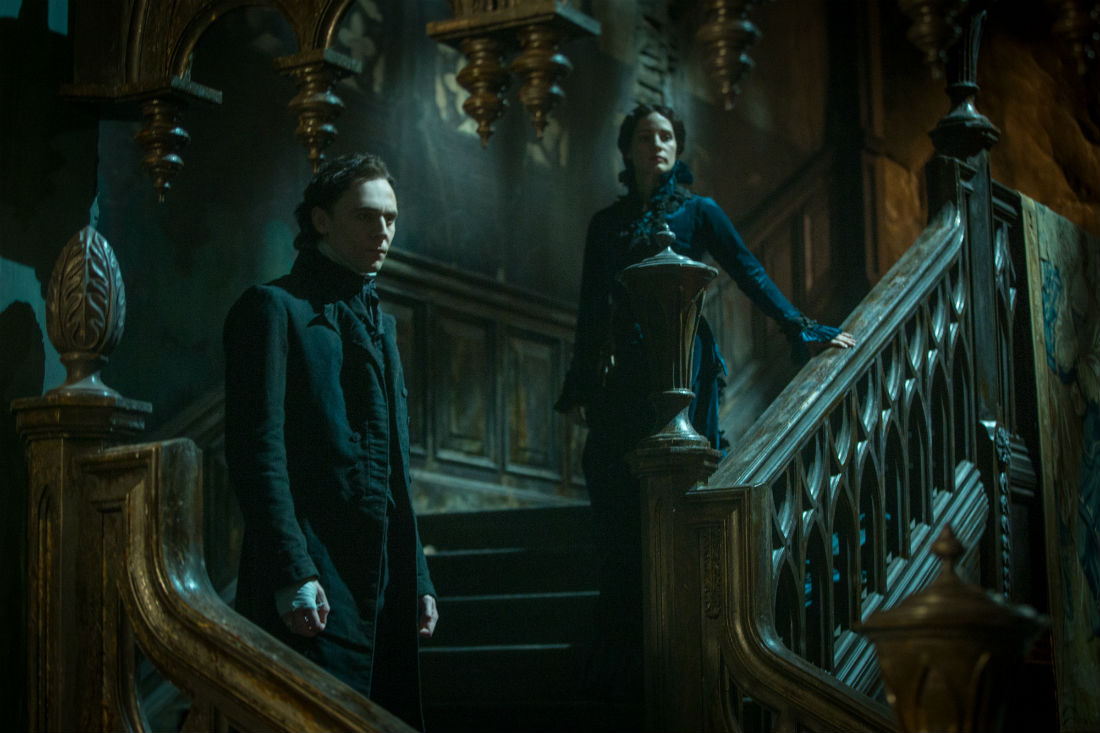
The family had changed, but the pattern had not. That is where Crimson Peak’s idea of generational trauma becomes more complicated than simply saying that abused children become abusive adults. The film does not make that argument. Instead, it shows how trauma can alter the language people use to understand love, loyalty, and safety.
Lucille and Thomas had never been given a healthy model for any of those things. So they built their own. And it was monstrous.
Lucille’s Cage — Blood Begets Blood
Lucille’s relationship with Thomas is built around the childhood roles neither of them ever fully escaped.
She had once protected him from their mother. As adults, she continued to position herself as the person who knew what was best for him. But the protection had become control. Lucille groomed Thomas into emotional dependence, keeping him bound to her and treating any relationship outside their shared world as a threat.
Thomas was allowed to marry, but only when the marriage benefited the family. His wives were not permitted to become genuine partners because Lucille needed their money and because their presence threatened the closed system the siblings had created.
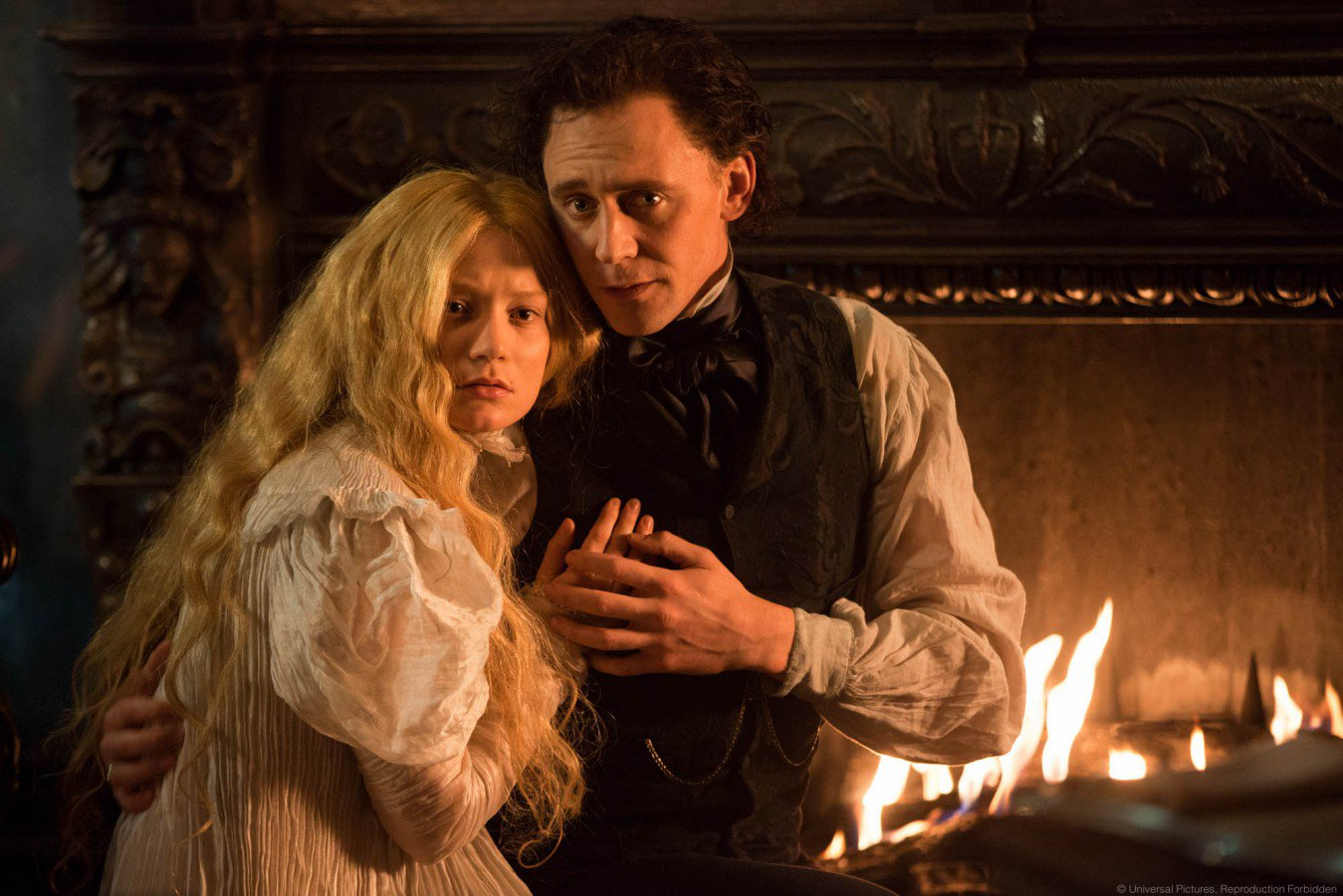
Edith becomes different. Thomas genuinely falls in love with her, and that love creates the first real fracture between the siblings. For perhaps the first time, Thomas begins imagining a life that does not revolve around Lucille.
That possibility terrifies her. Lucille’s reaction to Edith is not simply jealousy. Edith represents separation. She represents Thomas growing beyond the role he had occupied since childhood. If Thomas leaves with Edith, Lucille loses the person around whom she has constructed her entire identity.
The relationship between the siblings therefore becomes increasingly claustrophobic. Lucille wants Thomas to remain the frightened boy she once protected because that version of him needs her. Thomas, meanwhile, begins to recognize that the protection has become another form of captivity.
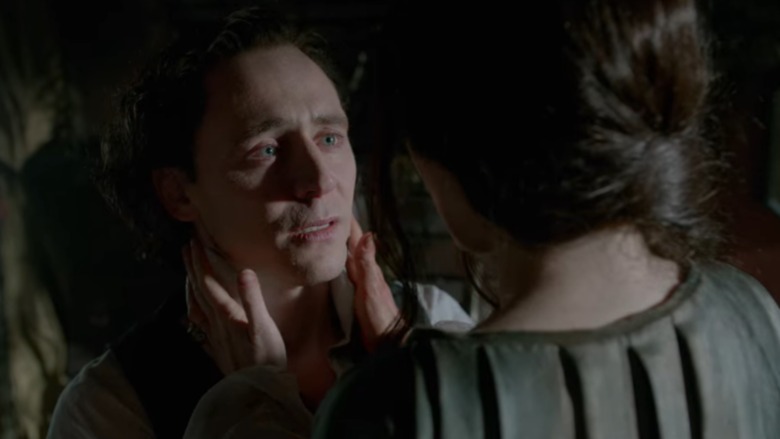
Their incestuous relationship reflects that same inability to distinguish love from possession. They grew up in a household where boundaries had been repeatedly violated. Their mother had abused them. Their father had abused their mother. The children had been isolated together. Lucille had become Thomas’s primary source of protection, and that dependency had eventually developed into a sexual relationship.
None of this makes their relationship romantic or tragic in a conventional sense. It makes it horrifying precisely because it reveals how deeply their childhood had distorted them. Lucille had spent years telling herself that keeping Thomas close was an act of love.
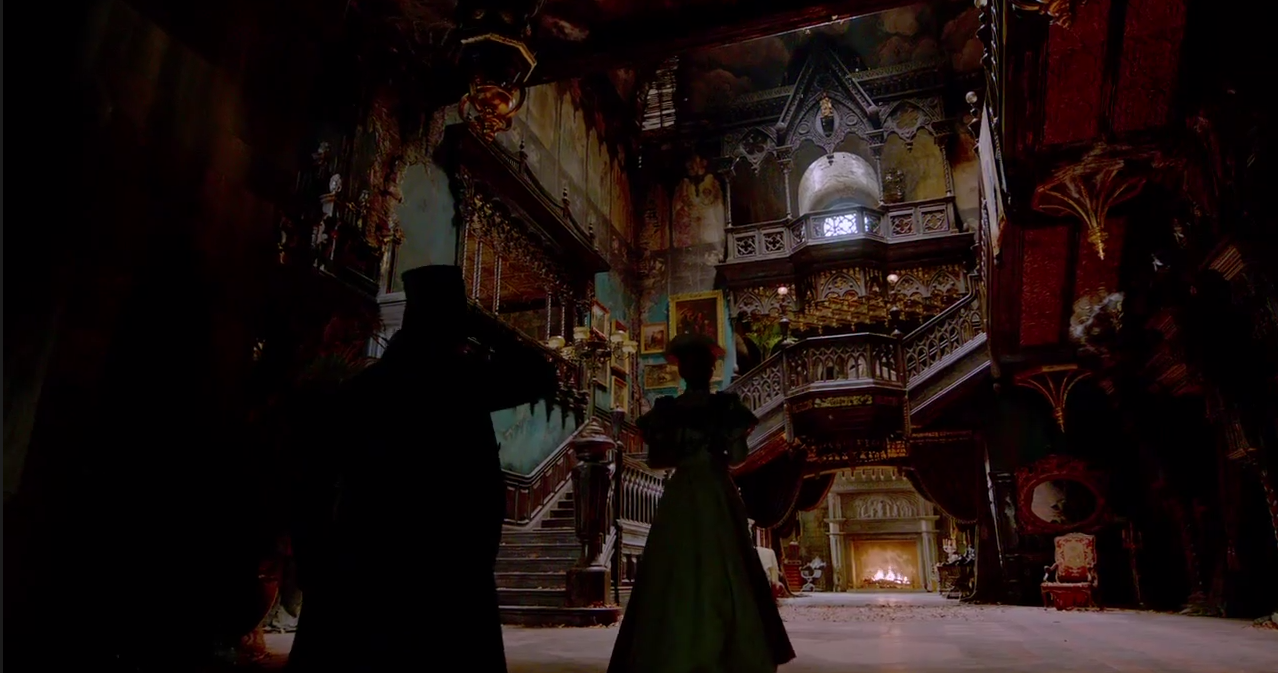
Eventually, keeping him close meant destroying anyone who might take him away.
Lucille’s childhood helps explain why she became so obsessed with control, but the film never requires the audience to excuse her. She had suffered abuse, but she also chose to inflict suffering on others. She had once protected Thomas from violence, but she later became the person who prevented him from escaping it.
That contradiction is at the heart of her character. Lucille is both a survivor and a perpetrator. Her trauma is real, but so is the harm she causes. Crimson Peak refuses to make those truths mutually exclusive. Thomas is more complicated because he eventually begins to resist the cycle.
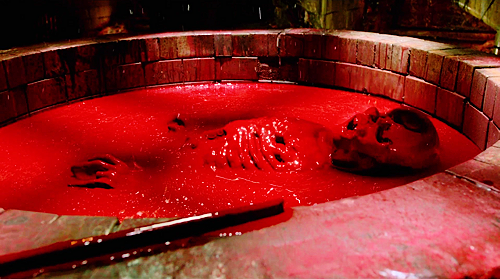
He participates in the murders and helps deceive Edith, but his relationship with her forces him to confront the life he has built with Lucille. He realizes that Edith is not simply another wealthy woman to manipulate. He begins to care for her, and that care creates a conflict between the family he has inherited and the life he might choose for himself. For Thomas, breaking the cycle means betraying Lucille. For Lucille, Thomas’s attempt to escape means abandoning her.
She cannot imagine surviving without Thomas because her entire identity had been built around surviving with him. So she kills him. The violence that had once been directed at them as children finally turns inward.
Dead Women Tell Tales
The ghosts are everywhere because the truth is everywhere. Each dead woman carries the evidence of what happened to her. Their bodies become records of violence, making visible what the living characters attempt to conceal.
The ghosts communicate through wounds. That detail makes them more than horror imagery. Their bodies function almost like physical archives. They preserve the history of the women who were erased from the Sharpe family narrative.
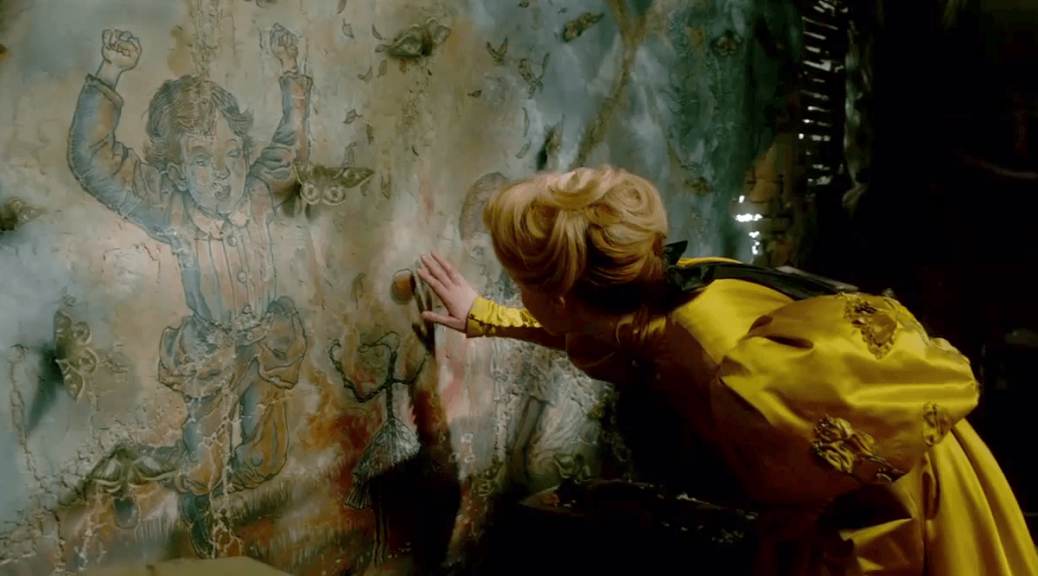
Lucille can destroy documents. She can lie to Edith. She can manipulate Thomas. She can hide bodies. She cannot make the dead forget. That is why the ghosts are so closely tied to the film’s larger theme of inherited trauma. The past continues to intrude because nobody in Allerdale Hall has actually confronted it. The family has attempted to bury its history, but the house keeps producing evidence.
The ghosts refuse the silence that protects the living.
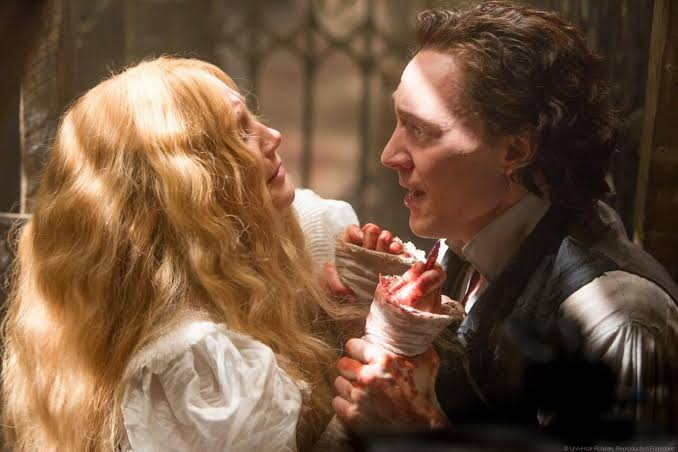
Edith’s own relationship with the supernatural reinforces this idea. Her mother’s ghost had appeared to her when she was a child and warned her to “Beware of Crimson Peak.” Years later, Edith discovers that the warning was connected to the Sharpe family and the violence waiting for her at Allerdale Hall.
She enters the house carrying her own grief, but she does not respond to it the way Lucille does. Edith writes about ghosts. She listens to them. She tries to understand them. Most importantly, she allows them to tell her what happened. Lucille had spent her life burying the past. Edith survives by uncovering it.
The House Always Collects
By the end of Crimson Peak, Allerdale Hall is no longer simply a haunted house. It is the physical remains of everything the Sharpe family refused to confront. Thomas tries to help Edith escape, finally choosing a future outside the world he and Lucille had built. Lucille responds by killing him, repeating the same logic that had governed their relationship for years: if Thomas cannot remain with her willingly, she will make sure he cannot leave at all.
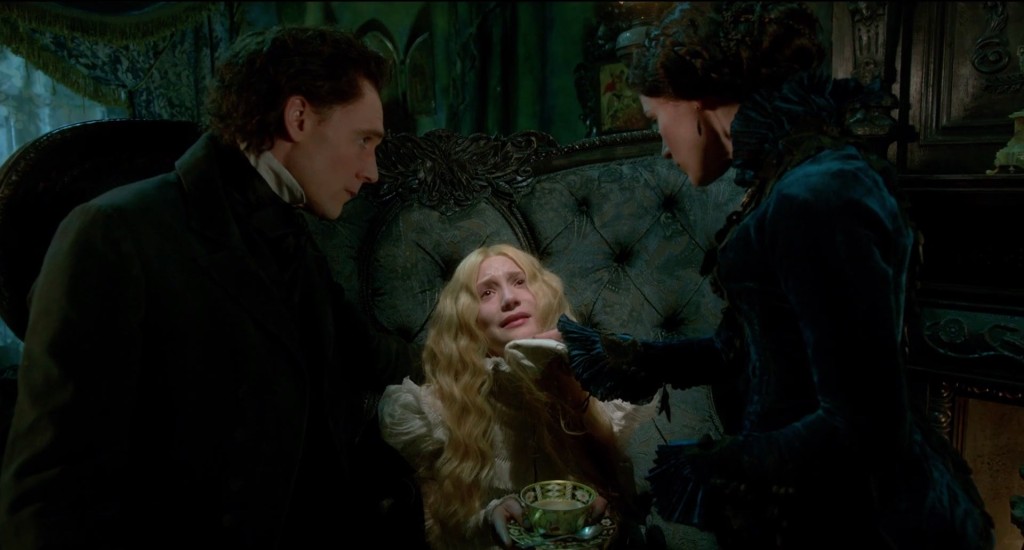
Edith kills Lucille, and her body disappears into the ruins of the house she had spent her life trying to preserve. Later, her ghost appears at the piano, still trapped inside Allerdale Hall.
Even in death, she remains where she has always been. With the past. Thomas’s ghost, by contrast, appears to Edith as a final farewell. His spirit is gentle, almost peaceful, a striking contrast to the grotesque ghosts who had guided Edith through the house. His final appearance suggests that his story has ended, even if the consequences of his life remain.
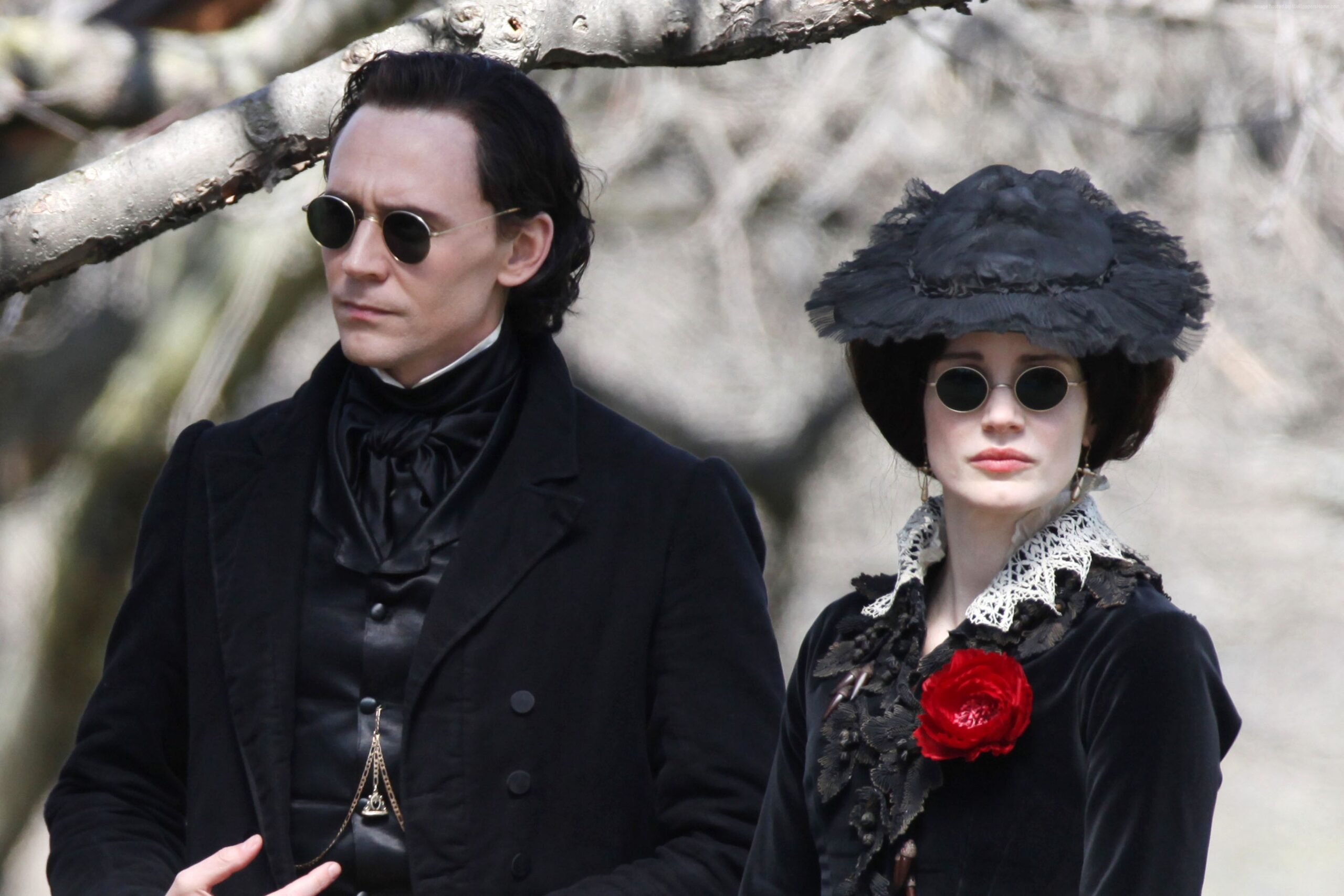
Allerdale Hall is left to rot and sink into the red clay below it, undisturbed in its purgatorial state. Lucille spends her afterlife at her piano under the scornful eye of her parents’ portraits, unable to ever escape their gaze. Even in death.
Edith escapes, and the cycle ends. Not because the trauma never happened, but because she refuses to carry it forward. That is what makes Crimson Peak’s ghosts so much more frightening than simple apparitions. They are not merely dead people wandering through a gothic mansion. They are the remnants of a family history that was never allowed to heal.
The Past Never Dies
The Sharpe family had tried to bury violence beneath marriage, wealth, secrecy, and tradition. They had tried to turn the house into a monument to a family that was already collapsing. But trauma does not become harmless simply because nobody speaks about it.
It settles into the walls. It changes the people who live inside them. It passes from parent to child, from sibling to sibling, from one relationship to the next. And eventually, it comes back. Some families inherit houses. Some inherit names. The Sharpe family inherits its ghosts.
In Crimson Peak, the dead refuse to stay buried because the living never dealt with what they left behind. The ghosts carry the wounds of women who were silenced. Allerdale Hall carries the history of a family that confused love with possession and protection with control.
Lucille and Thomas carry the consequences of a childhood that taught them intimacy could exist only inside violence and secrecy. None of that means their trauma dictated who they became.
Their choices still belonged to them. But the film understands something darker about inheritance: people can spend their entire lives trying to escape the conditions that shaped them while unknowingly recreating them.
Footnotes
- Del Toro, Guillermo. Crimson Peak. Universal Pictures, 2015. ↩︎
- Failes, Ian. “Paranormal activity: creating Crimson Peak’s ghosts.” fxguide, 19 January 2026. ↩︎
- “Crimson Peak (2015) – Movie Script | Script Slug.” Script Slug, (n.d.). ↩︎
- Kindinger, Evangelia. “The ghost is just a metaphor: Guillermo del Toro’s Crimson Peak, nineteenth-century female gothic, and the slasher.” Necsus, 6 December 2017. ↩︎
- Musap, Emilia. “Monstrous Domesticity – Home as a Site of Oppression in Crimson Peak.” SIC Journal, vol. 8, no. 1, 2017. ↩︎