

Table of Contents Show
A bad hand. A risky decision. One more attempt.
Chance has always been part of video games. Whether it’s landing a lucky critical hit, pulling a rare item from a chest, or drawing the exact card needed to survive another turn, uncertainty has long been one of gaming’s most effective tools. Those unpredictable moments create stories players remember because they cannot be planned.
Traditionally, though, chance has existed in the background, supporting larger systems of combat, progression, and exploration rather than defining them.

Recently, that relationship has begun to change. A growing number of indie developers have built entire games around gambling mechanics, transforming probability from a supporting feature into the foundation of the experience.
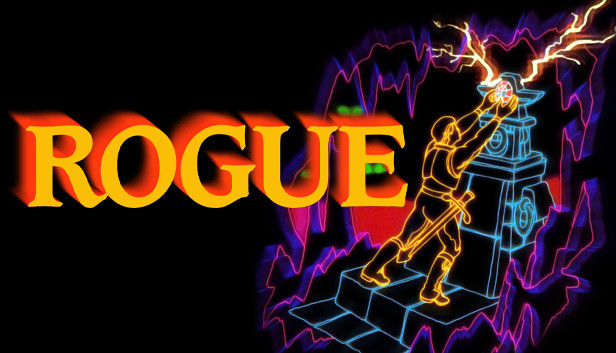
Named after the 1980s computer game, “Rogue1,” a roguelike game features randomized levels with a permadeath structure. Meaning that once your player character dies, that is the end of that specific run. However, in a roguelike, losing does not necessarily mean the end of the experience. Instead, each failed attempt leaves players with something they did not have before: more knowledge. The next run may contain a different combination of cards, items, enemies, or opportunities, creating the possibility that a strategy that failed once might succeed the next time.
This combination of randomness and agency is what makes these games so compelling. Players are not simply waiting for luck to change. They are making decisions within an unpredictable system and hoping those decisions will be enough to bend the odds in their favor.
Betting On Chance
Rather than simply borrowing casinos as a visual theme or including poker as a side activity, games like “Balatro”2 (2024), “Buckshot Roulette”3 (2025), and “CloverPit”4 (2025) ask players to embrace uncertainty itself. Every decision is shaped by incomplete information, every success feels earned against the odds, and every failure becomes an invitation to try again.
Although these games all draw inspiration from gambling, they use it to accomplish remarkably different goals. “Balatro” strips poker of its financial stakes and reimagines it as a strategic deck builder where careful planning can overcome bad luck.
“Buckshot Roulette” transforms probability into psychological horror, using uncertainty to make every decision feel life-threatening.

“CloverPit” takes players into a far darker place, using slot machines and endless reward loops to explore obsession, desperation, and the exhausting pursuit of one more win. Together, they demonstrate that gambling mechanics have evolved into something far more versatile than simple casino simulations.
Part of their appeal comes from the way they tap into fundamental aspects of human psychology. Behavioral psychologist B. F. Skinner5 famously demonstrated that rewards delivered unpredictably encourage repeated behavior more effectively than rewards given on a fixed schedule.
Decades later, neuroscientist Wolfram Schultz6 found that the brain often responds more strongly to the anticipation of a reward than to the reward itself, particularly when outcomes remain uncertain. These principles help explain why players become so invested in games built around chance. It is not simply the possibility of winning that keeps them engaged, but the tension of not knowing what will happen next.
Yet these games are not asking players to simulate casinos. Instead, they use gambling as a design language to explore entirely different emotional experiences. One turns probability into a strategic puzzle. Another transforms it into fear. A third exposes how easily hope can become compulsion. In each case, uncertainty becomes more than a mechanic — it becomes the driving force behind the player’s decisions.
The recent rise of gambling-focused video games reflects a growing fascination with uncertainty, risk, and reward in modern game design.
Through “Balatro,” “Buckshot Roulette,” and “CloverPit,” developers transform familiar gambling systems into tools for strategy, horror, and social commentary, revealing that the most compelling part of gambling has never been the prize itself. It is the possibility that the next decision could change everything.
Roguelikes — The Mentality Of “One More Try”
Over the past decade, roguelikes have become one of the most influential genres in indie gaming. Instead of treating failure as punishment, these games transform it into a learning experience. Every unsuccessful run reveals new strategies, teaches players how different systems interact, and encourages experimentation the next time around.
Gambling mechanics naturally reinforce that philosophy. Every randomized card draw, item drop, slot machine spin, or chamber of shells creates a new set of circumstances that players must adapt to. Rather than memorizing solutions, they develop a deeper understanding of the systems themselves. The goal shifts from finding the “correct” answer to making the best possible decision with the information available.
This constant adaptation helps explain why these games remain engaging long after players understand their mechanics. In “Balatro,” a disappointing opening hand becomes an opportunity to experiment with a completely different Joker combination.
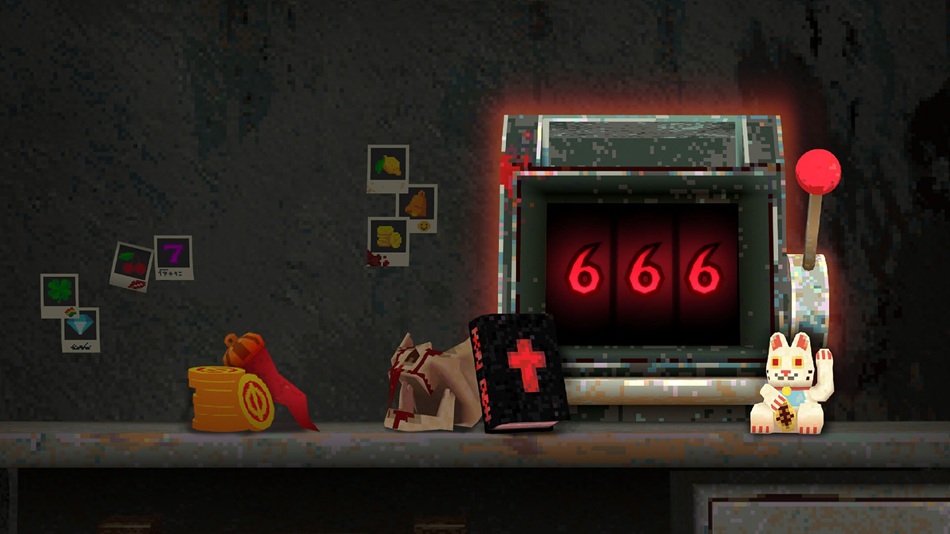
Meanwhile, in “Buckshot Roulette,” a devastating loss encourages players to rethink when they should use valuable items or take calculated risks. And “CloverPit” uses failure often to raise questions about resource management or whether another approach might be more successful. Every defeat contains the possibility of future success.
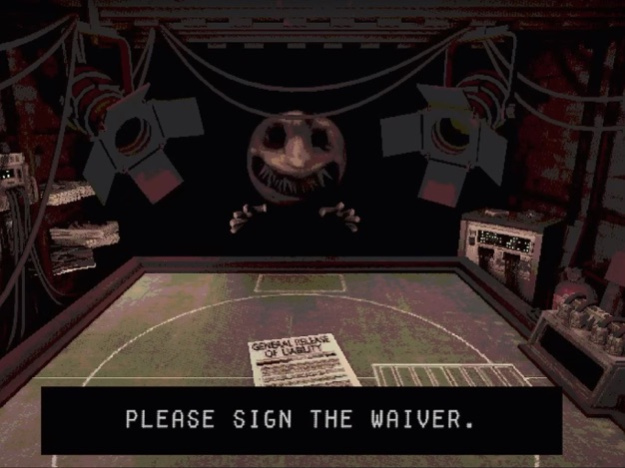
Psychologists have long studied why this pattern is so motivating. Richard Ryan and Edward Deci’s Self-Determination Theory7 argues that people remain engaged when activities support three psychological needs: competence, autonomy, and relatedness.
Roguelikes excel at fostering competence because players can clearly see themselves improving over time. Even when randomness influences the outcome of a run, players develop a growing confidence in their own decision-making. They lose less because they are unlucky and more because they recognize mistakes they can correct.
The belief that improvement is always possible is perhaps the genre’s greatest strength. Unlike games that punish failure with lengthy setbacks or irreversible consequences, roguelikes encourage players to immediately begin again.
Every reset feels less like starting over and more like beginning with greater knowledge. That subtle shift fundamentally changes how players perceive failure. Instead of asking, “Why did I lose?” they begin asking, “What can I do differently next time?”
This mindset closely resembles another aspect of gambling psychology. People often continue gambling because they believe the next attempt will finally produce the desired outcome.

In real-world gambling, that belief can become dangerous because each outcome is genuinely independent of the last. Roguelikes, however, offer something gambling cannot. Players actually become better with experience. While randomness remains, knowledge accumulates. The next run really can be more successful because the player has learned something meaningful.
That distinction explains why these games feel satisfying rather than exploitative. Their unpredictability is balanced by genuine player agency. Success depends not only on favorable odds but on recognizing patterns, making informed decisions, and adapting to constantly changing circumstances. Randomness creates variety, but mastery still matters.
“Balatro” — Gambling As Strategy
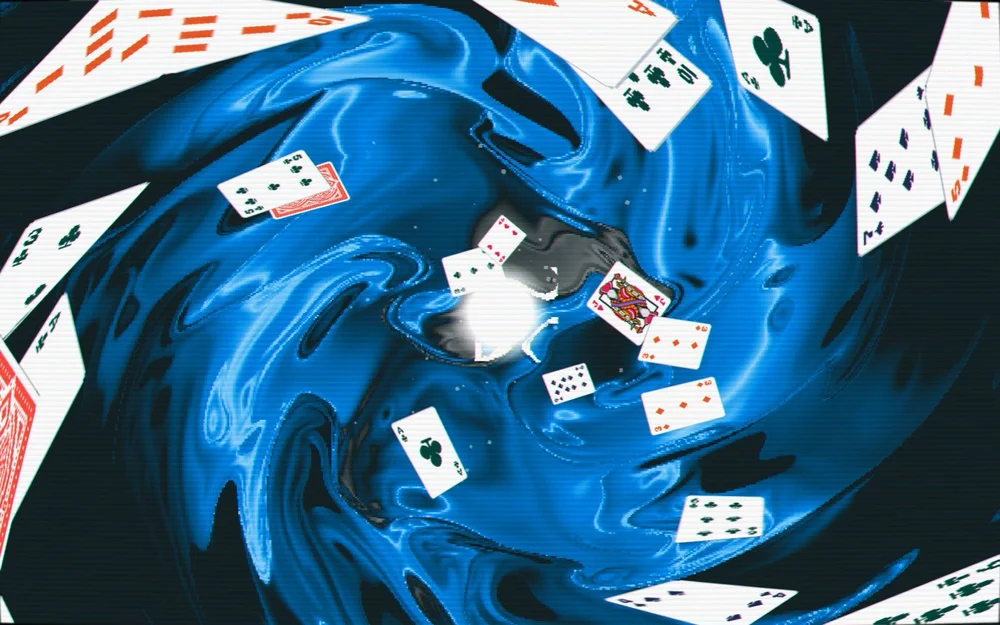
At first glance, “Balatro” looks comfortably familiar. It presents players with a deck of playing cards, recognizable poker hands, and a green felt table that immediately evokes the atmosphere of a casino. Flushes, straights, and full houses all score points just as they would in a traditional game of poker. It is easy to assume that “Balatro” is simply another digital card game built around gambling.
That impression disappears after only a few rounds. Unlike poker, there is no money to wager, no opponents to bluff, and no pressure to read another player’s intentions.
Instead, solo developer LocalThunk transforms poker into a roguelike deck builder where every hand becomes part of a larger strategic puzzle. The objective is not to beat another gambler but to outthink the game’s constantly evolving systems. Randomness still exists, but it serves as the beginning of the player’s decision-making rather than its conclusion.
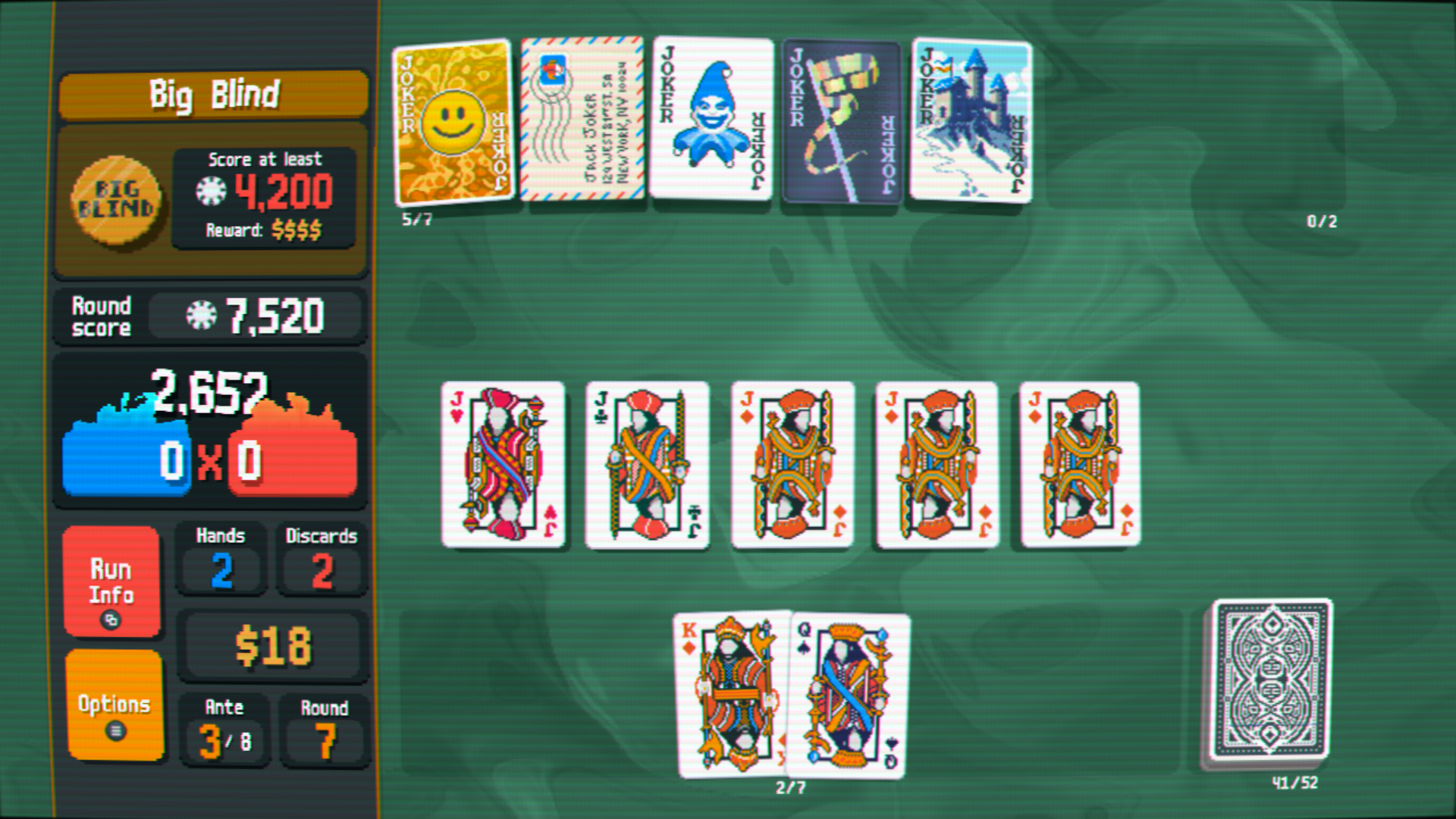
Each run presents a series of meaningful choices that gradually shape the deck into something unique. Players decide which poker hands deserve investment, which Jokers create the strongest synergies, when to spend money in the shop, and when to save resources for later rounds. Every new Joker, Tarot card, Planet card, and voucher introduces another variable capable of dramatically changing a run’s direction.
This constant balancing act is what makes “Balatro” so compelling. Success rarely comes from drawing the perfect hand. Instead, it comes from adapting to imperfect circumstances. The game continually asks players to work with uncertainty rather than against it, encouraging experimentation instead of rigid planning. Every disappointing draw becomes another puzzle to solve, forcing players to rethink their approach rather than simply blaming bad luck.
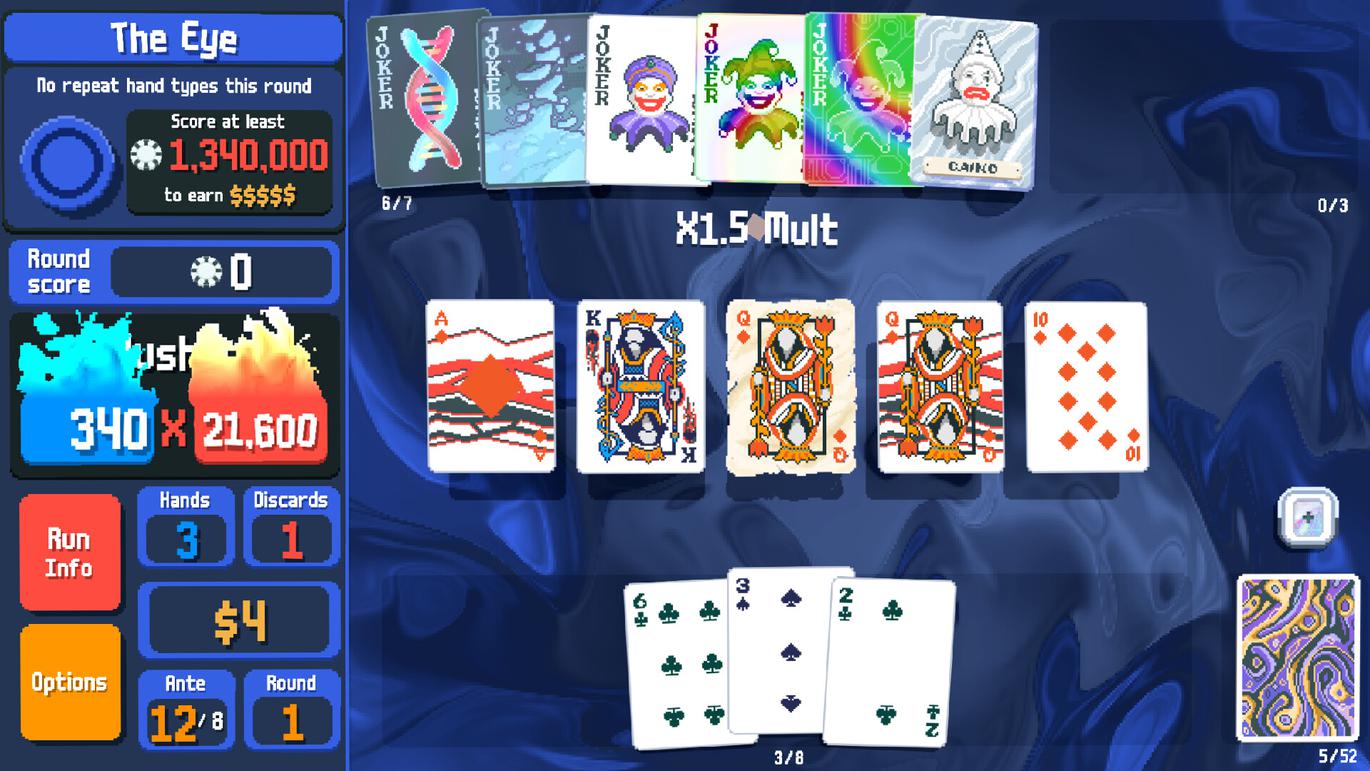
That feeling of adapting to randomness reflects an important principle in gambling psychology. Skinner’s research on variable-ratio reinforcement found that unpredictable rewards encourage persistence because players never know exactly when success will arrive.
Slot machines have long relied on this principle, but “Balatro” repurposes it in a far more constructive way. Rather than encouraging players to chase money, every randomized reward presents another strategic possibility. A rare Joker is exciting not because it represents wealth, but because it opens entirely new ways to build a winning run.

The game’s roguelike structure reinforces this philosophy. Every run begins with the same basic deck, yet no two attempts unfold in the same way. Randomized shops, booster packs, boss blinds, and Joker offerings ensure that players are constantly adapting rather than memorizing solutions. This unpredictability keeps each run fresh while rewarding players who develop a deeper understanding of the game’s systems.
Equally important is how “Balatro” handles failure. Losing a run rarely feels unfair because players almost always recognize the decisions that led them there. Perhaps they committed too heavily to a strategy that never fully developed. Maybe they ignored a Joker that would have solved an upcoming boss blind, or spent too much money early and lacked the resources to pivot later. Even when randomness plays a role, defeat usually feels educational rather than arbitrary.
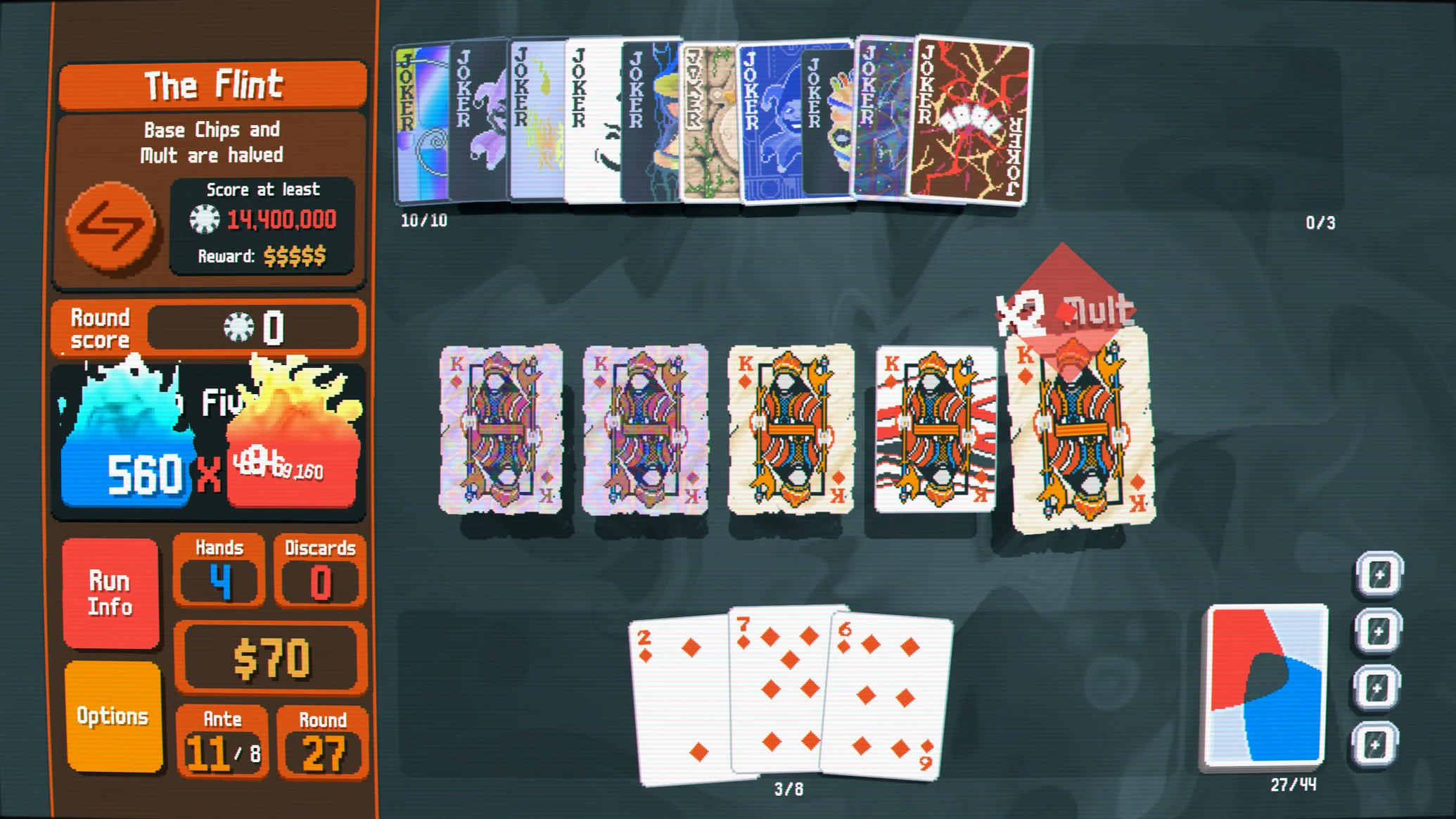
Psychologist Richard Ryan’s8 work on self-determination theory helps explain why this design is so satisfying. Ryan argues that games become intrinsically motivating when they support feelings of competence, autonomy, and mastery.
“Balatro” consistently reinforces all three. Players are given meaningful decisions, encouraged to experiment with different approaches, and rewarded as their understanding of the game’s intricate systems grows. Over time, victories feel less like fortunate accidents and more like evidence of genuine improvement.
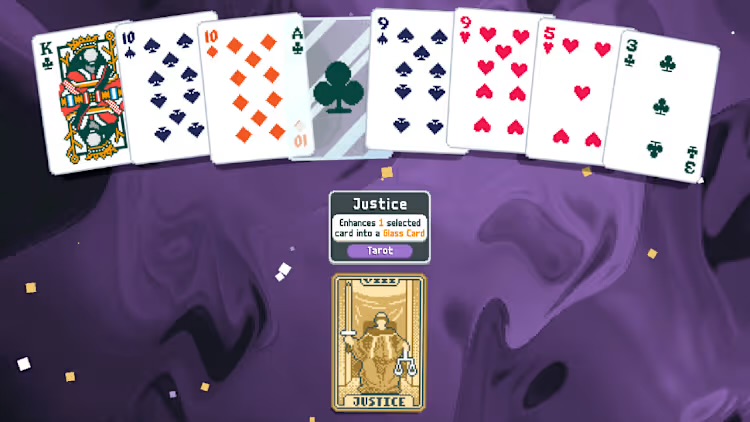
Perhaps the most fascinating aspect of “Balatro” is the illusion it creates. Every player knows the game is built on random card draws and unpredictable rewards, yet it continually convinces them that they can outsmart chance itself.
Each run offers another opportunity to discover a better strategy, build stronger synergies, or recognize patterns that were invisible before. That belief — that the next attempt might finally be the perfect one — is what keeps players returning.

In doing so, “Balatro” accomplishes something surprisingly rare. It captures the emotional excitement traditionally associated with gambling while stripping away its financial consequences. What remains is a game where uncertainty is no longer something to fear or merely tolerate. It becomes the central puzzle players are eager to solve, transforming chance from an obstacle into one of modern gaming’s most satisfying strategic tools.
“Buckshot Roulette” — Risk As Horror
While “Balatro” asks players to master uncertainty, “Buckshot Roulette” asks them to simply survive it.
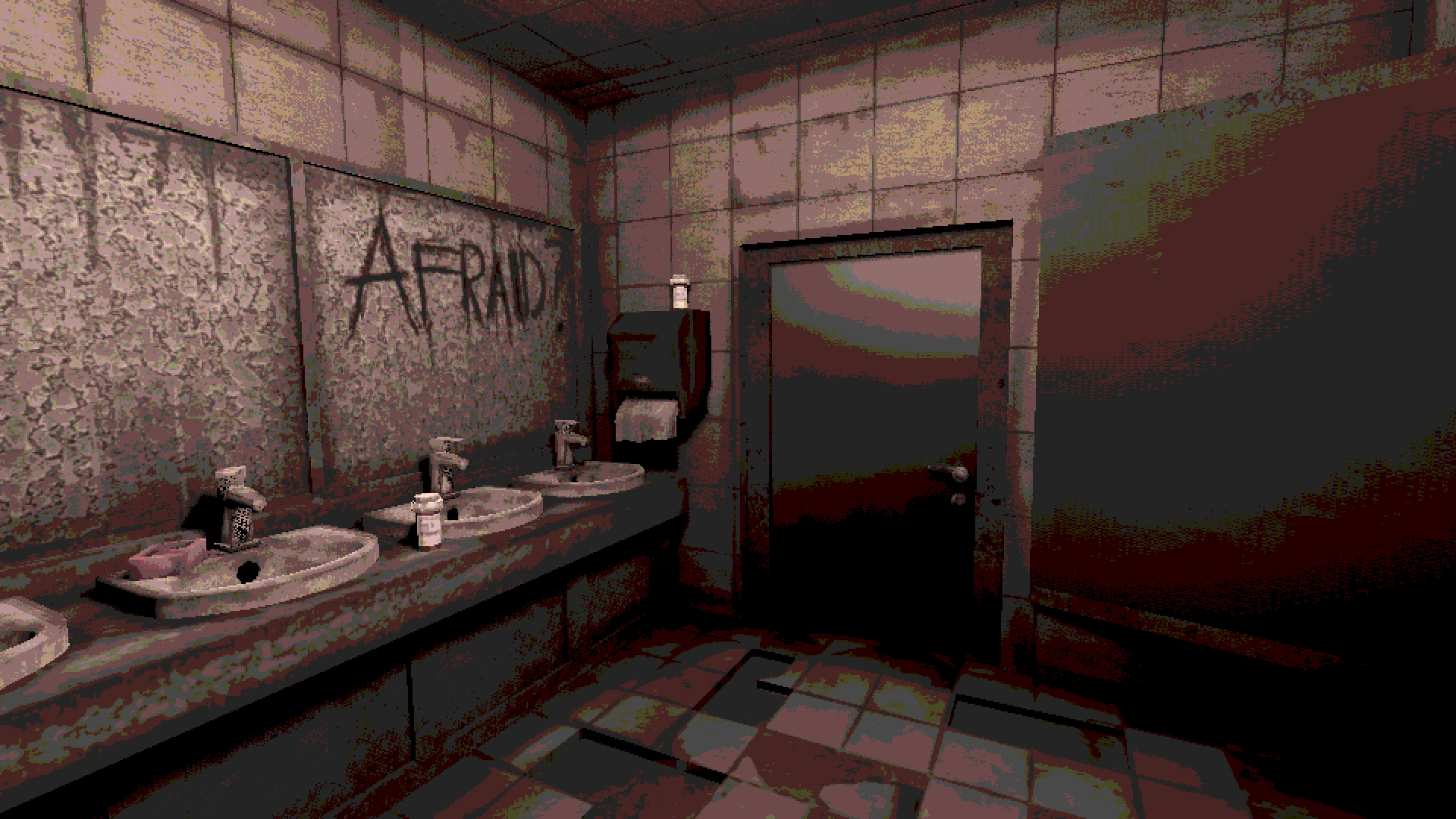
Inspired by the deadly premise of Russian roulette, Mike Klubnika’s breakout horror game strips probability down to its most terrifying form. Two players sit across from one another in a grimy industrial room. Between them rests a shotgun loaded with a randomized sequence of live and blank shells. The objective is deceptively simple: eliminate the other player before they eliminate you. Yet every turn becomes a psychological battle where every decision feels equally dangerous.
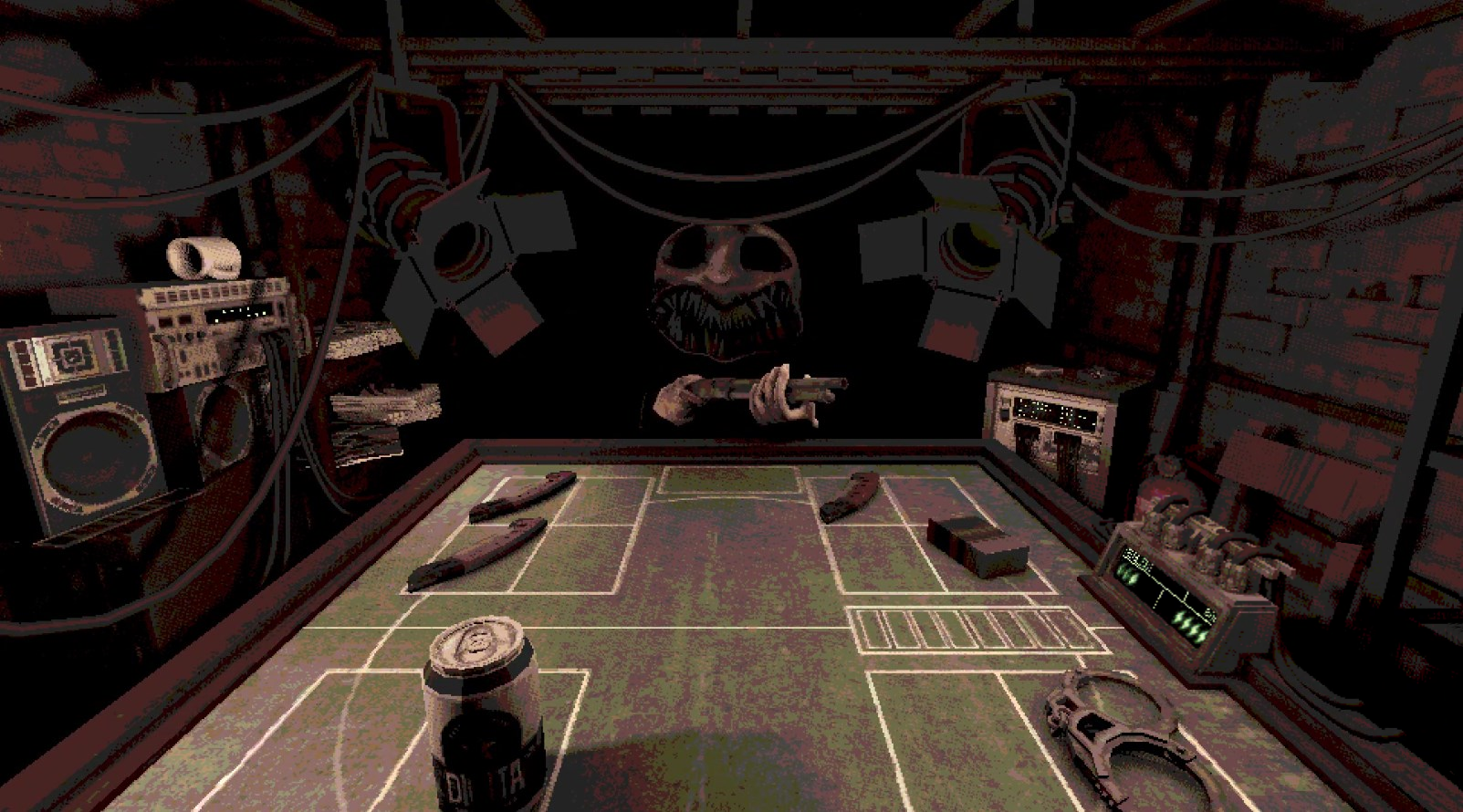
Unlike traditional horror games, “Buckshot Roulette” rarely relies on monsters, elaborate narratives, or sudden jump scares. Its greatest source of fear is uncertainty. Players know how many live and blank shells are loaded into the chamber, but never their order.
Every trigger pull forces them to make calculations based on incomplete information. Should they risk firing at themselves in hopes of preserving another turn? Should they assume the next shell is blank after several live rounds have already been fired? Even when logic suggests one decision is safer than another, certainty never exists. This uncertainty creates a unique kind of suspense because the game constantly asks players to participate in their own anxiety.

Klubnika, Mike. Buckshot Roulette. 2024.
Psychological research helps explain why this tension feels so effective. Studies on uncertainty and risk perception, particularly the work of psychologist Paul Slovic9, suggest that people often experience unpredictable threats as more emotionally intense than known dangers.
The brain naturally tries to reduce uncertainty by searching for patterns, estimating probabilities, and imagining possible outcomes. When those predictions remain unreliable, anxiety increases. “Buckshot Roulette” weaponizes this instinct. Every decision invites players to believe they have figured out the odds, only for the next shell to challenge that confidence.
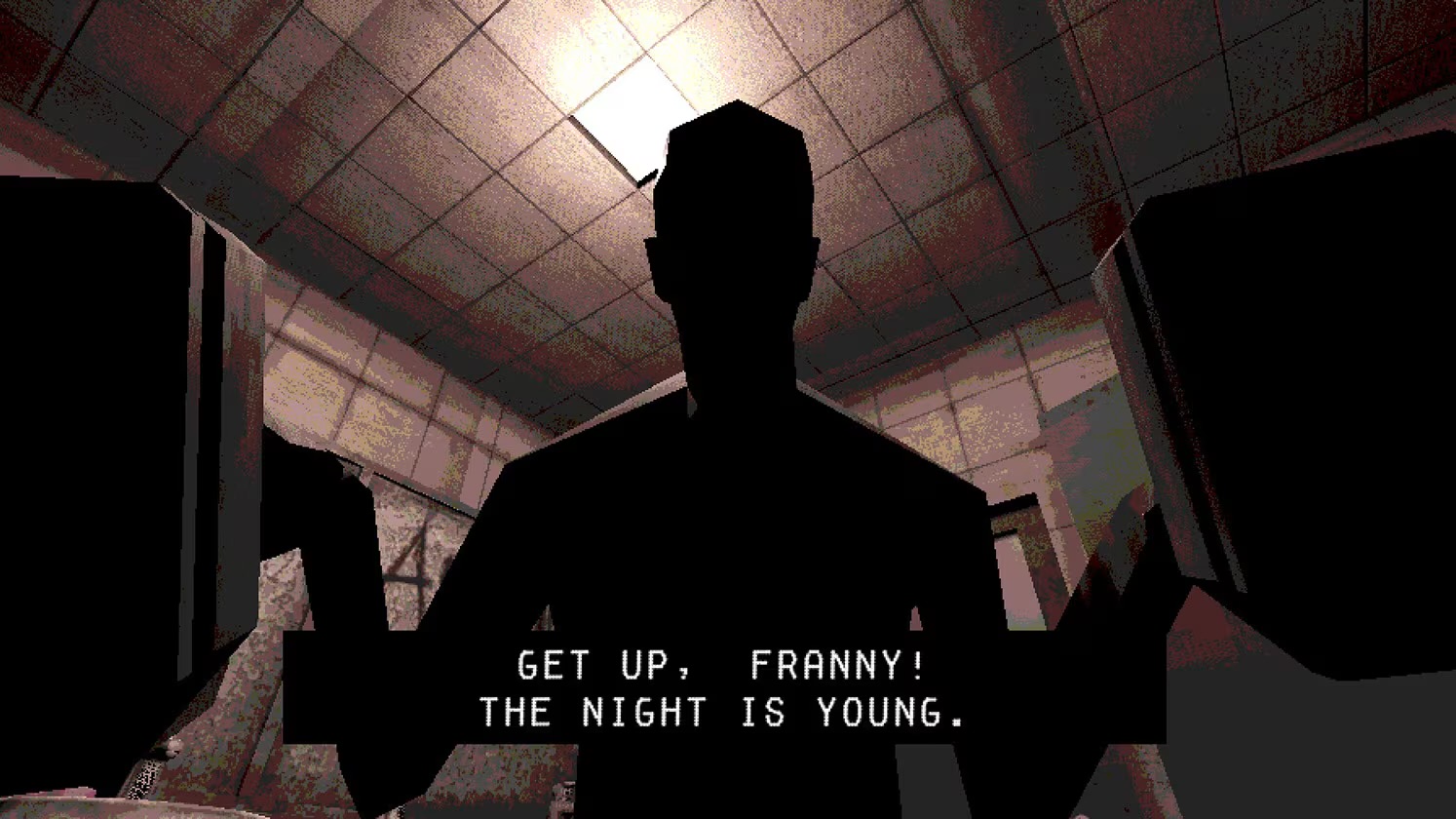
The game’s item system deepens this constant balancing act. Magnifying glasses reveal the next shell, handcuffs skip an opponent’s turn, cigarettes restore health, and other tools temporarily shift the odds in the player’s favor. Importantly, none of these items eliminate uncertainty. Instead, they provide fragments of information or brief moments of control before forcing players back into the unknown. Every advantage feels temporary, making each successful round feel less like safety and more like borrowed time.
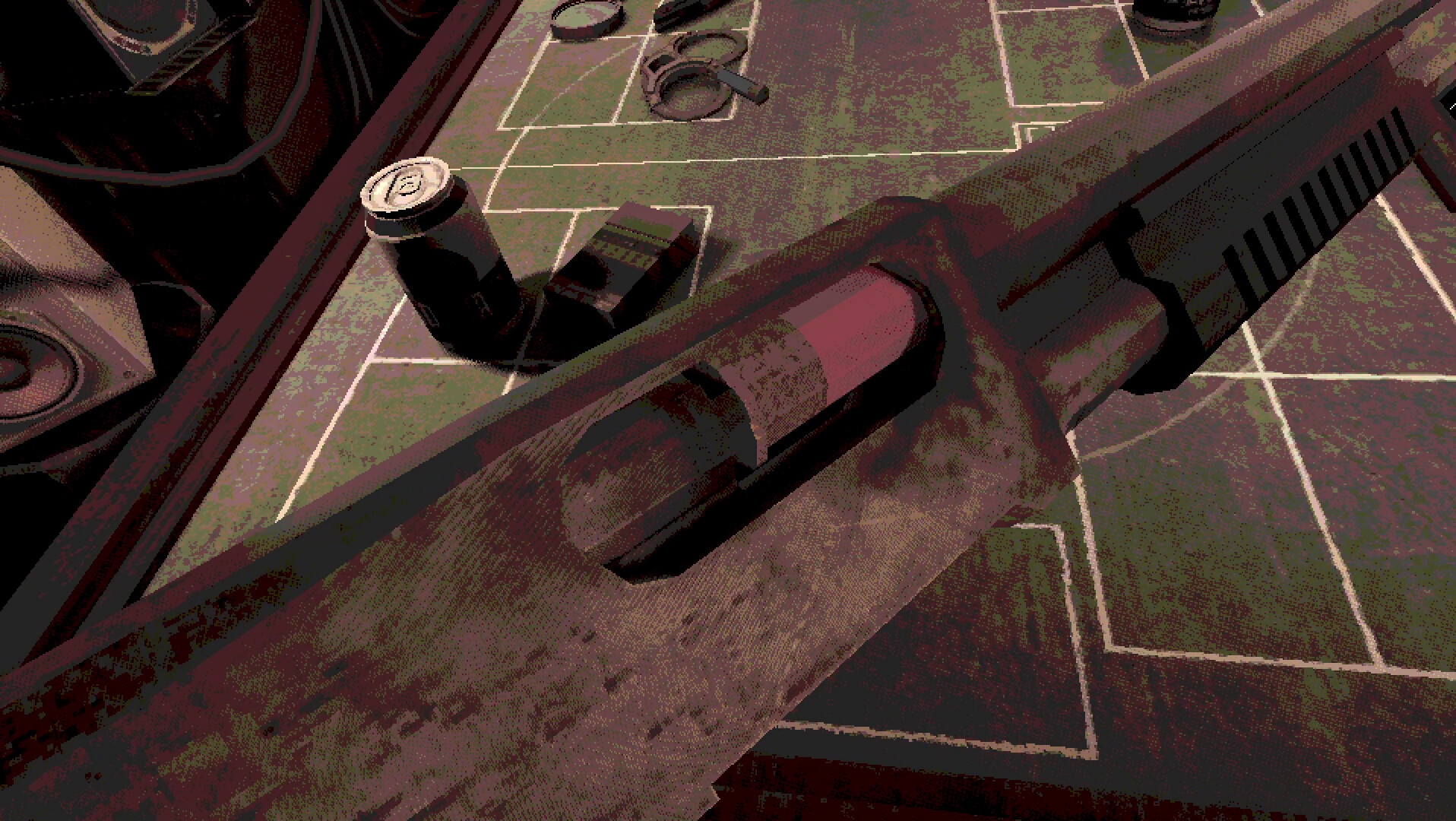
Klubnika, Mike. Buckshot Roulette. 2024.
That temporary control mirrors an idea found throughout gambling psychology. Researchers with the University of Cambridge10 studying decision-making under uncertainty have found that people often overestimate how much influence they have over random events, a phenomenon commonly referred to as the illusion of control.
In gambling, players may believe they can identify patterns in entirely random outcomes. “Buckshot Roulette” plays with this tendency without mocking it. The game rewards careful observation and logical thinking, but it never allows probability to become certainty. Players can improve their odds, but they can never eliminate risk.

This balance between strategy and helplessness is what separates “Buckshot Roulette” from many other horror games. Success depends on making intelligent decisions, yet intelligence alone cannot guarantee survival. Every run reminds players that even the best calculations can fail when chance intervenes.
Perhaps the game’s greatest achievement is how it transforms anticipation into the real source of horror. Neuroscientist Wolfram Schultz’s research suggests that the anticipation of an uncertain outcome often produces stronger neurological responses than the outcome itself.
“Buckshot Roulette” embraces this principle at every turn. The few seconds before the trigger is pulled are often more stressful than the shot itself because every possibility still exists. Victory, defeat, relief, and disaster all occupy the same moment until chance decides between them.
In doing so, “Buckshot Roulette” reveals another side of gambling mechanics. Where “Balatro” invites players to believe they can outsmart randomness, “Buckshot Roulette” reminds them that uncertainty can never be fully controlled.
“CloverPit” — The Trap Of Winning
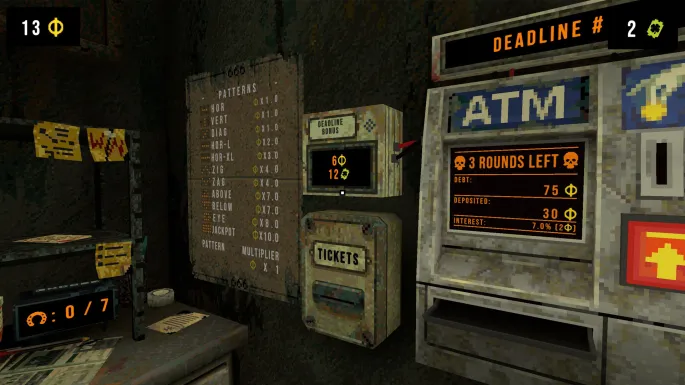
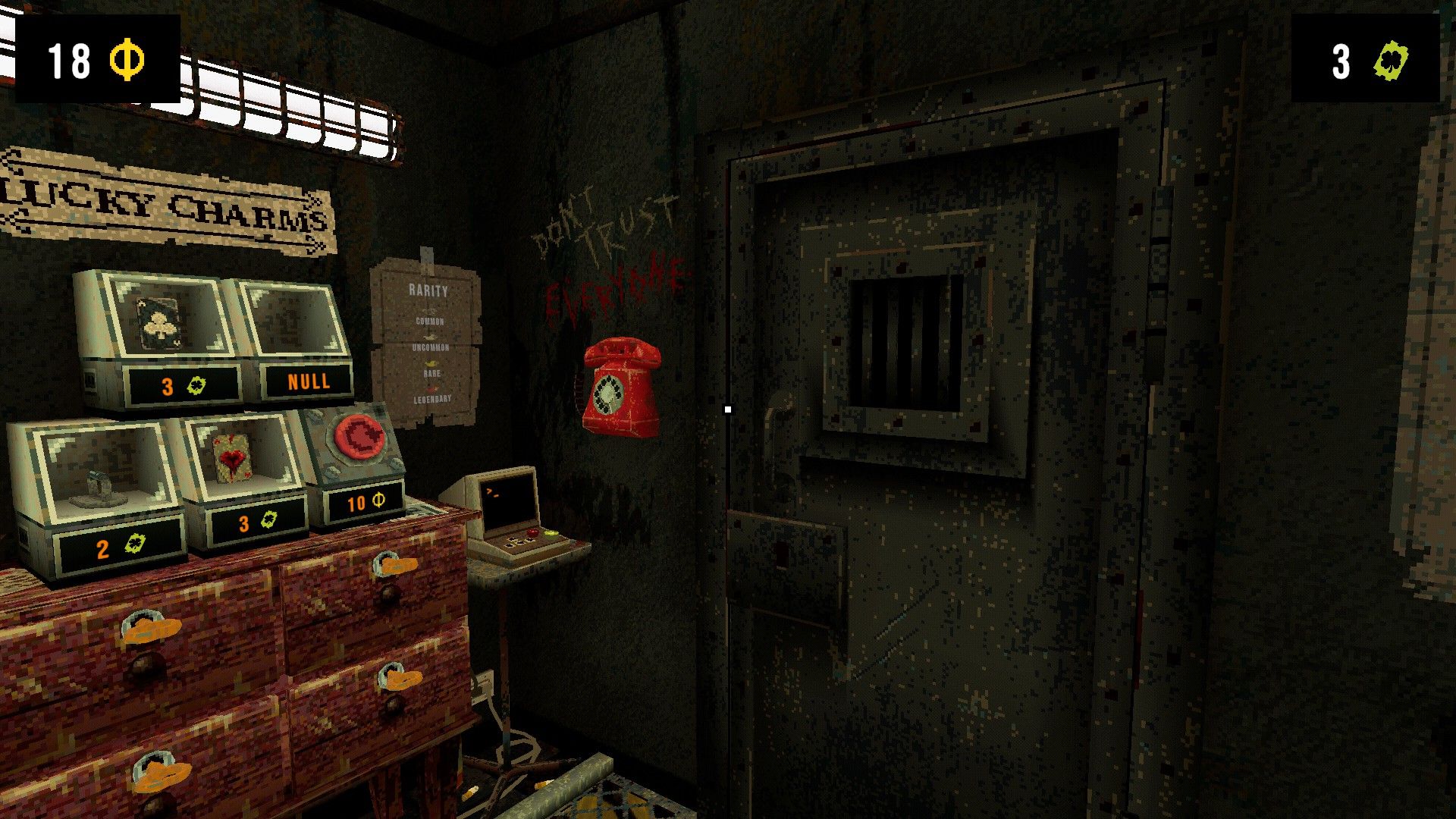
From the moment players begin, the game establishes an oppressive atmosphere. Trapped inside a filthy, claustrophobic cell with little more than a slot machine and mounting debt, survival depends on continuing to play. Every spin offers the possibility of earning enough to stay alive, but every reward is temporary. Instead of feeling triumphant, victories become another reason to keep going.
Unlike most games built around progression, “CloverPit” deliberately avoids giving players a sense of lasting security. Winning enough currency pays immediate debts, unlocks helpful upgrades, or delays failure for another round, but the machine is always waiting for another payment.

Every success raises new expectations. Every solution creates another problem. Rather than climbing toward a satisfying conclusion, players become trapped inside an endless cycle of maintaining momentum.
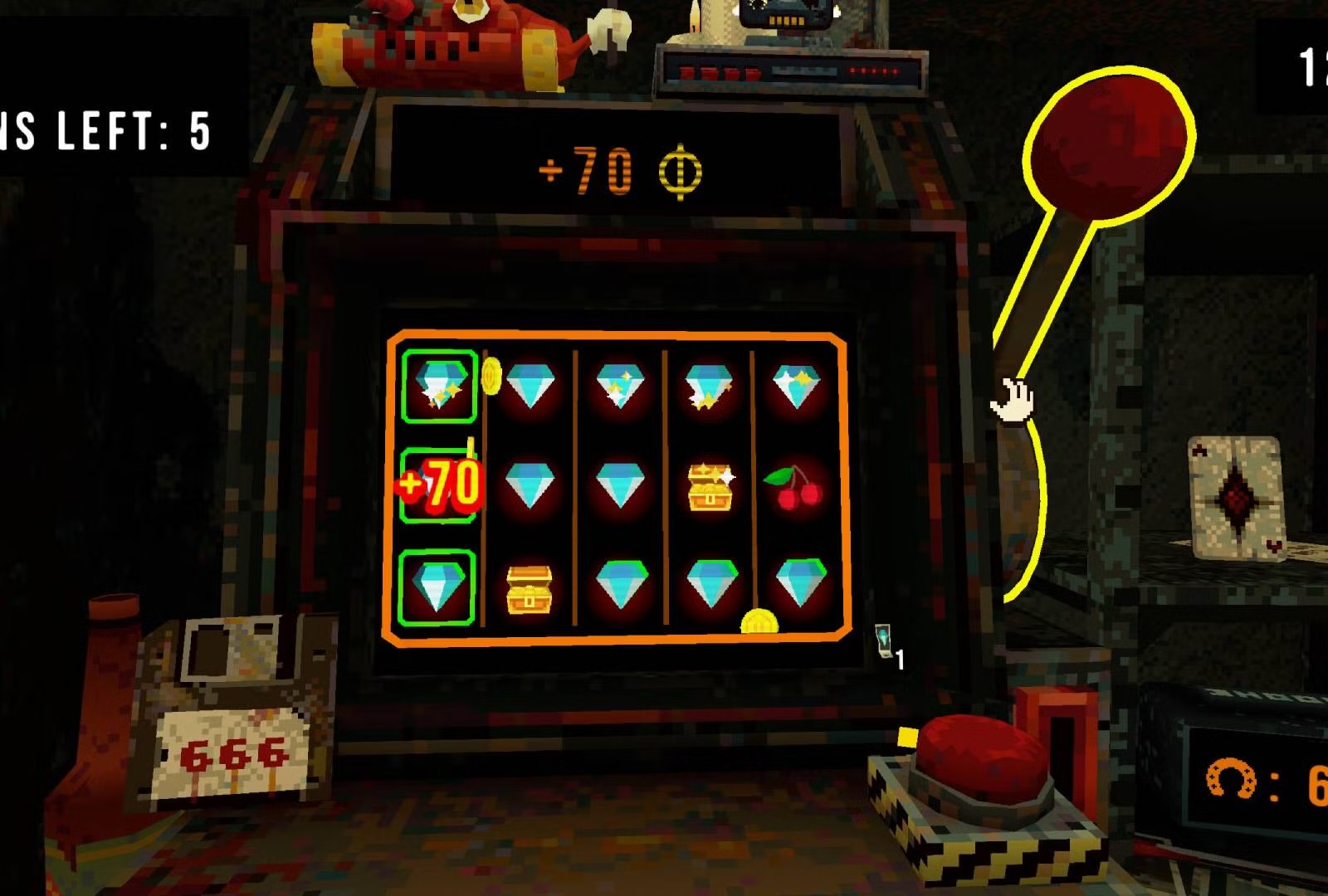
This design reflects one of gambling’s most recognizable psychological patterns: chasing losses and chasing wins. Researchers studying gambling behavior have consistently found that intermittent rewards encourage persistence because each success reinforces the belief that another one is just around the corner.11 Near misses are particularly powerful.
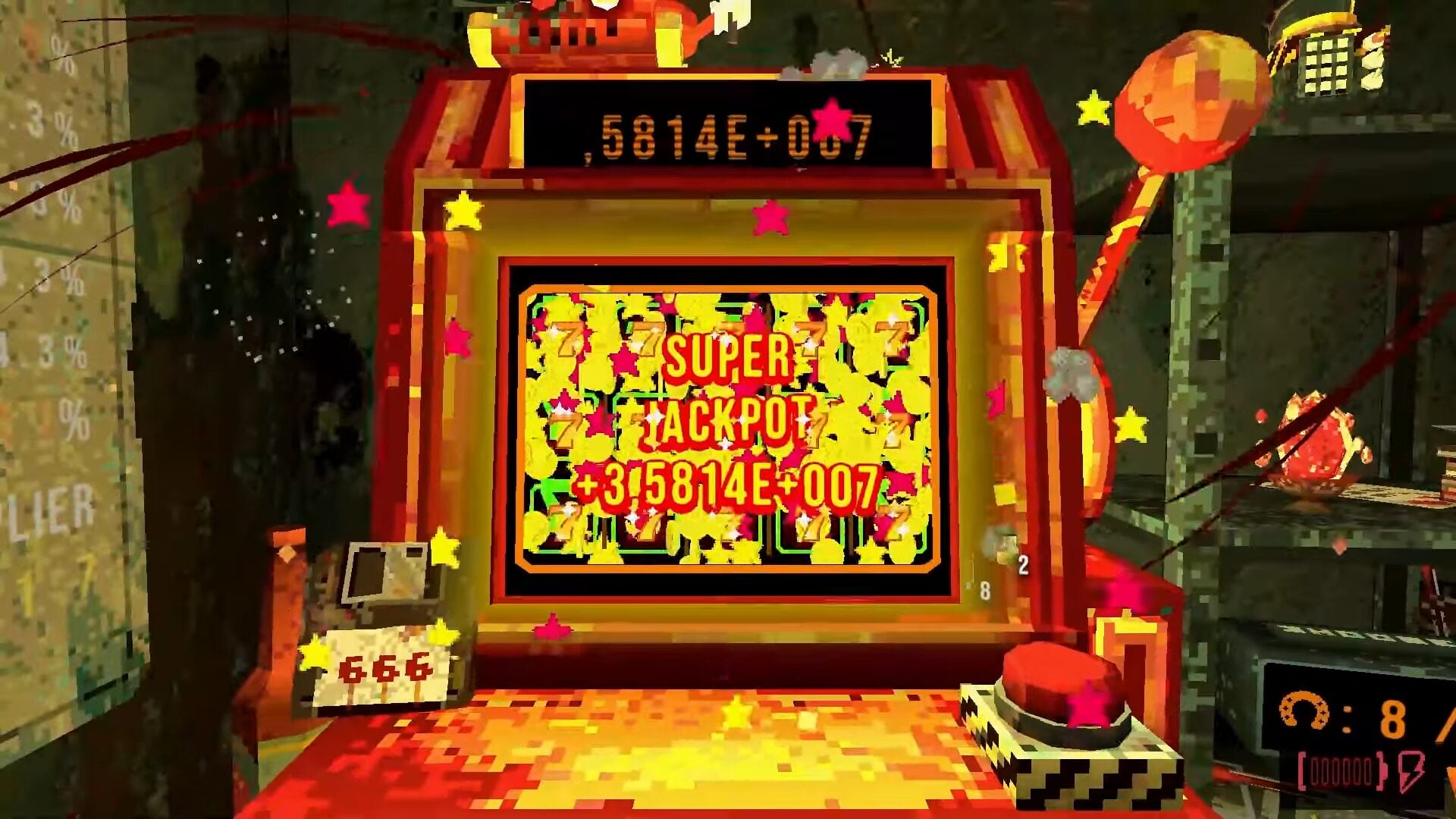
Even unsuccessful outcomes can motivate continued play when they appear tantalizingly close to victory, creating the feeling that success is becoming more likely despite the odds remaining unchanged.
“CloverPit” captures this emotional rhythm remarkably well. A promising spin that narrowly misses a jackpot feels less like failure than evidence that another attempt might finally succeed. A useful upgrade creates optimism that the next cycle will unfold differently. Every setback becomes another justification for continuing rather than another reason to stop. The game carefully recreates the psychological momentum that makes gambling so difficult to walk away from, not to encourage those behaviors, but to expose how persuasive they can become.
Unlike traditional casino games, however, “CloverPit” surrounds these mechanics with an unmistakably bleak presentation.
The environment is oppressive, the atmosphere suffocating, and every reward feels hollow. Winning never produces celebration. Instead, it provides only temporary relief before the next demand arrives. This constant emotional tension transforms the slot machine from a symbol of entertainment into something resembling a prison.
That distinction is important because “CloverPit” is not interested in glamorizing gambling. Instead, it uses familiar reward systems to critique them from within. The game allows players to experience the emotional exhaustion of constantly chasing another opportunity without reducing that experience to a simple moral lesson. It trusts players to recognize the growing absurdity of endlessly pursuing a reward that never feels complete.
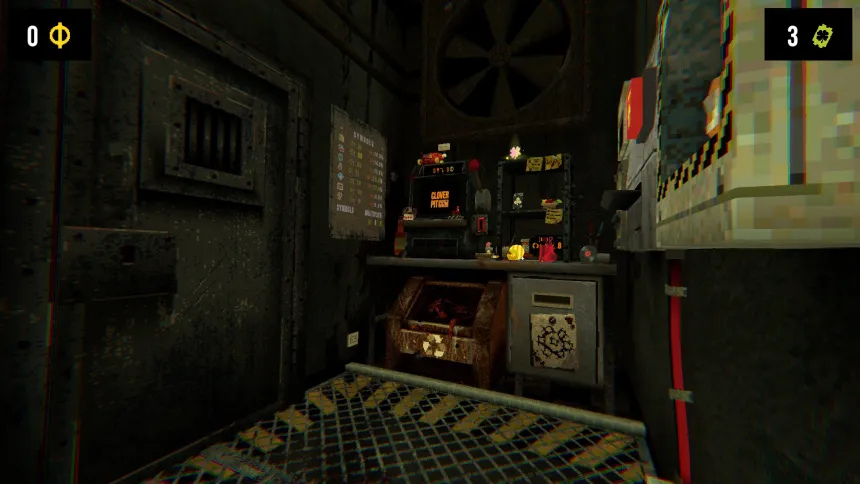
TVGS. CloverPit. 2025.
The game’s roguelike structure strengthens this commentary. Every failed run encourages another attempt with new upgrades, different combinations, and fresh possibilities. Mechanically, this loop resembles countless modern roguelikes. Emotionally, however, it begins to resemble something else entirely. The line between determination and compulsion gradually becomes more difficult to identify.
This tension echoes broader conversations about contemporary game design. Many modern games rely on progression systems, randomized rewards, daily challenges, and endless unlocks to encourage continued engagement.

While these mechanics are not equivalent to gambling, they often draw upon similar psychological principles involving anticipation, intermittent reinforcement, and long-term motivation. “CloverPit” cleverly turns those same systems into the subject of its own critique, asking players to consider why “one more run” can feel so irresistible.
The Allure Of The Unknown
Together, “Balatro,” “Buckshot Roulette,” and “CloverPit” demonstrate why gambling mechanics fit so naturally within the roguelike formula. All three are built around uncertainty, anticipation, and the hope that the next attempt will be different.
Yet where gambling often asks players to trust luck, these games continually reward curiosity, experimentation, and growth. They remind players that uncertainty is most compelling when it creates opportunities to learn rather than simply opportunities to win.
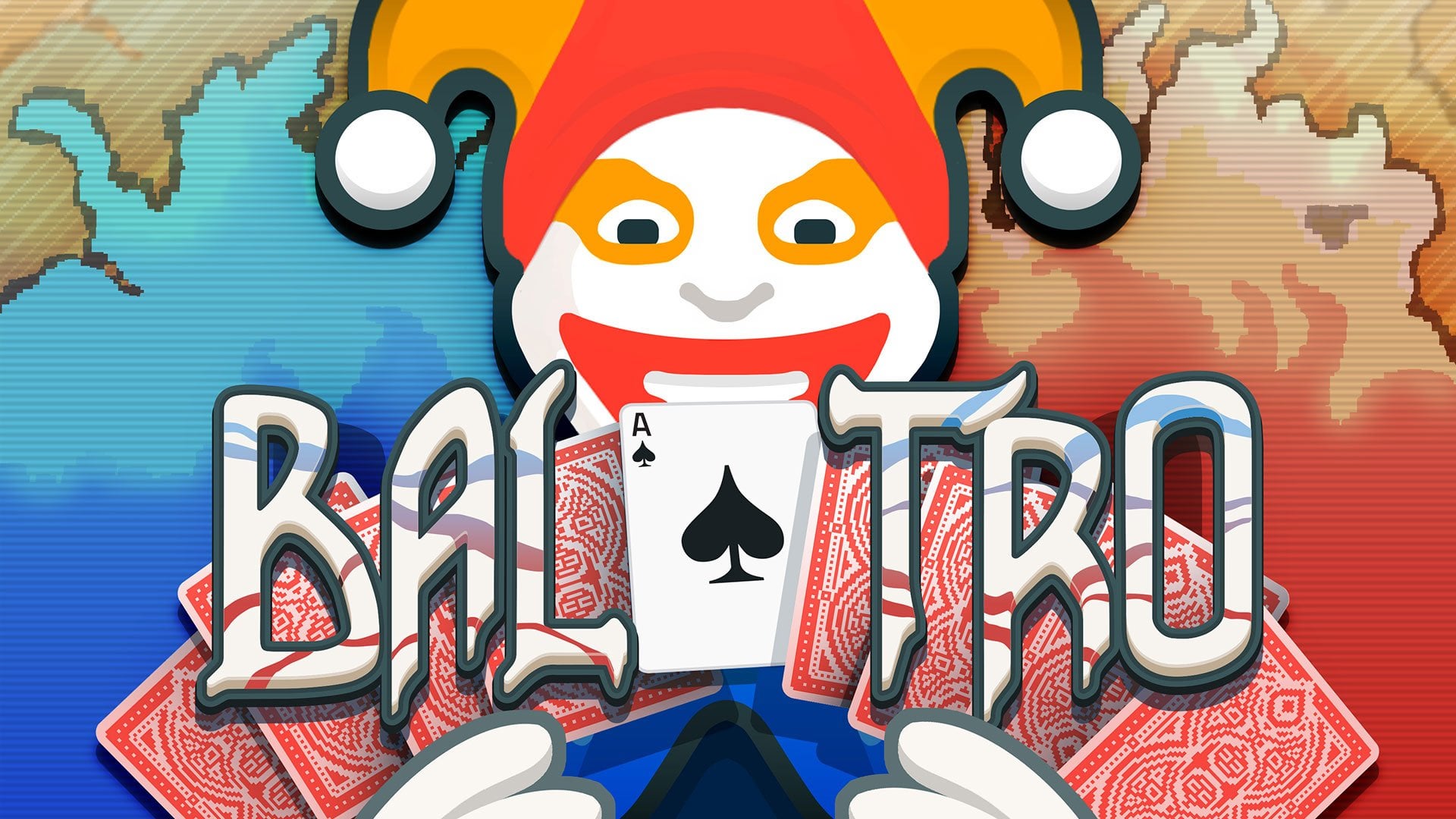
Each game, despite their tonal differences, captures one indescribable feeling: the excitement of possibility. The brief moment before a card is drawn, the trigger is pulled, or the slot reels stop spinning is filled with countless potential outcomes. That anticipation is palpable in the air, immersive and frighteningly fun.
As indie developers continue experimenting with new ways to challenge players, gambling mechanics will likely continue appearing in unexpected genres. Not because players necessarily want more games about casinos, but because uncertainty remains one of the most versatile tools available to game designers. It can inspire strategic thinking, generate overwhelming tension, or encourage thoughtful reflection on systems of reward and motivation.
Footnotes
- “Rogue on Steam.” n.d. Accessed August 7, 2026. https://store.steampowered.com/app/1443430/Rogue/. ↩︎
- LocalThunk. Balatro. Playstack, 2024 ↩︎
- Mike Klubnika. Buckshot Roulette. itch.io ↩︎
- TVGS. CloverPit. Steam Store ↩︎
- Skinner, B. F. “Schedules of Reinforcement.” Simply Psychology ↩︎
- Schultz, Wolfram. “Dopamine Reward Prediction Error Coding.” Nature Reviews Neuroscience ↩︎
- Deci, Edward L., and Richard M. Ryan. “Self-Determination Theory.” Center for Self-Determination Theory ↩︎
- Ryan, Richard M., and Edward L. Deci. n.d. Self-Determination Theory and the Facilitation of Intrinsic Motivation, Social Development, and Well-Being. ↩︎
- Slovic, Paul. “The Perception of Risk.” Decision Research ↩︎
- “The Psychology of Gambling.” 2007. April 1. https://www.cam.ac.uk/research/news/the-psychology-of-gambling. ↩︎
- Clark, Luke. “The Psychology of Gambling: Near-Misses, Illusions of Control, and Cognitive Distortions.” University of Cambridge Department of Psychology ↩︎