Table of Contents Show
The Devil All The Time (2020; Antonio Campos) feels like a black sheep of modern film.1 The story’s constant questions of faith and morality across an eerie Appalachian backdrop make suspense a character of its own. Suspense is shown unconventionally (by modern film standards), feeling more akin to a lingering cloud over the region as opposed to an active force. Campos achieves this through very quiet directorial choices, with a setting that feels so detached from the rest of the world, cinematography that feels a bit too still, and a constant question of morality through characters.
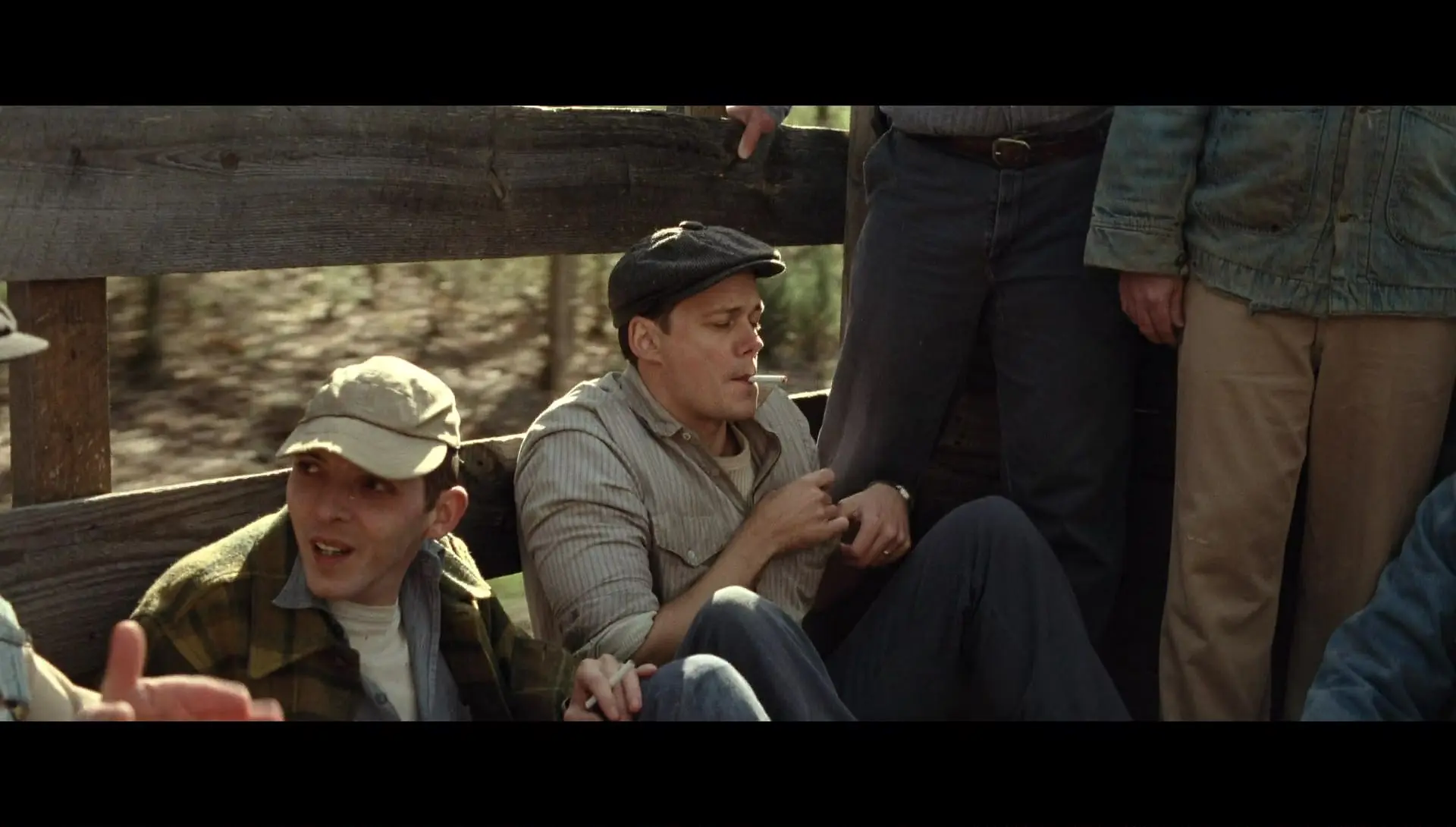
Releasing direct to streaming as a Netflix original, the Americana horror film follows many intersecting plotlines of sinister events around Appalachia in the mid 20th century. The film’s primary story follows Arvin (Tom Holland) as he grows up in the shadow of his father Willard’s (Bill Skarsgard) suicide. Arvin becomes increasingly violent as more events unfold, such as when he protects his sister Leonora (Eliza Scanlen) from assault and his run-in with serial killers.
Appalachia And The Power Of Isolation
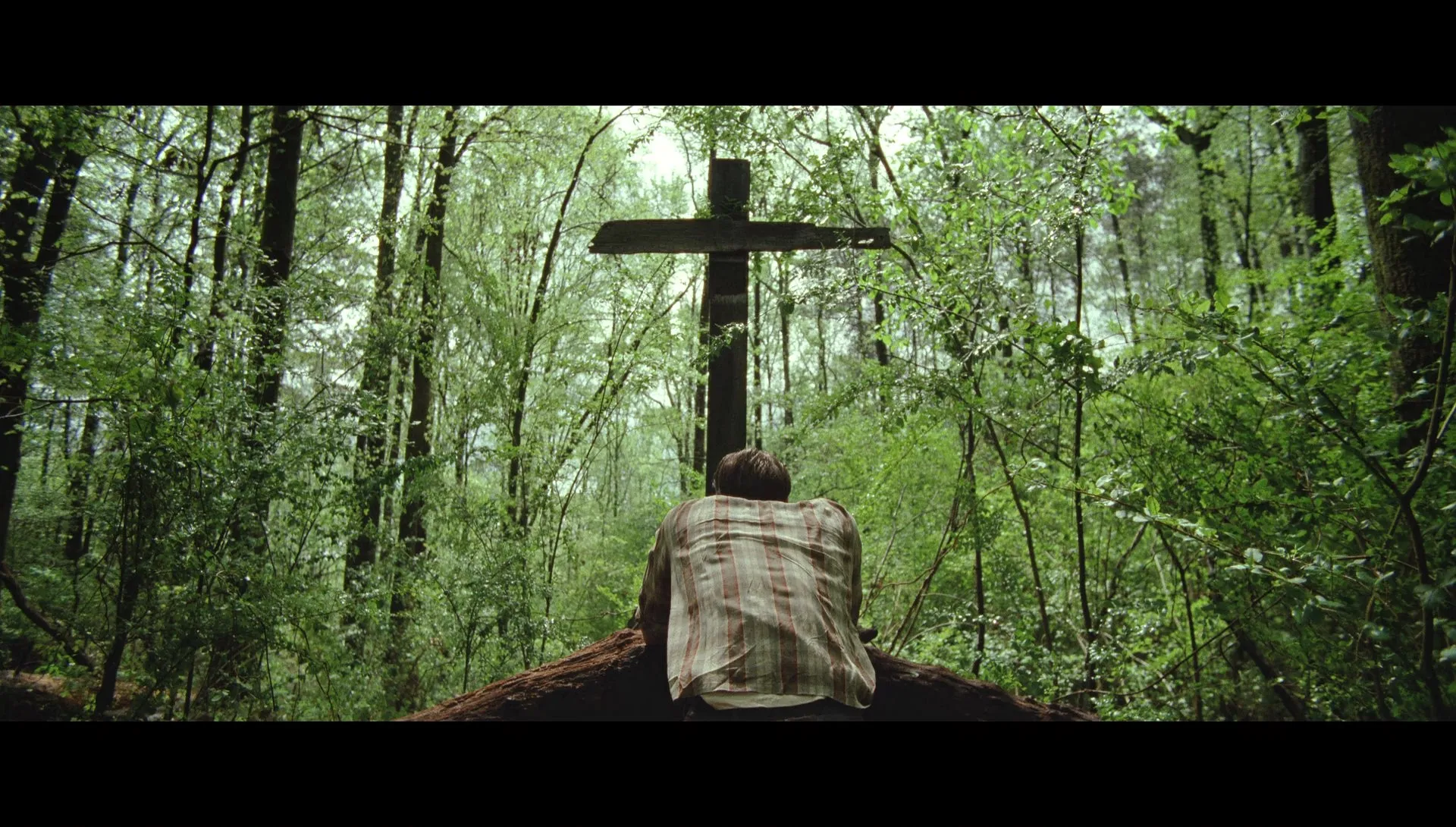
Appalachia, as a region, has always been a subject of discussion. A less populated area of the United States with a distinct but confined culture leads to a heightened sense of unease for anyone not from there. In The Devil All The Time, the setting is before that of satellite and quick response times; it feels immensely lawless. This is established early on, with Arvin’s discovery of his father’s suicide and his dog’s crucifixion.
The sound of the forest remains constant, with a lingering sound of bugs chirping and wind whipping through the trees. When the main characters of this film are in danger, there is a realization that they can’t just simply dial 911 or call for help out into a busy street; in the seclusion of the woods, there is no help. Response time is nearly nonexistent in this section of the United States, and especially in the mid-20th century.
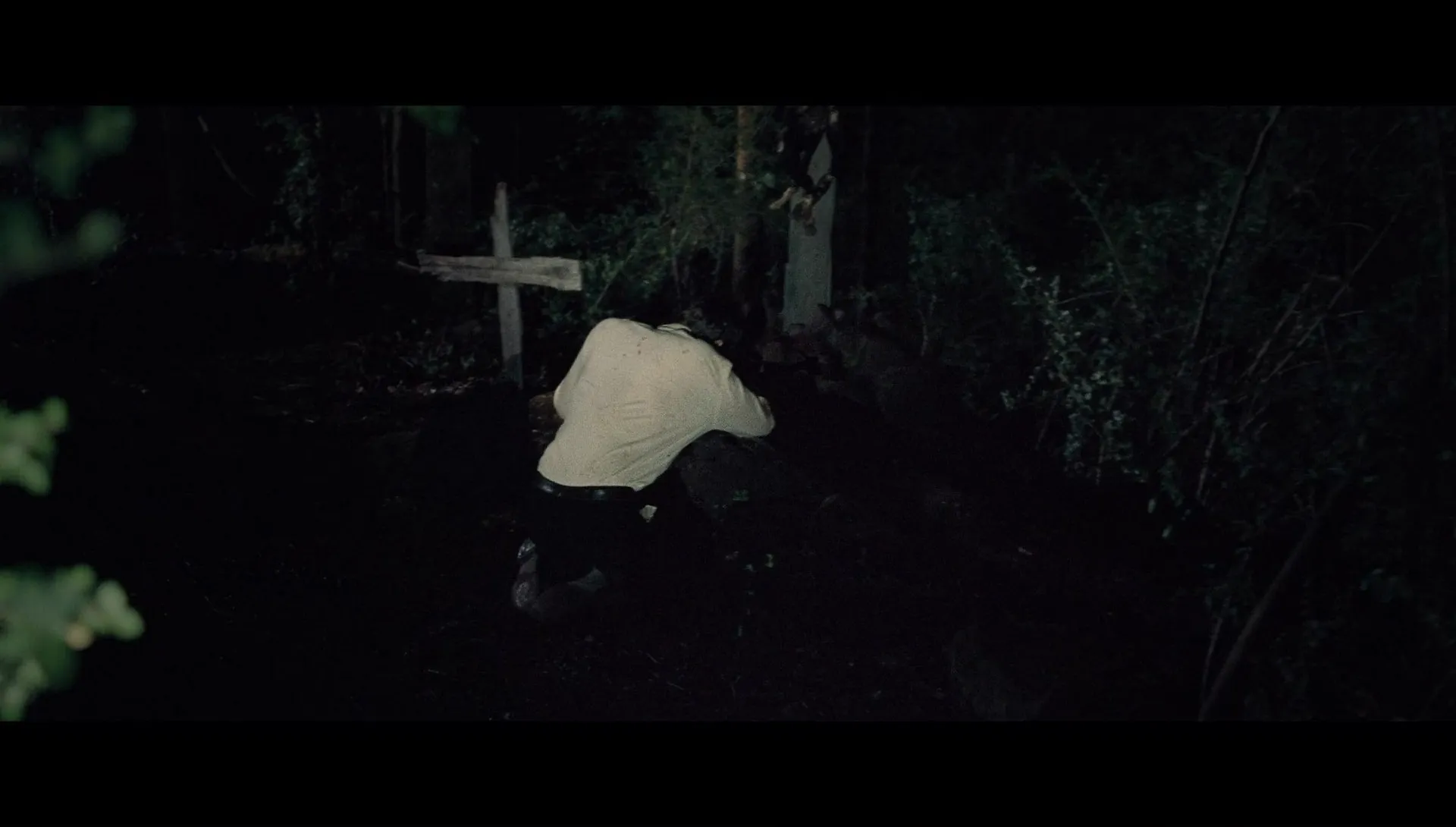
Even the areas where people reside throughout the story create a feeling of unease. Run-down cabins with hardly any light alongside dingy motels with decaying paint feel like a lull in the world. The people also tend to keep their noses to the ground, never bothering to intervene until it directly involves them.
Even the places that should theoretically be a safe haven are tainted, such as the church that is a central location throughout the story. Surrounded by an open field, the church serves as a false annex, being tainted by acts of “faith” that generate a visceral reaction. This is shown in actions such as Roy Laferty’s (Harry Melling) act of pouring spiders all over himself, or Arvin’s murder of Preston Teagardin (Robert Pattinson).
The locations in this story are never safe. Where there’s a rundown location, there’s always another entry; with the woods on all sides, safety and security are far from reality. These locations on their own wouldn’t be unsettling, but the tone of mid-century Appalachia amplifies these locations’ ambience and therefore, their character as well.
Cinematography And Constant Unease
Director of photography Lol Crawley doesn’t pull his punches when it comes to using camera work as a means of unease. Wide shots of locations add to the isolation of this community, showing that there truly is nothing other than woods for miles. This is best demonstrated in church scenes, with a focus on whoever is preaching, making the dialogue all the more powerful. In scenes where the unchanging angles would usually feel boring, here it truly feels like staring into a window of someone’s life.
But in faster sequences, Crawley doesn’t let these scenes overstay their welcome; they go on just enough to make you feel goosebumps going down your spine. Many of the acts of violence in this story are carried out in incredibly quiet locations, highlighting not only the rural setting the characters are in, but also the dangers that come with it.
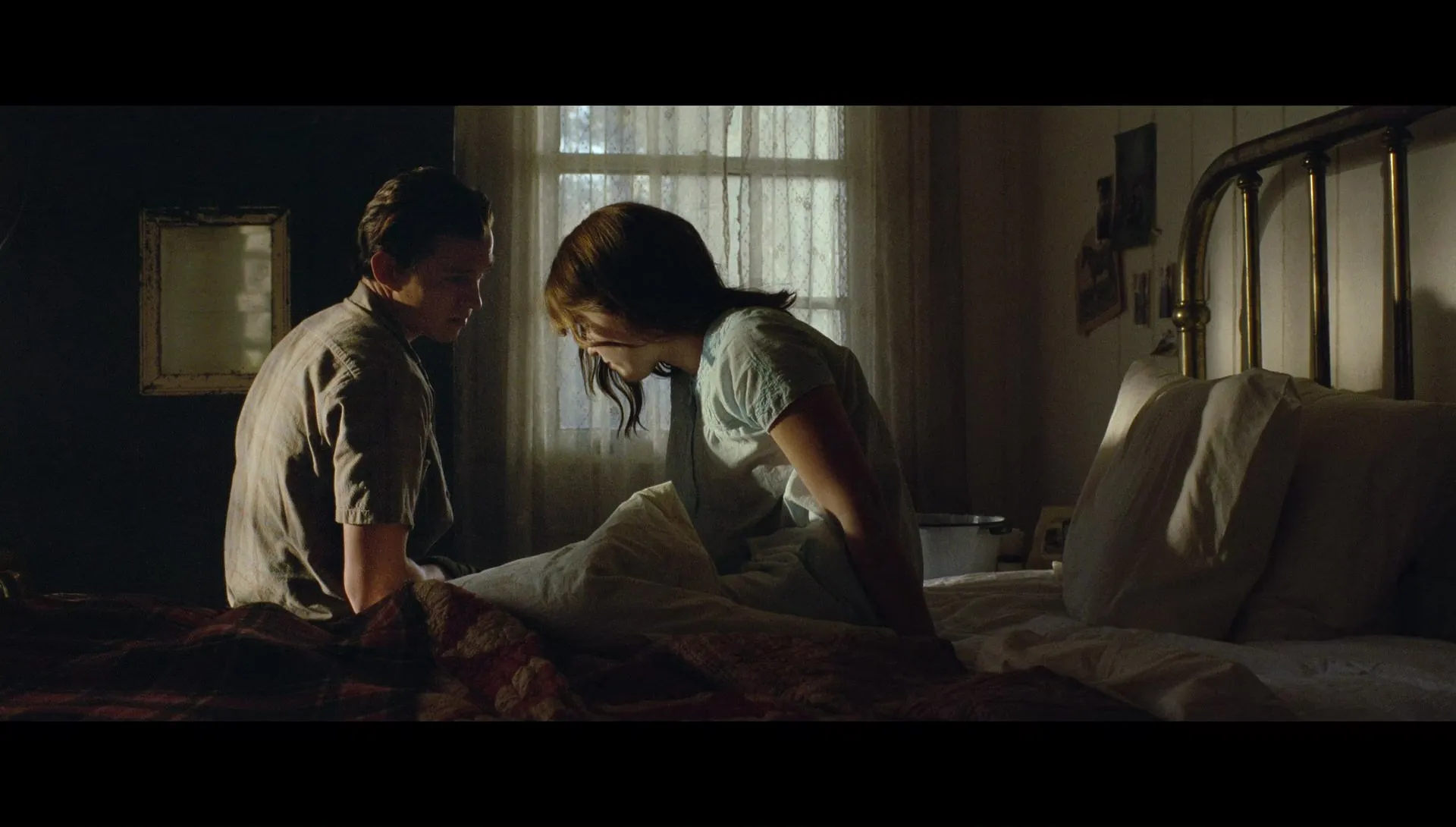
Car ride sequences feel like a calm before the storm. Filmed with a focus on everyone inside discussing (primarily) emotion before an action or after an action taken (such as Roy’s murder of Helen Hatton (Mia Wasikowska) or Williard’s assault on poachers as his son watches from the passenger seat).
Crawley isn’t trying to make the film stylized by any means, but a true time capsule into the story, and highlights the emotional impacts the actions taken have on characters. The cinematography truly does walk the line between simple and artistic, giving a true, raw feeling throughout the course of the film.
Violence, Morality, And Human Darkness
This film’s main cast of characters are morally uncertain (and unsafe). This primarily applies to the immense effect that faith in God has on the story. While the audience stares in disgust at certain events, such as Roy’s murder of Helen, it truly feels like Roy believes he can resurrect her with the power of the lord. The question of morality and darkness applies best to Arvin, who was a sweet child, but after witnessing many acts of violence around him, sees violence as a means to protect the ones he loves.
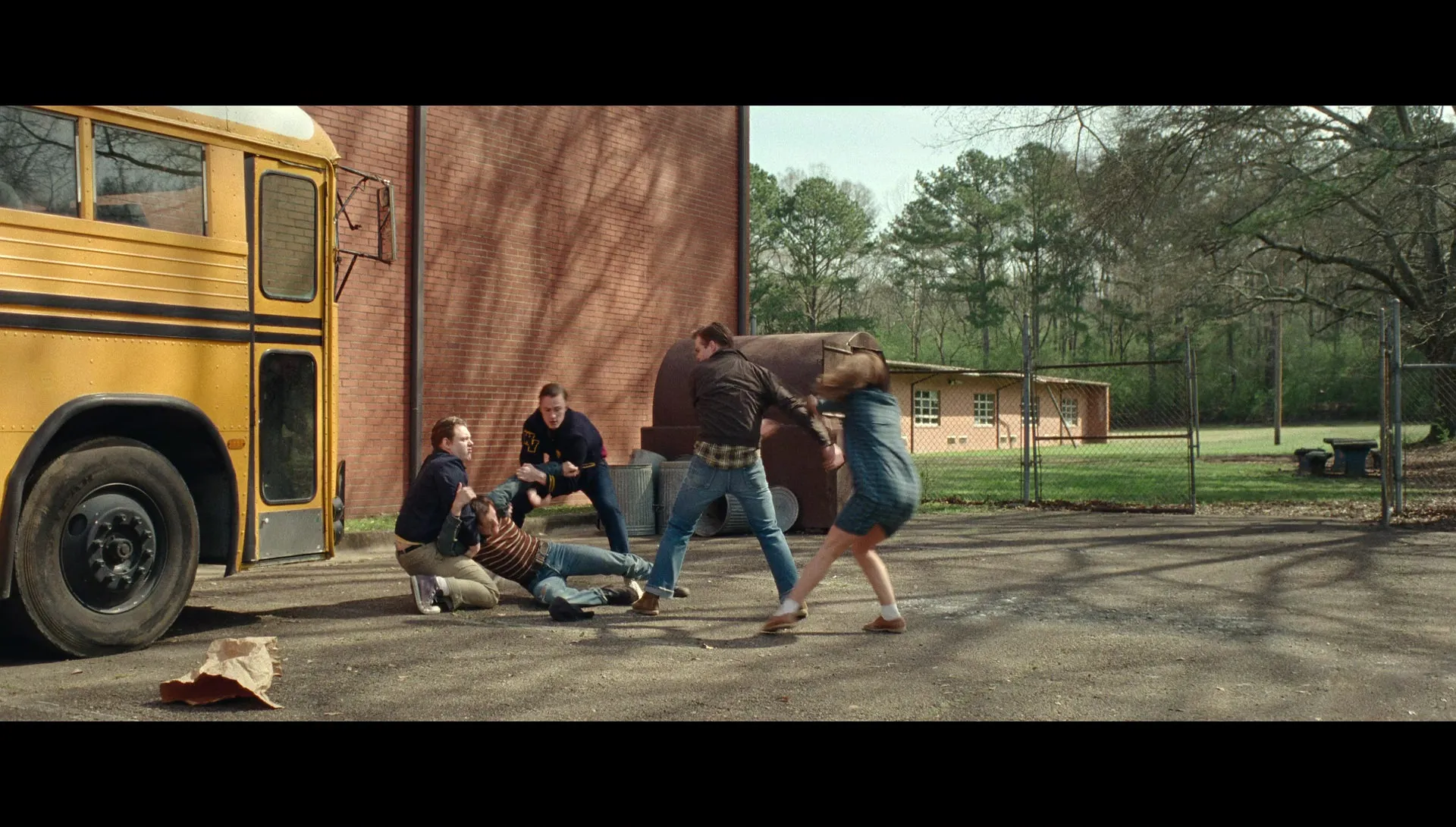
Many acts of violence in this film are quick and to the point, but highlight the brutality that is an attack out of emotion.2 For instance, Arvin’s assault on his sister’s bullies feels so much more visceral with each punch. On the other hand, Arvin’s murder of Preston Teagardin feels swift, but the aftermath of Arvin’s panic feels more unsettling than the act itself. It’s odd in principle because when you look at Leonora being bullied and compare it to Preston assaulting her (leading to her suicide), it feels like the latter should have more weight in the action than the former. But Arvin isn’t as affected by the action of killing Preston as much as he is by the reaction.
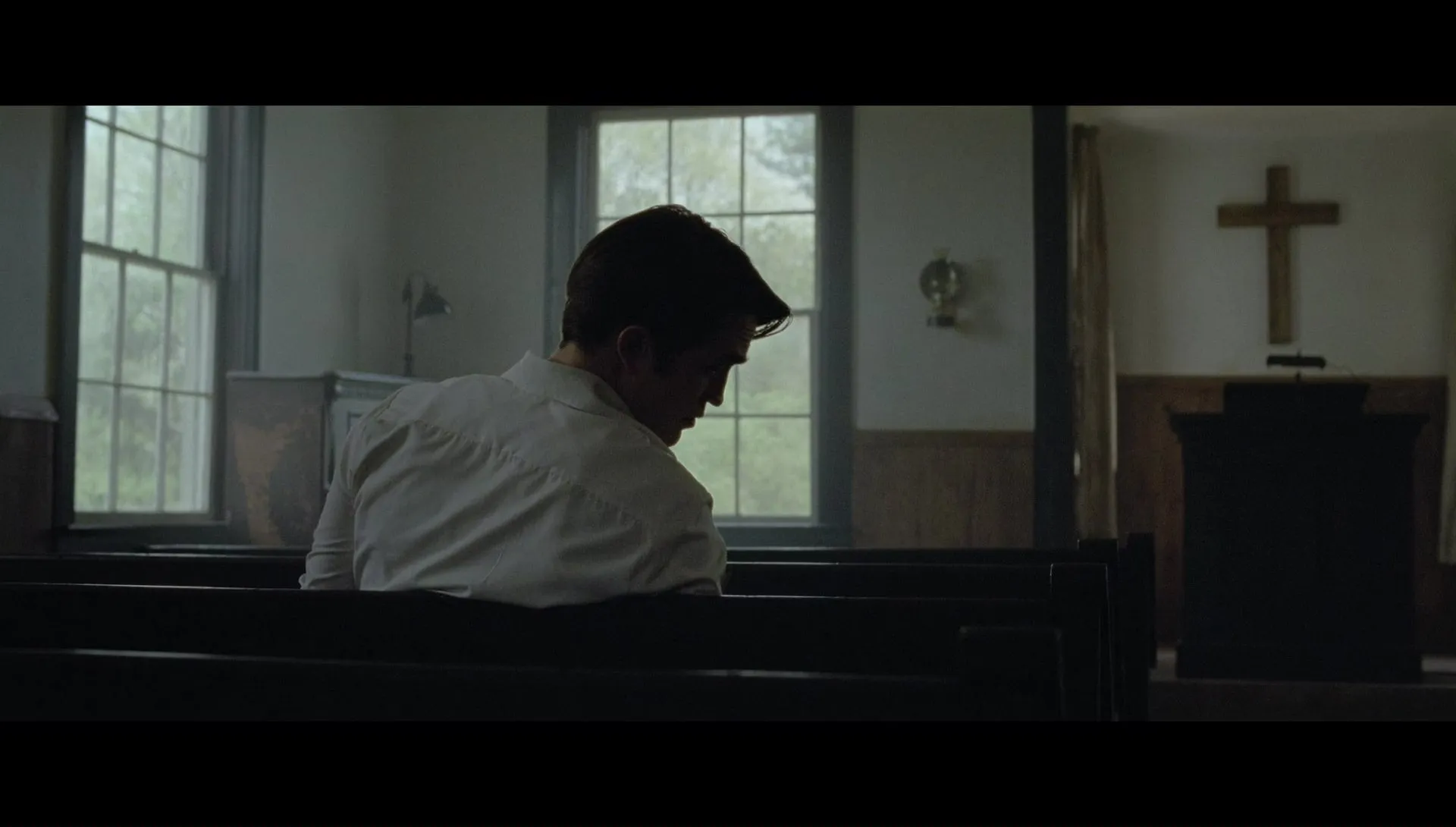
The film’s initial protagonist, Williard, is demonstrated to be the catalyst for Arvin’s violence throughout the film. Williard’s trauma from his experience in the Pacific Theater of World War 2 showed him the horrors of humanity. This led to him to turn to a higher power for an answer, which would eventually bring his downfall.
His harshness before his suicide makes his actions all the more powerful, demonstrating that this truly is what he thinks needs to be done to achieve peace for his loved ones. Human descent into violence and madness is a constant for all of the characters in this story, which makes it all the more unsettling to witness and know that it comes for everyone.
Why The Suspense Feels Different
The film’s suspense feels unlike anything crafted in the last ten years. Akin to that of The Killing of a Sacred Deer (2017) and Hell or High Water (2016), it’s a focus on atmosphere and character as opposed to jumps of shock and violence.3 As an audience, there is a preconceived notion that horror and violence need to be a consistent active force throughout a story, but this film’s restraint leads to a feeling of uncertainty as to what’s coming next; it is clear that something is coming.
The slow burn keeps people engaged, especially when storylines intersect, leading to an impending dangerous interaction. In many scenes, we see characters in locations we associate with others. This is seen when Williard casually takes a seat as the soon-to-be serial killer Carl Henderson (Jason Clarke), or the revelation that Deputy Lee Bodecker (Sebastian Stan) is siblings with Sandy (Riley Keough), Carl’s partner in crime. Little moments like this demonstrate how small these communities are, and further the chance of an interaction, or even an altercation.
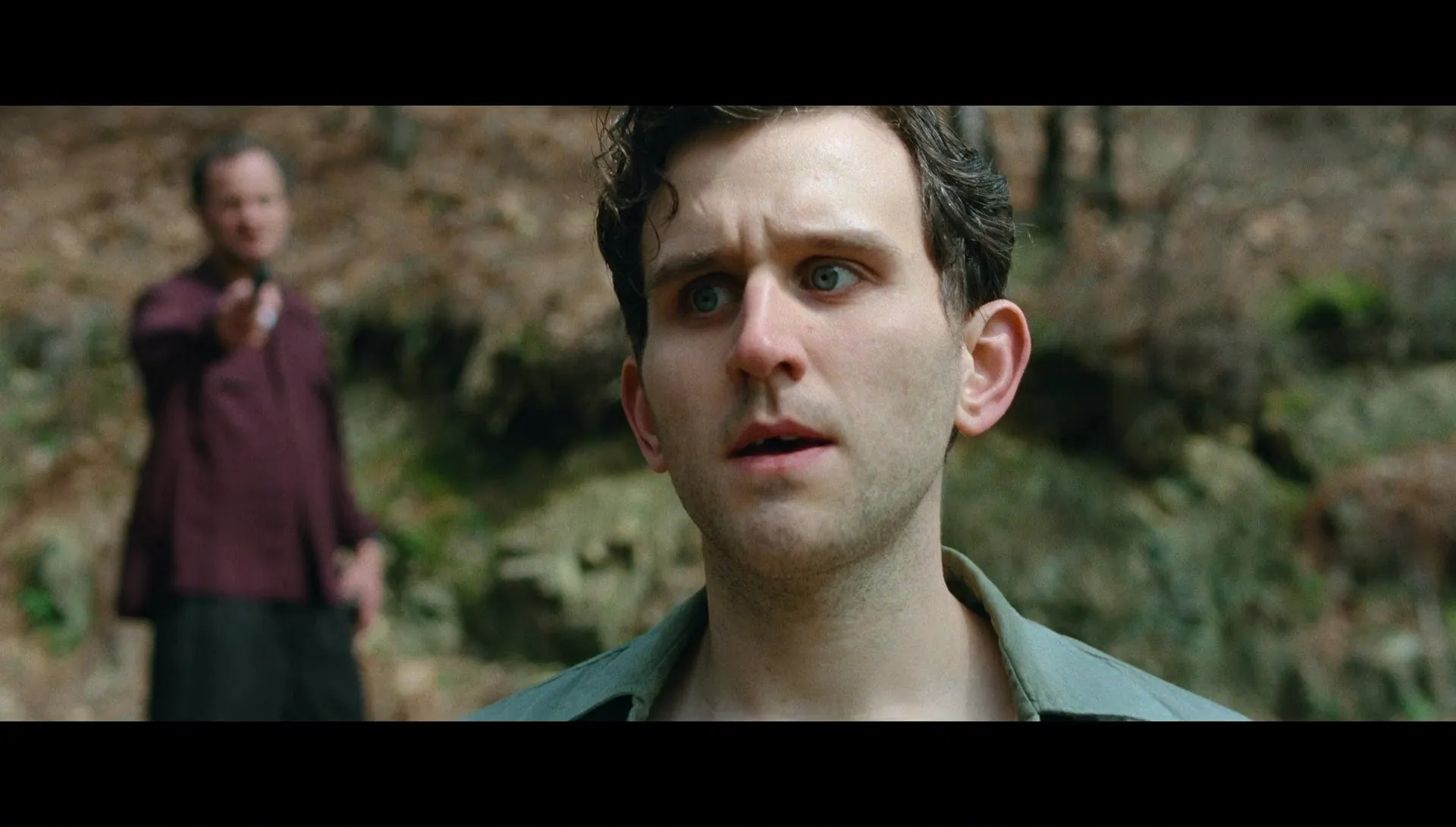
The lingering sense of inevitability is the key source of suspense in this film. Even when nothing threatening is transpiring on screen, there is this feeling that things are a bit too safe, a bit too quiet. Anticipation of the inevitable violence occurring through emotional dread and suffering is the jump scare for many. Campos and Crawley are focused just as much on the audience as they are on their project, attempting to achieve a memorable feeling of dread and suspense.
Dread Without Escape
The film feels like a cautionary folk tale of a small town in rural America. This insurmountable cloud of dread and moral decay over the entire story is so horrifying yet so captivating. Violence as a constant throughout the story drives this feeling of uncertainty in every situation, whether the characters will get out of these interactions alive.
Combine this with the deep cinematography focusing on the ambience and character, with the complex morality emphasized through religious and familial drive, and you get a cocktail of dread that is the hardest to digest. The feelings of isolation are still similar in areas such as Appalachia to this day.4 Even though this story takes place a whole 70 years in the past, the feeling of dread in some of these towns is still constant.5
Everyone’s a sinner in The Devil All The Time (as the name suggests), and Campos crafted a masterpiece that went relatively unnoticed. But those who stumble across it leave with a lasting impression. The impression of peering into a world so violent and unsettling that it’s hard to imagine that it isn’t far off from our own.
Footnotes
- Kermode, Mark. “The Devil All the Time Review – Deliciously Ripe Gothic Melodrama.” The Guardian, September 13, 2020.
↩︎ - Chang, Justin. “Everyone’s A Sinner in ‘the Devil All the Time.’” NPR, September 18, 2020.
↩︎ - Hadadi, Roxana. “Review: ‘the Devil All the Time’ Is a Grimy, Compelling Thriller in Love with Its Own Bleakness.” Pajiba, 2020.
↩︎ - Networks, Unofficial. “Why so Few Americans Live in Appalachia? – Unofficial Networks.” Unofficial Networks, September 22, 2025.
↩︎ - Todd, Roxy. “Q&A: Writer Explores Why Appalachia’s Economic System Keeps People ‘Poor, Sick, and Stuck on Coal’ – West Virginia Public Broadcasting : West Virginia Public Broadcasting.” wvpublic, February 7, 2018.
↩︎