

Table of Contents Show
LAIKA Studios’1 Coraline (2009) is a stop-motion dark fantasy horror movie directed by Henry Selick. The film was inspired by the award-winning author Neil Gaiman, who wrote Coraline as a children’s novella. Coraline is the first stop-motion feature film that was shot in 3-D.
Using this film technique, the director and creators of the film created a thrilling animated story that challenged the audience’s perspective on the horror genre by using clay to create eerie visuals and characters.

They used the clay by manipulating the characters and settings frame by frame to create a creepy subtext throughout the film that the audience recognizes in place of terror. This technique is used in place of traditional horror tropes like jump-scares and gore, and still firmly solidifies Coraline as a horror film.
How Coraline’s Stop-Motion Animation Creates Unease
Coraline uses the film animation technique called stop-motion2, which is when directors move and photograph objects frame by frame to create the illusion of movement. In the case of this film, clay is used as the framework of the film, and each set piece and character was created using clay.
By using this material, the creators are able to easily manipulate each action and feature of the characters and backgrounds to their advantage and create unique and intricate settings and designs.
To start the story, the creators use stop-motion to create our protagonist Coraline’s world. She and her parents have just moved to an old shared house called the “Pink Palace,” where the atmosphere the audience is shown is dark, drab, and gloomy.

Her parents are preoccupied with work and money issues, which leaves Coraline feeling dissatisfied with their new living situation. As she explores her new house, they use stop-motion to show the rickety hardwood floors, the dirty water from the shower, the bugs that infest the house, and the weed-filled garden just outside the house.
When Coraline discovers the “Other World” and meets the “Other Mother,” stop-motion is used to reflect the otherworldly atmosphere this fantasy world creates. The house is brighter, the clay furniture moves, the world comes alive, and she gets everything she asks for. It’s perfect.

Yet, the audience recognizes the uncomfortable undertone. The “Other Mother” smiles strangely, taps her fingers in a disconcerting manner, and tilts her head in a menacing fashion, making the audience suspect that the perfect world isn’t quite what it seems.
When Coraline begins to suspect the Beldam after being told she needed to have buttons sewn into her eyes in order to stay in that paradise forever, the other characters she had been introduced to in the “Other World” begin to act strangely.
Her “Other Father” moves sluggishly, like he’s drunk, and his movements become erratic, using the hands inside of his piano to contort his face and body in response to her questions.

These strange movements using stop-motion don’t immediately invoke terror in the audience, but instead create an underlying feeling of discomfort, which is just as horrifying as traditional horror.
How Coraline’s Character Designs Create Discomfort
When Coraline enters the “Other World” and meets the Beldam, there is already something off about her design. She’s always smiling, speaking in a soft and enticing voice, and her most immediate strange feature is the buttons for eyes. All the characters in the “Other World” have buttons instead of eyes, which is disconcerting.
Other characters that have unsettling designs include the neighbors both above and below Coraline in the real world. Her neighbors downstairs, Miss April Spink and Miss Miriam Forcible, were former theater actresses who have a knack for fortune-telling and have too many dogs.

In the “Other World,” they seem completely normal until they put on a show for Coraline and unzip their bodies to look younger. And when it’s time to challenge the Beldam in a game and retrieve the eyes of the ghost children, the women take on another form entirely.
They are ghoulish, with twisted faces and screeches that invoke terror as she fights to retrieve the eyes from them. They twist together like a piece of candy, and their faces morph into scowls with sharp teeth and unruly colored hair.
Another example of how the character designs create discomfort is the design of the Beldam’s natural form. When she finally shows her true colors and she slowly loses her ability to manipulate her prey, she becomes more spider-like. Her limbs become long and sinewy, her hands turn into metal claws, and her bottom half grows insect-like legs.
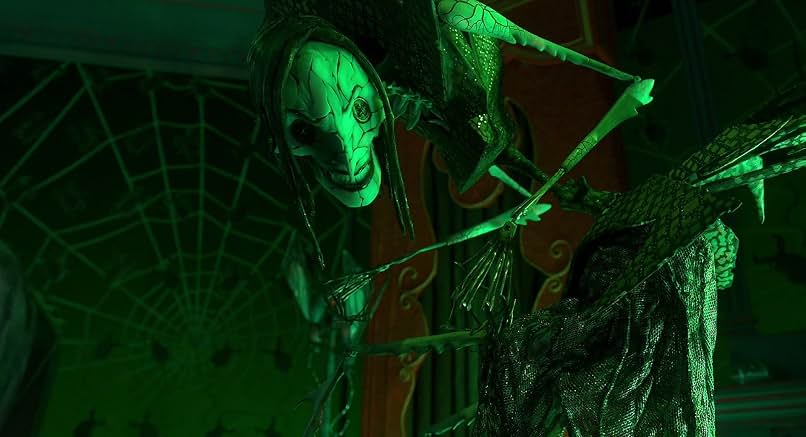
She is, in every sense of the word, a monster.
Her pale face, eerie smile, and the way she moves along the spiderwebs she uses to trap Coraline in their final confrontation send a shiver down the audience’s spine. To have characters move in an insect-like manner can trigger discomfort as it depicts inhuman movements. It is terrifying and uncomfortable.
Why Coraline Feels Like Horror Without Traditional Scares
The genre of horror can be described by Amy Roewe, who in her article says,
“The horror genre draws on the unnatural — it aims to unsettle the audience.”
Coraline does a fantastic job in embodying that philosophy. Each setting and character design is used to create the unnatural. From each unsettling head tilt to eerie smiles and contorting bodies and facial expressions, creates unease and discomfort without every seeing a drop of blood or scaring the audience into jumping in their seats.
Coraline has very few jump-scares in the film, mostly involving the final confrontation. The lead-up is filled with eerie-stop motion of the cold forest as Coraline slowly walks to the deep well. She sings to herself to maintain her courage but looks around with unease.
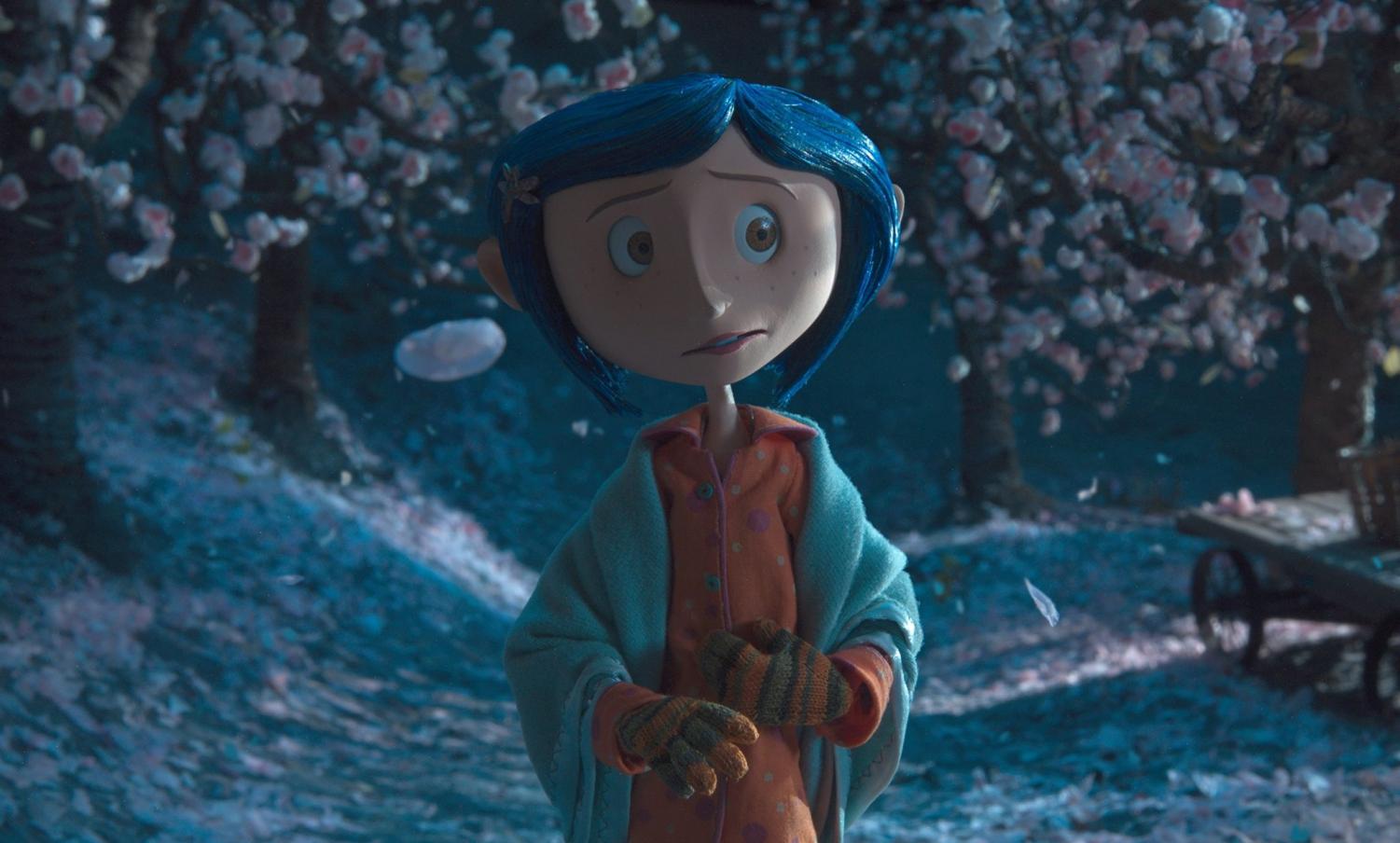
Then, as she is about to drop the key into the well, the Beldam’s severed hand jumps out at her and attacks, scaring her and the audience. These are all tropes found in traditional horror movies, but instead the film relies on the visuals and the emotions the setting evokes in the audience.
Coraline is a film that is horror in every sense of the word. Through its filmmaking technique, its setting, and its character designs, it fulfills all the tropes of a horror film without the traditional themes that most would classify as “horror.”
It is a movie that is scary, but more importantly, is uncomfortable.
Footnotes
- Henry Selick. Coraline. LAIKA Studios. 2009. ↩︎
- “Claymation: What it is and how it works.” Adobe, 2026. ↩︎